this is a presentation of the natural stone Institute's natural stone University thank you for watching hello everybody and to be with you today my name is tres Equis I'm the senior design manager for heart head which is a flooring company both commercial and residential applications I started my design career working as a residential designer doing mostly kitchen and bath design and then I joined craft made cabinetry a division of Masco and I was with craft me for 14 years and I was responsible for pretty pretty much every facet of design that you can think of
at one time or another from one point we did tradeshow booths design display design for a lot of our larger retailers and then I moved into a design management role where I controlled photography and really the overall look of the brand and so the last five years of my career went craftmade I moved into a product development role where I met the team that I worked with we did all the finished development of Dorval development view development really anything that has to do with new products passed through our team now that I've joined our head
it's very much a wide-open role in a sense that we handle new products we handle photography we really do our team touches every facet of the product from conception all the way through product launch and then beyond so this power point was really based on my journey of trying to capture trends and understanding trends as they relate to new product and design so this is really something that that I put together and as we go through I really encourage you if you want to ask questions please feel free but this is really about giving you
ideas about how you you're going to approach your own path to trend tracking and trend development so I really want you to take these take this as really a baseline and then develop your own way of tracking trends as it relates to your specific skill set and and who you're working with and what products you're working with so this really relates to both manufacturers dealing with retailers and you're manufacturing customers but this also relates to if you're a retailer working in a showroom and you're dealing with end consumers this process can really be adapted to
both ways so and I'll try to give you a little bit of both both flavors as we go through this PowerPoint so first of all we're going to do a quick overview really again this is my path of tracking track and it needs to be personalized a little bit for your own needs and this can fit you regardless of your background and regardless of who you're working with so we're going to go through what our trends why tracking trends are important identifying your key influencers and then how to use this data that's probably the most
important teach and then the selling of design and we'll get into that just in in a couple minutes first of all what is a trend really a trend is defined it's really a general direction in which something is developing or changing so it's a it's a movement or a so as we talk about trends it's normally not something that's it's not a huge shift you normally see these Gentle kind of gradation and gentle curve they ultimately result in a large trend shift but normally that doesn't happen overnight so it's also defined as something that alters
the human landscape so think of things that alter the way we live the way we communicate and the way we think those can all be defined as Tran so this we're going to look at trend what are the drivers the drivers are the constant there's a big picture elements that are really the core of what the way we live our lives and the way we think of our day-to-day so they're the economy their politics environmental issues religion global events and then one of our biggest that we see today technology so then we go on to
the macro trends the macros are the big buckets that effect more of the human factor they're like the pop culture the lifestyle changes human behaviors we can also bucket demographics which is statistical data that relates to population and ethnography to study a human race and culture we can bucket those two things also in with macro trap next we go on to the micro trends now the micros are more of the specifics so that's color material product those are your your home you're getting diving into the detail that you can think about one of the easiest
way to think about a trend is when you look at a funnel so you have your big drivers at the top that's where your your most of your data is then you're going to funnel down into the macro and then when you get into the micro that's the detail that relates to you and your product specifically so let's think about some of the different examples of that trend funnel so maybe it's when the the housing bubble burst that was due to the economy that was your driver your housing bubble bursting was your macro and then
when you think about how it changed the way we feel about our homes as an investment and then your micro is how it affected us as designers and sales people so that kind of gives you gives you your funnel another example of your trend funnel think about politics as your driver and then your macro is right now with the election year and you're seeing all these the debates going on on TV and now you're feeling that the economy is pulling back a little bit you're hearing people talking about jitters about spending well that's going to
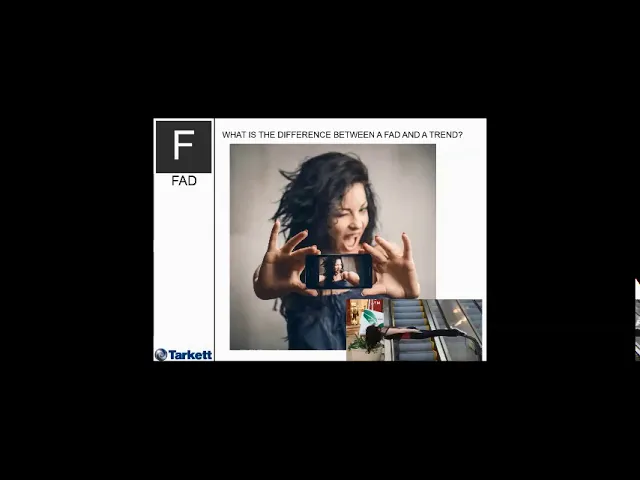
now think about your your micro how that's going to affect us in design how it can affect the way we design how it's going to affect the way our customers are purchasing our products and purchasing our services so that's a good way to think about it the next thing kind of differentiating what is a what is the trend and what is a fad so and I use the example of planking so if that is really something that short lived it's short Linda comes in and out very quickly it'll typically last the season and fade just
as quickly as it appears so think about planking on social media that kind of popped up on social media between 2011 and 2012 when you saw these people taking photos of them you know kind of in a prone position and it lasted about a season and then it was gone and then think about our selfie of trend on social media now selfies have become mainstream you're seeing products like selfie sticks and other things to support this trend so that one has definitely become a trend and moved to the mainstream where planking was something that lasted
media season and it was gone so that doesn't mean that we should ignore fad as we track trends we still need to keep track of them but it's something that we need to watch and not immediately immediately react to so the next thing we're going to talk about this wide trend tracking is important so a couple couple reasons why it's important for us to track trends it's really going to make you an expert in your field and as you look at design it's always changing so it's something that never staves never stay stagnant so we
need to make sure that we're kind of on top of what is that next thing what's that next new thing that is saying and it's also going to help us increase our sales dollars because that way it solidifies us as being the expert and also knowing being in the know of what's going on in our field so a little example when I in my early days of product development when I was this crappy we had a new CEO that joined the company and very often when we were when we were dealt with developing products our
product managers would just take my word for you know what colors were coming network that were new so we were launching giving a presentation to our new CEO and talking about the new finishes that we were going to launch and he said well why this new Brown why are we launching this new brown color in his eyes that just looked like another Brown and the product manager pointed to me and says well because that's what Tracey told me to do and he looked at me and I kinda had that deer-in-the-headlights look and he told me
it cut it cost our company a million dollars to launch a finish and we are not going to launch a finish although I know they you know you're very skilled in your field we're not going to launch a new finish just because you said so and that was a real eye-opener to me so he told me that we really need to have supporting data that is going to support our product path in our decision and he said he wanted a mix of qualitative and quantitative data that would support our path on this new Brown product
story so the first thing I did was went back to my desk and Google qualitative and quantitative so we talked about quantitative data quantitative is the type of data that deals with number that can be deals with numbers that can be measured so it informs us about quantities so like an example of quantitative data would be like the age of your car the number of Tiny's in your pocket so it's something that can be measured so for quantitative data I would say it's really best for you to either do surveys Survey Monkey is a product
that we use online pretty readily we use it throw fit at when I was with math go and craftmade and also now that I'm with char ket it's a really easy way to put together a week you can also do surveys in person one of the things that we did in trying to capture quantitative data as we printed out fake money we had a customer event not too long ago and we printed out save money we gave each customer $100 a mix of ten five and one and told them if this was their money and
they had to pick products that they were willing to launch into their into their retail showroom and we had a myriad of probably 20 products and we asked them to put their money to actually put their money on the product that they felt would perform the best in their retail location and then we went through and counted up the money of what products got the most money and that was really an easy way for us to do an in-person survey to capture what product we thought we're going to perform the best so as I said
survey survey monkey is another great one that we use the only thing about surveys is you want to make sure that you cool you set your quantitative parameters very clearly if you want to do a survey of designers make sure that you're you set your parameters to designers with X amount of experience or designers that design homes that are between you know X amount of dollars and you know an X so making sure that you know where your data is coming from so that we did a survey not too long ago that we targeted designers
that were that had work on the commercial side of the business that had at least 15 years of experience and worked on projects that were between 50,000 to 150,000 dollars so that's what our parameters pretty tight and we were able to you can you can quantify the data a little bit better that way so next we're going to move on to our qualitative data qualitative data that's a little bit more it's a little harder to track but this is more about making observations gathering opinions and insight so qualitative is more about information that's difficult to
measure so an example would be the softness of a tag or the color of the sky you know if you ask a designer what color is this guy in you're probably going to get just that many answers everybody's going to have a slightly different take on the help blue or how gray this guy is going to be on a given day so the good thing about the the qualitative data is it allows you to capture people's thoughts in their own words and that's what's really important so make sure that you write down direct quote you
observe people's body language as you speak to them um gathering Quantic qualitative data is actually the most fun in my opinion and think about just the people that you work with think about your peers here at turkette I often pull employees when I'm working on a new new design or new color when you think about it we are all consumers we all buy goods and services on a daily basis so you know why not make the most of your peers and the people that you work with so I'll often set out you know maybe three
or four designs and I'll bring up a group of people sometimes I'll do I'll call it at lunch and learn we'll bring in lunch and a ball you know gather opinion and that really helped me as we go to product to make sure that we're kind of moving down the right path and getting the right colors the right designs that are going to work for today's consumers so next we're going to talk about where where we track dress so the first thing about systems is it's really you should always be looking be on the lookout
already emerging trends so subtle shifts and what exists in your market today so a lot of the really true trends can't have longevity but you may see a lot of different iterations of that trend along the way now I'm going to give you an example you say back in in 2008 we started to track an emerging trend and people were calling it steampunk and it was very kind of sci-fi Jules Verne's at the time it felt very out there in fact when I was at craft made I remember presenting this trend to our upper our
executive staff and they they've looked at our team like we have three heads like they had no idea what we were talking about well again that was when the trend was emerging but when you think about how that turned has evolved over the past eight years we moved from steampunk in 2008 and then over the course between 2009 and 2012 it became the industrial track which we all know now has been huge and now we're seeing industrials slowly shift to this authentic trend which is still the use of natural materials natural wood metal but it's
not as heavily industrial as it was in it in its peak and it's heyday so we're still seeing that original steampunk trend that was emerging in 2008 when you think about it it's still hanging on today in 2016 but it's gone different iterations and you can still see glimpses of that initial trend but now it's kind of it's developed its own its own life cycle so when we talk about tracking trends one of the biggest places to look is of course the media now right now I'm speaking mainly about those drivers so think about where
are you here where do you hear your news where do you capture your data day to day data so it could be blogs it could be like I love NPR NPR quite a bit during my commute I listened to a lot of social media and I follow a lot of social media pop culture and really the big global event events like we've one of the trends that I was tracking for 2016 is the Olympics so we're seeing a lot of those kind of hot spicy colors for the Olympics but now we're seeing that pull back
ever so slightly because of the Zika virus so one of the things that you should always ask yourself is how when you hear just general everyday noteworthy news how is this gonna affect design how is this gonna affect color and that's something that you should kind of always be asking yourself the next thing we're going to talk about is vendor partners think about how often we rely on really our industry friends to help us out with with trends with product ideas with inspiration we really glean a lot of inspiration off each other so whether you're
in if you're in a showroom setting think about products that you don't currently sell or think about your manufacturer's rep so can they can you make your manufacturer sales reps help you with what trends they're saying let's rely on them to help you connect those dots a little bit so these are some of the vendor partners that that I normally track I reach out to so the other place says that I love to track trends is in x-ray shows so trade shows are really a great way to see what's going on really quickly so think
about trade shows that are inside your industry we just got back from the surfaces show not too long ago in conjunction with surfaces we had the International Motor Show we have the kitchen and bath industry show another place that we track quite a bit is furniture market so think about one those trade shows that are inside your history that you can visit next I would encourage you to think about trends that are outside your industry so that's a little bit more of an obscure path but you'd be surprised in what you see a trends that
may not be in your specific industry so one of the ones that I like to track we go to the cookie and housewares show which is it's similar to being in our industry I always track fashion Fashion Week not too long ago you'll notice that when I first started in the industry fashion and home fashion were about two seasons apart so in it would roughly take 18 to 24 months and you would see the colors that were going on in home fashion emerged into your interior fashion where we're seeing now that fashion and home fashion
or almost concurrent there's really no lag there so it's interesting to see some of the details and the textures and the iterations that are going on in fashion and see how they become translated in the home fashion so what I would encourage you to do though is when you're looking at trade shows outside your industry pick trade shows that interest you personally because that makes attending them and and understanding how they relate to your industry so much more fun and so much more informative what are the ones that I picked was automotive so we attend
every year I attend North American Auto Show because I'm just really interested and grew up in a family of cars so it was something that always interested me the other thing that why I chose automotive is it had a similar product track and lifecycle to foreign materials so most people retain a car after they purchase it between 7 and 11 years is what the automotive Institute is it's kind of tracking right now that's how long the average life cycle that people own a car what's the same thing with flooring so normally people change their flooring
every 7 to 11 years so it's a very similar product evolution so that was another reason why I chose to track automotive so again six things that are of interest to you and then try to connect those dots of how they relate to your industry in particular the other one that's a great one the CES the Consumer Electronics Show that's something that really we should all be tracking just because technology is affecting you really all of us the way we live the way we work the way we do our business on a day-to-day basis and
lastly try your own local shows those are really important to see what's going on in your specific market next we're going to talk a little bit about outside agencies these are mostly paid agencies color marketing group as Cheryl spoke about early on I'm a sort of dredgers number four color marketing and I really believe in the color marketing philosophy that you really what you put into it you really get back it's a great way to network color marketing has a newsletter and also they're involved in social media so you can track them at no cost
and get some of the insight into the color that is being forecasted color marketing is a non-profit and they also have something they call chromosomes which are color workshop they facilitate all over the United States and if you get on about color marketing group org you can track if there's a chromosome in your area and it's very inexpensive to attend the one-day workshops that you really get a lot out of it and there's also we have nkb a we have what Carol puts together with a Marvel Institute so there's really a great resource of information
out there for outside agencies think about all the agencies that I have listed on the page fear training color marketing group trend curb they all have three either three blogs or free newsletters that you can track at new pot so even if you can't afford to pay an outside agency or any kind of trend data you can still take advantage of some of their insight and some of their direction on their their newsletters on their social media sites the one thing with the paid agencies though that you really need to be conscious of is you
still need to validate any information that you receive from them in your own market and in your own product category next we're going to talk about specialty publications this is really a great way for you to again just get a quick snapshot of what's going on in your market so think about some of the big ones like my favorite some of my favorites or Elle Decor metric metropolis wired and InStyle and then I always track global publications as well think about some of the local builders in your area on the screen I have some and
be large publicly traded builders multi Lin are Katie Holmes things like that but think about smaller builders in your area and even think about how you can maybe partner up with them to get even more specific segment data what are they doing that's different what are they doing that customers are gravitating toward kind of create some of that awareness and some of that alignment with your local builders the next one my favorite one is think about where you go think about let's say you're going to go to a trade show in a different city immerse
yourself into that city so if you're going to go to a trade show in Las Vegas let's say don't just go from your hotel room to the convention show floor try to visit some local eateries and local shops try to immerse yourself in that culture and see what's different in more residential or commercial desires really that line between commercial and residential we see continuing through a roof and kind of blur out really we're seeing commercials influencing residential and residential influence and commercial spaces so restaurants so cheese hotel I even made a point not to stay
at larger chains anymore if I have to travel for business I'll try to find a specific small boutique hotel just to feel the difference of how they decorate how they how they present themselves from their marketing all the way down to their product so keep your eyes peeled and always travel is so easy for us now to always travel with our cameras now that we all have smartphones but don't be afraid to take to the with that camera Abbott I can't tell you how many photos I take on a daily basis um the next thing
that I just wanted to put out there again really that's the brief overview of where to track but you really need to try to establish your own path on how you're going to track the one thing I really know though as you go to trade shows and visit different news facets and things make sure that you track the same site your same sources of news your same websites in the same boost when you go to trade shows make sure you you have a path and you visit those same sources every year that doesn't mean that
you can't add new ones I would encourage you to do that but by tracking the same ones on a monthly or a yearly basis that establishes your your path you can see those gentle shifts and subtle shifts where if you don't track the same ones every year you might not see that so that allows you to track this TT so I would encourage you to once you establish that path stick with it for at least a period of time it might evolve as you grow and as your trend tracking skills grow but it's really important
to stick with those initial followers early on next we're going to get into a little bit more of how to track trends so really when we talk about asking questions always ask yourself how does this affect design how do all of these different news stories how are they affecting me as a designer and how are they going to affect my customers in the way that they interact with me or the way they shop or the way they they feel about design so we always need to be connecting the dots and drawing conclusions and validating our
hypothesis like validating our research so some of the ways that we do that we keep data so we thought about taking pictures so I probably download my photos on a monthly basis probably not as often as I should and then I keep lots of notes so I used to keep a lot of paper files back in the day that I'm dating myself a little bit I still do kill a couple trees I'm I'm ashamed to say that I do still have some paper piles but right now I break up my categories and what you see
on the screen if I have big picture drivers macro trend micro trends and then I keep specific files on demographics and then color and then special effects special effects is more Sheen level it's maybe metallics that's a little bit different I think in my category of flooring and also in some of our interior finishes right now Sheen and you know having that matte versus shine or the mix of both is really an important trend that we all need to pay attention to so and one of the reasons I'm tracking I tracked EMA graphics specifically I'm
working on a couple different presentations that have to do with certain demographic gauges like Gen Z is our younger group coming up so I'm tracking them specifically and then in a in opposition to that I'm tracking also how aging affects design so anything that I'm that I'm seeing on baby boomers are aging in place or I'm pulling data on that and just kind of throwing it in a file that doesn't mean I go over that file I normally skim the article really quickly if I find a great nugget and I'll just throw it in a
file and then I try to purge those every six months and get rid of data that is maybe duplicate or data that I don't need any longer the same thing with my photos I try to purge those probably about once a year and I'll pull specific photos that relate to certain projects into a different file the up cheese is can be a little bit arduous but it's really having everything digital versus you know those old paper files has really simplified the whole process and again you really have to establish your own path in your own
filing system make sure that you can access your file very easily and then set your own changes of when you'll update your file and make sure that your files aren't stack that you're continuing to keep them evolving and as you see trends changing and as you see data kind of continuing to shift to make sure that you're shifting along with it the next thing we're going to get into is to detract so think about again that funnel that we spoke about earlier you have your mobile companies or your your global information think about who you're
gonna attract specifically in the in the States or North America in your geographic location so turkette is located in Northeast Ohio so I normally track Ohio Pennsylvania Michigan Indianapolis down into West Virginia so that's kind of my region that I track and then think about your local level at your local level you're going to get you might have a lot of differentiation between what you'll track locally and what you'll track locally so and think about you know mixing that up so if you're a higher-end manufacturer or a higher-end retailer you should know what's going on
both at your level and then at math and then it's a value level as well so again you know thinking back to the early years of my career that gap between your Couture and the you end of your product category was huge you can definitely see the you know how wide that gap was we're now that gap has really really truncated down so you it's often just subtleties that will differentiate a value product from a higher-end product just from an aesthetic standpoint you know definitely materials and and those more robust details will be different but
just from a subtle glance often that gases is hard to spot also if you're strictly residential you should really have a pulse on what's going on in commercial design market and the same goes of your commercial designer you should you really should know what's going on in residential a because as I said with char ket up being very big in both market segments moreso in residential working both of them kind of influencing each other and those lines are most definitely blurring so this is again this is a little bit more specific to my path and
what related industries I tracked so if you're in a showroom think about the products that will help support your overall room story so if you are if it's countertops think about what else is going to be in a kitchen and bathroom you're going to need flooring you might need furniture you might need cabinetry and you might need appliances so those are always good things to track and you should also look at your own competition so you know think about I try not to get too hung up on head-to-head competition like I'll look at mostly you
know higher end or much lower end because really you don't want to be a me-too you want to kind of push that envelope and create your own path for me wallcovering I find it's very closely related to flooring material so that's one that I track pretty closely especially these days that pressure is so important look at the tile industry to get new shapes and colors and textures furniture we always track furniture because furniture is really your room anchor in those cases we go to furniture market every year and track what's going on not only in
color but in design in scale just to see what's what really where that pendulum is swinging in furniture we've seen this scale especially come down quite a bit over the past six or seven years and then think about tracking trends again outside of your industry so inside your industry very important but outside non-related can often give you a lot of insight especially into color and pop culture and different technology trends so fashion is a big one again that I track wait a bit from cosmetics to shoes fast fashion and then more kind of runway couture
fashion jewelry is one that I found at Craig made we should develop decorative hardware that would go that would get mounted on the cabin tree and we found a really a direct correlation with jewelry fine jewelry and cosmetic jewelry that when you would see kind of color shifts and design shifts and jewelry you see those same shifts happening in decorative hardware design so the same thing as you look at cosmetic trends you would see cosmetic trends and fashion trends that would directly relate it into interiors and the same kind of colors and textures going on
interiors we've talked about automotive and most definitely technology in the past you slide which are important to keep the pulse on the other thing that we are looking at quite a bit is we do a lot of networking which is so important so if you're in a in a showroom setting again think about those materials that will help you to round out your interior space so if it's a bathroom if it's a kitchen partner with other showrooms that are enclosed in your geographic location so maybe it's such an insurance maybe it's a company that sells
appliances or wallcovering so think about trying it not only helped you connect the dots for you as an individual and as a designer it'll also help you connect the dots with your consumer so think about your consumers they're coming to you strictly for one product that is within that interior environment if you can help them and be a referral you establish your own referral network for other products goods and services that they're going to need you will be an invaluable resource to all of your customers so some of the the networking that we do specifically
we've talked about NK VA and then think about other design affiliation we have ASID and iid a that we do in quite a bit and KP a is one that I'm affiliated with we talk about color marketing group and then like I said just retailers retailers are probably going to be your your best resource is at your local level thinking about those partnerships that you can establish one of the things that I began at turkette that become really an invaluable resource to me and to our chart Etsy is we established the design share so once
a year we get together with our peers from craftsmen cabinetry from formica counter from leery hardware delta faucets and whirlpool appliances and we talk about trends we talk about what products were launching and really the the goal of this design chair is just to make sure that we're all tracking on the same path it's not to make sure that we have products that match each other's portfolio but it's really just to make sure okay these are the trends we're tracking are you seeing the same things its consumer trends its product trends it's big picture kind
of macro trends all the way down to the micro levels down the style trend so and that would be easy enough for you to establish a design share in your own local area you know either with local retailers or here at a manufacturing level again just think about those other partners that help to round out your product category so with the design share partners that we have really does everybody a lot of the big players that you would have that would help you complete a kitchen or a bathroom so that's really you know where this
partnership began but think about forming your own design share in your local market and then think about some of the who you want to track outside your local industry or your industry itself Apple I know that one's a little bit tired because everybody talks about Apple and and how they they really expect technology and also you know color on its ear but think about when they launched back in 2012 they launched a lot of these great metallic colors rose gold they launched the gold at silver space grey that was really a chipping point when we
saw a lot of metallics and a lot more metallics coming into play I think that even now you're seeing so much more gold in the industry rose gold is still very very prevalent and then you see your silvers like your stainless in your your chrome that's never going to go away so think about a couple other different retailers or different areas that you would like to track so talk about with one that we were tracking from a marketing standpoint because they had one of the highest levels of millennial consumer engagement of any other brand so
they were on a daily basis giving a millennial word of the day they were offering coupons they were just blowing up on Twitter and snapchat so they were one of the first companies that from a fast-food company that allows you to do online ordering and then pave the you know Apple pay and you know people pay things like that so think about other brands that are really doing things in a an innovative way and see how you can parlay some of those different strategies into your own business plan the other one that we're tracking with
Tesla because they were pushing so much innovation into their product and there were also their sales model their direct sales set of a traditional franchise model and they were doing this because they wanted to control their brand experience which from a marketing standpoint is huge so think about not only your products but how consumers will interact with both you and your product what kind of experience are you are you giving are you providing the next one that we were tracking from a millennial standpoint with Dress Barn and instead of Dress Barn they were going through
I was tracking about a year ago that they were doing a complete brand overhaul and then we're even thinking about changing the name and it was interesting as they've you they gave you their new brand image last year they're targeting more of a younger demographic more kind of our Gen X and our younger millennial demographic but instead of changing their their brand and changing their name they wanted to keep their brand equity and so they just started to have fun with their name and a lot of their advertisements were geared around taking you know these
kind of high fashion photos with farm animals and so they were kind of upgrading their image but still having fun you know at their own expense so like some of the ads don't let the name fool you so if you know just again looking at some of those companies who was doing who was doing it well I wanted to give you a little bit of insight into our how I parlayed my turn tracking knowledge into products now this is back in 2009 we weren't really seeing a lot of discussion about blue of the color and
I thought it's really a beautiful kind of inky blue on the runway in 2009 in couture fashion then in that next year at 2010 at the Auto Show we saw a lot of luxury automotive manufacturers it was Alby it was Mercedes BMW they all launched some color of this kind of dark blue this inky blue color and at that same time we thought emerging in high-end fashion not insecure but kind of in your higher-end like Saks Fifth Avenue type of retailer then in 2011 it was moving we thought emerging in fast fashion and it was
a mainstream automotive like Ford and Chrysler Kia and it also started to pop up in housewares and interior decor and at that point we knew okay that we're good we're good to go with this one it's become a mainstream it's a stable and we were we had been working on that blue color since about 2009 we had a few evolutions and we did tweak it along the way but we launched at craft made we called it midnight in 2012 which is a blue color that still very much a staple and really that trend hasn't shifted
we still see navy blue and that dark inky blue being a trend for at least the next five to seven years the next one that I wanted to to point out to you was this gold trend and again in 2009 we started tracking this we thought emerging in jewelry and we also from our design share data with Delta Faucet company and also Liberty Hardware they saw and have taken some of their gold sail and so we continue to track it we launched in craftmade we launched a we called it champagne bronze in 2014 and it
was not long it was soon after Apple debuted the iPhone in there and their bronze color as well now with this product we were probably a little bit early because we just when we went to visit furniture market this past fall fall of 2015 this bronze this gold tone was everywhere but with launching in 2014 initially we did not have a inch of a while for this color for this product to to actually catch on so we're going to talk a little bit about the education of design next and that's something that we really need
to to be aware of okay and again we're going to talk just a little bit more about establishing your own path of who your influencers are going to be so think about the people or the companies that affect your product in your marketing or your sales strategy so figure out what those companies are doing and then do it better so next we're going to talk a little bit about this selling of design this might be a little bit of a new concept selling of design when you think about design it's tricky because it's subjective everybody
has an opinion and everybody's opinion on design is different and there's really no right answer in many cases when it comes to design so we've already talked about the where the how the who and now it's time that we need to kind of pull it all together and you use what you've learned so with cross made we used to have on our website it was called apps the designer we have something very similar at arkett where consumers can send you a question and then our office design staffers would actually answer their design question or product
need whatever it may be and it's it always amazes me that people most people really do know what they like they just need validation they need validation that their vision is correct and they often want to share their ideas there's not many people that are completely oblivious and don't what could you so it's really up to us to validate our design decisions of our customers give them guidance and reassurance that they're on the right path so one of the other things that we need to think about from a designer standpoint is think about the coordination
of our products so if you are again if it's more of a if you're selling or coordinating if it's a countertop or if it's more tile wall tile think about the other things that are going to go with that product so it's not about just your path for today it's about knowing what's coming next here at Starrcade we we often call it launch and love we want to launch a product and then we want to give our consumers and our designers ways that they can use it we want to inspire them on how they can
use this product we don't want to launch it and then leave it you know just throw it out in the marketplace and then walk away it's continually educating and continually giving feedback the other thing about selling design is if you sell your vision based on the data so if you are a designer or a manufacturer you definitely need to sell any kind of new products based solely on you know qualitative data and quantitative data but you can do the same thing if you're a designer at a showroom and you're trying to sell a consumer so
think about how you're selling your story we all know how visual people are today look at Pinterest look at how you look at our own website then most designers now are it's less words and it's more visual so think about how you can creatively and visually tell your story it can be storyboards it could be the old full storyboard where you're actually you know taking real product and putting together a coordination story it can be a story based on just create a story telling how you develop this product or how you came about selecting this
product is it based on your consumers insight or your background that you got from your consumer maybe they talked about how they love kind of clean and crisp so you selected a white maybe they talked about how they loved the outdoors so you take that a would challenge so make sure that you tell the story of why you need to selections that you made because that can often kind of put your design over the top of really of selling it selling the coordination selling the longevity of the of the product that you know that this
trend is going to be solid for at least the next seven or so years tell the advantages of the selections that you made why did you pick a white and also think about the advantages so you really need to not only sell your design but you also need to in a way you're selling yourself and don't sell your creativity short so just a couple more slides before we finish up here this is the one that I really wanted to key in on so when you think about a trend this is one that that I call
the trend curve really there's a different rate of adoption of trend depending on where you are both geographically and just based on your own product so a quick story I was a multifamily conference in Wichita last spring and it was funny in Wichita and designers we've been talking about the great story and grade the great product ran for years and in Wichita in the multifamily market where they were building apartments and senior housing and things like that they had just started to adopt gray into their interiors just that past season so they were even though
that we've been talking about it for such a long time that region maybe had a slower adoption curve than say New York or Los Angeles so think about where you're at on your own trend curve so we're talking about gray again for example one of the things that we do when we're talking to a lot of our big clients is will kind of give them the trend curve for gray let's say but then I'll put a summary arrow - well this is where we feel this product is on your trend curve so you still have
quite an uptick before you reach mass and then you can have your years of longevity at math so often when we present new products we get you know our our retailers and we'll get other manufacturers excited about what we're showing but we need to make sure that we're presenting that product when it's going to be the right time for that so when you think when I am considering some of our big our big box customers they might not be ready for a great concrete look you Florine quite yet so that's something that even though our
buyers are excited about it they're consumers it might be a little bit too early and we make sure that we try to educate them on - when is the best time to pull the trigger we want to make sure it's good for them and what's good for them will definitely be good for us so it's about again that education and then lastly when you think about selling your design don't sell yourself short it's amazing that by working with a designer if saved consumers so much money and that's something that you should really put out there
a lot more than than what designers do currently I have a colleague that works for a company in the Midwest and she was doing a lot of work with a baby boomer client and she wasn't getting a lot of interaction with Millennials with our younger clientele and she put together she had one millennial client that she targeted and helped gather resources around you referrals from this millennial client she had a mixer kind of an evening mixer invited all these millennial these younger Millennials over that were referrals from her initial client and she told them that
she would save them if they were doing a design project she would save them money by using her as a designer she promised them that she would say the money on both products and both on their time when you think about it all of us you know time is money so she was able to she from that initial meeting she received 10 millennial clients and the one great thing about Millennials is they're very big on social media so that those 10 millennial clients talked about their experience and how wonderful it was and how she was
able to save them money and now her business has completely flipped left to being mostly baby boomer clients - now she has mostly millennial clients and one of the things that she had targeted was it is not expensive to have to hire a designer that if she's going to do all the legwork for you she is going to source products that if you the Millea plan will provide her inspiration and she would often find a product that was less expensive so saving both time and money and she's had just an incredible turnaround of her business
just base that was selling of herself and the selling of her designs or design practices so at the end of your presentation and hopefully Kara will be able to send this to you separately I have a bunch of different blog that I currently follow these are all free blogs that you can log on you'll get daily sometimes weekly alert that will just give you a little bit of a snapshot of what's going on in the interior design community and then I also put design and trend websites we talked about fear training early on color marketing
WGSN is one that is a paid site but they also have a free newsletter that you can log on to the trend curve and the trend tablet same thing these are all paid sites but they have you can follow them on social media and they also have a free newsletter that you can follow and we also have our own chart ket design blog which is at the very bottom turn to na backslash training with Tracy that we would love for you to follow and then I also included some key insights and attracts to tracking what
Lyon house so knowing history just keeping your eyes open always looking always questioning and there's a couple different insights in there that I'm sure Carol will share with you just so you have a little bit of a take away this was a presentation of the natural stone Institute's natural stone University thank you for watching