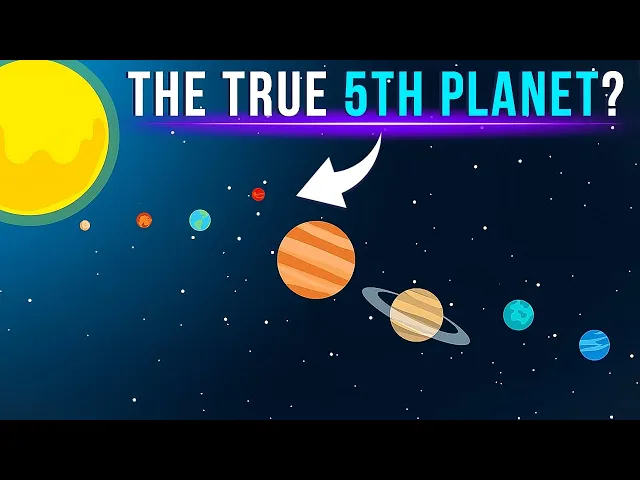
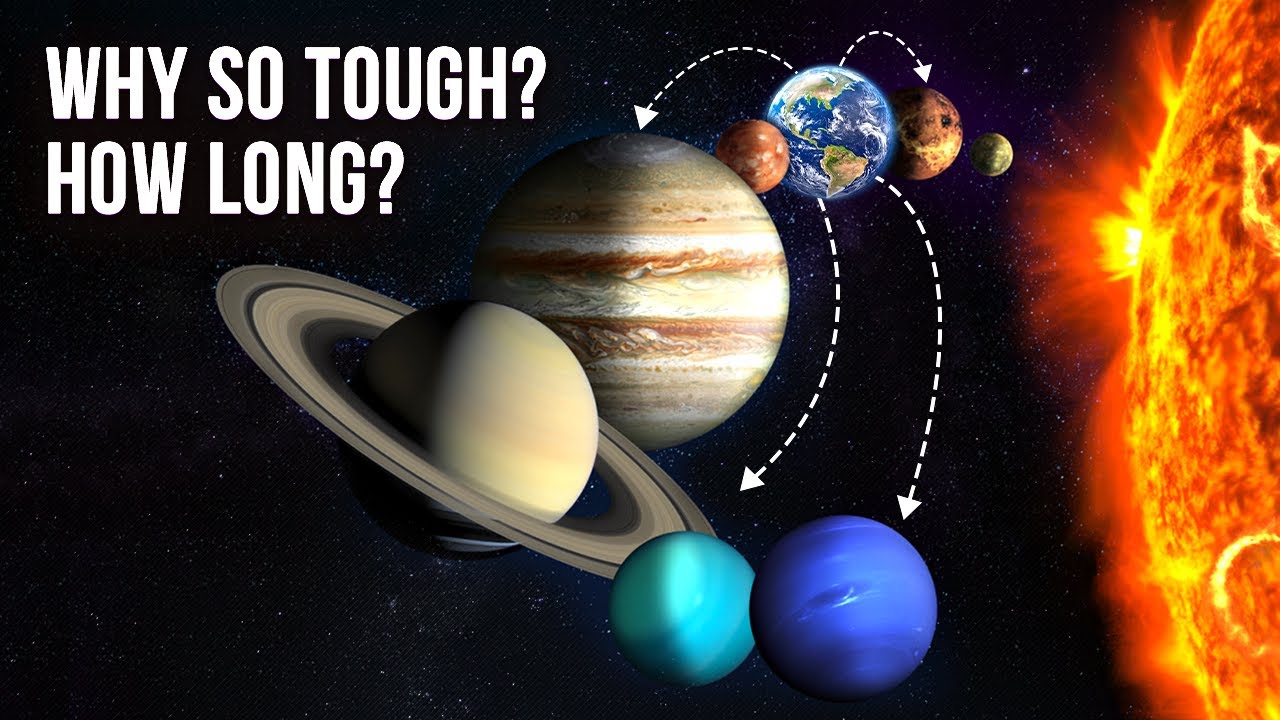
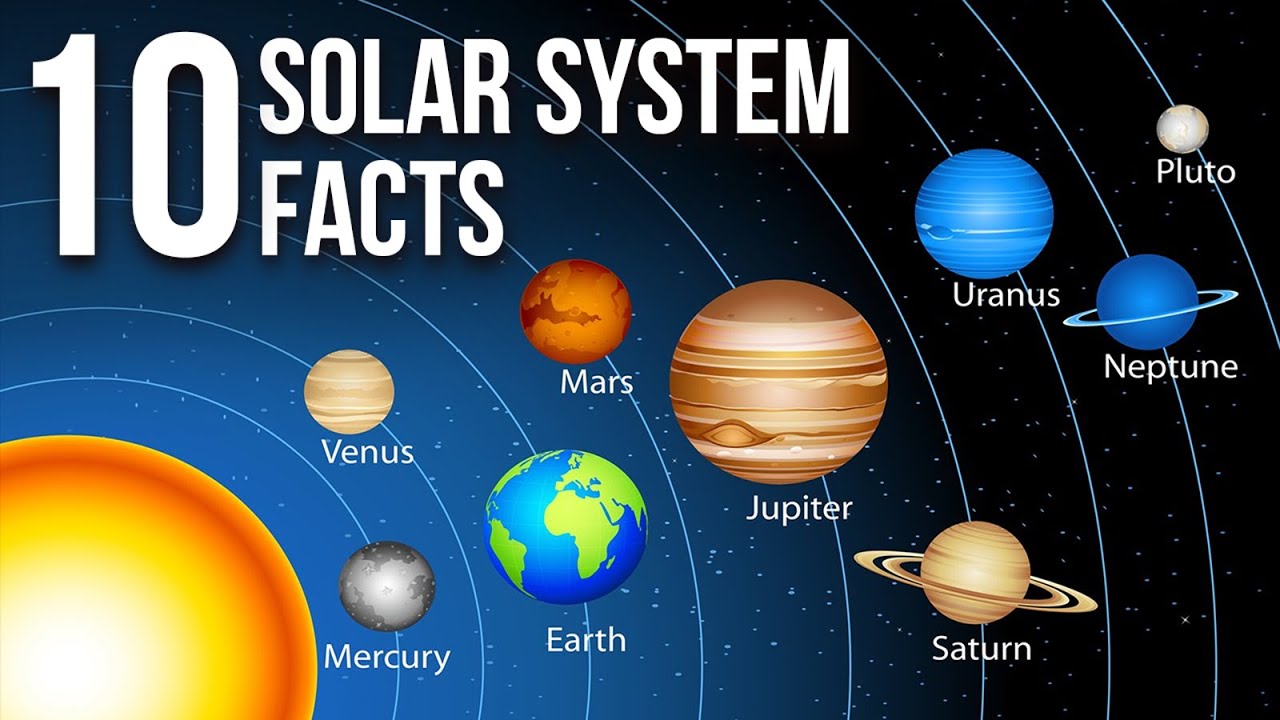
The mysterious planet between Mars and Jupiter that formed the asteroid belt Script: The solar system as we know it today was not always the same. If we looked at an astronomy book from the 18th century, we would see that the solar system used to have 12 planets and not 9 as it does today. But.
. . if gaseous planets like Uranus and Neptune were discovered just over 200 years ago, and some smaller bodies like Pluto and the rest of the dwarf planets were discovered less than a century ago, how come there were 11 planets in the 18th century?
What ll those planets? Stay with us to find out! “ Intro ” For years, astronomers have observed the sky, looking for all the objects that surround us, and sometimes they find interesting things like comets or asteroids, but other times they don't find anything they were looking for.
This has led to a relentless search on several occasions throughout history for planets that everyone believed could exist but that was never found. One of those planets was Vulcan, a hypothetical planet that supposedly existed between the Sun and Mercury. The existence of this planet was an idea that arose from Mercury's strange orbit, but this idea was discarded in the 20th century when it was discovered that what was disturbing Mercury's orbit was not a planet but the deformation of space-time caused by the immense mass of the sun.
For a time, some astronomers also raised the idea that there could be a planet on the solar system's outskirts that had an orbit of 70 million years around the sun and that, when passing near the Kuiper belt, it knocked asteroids out of their orbit. Causing the mass extinctions that have occurred on Earth throughout history; however, no planet with those characteristics has been found to date. Another planet that has been tirelessly searched for is the mysterious Planet 9; observations indicate that there could be a ninth planet smaller than Neptune and more significant than Earth on the outskirts of the solar system orbiting near the Oort Cloud.
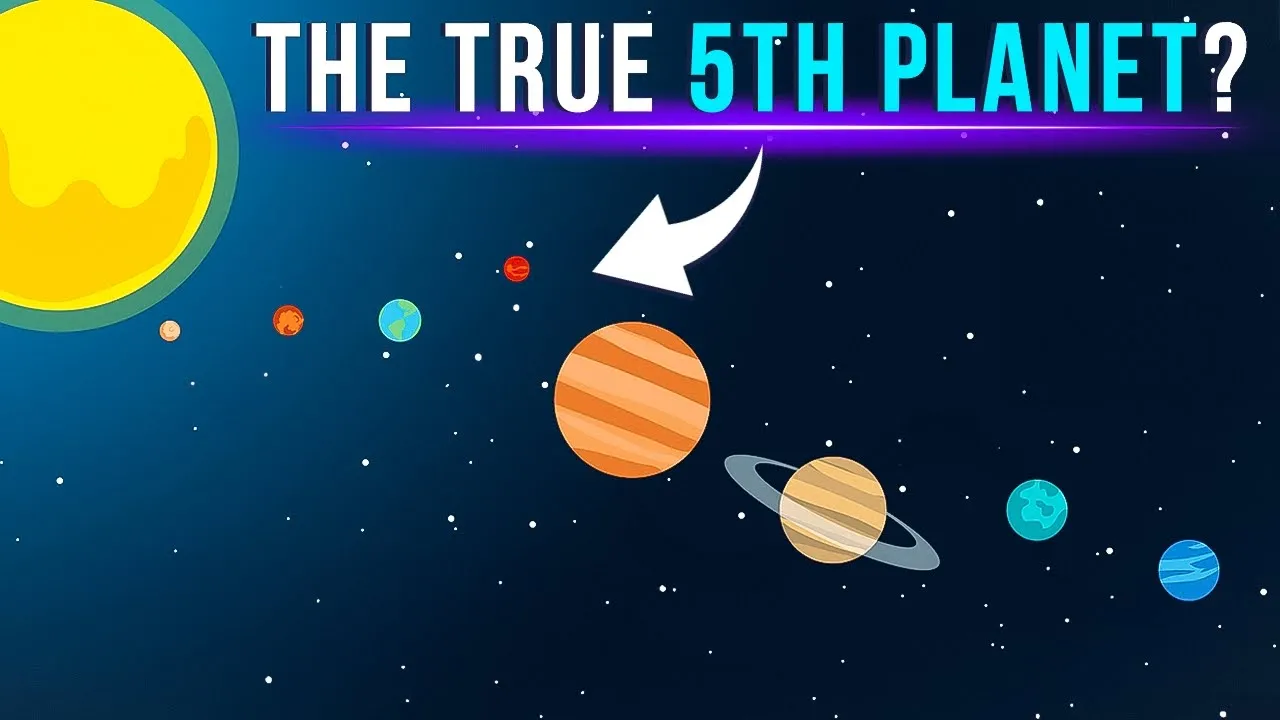
Unfortunately, our observation technology and telescopes are not powerful enough to find an object with these characteristics, so it is not yet known if Planet 9 could exist. And finally, we have the protagonist of this video, the hypothetical fifth planet between Mars and Jupiter called Phaeton, which was searched for many years but was never found. What happened to these planets?
Why don't we ever find them? Are they still there, hiding in the darkness of the immense void of space? How do we know where to look?
In the 18th century, the only known planets were the six closest to the Sun: Mercury, Venus, Earth, Mars, Jupiter, and Saturn. This changed on March 13, 1781, when astronomer William Herschel announced the discovery of a strange and distant planet beyond Saturn; this would Uranus be the first Planet discovered by a telescope and not by its trajectory in the sky, as was the case of the other 6. This discovery would mark a before and after in the search for planets and would give rise to an exciting Law that supposedly could accurately predict the location of the planets.
This was the Titus-Bode Law. This Law, developed by Johan Daniel Titus and later used by Johann Elert Bode, proposed a mathematical model that, when executed considering the astronomical units that separated each Planet from the Sun, resulted in a numerical sequence that accurately predicted the exact distance of each Planet with respect to Sun, with a tiny margin of error. While this model was elegant, few astronomers took it seriously until 1781, when William Herschel discovered Uranus.
Why? The reason was this Planet was located right where the Titus-Bode law predicted. Thanks to this, many astronomers began to consider this Law reliable since it managed to predict the position of a planet that had never been seen before, many years in advance.
However, there was a problem. The Titus-Bode law said that there was a planet between Mars and Jupiter, but until then, no planet was known in that region. And, because the Law had accurately predicted the discovery of Uranus, astronomers worldwide began desperately searching for the supposed fifth Planet between Mars and Jupiter.
This was how a race began for who would be the first to discover it. The search was exhaustive, and nothing was found for more than two decades until, on January 1, 1801, the astronomer Giuseppe Piazzi discovered a small, pale point of light moving just where the Law predicted; this mysterious and diffuse object was baptized Ceres. Its discoverer, Piazzi, declared that it was the fifth Planet everyone sought.
However, Was Ceres the fifth planet everyone was looking for? Many astronomers disagreed with this statement since when looking at this object with a telescope, it looked very diffuse. This meant it was an object even smaller than the moon.
Still, it was right where the Titus-Bode Law predicted it, so without further hesitation, the astronomy books assigned it the category of Planet, and it was officially placed as the fifth closest Planet to the Sun. At this point in history, much of the scientific community considered that the Titus-Bode Law was correct because it had accurately predicted Uranus and Ceres's existence, but this would not remain the case for long. Giusppe 's joy of Piazzi being the discoverer of the fifth Planet would not last long since just a year later in 1802, the astronomer Heinrich Olbers would announce the discovery of Pallas, another object very similar to Ceres that was also located in the same region.
Then, two years later, the discovery of Juno would be announced, then Astrea, then Vesta, and little by little, these small bodies began to be discovered where there was supposed to be a planet. But since they were all in the region predicted by the Titus-Bode Law, they were all granted the category of Planet and placed in the solar system's drawings. So, for some years, our solar system had no more and no less than 12 planets!
These were Vulcan, Mercury, Venus, Earth, Mars, Ceres, Juno, Palas, Vesta, Jupiter, Saturn and Uranus. However, a large part of the astronomical community was agitated since these last bodies that shared orbits with Ceres were extremely small compared to the rest of the planets. Many believed that these objects did not have to have the category of Planet, but obviously, Its discoverers had a different opinion.
The entire argument was resolved on September 23, 1846, when astronomer Johann Gottfried discovered the planet Neptune. Why did Neptune make a difference? The reason is that Neptune was a planet very similar to Uranus, much larger than the small bodies that had been found between Mars and Jupiter; it had a round shape, it did not share its orbit with other objects, and the most important thing is that it was entirely far away from where it was supposed to be according to the Titus-Bode Law.
Furthermore, for many years, several astronomers had declared their discontent with this supposed law since the outer planets, such as Jupiter, Saturn, and Uranus, were not strictly where the Law predicted, and now, with the discovery of a new planet at a completely different distance than that predicted by the Titus -Bode law confirmed something that many refused to reject. The Titus-Bode law was not correct; it had simply been a huge coincidence that slightly predicted the distance of some planets, but it was just that, a coincidence. So, after Neptune's discovery, the astronomical community discarded the Titus-Bode Law forever, leaving us with an issue to resolve.
Should Ceres and the rest of the bodies between Mars and Jupiter continue to have the category of Planets? Now that there was no longer a law to support the supposed existence of a fifth planet between Mars and Jupiter, what would happen to these objects? The response was quick; immediately after rejecting the Titus-Bode law, all these objects were demoted to the category of "asteroids", objects that were neither planets, stars, nor natural satellites.
Thanks to this, harmony briefly returned to the solar system; there were now only nine planets (Vulcan still appeared in the drawings of the solar system) and an asteroid belt. But what was the origin of this asteroid belt? We were initially supposed to be looking for a planet between Mars and Jupiter, and instead, what we found were small objects scattered in the same region.
What was their origin? Do you remember Heinrich Olbers? the discoverer of the asteroid Palas?
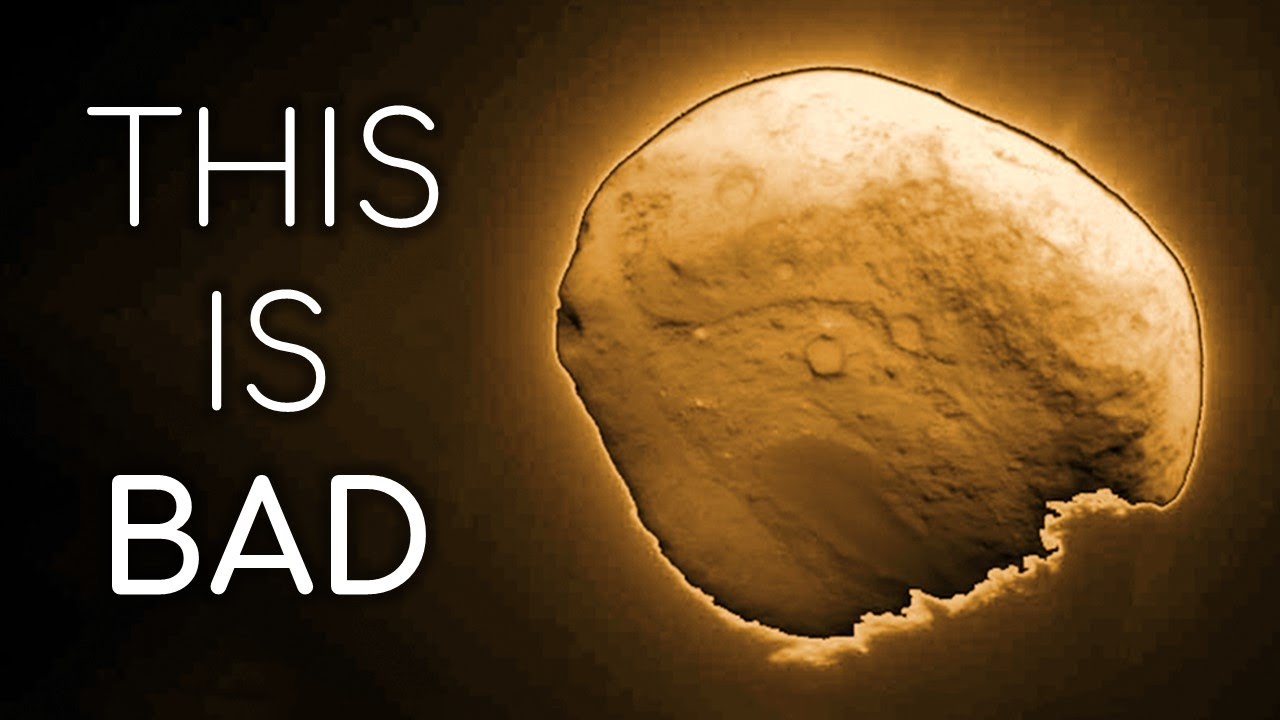
After everything that happened with Neptune and the Titus-Bode Law, Olbers continued his research and devised a hypothesis to explain the origin of all the asteroids that had been found. In his hypothesis, Olbers proposed that all these small bodies were the remains of a much larger, enormous planet that had been destroyed long ago; this supposed planet would be named Phaeton. Olbers' idea stated that billions of years ago, between Mars and Jupiter, there was a planet called Phaeton; this planet would have had a diameter similar to that of Mars and possibly would have been an icy world like Pluto, covered in ice and with an ocean beneath its surface, like Europa, Jupiter's icy moon.
This planet would never have been able to support life, but it would be large enough to be visited by humans. According to this hypothesis, it is probable that at a particular moment in history, Jupiter's immense forces of gravitational attraction carried objects to collide with the planet Phaeton, causing its destruction and thus giving rise to the asteroid belt. Although this idea sounds interesting, the scientific evidence suggests an entirely different scenario.
Before me move on to the exploration of Phaeton, be sure to stay tuned afterwards, if you havent' seen our earlier release on: “The Goblin Planet: The Key to Planet 9” Phaeton never existed Although the idea of a fifth planet fell in love with many astronomers, after carrying out exhaustive studies of the materials that made up the asteroid belt, it was determined that the asteroids do not have a planetary origin but rather are the remains of an accretion disk during the formation of the solar system. Accretion disks are disks of material that form around stars during planet formation. According to the most accepted theories today, during the formation of our solar system, there was an accretion disk between Mars and Jupiter from which a planet could have been created, but Jupiter's tidal forces prevented this.
Having a large mass, Jupiter has an enormous gravitational force of attraction that influences the planets close to it. For this reason, everything indicates that during the formation of the solar system, Jupiter's gravity did not allow this accretion disk to form a planet; instead, small bodies like Ceres were formed. This is the most accepted theory today, but with recent discoveries in the asteroid belt, many astronomers are beginning to return to this idea.
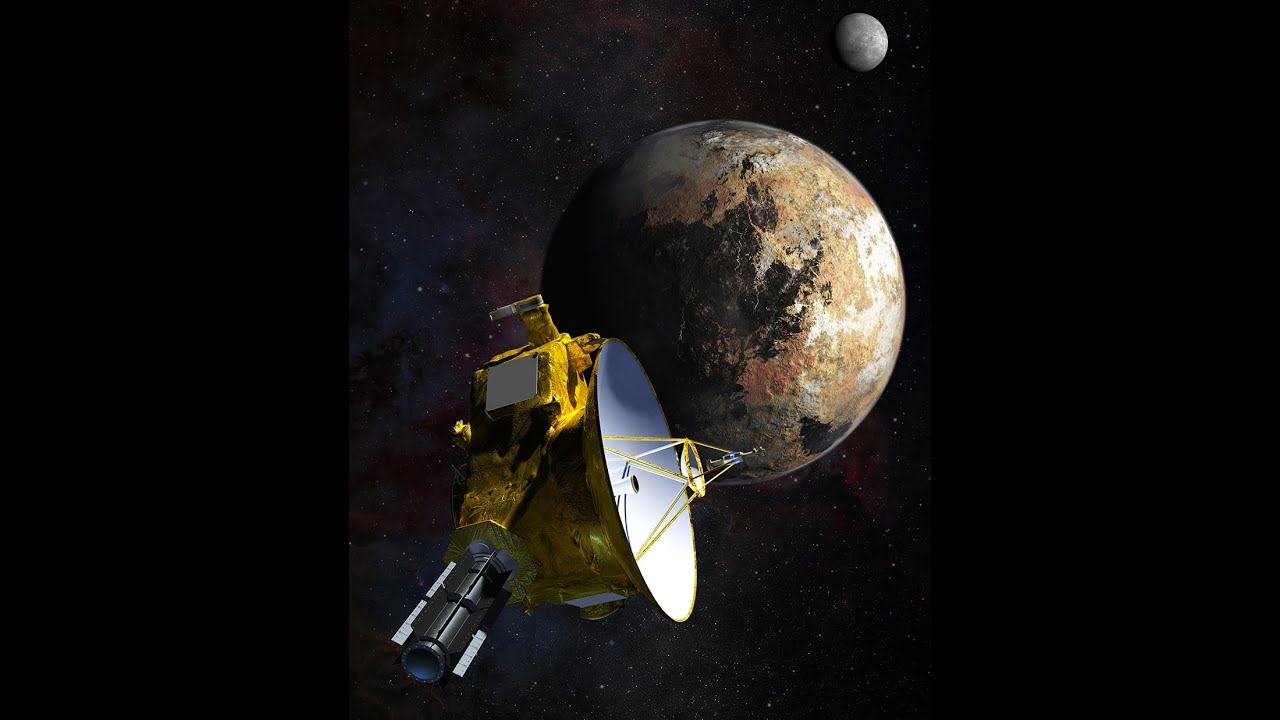
"The Goblin Planet: The Key to Planet 9" On June 30, 2016, astronomers announced that they had discovered a new planet beyond Pluto. The announcement came after years of searching for this elusive world, which would have been impossible without NASA's New Horizons spacecraft. The new planet is currently being called 'The Goblin' for its mysterious nature and lack of an official name yet.
But does it have anything to do with the formation of planets? Can this discovery lead to the mysterious ‘Planet Nine’? Our solar system's furthest reaches are dark and frigid, making exploration challenging from Earth.
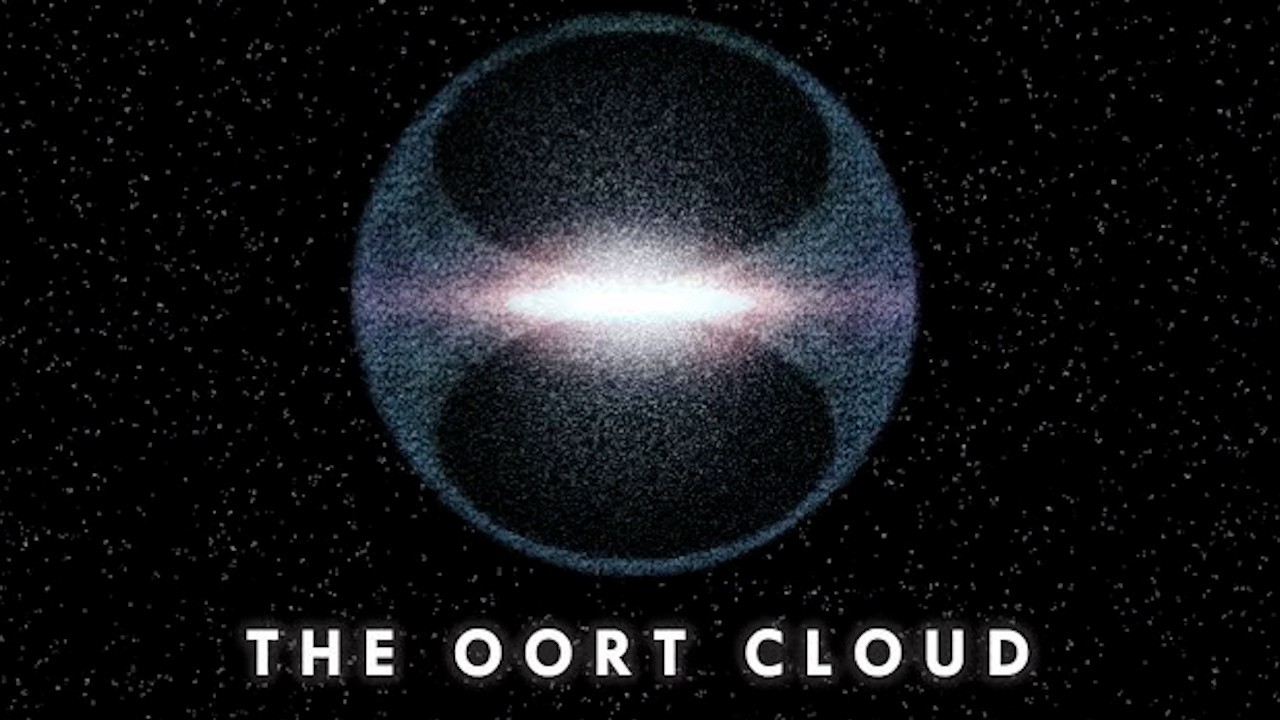
However, diligent studies are revealing more and more evidence for a large planet that we have yet to see. The Goblin, an incredibly remote dwarf planet, has been identified in studies that are redefining the solar system's furthest limits. Astronomers discovered the finding while looking for Planet Nine, a hypothetical huge planet thought to be orbiting far beyond Pluto in a mysterious area known as the Oort Cloud.
Planet Nine has yet to be directly observed, but The Goblin looks to be under the gravitational pull of a massive unseen object, giving astronomers even more reason to believe in the existence of planet 9. We've been searching for evidence of Planet Nine since the first possibility of its existence came to light back in 1984—but we haven't found any yet. What if there are other planets like this one out there?
What if they have their own moons or rings? What if they have atmospheres like our own Earth does? How might this planet be affecting life on Earth?
In 1984, while making about our solar system, scientists found out that over the past 250 million years, mass extinctions had happened on Earth every 26 million. But what could cause these periodic extinction events? What might be pushing these outer objects of the solar system towards the inner solar system?
Nemesis, a hypothetical red dwarf star, was hypothesized to circle the Sun at a considerable distance. The star would fling a flood of comets towards the inner Solar system every 26 million years as it passed through its closest approach to the Sun. The end result?
One of those comets would hit Earth, causing a global extinction. However, the evidence faded with time, and no companion star was discovered. The Nemesis theory is no longer alive.
Tyche, a new "Planet X," was hypothesized around the turn of the millennium. Whereas Nemesis was the bringer of death, Tyche's effect was more subtle, resulting in a modest increase in the frequency of incoming comets from specific areas of the sky and explaining apparent anomalies in their distribution. Once again, observations soon weakened the case for Tyche.
To explain the distribution of tiny, icy bodies beyond Neptune, an unknown, distant Earth-mass planet was hypothesized in 2008. Other scientists speculated that planet-mass objects may have developed alongside the Solar System's outer planets before being spread outward but never expelled. All of this leads us to Planet X's most recent form, known as "Planet Nine.
" All of you may be surprised to know that we are still learning about our solar system. There are a lot of questions to be answered and a lot of things that we do not know. We cannot Even answer the question – many planets are there in the solar system?
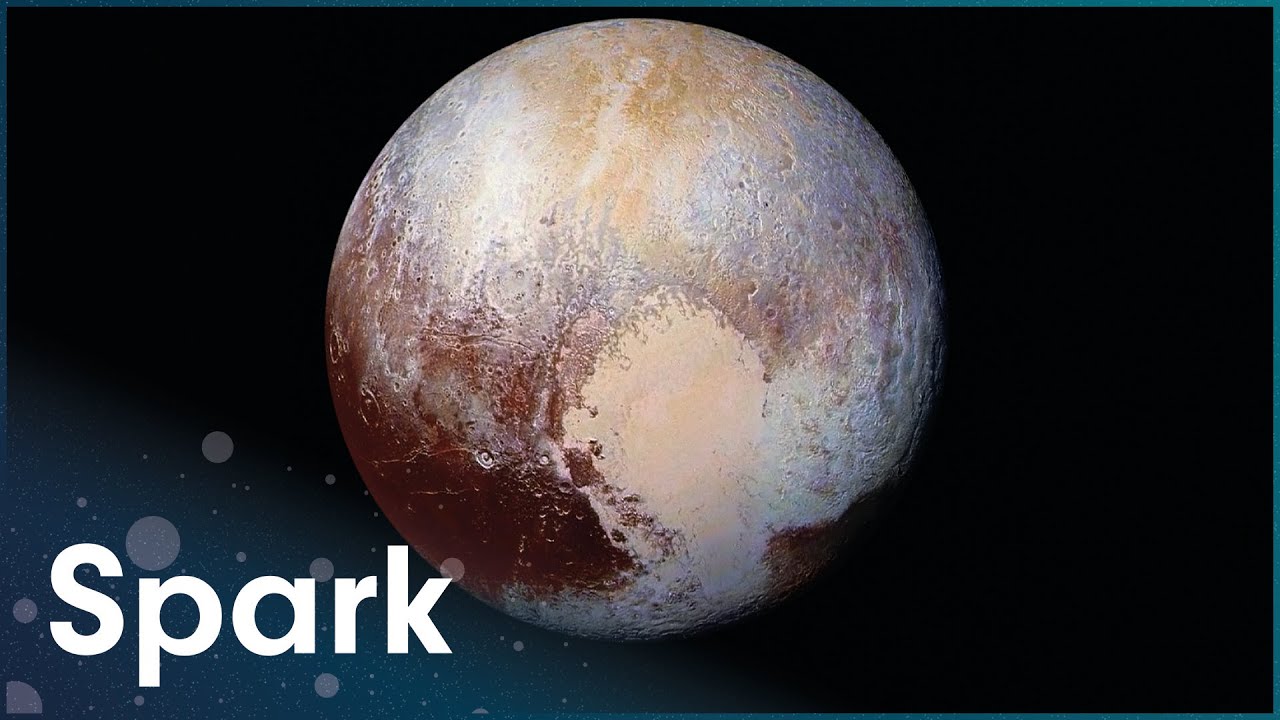
Take Pluto for example. Pluto was classified as a dwarf planet, and there are even more dwarf planets in our solar system. In fact the largest asteroid in our solar system, Ceres, is now classified as a dwarf planet.
The Goblin is also a dwarf planet, much smaller than pluto; about a fifth of the diameter of Pluto and it is really very far out there. The actual name of the dwarf planet is 2015 TG388, and it was found three years ago by a team of astronomers using the Subaru telescope atop Mauna Kea in Hawaii. The astronomers, led by Scott Sheppard of the Carnegie Institution for Science, were studying large swaths of the sky for small glimmers that may indicate the presence of new objects in the solar system.
This dwarf planet is in a highly elongated orbit; the closest it ever gets is approximately twice as far away is Pluto, and the furthest it ever gets is nearly 2,300 times the distance between the Earth and the Sun; it travels way, way, far out there. The orbit is so elongated that it takes 40,000 years to complete one orbit around the sun, which is really really incredible. The discovery of these far away objects beyond the Kuiper belt isn’t surprising though.
They are so distant and faint that they move incredibly slowly and are very very hard to detect. Now this discovery is interesting for a number of reasons. And the most interesting one of them is that there might be something larger out there, something we haven’t discovered yet in our solar system.
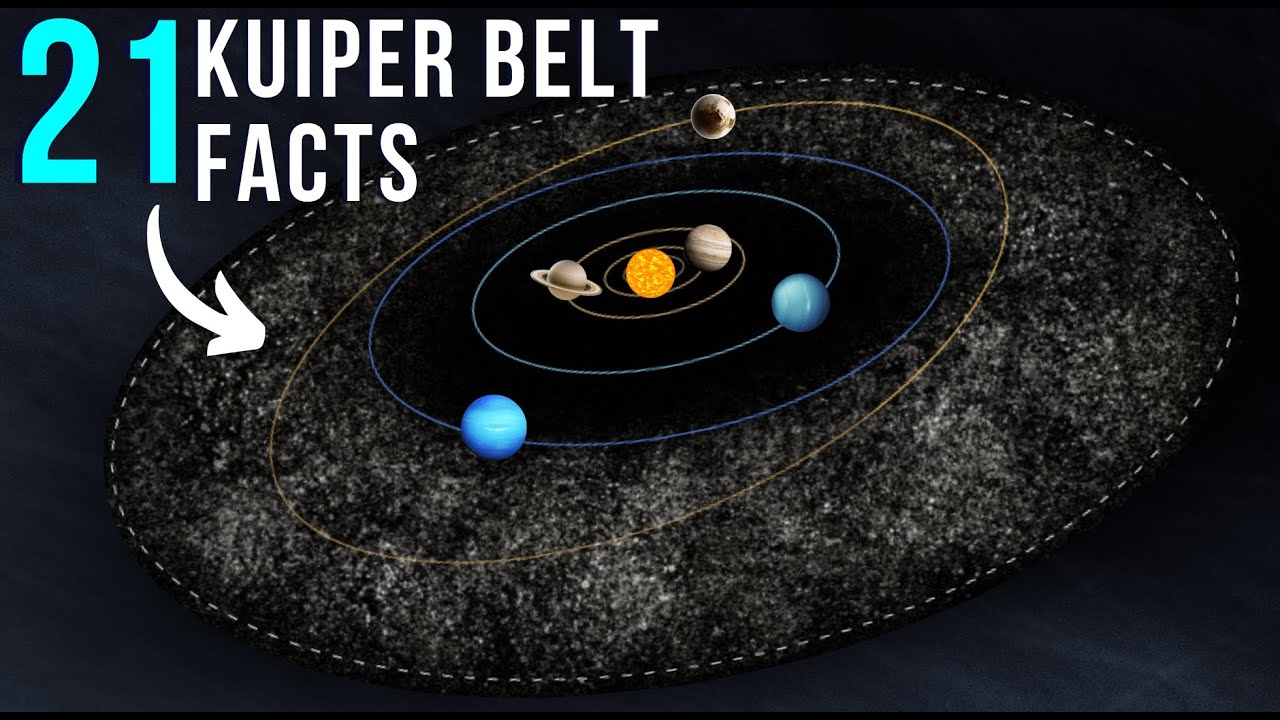
We have been noticing weird objects like the Goblin planet for quite a time now. These distant frozen planets are known as Kuiper Belt objects, and they frequently have extended orbits that bring them near to the Sun—by close, I mean roughly the orbit of Pluto and then much, much farther out into the solar system. We currently know of dozens of these objects, and there are likely many more out there that we are unaware of.
The intriguing thing is that we started seeing how their orbits lined up in our solar system, and there's a concept called perihelion, which is the closest pass an object makes to the Sun. And, surprisingly, all of these objects scattered throughout the sky appear to have perihelions (closest approaches to the Sun) that are perfectly aligned. Why does it matter?
Thing is, there is no reason for these objects and their orbits to be aligned in such a way. If they were separate orbiting bodies, their closest approach to the Sun would not coincide. So the concept is that there is a larger body out there someplace, like a planet, and as it orbits, it lines up and shepherds all these smaller particles into its orbit.
The evidence for this is rather convincing. We don’t know of any other reason or theory that would explain these lined up orbits. The story of this mysterious Planet nine started in 2003 with the discovery of another dwarf planet called Sedna.
Sedna too has a highly unusual orbit, and its orbital distances fluctuated between 75 Astronomical Units to 936 Astronomical Units from the sun. What might be causing these odd orbit fluctuations? Sedna is too far away for the planets to disturb it - they cannot be held responsible.
At its most distant, Sedna is still just one-fourth the distance to the closest star - so close to the Sun that a passing star is quite unlikely to perform the crime. To explain the strange orbit, numerous theories proposed that Sedna was placed there when the Solar System was young. The Sun would have been immersed within a stellar cluster at the time, and near interactions with other stars would have been more common.
If Sedna's orbit was the consequence of capture in the early days of the Solar System, one may anticipate additional objects to have suffered the same fate. According to the notion, Sedna might be one of a population of Sednoids orbiting in similar orbits. Several additional Sednoids have been discovered in the last decade.
Surprisingly, all of their orbits appear to closely coincide in space. In other words, their orbits' long axes all point in the same general direction. This isn't what you'd anticipate from people born in the Sun's birth cluster.
So, what may be the reason? Several scholars used Planets Nine to explain Sedna's peculiar orbit. Now the obvious question is where is this planet nine?
Our best estimates put it at least three to six times the mass of the earth, something on the order of size of the planet Neptune. So overall this is a big planet we are talking about and it might seem a bit embarrassing that we have missed an entire giant planet in our own solar system. With today’s technology we can detect exoplanets in distants star systems, how come we missed this planet?
The thing is, if it's actually that far away from us in its orbit right now; even a large planet would appear tiny to even the most powerful telescopes, we could have missed it. It would also be traveling so slowly that we may not detect it was a planet. Perhaps others mistook it for a faraway star.
So telescopes all around the world are examining the sky for any signs of an object moving extremely slowly that may be proof of this massive planet. These far-away dwarf planets like the Goblin and Sedna could help us understand what’s happening at the edge of our solar system. Because The Goblin planet moves so slowly and has such a long orbital period, it took the scientists several years of observations to acquire a decent orbit.
Researchers believe there are hundreds of tiny bodies like 2015 TG387 on the outside of the Solar System, but their distance makes locating them challenging. These faraway objects are like breadcrumbs pointing us in the direction of Planet X. The more we learn, the more we will comprehend the outer Solar System and the hypothetical planet that we believe is driving their orbits—a revelation that will change our understanding of the Solar System's development.
Scientists did computer simulations to see how different possible Planet X orbits might impact 2015 TG387's orbit. A Super-Earth-mass planet in an extended orbit at several hundred AU was included in the simulations. What is particularly intriguing about this conclusion is that Planet X appears to affect the Goblin in the same manner that all other extremely distant Solar System objects do.
These simulations do not confirm the existence of another enormous planet in our Solar System, but they do provide more evidence that something large may exist. So what do you think about this strange dwarf planet? Could there be more strange objects like this in our outer solar system?
How soon could we find the Planet “nine”? Let us know what you think in the comment section below and share the video with your friends!