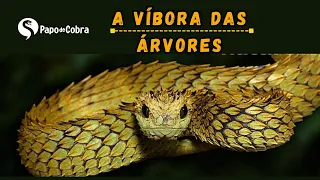
There are Vipers in almost the entire world except in Australia, the viperidae family has spread to various corners of the world. But in Mexico we find some very curious Vipers because they have horns. In today's video we're going to talk a little about these species and if you want to get to know them, leave your trusty like and while our vignette is starting, subscribe to the channel because another snake chat is starting [ Music] .
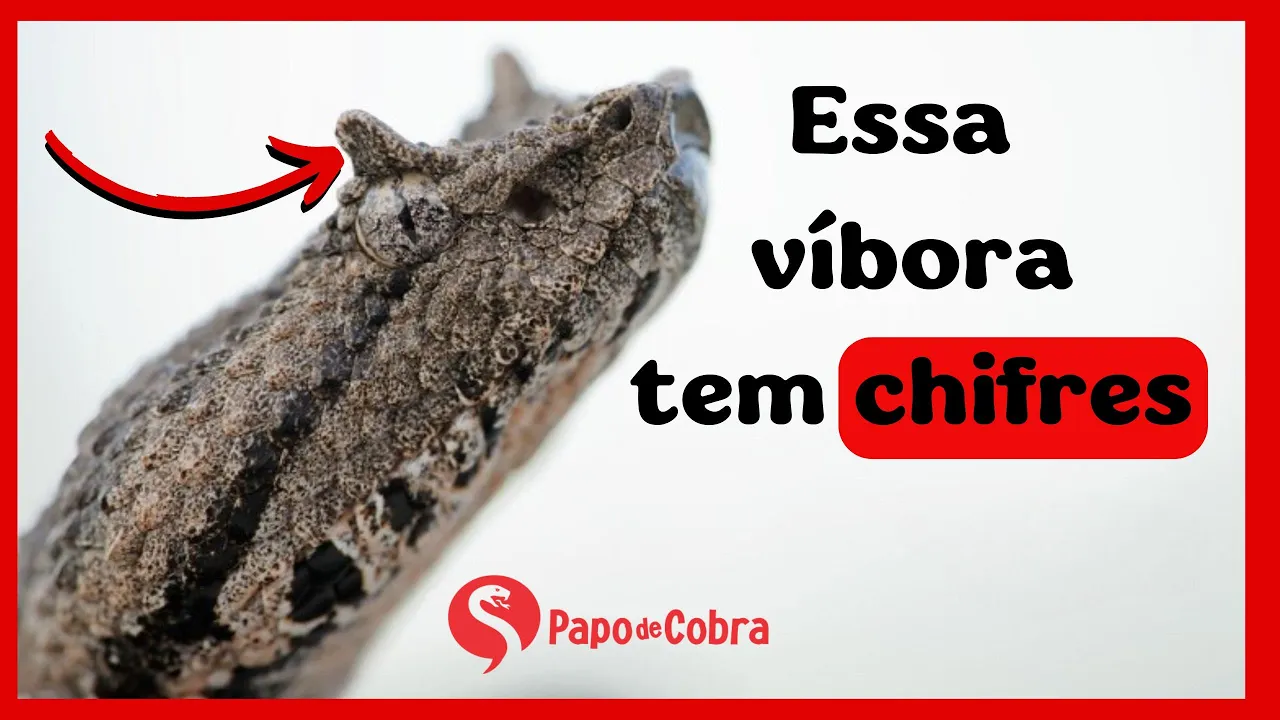
In Mexico we find some species of snake that have horns. In fact, these horns are modified scales projecting forward. These horns can help camouflage the snake in the environment.
Especially the species that stay more still, allowing them to lie in wait to ambush their prey, instead of chasing them. And in Mexico we find some of these very curious species. The first is the Mexican horned snake.
There she is. It belongs to the species Ophryacus undulatus and occurs in elevated areas of southern Mexico that can reach up to 2800 m in altitude. They are medium-sized vipers that can reach up to 70 cm in total length.
They can be both terrestrial and arboreal, climbing trees up to 4 m high. But even when climbing trees, they do not have a prehensile tail, unlike other viperids that live in trees. They feed on small rodents, but also on lizards.
Especially when they are in the trees. They have a diurnal habit, they live during the day. Because it is very cold in these regions at night , so it is best to hunt during the day.
They are viviparous and their litter can result from 3 to 13 puppies. And like all viperids, it is a poisonous snake and its venom is a hemorrhagic venom. In other words, the person who is injured by this snake ends up having several constant bleeds and requires treatment with antivenom.
But it is not the only species of horned snakes in this genus. There are also two other species: Ophryacus smaragdinus and Ophryacus sphenophrys. But the genus Ophryacus is not the only genus of horned snakes that occurs in Mexico.
We also have another genus, the Mixcoatlus genus. And we have the species Mixcoatlus melanurus which is the black-tailed horned viper. You understand the species, right?
melanurus = black tail because "melano" is dark black and "urus" is tail. So melanurus: the animal that has a black tail. Previously, this species was included in another genus, in the genus Ophyacus, but now it has been separated into a separate genus.
What is the reason ? They are differentiated by the types of the subcaudal scale. In Ophryacus onndulatus, which we talked about before, the subcaudal scales are entire.
However, in mixcoatlus melanurus these scales are divided. This viper also occurs in southern Mexico. Look there: in this small region of southern Mexico.
But its habitat has been greatly reduced by livestock farming and agricultural areas. It is believed that this species currently has such a reduced area and can reach a maximum of 6,000 km2. Living in such a small area, researchers already believe that it is at risk of extinction.
Among these species of horned snake that we are talking about, it is the smallest. It is the smallest in size. It reaches a maximum of 58 cm in total length, different from the previous species.
The black-tailed horned viper is completely terrestrial and is normally found sheltering under cactuses or logs, in semi-desert areas. She also hunts in the morning, avoiding the cold night temperatures. And their prey are also small mammals and also lizards.
She is also viviparous. And she can give birth to five to eight puppies per pregnancy. And its poison is the same as the previous one, it is also a hemorrhagic poison.
Care must be taken. And in this genus Mixcoatlus, we also have two other species: Mixcoatlus barbouri and Mixcoatlus browni. But these two don't have horns, so we won't talk about them here in this video.