programs for the Cambridge machine were written out using a simple code they were converted to punch tape and then fed into the machine scientists from many disciplines soon learned how to prepare programs these massive number crunches were so fast that one such machine could do the work of 10,000 human computers with calculators one physicist worked out that three such machines could do all the scientific Computing needed in Britain but as scientists became familiar with the machine they discovered that it opened new possibilities the availability of computers was essential to the development of new Sciences like
radio astronomy which generated masses of data and in many other branches of science now huge calculations could be done at Speed The Impossible became possible soon it was realized there would never be enough Computing capacity the scientists were interested in the computer mainly as a tool to widen their Horizons but newspaper headline writers wanted to believe there was more to these machines than that and they had good authority Alan Turing a brilliant mathematician always saw computers as much more than mere number crunches the vision touring had of computers even led him to design One Pilot
Ace the only more or less complete machine that survives from that era was based on that design but Turing hoped to use it for more interesting things than arithmetic which is a long time ago but this was where where computer started electronic computers started this is one of the first stored program computers it was designed by a man called Alan T who was in fact a British mathematician who was involved in cracking codes in the war in the second world war cracking the German codes yes War turing's ideas and computers went back even further than
the war in 1936 he had published a paper on an abstruse mathematical problem in that paper written a full decade before computers were built he wrote about Computing machines and demonstrated theoretically that one such machine could in principle do any logical task a human could do Turing realized there was nothing special about Computing numbers it was just one step-by-step logical process which manipulated symbols according to certain rules but there were others codebreaking for example it took symbols usually letters and transformed them to unscramble a message if manipulation of numbers could be mechanized or done by
a machine then said touring so could manipulation of letters when war broke out he had a chance to test his ideas but the work done at Bletchley Park by touring and the other code Breakers was so secret that its existence would not be revealed until the 1970s the encoding methods used by the Germans in the second world war relied on machines Enigma the best known encoded the day-to-day traffic of the forces this was touring's main area of responsibility but the most secret of all the messages including some from Hitler himself were sent from teleprinters attached
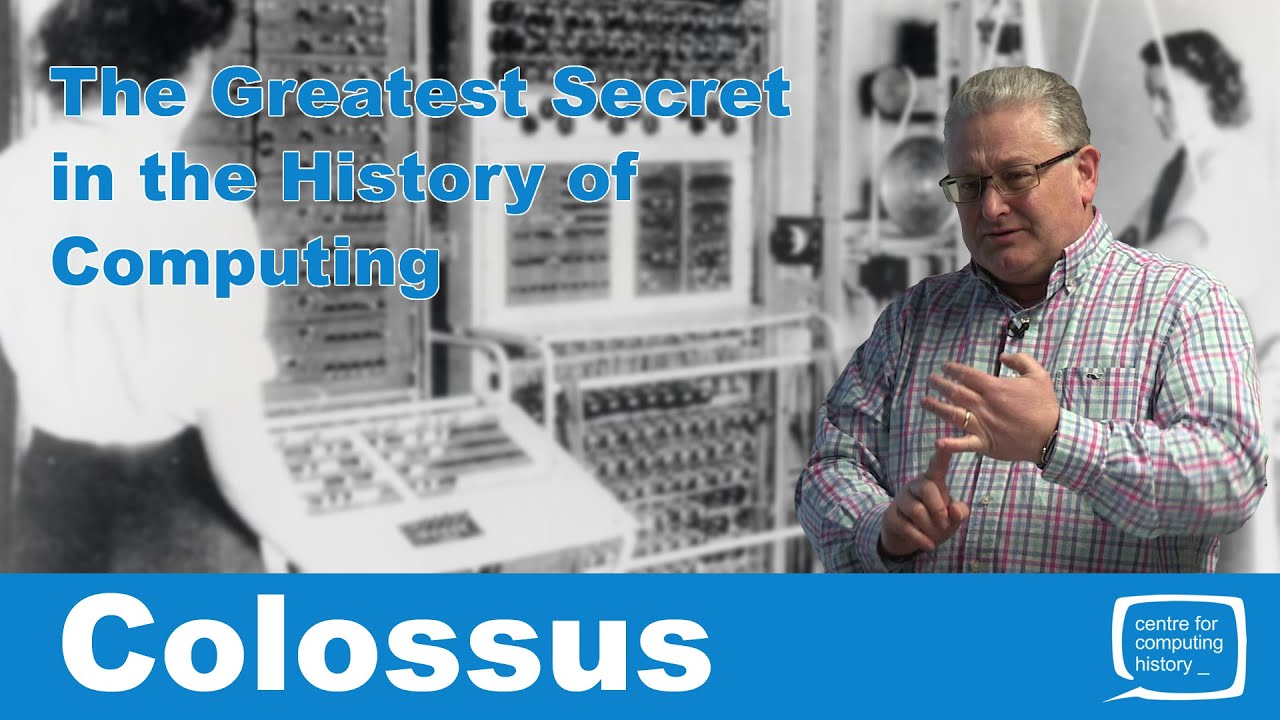
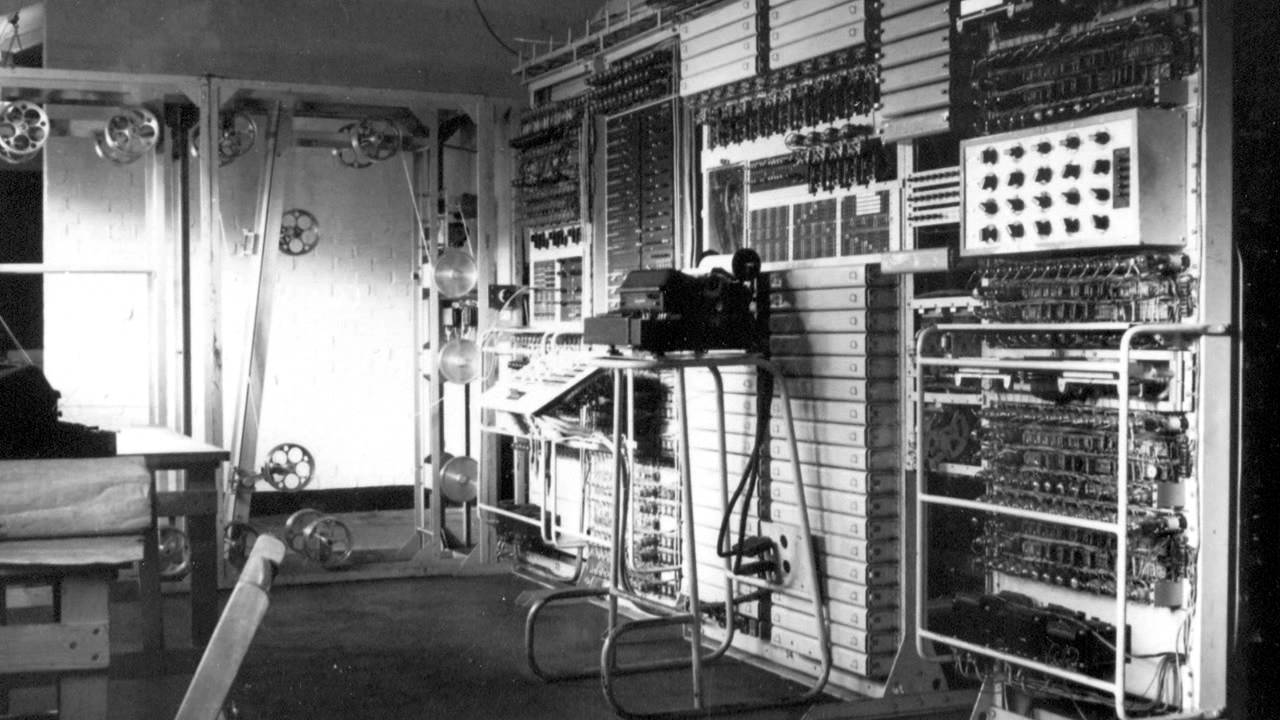
to another machine called the lorence it had shifting Wheels which scrambled the letters in a pattern that was continually changing Alan Turing worked out one of the logical strategies the code Breakers used to attack it but the task was hopeless it was much too slow to be useful the only possibility was to build the rules of their strategy into a machine Colossus an extraordinary construction was a partial embodiment of the Computing machine touring had imagined it was electronic and therefore very fast and it computed not numbers but code letters Colossus began operating in 1943 the
same year as work on ENC began but whereas the anc's vacuum tubes did arithmetic Colossus circuits carried out the logical steps of a code breaker Colossus broke so many top secret messages that unlike ENC it undoubtedly did help to win the war it had a less obvious impact than ENC on the development of the computer but it confirmed what Turing had always believed that a computer was not simply an arithmetic machine because of the secrecy surrounding Colossus Alan turing's remarkable insight into what a computer could be has only recently been recognized Turing had this extraordinary
almost uh unique obsession with looking at a problem as though it was the first time that anybody in the world had ever looked at that problem and taking it completely fresh there was a small group of us who came very much under his spell in terms of the vision that he had for what would be possible after the war to develop Computing machines which in itself was an amazing idea but not just for numerical calculations but for symbolic non-numerical calculations which could simulate the processes of of logical human thought and above all of machine learning
but unfortunately for Turing the response of young colleagues like Donald Mickey was not shared by The Establishment having devote a great effort to designing his Ace he realized it would never be used as he had hoped he wanted to simulate human thought but the machine was destined to spend all its time performing scientific calculations when it became entangled in bureaucracy he left in disgust moving to Manchester University he had a chance to try out a few of his ideas for non-mathematical projects in 1954 this remarkable genius committed suicide following a prosecution for homosexuality so he
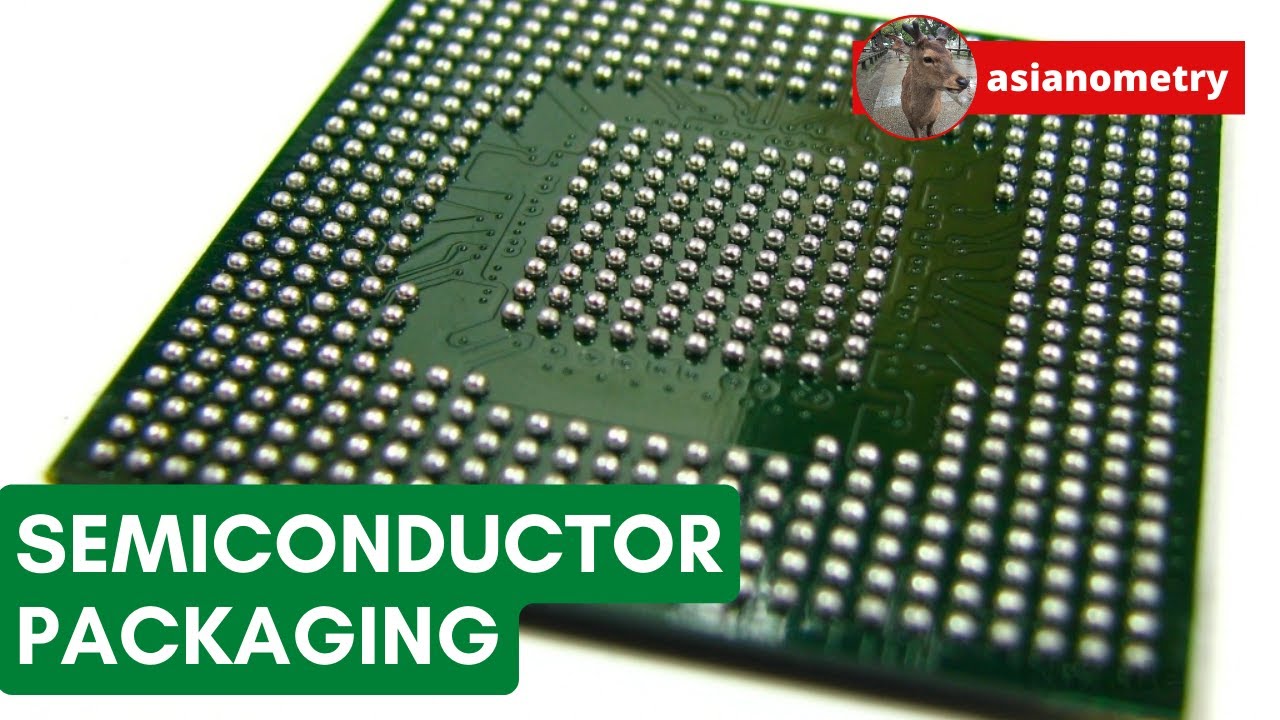
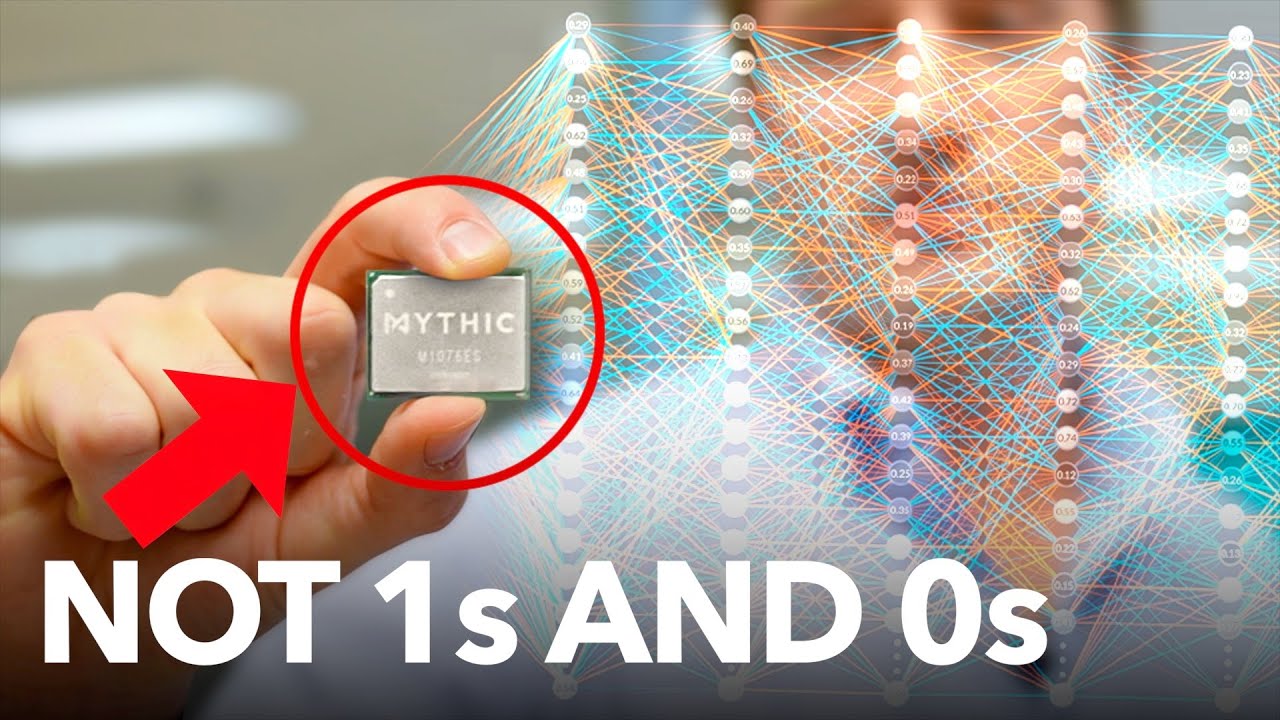
never saw which of his dreams came true he never lived to see that eot and Morley's far-fetched schemee to start a computer business would end up launching an industry he never saw how Engineers were able to shrink the main circuitry of a computer and put it onto a single chip that you could fit on your hand he never saw that one day computers would play chess better than all but the very best human players today computers are as churing for saww Universal machines their uses are limited only by our imaginations know what these little bottles
are no today children look back at the machines of turing's time in astonishment computers are such common objects used for so many things that it's hard for them to understand that once all people did with them was compute








![The Evolution of Computing [Documentary] (Vacuum Tube to Transistor to Integrated Circuit)](https://img.youtube.com/vi/ZBZnSteT72A/maxresdefault.jpg)