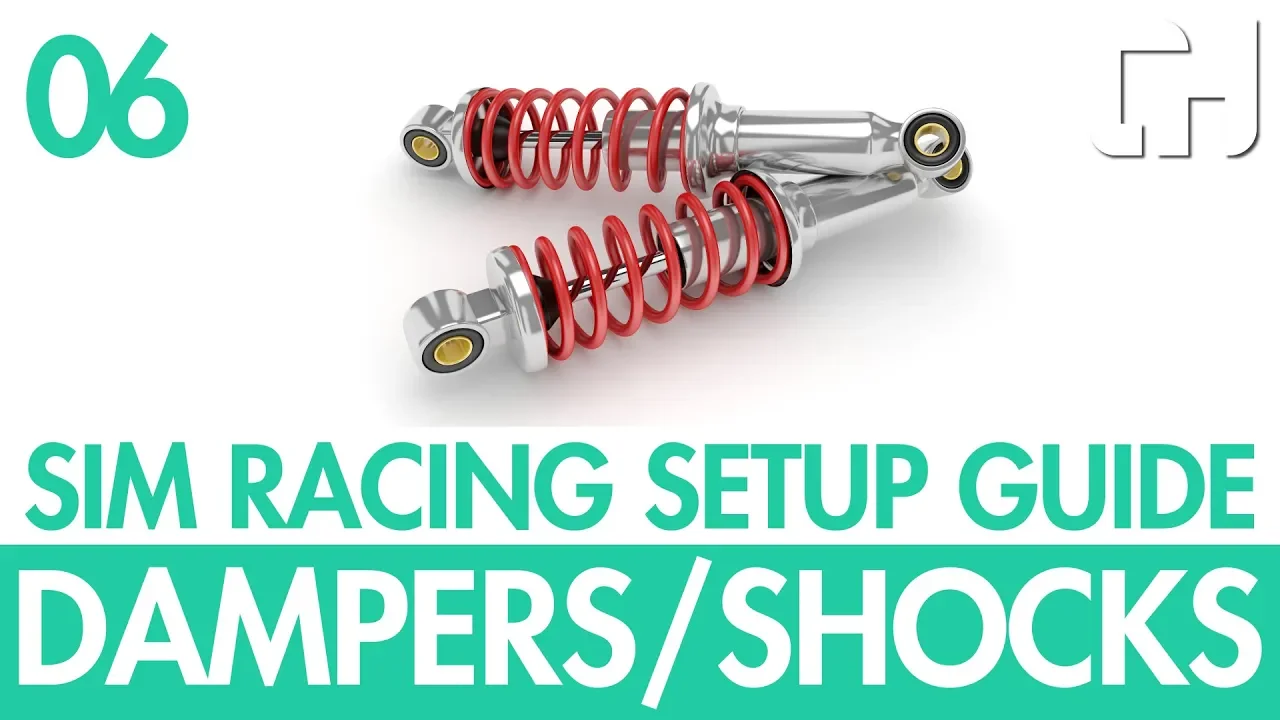
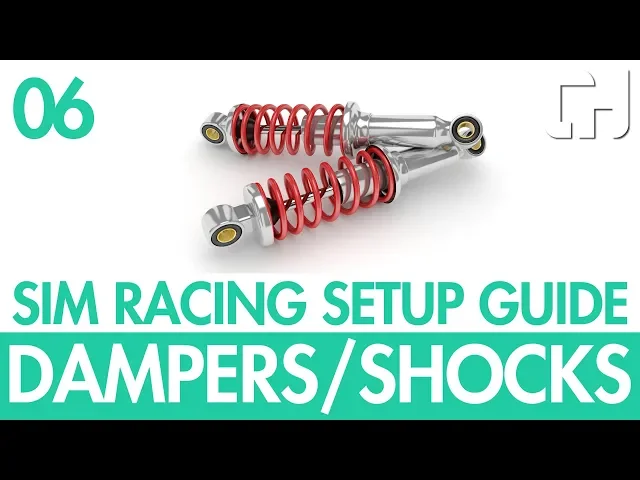
[Music] hello fellas and racers and welcome to part 6 of this sim racing setup guide and in this video we're talking about dampers did you've not seen the first five parts than a link to a playlist containing all of my setup video should be in the top right hand corner of your screen [Music] if you look at the damper page on a setup screen there are so many variables you can change and that's probably got a lot to do with what dampers are often the most confusing and intimidating aspect of setup work but once you
get your head around the terminology it's actually pretty straightforward dampers or shock absorbers control the way energy is stored and released from the car suspension Springs if you think about it a spring that's capable of handling the forces exerted on it by a heavy car is capable of storing and releasing a serious amount of energy when you go over a bump accelerate brake or turn a corner you're compressing the suspension Springs and how their energy is stored and then released has a significant impact on a car's handling to put it simply the dampers job is
to moderate the movement of your suspension Springs which stops the car behaving like a pogo stick a handling trait that's not desirable damper settings are broken down into two main areas called bump and rebound bump settings control how quickly the suspension Springs can be compressed like when you go over a bump more bump value adds more resistance to the spring and therefore slows the rate at which it compresses so it follows that the rebound settings control what happens when the suspension Springs are released from their compressed state or rebounding to their normal position and similarly
if you increase the rebound value more resistance is added and the spring rebounds more slowly bump and rebound both have slow and fast settings as well which means that each damper has four possible settings slow bump fast bump slow rebound and fast rebound intuitively the slow settings control the damping when the spring moves slowly and the far settings when the spring moves quickly so for example the slow bump setting controls how the spring behaves when it's compressed slowly and the fast rebound setting affects the behavior of the spring when it extends quickly now here's the
important bit slow spring movement refers to the natural movements of the car like when the nose dives under braking or when the body rolls through corners whereas fast movement is what happens when the car hits a bump or a curb so for the most part you can compartmentalize the slow settings as something you can alter to impact the natural movements of the car and the far settings are something that changes the behavior over bumps and riding curbs but there is some overlap so keep that in mind first of all conventional wisdom dictates that dampers rebound
values should be higher than the corresponding bump value that's because the suspension needs to be more compliant under compression than it does under extension so how do you go about making setup changes to the dampers well there are a lot of ways to do it but my method is as follows once I've got the tires anti-roll bars and Springs working the way I want I'd like to run a few laps to feel and observe what's happening with the car using the replay mode is particularly helpful here as you can watch exactly how the car behaves
during weight transfer and over bumps if the cars bouncing or oscillating too much you can increase the damper values or if the cars too edgy you can reduce them the key thing to remember here is that dampers only affect handling when the springs compress or expand so essentially they're tools to help manage how quickly weight is transferred the higher the damper setting the quicker the car will settle on its suspension and this is desirable up to a point but the quicker our car settles the more edgy it is to drive so like everything in setups
it's about finding the right compromise before we move on from bump and rebound settings here's a good starting point if your car feels unpredictable or twitchy when weights being transferred or over bumps consider reducing the damper values if it's over bumps and curbs then look at the far settings or if it's under braking and acceleration then try altering the slow settings conversely if your car isn't very responsive during weight transfer then you can increase the damper settings so to sum up dampers control the rate at which Springs can be compressed or released this allows you
to control the characteristics of the spring under different circumstances the slow damper settings are ideal for taming the weight transfer that happens during braking acceleration and cornering while the far settings are great at managing how a car behaves over bumps and curves all-in-all dampers are one of the most useful tools we have at our disposal to change the way that car feels during some of the most critical parts of the lap in the next video we're going to talk about ride height which we've already touched on in the video about Springs I hope you enjoyed
the video if you did then it would be great if you could hit the like button and subscribe to my channel and if you think the video will be helpful for others then please consider sharing it as always thank you very much for donating your precious free time by watching it is very much appreciated so all that's left to say is goodbye thank you for watching and enjoy the rest of your day you

![Sim Racing Setup Guide 08 – Brake Bias [Brake Balance]](https://img.youtube.com/vi/bSkKAtWbcLw/mqdefault.jpg)