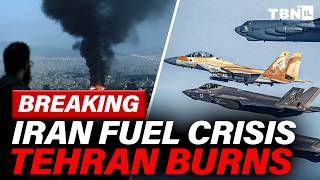
The desert wind carries the scent of gunpowder as UAE President Muhammad bin Zed shifts the nation to a full war footing against Iran. Following President Muhammad bin Zed's declaration of war, UAE fighter jets have officially scrambled for combat missions. An announcement was made in Abu Dhabi.
The clock showed 14:30. The leader of the United Arab Emirates, Muhammad bin Zed, stepped in front of the cameras and changed the fate of the Middle East with a single sentence. We are at war.
These words came after an Iranian drone struck the 23 Marina Tower, the symbol of Dubai. Just a few hours earlier, the same drones had targeted Dubai International Airport, diving among the airplanes. The Gulf's largest trade center had found itself right in the middle of war.
But we are not easy prey, bin Zed said. We will do our duty. At that moment, UAE warplanes were already in the air.
They were hunting Iranian drones in the sky while air defense systems were shooting down ballistic missiles. A new front had opened in the Gulf and this front had erupted at Iran's weakest moment. Before we go into the details, we have a request from you.
Organized comments coming from accounts supporting the Iranian regime are seriously affecting our independent analysis work in a negative way. Your support is not only morale, it is also a real force that allows us to continue these efforts. Liking the video, leaving a comment and subscribing ensures that these analyses reach wider audiences.
We thank you in advance. And now we continue the story. So how did it come to this point?
The smoke rising from Dubai's luxury skyscrapers had not yet cleared when another sound rose from the north. The Bahini army launched its first missiles toward Iranian territory. The target was a military base on Iran's southern coast.
The missiles glided through the air like arrows and found their targets. The explosions could be heard from kilometers away. Now the ring of fire was tightening not only in the south but also in the north.
Iran was being surrounded from two sides. Bahrain's move was the clearest evidence that the Gulf Cooperation Council had formed a joint front. This small country which had lived for years under the pressure of Iran was now showing that it possessed the power to retaliate.
As Bahrain's missiles struck military bases in southern Iran, another statement came simultaneously from Saudi Arabia, Saudi officials announced that they fully supported Bahrain. The small countries of the Gulf were uniting against Iran. At that very moment, a completely different reckoning was taking place in Thran.
In the morning hours, there was a name at the head of Iranian intelligence, Akbar Gafari. For years, he had worked in the shadows, carrying out the orders of number one. But that morning, he became number one.
He was promoted. Only 10 minutes had passed since he began his new position when he became Israel's target. Mossad had been tracking him for months.
Gafari had conducted operations against Mossad for years. His knowledge was one of the most critical points in Iran's regional intelligence network. Israel had been waiting for the opportunity to eliminate him, and the moment of promotion created that opportunity.
An Israeli drone targeted Gafari's vehicle. The missile struck the car with perfect precision before the ink on his promotion document had even dried. Gafari became history.
Iran lost its intelligence chief in a single day. It was not yet clear who would replace him. But for that moment, Iran's intelligence network had been left headless.
This was a major blow struck at one of the regime's most sensitive points. Gafari's death created a huge vacuum in Iranian intelligence. The name that would replace him was still unknown.
In fact, there was hardly anyone left to appoint. Most senior commanders had already become targets of Israel in recent weeks. At the same time, another target existed west of Thrron.
Mojaba Kam, the son of Ali Kam. He was seen as his father's successor. That morning, he was attacked while leaving a meeting.
He was seriously wounded. Israeli sources described him as fleeing like a wounded animal. In a single day, the regime had lost both its intelligence chief and its potential future leader.
This was one of the heaviest blows ever inflicted on the regime, and the blows were not stopping. Mojaba's escape was exposing just how fragile the regime had become. It was uncertain who could replace him or even whether he would survive.
Mojaba's escape in a wounded state also caused panic among Iranian security forces. No one knew what to do. The chain of command had completely collapsed.
While these developments were unfolding, there was another movement in the sky. Israeli warplanes flew low and approached Marabad airport west of Thran. Radar had detected them, but the air defense systems reacted too late.
The first missile fell directly in the middle of the runway. Then the second, the third. The runway became unusable.
The hangers where aircraft were kept were also targeted. Explosions were being heard all across Thrron. People locked themselves inside their homes.
No one dared to go outside. But this was only the beginning. Marabad airport was a strategic point also used by military aircraft.
Its destruction would seriously weaken Iran's air power. Huge craters had formed on the runway, making takeoffs and landings impossible. The airport was completely shut down.
Thrron's air traffic had come to a halt. Let us move a little further south toward Isvahan. Isvahan is one of Iran's most important cities.
It is famous for its historic mosques and blue domes, but it is also home to Iran's nuclear facilities. That afternoon, explosions occurred one after another in the skies over Isvahan. US warplanes were destroying the air defense systems surrounding the city.
The missiles found their targets one by one. Air defense radars fell silent. Missile launchers were rendered unusable.
The people of Isvahan watched the trails appearing in the sky. Some prayed in fear, others shouted in joy. Because opposition to the regime had existed in Isfahan for years, the people saw these explosions as a sign of hope.
The nuclear facilities in Isvahan were one of Iran's greatest sources of pride. But now, the defense systems surrounding those facilities were being destroyed. This was one of the heaviest blows ever struck against Iran's nuclear program.
The facilities were now unprotected. They could be struck at any moment. Crowds gathering in the streets of Isvahan applauded the explosions in the sky.
Security forces tried to intervene but could not stop the crowds. Every explosion increased the people's hope a little more. While the skies of Isvahan were burning, another movement began at the northern border.
The Azerbaijani army had been deploying troops to the border for days. Artillery units had been positioned along the Iranian frontier. Diplomats had been withdrawn and the embassy had been closed.
The official statement was brief. We may act at any moment. That afternoon, the artillery began to speak.
The targets were military bases in northern Iran. Explosions echoed beyond the border. Iran was being surrounded not only from the south, but also from the north.
The pressure coming from all directions was breaking the regime's back. Azerbaijan's move was also supported by Turkey. Turkish warplanes were flying in Azerbaijani skies, sending a warning to Iran.
Iran was now completely alone. The units Azerbaijan had masked at the border were not limited to artillery. Tanks, armored vehicles, and special forces had also been deployed to the frontier.
A ground operation could begin at any moment. In a statement from the Azharbaijani Ministry of Defense, it was said that the units were on full alert and ready to act at any moment. A massive army had been deployed along Iran's northern border.
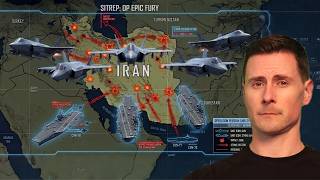
This isolation was felt not only on land, but also at sea. A shadow was moving across the Indian Ocean. USS George HW Bush was sailing toward Gulf waters as the third aircraft carrier.
It carried more than 90 warplanes and over 5,000 sailors. The ship was moving at a speed of 30 knots and would arrive in the Gulf within a few days. It would join USS Abraham Lincoln and USS Gerald R.
Ford, tripling American power in the region. According to Sentcom, 3,000 targets had been struck in the first week of the operation. But this was only the beginning.
US officials announced that the second phase had begun. This phase would last 12 to 14 days. Targets were expanding.
The scope was growing. Now, not only military targets, but also the regime's economic infrastructure, energy facilities, and logistics networks would be struck. Iran's ability to finance the war would be completely destroyed.
The arrival of USS George HW Bush was the clearest evidence of America's determination in the region. Three aircraft carriers had the capacity to conduct hundreds of sorties simultaneously. This was a force capable of completely collapsing Iran's air defenses.
On the deck of USS George HW Bush, F-18s, F-35s, and EA18G Growlers were lined up. Pilots were receiving their final instructions. Aircraft were undergoing maintenance.
They were ready to take off at any moment. At that moment, another statement came from the White House. Trump stepped in front of the cameras holding a file in his hand.
Inside the file was a list of targets to be struck. These are names we have not touched until today, he said, but now they are next. On the list were President Peshkian, foreign minister Aragchi, the Speaker of Parliament, and other high-ranking officials.
Trump's message was clear. Iran was the bully of the Middle East. Now it is the one being crushed.
We will strike until it surrenders or collapses completely. We will strike those we have not struck until now. These words were more than an ultimatum.
They were a death warrant. There was no negotiation table anymore. Diplomacy was finished.
Only war remained. The list in Trump's hand covered Iran's entire top leadership. It was a sign that they too would be targeted one by one.
In a statement from the White House, it was noted that the list had been recently updated and new names had been added. No Iranian official was safe anymore. This war was not limited only to military targets.
Inside Iran, the regime itself was collapsing. Desertions within the revolutionary guards were increasing and soldiers were abandoning their positions. In a video circulating on social media, two Iranian soldiers and one member of the revolutionary guards stood in front of a camera holding pictures of Trump.
"We thank everyone who helps America, Israel, and the Iranian people. " They said the video had been watched millions of times. The regime was losing even its own soldiers.
They were no longer fighting for the regime, but for their own future. The soldiers in this video were typical Iranian soldiers, young, tired, hopeless. One from the army, two from the revolutionary guards.
They stood in front of the camera and said, "Enough is enough. We do not want to die for this regime anymore. The regime used us and now it abandons us.
We thank America for saving us from this dictatorship. " These words were echoing across Iran. Millions of Iranians were thinking the same thing.
The video quickly spread across all social media. Iranians were sharing it and leaving comments. Even pro-regime accounts had fallen silent.
South of Thrron, another base belonging to the Islamic Revolutionary Guard Corps was targeted. For years, Lebanese, Iraqi, and Palestinian militants had been trained at this base. The most experienced fighters of Hezbollah had been raised there.
But now that base was nothing more than a pile of rubble. Israeli missiles had struck the base with full precision, leveling all the structures inside. The militants who had been training at that base were gone.
In their place were bodies buried under the debris. At the moment the base was hit, a massive fireball formed in the sky and the sound of the explosion was heard from kilometers away. That base had been the center of Iran's regional terror activities.
Its destruction was one of the biggest blows ever delivered to Iran's proxy forces. Smoke rose from the wreckage of the base for days. People living in nearby villages said their homes had shaken from the force of the explosion.
Hundreds of militants training at that base had vanished in an instant. At the same hours in Hamadan, a police headquarters that had stood since the first days of the revolution also collapsed. In that headquarters, hundreds of protesters had been tortured in recent months.
Young people, the elderly, women, all of them had been interrogated and tortured in those dark rooms. Now there were neither torturers nor interrogation rooms left there. The building had been flattened by an American missile.
The people of Hamadan gathered at the sight of the rubble, embracing one another. Some were crying, others were praying, but they were all thinking the same thing. They were finally free.
That headquarters had been the symbol of the regime's oppression in Hamadan. Its destruction had also destroyed the fear hanging over the people. The crowd gathered around the ruins began chanting slogans.
Cries of down with the regime were rising. Security forces tried to intervene, but the crowd would not disperse. With every passing hour, the number of protesters kept increasing.
The wind of freedom was also blowing through the streets of Isvahan. The people watched the explosions in the sky and shouted with joy. Some carried photographs of Raza Palavi in their hands.
Others shouted slogans saying, "Down with the regime. " Security forces tried to intervene, but they could not stop the crowd. Every explosion increased the people's hope a little more.
Isvahan had long been the symbol of resistance against the regime, and now it was reaping the fruits of that resistance. Hundreds, thousands of people had gathered in the streets of Isvahan. They carried flags and banners in their hands.
While explosions were happening in the sky, they were dancing and singing songs. The regime forces did not know what to do. If they opened fire on the crowd, a much larger uprising would begin.
If they did not intervene, the regime would completely lose control. Commanders did not know what to do. Orders coming from the center were also contradictory.
Some commanders ordered the crowd to be fired upon while others said to wait. This wave of hope was echoing across the Gulf as well. Three aircraft carriers were cutting through the waters.
United Arab Emirates fighter jets were hunting drones in the sky. Artillery was positioned along the Azerbaijan border. In Iran, the regime was dying.
But how much longer could this regime endure? The United States 14-day second phase, the UAE's new front, Azerbaijan's artillery waiting on the border, Israel's hunt for leadership. When all these were combined, it seemed impossible for the Iranian regime to endure any longer, perhaps days, perhaps hours.
But one thing was certain. The 47year-old regime was about to be buried in the dusty pages of history. Iran's allies, Russia and China, had remained silent during this crisis.
Iran was alone, and a regime that stood alone could not endure such a massive assault for long. In the latest statement coming from Russia, a call for restraint was made to the parties, but no concrete step was taken. China, on the other hand, chose to remain completely silent.
Iran had been left alone at its most difficult moment. As the sun rose over the waters of the Gulf, a senior official in an office in Thran was holding one final meeting. Around him were several generals and advisers.
Their faces were gloomy, their eyes exhausted. They did not know what to do. Did they have the strength to resist, soldiers were fleeing, commanders were losing their lives, and the people were rising up.
Should they surrender or resist? Both were terrible options, but time was running out. Three aircraft carriers were approaching the Gulf.
UAE fighter jets were shooting down more drones with every passing hour. Azerbaijani artillery was pounding the border and Israeli missiles were hunting leaders. The regime had no cards left to play.
They argued for hours in that meeting, but they could not reach a decision. Every option meant the end of the regime. If they surrendered, they would be put on trial, perhaps even executed.
If they resisted, they would be completely destroyed. There was an atmosphere of panic in that room. Some generals suggested fleeing, others defended fighting until the very end, but no one knew what to do.
On a street in northern Thran, a military convoy was moving forward. Inside were armored vehicles belonging to the Islamic Revolutionary Guard Corps. The public was throwing stones at the convoy and shouting slogans.
The soldiers did not know what to do. If they opened fire, a larger uprising would begin. If they did not open fire, the regime's authority would collapse entirely.
The convoy quickly moved away from the area. The regime could no longer maintain control, even in its own capital. Stones thrown behind the convoy were flying through the air.
The soldiers had shrunk into their vehicles, not even daring to look outside. The anger of the public was growing stronger with every passing hour. No one was afraid of the regime anymore.
In the streets, slogans were being shouted freely and people were openly speaking against the regime. In Isfahan, the air defense systems around the nuclear facilities had been completely silenced. The facilities were now defenseless.
American war plananes could strike these facilities at any moment, but they had not done so yet. Perhaps they were giving one last chance for an agreement. But would the Iranian leadership use this chance?
Apparently not. The regime was determined to resist until the end. Even the soldiers standing guard around the facilities in Isvahan had fled.
The facilities were empty. Only a few technicians remained inside and they also did not know what to do. The people gathered at the entrance of the facilities were shouting, "Strike these facilities.
" The regime had now lost even the support of the people. The price of this resistance was heavy. Every day, dozens of soldiers were dying and hundreds were fleeing.
The morale of the Islamic Revolutionary Guard Corps had dropped to zero. Commanders were blaming each other and no one was obeying orders. The regime was dissolving from within.
And when this internal collapse combined with the blows coming from outside, it was bringing about the end of the regime. In the barracks of the revolutionary guards, almost no soldiers were left anymore. Those who fled were not being replaced.
The commanders were left alone. There was no one left to give orders to. The news coming from the fronts was also grim.
Every day, a new area was being lost. Only Thrron and a few major cities remained under the regime's control and they too could fall at any moment. In the Gulf, three aircraft carriers were cutting through the waters.
UAE fighter jets were hunting drones in the sky. Azerbaijani artillery was speaking along the border. In Iran, the regime was dying.
But how much longer could this regime endure? The United States 14-day second phase. The UAE's new front.
Azerbaijan's artillery waiting at the border. Israel's hunt for leadership. When all these were combined, it seemed impossible for the Iranian regime to endure any longer.
Perhaps days, perhaps hours. But one thing was certain. The 47-year-old regime was about to be buried in the dusty pages of history.
On the streets of Tehran, not a single supporter of the regime remained. Everyone was singing songs of freedom and waiting for the regime to fall. When the sound of aircraft was heard in the sky, people were shouting with joy.
There was nothing left to fear. The regime was finished. As the sun rose over the waters of the Gulf, a final message was being received in an office in Thran.
The message came from the White House. The last words of Donald Trump. Iran has two options before it.
They will either surrender or they will be completely destroyed. This message would determine the fate of the regime. The faces of the officials in that room turned pale.
They did not know what to do. To surrender meant the end of the regime. To resist meant complete destruction.
Both were terrifying. But time was running out. Hours were passing and a decision was expected.
There was an atmosphere of panic in that room. Some generals suggested fleeing. Others defended fighting until the very end.
But no one knew what to do. The phones would not stop ringing. News was coming from everywhere.
Fronts were collapsing. Soldiers were fleeing. And the people were rising.
There was no turning back anymore. Here we have a short request from you. Organized and malicious comments coming from accounts supporting the Iranian regime affect us negatively.
Your support is not only morale but also a real strength that allows us to continue these works. Liking the video, leaving a comment and subscribing help these analyses reach wider audiences. The super thanks or hype button also means direct support.
We already thank you in advance for your interest, trust and support and we present our respects. We wish you days filled with peace.