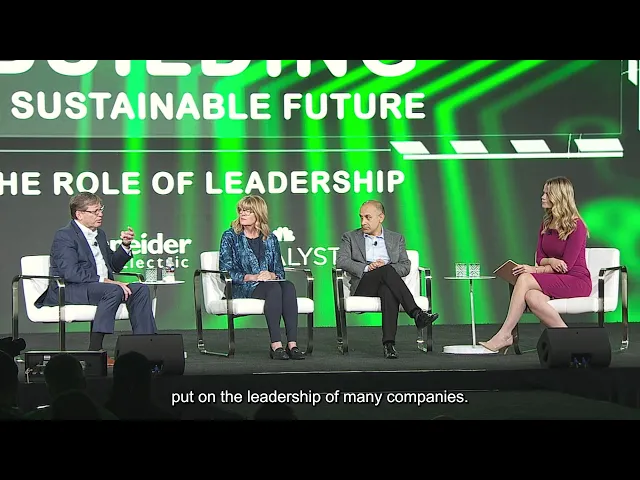
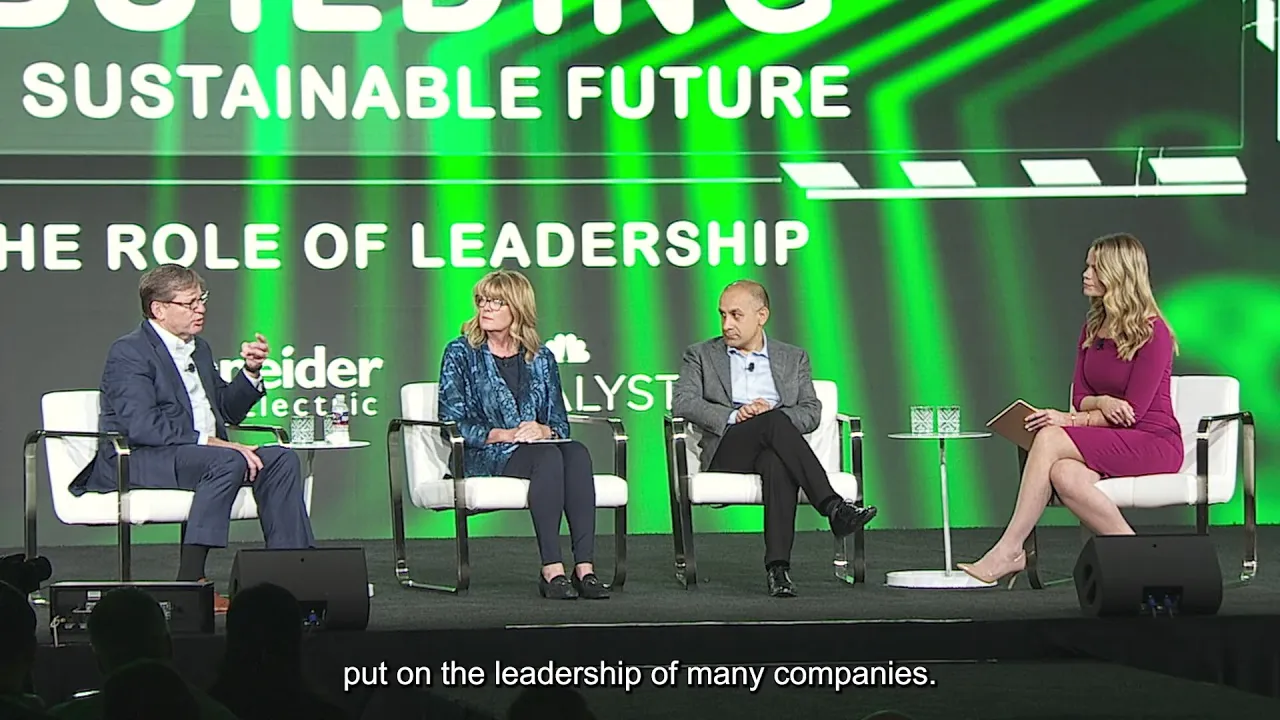
[Music] welcome everyone I'm Caroline woods and I'm thrilled you can join us for what's set to be an insightful session looking at the role of leadership and building a sustainable future for leaders in both the private and public sector sustainability efforts are now an integral part of the job but in what way do leaders that prioritize sustainable inclusive and Equitable growth stand to benefit whether it be from the use of Innovations to mitigate the effects of climate change or policies to support a more sustainable economy that works for everyone I'm joined by industry experts and
key decision makers who can share first hand where the growing pressures for Business Leaders to become more sustainable are coming from be it investors consumers Regulators or Lobby groups we'll discuss the tools and strategies Executives can use to integrate sustainability and purpose into their business models and what traits make a successful and responsible leader of tomorrow let's bring in our expert panelists to help us unpack these themes and more I'm delighted to welcome Amer Paul president of North America operations and a member of the executive committee at Schneider Electric William Sisson executive director World Business
Council for sustainable development North America and then of course we have Cindy Ortega she's founder and chief executive officer of Blue Heron strategies Omar I'd love to kick start things with you really taking a top level approach I've heard you make the case that ours is the first generation to understand the climate crises and the last generation that has the capacity to do something about it which I think is really compelling so I guess the question is what do we do about it we have a three-step process that we've talked about over and over again
we encourage all leaders to think about it step one digitize digitization allows you to understand your Baseline it makes the invisible visible and it gives you a standard to which you can go back and measure all your actions once you have an understanding of that we encourage you to decarbonize and decarbonize a lot of people talk about new and clean energy resources and that is absolutely important but the most important part of decarbonization is reducing waste we have so much waste in our system so if we can just make our buildings more efficient our processes
more efficient we decarbonize and by the way it pays for itself so it's an efficiency measure and the last one is engage engage your communities engage your partners engage your suppliers engage your consumers this is a systemic effort so digitize decarbonize engage that is a good roadmap to start with so turning to the role of leadership Cindy as a former Chief sustainability officer what is the role of leadership in this push to a more sustainable future yeah I mean I'm the business girl on the on the panel and um you know if you look at
a business business does a lot of important things and leaders and businesses have a lot of important things to do historically Corporate social corporate social responsibility initiatives are sort of viewed as an important thing for the business to do and it's usually funded well usually as talented people in it but the shift that we're seeing right now is really moving in sustainability ESG management and social Improvement is moving into a priority and a priority in a company is a lot different than something that's important and so when a leader has to lead through a priority
what that is uh what what changes is that first and foremost it has to be clearly and simply communicated anything that gets lost in the muddle will never come to fruition and be successful and if you think about the stakeholders that's the people like investors and people like customers but more importantly it's like people that are the employees and the fabric of the company secondly it has to be funded and what I I don't when I say funded I don't mean to go buy a solar array that's not what I'm talking about sustainability and the
practice of systemic Implement implementation of sustainable practices is the long-haul journey and so for a CEO or other Business Leaders they need to fund a system that's sustainable itself and so that involves funding support around that system you need to have a communication support around it so that the objective and the simple objective is actually continually communicated both internally and externally so I think it's a shift I think it changes from something that we're glad we're doing and we're proud of all of our our of our accomplishments to something that we need to do this
to make our company a better company for many years ahead so Bill Cindy talked about the difference between something being important and something being a priority but where is this pressure coming from forbid Business Leaders to become more sustainable right it's um it's really an interesting time right now if you're in a sustainability profession sustainability is moved from what I call an informal kind of Guided by principle but not really being measured not really being clear who your audience was that was picking up that information it's moved from that from 20 years ago to this
very interesting phase we're in right now where we've got three pressures essentially uh put on the leadership of of many companies first we've heard it a bit already today first is your employees they want to work for a company that is sees the direction the company is taking on these issues and moving it Forward second to that those employees you're going to need to replace those employees particularly in a very tight job market we have here now those employees can be very very future employees can be very very critical of the choices they make for
the companies the second pressure is coming from the consumers whether that's your supply chain or your end customers they're demanding more from companies that want that they want to do business with and then last but not least I think this is probably the most interesting dynamic in the last three years is the financial markets they weren't on the scene 20 years ago now they are and I think that's putting real pressure on leadership it's moved from that sustainability professional if you will to the c-suites getting calls through their investor relations teams having to address real
credible questions about the sustainability direction of their companies so that's where we see those pressures really being put on leadership and a company like Schneider just to say gets it they really do but there's many companies out there that haven't even begun the process and Bill we'll talk about a progress report in just a second but first Omar I want to ask you because from a business reporter's perspective we talk a lot about things from the investors side when it comes to ESG and the big question always is can profitable and sustainable growth coexist the
alternative cannot so the way to think about this is companies that are sustainable will create ecosystems of other companies they work with that are sustainable investors want to invest in those companies consumers want to buy from those companies employees want to work at those companies those ecosystems will become stronger and if you do not invest to be part of it if you do not invest in capability then you will die and look this is not a new idea right in in the late 90s there was all these white papers and Harvard Business Review articles about
is I.T really necessary are we spending too much on Information Technology are we really going to digitize everything you know Joe over there is doing this with the punch card why is that a problem uh Joe's not doing it anymore and those companies are dead so this is not a complicated question you become sustainable you become efficient you create self-reinforcing ecosystems that build on themselves it becomes the most important sustainable advantage in competition that we have seen in the last two decades and it will happen faster than Information Technology because it has to so actually
we're not confused about that question at all to do good you have to be good and to be successful you have to be sustainable Cindy building on that in what way can sustainable strategies Drive long-term value and competitive Advantage I think that it's interesting I mean I was just thinking about what Omar was saying and the shift in the way that leadership has to look at becoming sustainable over the Long Haul and the strategies that support that you know in the past really almost everybody relayed on this we relied on this sort of initiative by
initiative thing so let's go find something to do that's really cool and saves a lot of money saves a lot of money being the number one part of that and or something that's sustainable like a recycling program or something and we're going to put all of our effort toward that and we're going to do a really good job of it and then we're going to tell everybody that cares about us and our employees about it and then we're going to read the financial rewards of doing that and what's really shifted here in terms of strategies
is that the idea of becoming a sustainable company as a long call Journey it's it's actually incremental thing things that you do and the reality is that incrementally they get more difficult and more difficult to justify from a financial standpoint and so where I see that the talent and the real leadership expertise comes is when the leader communicates those things with stakeholders funds it early not funding what's going to happen later but sets the expectations with the board of directors and others and other the CFO and others in the company that this is going to
be something that sometimes is great and we have the party and we turned on the solar array and other times it's investing in a system in a new development in another country that actually cost quite a bit more but in the long term made us a more sustainable company which made us a more valuable company and also drove Employee Engagement and Bill in terms of progress you've already given Schneider Electric and a plus in terms of the work that they're doing and I know you work with a lot of companies who want to be part
of the solution but overall how are companies doing not just in terms of setting targets but actually meeting some of those goals I think the scorecard is is actually a bit mixed right now you know we have just a little less than a third of publicly traded companies putting out Net Zero commitments and I use the word commitment because there's there's the commitment part and there's actually the goals to achieve it but a third less than a third and then when you look at the Russell 1000 more than 50 percent haven't even started to disclose
data yet and so we're in this real I call this this sort of real contradictory state right now I think companies are starting to understand in their leadership they're starting to understand that this is a real issue and they need to address it but they haven't yet started the journey so that's on the macro scale I think on the micro scale you take companies like Schneider who are members of our organization and all our members at wvcsd we evaluate them we help them understand where they're seen in the marketplace on these cross issues whether it's
a net zero agenda the nature agenda which is arriving on the scene or the social agenda which is a little bit of a laggard right now in terms of how we're assessing that and then the degree to which they're being transparent on those issues and we help them understand how they're they're currently positioned and will then give them some guidance on getting there so it's just it's a mixed record at the moment but I think we see the momentum in the business sector and back to amir's point you know when companies like Schneider ask their
supply chain not will help you but we want you we demand you to do these things I think you're going to start to see a title shift in terms of how companies step up to the plate on these issues Omar you talked about the importance of digitizing decarbonizing and engaging as your three key points but can you be a little bit more specific about where leaders should be focusing their sustainability efforts yeah you know I want to build on points both Cindy and Bill made so Cindy talked about this notion of how do we make
sure that we understand the economics of the return and there's this long short Paradox in any Innovation right what do I need for the next 13 weeks how do I prepare for the next decade that's part of what leaders do in everything but in this case you can also have the right programs because there's certain programs that have much faster payback as you know and we did some of that work with you and then certain programs that are more systemic so I think building that right balance of Investments that allow you to pay back learn
and then expand your ambition is super important we really encourage people that look you don't have to just throw everything at it but begin take the first step learn by doing so that's one thing they can do practically second um you know Annette always tells us that you have to have Clarity in terms of your goals we have a process where we have a ocean we Define it and then if it's not on the ocean we shouldn't be working on it so I think how do leaders lead how do leaders leads on anything they invest
their time to invest their resources they talk about it they make it part of the emission and then as Jean Pascal said when it gets to a point where the people are ready to run with it you get out of the way uh and I think like in any transformation those things have to be important so this will start in companies When leaders catalyze it and it will scale in companies When leaders let go Cindy can you talk about the importance of company culture and what role that plays in this you know if if you
look at the long-term uh value of a company not the financial value but how valuable is that company over the long term I think you can measure without by the Collective Strength of all the employees that ever work there and so one of the most if not the most important uh imperative of a company is to retain and attract talent and so you know you see some uh some places where there's big slit campaigns around uh that about the initiatives that we've done um but that needs to translate into authentic commitment and authentic actions that's
what builds company culture what builds company culture almost as a as a top builder of company culture is loyalty and engagement and being proud of what your company does so the companies that get this ride one of the primary values they'll find in being a sustainable company and in taking these difficult actions and they are difficult by the way is that they will have a better Workforce and they will have better brain power coming out of their company and they will have had people that love their company and so that's where I think the competitive
Advantage is in being a company that cares about mitigating environmental and packs and cares about building social justice throughout our communities and throughout our society and Bill I know you work with hundreds of companies so countless leaders can you talk about some of the traits that leaders of the future should possess because I think it's an important point to note that some of these targets aren't until 2030 40 50. so decades away so there's going to be multiple leaders at the helm between now and then the reality of today's leader is they're not just setting
a goal for themselves they're setting a goal for the company to achieve 20 30 years from now and and that takes a lot of Courage so I would use that as sort of my number one criteria for today's leaders being able to get above the noise being able to get above the challenge and make those long-term commitments that they know need to be sustained by not just them but then as the transitions go on I would say the second is resilience I mean I I think you know let's put it on the table we're in
a world in crisis right now and the the situations that leaders are having to deal with are challenging their Notions in terms of how they need to think about some of these topics like environmental social governance going forward but I really appreciate the fact that how do we use the the crisis as an opportunity and learn from the situations that we're dealing with Now find those those levels of resilience that leadership needs to take adapt that into the to the decision making for the now so that what we have down the road is is the
better place I think the momentum is really there to continue this forward so I'm encouraged that uh we're a learning society and we'll get there Omar we're almost out of time but I want to leave you with the final word what's the key point you really want the audience to walk away with today you know we just said 2030 is a long time away um it's 30 quarters we've been in the pandemic for 10. so our perspective on the amount of change we can we can make it has to be something we think about and
you know have have a thought for our colleagues in Europe right they were not talking about an energy transition until all of a sudden it was existential to their economies to people actually getting through winter in good shape to their Health Care Systems so let's not wait for the crisis to be obvious we have a responsibility and I think at a personal level I would just say that every leader your kids the Next Generation you care about will ask you what did you do when you had the opportunity what did you do and I think
we all have a personal responsibility to answer that question as best we can I think that's a great point to leave us with Omar thank you so much Cindy Bill really appreciate all of your insights [Applause] [Music]