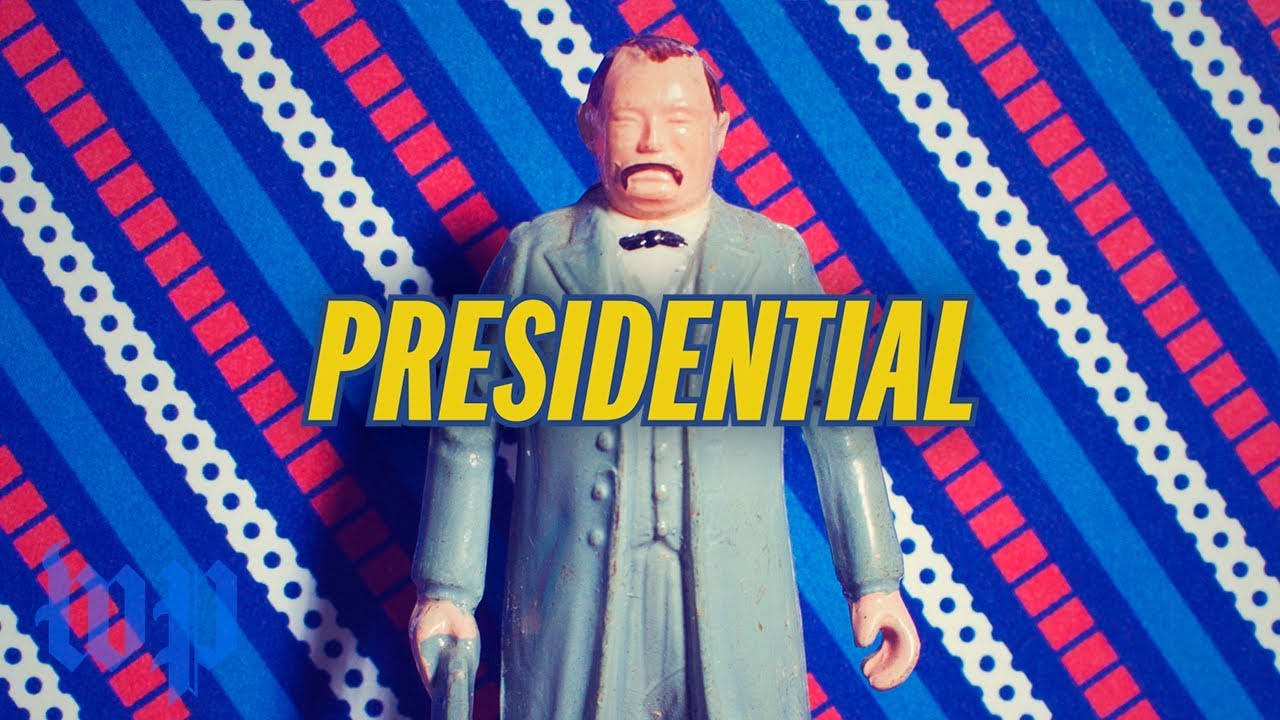
[Music] The start of my research about Woodrow Wilson this week took me to the place where he died. It's a large townhome in the Kalorama neighborhood of Washington, DC, and it's preserved just like it was when he lived there. Its marble entryway is the same; its rooms, the ticking grandfather clock on the staircase, the Victrola on the landing—it's where Wilson spent the last few years of his life after leaving the White House.
For a long time, the main legacy of Wilson's— you know, the kind of thing that ends up on a history exam—had to do with his leadership during World War I. In particular, you probably remember phrases like "the 14 points," "the League of Nations," and you hear things like "the Paris Peace Conference. " Wilson really strode onto the world stage on behalf of the United States, and arguably, the world hasn't been the same since.
So that’s Robert, and home, who’s the executive director of the Woodrow Wilson House, and he led me on a tour through its rooms and through Woodrow Wilson's legacy. But his job is getting a lot more complicated today because there's another part of Wilson's life and presidency that's starting to overshadow more and more Wilson's ideas of global peace and American diplomacy, and that's Wilson's racism. [Music] Those are the chants of Princeton students back in the fall when they were protesting Wilson's history of racism and calling for his name to come off campus buildings.
There, for example, is the Princeton University Woodrow Wilson School of Public and International Affairs. Now, for decades, Wilson has been most remembered for his efforts on working-class rights and global human rights, but people today are looking around the country—before us, the racial tensions, the shootings of unarmed black men, the inequality that still colors America—and they’re starting to point fingers at presidents like Wilson, who led this country during a time in the early 20th century when the rights of African Americans that had been gained in the Civil War and through Reconstruction were actually being taken away. I'm Lillian Cunningham with The Washington Post, and this is the 27th episode of Presidential.
[Music] Another sign of pregnancy effect will live in infamy. [Music] [Applause] So part of my plan for this episode had been to talk to my colleague Wesley Lowery, who’s one of our main reporters at The Washington Post covering race relations, and he was going to walk us through how early 20th century America sowed seeds for a lot of the very raw racial challenges, injustice, and inequality that we’re still seeing today. Well, in proof of how violently present many of these problems still are, Wesley had to cancel.
All week, he’s been covering the shootings of Philando Castile in Minnesota, Alton Sterling in Louisiana, and the police officers in Dallas. Still, I feel like we have to start the episode about Woodrow Wilson here with racism and with the current controversies over his legacy. But there is, of course, so much to cover about this figure.
Like all presidents, and like all humans, some of it is good, and some of it is bad. So I’m going to try, in the bit of time that I have here, to cover as much of it as possible, but with a focus on rights: African American rights, women’s rights, human rights, and workers' rights. We’re going to come back later in the episode to Woodrow Wilson's home in Washington, DC, and walk through it a bit more, but first I want to share with you my conversation with the historian and biographer John Milton Cooper.
So here’s the little bit of backstory about Wilson: He was born in Staunton, Virginia, in 1856, meaning that he was a young boy during the Civil War, and his father was a Presbyterian minister who moved the family around the South—from Virginia to Georgia, and the Carolinas. His father was actually one of the religious leaders in the Presbyterian Church of the Confederate States of America. So, most people would look at this—or most people do look at this history of Wilson’s—his childhood, and they point to it as an explanation for his racism.
But John Milton Cooper says it’s not quite as simple as that. He was a southerner, right? Well, technically sure, of course, born in the South, raised there.
The problem was, he wasn’t much of a southerner. His family was not from the South; they had moved there from Ohio just a few years before he was born. In fact, his mother was born in England from a Scottish family.
He's the only president between Andrew Jackson and Barack Obama to have a foreign-born parent, and he’s the only president since Andrew Jackson to have had no American-born grandparents. So this is not a man with deep roots in the South, or in America for that matter. He got out of the South just about as soon as he could.
He was 18 when he went off to college at Princeton, and except for studying law in Charlottesville and then practicing law in Atlanta—a total of about four years—that’s the only time he lived, and ever lived, in the South as an adult. And those were unhappy years too; he did not like the study or the practice of law. He got out, got out of the law, and got out of the South about as soon as he could.
Wilson left and went to Johns Hopkins for graduate school. He got his Ph. D.
in political science and history, and his Ph. D. dissertation topic was pretty revealing.
It was a critique of Congress’s dominance in American politics, and it was Wilson’s case for why the presidency should really be the stronger branch of government. Well, okay, so Wilson’s basically going to put that theory he mapped out into practice when he becomes president. But first… Before being President of the United States, Wilson was a professor.
He was also the author of numerous books, including a five-volume history of the United States and a biography of George Washington, and he eventually became president of Princeton University. So, in this administrative role, we start to see some of Wilson's views. One thing he does is try to get rid of the exclusive social clubs on campus because of their elitism.
However, while he's president, he makes comments about how he doesn't really support the idea of African Americans applying to the school. In his racial views, Wilson was much more a white northerner of his time rather than a white southerner. The distinction is not that he or white northerners weren't racist; they certainly were.
I mean, to be a white person in this country at that time almost always meant being a racist of some kind. But the question is, what kind and how much? The difference is that white northerners regarded race as a pesky problem—a kind of distraction—something that they really would rather not think about.
That's not true for white southerners; race is absolutely central to them. Wilson, a northerner, is part of this pattern. For the most part, what's happening is that the white north, and you can tell from those kinds of attitudes, has pretty much abandoned the south.
After Wilson is President of Princeton, he becomes governor of New Jersey, and then he very quickly ends up as the Democratic nominee for president. This is in 1912, during the 1912 election when William Howard Taft and Theodore Roosevelt split the Republican Party, and that's what allowed Wilson, who was running as a progressive Democrat, to win the presidency. He comes into office in 1913.
So, what are some of the ways that Wilson's racism showed itself? Well, one is not a policy one; it's more of a personal one, and it gets mentioned quite a bit these days, which is that Wilson attended a special screening at the White House of the film *The Birth of a Nation*, which was a movie glorifying the Ku Klux Klan. The movie was actually based on a novel that Wilson's friend wrote.
After this movie comes out, riots break out across cities in America. The NAACP tries to get the film banned, and the movie also became a major recruiting tool for the KKK, which, over the course of the next several years of Wilson's presidency, grew by millions of members. In terms of policy, though, one of the main ways that racism manifests itself in Wilson's administration is that he supported segregating workers in the federal government.
This was not a case that he initiated; several of his cabinet members were from the south, and they were saying, "Mr President, you know a lot of our people down south—white people, of course—are very upset that there are black men bossing around white women in the government. " Well, frankly, there were almost no instances of that, but that was the stereotype, and what's more, there were all kinds of problems, which there weren't. So, they thought it would be a good idea to separate them—meaning segregate.
Wilson's attitude was, "Well, if you really think so, give it a try. " He permitted it to happen. That's not to take him off the hook, but he permitted it.
Interestingly enough, he was always a little nervous about his southern base, so he allowed that to go forward. They later pulled back on the formal part, but they continued to downgrade and degrade, in many ways, the black employees in the federal government and had to reduce the numbers and the jobs available to them. But then, after we got into World War I, he let his attorney general and his Postmaster General do some pretty serious violations of civil liberties.
These were the Espionage and Sedition Acts, which basically said that the government could arrest people for criticizing the military, the war effort, or the American government itself. A friend of mine once said he thought the two things that really stood in the way of Woodrow Wilson being viewed as transcending greatness were race and civil liberties, and I think those are the two great blots on his historical reputation. Both of those come out of the defects of his virtue, which is love.
He believed in letting other people, who were supposedly no better, run things. If he wasn't trying to micromanage, the problem, of course, is that if you're going to let people run things and trust your lieutenants, you better be very good at picking your lieutenants. So, we've talked a lot so far about Wilson's flaws, but to focus on a couple of his leadership strengths, one of them was his gift for oratory.
Wilson was actually the first president since George Washington and John Adams to directly address Congress in person. Not only did he revive the practice of speaking to Congress, but Wilson actually spoke to Congress more times than any president before or after. He believed in working with Congress; he believed in legislation.
He thought the greatest test of a president, or any leader, was legislation—what could he someday do in the way of enacting significant laws, significant, and then, of course, administering them. But this was the real test, and by. .
. His own standard, he got himself an A-plus. There were a ton of majorly significant progressive domestic accomplishments that Wilson orchestrated even in just his first couple of years as president; and forgive me that I'm just gonna quickly bulldoze through the list of some of the highlights of them, because otherwise we would just be sitting here talking about them all day.
Okay, so tariff reform: this was the most significant cut in rates since the Civil War. Banking reform: he established the Federal Reserve, which was probably the most significant of all of his domestic achievements, since this is what established the framework we still have today for regulating the country's banks, credit, and money supply. He also established the Federal Trade Commission, which is like a watchdog for corrupt businesses, and he got a major Antitrust Act passed.
He pushed for, but was unsuccessful in getting, child labor laws passed, but he did successfully make into law the eight-hour workday for railroad workers, which is then what set the foundation for shorter, limited workdays for lots of other industrial workers. Wilson also officially created the National Park Service. A lot of this, like the parks and the Antitrust and the sort of watchful eye on big business, kind of starts to sound like a version 2.
0 of Theodore Roosevelt's, right? So, I asked John Milton Cooper how he thinks about what the differences are between these two leaders. Theodore Roosevelt and Woodrow Wilson, I think, are the early 20th-century analogues to Alexander Hamilton and Thomas Jefferson.
I mean, these are two great seminal figures and obviously two great rivals who clashed and had very different visions, although they were both very deep thinkers. These were men who really thought carefully about the big picture of the world and about the state of the nation. Interestingly, up to a point, I think they're very similar; they both liked big, strong, centralized government.
Roosevelt talked up his vision of what he called the "New Nationalism," which was where we would set aside or de-emphasize our different interests and all pull together for the common national purpose. You know, one's gender, one's race, one's economic standing—all of these things were things that we ought to rise above. And then the people who were less well-off would be made better off, and the people who were better off would give up some of that.
But it was very much based upon the metaphor of military service. Woodrow Wilson countered that with what he called the "New Freedom," and he said that what we needed to have was constant social renewal. In other words, what made a democracy strong was people being able to rise up from the most humble circumstances, realize their potential, and realize whatever they had in them to their fullest.
What this meant was not setting aside your identities, not setting aside your interests, but in fact realizing them and pursuing them. For him, the role of government was to keep these channels of opportunity, channels of mobility, and renewal open. Interestingly enough, both of them, in 1912, running against each other, appealed to Lincoln as their great example.
For Theodore Roosevelt, Lincoln was the savior of the Union—the man who held the Union together and who resisted what he considered both extremes. For Wilson, it was Lincoln the self-made man; Lincoln was the example of how there were no limits to what we could be in this country. By the way, what neither of them talked about or had a word to say about was Lincoln the Emancipator.
Race was really off the table in their running against each other, and a lot of people argue with me about this, but I think ultimately, Theodore Roosevelt is a conservative. I think he's someone who is willing to have a lot of radical changes, but in order basically to conserve what we have and to really avoid social revolution. He's really deeply worried; I mean, we don't like to use the word "afraid" with Theodore Roosevelt, but he was.
He was afraid of upheaval and revolution. For Woodrow Wilson, I think he's too liberal because I think he wants people to be able to pursue their own interests, to do their own thing, and that that’s what will produce the good society. I think it ultimately comes down to conceptions of human nature; I mean, Roosevelt, for all of his joyousness and boisterousness and everything, is basically a pessimist who does not see people as being naturally good—that they have to be made better.
And I think it’s Wilson, interestingly enough, who comes out of a Presbyterian Calvinist background but nevertheless is the optimist; he sees people as being naturally, at heart, good. Given the chance, they will do good things and produce the good society. So, Wilson, as I said before, had entered the White House in 1913, and in 1914, war breaks out in Europe.
But for the first couple of years of World War I, America stays out of it in terms of diplomacy. Actually, Wilson, early on, is a lot more focused on democracy-building in Latin America rather than getting into European affairs. But by 1917, World War I has become so devastating and enormous that Wilson decides the U.
S. can no longer stay neutral; it has to help win the war, and it has to be involved in helping to shape the peace in foreign affairs. Wilson is the president who really takes us into the world.
Our first big war overseas is World War I. One, we’d fought some smaller wars: the Philippines, a few other things, but we never—we’d never fought a big war overseas, and that is the major projection of American power. This is not only the biggest war, but it also starts to establish a notion that will underpin much of American foreign policy to come in the 20th century, and that’s the concept of aggressive moral diplomacy.
So, the idea that America doesn’t get involved in world affairs to try to acquire territory, or even in some cases to defend its own security or its own interests, it’s the idea that America has almost a moral obligation to support democracy and peace. So, in 1917, with this sort of mindset, Wilson goes to Congress and he asks for a declaration of war. Here’s one time that I think you really can see is his religious faith, his religious upbringing coming to bear, because his last line in the war address, after he’s got this, that, by the way, I think that war address is probably the greatest presidential speech since Lincoln’s second inaugural.
It’s a work of really somber beauty. There are echoes of Lincoln, and there are echoes of the Declaration of Independence about what we’re going to fight for, and then at the very end, talking about how America will spend her blood and treasure for her values, he ends by saying, “God helping her, she can do no other. ” You know, for a call to arms, that’s a very downbeat way to end; it’s something Lincoln could have said, and I can’t think of another American statesman who probably would have called for war in that way—certainly not Theodore Roosevelt, and certainly not Franklin Roosevelt in 1941.
But that is a direct paraphrase of Martin Luther to the Diet of Worms: “God helping me, I can do no other. ” In other words, what do you do if you’re the Christian, either Christian person or the Christian nation in the world? How do you conduct yourself in the U.
S. foreign policy sphere today? Where does Wilson’s legacy show itself most?
On the left, both sides of the aisle, his legacy appears to be ambiguous, but I don’t think it is. There was a time a decade ago, a little more, when the argument was that George W. Bush was the real heir to Woodrow Wilson, and one historian even called W.
Wilson "on steroids. " That is, this kind of notion that the United States would go around and build nations and impose democracy. I think Woodrow Wilson’s legacy is still very much center-left liberal internationalism.
The other thing about Wilson is that I think the most misconstrued statement ever uttered was the one from his war address about the world being safe for democracy. He said the world must be made safe for democracy, and this guy really was just a man who would not have used the passive voice unless he meant to. If you stop and think about it, there is an unintended world of difference between saying “we must make the world safe for democracy” and “the world must be made safe for democracy.
” For one thing, he didn’t think we—the United States—could do it; we certainly couldn’t do it on our own. He even said at one point, unfortunately, it was off the record and not published for another more than 50 years, that we can’t impose democracy on people who don’t want it. The democracy has to arise out of the desire of the people themselves.
So, Wilson, as though, is a much more restrained and cautious kind of foreign policy leader than I think he’s usually given credit for. I was once asked what American foreign policy would be like today if Wilson were president, and I came back and said I thought, “Oh, look, probably pretty much like President Obama. ” Wilson believed in American exceptionalism, but not uncritically, and he did not see us as being exempt from many of the problems and many of the shortcomings of other nations.
By 1918, World War I was over, and nearly 20 million people had died; about 115 thousand of those were Americans. Wilson mapped out his vision for a lasting international peace and a new world order in his 14 Points speech to Congress. His boldest proposal was to establish a new organization called the League of Nations, which would be made up of democratic countries around the world who would basically serve as the global keepers and promoters of peace.
So, Wilson sails across to Europe at the end of 1918; this is during his second term as president, and he goes to negotiate with European leaders about these peace terms. After all his work persuading other countries of this League of Nations concept, ultimately he ends up not being able to persuade his own country. He has this Treaty of Versailles that he comes back with that the Senate just has to ratify so that the U.
S. can join this League of Nations, but the Senate never does. So, here we are finally back at Woodrow Wilson's home in Washington, D.
C. , and here again is Executive Director Robert, talking about how Wilson ended the presidency with his popularity and his prospects for a bright legacy having dimmed in the eyes of many Americans. Surely, the failure to get the Senate to ratify the Versailles Treaty and to have the U.
S. join the League of Nations was the great disappointment of Wilson’s life and of his public career. So, what was at the core, then, do you think, of why he couldn’t be successful?
One was that while Wilson was a tremendous. . .
Creative and political genius, he didn't appreciate the enterprise that he was undertaking and how long it would take. So he left the United States to negotiate in Paris, and it took six months in a time when he didn't have reliable and adequate communication. I think his finger was no longer on the pulse of the American people.
There's that—it’s often said that he didn't take any Republicans with him, and that's not entirely true. He did take one Republican diplomat with him, but it's fair to say he didn't take a potent elected Republican leader with him. I think Wilson understood the difficulty he would have in negotiating with 26 nations in Paris and didn't want on his own team to have a snake in the grass who would be constantly bickering.
So he left his Republican opponents back in Washington, and they lay in wait. If you think of the politics of this, Woodrow Wilson was the first Democrat elected to the presidency since Grover Cleveland, and then about 20 years. So here’s Wilson, taking credit for ending the Great War, this horrible conflagration, and Wilson's political opponents must have felt that if they just let him take credit for this, then their political party may suffer indefinitely as a result.
So they really wanted either to amend the League treaty sufficiently that it could be seen as authored by both political parties or to defeat it. Wilson wouldn't budge on it, and so the Senate was ultimately set on defeating his plan. At that point, the story of Wilson's life almost takes on the characteristics of a Greek tragedy.
Wilson sets out across the country to make his case directly to the American public, hoping that they will, in turn, nudge their elected officials back in Washington to ultimately support him. I mean, here's a man who has expended so much effort and energy and thinks he knows what's right, and yet the only way he knows to make it happen is to take it on his back himself and go across the country by train, giving speeches to Americans with, in his view, great success. But he doesn't have the physical strength and endurance to make it happen.
I mean, he eventually collapses in Pueblo, Colorado, is rushed back to Washington by train, and in those days, rush meant it took three days to get from Colorado to Washington, D. C. Later that week, he suffers the stroke that ends his effectiveness as president and his effectiveness as an advocate for the League of Nations.
[Music] Up until this point in the episode, we haven't even talked about Wilson's relationships. But now that we've talked about his legacy on African American rights, workers' rights, and global human rights, we're going to end by talking about women's rights. So here again is a place where his personal story and his presidential story intertwine.
Although I feel like we could use a little levity in this heavy episode, so I asked Robert a question as we walked up the stairs. One thing I've asked in a number of the episodes, usually, is what it would be like to go on a blind date with Woodrow Wilson. Interesting.
And, well, he was the last president actually to date, and his first wife died while he was in office. Then he met and married his second wife while president. So it's not quite like the popular vision of the movie The American President.
It's interesting because President Wilson presents to us an image of sort of the severe schoolmaster, and certainly that was a part of his personality. But as we know from the love letters that he wrote, and many of which are still in existence, both to his first wife when he was in his 20s and to her when she was his wife when they were apart, and then the love letters he wrote to Edith Galt when he was wooing her and then after they were married in 1915, we know that his passions ran deep, and he was quite eloquent, quoting poetry. Let's just say this: a friend of mine came last year to an exhibition we had on Woodrow and Edith Wilson's wedding gifts, and we included some quotations from the love letters.
He said to me, "You should have warned me not to take my wife to this exhibition. " He said, "I have never, much less written, even said anything nearly as romantic and passionate to my own wife. " He said it was really quite distressing to see the depths of the passion the president expressed.
So I think we know what Woodrow Wilson’s sort of life on a date looked like. He dated Edith, and then they would correspond about their dates. She was herself widowed, and his first letter to her addressed "Dear Mr.
Gault," but within a couple of weeks, he's writing, you know, "My dearest darling Edith. " One of the things that I find amazing in our house is this horseshoe. In her 1938 memoir, Edith describes how on one of their dates, while walking through Rock Creek Park, they found a horseshoe on the path.
They considered it a sign of good fortune and kept it. She says, "I still have that horseshoe hanging on a sconce in my bedroom all these years later. " Well, all these years later, we still have that horseshoe hanging here on the sconce in Edith's bedroom here in this house.
Hmmm. So what exactly was Edith's story? Edith grew up in Virginia and then moved to Washington, D.
C. , in the 1890s. Her first husband owned a jewelry store, and when he passed away in the early 1900s, he.
. . Left that to her, and so in that era, Edith was a woman sort of at the pinnacle of the power that women had in that society, in that she had wealth and no husband or father to tell her what to do.
She was one of the first women to, she describes in her memoir, get a driver's license. Although I don't know what that means when there's no DMV, she did drive a car. She had a little electric coupe, a two-seater with a till to steer rather than a stern wheel.
But this isn't her. I can imagine in that time that there were so few women driving that the police, who managed the traffic, must have seen her coming and said, "Oh, here comes Mr. Gold; clear the train, you know, stop all the min.
" It would have been an act of chivalry in that era to let her go down to the jewelry store that she had inherited from her husband, which was down in the area near the White House, essentially a tree-zero Dupont Circle era. She was actively running it, or she hired a manager to run it, but she was, you know, in a sense, a small businesswoman again with what we would consider, essentially, a high school education. But Edith showed tremendous moxie and smarts.
So in some ways, although she, when she met President Wilson, who had been widowed about nine months earlier, and they began dating, and he proposed to her, she objected and said, "You know, I shouldn't be the president's wife; I really don't know anything about politics. " But in many ways, she might have been the perfect wife for him. In this era, as it turned out, he suffered a stroke, and she would be very much a lion at the gates of access to him, protecting him when he was recuperating to the extent that he did from the stroke.
I mentioned that she was from an old Virginia family, and you'll notice here a matte couture model of a statue of Pocahontas. This is a model of the full-size statue that was installed in Jamestown in that era, and this actually was a wedding gift to Edith in December of 1915 when she and Woodrow Wilson married. But Edith herself was a direct descendant of Pocahontas, eight generations removed, and quite proud of that.
Perhaps fitting for a woman descended from Pocahontas, Edith was, in a way, the first woman who ran the U. S. government because she basically served in Woodrow Wilson's stead after he suffered his stroke, which happened with roughly a year and a half still left in his second term.
The stroke had left him partly paralyzed and almost blind. So not only do we end up seeing, kind of by circumstance, a strong female figure steer the ship of the presidency, but it was in the very same year as Wilson's stroke, in 1919, that women finally gained the federal constitutional right to vote. His views on women's suffrage evolved during his eight years in office, and I think it's interesting that neither of his wives supported women's suffrage, but that through all three of his daughters did.
In fact, two of them were active suffragists. So to some extent, women's suffrage was what is a generational issue. I think it's fair to say that Wilson went into office ambivalent, at best, about women's suffrage.
He famously was president when suffragists protested, chained themselves to the White House fence, etc. , and were arrested. But his views also evolved during that time.
So in 1915, when the state of New Jersey, where he was a resident and had been governor, had a public election on whether women should have the right to vote, Wilson publicly stated that he was going to vote for suffrage for women in New Jersey and traveled by train, actually, with his fiancée, Edith, up to New Jersey to vote. But he still wasn't persuaded that this was a matter of federal constitutional law. For a time, he was in the position that this was a matter of states' rights.
But during his presidency, Wilson was persuaded that women ought to have the 19th amendment, and in fact, in the last couple of years of his presidency, he had an important role in persuading certain members of the Senate, for example, to vote in favor of the constitutional amendment. There are letters to him from various suffragists thanking him for his support. So his story is an interesting one of his evolving views.
Also, I would say in the context of his life, when he proposed to Ellen Axson, who grew up in Rome, Georgia, she accepted that they would be engaged but said that for the first year of their engagement, before they married, she wanted to go to art school in New York City, and that's what she did. That's a rather remarkably independent thing for a young woman of that era to do. I think it's interesting that Wilson saw the growing aspirations and self-awareness of women in his own lifetime, but in his own personal experiences with women, his wife, and then all three of his daughters had what we think of as a college education, which was not typical of that era.
So in his own interactions with the women in his life, Wilson twice married very independent and strong-willed women and encouraged his own daughters to have lives of their own. I think that speaks to the evolution that was going on broadly in that era among men and women alike and in the changing role of women in our society. [Music] In the library of this very house, just a few months before his death, Wilson gave the first national radio broadcast.
Was a final effort in his fight to make Americans change their minds about the League of Nations. He gives this address on the eve of Armistice Day in 1923, which marks the fifth anniversary of the end of the fighting in World War One, and it was picked up then and rebroadcast across the country. So it was truly the first national radio broadcast.
The radio engineers came about 8:00 in the morning for an evening broadcast, and they worked all day. President Wilson was upstairs napping fitfully, complaining of a headache, nervous and not sure what to do. And remember, this is one of the great rhetorical figures of American history and certainly of his time, but the idea of speaking into this contraption was nerve-wracking to him compared to speaking to crowds of 20,000 or 30,000, which he had done without concern regularly during his presidency.
So finally, the time came. A microphone was set up in this room for Wilson to speak, and he said, "Principals, you can sit here in front of the microphone. " And he said, "No, no, I'll want to stand.
" They said, "Well, it doesn't matter; you know you're on radio. " And he said, "Well, I always stand when I give a speech. " He gave a talk that lasted about four minutes, and he used this broadcast to remind Americans of the urgency of their reconsidering the decision not to join the League of Nations.
He spoke of how the League of Nations was consistent with our founding principles and that to ignore it was to abandon the sacrifices of the troops who had gone into battle in World War One. This was three months before he passed away. You can see that even up to the last days of his life, he was intent on reasserting the idea of the League of Nations before dying.
On February 3rd, 1924, at his home, Wilson found a sort of peace in this house. In the months before he passed away, he told his eldest daughter, Margaret, and we know this from her memoir, that he had reached a place of grace about all of this. He told her that he knows that good ideas don't rely only on their advocates, that they have a strength of their own, a momentum that's internal to the idea itself, and that he was confident that the United States would one day recognize how important a League of Nations would be and how consistent it was with our national values.
The country did ultimately recognize Wilson's vision roughly 20 years later. After World War Two, America would become a strong champion for an organization built on the same premise, and that was the United Nations. I've been thinking a lot about Wilson's reflection that good ideas aren't just carried forward by advocates, but that they have a strength and a momentum that's internal to the idea itself.
It strikes me that that's a piece of why we're all going on this little podcast journey week to week: to better understand what parts of our history have been shaped by the actual individuals who've led our country and which parts of our history have marched on toward something better, regardless of these leaders. [Music] Oh, and that grandfather clock that keeps chiming in Wilson's home—it was a housewarming gift from Edith. After Wilson had his stroke, she noticed that the sound of the grandfather clock in the White House seemed to be the only thing that soothed him.
So when they moved into their home, she got one just like it, because I guess more than anything else, he found some comfort in hearing the steady beat of time. [Music] Many thanks to this week's guests, Robert H. Smith of the Woodrow Wilson House and historian John Milton Cooper, who wrote the book *Woodrow Wilson: A Biography.
* Original music for the podcast is by Dave Wesner, and I hope you guys noticed and liked that we've introduced a few new tunes into our mix. Now that we've transitioned into the 20th century, they've made new ones for us. So thank you, Dave.
Next week, we'll be talking about Warren Harding, and oh man, this blind date question is going to be interesting!