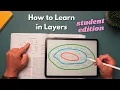
this video is part of our ultimate study skills series and today we'll be covering a technique that allows us to learn fast without sacrificing on comprehension so our friend Justin sung actually teaches this in his course and it's called learning in layers so let's say we're learning how to build a house it'd make the most sense to build the foundation first right this includes the walls the structure and this all represents the main concepts of what we're learning that's layer number one then we would add on supporting stuff like the roof some electrical some plumbing
and this all represents the supporting details that's layer number two at this point we have a fully functioning house but obviously there's still more we can add to make the house comfy right maybe a couch a lamp some picture frames on the walls or something These are nice things to have but we don't really need this furniture to survive so we're going to call these the less important details this is layer number three so layer one is Concepts and layers two and three are both details but how do we differentiate between layers two and three
well layer 2 actually helps us understand layer 1 better whereas later three normally doesn't for example if I'm studying the concept of photosynthesis then a layer 2 detail would be understanding that water sunlight carbon dioxide is transformed into oxygen that's a detail that helps me better understand photosynthesis right that's the layer 2 detail a layer 3 detail would be knowing something like the name of the enzyme that drives that transformation which I don't even know the name of that enzyme right it's not that important but obviously we're still going to be tested on it so
lighter three is usually what I would put on my flash cards to be memorized and if we follow the 80 20 rule usually 80 percent of exam questions will be on layers 1 and 2 but usually those two layers make up only 20 percent of the material that you need to know and I think the hardest part about learning is being able to differentiate what detail is more important and what detail is less important basically knowing which topics and key terms belong to which layer and unfortunately the skill isn't taught in school you'll notice that
if you read a textbook from start to finish the order of information that comes at you is first you'll get a heading or main idea followed by loads of detail that you kind of just got to sift through right then you'll get another heading main idea followed by details another heading followed by details right this is the same pattern that most professors teach in lecture too instead of giving us all the foundational pieces first to help us build our structure they give us all the pieces for one room at a time we don't move on
to the kitchen until we've completely built the bathroom first and this approach makes this house overall super unstable right it might seem like an efficient way to teach but I don't think it's an efficient way to learn so here's a step-by-step of learning in layers step one is to start with a list of key terms you want to have all the pieces laid out in front of you and you can find this in the learning objectives of the chapters or from the syllabus itself step two is to categorize the key terms into one of the
three layers is it a concept is it an important detail or is it a less important detail then step three you want to build your house layer by layer here right on the first pass of the material you want to focus on the concepts then you come back for the important details then you come back for the less important details so let's see these steps in action using microbiology as an example for step one here I have a list of all the key terms for multiple chapters just a side note for beginners I'd recommend doing
this one chapter at a time but when you get the hang of it you can definitely try multiple chapters because it's much more efficient for step two I'm going to categorize the terms into the three layers it really helps to compare and contrast all the key terms against each other to figure out where they belong so first what is a Gram stain a Gram stain is a laboratory technique that we use to identify bacteria I'm not exactly sure what layer Gram stain is at the moment is it a concept is it a detail I don't
really have anything else to compare it to so let's move on and then maybe I'll learn something later that will help me better understand where this fits in the big picture so next what is a gram-positive bacteria alright so it's basically a bacteria with a thick cell wall how does it relate to Gram stain well if you Gram stain a positive bacteria then it'll turn purple under a microscope so we see some sort of functional relationship between these terms let's keep that in mind and move on to the next what is a gram-negative bacteria right
we have another term with the word gram in it gram-negatives have a thin cell wall and if you compare and contrast that to a gram-positive this one usually gram stains red under a microscope so the idea of gram staining is a concept so you see the more we learn the easier it becomes to put these terms in layers all right next what is a staphylococcus aureus it's a type of Grant positive bacteria this next one is clostridium difficile it's also a gram-positive next we have toxin a this is a toxin that's released by a closeridium
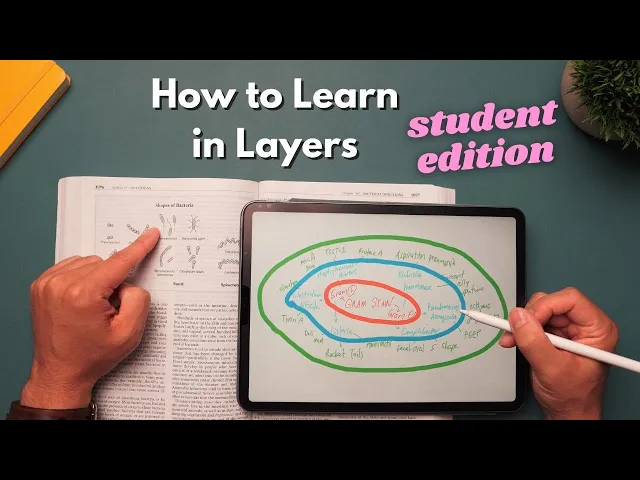
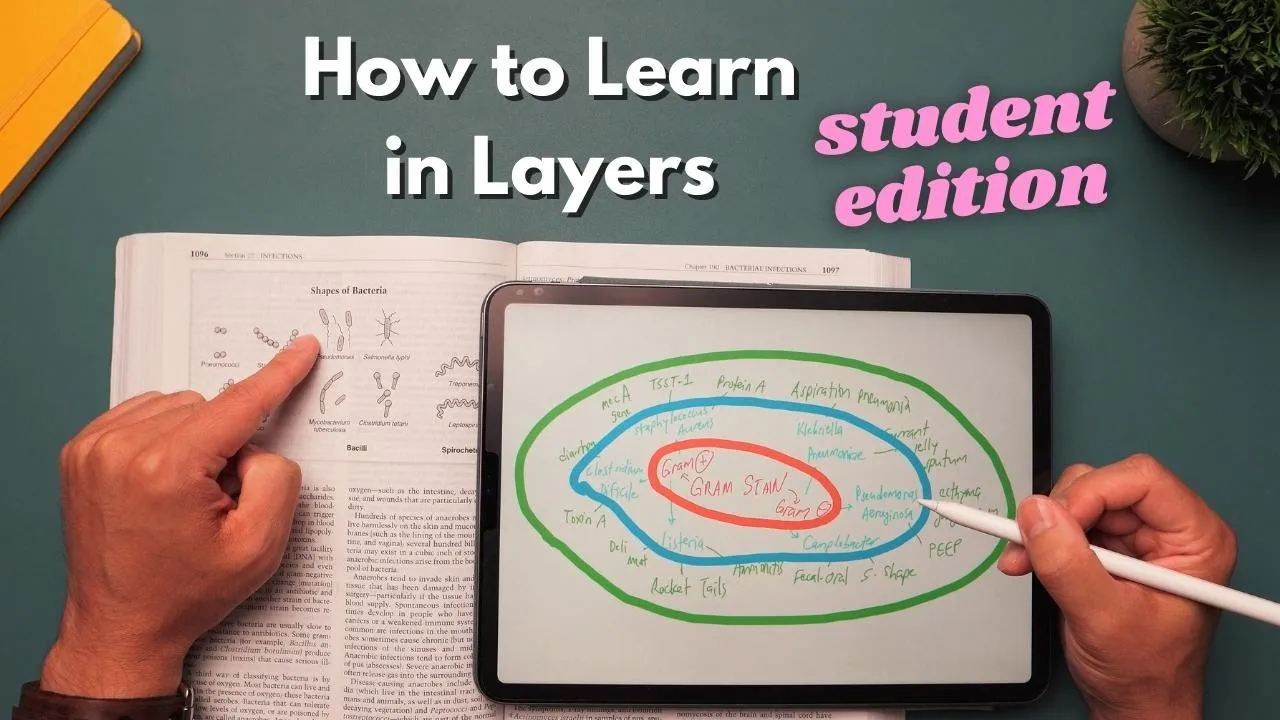
so it's a detail of that next is klebcl and pneumonia this one's a gram-negative bacteria and we just keep going until we finish categorizing and grouping all these key terms together step three is to build a house layer by layer and what better way to map something out in your head than mind mapping so I'm going to start by placing all of layer 1 on the page so I think the most important part of this step is figuring out how the different components of layer 1 relate to each other for example here it becomes clear
to me that we group bacteria based on their characteristics right gram-positive ground negative Etc because those characteristics are how we identify them which then tells us what antibiotics to use to treat them that's the big picture right there right that's what I'm talking about when I say lay the foundation first with the layer 1 Concepts so once all of layer 1 is connected on the page and we have a good core Foundation we can add the details on top starting with layer two and then layer 3. foreign map is to kind of build out each
branch all the way out to the details before moving on to the next Branch this is not learning in layers and you'll easily lose sight of the big picture if I were Speed Learning or even cramming the night before an exam which I don't advise and I wanted to make sure I don't fail that exam then I would focus on the red and blue layers first since that will be the majority of the tests right 80 20. but if I didn't go in layers I might not even have time to cover all the important stuff
because I was too busy with the less important details so that was a simplified version of learning and layers Justin covers it more comprehensively and even adds an extra layer that can be helpful for bigger more complex topics so check out his channel for that I want to point out that the Mind map we made here is only the first draft right but the more I learn and the more microbio chapters I add to this map the more I'll need to rearrange my thinking and make my notes more concise now if you want a deeper
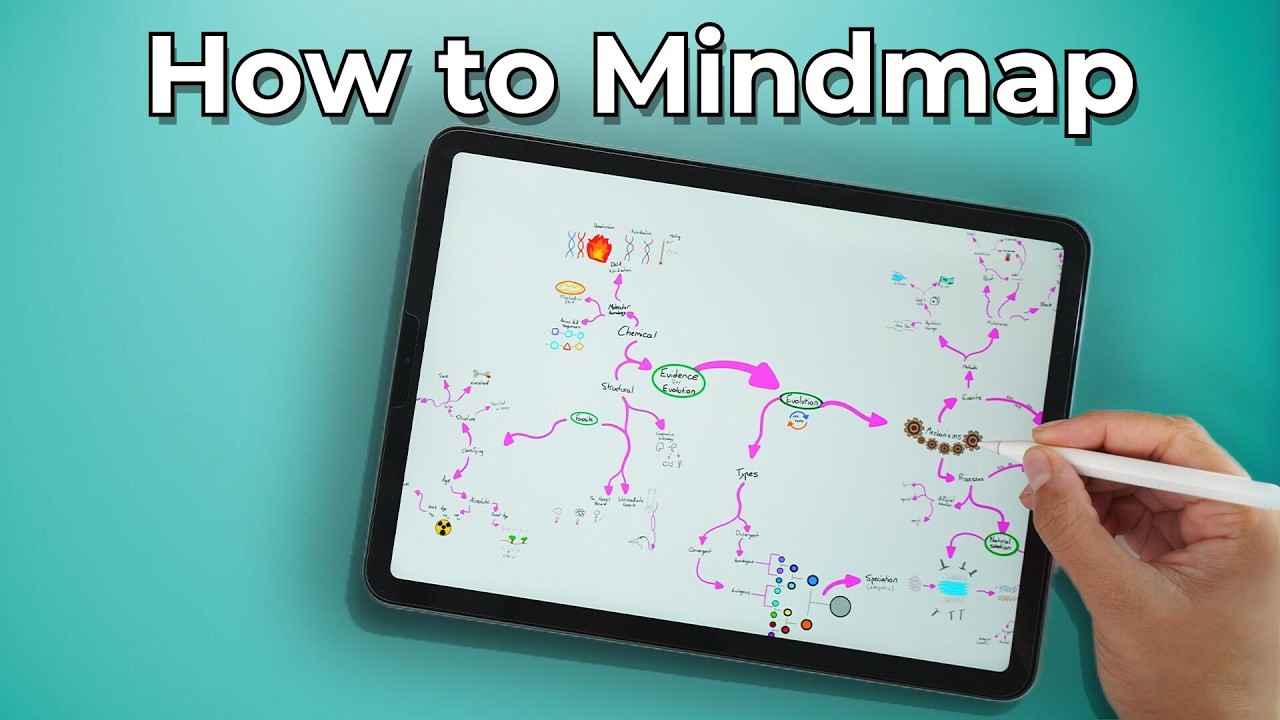
dive into the skill of my mapping itself then check out this video right here it's a great skill to pair with this entire layer method I'll see you there