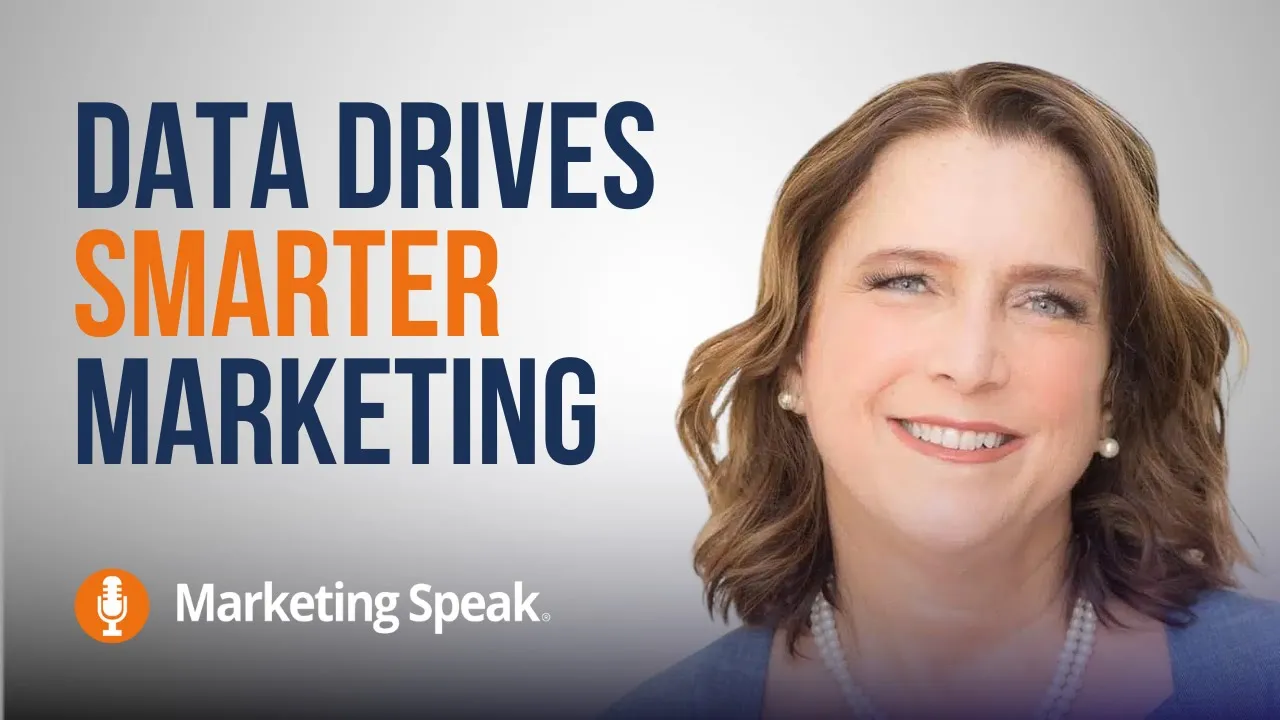
Hello and welcome to marketing speak i'm your host stefan spencer and it is my pleasure to have janet driscoll miller with us janet is the co-author of data first marketing how to compete and win in the age of analytics published by wiley she is the president and ceo of marketing mojo an award-winning digital marketing agency and a frequent speaker on digital marketing and analytics janet it's so Great to have you on the show it's so great to be here thank you so much for having me of course so i would love first of all for
us you know the listeners and viewers to understand a bit more about what data first marketing means since that's the title of your book you know you and i've known each other for a long time and and i've been working in agency life for many many many years in digital Marketing and i've worked with many different clients and this book arose out of my experience in working with everyone from micro businesses all the way up to large global enterprise corporations and the problems that we saw in digital marketing and the the book really encapsulates the
approach that i have been using with my clients for many many years and focusing on being more than just Data driven we all like to say that we're data driven and that's a very popular term but the reality is that data needs to be at the center of everything that you're doing with marketing and that's at every step of a marketing process of a campaign process and unfortunately what i've witnessed over all these years has been that there's lots of challenges that sometimes folks aren't always aware of marketers aren't always aware of that is Causing
their data to not be accurate in many ways um and so when they say that they're data driven they look at the the data at the end of a campaign they don't necessarily look at the data throughout the different parts of the campaign like for instance uh what data are you using to create personas how effective are those personas are you measuring them or a piece of content like uh a lot of Times i talk to content marketers and they'll say yeah we created these great pieces of content i'm like well what's the point of
them like how are you measuring whether they were successful or not successful and many cases they don't have a measurement so there's a lot of holes that exist and so our job as digital marketers and what data first marketing is about is taking data at every step of this process and Analyzing how we can make each step of the process better and more effective to end to reach our end goals which is typically of course revenue generation and it's also about making sure that the marketing department has a a voice and a seat at the
table when it comes to the decisions that a company makes about its future and its budgeting and so forth and unfortunately i think marketing is often thought as thought of as sort of the Throwaway people don't you know ceos and support don't always have confidence unfortunately in uh the marketing department and their ability to track what they're doing to meet those business goals which is typically going to be revenue and sales you know lead generation that type of thing as well and there's not a lot of confidence there from a c-suite so This book is
hopefully going to help marketers everywhere to connect with that c-suite meet those business goals and really learn how to track everything appropriately so they know if they're really meeting that revenue goal that roi those business goals as opposed to just saying we're data-driven marketers aren't we great uh how are we really going to put that into action right and so let's talk a bit about Business goals and how those can connect the marketing department with the entire organization and help align everybody's interests like what would be an effective goal and what would be an ineffective
goal maybe an example or two would be great sure so i think a lot what we see Currently in the c-suite we've been seeing this even pre-covered was that cmos had the short smallest or shortest tenure of any c-suite executive and so we're seeing a lot of turnover with cmos there's also been a shift where you see a lot of companies now talking about strategy officers or chief lead generation that sort of thing they're becoming more you're seeing more of These titles that are really a bit more defined more than just marketing they actually are
saying chief revenue officers and that sort of thing and so it really speaks to the fact that companies are looking for leadership in marketing that is focused on revenue and unfortunately i think that marketers have gotten a bad rap for many years that we just don't care about that when we really do we truly do care about revenue generation that's our job But i think there's been a real disconnect between what marketers often will measure versus what the company cares about and that's in part what i think has given us sort of a bad reputation
with the c-suite in many cases like the cfo does not care how many likes we got on instagram they don't care that's not important to them what they Care about is how much we spent on instagram maybe but how does that effort directly impact a business goal of reaching a certain revenue number or meet a goal even just of like right now a big goal for many companies is recruitment like finding talent how are we impacting that directly with the work that we're doing and it's critical for marketers to bring those numbers to the table
because other People were talking within the c-suite like a cfo like us chief sales officer like a ceo all that they care about is the numbers they care about that data and so if we come to them with something that isn't relevant data like we got a thousand likes on instagram that's great but how did that impact us hiring new people how did that impact us gaining the revenue goal we wanted for this year and if we're not speaking that Language as marketers we're not we're not going to be respected and our input is not
going to be taken into account when we want to help influence how the company moves forward with marketing and sales and so what would this look like in terms of uh distilling [Music] the information the the the metrics the kpis down to something Very visual very easily uh understood and consumed by the upper management c-suite executive so i'm guessing maybe there are dashboards or reports graphs charts something that you distill it down to so you can see oh this is red that's not good this is green that's great keep up the good work yeah You
bring up a really good point visualization is data visualization is so key with this group and really anytime you want to tell a story data visualization is critical because you can have the best performance in the world you could be driving tons of revenue but if you put it in a bunch of tables that are not easy to read and it's a lot of data it's going to get skimmed over and Probably ignored and there's some really good studies there's one i talk about in the book about data visualization about how just how you present
the data in general is really really key so your point about dashboarding and so forth is really important thinking about what is the best way to share this data and in the book we have some suggestions as an example of like if you're dealing with this kind of data Consider this type of visualization like this just a guide for maybe where to get started but i will say the before we even get to down the road to data visualization it's having common understood goals this is really important too when we're talking with the sales team
because a lot of definition of goals throughout the organization of what it really means as an example with with sales in particular when you work with sales as a Marketer especially like in b2b and you're doing lead generation how sales perceives a quality lead versus how marketing perceives a quality lead are often two different things marketing thinks you know i brought in this lead it came from my google ad it's great but sales on the other hand and i'm sure every marketer can relate to this some some sales person says well this is a gmail
address this is no good you know Like it's not that it's no good right uh necessarily and how do they know it's no good so sometimes those definitions are not in sync that's a very common common problem between marketing and sales in particular but defining those goals as an organization not just in marketing but with the whole organization and having a common definition for what that goal is so what is a sales Qualified lead what makes a lead qualified and then once you know that i'm measuring sales qualified leads and this is how a sales
qualified lead is measured how i know that it's a qualified lead then you can start to put those goals into a visualization a dashboard a report a regular report and figure out the best way to show the progress in meeting that goal but it definitely comes back to that definition first and making sure Everyone has that common definition and wants to measure the same goals that's i would say that the first step yeah that's great and can we hear what your ideal definition is of a sales qualified lead and how that differs from a marketing
qualified lead sure you know and i think that really differs for every company because you know different companies define who their personas are who their best prospects are who their best customers Are likely to be and and so it's really custom to everyone the way i would approach it so i don't have like one set approach but i would say the way i would recommend approaching it is look at your current customers number one you've got a database of your current customers what do they look like and it's understanding that really really well so you
know how to go out and get more people just like that so that sets you up when you think about Like the personas themselves who are these people who are these audiences that are currently my customers then you can start to judge as you bring leads in do they match these criteria that most of my customers match that could be demographic data that could be you know a platform that they come from where people normally hang out like as an example you might say typically if someone comes from linkedin for a b2b maybe that's a
better qualified lead in In general than coming from a platform like tick tock you know it depends on what your what your makeup is and what your personas are but sort of scoring that person based on those criteria helps you really define what what how qualified of a lead it is but again those definitions are something that marketing should not take on by themselves marketing can say yeah i've got a qualified lead they came in they filled out a form Um they meet some basic criteria we have for marketing but sales often has a different
criteria and that is based more on the lease they see become opportunities and become sales and become the highest average order value customers and lifetime value customers and so that's really data you as a marketer need to be able to get at so you can evaluate that really build out the personas and understand who that target audience Truly truly is based on actual sales data gotcha now a scoring system that's designed by both marketing and sales departments to apply to leads that are coming in what does that look like what what are some of the
scoring criteria that you would recommend at least uh considering if not incorporating i think you know especially uh in b2b We're talking about lead generation that goes to a sales team to follow up certainly demographic data i find that typically things like job titles job job experience level size of company that's a huge one i mean that and that really applies to both b2c and b2b you know if you have a company or a person an individual a consumer that can't afford your product you know then that that's a problem like you're targeting the wrong
audit audience so Things like you know for consumer side income levels and where they live and you know those types of demographics are really critical and then on the b2b side from a lead generation perspective again like job title size of the company is it a one-person company is it a global enterprise company those things tend to be real standards when we talk about targeting specific audiences because you know it's funny i talk to lots of different companies and sometimes i'll Say to them well who's your target audience and they'll say everybody and i'm like
no no it's not it's not everybody uh let's get real here who is the real audience you're looking to to um to work with and you may have multiple audiences and some are higher priority than others because you may see that certain audiences have a higher lifetime value you want you definitely are willing to spend more towards that audience you're definitely willing to do Whatever it takes to get that audience in whereas you may have another audience yeah they're customers and you get some of them and they they work out it's fine but they maybe
have high turnover or whatever then you might say yeah i'm still targeting that audience but their priority in my list of people that i'm targeting is going to be lower and i might spend less budget there because they're not as Important to me as these high lifetime value customers and so definitely looking at all that data and understanding it is really key to making sure you put your money in the right place your investments are in the right place and even it goes all it speaks to content even you know you get into the content
what content to these personas do these audiences need to make their decision and it may differ by the audience so it really defines so much of How you progress with your campaigns and with your your marketing efforts right and so you you talked a lot about some of these demographic related uh numbers income uh job title and and employee numbers things like that but what about psychographics and clicker graphics too for that matter absolutely they all play into it i mean i and depending on who you're targeting again like Psychographics in particular i think really
work well with b2c um and and nonprofits as well um and so understanding that is really helpful because you know as an example psychographics uh when you think about if you're a non-profit this you know we're we're at the end of the year when you're doing non-profits typically have a really boom week that last week of the year and why is that because a lot of people are trying to Reduce their tax taxable income at the end of the year they realize gosh i've got all this taxable income i'm going to be taxed on so
it's a great time for non-profits to capitalize on that and to try and get donations in so that last week of the of the calendar year is always a really important week for non-profits and when you think about psychographics it's not just hey i'm Trying to target the people who have the biggest incomes to say to them you should donate this week to our nonprofit to reduce your taxable income but also looking at things like psychographics what kinds of activities are they involved in are they do they tend towards volunteerism do they have are they
a member of a of a religious community maybe you know those types of things that might indicate yeah this person is probably more likely To give than someone who is not and so those two are really really helpful in certain scenarios especially in the b2c or non-profit world yeah now one analysis that i remember from many years ago was around analyzing click-a-graphics and how through personalization they were Able to find correlations of people buying different products together that uh italian wine and pasta was an obvious uh a correlation and and yet uh white wine and
bread was also highly highly correlated and that was a surprise to them that they weren't uh expecting to see but the the data shown that Showed that to be true so i'm curious what are some uh examples from your work and your clients that were maybe perhaps uh surprising or counterintuitive uh correlations like that i will say that um you know one of the ones that i was really interested in because i'm a star wars geek i really love star wars Was one day i went into facebook and i was using one of the tools
in facebook to really understand the marriage of these psychographics and demographics and i said okay what do people with star wars who like star wars what do they self-identify also like it like what are some good correlations and probably not a shock because who doesn't like pizza but it says that you know star wars people tended to have a real love of pizza and I thought these are opportunities think about like let's say a new star wars movie is coming out and um pizza hut or dominoes or any of these big brands what a great
opportunity for them if they know that these marriages exist in the psychographics to have great cool offers because they know you know star wars people love pizza so let's figure out a way to uh marry those Two things together and and create great offers which can make us uh help us really have have very successful marketing campaigns and so there's a million of them out there and it's it's fascinating to your point like there's some things that you would have never guessed that they could be really surprising i'm not surprised necessarily that star wars fans
love pizza who doesn't love pizza but at the same time there are some that Might surprise you and those marriages are unique and it helps you have a very unique marketing campaign when you can find those interesting niches where there's that psychographic overlap right now there are some different tools that will help you to see uh these overlaps or correlations they'll allow you to see Different behaviors and different segments and and how they differ i'm curious uh what would be some of your favorite tools that are not the obvious ones like google analytics or or
something like that but just something that maybe does personalization really well or something that does uh um analysis of of data warehouses and and user behavior really well and so forth one thing i have really wished linkedin Would do um they at linkedin for especially for b2b has some really great information of these overlaps in demographics and limited psychographics because it's really more uh on the professional level but um and not so much personal level but um there are some that are there that you know the groups and things that people join on linkedin one
of the things i really wish linked And did more of is having a persona builder i've tried to say to them this would be a great thing marketers would buy this all all day long because we'd be able to do exactly what you're saying is like sort of you know mix and match like say okay let me upload as an example my ideal persona here's janet she is a ceo of a small business and this is you know her size this is her experience level etc show me the Look-alike audience right show it to me
what did that what does that look like audience really look like i mean who what other things do they like what other groups are they part of and so forth and unfortunately you can't do much of that with linkedin right now you can choose a look-alike audience from an advertising platform perspective but there's no real like persona builder which i think could be a very powerful tool from them Facebook on the other hand does have some some tools like that and it's really fascinating like i said like the star wars and the pizza example where
you could go and do some digging um and i think that's a smart move on facebook's part because it does encourage you then to go after those audiences on facebook um and they have all this this great data but i can't say from personalization perspective that i know too many tools That do that but it doesn't mean you as a marketer can't do that uh what we do is we just build out a separate campaign for each of these groups right so we say like to take the star wars the pizza example uh let's say
another thing that star wars people like is i don't know um they're in higher education maybe they're they're into getting a graduate degree or something like that again those kind of random pairings we Can create campaigns as marketers that are separate and say this campaign is targeting star wars people who love pizza this other one is targeting star wars people who are looking for higher ed then you can really separate and track yourself and do your own personalization even though those tools don't always exist to make it as smooth as you would like to do
it you know for you and kind of plan it out for you this there is a Way for you to build it that way so that you can track it and you can see what was uh most successful and you can segment that audience so that one is getting a very personalized message to them and and the others getting a very personalized message to its own group do you have any good examples of companies that have built out personas in such a full immersion sort of way that it is just really impressive and a quick
Example i've shared this a few times on on the show but i don't remember if it was nike or adidas but they had these kind of full immersion environments with lockers school lockers you'd open the locker and it would be decorated and it would have sports gear in there and textbooks and a person's lunch and all that sort of stuff and and you would get a sense for that Person that persona yeah and there was a whole bunch of these uh these lockers and then there were full-size uh life-size posters of each of these personas
so that gave you a full immersion experience of the personas do you have any examples of really standout companies doing full immersion or a really built out Visualization of their their ideal client avatars or personas i i don't and and surprisingly i think personas is often one of the more overlooked parts of marketing and and i think it's sometimes it's just not as thorough as i would like it to be some some companies do a very good job of being very detailed but i again i think that too many Companies don't look at the data
and they're not always building this out based on their actual data um um i think that uh i don't know if you know adele rivella do you know adele revello i don't so sh she wrote a book called um buyer personas i think it's called buyer personnel and i met her quite a few years back and her method for building a persona is the Best i've ever seen and it involves looking at that actual sales data but also interviewing customers and getting more data from them that way but um i would say that most of
these companies you know have never really approached building that buyer persona adequately um it's been best guesses i think marketers think they know what their customers are like but if they aren't really looking at the Data they don't and so um unfortunately i think sometimes it's just sort of a ad hoc thing that not enough companies not have marketing departments are doing these personas to begin with but i would love to see like what you're saying but that the the personas there's a full immersion at minimum for the marketing department but also for the sales
team quite frankly to really understand This is who our customer is and and really to your point really fully immersing those departments and the company in who that target audience is so they can keep focused on the prize because i think that that's a real challenge right now and i haven't seen too many companies that do it well unfortunately yeah okay what about doing kind of user surveys or More just impromptu what do you call it when you when you get a small test group of people together i forget the name of that focus group
focus group so do you have any examples of uh how to do this well either collect user surveys or do focus groups in a way that gets you actionable insights and not just interesting information absolutely Yeah and it's tough with customers because you don't want to bug them too much you don't want to take up too much of their time to gather this information i actually before i started my agency i was doing digital marketing for an online survey company that competed with surveymonkey and so i come from the survey world i know a lot
about it what i will tell you is the hard part is response rate in surveys is typically really low and so The hard part is if let's say you send out a survey to customers and ask them to fill it out and you don't offer them anything to do so like just like hey help us understand better and make our customer experience better the the response rate is going to be very very low it might be one to three percent at best and so the problem with that is going to be if you're basing all
your persona information On three percent of your of your customers is that a representative sample i i would say no so what this is where i like what adele's approach is which is adele ravel's approach in her book is is actually interview pick some of your best customers set up an interview with them and you can certainly incentivize them you can give them Something as a thank you you can do other things to help them to encourage them to help you but those are probably more meaningful than the random survey response and and also think
about who is who you're actually interviewing so like if someone sends me something like you know i'm a ceo of a company i'm doing podcasts i'm speaking i'm i'm Real busy all the time so am i gonna take the time to fill out your survey yeah uh i'm not and and i'm just gonna delete it you know out of my emails so so the the question becomes you know if somebody wanted to to interview me and say i really want to understand better if they reached out to me personally i might be more likely to
respond to that than than just a random email so definitely think through who is that Audience because certainly a more junior level person in my organization might have more time it might be more eager to give their feedback but for someone who's a senior level person they may not have the bandwidth to just if they've got a million things on their plate so think about how you're gonna deliver the questions whether that's delivering them through a survey that you email to people or print you know for people or If you're gonna call them i'm much
more likely to have a to have a response if someone calls me then just sends me something random in the mail or sends me an email um if you get caught up in my spam too so think about that process as you try and gather this data yeah you know something that occurs to me that could be very effective would be to contact those busy ceos uh and instead of Just asking them the questions in the form of uh you know a voicemail uh recording or something instead set up a podcast interview and you're presumably
going to collect a lot more uh data points from a lot more people than just would be feasible to have a separate episode for every single person that you speak to but you could Aggregate those little snippets of the best sound bites from those different uh interviewees that are your survey subjects and turn that into an episode about an interesting um i don't know trend or something like that absolutely you know there's a there's a lot of different ways you can use that and another couple of ideas that come to My mind is if you're
a software company you typically set up user groups user groups are basically little focus groups for you and it's a great opportunity to get in front of actual customers and talk to them about the product and and it's an opportunity even to like uh float in a soft way like a soft launch floating out ideas for how to improve the product and how to make Things better what other products associated with our product would you like to have that we don't have you know there's a lot of opportunity in a user group to with a
very dedicated audience who is loyal in many cases to your software because they're using it and they they're gathering in a way to share ideas on how to use the software so user groups are really great also in the past i've done things like customer summits Where this i worked for software companies in the past where we would bring our customers together and have a software summit and we would bring the ceos or whoever the users were or the buyers together to have as you said like small focus groups discussions about about things and the
kind of information you could glean from those is so rich and valuable and you may even you know depending on what kind Of company you are you may even pay for them to come the one thing that's great about things like a summit that you hold for customers you can have them speak and and it's such a they feel honored to be asked right like they feel honored to be asked to speak about their usage of the product and they're often eager to do it and if you can either offset or pay for their travel
that's always a good thing too so There's lots of i think different creative ideas you can use to gather your current customer base together get great information from them it doesn't have to just be i made a google survey and i sent it out uh it can be something much more intimate and helpful and it also you know the other thing that a survey doesn't always allow you to do is have that follow-up question when you've got someone like You said podcasting with them you're having a conversation it gives you the opportunity to throw in
an additional question to get dig a little deeper which a survey does not always do because you can't always predict what those open-ended answers will give you so uh and and that's the other challenge with surveys is open-ended dancers right you you know you have It's tough to review those and glean commonality between different respondents um and so um it's not as simple as putting in a spreadsheet meaning like five people answered it this way an open-ended answer gives you a lot more information though than a simple Multi-choice uh type of survey question right and
so something to think about as you put these things together what do you want to know from these people who are they you know uh what's the best way to deliver this type of request to them um those are all really important things to think about as you try and build out those personas and you want to get get that information from your customers yeah while you were talking about Customer summits i was thinking well these could be virtual as well especially with uh with the pandemic so you could uh easily invite a bunch of
your customers to participate in some different best practice uh panels and then you've got concurrent sessions and all sorts of things and it's all done very inexpensively because it's all done online uh via zoom or what have you That could be really effective absolutely and you know over the years i've like i've worked for lots of different types of companies and before i started my agency and you know some of them would do golf outings or you know whatever it is that you think is going to be appealing to that group um definitely consider that
uh and and certainly and i will say you know i've reached out to perfect strangers during this uh pandemic on on the side i'm a Girl scout leader i'm i'm an avid girl scout and i love to reach out to people and the pandemic has made it actually an opportunity because so many people are more willing to just have a conference call with you over zoom or whatever to share their knowledge i'm always impressed when you ask someone for their knowledge how receptive most people are to that and even perfect strangers who i've never met
i would just reach out to them Through linkedin and say hey would you come and maybe talk about like i had somebody who was a developer for animal crossing the game and we were working on a video game design badge and i wanted these girls to hear about like what's the process and i know nothing about that i haven't ever done that but being able to talk to an actual person who does this for a living and say this could be a career path and ironically my daughter who is 16 my Oldest daughter she was
really into that and she's like that that's the career path she wants now so it's amazing if you ask people and you ask them to share their expertise and knowledge even if you've never met them and you're doing it virtually i think people have been very open to that during the pandemic and especially and because your point they don't have to travel necessarily it's very safe And people are almost generally i've always found very eager to share when you act just ask and it's amazing the response you'll get yeah yeah that reminds me of uh
hearing about homeschoolers who will uh do a little uh field trip with a group of of other homeschooling uh kids to the fire station and and get to interview some of the the fire uh men and fire women and ask them questions about their job and so forth And you can uh do this not just with homeschool kids or uh girl scouts or junior achievement but you can do that in your your vertical and do it for adults not just for for kids yeah yeah yeah absolutely yeah now something that's related to the concept of
surveys is something called net promoter score nps i'm curious to hear what your take is on nps is it good is it bad Are you indifferent to what uh what's your take i'm sort of indifferent to it uh it's been around for a long time and even back when i was in the survey world um we've been talking about the net promoter score i think it's one measurement that's what i think i don't i don't think it's everything some companies really invest in it and think it is the holy grail of Measurement for their success
but i i don't agree with that necessarily and in part because again every company is different even in the same vertical even in the same even with competitors every company's a little different and so i think it's certainly one measurement and it's something i would pay attention to i think it's really interesting to know but it's not going to tell you everything you need to know it might alert you it Might be a red flag there's something that you need to address and dig a little deeper but i don't think it's going to be everything
you need so like with many things in marketing or in company measurement and measurement of our goals for the company that's just one measurement you can use but i would always consider using additional measurements as well yeah I remember an episode from years ago i think it was 2016. jared spool the usability expert uh was on the show here and we spoke about nps and he just railed about it he thought it was terrible it's just a terrible uh system and and set of metrics and i'll i'll link in the show notes uh to that
episode but that's that's pretty funny yeah so i would love to hear also what your take is on these usability Analysis tools that will tell you how people are interacting with your site and rage clicking and uh scrolling and not scrolling and you know trying to figure out things that are not so intuitive that you didn't realize weren't intuitive like for example microsoft clarity so i will say like you brought up scroll Depth as an example i i've i found myself setting up scroll depth in google analytics which is a measurement you can have in
google analytics quite a bit recently for some customers because we're trying to dig into understanding why conversion isn't happening on a particular page as an example i have a client that i work with that is a sells alcohol and liquor and Fine wines and so forth throughout the united states and one of the things we found on their pages was the landing pages that they would provide us with where the product resides i think that probably they were a little misguided in some ways and that they wanted to probably use these same pages for organic
search and so they had loaded up the page the Top of the page with a ton of verbiage which of course google likes from an organic perspective but not so ideal when you're advertising and you're trying to get people to buy the product that's on the page and so just the other day i was doing actually yesterday i was doing some analysis with this and i had set up scroll depth because i had i had a feeling that people coming from digital ads were not ever seeing the product they were not Ever scrolling down that
far and so usability was definitely an issue uh and absolutely what we found was the product didn't begin to about 50 down the page and what we found was only 33 percent of all visitors all site visitors regardless of whether they came from ads or not went past the 50 mark wow so only a third of the visitors to that page ever saw the actual products So they didn't really have an opportunity to become customers and buy product because they didn't see it and when they start scrolling they're like it's all words they don't see
any whiskey they don't see any wine even though that's what they searched for and they're only going to scroll for so long and then that's going to become a problem so there are lots of usability Measurements and many of them you could just do with google analytics quite frankly you don't necessarily need a special tool you can even use the wonderful free tools in google analytics to understand better how people are interacting with your site and scroll depth is just one and i i personally l i'm a geek about scroll depth i really love it
because especially for content marketers like I've got another client want to send their whole goal for their their campaign was just to send traffic to a blog post from linkedin they wanted to target a specific audience and have them read these blog posts a series they created and that's great but i was like okay well we get them there but do we know if they actually read it do we know that they actually absorbed this great story you're telling on this blog and scroll depth is a great way for us to See are they getting
to the bottom of that content and for content marketers in particular what a great measurement to really understand is the content i'm writing resonating with my audience are they are they engaged and gonna read throughout the whole thing and so that's just one fantastic example of of a tool you can use and a and a measurement you can use to really apply that to different areas of your Digital marketing to really understand better from a usability perspective but also you know the quality of the content itself and how much you've written are people really going
to to absorb it and connect with that content and that's what every content marketer should want they put a lot of effort into that content creating it it's not just about ranking high on google it's about having your customers read that awesome content You wrote if they're not reading it what's the point what's the point really so there's some really great tools and scroll depth is just one of them from a usability perspective that can help you take a look at those types of things that you're investing in from a marketing perspective and understanding how
well they're working yeah and another example would be a Click heat maps and that's something that's supported in google analytics as well you don't need crazy egg or hot jar in order to accomplish that it's true and and so i think a lot of people get a little bit lost on the whole where people click on the page like they'll want to measure things like they'll put a banner ad or they'll have a graphic that changes out of the homepage they'll say i want to see how Many people click on this and go to someplace
else in my site the heat map is great for that especially when you're doing things like redesigns too you can take a look at what people have been doing on your site are they clicking on these things that you want them to click on and because if they're not why do you have them on the top of the page if they're not doing their job at getting people further into the site and again it all comes back to What's the goal here like if people get to the home page and there's a big banner there
what's the goal of that banner well the goal of that banner is to drive them deeper into the site to get them to specific content or you know take a specific action like purchase this bottle of whiskey or whatever it is and if they're not doing that action then something's wrong there with either the placement of the banner maybe what's in the banner it requires more in-depth Analysis but it you need to be thinking about is this really working to get to the goal i want which is ultimately purchase or drive them deeper in to
become a lead etc so those are all really great ways from a use and usability is so key to everything we do in digital marketing that it's really important to look at those types of metrics but it's asking yourself too what is the metric that i need to know To understand this better and then setting that up so you can measure it right and and so some of these metrics that would be the best metrics from google analytics and google search console and whatever else to bubble up to the to the surface and and show
on on a dashboard let's say in google data studio what would be some of those metrics and what would be an example or two of really great uh data studio template that Folks should check out and maybe utilize i haven't found uh one that i love the data studio template that really applies to everybody again it's it's custom to your goals but i love data studio i'm a geek about it i just i could talk about it all day long i think it's a great tool and it's free and it does a great job and
it integrates with so many different platforms one of the things i will mention about Data studio though and things tools like google analytics is that sometimes the data that you pull in directly from a platform may not always be formatted with dimensions and metrics the way you want it to be so a good example of that is in google analytics for instance there is a great graph that you see in google analytics is a pie chart and it tells you where all of the traffic came from to your site did it come from organic Search
did it come from paid traffic like where email whatever all the different sources and mediums the orgasis uh the mediums but the reality is that you can't actually pull that same data and display it in data studio the way that they do in google analytics in that pie chart because it it conflates dimensions and metrics so sometimes you have to take that data out of the platform reformat it the way you Want and then slap it into data studio and so what i often do is i use google sheets google sheets wonderful it's wonderful i
love it and there's so many automated things you can do with it that you can take that data automatically from a tool like google analytics put it into google sheets reformat it the way you want and then use the sheet inside of data studio and use that as your as your data database You know and set instead and that works really really well and allows you more flexibility sometimes to do the things you want to do another good example of that is like let's say i want to put together facebook data add data i want
to aggregate facebook linkedin and twitter together and all of the stuff that we've done with that and i want to have an aggregate view well a great way to do that is pull all that data into google sheets Do all your metrics all your formula formulas you want to do and then pull it right into data studio the way you want that data aggregated and so it gives you a lot more flexibility so i will just throw that tip out there that i love google sheets for that reason because you can do a lot of
things with your data and even combining different platforms of data together which is really helpful into one one uh tool that you pull that Information into data studio but um now google sheets supports uh pivot tables too it does i did yeah i could talk about excel and google sheets all day i love spreadsheets yes for not familiar with uh pivot tables can you briefly describe the technology and the benefits of it i'll give you the uh the janet driscoll miller pivot table i just finished using a Little while ago which was my christmas pivot
table i'm a real like i said spreadsheet geek and i keep my spreadsheets every year i keep spreadsheets for christmas and what every gift is everybody's getting and what it costs etc and i have two daughters and one of the things that i'm always concerned about is that i give them the equal number of presents like i'm like i want to make sure no one feels left out no one no one says i got One more present than her or whatever and so i have all that stuff in there and a pivot table allows me
to take that data and very quickly without doing a lot of analysis it just update a table that tells me here's the total number of gifts that are assigned to emma versus molly and i can just do a glance of it and when we were doing santa we also had santa gifts and how many gifts is each kid getting from santa you know i mean i had it it's Really it's really geeky if anybody wants to see my christmas spreadsheet happy to share it it's really ridiculous but but the pivot table just organizes that information
and aggregates it very quickly for you so it's a very handy tool to have don't be afraid of pivot tables they're fantastic and you can use them to create charts so from that data that you gather and aggregate in the pivot table then you can create a chart from it too and That's a really handy feature so they have a lot of great ways to aggregate data together as a marketing example let's say i want to aggregate all my campaigns from different platforms i could do that with a pivot table i could say show me
everything that is for whisk whiskey right my whiskey campaigns instead of buy facebook twitter tick tock whatever it is whatever Platform i could just say show me ever all the whiskey campaigns and how they perform as an aggregate and it's just so fast to be able to do that type of analysis when you use a pivot table so definitely encourage everyone to use them yeah awesome do you have any examples of uh or templates or anything like that that you share for people who bought your book they can download some Data studio templates or some
google sheets templates or anything like that i don't have any data studio templates yet but it's definitely something i've been considering creating as a sort of an add-on for the book because i do think that i think a lot of people need a place to start but what i would say is again everybody's goals are custom there are Lots of good free templates in data studio now that you can use as a starting point a jumping off point to create your own dashboard but again think about what those goals are that you and your company
have what are you being held accountable to in your company what type of measurements that's what you want to get into the data studio dashboard and and i also want to clarify that Dashboarding versus reporting dashboarding needs to be reserved for things that you need to measure at the moment on a regular basis reporting however can be done at certain intervals and so i think some people make the mistake of thinking dashboarding needs to show me every single thing and that is really not the case dashboarding is most effective when you Are reserving it for
things that you want to keep an eye on that you are concerned are changing at a regular interval pretty quickly that you want to keep an eye on and that's where dashboarding works best otherwise think of it more as a report a moment in time where you measure month over month and year over year etc and really more of a report so dashboard and try and reserve that for things that are constantly moving Other things don't need to be viewed that way yeah that's a great point and uh another thing too for our listeners to
bear in mind that whether it's a report or a dashboard if the data doesn't have integrity maybe there are errors or in incorrect data collection techniques in place then it doesn't matter if it's a report or a dashboard either way it's wrong because The data is wrong yeah i found for example doing uh google analytics audits for clients that they were double counting users they'd have uh the the snippet of ga code uh twice in in html they'd have it maybe in the uh in in google tag manager and then separately just in the in
the html as the javascript so you got to look for that sort of stuff you got to Do an actual audit of google analytics make sure all of the goals are set correctly and everything that's a very good point i mean and one of the things i do when i take on a new client every new client we look at we always immediately look at their analytics and try and repair things because in the 17 years now that i've run an agency not once Not once and it does not matter if it's a small company
or a very large company not one time ever have i had any company walk through our doors that's gotten it right out of the gate there's always mistakes so to your point an analytics audit is a very helpful thing to do even if you don't do it yourself and you outsource it to someone else to have to ensure that you've got that data tracking accurate because I can't tell you how many discrepancies i see a real common example and i've got this example in the book that i have seen before is as a best practice
as an example at our agency what we do is we create all of our google ads conversions inside of google analytics and import them that is a pos that's what you can do with google analytics you can create goals In your analytics reporting view and you can import those same goals into google ads what i've seen happen is sometimes they're built separately where the google ad conversion is built inside google ads and then separately in google analytics someone's built a goal and inevitably they're not measuring the same thing and so if you are a marketer
and you're using As an example let's say in google ads you have you're maximizing to conversion fantastic um and it's maximizing to your google ads conversion great but many times that google ads conversion number isn't going to match what's in analytics because you're measuring it in a different way you set it up differently right and so as a best practice to keep everything seamless it's really helpful to create those Goals and analytics and just import them into google ads and that way you know it's consistent otherwise mistakes are made that's a real common one we
see is where they've been set up separately and the tracking is not the same same thing happens with like um when you look at say let's say lead generation when you look at the leads you generated through hubspot the actual signups the form fills and Then you look at the goal in google analytics if they don't match why not why is there a problem and so i've seen that happen quite a bit where sometimes the tracking event tracking isn't correct and things like that so definitely definitely audit your analytics that's great advice because ultimately you
don't want to be making decisions from bad data it's not going to help you it's just going to Potentially have you throwing good money after bad yeah awesome this was all fabulous advice and very actionable now for our next action for our listener or viewer i would say they should get your book data first marketing where do they find it and i believe you have a separate book website as well and you also have a free book giveaway offers so if you could uh share all that with our listener that'd be Great absolutely so you
can pick up data first marketing um at amazon uh it's available on amazon right now and i believe it's available almost every country too i was checking with them and seems to be available pretty globally so you can order it there uh also um as stefan mentioned we do have a book website it's datadashfirstmarketing.com where you can learn more about the book and on that site there is a mini Assessment so if you're not sure where you stand today with your organization and your marketing organization and understanding how close you are to achieving real data
first marketing we have a full assessment in the book but you can take a mini assessment for free on the site and sort of get an idea of where you are on our marketing data first marketing maturity model like how evolved and how mature Your organization is i will say don't get discouraged most i don't expect anyone to be expert at this at this point there's going to be pitfalls there's going to be areas for growth and so you just take it one step at a time and the book helps you to plan that out
and if you'd like a copy of the book we are doing a book giveaway and so you can go to bit.li marketingspeak all one word marketing Speak just like the podcast and you can fill out the form there and we'll do a drawing to give away one free book to one of listeners so i would love to have you enter that as well but uh but certainly check out the website try that assessment learn more about the book what data first marketing is about and uh hopefully it'll be a real help for you awesome and
then to follow you on social and uh hire your agency where would they go for Those those two things so you can follow me on social i'm i'm pretty active on linkedin and um i'm just janet driscoll miller on linkedin you can follow me there but also on twitter i'm janet d miller i'm not as good at tweeting i'm real terrible at tweeting i do a better job around conference events and things like that but i'm really terrible about tweeting like i should um but that's where you can follow me you can also Reach me
via email at jmiller at marketing dash mojo.com or you can check out my website at marketingmojo.com and learn more about our data first marketing approach at our agency and how we can help you if you if you need an audit like we talked about analytics on it we do things like that to help companies understand where they are with with data first marketing and to help make sure that they're measuring Everything appropriately but we can help you with digital advertising seo analytics uh if we could be of help let us know awesome well thank you
janet and thank you listener now get out there and make it a great week and create lots of value for your clientele and we'll catch you on the next episode i'm your host stephan spencer signing off you

![DAX Filter Context Basics [Full Course]](https://img.youtube.com/vi/Rpa8mDH7mes/maxresdefault.jpg)



![Business Analyst Full Course [2024] | Business Analyst Tutorial For Beginners | Edureka](https://img.youtube.com/vi/1QKIvt05LmA/maxresdefault.jpg)


![Business Analyst Full Course [2024] | Business Analyst Tutorial For Beginners | Edureka](https://img.youtube.com/vi/czymrnQV2p4/maxresdefault.jpg)

![Hands-On Power BI Tutorial 📊 Beginner to Pro [Full Course] 2023 Edition⚡](https://img.youtube.com/vi/77jIzgvCIYY/maxresdefault.jpg)