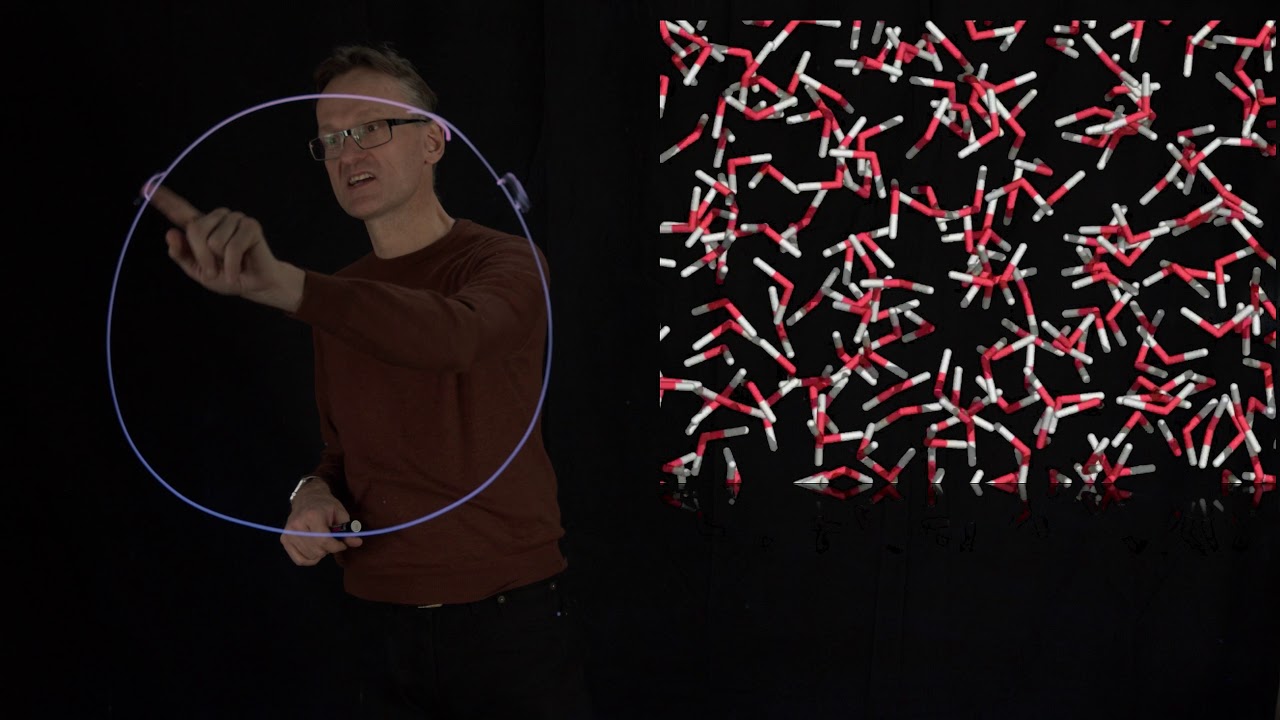
the first part we're going to bring up is water it's a super simple liquid you could argue it's not even biophysics but it's the basis of all these interactions with biophysics and that's why we need to start there this is a computer simulation of water i figured it is fun to start that way because you've all seen experimental water i hope in terms of water here this is probably 10 picoseconds or so so it's very much physical time scales hardly chemistry but this manages to reproduce all the properties of water the diffusion coefficient is right
the heat of vaporization is right the boiling and freezing points are going to be right and you even get some properties such as solubility of a piece of oil or something roughly right the other thing that you might see here is that although this is liquid the molecules can move around it's kind of like a mesh network so all these molecules interact quite strongly through hydrogen bonds these hydrogen bonds if we had a perfect ice crystal every single water molecule would have an average two hydrogen bonds formed per molecule it's slightly less in water because
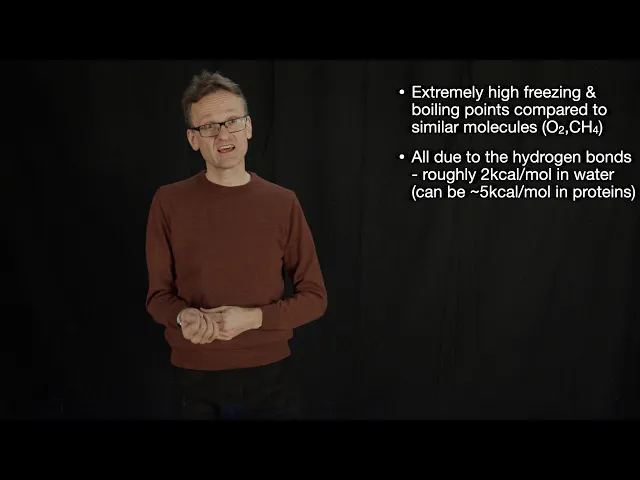
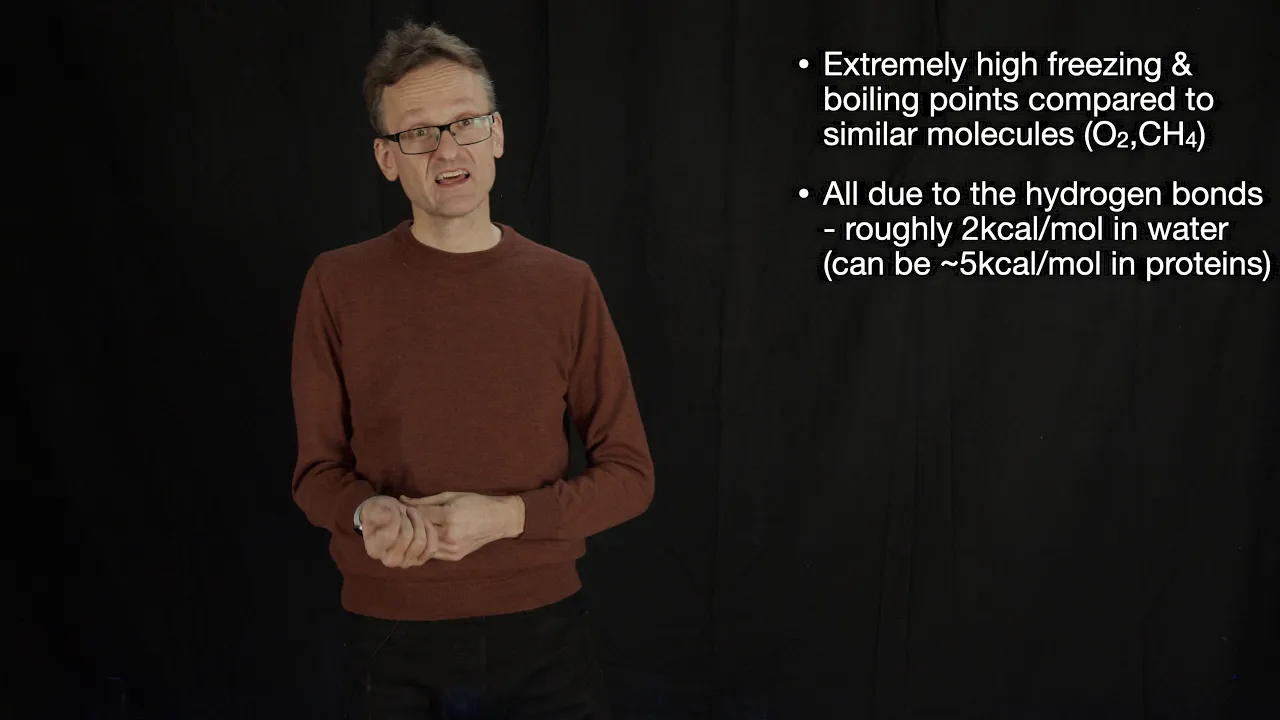
it keeps breaking a few of them but it's actually as much as 1.7 around room temperature so most hydrogen bonds remain formed even when water is liquid and that's what gives us very special properties in particular very high boiling temperature and a very high melting temperature most other simple liquids that you know about you probably don't even think of them as liquid but oxygen can be a liquid methane can be a liquid carbon dioxide can be a liquid and even most noble gases can be liquids if the temperatures are low enough and low enough in
some other places might mean 0.1 kelvin the reason why you need to go to so low temperatures is that those atoms don't those molecules don't really attract each other very strongly so they prefer to be gases water on the other hand due to these hydrogen bonds the molecules will attract each other very strongly and due to this attraction that means that they're going to form something called condensed phases where atoms prefer to be together rather than more or less infinitely far away and that's the whole definition of a liquid or solid in water in particular
these hydrogen bonds have strength in the ballpark of say two kilocalories per mole we're going to come back to those energy units later on but it's important to to be aware that whether it's kcals or kilojoules or k cos per mole you can use absolutely anything you want but you need to get it right it matters that this is per mole the actual energy of an interaction between two waters is almost nothing and that's why we're having it per avogadro's number of molecules here to get easier numbers to talk about inside proteins there are also
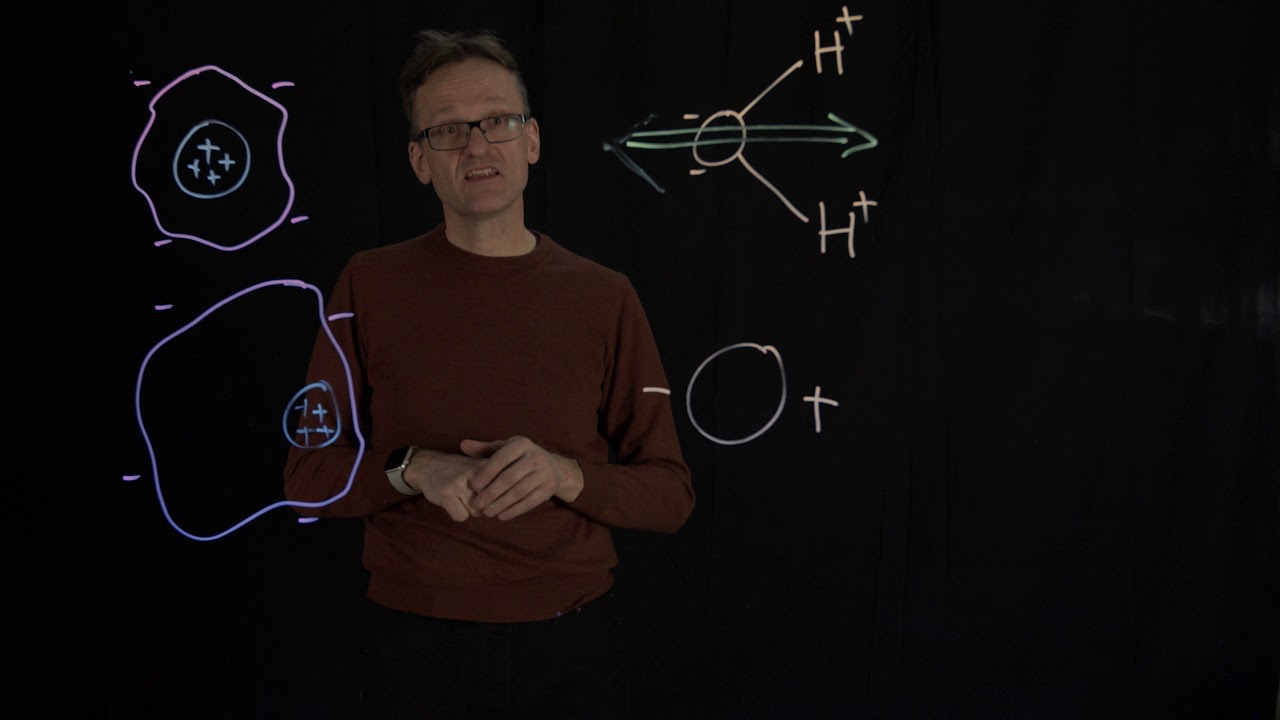
hydrogen bonds the strength varies a bit more some of them are very weak but some of them can be a bit stronger because those molecules are more polar so maybe up to five k cows per mole or so the reason why we get those hydrogen bonds despite each water molecule is neutral it's not like an iron but inside this water molecule the oxygen here is a very electronegative compound so it's going to steal some of the electrons sitting on the hydrogens to create an excess electron density around the oxygen here and it's so much that
it's almost as if we had a full extra electron on the oxygen now it's not an extra electron it's stealing those electrons from the hydrogen so that corresponds to taking half that charge from each hydrogen so the hydrogen is then going to have an excess plus charge that means that this molecule is effectively going to be a dipole so this dipole then means that it's like having a small arrow pointing from the red one that's negative towards the the center of the hydrogens that would be the effective positive charge here one such molecule doesn't make
a ton of difference but if we now take many such molecules this positively charged hydrogen would suddenly love to start to interact electrostatically with this negatively charged oxygen and then we're effectively creating an electrostatic interaction here between two different molecules and that's given the magnitudes of these numbers this is going to be quite strong so strong that it's not quite a covalent bond but almost and that's why they remain formed even when we have the water in liquid and the molecules are moving around this dipole property of each water molecule is also what gives us
some of the properties that you might have seen that if you take a comp and charge it for instance by just combing your hair or skin of a cat that means that we have a negative charge on the comp electrons in that case and that we can use that to push away atoms that this negative charge on the oxygen is going to repel my the electrons on the comp