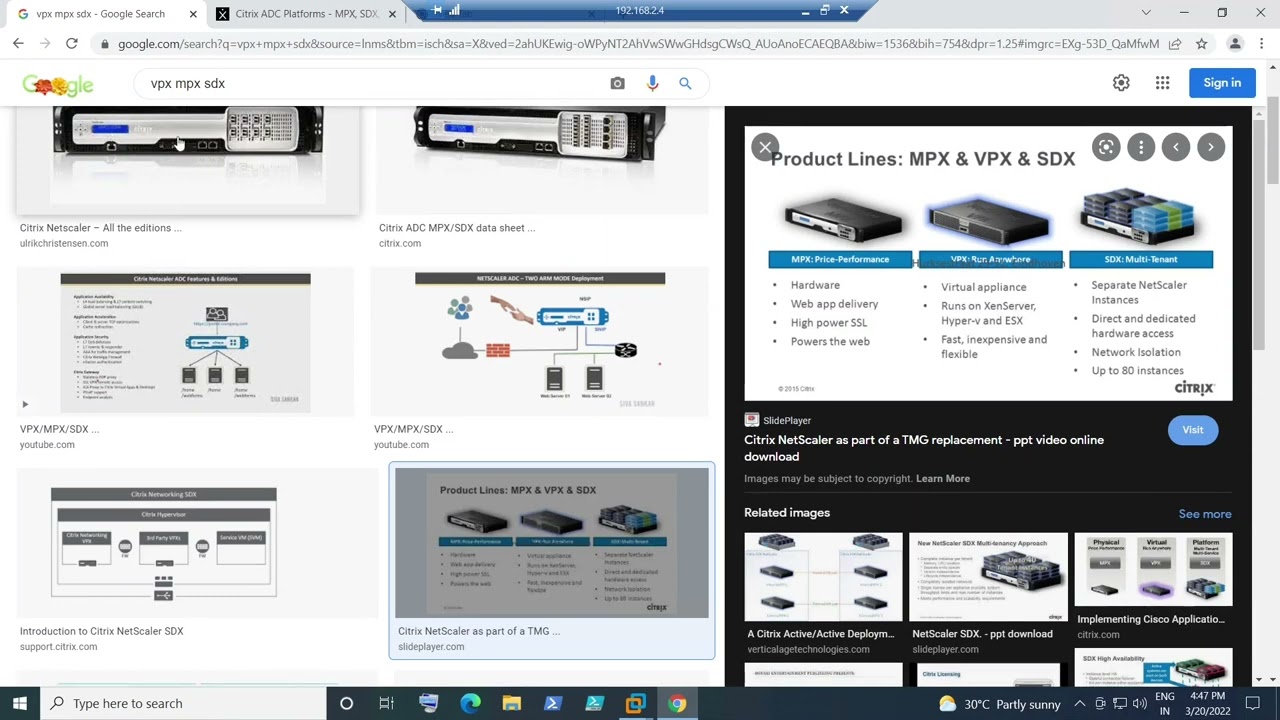
so Citrix net scale of platforms so it is available in three models one is physical Appliance and another one is virtual Appliance and another one is it is also available in public Cloud so it means Citrix ADC you can deploy on your public Cloud such as Azure AWS and gcp which is Google Cloud so you can deploy it over the public Cloud as well when it comes to Virtual Appliance this is a software so you can deploy it on your hypervisor such as Zen server as well as your hyper-v so you can deploy as a
virtual app lens in this hypervisor platform and coming into the physical Appliance it is also available as a physical device so you can you know rack mount in your data center and you can use it as well so based on the customer use case it is available in all the flavors so product lines and so when it comes to Citrix netscaler we have three types of net scalar again which is MPX VPX and sdx so VPX you can run it from anywhere from any hypervisor as I mentioned it is an appliance and then we can
we have MPX which is a physical model so this will come with a physical box or physical appliance that you have to direct mount it and third one is sdx sdx is also a physical Appliance but it is a multi-tenant so I will I will discuss in detail what is multi-tenant and why what is the difference between your MPX and sdx so VPX so VPX supports software based application delivery for Data Center and private cloud so you can deploy on your preferred hypervisor and Achieve High SSL performance with no Hardware acceleration best use case use
case that require a virtual platform replacing Hardware based use cases inexpensive and flexible so VPX it is nothing but a software okay so how you are deploying your Windows operating system in hypervisor similarly you will get a VPX Appliance as a software so you can just go to Citrix portal and you can download the tip lines and then you can deploy that on your private Cloud when I say private Cloud you should understand private cloud is nothing but your on-prem data center public cloud is nothing but your cloud data center which is AWS Microsoft Azure
and gcp so you can get this VPX Appliance and you can deploy it on your private Cloud as well as on your a public Cloud okay so it is and it is it is supported in major uh major hypervisor as I already mentioned such as your hyper-v your VMware sxi as well as your uh um Zen server so best use case for example let's say you are moving all your physical workloads into virtual workload then this is best suitable why because you don't need to maintain a separate box or you know or separate space in
your data center rack for the netscaler so you can replace your physical Appliance with your VPX and you can reduce the data center space so then the second one is replacing Hardware based use cases for example let's say you wanted to reduce your data center space and you are going to virtualize all your data center then this is best use case so you can deploy a virtual as a virtual Appliance and you can avoid the physical things and third one is inexpensive and flexible the third why it is inexpensive because it will start with the
300 Mbps and it will go up to 10 gbps uh in speed so you can at any time you can change the license and you can get the uh get the bandwidth changed so I'll come to the bandwidth part Etc okay so and the flexible it means it is flexible to deploy or in any any of the hypervisor or in any of the cloud for example let's say if your company is going to the cloud then you can also deploy in the cloud the same Appliance and you can get all the benefit which you are
getting in the on-premise so that is why it is flexible and inexpensive so this is related to VPX and the second model and second type is MPX MPX support Hardware based application delivery and load balancing purpose built for cloud scale and performance for SSL needs best suitable for managing web application with the multiple gear traffic high performance web application security high performance SSL support so basically MPX it is a physical device so it is uh basically used for the uh application which requires uh you know which processing multiple gigabyte of traffic for example if you
consider with VPX VPX has a limit when it comes to processing your traffic so you can go up to 10 gigabyte I believe uh the maximum bandwidth you can get and also there is a limit on the SSL transaction for example let's say if you are using users are generating SSL traffic maybe 5000 sessions so or 10 000 sessions with the VPX there is a limitation so you can you cannot go beyond that limitation however with the MPX you can go you know up to certain level as compared to VPX so this supports more SSL
transaction and um L4 and L4 L4 and L7 throughput etc etc okay in general it is having a high capacity compared to VPX and the second thing is it is having its own SSL chips if you wanted to know what is SSL chips SSL chips is nothing but a special kind of you know chips uh comes with the hardware appliance that will help you to uh offload your FS SSL traffic or decrypt or encrypt SSL profit when it comes to your VPX VPX is VPX doesn't have its own SSL chips it will use the hypervisor
SSL chips okay that is the reason they have the limitation on the transaction SSL transaction processing Etc but when it comes to MPX it is having its own SSL chips so that it can use that SSL chips to optimize or you know do the offloading of your SSL traffic etc etc okay so best suitable as I mentioned yeah if you have a web application which requires multiple gigabyte of data to be processed then you need to go with MPX Appliance okay and sdx so this is a very uh you know um beautiful concept so and
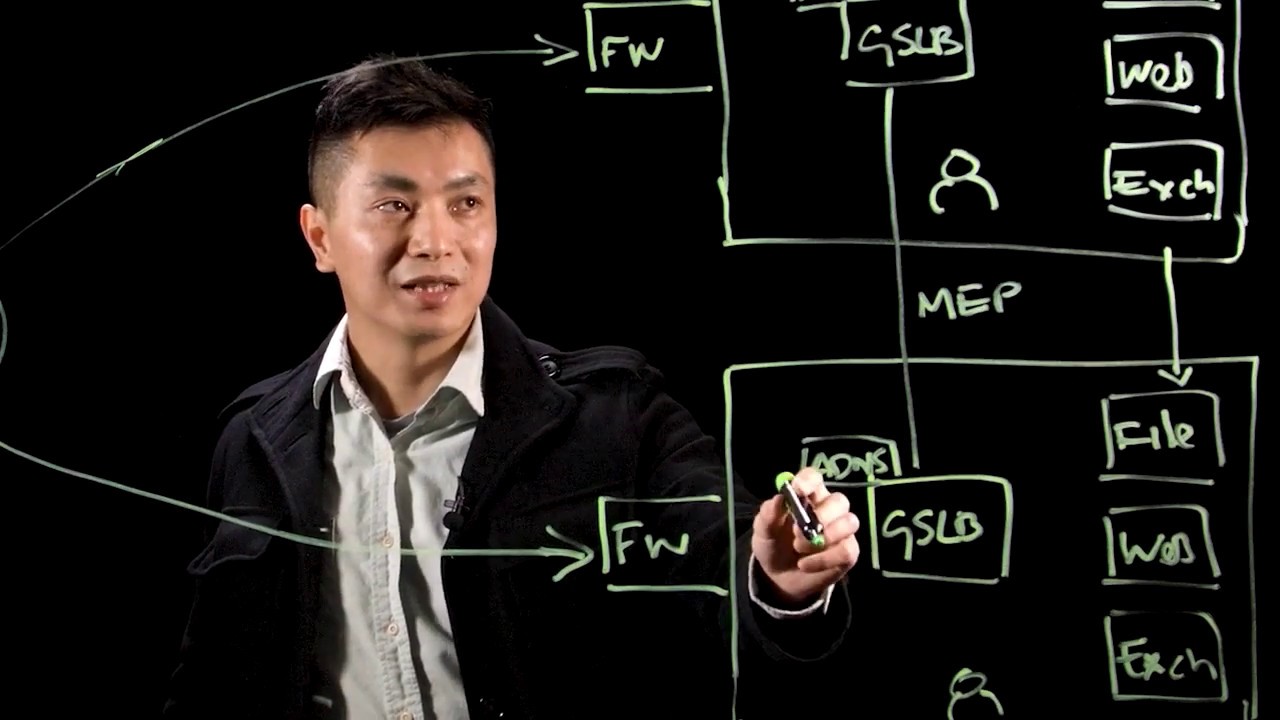
sgx is nothing but a fully isolated multi-tenant support for application workloads and groups okay so in order to understand sdx so I'll go to my whiteboard so consider MPX so as I mentioned MPX it is a dedicated physical Appliance Okay so this you can deploy on your data center and VPX as I mentioned this you can deploy on your public cloud or on your private cloud comes comes to the third part which is sdx sdx is nothing but it is a net scalar Appliance itself but inside sdx you can deploy a number of VPX it
is same like a hypervisor okay so for example let's say I'll take the use case let's say you have 10 applications out of 10 Phi application belongs to production five application belongs to non-prot maybe we will take 15 application and another five application belongs to your test and development so you wanted to do load balancing of all this Appliance sorry all these servers or web servers one option you deploy VPX and do load balancing of all this however this is highly not recommended why because there is no segregation between production non-product test and development you
are doing you are using a same UPS Apex plans to do all this load balancing which is security wise highly not recommended so one more option is same like vpa MPX you can go so with the MPX also it is same limitation still you are going to use a same physical box to load balance all your production non-prod and uh your test and development application which is security wise or not recommended the only difference between MPX and VPX over here is it is just a physical Appliance however there is no segregation when it comes to
your load balancing the backend application so in order to overcome these scenarios you can go with the sdx the beauty of sdx is it is a physical Appliance or it is a single box physical box inside this physical box you can create a number of VPX Appliance for example you create one VPX only for the production you create another VPX only for the non-prod and you create another VPX only for the test and development and then use this to load balance your production servers use this to load balance your non-prod and use this to load
balance your test and development now you may have a question still I am using the same Appliance how it will overcome the security challenges the answer for that is this sdx box comes with its own physical ports okay so you will connect the cable which belongs to production to that physical cable sorry for that physical interface and another cable for the another interface which is only for the run prod and you have a third one which is only for the test and development so Network wise there is no inter communication between this okay it is
totally isolated and this interface will only talk to your production sorry test and development and this one only talks to your non-prod and this one only talks to your production okay so there is no interconnection between these traffics so that you are going to isolate everything on the network level logically and physically so there is no intercommunication between this traffic so that you can avoid this security related issues where you know there is no communication between production to non-prod non-prot to production or to test and developments etcetera etcetera so this is the beauty of sdx
this is one use case for the STX and another use case is for the sdx is is considered the MSP managed service provider for example your company which is providing a service to multiple customers okay for example this is customer one and this is customer two and this is customer three imagine customer one is having an application and this guy is having one application and they are having one application and now they wanted to do the load balancing so they will come to MSP they will come to you and they will tell your their requirement
that I have some application I wanted to do the load balancing and I need your help so what that time you have one option either deploy vpmpx or deploy VPX for example deploy MPX or VPX over here for this guy as well as same PPX or MPX for this guy and vpx4 MPX for this bank so now you are going to load balance your customer using three different appliances however for the MSP who are managing this netscaler it will be a headache because they need to manage all the three Net scalar individually so in order
to overcome this what you can do you deploy one physical HDX box okay so for example this is a sdx box replace it with one single appliance which is a sdx box and inside this you create multiple VPX Appliance and then you do load balancing of your customer applications so for the MSB it is very simple for him it is only one device to manage physically but logically you have a three Appliance inside that so this is another advantage of Ms another advantage of sdx where you can host multiple tenants in a single Appliance so
that you can manage or administrate easily of your environment okay so that is the meaning of uh multi-tenant okay so here I mentioned multinarian support so let's say what is the best use case supporting hardware-based application with virtualization as I told you this sdx box is having a virtualization layer so it comes with uh SD sorry it comes with the Zen server as hypervisor so using that sensor you're going to deploy the VPX so that is the meaning of supporting Hardware based application with virtualization second one is consolidating multiple physical load balancer so one more
use case I can speak about uh SD access for example let's say you have the data center let's consider you are a big company you have a big company so you deployed multiple MPX Appliance okay MPX Appliance one two three four for example let's say this is used for your Citrix c-vad as a Gateway maybe this is used for your Exchange load balancing and this is used for your web application as a web for your Raw uh internal sorry public facing applications such as your SharePoint or portal or this is used for the VPN Gateway
Etc okay so now uh ultimately for the administrator or your you know Citrix admin it is a challenge to log into this and manage everything you know separately so instead of what you can do uh instead of avoiding all these physical appliance which is taking a Rackspace in your data center Etc so simply buy one sdx box and create a VPX and move everything to this one so that you don't have a headache to manage all the you know a number of physical Appliance instead of you will only manage one single Appliance instead that you'll
have all the um you know instances related to your this MPX so this is the one more advantage of citric systems so the third one is supporting fully isolated tenants as I told you the I gave the example of prod non prod and how we can isolate both logically as well as physically okay and then the fourth one is simplifying application rollout from staging and development environment so this is where nothing but let's say if you have two environment one is your production and another one is development so if you wanted to you know roll
out any test and development to production so you have you can have a separate instance for the production and separate instance for the uh development so where you can you know do all those testing etcetera so once you satisfied with the testing uh you know you can easily you know roll out that to the production environment so this is nothing but as similar to the first example which I give which is related to a production non-productive