the B2B buying Journey has changed so in this video I'm going to run through the updated LinkedIn ads Playbook which would help you grow your B2B brand this year we'll be running through the 3 FS of the LinkedIn ad funnel this should help you with not only how you should structure your account but the objectives for each stage of the funnel as well as a different types of content you should be utilizing on top of this we'll also be touching on some consumer psychology and its role within each stage of the funnel while listen to
us we manage millions of pounds of LinkedIn and Google ads spend each year for B2B Brands we've literally built our own LinkedIn ads attribution software we have pictures of LinkedIn all around the office and we actually have LinkedIn ads commenting on our LinkedIn ads about how good our LinkedIn ads are and if that's not enough I got a pair of LinkedIn socks for my secret Santa so yeah we like LinkedIn ads and enough about my socks let's jump in to the framework so the first section of the funnel that I want to jump into and
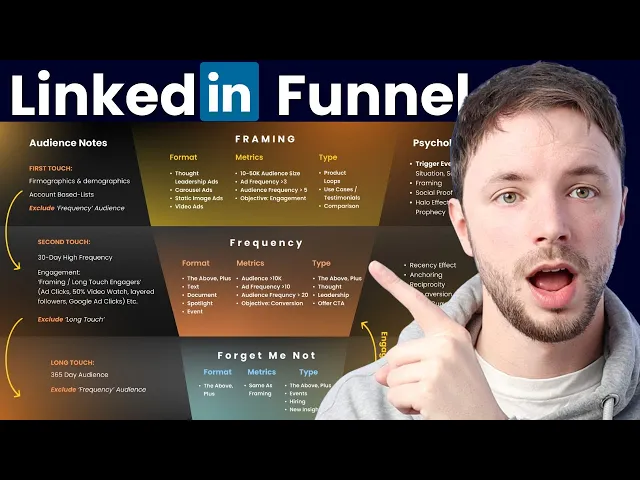
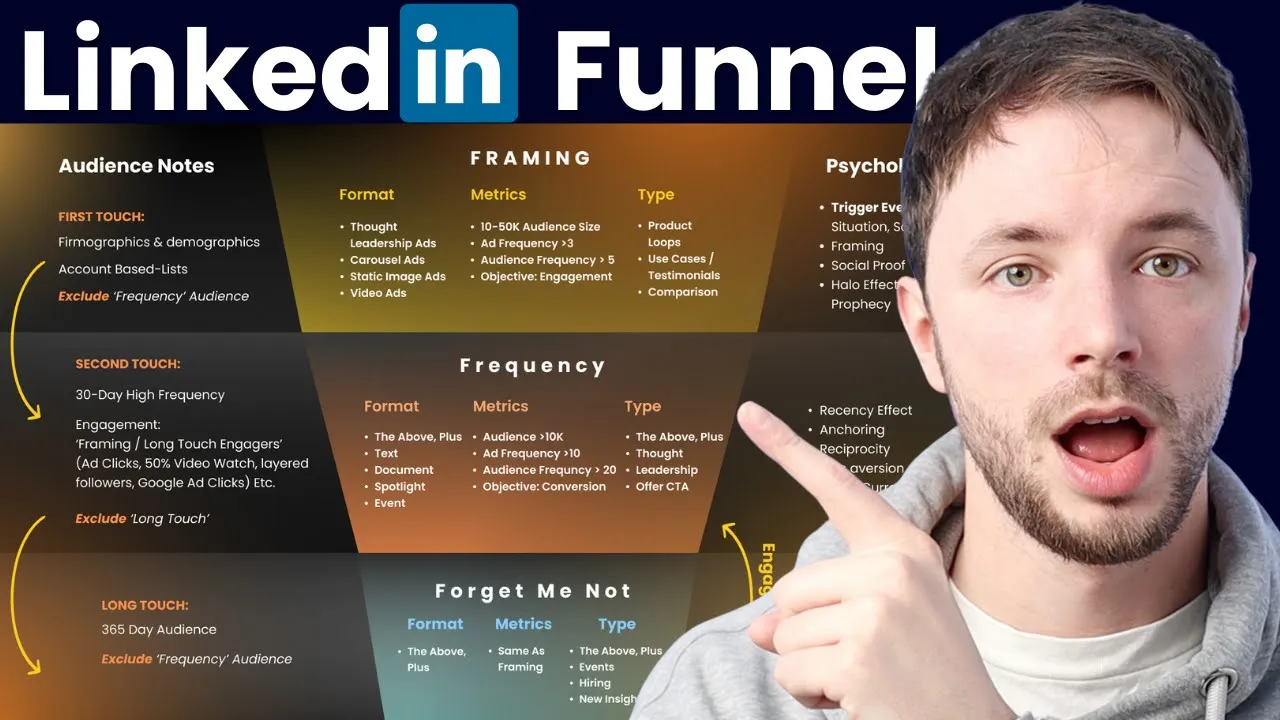
the first f is framing now before we get into what framing is let's first look on the left hand side of audience notes and this is very much from an audience perspective going to be the first touch point in many cases with the brand now this can be from targeting through Linkedin uh firmographics and demographics so size of company person within the company that we're targeting what's their job position um what industry is that company in or that person in sort of general firmographics or it can also be account-based list so if you have a
Target list from an account-based marketing perspective you're going after or you have a certain patch that you're going after you can also upload that list within here as well next we want to move on to the framing core components now there's a few different primary formats of ad that we want to be running at this point in time to really get the best bang for our buck and make sure that we can actually appear inside the feed in a memorable way those three formats are going to be Carousel ads static image ads and video ads
I'll get on to different ad types later that you can use these are the three that we found to be the most effective from a scroll stopping perspective initially especially with the types of content which we're coming on to from a metrics perspective you can play around with these but say for example we find typically that it's about 10 to 1550 2,000 audience size LinkedIn recommends going bigger but in a lot of cases we found especially in the UK for example that this is the size of the audience or if you are going across you
know the us or EMA as a whole you can narrow it down into certain job tit TOs and actually get quite narrow with the audiences you're going after to really keep that control it also depends on things like how much budget you have so you can always play around with these metrics but say for example for a ,000 person audience size you want to keep the ad frequency to less than three and that's per per month so you want to make sure that the same person isn't seeing the same ad three times per month which
is slightly different to the next one which is audience frequency and we're saying here that try and keep it to around about nine or less per months of the people seeing any one of your ads within the audience so that could be someone seeing this you know three different ads three times for example creating an audience frequency of nine it could be to someone seeing different ads each time but seeing it nine times you can kind of play around with that you probably can go slightly over but we don't want to be bombarding these these
people with messages at this stage of the funnel and the objective here finally is all around engagement we want to go back and look at the best types of Performing ads from an engagement level are people commenting are people liking are people sharing are people actually physically getting in contact with you off the back of it now even if someone does submit a form and they convert and they want to get a quote for your company or pricing or start a demo we still want to take them through the next stages as well to sort
of keep building that credibility which is something I will get on to in the second now the type of this content the main ones we found to be great um which actually help frame our product framing really comes down to how something is presented which can change the perception of it so we want to frame it in the best possible scenario so for example we could be framing it as the best alternative to what they're currently using through video Carousel or static image we could be you know framing it as how it's going to make
your job easier than it currently is we could be framing it is who it's currently help so contextually we could frame it as a testimonial ad which actually then lists within that testimonial ultimately what it's helped that person with and so for the type of content we're framing it using framing we want to make sure we you know getting across our value prop so we using it use cases and testimonials and then comparison to what they're currently doing and trying to bridge that Gap to the pain point they may currently be experiences so their problem
the solution your product in the middle and just touching on the psychology as a side note there's a few different things I want to touch on but quite quickly and the first one is a trigger event and a trigger event is very much a psychological um event that happens when someone first decides or feels that they need or want your product or service this could be emotional for example they feel like they're struggling with workloads they need to help streamline processes it could be situational that their boss has ask them or they've just been promoted
they're looking for something new or it could be social that you know people are talking about a certain product or service and you can sort of jump on that bandwagon so when you're framing the product through those different formats and those different types of content you know think about it as a trigger event we then go on framing which I just touched on about how we actually perceive the product to make it more valuable to the audience how you going to bring that all together then using things like social proof using the testimonials to bring
that in at this first touch Point as well can be super powerful um use cases testimonials and then on a slightly different point the halo effect which then leads into the self-fulfilling prophecy so halo effect is all around someone's first touch point with a brand if it's positive then further down the line they'll be looking for other things which may not be as positive but they will actually you know view them with rose tinted glasses because their first touch point was so positive therefore the self-fulfilling prophecy of what they've seen and then further down the
line so this first touch point is super important it's why we recommend using these formats it's why we recommend using these types um of content to put them out there and you can get super creative and then over the months you can see the best performing types of content from an engagement perspective and then you can optimize around those bits of content and then keep updating that creative from a first touch point and the second f is frequency so what you want to do now is go down to anytime someone engaged with one of these
ads for example we go then go on to from the uh first touch to the second touch and this is going to be very similar to say a b2c counterpart campaign where you go on to Amazon you put something in your car and for the next 30 days you get uh hit with all the ads across you know email uh you know Facebook Instagram around the thing that you have in your car trying to get you and incentivize you to come and check out obviously this is B2B so it's slightly different as the buying journey
is very different and the people who make the decisions are much more than in BTC in a lot of cases but it's very similar concept so anyone who engages with this we want to put them in a 30-day high frequency depending on your buying Journey product you know ACV you can make it you know 30 60 90 days it doesn't really matter but in this case it say 30 anyone who engages with any of the above ads um in the framing um side of things anyone who clicks on the ads anyone watches say 50% of
our videos we know they're engaged we want to make sure anyone who follows our um LinkedIn company page we can add them in there and layer it with the firmographics or account lists um also people click on your Google ads or anyone who goes to your website and visits your website then we can now bring these people into our second touch because even though it hasn't come the first touch hasn't come from LinkedIn they've still had an engagement with your brand which has hopefully framed their mindset around what it is that you offer so now
they're going into a high frequency audience now from a format perspective we want to make sure that we use all the above so we can still use a lot of the same ads but just a much higher frequency um because for example someone may have only seen a value prop ad in this one but hasn't seen the other use cases and comparisons these can be in there as well but the the whole purpose is to make it a higher frequency which I'll get on to so we want to make sure we use all the above
we also want to leverage thought leadership ads here this is very similar to uh the ads that you can run from your company page but ultimately these thought leadership ads are quite new from LinkedIn but you can actually run paid promotion from individuals ads like company owners uh sales team teams directors wherever you're running um these ads from you can actually start promoting the individual within the company who's running these ads it's a really good way of building that trust and building that credibility within the company and putting faces to names and actually bringing in
more types of content that isn't just a faceless branded company I've got a whole video around the leadership ads which I'll link to up here um as well which you can go into and how you can utilize that and you know internal influencer marketing and B2B this year inmails are one of my favorite from this section because ultimately someone's engaged with your brand you can create an audience and for example you can then start what we call conversation ads which ultimately pings off the people that have engaged with your first step and it can either
you know give them more case studies give them more information give them you know opportunity to reach out to the sales team natively within the platform without pushing them away to a website and then the author Le ship and in mail will be the primary and text and document I say you can use those as well but those going to be sort of secondary touch points slightly cheaper texts are great because you just have them on desktop for example so you know it's sort of like when when someone's probably sitting at work on the desktop
and document ads are good if you're going to be promoting sort of a longer form piece of content but won't Touch Too Much on these now the frequency section is super important for example we find this audience size typically has under around 10k of this of if we had a 50k initial audience size and depending on obviously how long the frequency is at this point we want to make sure that no ad has been seen more than six times again I'd probably try and keep that to around three to stop getting the same person to
see the same ad so many times but it all depends on how much creative you have available um the audience frequency is the important one you make sure it's over 20 so we want to be making sure there's at least one touch Point pretty much per working day that month so they're actually seeing vast variety of different ads and the objective here is conversion we want to get different types of ads which prompt people to get in contact and sort of show everything at it we've deemed there may be an organizational intent from you know
external channels like Google ads or from that first touch point so just trying to get in front of them as you know physically possible to try and capture all demand that is there and if it's not there and we're not capturing demand in this time we're starting that process of creating demand so the type of content again you can use all of the above um plus the director employee posts we want to sprinkle in some high intent like I mentioned first touch point we're framing the product we're not trying to get that high intent touch
point we're trying to get someone to consume it and then finally things like product Loops service Loops how you work it and just throwing in all the testimonials and case studies you guys have a really high frequency for the next 30 days now within this from a psychological perspective there's a couple of different things I want to touch on one is just the mere exposure effect this has shown that if you show up a lot more in someone's feed you're you know by default going to be trusted more and therefore people are more likely to
buy for you so getting this high frequency is super key anchoring as well is trying to State what they're currently doing is it costing the money is there a cheaper alternative to get the same result um this also kind of ties into um loss AV verion as well which I haven't listed down here but the main one as well I try and focus on here is social currency um which is slightly different than social proof and social currency is how can they see actually their peers agree with what it is you're selling know it's a
good product and everything else and this is very much when you have ads or you have th leadership posts which have lots of likes lots of comments lots of Engagement of people agreeing great conversation great debate in them this is when you can start amplifying those posts which you know have a really good impact because if someone sees lots of different marketing managers or people that they know communicating within these comments or people in a very similar position they're much more likely to you know pay notice and actually not think it's just another ad that's
being run for a couple of days hasn't been thought about and no one really cares about it outside of the company that's promoting it again make sure these things are used um responsibly don't just be throwing them out there Here There and Everywhere to try and you know manipulate people into buying it's all going to be based off actual real world testimonials real world reviews and actually around Real World engagement which you guys are putting out into the world and adding value so we have the frequency and if someone hasn't engaged in that 30-day period
and then go into a long touch and what I've kind of haven't mentioned here is you want to exclude everyone in the frequency um stage in this first touch as soon as someone sees one of these ads and clicks you want to exclude this audience they're now in and then you want to do the same with what we call the long touch which ultimately is excluding anyone from the long touch from this frequency here so we want to make sure that anyone from 30 days to 365 days is in this audience no one goes straight
into this audience for example and again I'll link at the end to a video which shows you how to set up a LinkedIn ads account which includes audience at the end of that video as well which will make this super clear now this third f is called Forget Me Not So we have framing frequency and forget me not it's a bit on the nose and we have to think of a third F just to make it sound cooler uh but this is probably pretty much what it says on the tin um from a format perspective
we're running very similar ads as well as potentially using secondary Spotlight and event ads metrics we're trying to use a very similar frequency to framing we don't want to spam again we've kind of gone through the high frequency High intent interest phase and now we're just maintaining the types of content that we should be pushing out here are going to be content which brings people and draws them back into the brand we want to know that potentially if we've done framing correctly they have a good idea of what our brand is and you know the
use cases behind that and how we can save them money or you know make their life easier we framed it correctly we then gone through a high frequency 30 to 90day period in which they you know understand more about our use cases they understand about our team they understand the way we think about marketing uh but they haven't converted yet so now we you take the foot off the gas stop pestering them and we want to therefore start doing things like we have events so maybe they didn't want to sign up online but they may
want to come to an event to meet you guys in person so you can bridge that gap between offline and online you can then use things like updates so you launch a new product maybe your old products weren't worth it for them but you have sort of like a new offering which may you know could be better suited to them launch that you have new videos so for example for me in our you know long touch audience I could upload a video like this around LinkedIn strategy and someone may not be interested in buying but
we know they' seen our ads around what our company offers um they've seen sort of the high frequency use cases and clients that we've helped um and then now they want to just see more info content around you know the subject matter they're interested in so if they move jobs have budget whatever it may be it may open up to work with so you can kind of use whatever you want in here just keep it low frequency you can use a lot of it just keep updating it with different ad creative and you these people
are sort of your nurture sort of email list type audiences and the things I like about this as well is you can move on to the psychology perspective Ive there's going to be two main things you're looking at one is the authority bias in the fact that if you can you know keep offering value you're doing a podcast for example with someone who's well known in the space you've been featured in Tech crunch all of this stuff is going to sort of add to the perception of your Authority in which people are going to S
trust you more and more so you're building that up so make sure you link to any sort of third party press and all that stuff don't worry too much about attribution at this stage um next one is a recip reciprocity reciprocity I can never say it and this is around when you're giving away so much much value that people feel that they've earned sort of like some you know return of that value in itself whether that's going to be money time whatever it may be so if you're giving away really valuable um everything from your
relevant ebooks to data and research to training to software products for free potentially you're building up that good will so in the future if they do then end up engaging with one of the Forget Me Nots they're then going to go straight back into the frequency again because they then engaged with one of the ads which takes them back into the high frequency area so you can kind of see how this Loop and fly happens of advertising and marketing we're always trying to find the best performing ads to get someone into the funnel we're then
hitting them with a lot of different frequency ads to give us a really good opportunity like to show the social proof and to show that we're you know a good company to work with and getting back in front of them um at a faster and more frequent scale and forget me not is very much a nurturing to make sure um that we can keep engaging with these people that have gone through the initial stages and I'd probably kind of of frame this as framing um frameless as framing being what we call the old you know
top of funnel the frequency being bottom of funnel sort of high call to action trying to get the conversion and then the forget me not being the mid funnel so not the typical top middle bottom it's going to be top um bottom middle at the end CU it's very much around timeline and how much someone shown intent into your product that we should be advertising it shouldn't be like okay they've seen this ad they should now see this one they should now go through this sequence it's very different to how it used to be and
the B2B buying model is always changing the more educated customers are getting uh quite rightly so the uh the B2B marketing landscape is changing I hope you found that useful if you actually want to know how to set up a LinkedIn ad which includes setting up audiences and these sort of workflows click on this ad up here and uh it should show you everything that you need to know uh any questions back them in the comments but until next time guys thank you so much for listening