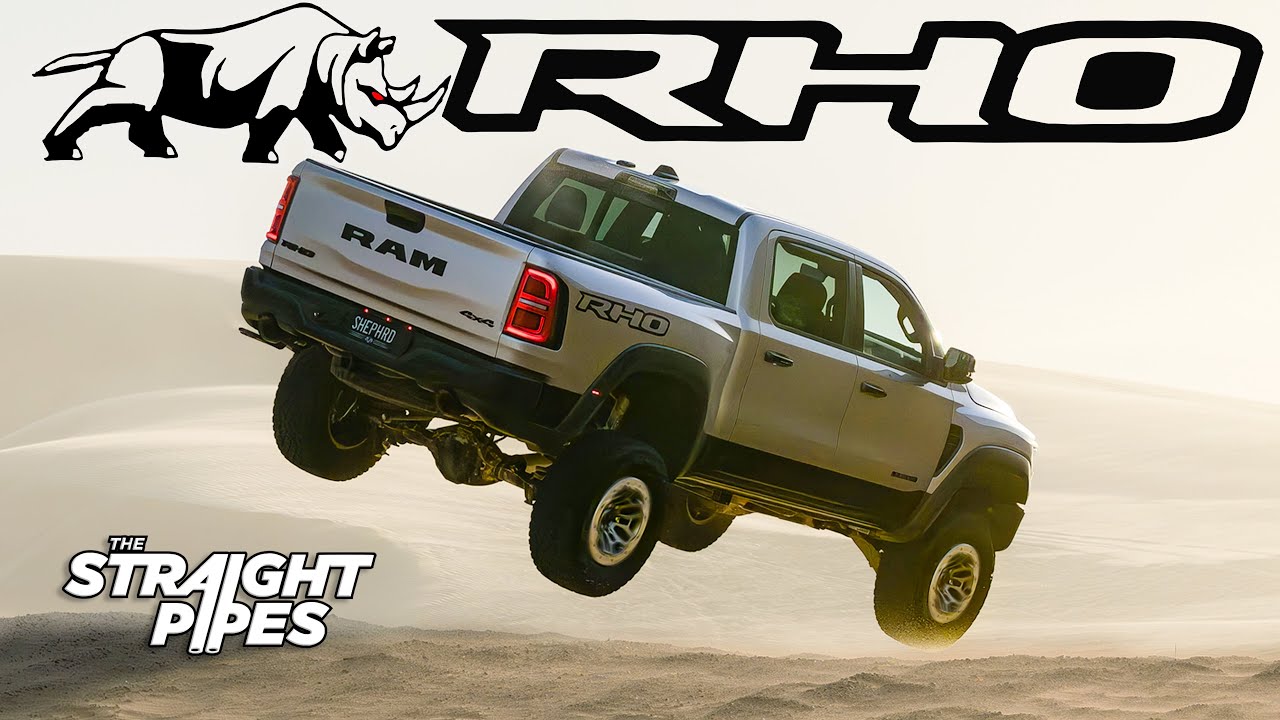
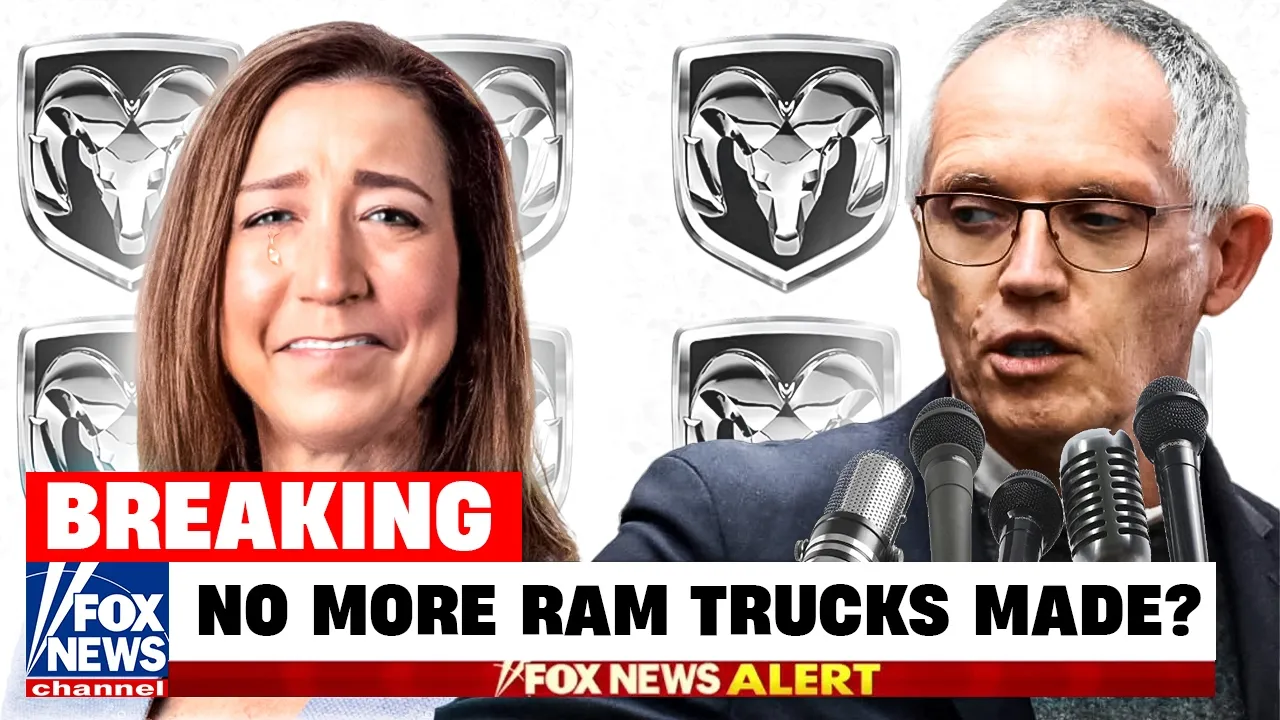
The legendary Ram 1500 truck is about to be a thing of the past. Stellantis is making changes to it, and this truck is getting the axe. But that is just the tip of the iceberg; Stellantis is also firing workers in astronomical numbers to a point that it is even getting the union's attention.
Thousands of employees at the other Detroit 3 automakers, Ford and GM, are affected. This is so bad—not just for the auto industry but for the whole economy. So, why is Ram shutting down their truck production, and what is happening at Stellantis?
What is happening? Well, the CEO of Stellantis is saying that the car market is in turmoil and every auto brand is struggling. In fact, they are kind of the best performers right now.
But the union president, Shan Fain, says he is a disgrace—such an embarrassment that if any auto worker performed as poorly as Stellantis CEO Carlos Tavares, they would be dismissed, just like the hundreds and thousands of people that they are laying off. But let's clarify: why are they doing this in the first place? The simple answer is declining sales, but sales are just an indicator of problems and deep-rooted issues—not the problem itself.
So, what's the reason behind all of this, and how big of a deal is this really? Well, just look at the plan set to begin as early as October to lay off up to 2,450 people just from one factory. As for the future of the truck, Ram wants to commemorate this muscle machine with a special final edition.
To be honest, maybe it is time for this change. I mean, just look at the sales charts, and you will understand it all. Over the past few months, we've seen a significant and troubling decline that screams for attention.
To put it bluntly, Ram's sales figures are pretty concerning. Looking specifically at the first half of 2024, the numbers have taken a nosedive, plummeting by a staggering 19. 5%.
This translates to a jaw-dropping drop of nearly 45,500 fewer units sold when we compare it to the same time frame in 2023. That's a colossal setback. Such a dramatic decline raises a lot of eyebrows and questions about what's really going on over at Ram trucks.
During the same period, competitors like Chevy have been leaving Ram in the dust, with Chevy selling around 100,000 more units than Ram. That's not just a small gap; it's a chasm. Such figures highlight not only the struggles that Ram is facing but also their urgent need to reassess their strategies and possibly pivot in response to the shifting market dynamics.
With these challenges mounting, it raises a lot of questions about the brand's future. How will Ram adapt to reclaim its spot in a highly competitive truck market? Well, we have already discussed the discontinuation of their legendary truck, and instead, they are releasing a special limited edition.
That should show you the intentions behind Stellantis. This limited-run pickup signals the end of an era for a true high-performance icon. So, what makes it special?
What's their strategy with this? This edition is limited to only 4,000 units worldwide, making it a rare find for any truck enthusiast. Among these, there are 340 units specifically allocated for the Middle East market and 130 units available in Australia, proudly priced at $249,950 plus on-road costs.
Each unit is poised to be a collector's item, so if you're eyeing this beauty, you better act fast. And that is what Stellantis wants you to do. See, they are capitalizing on their reputation and the beloved Ram name to push cars with sky-high prices.
Now, don't get me wrong; this thing is a beauty. It features satin titanium beadlock wheels and unique TRX badging that add a rugged charm, along with the passenger side satin titanium TRX dashboard badge for added exclusivity. On the inside, luxury meets performance with patina stitching and an embroidered TRX logo on the seats.
The full-weave matte carbon fiber accents enhance the sleek look, while triaxle suede door panel inserts add refinement. But the best part is what is under the hood. This beast is powered by a supercharged 6.
2L Hemi V8 engine, delivering 702 horsepower and 650 lb-ft of torque. It rockets from 0 to 60 mph in just 4. 5 seconds and completes a quarter-mile in 12.
9 seconds, with a top speed of 118 mph. Get ready for an exhilarating driving experience. In essence, the 2024 Ram 1500 TRX Final Edition is the beloved truck on steroids with an expensive price tag.
This goes to show you the plans of Stellantis; they are implementing several strategies to reverse its sales decline and regain market share. At the heart of this, Ram is gearing up to shake things up with the introduction of exciting new models that promise to redefine what we expect from pickup trucks. It’s not just about carrying loads anymore; it’s about doing it with style, efficiency, and capability.
But Ram is also on a mission to address some of the criticism they face, particularly around payload capacity. They’re set to roll out enhancements that will include cutting-edge load-bearing helper systems like hydraulic dampers and airbags that will not just elevate the driving experience but also supercharge towing and payload capabilities. In a world where competitors like Ford and Chevy are pushing the limits with higher capacities, Ram has to step up its game to stay in the ring.
But that's just the tip of the iceberg. There's buzz around potentially reviving the midsize Ram to offer alongside the exciting launch of the Rampage, which recently made its debut in Brazil. This move to enter the midsize truck market could be a game changer.
Ram is positioning itself to attract a wider, more diverse customer base. It's like they're. .
. Saying, "Hey, we see what you want, and we're ready to deliver. " And when it comes to technological advancements, Ram isn't holding back either.
They're planning to upgrade the interiors of their trucks with sleek new designs and cutting-edge infotainment systems that scream modern luxury, featuring massaging seats that turn your daily commute or long rides into a spa-like experience. This isn't just about comfort; it's about justifying those high price points by offering features that make buyers feel like they're truly getting their money's worth. But will it work?
Well, again, the answer is simple. I mean, have you seen the prices on the new Ram trucks lately? Let me break it down for you.
We're talking about a starting price around $77,000 for models like the 2025 Ram 1500, and some splurge-worthy variants are even exceeding $80,000. Can you believe that? Those prices are so high they're practically flirting with luxury sports car territory for many potential buyers, especially those in the working-class demographic who have historically been drawn to Ram.
This is a deal breaker; it feels like they're being pushed out of the market before they even step foot in a dealership. With the cost of living skyrocketing—rent, groceries, and gas expenses—it becomes increasingly hard for us to rationalize splurging on such hefty purchases. Financial experts generally recommend that car loans should ideally hover around 10 to 15% of a person's monthly income.
So if you're eyeing that $80,000 Ram, you're looking at needing to pull in around $150,000 annually just to keep your finances in check. That's a tall order for a lot of folks, making it super tough to justify spending that much on a truck. That is why Ram dealers right now are dealing with a major headache.
They've got a backlog of unsold trucks parked on their lots, and it's not pretty. Reports reveal that there are hundreds, if not thousands, of new 2023 and 2024 models just sitting there and gathering dust. And then there's the dreaded topic of depreciation.
Buyers are understandably concerned about the rapid decline in value that these high-priced trucks face. It's predicted that a new Ram could lose between 15 to 20% of its value the moment it rolls off the lot. Who wants to make such a big investment only to watch it plummet in value almost instantly?
And when it comes to the reliability of Ram trucks, especially the standout Ram 1500, you're dealing with a bit of a mixed bag. Sure, these trucks are known for their impressive features, capabilities, and overall performance, but potential buyers should definitely be in the know about several reliability concerns. One of the most notorious problems that many Ram 1500 owners face is the infamous Hemi lifter tick.
Ever heard that persistent ticking noise coming from the engine? Yeah, that's typically linked to faulty lifters. If this annoying sound is left unchecked, it can escalate into something much more serious, such as worn camshafts; this could mean significant engine damage awaits if you don't act fast.
The lifter tick tends to be particularly loud during those chilly winter months, and let's be honest, who needs that aggravation when it's already cold outside? Statistically speaking, this issue often starts to show its ugly head after the truck hits around 70,000 miles, which is usually when owners begin to pay closer attention. If lifters need replacing, keep in mind that repair costs can skyrocket into the thousands—definitely not pocket change.
Some owners have tried to tackle the tick issue by switching to higher-quality oil, but that's really more of a Band-Aid solution rather than a real fix. But that is not all; numerous owners report dealing with broken or warped manifold bolts, which can create exhaust leaks that seriously compromise vehicle performance. A broken manifold bolt prevents a proper seal against the engine block.
That means exhaust gases escape, risking damage to nearby components. This not only hampers the truck's performance and fuel efficiency but can also lead to failed emissions tests—and nobody wants that hassle. Addressing these exhaust manifold issues isn't a walk in the park either; the repairs are often labor-intensive.
You're looking at a process of extracting those pesky seized bolts, which can turn into a costly endeavor. Many owners aren't even aware of the problem until they start experiencing a ticking sound or a noticeable drop in performance, which makes it even trickier to catch early. Now, I can go on and on about the list of issues, but I don't have to tell you all of them.
Just look at the recalls. In the year 2024 alone, Ram found itself recalling a range of its popular trucks, specifically the 2023 Ram 1500, 2500, and 3500 models. So what was the big deal?
Well, it turns out there was a significant flaw in the welding of the transmission control unit. This wasn't just a minor oversight; it could potentially allow transmission fluid to leak directly onto electrical components. Why is that a concern?
Because if that happens, you could lose drive power altogether or find yourself unable to shift into park. Let's cut to the chase, shall we? I could dive deep into the endless list of recalls plaguing Ram trucks, but who has the time for that, right?
What really matters here is the crux of the issue: a significant drop in demand for these trucks. And how is Ram responding to this challenge? Well, with some serious discounting and incentives!
Like, we're talking steep reductions here. Dealers are rolling out the red carpet with discounts ranging from 12% to a jaw-dropping 20% off the manufacturer's suggested retail price. They're clearly in a scramble to attract buyers back into showrooms, hoping to entice them with these eye-catching deals.
But the thing is, to a lot of people, these hefty discounts are like alarm bells ringing loud and clear. clear hinting at an initial pricing strategy that might have been way off the mark. Really, what's the message for consumers?
It's starting to look like we should always expect to snag their favorite vehicles at lower prices, which can sour the buying experience. This glaring disconnect between Ram's sky-high pricing and the actual market demand is brewing a perfect storm, and it's not good news for sales figures. So what does all this mean?
It's clear that Ram Trucks is already wrestling with some pretty significant challenges, and those are largely tied to their pricing strategies. Now, imagine how things would unfold if Ram decided to double down on this approach. Things might get even messier.
But Ram isn't navigating these waters alone; almost every brand under the Stellantis umbrella is facing similar challenges. This signals deeper problems within the overall company strategy. A trend like this suggests a much larger predicament, and it's one that begs for some serious examination.
Let me explain using facts and data. The numbers don't lie. Here's a snapshot of the Q2 2024 sales figures for some of the most significant players under the Stellantis umbrella, starting with Jeep.
This brand has taken a hit, experiencing a 19% drop in sales compared to last year. When you look at the individual models, the numbers tell a tough story. The Wrangler, a fan favorite, is down 17.
7%, while the Gladiator has seen an even steeper decline at 24%. And it doesn't stop there; the Grand Cherokee is down a whopping 26%. But we are just starting, so watch carefully.
Moving on to Chrysler, the news is similarly bleak, with the brand also facing a 19% year-over-year sales drop in Q2 2024. The Pacifica minivan, which usually garners a lot of interest, drops 16%, with just 37,718 units sold. Then there's the 300 sedan; it plummeted by 53%, wrapping up the quarter with only 1,198 sales.
Next on the list is Dodge, and it's not escaping unscathed either, with a 17% decline in sales for the same period. The Challenger, which has had its share of loyal fans, dropped 11% to reach 11,480 units sold, while the Charger took an even greater hit, down 34% to 16,216 units. This decline makes sense, as the current generation is wrapping up production.
The Durango isn't faring much better, showing a 9% decrease and landing at 7,795 units sold, while the Hornet is the lone model not exiting the production line, having sold just 4,299 units—which raises some eyebrows. So how is this affecting Stellantis? Layoffs on top of layoffs.
The company has been making significant layoffs, and the driving forces behind these drastic measures stem from a notable decline in vehicle sales coupled with a strategic pivot towards electric vehicle production. We have already talked about the plans to lay off up to 2,500 factory workers from the Warren Truck Assembly Plant because production of the Ram 1500 Classic is winding down, but that is not all. You see, in July 2024, Stellantis announced temporary layoffs that affected over 4,000 workers at the Warren Truck Assembly Plant.
That's right, over 4,000 people. Among these workers, about 1,600 were directly impacted when the second shift was scrapped. What triggered this decision?
A staggering 21% drop in vehicle sales compared to the previous year, which forced the company to cut back on production. It's like watching the dominoes fall in slow motion, and unfortunately, the effects are rippling through the workforce. Not far behind, we have the Toledo Assembly Complex, where layoffs have also created turbulence, particularly for those working on the Jeep Gladiator.
Approximately half of the 5,000 employees at this complex were affected, with production halts anticipated to linger for at least two weeks. Imagine going into work on a random day and finding out that half your team is on the chopping block. Earlier in the year, the situation was dire as well; Stellantis had already laid off 2,453 employees, both full-time and supplemental, at the Detroit Assembly Complex.
But it didn't stop there. They also made cuts of 400 engineering and tech workers back in March, along with layoffs of temporary part-time staff scattered across various locations. It's like a chain reaction, each event leading to more uncertainty for the workforce.
CEO Carlos Tavares has made it clear that Stellantis is targeting a 30% reduction in costs, primarily through job cuts and an emphasis on improving efficiency. This declaration has understandably sparked concerns among employees regarding job security and whether the company genuinely plans to support its workforce as it transitions to electric vehicles. But what is the impact of this?
When you hear about layoffs at a giant employer like Stellantis, it's easy to think, "Oh, that's a bummer for those poor workers. " But hold up; the reality is a lot more complex than that. Those pink slips don't just affect individuals; they're more like a stone dropped into a calm pond, sending ripples across the entire community.
And believe me, it's not just the laid-off workers who feel the pressure — communities start feeling the squeeze too. Imagine this for a second: when factory workers lose their jobs, their purchasing power plummets. What happens next?
Local businesses start to feel the crunch. Think about those charming mom-and-pop shops on your block. When loyal customers suddenly find themselves unable to afford a night out or a shopping spree, these once-bustling businesses begin to struggle.
This phenomenon is what's known as the multiplier effect. Retailers, hair salons, local cafes — you name it — all could see declining foot traffic. The fallout doesn't stop there; as these businesses experience a dip in sales, their employees might also face layoffs.
It's like an avalanche of job losses just waiting to bury the whole town. As unemployment rises, essential community resources, like food banks and social services, become increasingly strained, leaving families that relied on steady incomes in a precarious situation. Incomes are now heavily dependent on support systems at risk of breaking down, creating an atmosphere thick with anxiety and unrest.
The struggle affects real people and families, with dreams hanging by a thread. Think about the workers who recently secured better wages and benefits, only to receive layoff notices; the feelings of betrayal and uncertainty are profound. On the political front, local leaders aren't inactive as their communities face a crisis.
They are voicing concerns and advocating for workers in distress. But what is the union doing? Well, to be honest, Stellantis has done some damage.
The atmosphere within the union is reaching a boiling point, and the discussions taking place behind closed doors are anything but tranquil. The echoes of discontent are loud, resonating through the very halls where decisions are made. Workers are giving the United Auto Workers the side-eye glance; a growing number of them are beginning to question whether their leaders are truly doing enough to safeguard their interests.
Imagine being part of a sports team where the coach makes a series of questionable calls; you can't help but wonder if they even know what they're doing. Whispers of discontent are swirling around that some union leaders aren't adequately supporting their rank-and-file members, and as a result, many feel profoundly disheartened. A growing number of members are calling for a shakeup at the top.
Many UAW members are tossing around pointed phrases like "sellout bureaucrats" aimed at their leaders, accusing them of failing to address crucial issues, particularly when it comes to job security. This sentiment is catching fire, and the idea of bringing in fresh leadership is looking increasingly enticing to those who feel betrayed. Their desire is crystal clear: they want a leader who is ready to fight tooth and nail for workers' rights instead of merely sitting behind a desk, comfortable and detached.
And that is where the union president, Sean Fain, the man stepping up and making some serious waves, enters this story. He's not holding back whatsoever when it comes to calling out Stellantis for its recent layoffs. His position is as bold as it gets; he's labeling these layoffs as a disgrace and rallying union members to come together and push back against the injustice.
You can feel the surge of energy in the air as he motivates workers to fight like hell. But there's more to this—Fain's passionate rhetoric is far from just empty words; it serves as a powerful call to action for all union members. He's emphasizing the importance of unity, urging everyone to band together in a show of solidarity.
The message is loud and clear: now is definitely not the time to back down or shy away. This battle isn't solely about job preservation; so what is their demand exactly? First on their list is job security.
And let me tell you, the union isn't just hoping for a friendly pat on the back and a casual good luck when the company faces difficult choices. They're going all in, pushing Stellantis to make job retention a priority over funneling money into the pockets of executives. They're declaring loud and clear that if the company genuinely cares about its hardworking employees—who have essentially laid the foundation for its success—then investing in these dedicated individuals should be at the very top of their agenda.
It's not solely about keeping people on the payroll; it's about crafting robust, long-lasting careers that can genuinely support families and uplift entire communities. But hang tight, because that's just the beginning. The union is also fired up about reviving benefits that have unfortunately fallen by the wayside.
And let's be clear, we're not talking about a shiny new coffee maker for the break room; we're discussing vital benefits that make workers feel appreciated and secure in their roles. The workers' union is advocating for enhanced pay and improved working conditions for every level of employee, especially the new hires who sadly often start earning far less than they truly deserve. Now, moving on to the third crucial demand: accountability when it comes to executive compensation.
You see, while thousands of dedicated workers are grappling with layoffs and uncertainty looming over their heads, Stellantis executives are raking in massive pay raises—a 56% increase, to be exact. The UAW is not the type to just sit back and accept this glaring corporate imbalance; they're shining a spotlight on the situation, calling it out with fierce determination. The union has made it abundantly clear that they're all set to file formal grievances if their demands aren't addressed soon, especially concerning the reopening of the Belvidere factory in Illinois and sticking to the promises made in the past.
They're ready to take serious action. And the union isn't just throwing around idle threats; they're totally serious about escalating matters with a fully organized strike against Stellantis. And we're not simply talking about a handful of employees stepping away from their desks; oh no, we're gearing up for a colossal walkout that could bring production and operations to a complete standstill across all Stellantis facilities.
Do you remember that last strike? The 2023 United Auto Workers strike was a historic labor action that began on September 15th and lasted for 46 days, concluding on October 30th. This strike was notable for being the first time in UAW history that the union simultaneously targeted all three major U.
S. automakers: Ford, General Motors, and Stellantis. Initially involving around 13,000 workers at three key assembly plants, the strike later expanded to include 5,600 workers at 38 Parts Distribution Centers.
With approximately 145,000 union members employed by these automakers, the strike significantly impacted vehicle production, which accounts for about 50% of U. S. automotive manufacturing and 1.
5% of the national GDP. So it is clear that workers have power. But will Stellantis give in?
What's your thought on this? Let us know in the comments. Thanks for watching; see you on the next!
One.