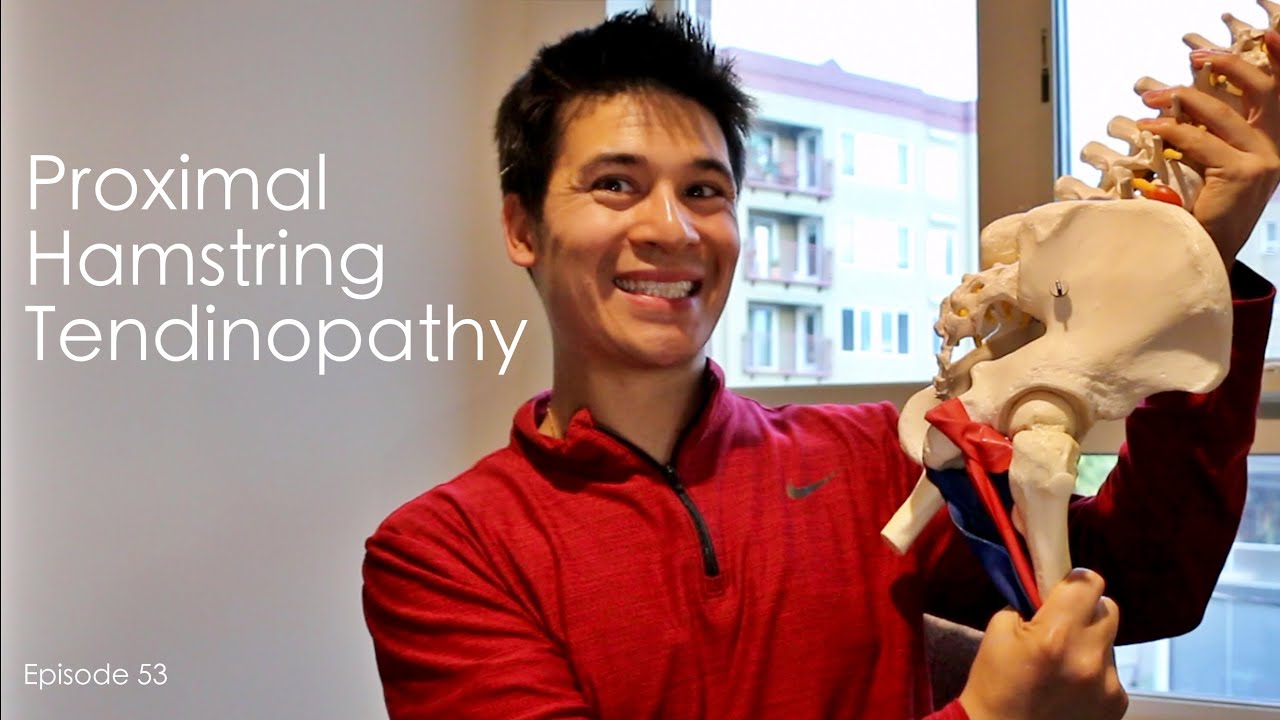
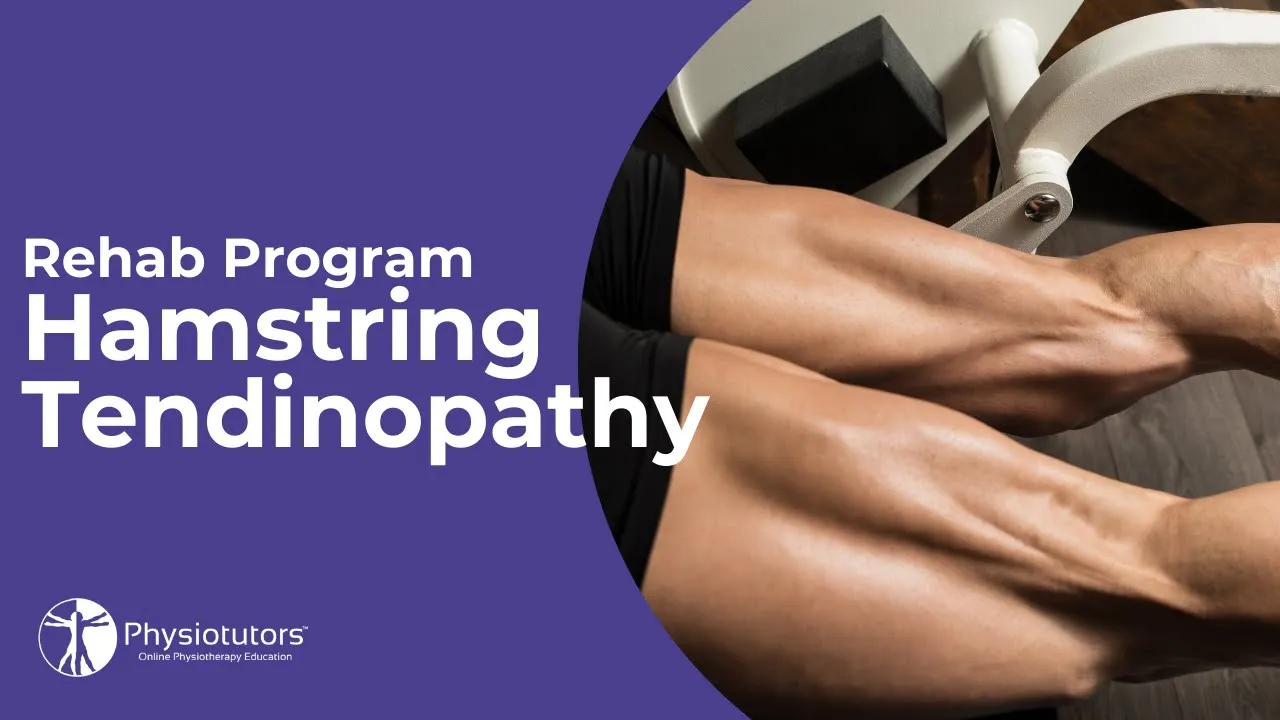
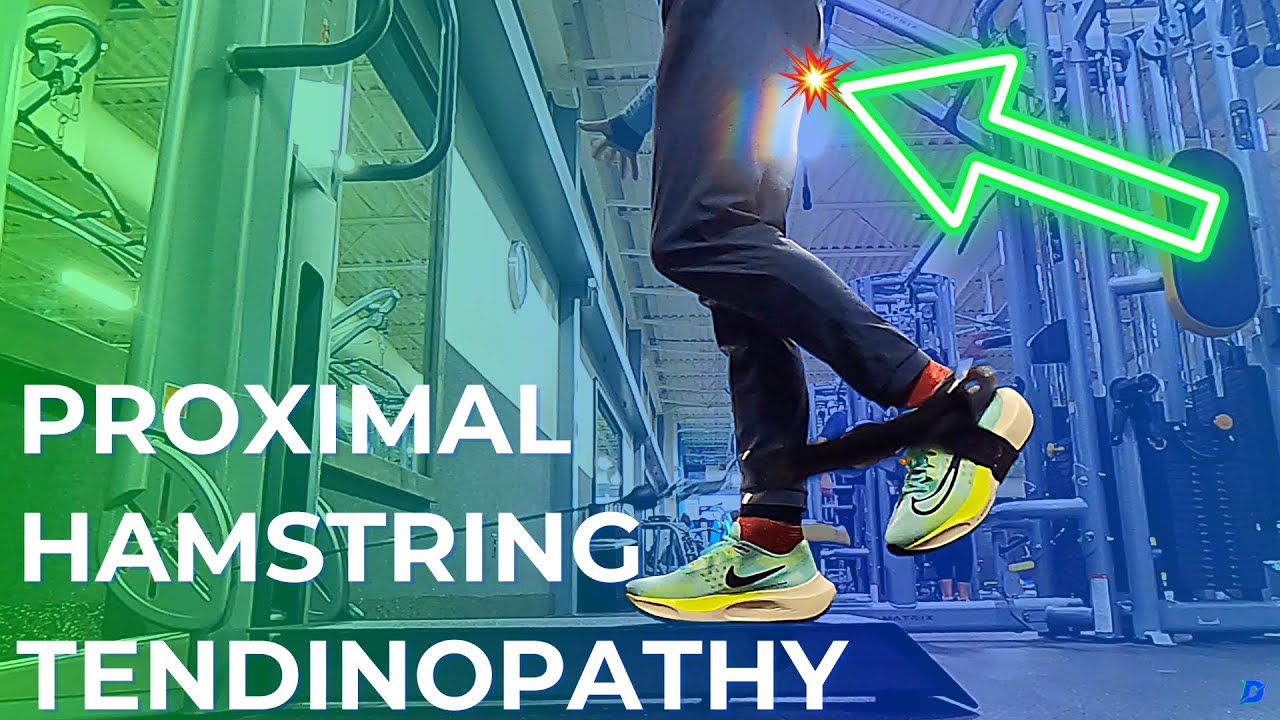
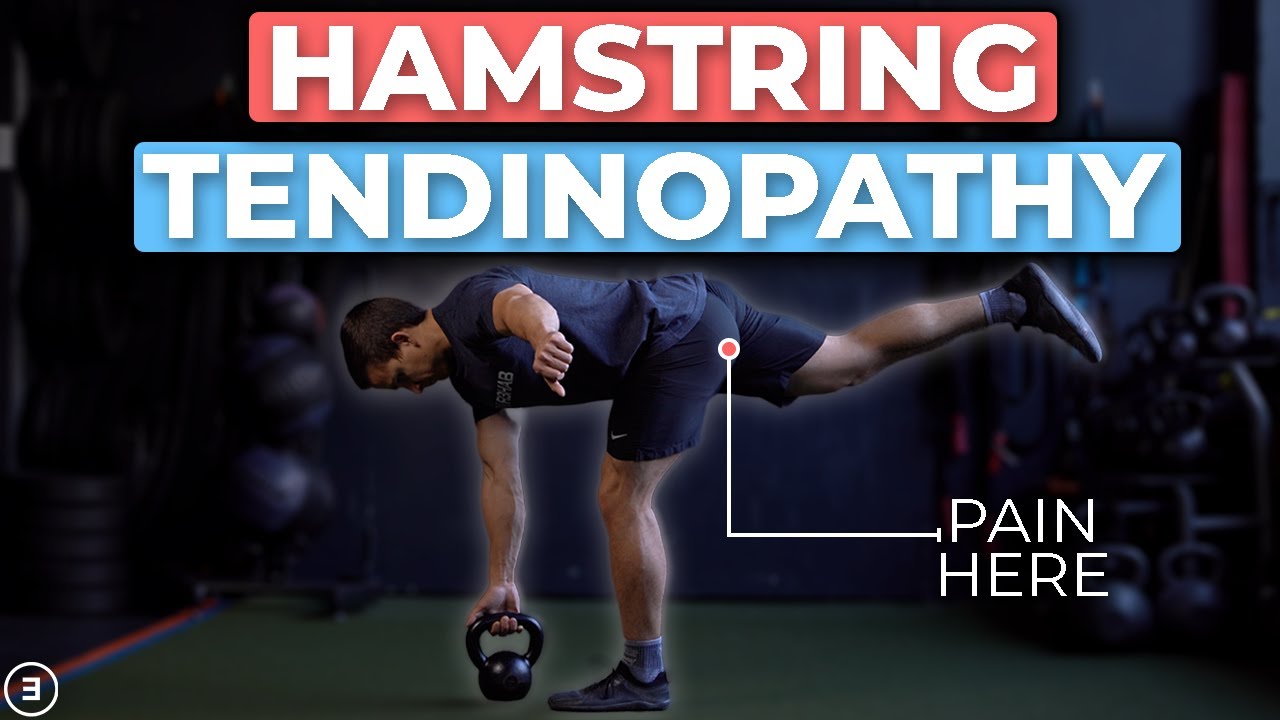
in this video we will show you a progressive rehab program for proximal hamstring tendinopathy enroll in our online course now link is in the video description hi and welcome back to physiotutors unlike achilles and patellar tendinopathy proximal hamstring tendinopathy is less prevalent for this reason we are not aware of any randomized controlled trials evaluating the effectiveness of a progressive loading program like the ones we have presented for achilles and patellar tendinopathy although high level evidence is scarce rehab principles are identical the following rehab exercises are inspired by different expert opinions from jill cook and peter
melieres as well as clinical commentary by tom goomb and colleagues that you can find in the video description a possible 4 stage rehab program can look like this like with other lower lymph tendinopathies load modification is critical in order to decrease pain irritability especially energy storage loads should be limited to activities that can be carried out with tolerable pain and with increases in pain levels that settle within 24 hours in a highly irritable tendon it can be helpful to first limit hamstring stretching if it is painful two to modify sitting for example a special hamstring
cushion can help or sitting on a rolled up towel so weight bearing is mainly on the posterior phase instead of the issue furthermore sitting with a posterior pelvic tilt is preferable or sitting on a higher chair and three squatting in daily function should also be limited if it's painful as with other lower limb tendinopathies a progressive loading program is key to recovery to monitor pain and to determine low tolerance you can use a load test like the short or long level bridge on the same time daily the patient carries out the test and rates the
pain level for one repetition like mentioned earlier all exercises should be carried out with tolerable pain levels and an increase in pain should settle within 24 hours if this is not the case this means that the patient is not low tolerant to those exercises yet [Music] so [Music] so [Music] wow if a patient is not able to perform concentric exercises you could opt to focus on eccentrics [Music] [Applause] [Music] once 15 to 20 repetitions are easy use the same progressions as with isometrics so single leg and offset bridges start with the most challenging with acceptable
low tolerance [Music] [Music] [Music] uh [Applause] [Music] [Applause] [Music] [Applause] [Music] [Music] so [Music] so [Music] [Music] so [Music] [Music] [Applause] so [Music] foreign [Music] [Applause] [Music] [Applause] [Music] eat that [Music] [Music] foreign [Music] at last graded return to sport can be started as soon as the patient is low tolerant to energy storage exercise progressions that replicate the demands of his or her sport in regard to volume and intensity of relevant energy storage functions return to competition is allowed as soon as the patient is low tolerant to full training all right i very much hope
you enjoyed this rehab video if you did please help us out by liking and subscribing to our channel and drop us a comment if you still have any questions check out our upcoming online course on muscle and tendon rehab by ender king for more in-depth info on rehab on our web page webpage study.physiotutors.com as always thanks a lot for watching and i'll see you in another video bye




![3 Keys to Rehab a Rotator Cuff Tear & AVOID Surgery [UNIQUE EXERCISES]](https://img.youtube.com/vi/o9fiTFfW4uU/maxresdefault.jpg)