Personally, I think that today's society is heading towards total chaos. There is no longer a leader, there are only manipulators who are behind the scene. These people who seem to be leading us are, in fact, puppets who are not leading us. They are led by others. But these others are very influential people, who have a vision of the human person that is disastrous. And above all, these are people who want to satisfy their power. There are manipulators, there are puppets, and there are saviors who are still the most dangerous of all. Because saviors look nice,
they look good, they are very attractive. And I think the saviors are biding their time. And that's where the big fight is going to be, because the fight against the manipulators, it's very visible and you understand what it's about. And I think there are a lot of people today who look at all these manipulators, but they don't look at what May come next. And it's these guys who are scary, because it's the lie. It will be the biggest lie in the history of mankind. Hello, Alexandre Dianine-Havard. Good morning. Thank you for accepting this new invitation.
So I remind listeners who don't know you that you are of French, Russian and Georgian origin. You are a lawyer by training and you practiced as a lawyer in France and Finland for several years before developing the Virtuous Leadership system which is taught today through some twenty institutes spread over the five continents. You have also written about ten books devoted to the subject of leadership. In the book "A Russian path", you explain in particular that the exercise of virtuous leadership requires becoming aware of one's vocation and one's mission in life. What is the difference you
make between vocation and mission? Why is it fundamental To discover one's mission in life and how to achieve it? This is indeed a very important question, because leadership is a call to action. While… And so the concept of mission, a mission… The Latin word “mittere” means to send, you're sent to do something, you know ? Whereas the concept of vocation comes from another Latin word, “vocare”, meaning you are called, and for me you are called to be someone. When you are sent to do something, but you are called to be someone. This is why I
consider a vocation to be something profoundly religious, in the broad sense of the term. I speak of natural religion. It is a person who realizes that he is called by God or by nature to be someone, to behave in a certain way, to think in a certain way, to feel in a certain way. , to act in a determined manner. That's what I call a vocation. It really is An existential framework. It's who are you? You see ? And so it's something of… The concept of vocation presupposes a certain religious spirit on the part of
the person. There are people who do not have a religious spirit, with difficulty they will discover their vocation in existence. On the other hand, you have very many people, even if they have no religious spirit, who understand perfectly what their mission is. That's the thing that--that they're called to do. That is to say that there, it is no longer a question of being, it is a question of doing a concrete thing and doing a concrete thing that you do every day, of course, since your mission is something something that you realize in all the moments
of your existence, from morning to evening, from evening to morning, all the time. It's something you do all your life, but it's not a call to be, it's a call to action. So vocation is important in human beings because it's a bit like the framework, I would say, it's the framework of your mission. It is A call to be, to feel, I repeat, to think, to do a certain number of things in a determined way . While the mission is a call to do one thing concrete. So the... You have a lot of people who
realize their talents, who realize their abilities, who know well, who have a very high level of personal knowledge, self-knowledge. And these people can come quite easily to discover their mission in existence. Because the mission, I always repeat it, is not what I want to do. The mission is ultimately who am I ? You see ? And what is the challenge in society? It can be a challenge, a challenge, a social, cultural, political or human challenge. And you, you realize that with the talents you have, with the gifts you have received, with your personal story, you
can take up this challenge. This challenge is your challenge because you have the qualities to do it. So that supposes a reflection, a reflection that anyone can do, A reflection that pushes them to know themselves very well. And the more you know yourself, the more you will discover your mission in existence. And that, it is not necessary to be a deeply religious being to manage to discover one's mission in existence. It is enough to be a person who knows himself well, I repeat, who knows his history well, who knows his specificity well. Because your mission
is your specific contribution to the common good. And the big problem that arises for many people is: what is my specificity? You see ? So the more you manage to discover your specificity, that is to say your own talent, your particular capacities for action, your particular history, your parents and grandparents, your country, what did you receive ? The more you come to know the specificity of your life, the more you can come to understand what your mission in existence is. So that supposes a work of complex reflection, whereas discovering one's vocation in existence, I would
say, that simply supposes a privileged relationship between The person and the God who created him. It's something religious, you understand? A profound person can come to understand what his vocation is, what God expects of him, not what God wants him to do, but what God expects… What type of person God wants that person… that person to be. But you have a lot of people who have a sense of vocation, because they have a, I was saying, a certain interior religiosity, but who don't have a sense of mission because they don't know each other well. They
themselves do not know their talents very well, they do not have what is called the human virtue of magnanimity, which is the virtue of the great. And so they are there with a vocation, a beautiful vocation, a vocation to be, but they don't have a sense of mission, indeed, and they do nothing. Do you see what I mean ? They don't do anything because they don't have magnanimity, because they don't have… They haven't…. They haven't discovered their specific talent, their own talent, The particular gifts they have received and therefore their life… in their life there
is no action. And you find people, it's the other way around. There is magnanimity, there is action, there is self-knowledge, there is the challenge you take on, but there is no framework. That is to say that there is no vocational framework. There is quite simply a mission, but there is not a vocational framework. And I think one... Like the other situation is bad, a person really has to think. Finally, what is my vocation? That is to say, what is the framework of my existence, since it is within this framework that my mission is exercised; and
then, what is my concrete mission? It takes both to be a happy person and an effective person, and a complete person. And so I think that if among us there are people who understand, then I see my vocation but I don't understand my mission, well, you have to think deeply about your mission. And other people say: I see my mission, but I don't quite understand the vocational aspect; well they have to discover in themselves perhaps a certain natural religiosity which will elevate them and which will understand the framework of the exercise of this mission. You
see ? So there, it is clear that the mission appeals above all to the natural virtue of magnanimity, which is the virtue of the great, the virtue of greatness, the tension of the heart, of the body, of the spirit and of the will towards the big things. And the vocation appeals above all, I would say, to the virtues that we call supernatural, which are the virtues of Faith, Hope and Love. These are two different areas. Vocation is really a religious domain, I was saying. And the mission is an absolutely human, very human domain, even if
sometimes we see in the history of humanity that there are vocations and missions which are extremely close to each other. You think of Joan of Arc, you think of Moses, you think of King David, you see that they have concrete missions, but that their mission, in fact, is Practically identified with their vocation. But I don't think every day God asks people to do things, you know, in a concrete way. I think he especially wants people to think, to use their intelligence to know themselves well. And with freedom, with responsibility, they manage to understand what I
really am and according to what I am, what is the challenge that I must take up? And so there, the people have a very, very great responsibility, it is rather from them, from each one of us that this work comes… This work which pushes us to discover our mission in existence. And we gotta... We can get there, get pretty close to finding out his mission, you know? According to its history. Me, for example, the mission that I discovered at the age of 35-40, is to grow by making others grow. Ignite hearts for greatness. Ignite hearts
for greatness, which is to say that the whole story of my… My whole story and ultimately the story of a person, I Lived with my grandparents who were people all together. extraordinary facts, who had incredible talents, who had fled the Bolshevik regime, who had suffered a lot. There's a lot of blood in their lives, there's a lot of suffering, there's a lot of pain, but they're great people. They were magnanimous, they were great and I am very lucky to have been educated by these people. I spent a lot of time with my grandparents, with my
parents and then later, during my years of university, school, end of senior years and university, I realized that the world falls into total pusillanimity. And I was able to make this unconscious comparison between what I received and what happens. And so it was my personal story that pushed me to understand that ultimately my mission must actually be to remind people of the sense of dignity, the sense of freedom, the sense of greatness, the heart, the intelligence, the soul, this anthropology which pushes you To go against the natural movement of contemporary civilization, which is a pusillanimous
movement which goes against human dignity and which stops making people dream, which zombifies them, you see? So it's like a personal story, comparisons you make and then you realize what talents you've been given and then you take action. So mission is action, it is a call to action; whereas a vocation is a call to be. And both are important. Neither should be minimized . You also explain in this book “A Russian Path ” that “the crisis of the modern world is not an information crisis, but a training crisis and an education crisis”. How is the
modern world experiencing a training crisis and an education crisis, in your opinion ? Well, training and information are not the same thing. Training is the same thing as education. The word education comes from the Latin "educare" which comes from another Latin word "educere", which means to bring out the best in a person. So, we realize that today, the university does everything except that. It's crisp and clear. Today, the university, what it does is that it sells information, when the courses are paying, it sells information to the students, but above all it does not want to
deal of their training. Training is character building. That is to say that training, education, touches the heart and the will as well as the intelligence. So today, what do we see? We see that all this... What we call training, what we call the information that is given to the students, it affects their intelligence. The objective is to make intelligent beings, but intelligent beings who don't have a heart and who don't have a will, but who know, you see? And then with that, what do you fall into? You will fall for the trick. Instead of falling
into wisdom, in fact, you don't train wise people, you train Informed people who can become cunning. And this is the great difference between the natural virtue of prudence, therefore of practical wisdom, and cunning. We often say, "He's smart." In fact, he's not smart at all, he's cunning. So in fact, the information that we give today is not training because we are completely uninterested in the hearts of people and we are uninterested in their will. It is thus an intellectual information which is directed towards the intelligence of the person. But as this intelligence is not related
to the heart and the will, it is not intelligence, it is something else. It's training that makes you a cunning guy. A guy who knows how to get away with it, who knows how to be in the right place at the right time. That's what we're doing today. And that is not education. That is not “educere”. That's just giving people information so that they are in the right place at the right time, that they have a good career And that they know how to maneuver. And that's what we… that's what we have today, you see?
So true education is education that touches people's hearts, formation of the heart, you see? The formation of the heart, the formation of feelings, the sense of Good, the sense of Beauty, the sense of Greatness. Understanding the meaning of suffering. The sense of freedom and dignity, that's the formation of the heart, you understand? And I find that the human being, today, has very little of this meaning. It has no meaning in fact, it only has an intellect, but an intellect which does not function like a human intellect because it is not connected to the heart, it
is not connected to the will, it operates independently. It's the intellect of trickery, that's it. That's what we're training today. And we say we form, we don't form, in fact we deform. Because true training, the only possible training, is that which touches the heart, the intelligence and the will. First the heart, because it is the heart that contemplates The beautiful, it is the heart that perceives the beautiful, the great, the magnificent, you see? It's... The truth. It is the heart that perceives these things, and intuitively. Then the heart gives impetus to the intelligence for the
intelligence to reflect on these things. And then the intelligence gives an impulse to the will so that the will takes action. The heart is the center and the heart is the base. Then, you have the intellect which concretizes, because the heart is rather… It is general, it does not formulate things, it feels them. Then, you have the intelligence which formulates, and the intelligence which gives an impulse to the will so that it acts. And the real formation is a formation that affects these three levels. And today, we have all become rationalists, not rational people but
rationalists. It's not the same thing. Being rational, I find that is very beautiful. And you know, France, for me, is still the country of rationality. I have a lot… I have lived 27 years in France and I admit that I received a lot in terms of rationality. But I 'm not naive and I realize that many people who call themselves rational have in fact become rationalists because their hearts and wills don't work . And at that moment, you fall into rationalism which is a heresy to it, it is in fact a deformation of rationality. And
so in France, you have rational people, but you have a lot of people who are rationalists. The rational people, I like being with them because it's very interesting… It's important this logic that you find in the French. It's something you learn a lot from. Me who lives in Russia, it's something that's a bit lacking in Russia, there are other values in Russia, it's more values of the heart, but the values of reason are not necessarily very developed . And you see that in France, there is that, but you also see that the vast majority of
people, unfortunately, are not rational, they have become rationalists. And it's a frustration, it's a castration, in fact, of reason, you see? So I think training is something very important, it's education. The formation touches on these three aspects of the human personality which can never be separated from each other. Otherwise we fall either into rationalism, or into sentimentalism, or into voluntarism . And it's got to have these... The heart, the mind, and the will work constantly hand in hand, or you create deformed beings. And all philosophy, whether it's Descartes, whether it's Rousseau, whether it's Nietzsche, well,
it's rationalism, sentimentalism and voluntarism. And these are... This philosophy, I would say, partial because it's created, founded, developed by people who are partial. When you only have the heart that works, well you're partial, you're a sentimentalist or a sentimentalist, as you want. If you only have the intelligence that works, well then you are a rationalist, you are not rational, you become a rationalist. And if you only have The will that works, as with Nietzsche, you are a voluntarist. But these people are not beings… they are not complete beings, they are partial beings, partial beings. And
so they produce a partial philosophy. And this partial philosophy, we call it an ideology. Anything partial is ideology. To fight against ideology, what is needed is globality, totality. So training is what really makes people happy and really capable people, that is to say intelligent in the true sense of the term, intelligent with what is called wisdom, real wisdom is practical wisdom. So that's what's missing today, there's no training, there's no education. I see information everywhere, see? This information... So wisdom is embedded in information. There is no more wisdom, there is only information everywhere. And most
people take in information and information, but there's no moral framework in which They can… in which they can place this information that they receive, and so they disperse in all the senses. And all this information they receive, instead of making them grow, destabilizes them. While a person who is well formed, with the heart, the intelligence and the will which is well formed, he has created a moral framework in his existence and all the information that comes in, he finds his place and there is an order for her, in her head and in her heart there
is an order for this information. Most people today, unfortunately, there is no order. The information that comes in is emotion, but there is no… There is no framework. So a well-trained person , therefore who has the heart, the intelligence and the trained will, is a person who has a framework, a framework of reflection that allows him to understand this information that he receives. Otherwise this information... pulverizes her and really prevents her from achieve as a person. In the book From temperament to character, You also explain the difference between the temperament and the character of an
individual. And you emphasize in particular that it is on the basis of temperament that we forge our character. What distinguishes temperament from character, in your opinion ? Why is it essential to distinguish between the two? So, we very often confused a little temperament and character. These are very different things . Very often, the word character is used to speak of temperaments and this is a language error. Temperament is an innate biological inclination. And you know, well, Hippocrates... Hippocrates was the great physician 300 BC who discovered that there were... There were types of people, and those
types are biological, you know? Aristotle is the one who discovered that there is character. There are types of virtues and there are people who practice a number of virtues, but these virtues are spiritual. So Aristotle is the one who formulated, I would say, in a Clear way the concept of character and virtue which is... Which is linked to your responsibility, to your human freedom, these are things that you can develop yourself since you are very small and you develop all your life, this is called character. The word "kharakter" in Greek, in ancient Greek, means a
seal. It is a seal which is on your temperament so that this temperament ceases to dominate your personality. So the Greeks are aware of two things that are very, very important, and that is that in each person there are natural, biological, innate inclinations that you cannot change, that you must not change. These are the four temperaments: choleric, melancholic, sanguine and phlegmatic. And then they discovered at the same time that there is something called character. It is not the temperament, the character, it is something that we forge ourselves through the exercise of our freedom and which
allows us to become free because we are no longer a being. biological. Finally, we continue to Be a biological being, but above this biology, there is this spirituality, this freedom which means that you can... You can complete your temperament, because each temperament is an inclination. positive and negative. You develop character, which allows you to give an incredible boost to the positive biological inclinations that you have and at the same time to control the negative biological inclinations that you may have. So character is very, very important, but it's very important to know your temperament well too.
So, Hippocrates, he was wrong about the names he gave, since Hippocrates thought that the four temperaments that I have just named: the choleric, the melancholic, the sanguine and the phlegmatic, refer to liquids, fluids in the human body. We won't go into details, but he was wrong. The origin of temperaments is not fluids, the origin of temperaments is genetics, it is genetics, they are not fluids. So a lot Of people say, “Well wait, I don't like the word angry, don't you want to come up with another name, Alex? No, we've been talking about angry people for
2300 years, what do you want? We're not going to find another name today. Who am I to invent another name? Ah, melancholic, but it's not beautiful, melancholic. But stop, melancholy, that doesn't mean you're throwing fits of melancholy every day , you know what I mean? You have to explain to people that words should be kept because they have a history, but the word does not correspond to the origin of this temperament. Hippocrates was not mistaken about temperaments. He really understood, that's impressive. 2300 years ago the guy understood that there are biological inclinations, general traits with
very, very clear biological inclinations. Moreover, the great doctor Pavlov, the Russian Pavlov who is the Nobel Prize for medicine, dogs, the reflex of dogs, Pavlov, who is very well known, he Said: Hippocrates it's absolutely unbelievable, what this guy did 2300 years ago when he discovered... When he discovered the basic biological traits of people in their behavior, he said it's still unbelievable. So you have a component, a component… A genetic and biological component in people that you have to know, and you have a direction that you can develop, which is character, which is spiritual. And you
need both, because if you say there's no character, what's left? There remains only the temperament, well that means that you are then completely determined by your DNA. And that is tragic to say that. And if you say there is only character and there is no temperament, well then you fall into what is called spiritualism, that is to say that you consider that you can overcome all your biological inclinations because in reality, for you, there is no biological inclination and you can no longer understand the reality of people, You can no longer understand the diversity that
there is between people and you can no longer communicate with people. If you are angry and you have a phlegmatic being who comes to see you, you speak with him, but you do not understand what he is talking to you about and you do not understand how he is talking to you. And so, you can't commune with him, you can't communicate with him. So understanding temperaments is very, very important for three things. One, she lets you not judge people first, you know? Because when you see a phlegmatic, you stop saying: he is lazy; you say:
he is phlegmatic. Laziness is a vice. While phlegmatism is a quality, it is a mode of being that God wanted for this person. When you see blood, you stop saying: it is superficial. Blood is not superficial, it is blood. It means he's in the moment, he's in the moment. The carpe diem, it is in the moment, it is in the now. For him there is no tomorrow, there is No... there is no... there is no yesterday and there is no tomorrow, it is now. So he's… He's bloody and so he's happy to live, he's happy
to live in the present moment. And you're not going to say: he's superficial, he doesn't think about the future, he's an idiot. No, he's not stupid, he's not superficial, he's bloody. So instead of judging him, you say: he's bloody, so respect him as he is. When you see a melancholy, you stop saying: he is selfish. Melancholics are very self-absorbed, they're self-absorbed, they're self-absorbed, they're self-absorbed , they're self-absorbed, they're self-absorbed. And so you have the impression, sometimes, that they are selfish because they can live without others for days and days, and even years, they can live
in total isolation because they have enough material inside. And then you will say: he is selfish! He's not selfish, he's melancholy, you know? So you stop Judging. When you see a... When you see an angry person, you don't say: he is proud ! Cholerics are people of action, they like competition, they like to be first, they like to show it off. But that's biological, if you like, it's not something spiritual at all, it's biological. And so you stop saying: he is proud; you say he's hot-tempered, so acting is his thing, so stop judging him, you
know? So the first thing knowing about temperaments gives you is that you stop judging people for nonsense. You realize perfectly well that, in fact, we are all different on a biological level and that it is very good that we are like that. And you have to love his biology, you have to love his temperament. Two, it allows you to communicate well with people, because when you go to see a phlegmatic person, you don't come with a big dream, you come with facts. Two plus two is four. Here are the facts, man! Facts! You know what
I mean ? So you Say “facts”, the guy opens his eyes like that and he will start looking. If you arrive with a big dream and big emotions, the guy, he panics and he doesn't listen to you , you see? Conversely, you are going to see an angry person, what do you do? You're not going to see a choleric with… with emotions. What you're going to see with the choleric is you're going to see him and you're going to tell him listen, we have a great project, we have incredible goals and we're going to be
able to do unheard-of things, but that's going to require some effort. energy and I don't think you're capable, actually. Do you see what I mean ? You want to... You challenge him, you challenge him. He will say, I am not capable? And immediately he will listen to you, what are you talking about? You see ? And he's going to pay attention because he wants the challenge. He needs the challenge, he needs the competition. You have to put it... you have to put it to the test, the angry person will react immediately . So you communicate
with these people. When you go see a melancholy, you don't come With a big smile saying we're going to have fun in our project. You come to him and you explain the dream to him. You tell him the dream, you talk about the dream, it's a dream ! We're going to do something, but absolutely unheard of, you can't even imagine what it is. Your imagination is too short to understand what... what... the thing we are dreaming about. You see, you make the guy dream and he will listen to you. And when you go see a
sanguine person, well you're going to tell him: listen, we're going to have a lot of fun with this thing. You see, the sanguine, he needs to have fun, if he doesn't have fun , he dies. So you come with a project, you don't come with facts, you don't come with… with objectives. You tell him, the process is awesome, in the process, you know, we're gonna have a blast. We're already a team, we're all going to be together, we're going to have fun like crazy. And the guy, he doesn't care where we're going. What interests him
is the process. And so you, you showed him that the process is going to be extraordinary And the guy says: well, I'm starting! So you learn to communicate a lot with people when you know their temperaments well because you know from what angle to present your project to them, from what angle so that they listen to you. It's not manipulation, because manipulation is trying to make people do things they don't want to do, you know? How do you get someone to work for you when they don't want to work for you? How you force someone
to love you, when loving you is impossible. You know what I mean ? That is manipulation. But that's not manipulation, the temperament thing, it's helping to understand how I can present the reality of a project, in such a way that this person understands what I'm talking about. You see ? Open… Open horizons to people so that there is real communication. So it's not manipulation. Manipulation, I repeat, is when your intentions are bad. You want a person To do what they don't want to do and therefore you will manipulate them. You see ? So that 's
not it. And so the third thing that temperaments gives you which is impressive, and this is for me the most important thing, is that the science of temperaments helps you to understand what is the virtue of the character that you are going to need that you develop above all. If you're angry, it's action. And so, the virtue of character that you will have to develop is humility. Because cholerics, they set goals, they achieve their goals, but they use people. These are human resources people for him, to get a goal. And so humility will teach him
to look at people as an end in itself and not as a human resource. So if you are angry, you develop humility, you learn to serve people and you stop using others, you learn to serve them and you don't use them anymore. A person who develops humility by being angry becomes an extraordinary manager Because it becomes a real leader, you know? He is a leader because he serves, he serves. If you are melancholic, you realize that the great challenge of your existence is going to be action. Because the melancholy, he is a perfectionist, he loves
ideas, but he needs action because action is what he... What transforms ideas into reality. But the melancholy is very afraid of reality. Because the reality is... It's the sinful reality of human beings. While the ideas are perfect, in your heart and in your intelligence the ideas are always perfect, because they are spiritual. But as soon as they take action, the ideas lose their quality, of course, because they materialize. And in materialization, especially when it's materialization done by human beings, well the level goes down, you know what I mean? And the melancholy does not support this
drop in level. That's why he's very afraid to take action, Because he says: action is going to be horrible! Why turn a great idea into a crummy thing? You see ? And so he doesn't want to take action and so he needs action, he needs to learn action, he needs to learn to develop the virtue of courage, the virtue of audacity. The sanguine, you see, he is… He is a person who is very into communication, who likes people, who likes being liked, who communicates very well, who is always smiling. He is a person who is
in the moment and does not fully understand what the future is. And so she's not persistent, in fact, what she likes is the process. She loves… The results, she doesn't care. What matters to her is the process. And so, as soon as the process exits or the routine enters the process, it stops and it moves on, and so it doesn't end. So, if you're sanguine, you have to tell yourself the virtue I really need to be a complete being, well it's going to be endurance, perseverance, Patience. To finish, to finish each of my projects before
moving on to another project, to a project afterwards. Finally, if you're phlegmatic, you can see that it's rationality that's your thing, you're dispassionate, you're extremely rational, extremely concrete. But you realize that the great difficulty in existence is magnanimity. Because you are afraid of the dream. The dream is anything but rationality. You understand ? So for a phlegmatic being, the dream is… it's dangerous. And so he takes the magnanimous for fools. That is the problem. The problem with the… the… the phlegmatic is that he takes magnanimous people for madmen. Whereas magnanimity isn't madness, it's greatness, you
know? So what is needed is... You have to... The phlegmatic, I have known many phlegmatic people who were magnanimous because they developed this magnanimity and they became excellent beings. So you see, there are actually three levels. Why... why is it important to Understand your temperament? Because it gives you three things. One not to judge people, to understand this diversity. Two, communicate with anyone in an effective manner. And three, discover personally what is the talent, rather what is the virtue that you will have to develop in your life to become a balanced being and an excellent
being. Those are the three things it does. And me, in the formation that I give to people, the objective is above all the third. That is to say, I'm not there to help people communicate about everything, I'm mainly there to help them develop the virtue that is a challenge for them so that they become excellent people. This is the goal of virtuous leadership training: to make excellent and happy people. In this book From temperament to character, you also explain that the history of humanity shows that two systems guide and condition the behavior of individuals the
ethics of rules on the one hand and virtue ethics on the other. You also point out that The ethics of rules tends to produce “narrow-minded, superficial and unimaginative people”. What is the difference between these two systems? Which predominates today in your opinion? Why is virtue ethics superior to rules ethics? How does it further promote individual and collective development ? The ethics of rules is only an act of the will, you see? What is correct? What is incorrect ? I can do what is right. I can't do what's wrong, what's allowed by the rule, I can
do it. What is not permitted by the rule, I must not do. Whereas virtue ethics is another level. It is really at the level of freedom because intelligence comes into play. That is, I seek to know what is right and what is wrong. You see, the big difference? There you go to a higher level. Why is it good? Why is it bad? It's good Because it helps me to develop as a human being, it goes in the direction of my human nature and it makes me an excellent being. It's wrong because it goes against the
principles of human nature and it makes me… It makes me miserable. So you have... You have this difference, it's that the ethics of rules only looks at the will. She looks at what is correct and what is incorrect at any given time. And that can change, depending on civilizations, depending on time, depending on the era, depending on the political regime you have in power, you can very easily fall into political correctness, culturally correct, religiously correct , all correct. Rules ethics is all that is correct. I have to live according to what is correct, and I
am a saint because I live according to this righteousness. And you have a lot of people who think like that. Me, I respect the rules and therefore I am perfect, you see? And I've known... I've known a lot of people like that. It's called ... It's the absolute conformists, it's the Pharisees, in fact, it's the Pharisees. Self-righteousness, that's it, it's the rules, you have to respect the rules and if you respect the rules, well, you're perfect. That's good for children, but when you're 45 and living like a 2-year-old kid, you're not a perfect being, you
have some serious problems, you have some serious problems. At 2 years old, it's perfectly understandable, we don't ask you to think things through, but when you're 45 and you continue to live according to the ethics of the rules, it's because you have a hell of a problem, you see ? You are a Pharisee, in fact. So the ethics of rules… the ethics of virtue, what it does is it puts intelligence before anything else, it puts intelligence… It forces you to think, it forces you to thinking about what we call… It's the virtue of prudence, it's
the virtue of practical wisdom that helps you think and know what it means to practice courage in this situation? Do you see ? The... Caution helps you understand. An act of this kind in this given situation is recklessness, not audacity. So you have to put your intelligence to work. The… The virtue, it pushes you obligatorily to make work your intelligence. So in virtue, you have the heart, the intelligence and the will which come into practice. Whereas in the ethics of rules, there is only the will. Once again, we come back to this system in which
the big problem of modern humanity is to isolate the various elements which constitute the human personality and to make a whole of them. It's actually ideology. Today, we live in a situation, I would say, of rules ethics. Political correctness, religious correctness, whatever is correct, people say it's perfect, you have to live according to what is correct! And so there is no room, if you will, for virtue. And I repeat, there is no room for virtue, because there is no room for the heart or the will. It's basically, again… There's no room for the brains and
the heart. It is once again the ethics of the will. That is to say, we must obey. And in the modern world, especially when you have ideologies in power, ideologies that are gaining more and more momentum, the ethics of rules becomes a monstrous thing because at that time you have a whole people whole thing that follows a rule that's evil and thinks they're all perfect because... It's the Nazi regime, you know what I mean? It's the Nazi regime. It can happen to anyone , that is to say an entire people can say: well, we have
the ethics of rules… We don't even think in terms of the ethics of rules, one rule is enough and they think they're perfect because they follow her, you know? So once again, I say what is needed is to restore the heart and the intelligence in people, because that is the only way to come to understand what is… how one practices the virtues. And the virtues are what make you an effective, attractive, beautiful being. Beautiful ! And you stop being a Pharisee. But many people are Pharisees without realizing it . But they live by rules, they
absolutely live by rules. I repeat, rules are not bad, we can see that children need rules. But the thing is, there comes a time when it's your virtue that becomes the rule. I will take a very concrete example. When you're a lawyer… When you're a businessman, for example, a businessman. You do not slander your competitor, why? A virtuous businessman does not slander his competitor, why? Not because he knows he can go to jail or pay a fine if he slanders him, but because he thinks I'm not one of those slanderers. Do you see the difference
? A person who lives by the ethics of rules says: be careful if we slander him, we will go to jail. We 're going to pay a big fine of a million dollars. You know what I mean ? That 's the ethics of rules and there are a lot of people like that. Watch out guys, if we do that we'll pay for that. And so you don't have to. Whereas the virtuous, he does not think like that at all, he thinks… He will say to himself: I am not one of those people who slander. It's
the being, it's his whole being which is… which is… which is in the moral process, you see? And so that's when you say, well, that's a beautiful person. That's a person, that's a beautiful person. It's his heart that's there, you see who it is, you know what it's about. He's not a slanderer, he doesn't care about the rules, he's not a slanderer , he's not dependent on the rules, he's dependent on one thing and that's his virtue, therefore of good and truth. You also chose a quote from Alexander Solzhenitsyn to introduce this book From temperament
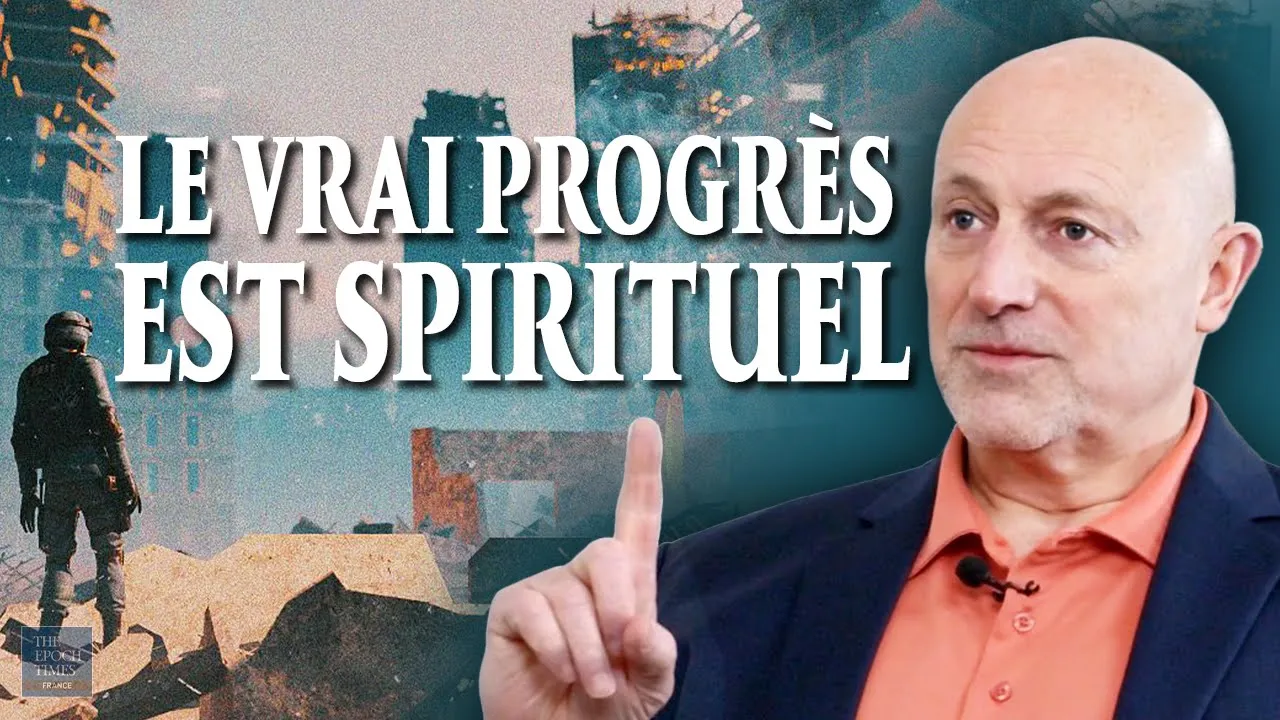
to character, I quote: “There can be only one true progress. It is the sum of the spiritual progress made by individuals , the degree of their moral improvement throughout their lives. In your book Seven Prophets: An Analysis of the World Crisis, you come back to this idea of progress and you explain that our civilization is obsessed with the idea of progress and that the conception we have of it, if it is adorned with all the virtues, has become foreign to any notion of spiritual elevation and promotes on the contrary a form of monstrosity, even of
deformity. How has this notion of progress been misguided, in your opinion? Why does the moral improvement of an individual throughout his life constitute true Progress? Solzhenitsyn, what did he mean ? He has... It's a provocation. He wanted to explain that the world, for several hundred years, has been talking about progress, progress, progress. He thinks that the... that... And above all we talk about technical progress and we think that technical progress will bring about moral progress. And for Solzhenitsyn, it's clear that the only real progress, spiritual, well, it's The progress of each individual, it's my own
life that is important. This is not the progress of humanity. There can be a technical progress, a technological progress which is important and which is very beautiful. But moral progress starts afresh at each birth. Every child, we start from scratch. You understand ? And that's why you can have people 100 years ago who were 100 times better than us, morally speaking, than you and I are today. For what ? Because they received... They used their freedom in an exceptional way, whereas maybe you and I don't use it in such a... equally exceptional way. So what
I... What we mean by that is, each one of us, every generation, well, we start over. That is to say, you are born, you have to be trained, you have to be educated, you have to fight against your low tendencies, you have to develop your positive tendencies, you have to love others, you have to love God, your Creator, you have to... You have To rise. And there you are, there are people who come very, very far and there are some who don't come very far. It's as stupid as that. And in every generation, it's the
same thing. In every human life, that's… That's what Solzhenitsyn means. This is real progress. It is, this person, what did she do with her life? And this person, what did he do with his life? And we're going to accumulate all that, and that's progress, you know? And what happened is that, like all these people, the people from the Encyclopédie, the French Encyclopedists, they don't recognize the idea of original sin, they think that the problems in the world , these are social problems. Because he says, Rousseau says original sin is a myth, do you remember the
good savage? So from the moment you say that there is no evil in man, that there is only good, and you say that therefore this idea of original sin and the tendency towards the bottom is a falsehood, at that moment, you say: well the only Thing that can save us and that will be the great world revolution, is a system, a political system. We must find the political system that solves all the problems of humanity. And so at that moment, you create “homo politicus”, you only create human beings who cease to be human beings and
who put all their faith in politics. We see what it actually leads to, it leads to ideology. They deny human nature, they deny the problem that there is in human nature, they deny the problem that the evil is in man and that he is not the outside, and that the external evil is not is only a consequence of inner evil. You understand ? The consequence of the inner evil is the evil of the structures. But the evil of the structures comes from the inner evil of each person. You see, it is not… it did not
fall from the sky the evil of the structures. So these people think we're going to save the world through politics. And there's a guy who arrives, his name is Karl Marx and he says Rousseau, you're really a genius, but I've found your thing, it's communism. It's fantastic. He says, Marx says: Rousseau, he's absolutely right, the guy, there's no problem in man, it's the structures that don't work. Me, I found. He didn't have time for Rousseau, but I found it. It is Marxism. And he imposes Marxism, everyone believes in it, it becomes a great science and
we think that with that we will have happiness on earth because we completely deny the reality of human nature, the reality of the evil that is in man and that's it. And so progress is in fact, that's progress for them. And progress, so what does it lead to? At the Gulag Archipelago. That's it. And today's world also has its gulags. You see what I mean, the world today also has its gulags. When you think about the whole gender theory, it's a gulag for a lot of people. When you see a guy, he sees his thirteen-year-old
daughter don't know if it's a boy or a girl. The guy, he panics and for him it's worse Than being in the gulag. You know what I mean ? It's completely insane. So it happens that the theory... All ideologies, all ideologies go against this fundamental idea that there is in fact in the heart of man, there is a problem and that if we deny this problem which is in the heart of man and that every human being is born with a certain problem, that he is sick, at that moment, the virtues no longer have any
meaning , the character no longer has any meaning. The only thing that matters is politics. And politics will save us, politics becomes a god. That's the... That's the vision of the Encyclopedists, it's that politics becomes a god, we're going to find the big system, you see, that's going to save humanity. Whereas humanity does not need to be saved by a system. What it needs is to be saved by character, by virtue, so that each individual, in his situation, at the time in which he lives, can surpass himself and his miserable tendencies. and become an excellent
person Who can be of service to all mankind. So we've taken a complete wrong turn because there's a lamentable anthropological error that was… that comes from the Encyclopedists. It is this Rousseauist vision of the fact that there is no evil in man. In man, there is good and evil, there are both, you see? And both, as Solzhenitsyn says, as Dostoyevsky already said 200 years ago, the fight is in the heart of man, the devil fights in the heart of man, he is not not outside, it's inside. And that's why Solzhenitsyn says at the end in
his book The Gulag Archipelago a very beautiful sentence. He says: There are some people who think that all these bad guys, we could annihilate them and then we would have... We would have peace in the world. In reality, no, since it is in the heart of each person that this struggle is, it is not... It is not a struggle within society, it is not a geographical struggle, this is not a territorial struggle. It is within... At the heart of each person, there is this struggle. And nobody wants to destroy their own heart, you know? So
it's human life and we're all in this… in this condition and we will be until the end. The condition of struggle between good and evil in the heart of every person. And what is needed is to encourage people to make good decisions, to want this good for themselves. And I think virtuous leadership is all about helping people to want to do good, to want to be good, to want to find out the truth, to want to live by the principles of human nature. So this progress, I laugh when I hear the word progress because I
know perfectly well what they are talking about. They want to talk about what we are talking about today, it is Rousseauism. And I tell them guys, what progress are you talking about? Technical progress, technological progress, it's very important and it's very beautiful and we have to go for it. But if there is not... If people refuse To understand that in them there is also sin and there are downward tendencies, why this technological progress in the hands of these people who do not don't understand that there is also a downward trend in the human heart, it's
the end of the world. It's the end of the world. The more technological development you have, the more amazing things you can do , but if you don't take into account that in your heart, there are things that don't work very well, well one day you will use this technology to wipe out tens of millions of people, and you'll say, Am I really... Am I not allowed to do this? For you, all that doesn't exist anymore, the good, the bad. What matters is what you can do. And we see it, that's what's happening today, what
we can do, and we think that technology will save mankind. Technology, science can't save the world, that's obvious, but there are still people who believe that science can save the world. But what they mean by saving is not the same as you and I probably mean by saving the world. In fact, they mean science can solve my own little problems and the number of deaths there will be, it's not a problem, it's just a little rubbish, anecdotal rubbish, details, you see what i mean? In the history of mankind, that's how a lot of people operate
today, especially those who have a lot of money and want to… who manipulate the world. So progress, we must be very careful with the word progress. What does progress mean? What does it mean ? You have to ask people, Solzhenitsyn studied the concept of progress a lot in his American speeches, the Harvard speech and several speeches he gave in Europe as well. He always comes back to the word progress, and that's why, I come back to your question, he says: be careful guys, I don't believe in that thing because I was in progress , it's
The Gulag Archipelago. So stop talking to me about progress. Real progress is your spiritual development, my spiritual development, his spiritual development. That's real progress, that's the sum of all that progress, that's progress. It is not political progress because it does not exist, it is false. And if you focus on political progress and forget the problem of human nature, well what you're doing is not progress, it's... You're taking us backwards, 3000 years backwards , What. In your opinion, do our current elites embody the greatness or the pusillanimity you were talking about earlier? Are our leaders true
leaders capable of bringing out the best in their people? And if this is not the case, what can a people finally devoid of a true leader claim? Well, there is a crisis of leadership which is terrible today and it is due to… It is due to the crisis of character. That's why really, Virtuous leadership for me is extremely important since it's about the formation of the character of people. And so, if there is a leadership crisis, it is because there is a leadership crisis, also because there is a family crisis, because it is in the
family that the people form, people develop leadership, develop character. So this crisis of the family, this worldwide disintegration of the family, especially in Europe and the United States, causes people who no longer have character and therefore they cannot be leaders. Because leadership is fundamentally a question of character. Leadership is not being the king, it is not a social position, it is not a function. Leadership is a way of being, you see? And you have people who are real leaders, who have no power, but who are real leaders because they are magnanimous and humble, because they
have a sense of greatness and a sense of service. And what we have today in Europe and the United States Is… it's… It's miserable between us. But it's completely miserable. These people should never have had power. We are… we are shocked to see this moral misery. We say to ourselves, but how is it possible that these people have power ? But it's like in the Soviet era, we said to ourselves how is it possible, in the 1920s, that guys like Stalin, Kaganovich, Trotsky, how is it possible that these guys have power? These are guys who
should be in jail, you know what I mean? They are monsters! Well, they have the power. Well in Europe, the same thing happens. We have people who are… who are filthy nonentities , that is to say that they really don't have anything to have power, they don't deserve it and yet they have it. And so these people, they're destroying all of this… all of our civilization. But you have people behind these people. If you want, people tell me, but are they really directing these people to us? But we realize That these people do not direct
anything at all. It is precisely because they do not direct anything that they are in power. Those who lead are behind them. And that's not a conspiracy, it's that you have people who have a lot of money, who are extremely rich and who want... who want power and who want to be able to lead themselves, who want to be able run, I mean, our planet. But it is these people who manipulate these people. And these people are not elected by the people, these politicians that you see, they are elected by finance. And it is finance
that controls the media. And it is through finance and the media that these people are in power. And these people know perfectly well that if tomorrow in three seconds, we decide to evacuate them, they are evacuated. Because these people who are very rich, who have the means of information will give the watchword, that one, in three weeks we no longer want it . And in three weeks, we won't have any more. That's how it works. So they are puppets, you see, they are puppets. These people who seem to be leading us are, in fact, puppets
who are not leading us. They are led by others. But these others are very influential people. These are people who have a vision of the human person that is disastrous. And above all, these are people who want to satisfy their power. The thirst for power is a reality, it's... it's the human heart, it's like that. So there's a… there's a… There's a complete breakdown of leadership. There is no longer a leader, there are only manipulators who are behind the scenes, who manipulate the politicians who everyone realizes are no longer... That they are not leading us
. So you have the puppets. The puppets, so we can't call them leaders if they are puppets, even if they make a lot of noise, but the more noise they make, the more you realize that they are puppets. They are... And they know Themselves that they are controlled by other people. And you have behind that, you have those who… A small group of people who have… who… who are… who have incredible money and who have a vision of human beings that is really pathetic and who run these puppets. And who are going… who are creating
absolutely unbelievable global chaos, total chaos because they want this chaos. They want this chaos because they want to be able to reorient civilization. And I think that there are above these people, there are other people, there are what are called “the saviors”. There are those who will come when the chaos is instigated and who will come as saviors. And these "saviors", they're very different, they're super nice, they're very... They're handsome, they're kind, they're sweet, they don't look like Ted Turner or those others at all... Bill Gates, that's is rather people… I see these pleasant, smiling,
kind people, true saviors of humanity who will come After, who are more like the Antichrist, that is to say people who want this chaos because they want to arrive as liberators. So I think that today's society is going towards total chaos which is caused by these... by these manipulators who manipulate these puppets, but that there are people above them who are watching, who are contemplating and who want this process because they know that a time will come when they will have to present themselves as liberators. Lenin understood this very well when he refused to make
a pact with the Provisional Government. He said to himself: they're going to fail, it's going to be chaos and we're going to arrive and no one knows us. And everyone will bet on us. And There you go. And we're going to take power and we're going for the first time in human history, we're going to have all the power and we're going to set up our thing. You understand ? So I think we're going to... Right now there's no leadership, there's no leadership, there are manipulators, there are puppets and there are saviors Who are still
the most dangerous of all. Because the saviors, they look nice, they look good, they are very attractive. Whereas the manipulators, the guys like Ted Turner, Bill Gates, Soros, they look like hell, that is to say, you see right away that they are no good, you understand? But the ones that come after, they look good, they look nice, they look capable and they seem to love us mostly, you know? That's the "saviors" and I think the saviors are biding their time. And that's where the big fight is going to be, because the fight against the manipulators,
it's very visible and you understand what it's about. And that's all of Soloviev's speech in the Short Story on the Antichrist which is… which he wrote 100 years ago. It's impressively clear. And that's where we're going. And I think there are a lot of people today who look at all these manipulators, but they don't look at what may come next. And it is there, it is there that the horizon is Limited. And I will say to people: Open your eyes! Because when saviors come, that's where the big stakes are. And that's where you can't go
wrong, guys. Because these saviors, they are going to want you to give them your freedom in exchange for material goods. And you, you're going to say he's nice, he's good, why don't I give him my freedom? And you're going to give him your freedom, you're going to give him… you're going to give him your dignity, you're going to give him everything so that he gives you bread, peace , security. And you know he's gonna give it to you. And you will at that moment cease to be a human being. And you're gonna fall into the
big trap, the big trap, you know ? They're not scary, these manipulators, all these Americans stuffed with money, because you can see right away from 300 meters away, you can see that they're crazy, that they're monsters, you see? But there are other people coming behind who look really nice, who will look really nice, and really capable. And it's those guys Who are scary. Because it's a lie, it will be the biggest lie in the history of mankind. And there you would have to be... You will have to be intelligent, you will above all have to
have... Above all, you will have to have wisdom to realize, be careful, these guys are the antichrist. They look good. You see, that's what I think is the big… That's where the big thing is going to be. It's not at the level of the manipulators. And the manipulators know it, they are practically all Americans. But the "saviors", I'm not sure they are American. They are smarter than that. And Americans aren't smart enough to be saviors, they're smart enough to be manipulators. But I see more Europeans. It is Europeans who will be the “saviors”, but saviors
in the sense… Not in the good sense of the term. You know what I mean ? I see that and that's the intuition that I also draw from Soloviev. Soloviev is impressive, he was right about almost everything he wrote 100 years ago, so he sometimes Even looks like an Old Testament prophet, that guy. It's incredible, this intuition that the Russians have, it's incredible. They are... I was speaking earlier about rationality when this... The problem of rationality that there is in Europe today, we have mostly rationalists and fewer and fewer rational people. But the Russians, by
the heart, they picked up things that are absolutely incredible. It is a reality, the knowledge of the heart. Europeans say no, it's bullshit the heart. No, no, the heart captures realities that are absolutely unheard of. By logic, you cannot capture everything, you capture certain things, but you are very, very limited. And it is the strength of the Orient, it is precisely this mysticism, this ability to grasp things, as Soloviev said, mysticism is... it is... It is the roots, it is the communicating trees between them by the roots, whereas logic is… it is by the branches.
And the logic, you see perfectly the trees which communicate between them by the branches, you see them. But The roots, you don't see them. That's what mysticism is, it's hidden knowledge , root-level knowledge, not branch-level knowledge, you see? And there, the Russians were very good at that. That's why Dostoyevsky and Solovyov for me is... It's really... They are very, very great visionaries, they are absolute prophets because they really grasped by heart all the drama that was going on. unfold in the 21st century in France, the United States and around the world. So you were talking
about Dostoyevsky and Soloviev. You devote several pages to this in your book Seven Prophets: An Analysis of the Global Crisis. You say in particular that “these two thinkers open our eyes to the times we live in and encourage us to make vital and engaging choices”. In what way do the ideas of Dostoyevsky and Solovyov still apply to you? How can these two thinkers help us overcome the upheavals we face? Well, the big idea, I think, the heart of Dostoyevsky's thought is the concept of freedom. That is to say, in this… In this magnificent image that
he has in The Brothers Karamazov, the legend of the Grand Inquisitor, he has… Well, he really reveals what is deep in his heart. Dostoyevsky, he sees, in this sense he is truly a prophet. He sees that a time is coming when humanity will have to choose between freedom and bread. That is to say that there is... There is a moment when there are people who will say listen to you, give me your freedom and I will give you the bread in exchange, I will give you the pleasure , I give you everything you want, I
give you security, bread, games, fun. But you, what I especially expect is that you give me your freedom in exchange. And so we are moving towards that, we are moving towards this system. And I think that's… Well that's the… It's very much the drama of the modern man who… who falls… who falls a little… who becomes more and more of a person who loses his senses of his own Freedom, and Dostoyevsky tells us: watch out, children, that's what's going to happen, that's where we're going and we'll have to... You have to be brave, you have
to have audacity, courage, endurance, fidelity to conscience, fidelity to everything you believe in so as not to let yourself be manipulated. It's a bit like what I was saying earlier, that is to say these people, these "saviors" of humanity who arrive and who will tell us one day, I have all the solutions , trust me completely, give me your soul and your body, I will give you everything you really need to live from a material point of view, and only it is necessary that you trust me completely and therefore give me your freedom. So there
is in Dostoyevsky this vision that humanity is going to be confronted with this reality of the choice between bread and freedom, and that soon it will happen. And I think on different levels you see how it's happening. And so it's... That's The Legend of the Grand Inquisitor, which in my opinion is something you have to read and constantly reread, because first of all, from a literary point of view, it's one of the most beautiful… It's one of the most beautiful pieces of literature that has ever been written, but also from the point of view of
philosophical content, it's also incredible. The Grand Inquisitor, in fact, he tells Jesus Christ that he has... Jesus Christ returns to earth, it takes place in Seville in the Middle Ages, and the Grand Inquisitor has him put in prison. He has him put in prison, it's quite funny, he's a cardinal, a cardinal who has lost his faith over time. He had it when he was young. One day he lost it and we see that today there are many cardinals who have lost it, unfortunately, it is a reality. You must not... I am a Catholic, but I
see that many cardinals have lost faith. And so Dostoyevsky also foresees that, there are many cardinals who will lose faith. But then, this cardinal, he's a little special, it's because this cardinal, He has lost his faith, Jesus Christ is coming back to earth and he's going to judge him. And it's extraordinary, what does he say to Jesus Christ? He tells him, you, finally you are a poor guy because you lied to humanity. You expected something extraordinary from human freedom, you gave freedom to human beings thinking that they could use their freedom to do great things.
I understood them. They are dummies. They don't have... They can't use freedom because they're petty, because they're small, because they're sensual, because they're greedy for pleasure. You didn't understand them. It's extraordinary what he says, it's extraordinary, this dialogue is incredible. The Grand Inquisitor, he talks to Jesus Christ, Jesus Christ says nothing to him at all. He only listens to her and at the end he gives her a kiss. But the Grand Inquisitor, his monologue, in fact, he is extraordinary. He said: You, Jesus Christ, your big problem is that you did not love people, because you
demanded Things from them that they cannot give. Me, I liked them. I liked them, I understood them and I understood that they are all nullities and that nullities must be treated as nullities, that is to say that they must be taken back from them. freedom and give them bread and security. And I do this to them, I do this for them, that's why they love me. And you, tomorrow, we're going to burn you. Because you are a criminal. It's extraordinary the depth of that, because indeed you see that Christianity bets on the man-God. It relies
on human freedom. He believes in human freedom because he believes in love, and he knows that where there is no freedom, there is no possible love. While the Antichrist, he says love, it's useless, we don't need it, we can't... We can't reach it, it doesn't exist because freedom can't not produce good, it only produces evil. So I am taking these people's freedom away and giving them peace and quiet. Bad, bad, bad people , what they want to tell us is be careful, your freedom, you don't need it because you can't do anything good with your
freedom. And so we, the Europeans, we have to… The Americans and the Europeans, we have to realize that one day there will come a dilemma or really we will be told freedom, you don't have it… We don't care. because it only does harm. And there it will be necessary to say attention, attention, attention! No, no, freedom doesn't only produce harm, it also produces love, it also produces a lot of good, and I don't want to give up my freedom in the name of security, peace, games , circus and bread. That 's very important. People have
to keep that in mind all the time. I don't want to destroy my freedom, I don't want to play the game of the Grand Inquisitor because he is lying to me. I prefer Christ's strategy which is to entrust, to have confidence in human freedom knowing that there are many people who are incapable Of using it positively. But I want to use it positively and I will make an effort to be free because I know that it is freedom that produces love and where there is no freedom, there is no love, there is only zombification, there
are slaves and that is not the purpose of our existence. That's Dostoyevsky, you see, that is to say, Dostoyevsky says to you: Be careful guys, never sacrifice your inner freedom for security and for bread. Never do such a thing. So that's Dostoyevsky's strength in having understood, if you like, what human freedom is and that even if today we talk a lot about freedom, freedom, freedom, but in reality, you see, it is about licentiousness because a freedom in which there is no no more truth, it is no longer a freedom at all. A freedom that is
separated from the truth is not freedom, it is simply licentiousness. It 's about doing what I want to do and doing what I want to do is not Really freedom. True freedom consists first of all in understanding through intelligence. Indeed, what should I do? And I am then free to do it or not to do it. But if someone tells me, it doesn't matter anymore to think about what I should do, what you're doing is no longer freedom, it's just debauchery. Where intelligence no longer comes into play, where truth no longer comes into play, where
there is no longer any search for good and evil, at that moment freedom is is something other than freedom. It just becomes childish. It's the choice between reading the newspapers or eating chicken. You know what I mean ? Reading the newspapers or eating chicken, you say: well, that's freedom today. People say, I'm free: now I can eat chicken or read newspapers. And it is at this level that human freedom is located when there is no longer any search for truth. You see ? And so it's funny, you're laughing, but for people, for many People, that's
freedom. No, be careful Alex, now I eat chicken and I can... I can choose between reading the newspapers or eating chicken. Do you see what I mean? And so their... it's really the choice, for many people, the fact of being able to make small choices like that, for them that's great freedom, whereas that's not freedom. True freedom is being able to make real choices between good and evil. And when you are told that there is no longer any good, that there is no longer any harm, there are only small choices like that, we are no
longer talking about freedom. childish, see? So people have to be reminded of that. That 's… That's really what Dostoyevsky teaches us. It's that you have to love freedom, you have to understand what it is, you must never separate it from the truth, you have to thirst for truth and you have to live in the truth, and that's it what does it mean to be… What it means to be a free being. So then you have Soloviev who arrives a Little later, Soloviev is a friend of Dostoyevsky, he is 20 years younger. And they got to
know each other well, they have a lot of ideas in common. Soloviev died in 1900, Dostoyevsky, he died in 1881, I believe. And so Soloviev lived 20 more years, but he died very young, he died at 47, so very young. So he, Solovyov, he has this great vision of a bit of the end of the world where he... Which is very important for us today, which is a vision that is addressed above all to... If Dostoevsky is addressing a little to the humanity as a whole, Soloviev addresses himself above all to Christians and he says
to them: beware, there is going to be a big lie, a very, very big lie. And I want to warn you. This big lie is going to be the absorption of Christianity by humanism. So much so that Christians will not even realize that they are no longer Christians today. That is to say , it is really accurate. I repeat, if Dostoyevsky is addressing all of humanity a little bit by saying: be careful, freedom is more important than bread and than security , Soloviev says: be careful, Christians, you are going... You're going to lose consciousness of
your--your Christianity, and yet you're going to still believe that you're a Christian. But in your Christianity, there will be no more... There will be no more Jesus Christ, there will be no more sacraments, there will be no more prayer, there will only be what is called the values, some Christian values. And he says, this will be the biggest lie that has ever been realized, because at that time… At that time, you, without realizing it, you continue to call yourself a Christian but you are no longer. And when you see what is happening in Germany at
the moment, with a large majority of German bishops for whom you see that the substance of Christianity no longer exists, that the only thing that exists is political correctness, social correctness and moral correctness. You say to yourself, but that's exactly what is happening . What is happening is that it happens in Germany, but if it happens At the level of the universal Church, then we have exactly what Soloviev says, that is to say that Christianity is completely absorbed by the politically correct, socially correct and morally correct humanism of the modern world. We call it humanism,
why? Because it's about allowing people to live in sin, but telling them that it's not a sin, it's no longer a sin, it's good. At that time, what are you doing? You create a total substitution of Christianity by an ideology which is the ideology of atheistic humanism. And people don't even realize that they're not Christians anymore, and so you created this sublime, awesome substitution, and there's no... There's no struggle, there's no There's no revolution, there 's no war, no one left… People don't even realize what happened, they just stopped being Christians. So there is no
more... I repeat, there is no more Jesus Christ, there are no more sacraments, there is no more Prayer, there is no more personal contact with the man-God, there is only to live from the… from the politically, culturally, religiously correct of a given era. And so that's this absorption, if you will, of Christianity by atheistic humanism, that's what's happening and that's why… That's what's happening now in many countries. And that for us, that helps us to understand that Soloviev as much as Dostoyevsky, these are guys who got it all, and they got it all 100 years
ago, 150 years ago, they saw exactly what was going to happen . And so I think Europeans should open their eyes and tell each other Russian culture, it's still a thing… The guys, they weren't… they weren't very wrong. That is to say, instead of saying we are going… We are going… We are going to destroy Russian culture because they are waging war on us, we should… Wait, this culture, it provoked… it provoked… . She gave birth to guys who saw exactly what was going to happen to us. And so instead of Thinking why did they
see that and why don't we see that? Why did they understand this 200 years ago and why do we still not understand what is happening today? It should make you think a little bit, there is something in this culture that you have to take. There is something about this culture that is very appealing. There is an incredible and intuitive perception of truth that in the West we have lost because we have fallen into rationalism. That's kind of what each gives us, you know? Dostoyevsky and Solovyov are really the two great prophets of modern times. So,
precisely, in the book "A Russian path", you go back in detail to your origins and the way in which they influenced your personality. You mention “the Russian idea”. You quote several thinkers, including Dostoyevsky and Soloviev, but also others who have marked you, and you explain that you were struck by "the moral content" of Russian literature and culture , by the fact that it seeks to develop the noblest aspirations of individuals. You also insist that your approach to virtuous leadership is deeply inspired by Russian culture. What is the "Russian idea"? Why has it deeply permeated your
approach to leadership and what are the particularities that distinguish the Russian spirit from the West? Personally, I think that when you read Russian literature , you see that it is profoundly moral. What does that mean, moral? That means it basically speaks to the heart of the person, you know? It is not fundamentally addressed to the intellect, it is addressed to the heart of the person. She wants you to intuitively grasp the good and the bad, without being fundamentally, primarily, able to explain what is good and what is bad, but grasping it is a formation of
the heart. Russian culture is really a formation of the heart. It's... Both Tolstoy and Dostoyevsky, all those guys. Tolstoy and Dostoyevsky are very, very Different. Tolstoy is above all psychology. Dostoyevsky is anthropology, all the same it is very, very different people, but in both, the formation of the heart is extremely important. They're very… It's very intuitive, very heart-training. The West is very logical and very rational. The oriental spirit, it is much more mystical and intuitive. It is much more feminine, in fact. Much more feminine. The West is maybe more masculine, you know? The West is
always about getting out of yourself, destroying all obstacles, obtaining a goal, whereas the East is much more internalized. He's much more internalized and much more… Much more melancholic, of course. The West is much more angry, I would say, if you can speak... If you can use the expressions that are typical of the temperaments. You have... There is this great difference which for me is a great complementarity. A great complementarity. So me, I learned a lot when I Started to read Russian literature, at the age of adolescence, you begin to realize that... There are other things
than thought in being human, see ? We were trained by Descartes, thought, thought, thought. "Cogito ergo sum ", thought, etc. And you realize that there is something other than thought. There is also the deep feeling, there are also things which are inexplicable but which are intuitive. There is contemplation. There is not only action, thought and action, there is also the contemplation of beauty and the contemplation of ideas. So you have... In all Russian literature there is a desire to touch a person's heart. It is much less intellectualist, much less rationalist than culture... than Western culture,
than Western thought. And there, the Westerners can learn a lot because the Russians restore a little bit this unity of the person, the heart, the intelligence and the will. That's also why in my book “Seven Prophets”, there are two Russians among the builders. There is a Frenchman, of course, there is Pascal who, in my opinion, is an absolutely incredible guy. Pascal is the great Frenchman for me par excellence, but he is very Russian. The Russians, when they read Pascal, say, but it's our Dostoyevsky! For what ? Because with Pascal, heart, intelligence and will work hand
in hand and like turbojets, you know what I mean? With Pascal, the heart, as we well know, is really the basis of everything, it is the foundation and the direction of everything. Pascal's intellect , well, he is one of the greatest scholars in the history of humanity. He thinks well the guy. And then Pascal's will, well he's an ascetic, he's a guy who has an ascetic life, he's a guy, he's capable of terrible renunciation, his life is a life of pain, sickness, suffering. He endures, he endures and he endures, see? So he's a guy whose
heart, intellect and will are working Flat out. And the Russians when they read Pascal they say to themselves, but he's a guy of ours, he works like us, you see? It is complete. So. Whereas when you read other French people, it's very intellectualist, it's very Cartesian, it's very intellectualist, you easily fall into trickery and you forget wisdom, you see? We are in information, but we are no longer in training. So there are of course great French people who have made the effort to get out of all that, but the one who gave, I would say,
the great impetus is all the same… it's still Pascal. Russians love Pascal. But Descartes, they don't understand what he's talking about, the guy, you know what I mean? They don't understand what the guy is talking about and you read three pages and then you stop, it's no longer possible, you feel like you're in front of a computer. There's no feelings, there's no intuition, there's no mystique, it's mathematically correct. Everything has to be mathematically correct. And so it's interesting for Science, obviously. Descartes is super interesting for science, anything mathematical is good for science. But for philosophy,
it's zero. Descartes did a lot of good for mathematics, but he did a lot of harm to philosophy because he is a mathematician who claims to be a philosopher. And there he did harm because he created the bases of a new philosophy which is Cartesian philosophy, which in fact denies all the capacity of the human mind to know by any other way than the intellect, the mathematical intellect, because in Descartes the only thing that is true is what is mathematically demonstrable. So… He goes even further, it's not only the intellect, it's the mathematical intellect, it's
really mathematics which for him is the… is the science par excellence. The rest is not science, the rest is something else. So metaphysics, philosophy, for him, is not science at all. Whereas in Russia we know perfectly well that it Is not only the mathematical sciences which are sciences. Besides, it's very interesting because you see that in Russia, all these great thinkers have all been engineers, they are all people of mathematics and physics. Think of Solzhenitsyn, it's maths-physics. All the... All the Russian intelligentsia, practically, it's an intelligentsia coming out of mathematics and physics. And these guys,
they oriented themselves, like Pascal, it's like Pascal, it's the same process, it's people of the intellect who discovered... who discovered that all that is really limited and which have returned to the heart. People who discovered the limits of the intellect and launched into the heart, that's what Descartes should have done, but he didn't. But Pascal did it. And most Russians, the Russian intelligentsia, that's mostly it, they did it. You see ? So I think that classical Russian literature , that of the 19ᵉ and the beginning of the 20ᵉ, is something that you have to read
and reread, Even if it costs a little bit, but it humanizes people and it makes them understand that there is... We may have lost a lot in the West... And that's why I constantly say: Guys, there is no Europe without Russia. It is unthinkable. It is because today's Europe is no longer Europe. Today's Europe is a kind of Latin, Roman thing that doesn't correspond at all to reality. Europe is both East and West. Europe has two lungs. Europe has two lungs: the eastern lung and the western lung. And Europe cannot continue to function with only
one lung because it is falling into rationalism. She needs, I would say, this feminine lung which is the oriental lung, otherwise she will... She will... She will die. And we can see how she is wearing herself out today. And that's why this idea of cancel… cancel… How do you say it in French? Cancel… The culture of cancellation? To cancel, to cancel… To cancel Russian culture, In fact, is to annihilate oneself. It's self-annihilation, so it's a... It's... It's politically correct, but it's... It's very, very miscalculated. That is to say , the French really need this Russian
spirit, they really need it. All Westerners need it, and Americans too, of course they need it. Everyone needs it. There is, if you like, there is... Me, I see this inter... This complementarity. Today, we live in an ideological model in which people refuse any complementarity. So it is necessary... It is absolutely necessary today that people become aware, despite the political differences that there are between one and the other, it is necessary... We must understand that there is... We cannot entirely reject a culture, especially if this culture can help us , us, to rediscover what lies
at the heart of our own European culture. I mean, in France, there are extraordinary things in French culture that have disappeared. But that 's not why they disappeared forever. And the Russians can really help us, I am convinced, to rediscover this depth of our own culture. You explain precisely in this book "A Russian path", published in 2013, that the destiny of France and Russia, the destinies of France and Russia are inseparable. How do these two countries have a particular cultural and historical affinity? To what extent can the conflict between Ukraine and Russia which is currently
unfolding ultimately affect the relations between our two countries in a lasting way? Well, me... First of all, you see, France and Russia are... I see that there are... There have always been, if you like, privileged relations, and I, of course, am Russian, French and Georgian, so it's obvious that I feel inside myself all that. And at the same time I see this attraction of Russians for French culture , the whole of the 19th century… You see, historically, Russians are extremely Attached to everything that France has been able to produce, even Napoleon, they don't hate him.
Hitler they hate, but Napoleon they don't. They find that there is something about him of... There is something grand, there is something beautiful even, practically. Well, I would be very… Everyone has their own opinions on Napoleon Bonaparte, but they're not… They're not there hanging him, you understand ? Yet he did a lot of harm to Russia, a lot of harm. There is an attraction for French culture. There is an attraction for this… this… this rationality perhaps that they lack. They feel they need this Western rationality and they find it in the French, you see? And
at the same time, they see that the French are receptive to what they have to offer the world. That's what's beautiful. The Russians realize that the French are receptive and that the French talk about Russia. And the French think in terms of Russia and that Russia is in Their culture in a potential way, you know? They have always felt it. And the Russians realize the same thing, France is a bit part of the Russian culture, but there is something that we need the French to find... To find this balance, I would say, in our Russian
culture. And the French, they need our Russian culture because they need to rediscover a little bit these heart values that they had but lost. So I... We see that there is that, in addition, you see that there were nevertheless two great revolutions, it's the French Revolution and the Bolshevik Revolution, 1789 and 1917. Two countries which knew their revolution and bloody revolutions, you see? So they have something... Two countries that have... that have produced ideologies. France produced the French revolutionary ideology and Russia produced the ideology of Bolshevism. Bolshevism. So you see, these are… In addition, you
see that Russia is after all the great Slavic country which represents the European Orient. And France is still the engine, Dostoyevsky says, the great engine of European humanity is France. Maybe today people would argue about it, but for Dostoyevsky, it was obvious that the great intellectual engine of the European world is France, it's always the country of the first idea. You see, Descartes. Descartes, it was he who produced the contemporary idea of rationalism and the Germans went on it and they built on it, but they didn't have the first idea. They built the castle on
this idea. All German idealism , all German rationalism, Kant, Hegel, in fact they are... The basis of everything that is Descartes. So the first idea comes from France. From France come very, very beautiful ideas. And that the Russians are well aware of it. So there is... In Russia, you have... Russia represents, I would say, embodies this big eastern European lung. And France, it really embodies this big Western European lung more than Anything else. So Russia, she says to herself, we are a great country, France is also a great thing historically, you see? And so with
them, we can function. With Germany, it's very, very different. Russia and Germany are purely economic interests, whereas with France, it is perhaps a union of hearts, a union of hearts, there is a common culture. And you can clearly see it, today in Russia, there are a lot of French people who have stayed. Enormously. Compared to others, it's amazing. And those who had to leave, they were simply driven out by their own government. And I live in Moscow and all the French people who left, they left crying. That is to say that you see that there
is a symbiosis, they are… They are at ease, they feel at home. You see, they feel at home . There's a certain… there's a mystique… a certain mystique in there. But you don't find that among other peoples. The Germans left very quickly, Without any problems, without crying. The Italians stayed pretty good because the Italians know how to maneuver, they're not stupid, they know how to maneuver, they know how to play, the French don't know how to play, the Italians know how to play, they play very, very well, especially the men of business, you see. But
it's not for cultural reasons. The French, it is for cultural reasons, they suffer from being forced to leave Russia. They suffer culturally, they feel… they feel at home, really. They have the impression of being in France, but not in present-day France, rather in another France , a little ideologized, idealized, I would say more than ideologized. And so you see that there is a… There is a very strong symbiosis. And I continue to strongly believe that France and Russia, these two countries which... Which... Not in the short term but in the long term, these are two
countries which will... which will achieve... which will achieve this symbiosis . I'm convinced. Even if today nothing suggests this Kind of symbiosis, I am convinced that it will... It will present itself and it will come true. You still have great French men, de Gaulle, it's obvious, he felt that in Russia there is... There is something, we can't... These people are close to us, you see? Robert Schuman, founder of the European Union, was not at all anti-Russian. He was anti-communist, but Robert Schuman always said Russia belongs to Europe, Russia has a vocation to be in Europe,
what I see is that many Europeans think that being European means is to be Latin. And being Latin according to today's political correctness. And I tell them, but be careful guys, Europe is not only that. Dostoyevsky considered himself completely European, 100%. And besides, when he criticized the West, it was because he was criticizing the West for renouncing its European roots. That's what he was criticizing. He did not criticize Europe, he adored Europe. He said: We are even more European than Russian. And it's because I'm Russian that I'm European, you see? It is because I am
Russian that I am European. So the Russian, he is... He is naturally European, he is naturally European. Europeans today are renouncing their European roots, and so they... We no longer know what it means to be European. The great... The European roots, it's clear, it's... it's the... It's the ancient Greek tradition, this idea that there is a transcendent reality that one can know through the human intelligence . So it's the refusal of immanence, it's the acceptance of transcendence. And the transcendent realities that can be known by human intelligence. The second European source is all the same
the law, that is to say that the law is what is just. You see, it's the Romans, the law: “id quod justum est ”. That is what the law is: what is just. And then the third source is obviously Christianity. But these three sources, today, they have been completely Destroyed. Today, there is no more transcendentalism, we no longer believe at all in the capacity of the human mind to know things that transcend the human mind, everything is completely immanent since Descartes, the "cogito ergo sum », so we created the world of immanence, being is the
consequence of my thought and not the reverse. I produce being by my thought, absolute subjectivism. At the level of law, law is force. The law is the laws. Law has nothing to do with justice, it has nothing to do with what is right. For most people, law is positive law. Well, that's the law. So. And so you have to... You have to keep the laws, that's it. And that's it, that's the law. As a jurist, of course I'm laughing, because natural law is something... It was still something... something extraordinary, it no longer exists. And then
Christianity, we wanted to annihilate it, starting with Valéry Giscard d'Estaing, twenty years ago, Saying Christianity has given absolutely nothing to Europe, it does not exist , it should not be in the Constitution as… as the source of Europe. Europeans themselves, people who are imbued with Christian values, say Christianity has nothing to do with Europe, so there is nothing left of Europe. But the Russians today are trying to return a little to their past, so they are trying to return to these European values and the Westerners, they have destroyed them at home. And so the serious
question that arises is who is European? But who is European? Do you understand ? It's no longer… Things aren't easy anymore. In the Bolshevik era, it was very clear, Bolshevism is anti-European, ok. There were still a few Europeans here. Today, the Russians have come out of Bolshevism, they are trying to return to their traditional values. Westerners have entered into ideology, they deny the principles of human nature, etc., so they are completely destroying all Their European roots. So in this situation, you ask yourself the question: but then who is European? So it's very complex, it's very
complex, but we have to reflect and I think that we must above all broaden the framework of our reflection. You have to think a lot about that. What is Europe? What does it mean to be European ? That's question number one. And if we can't answer this question, well, we can't understand what is happening now. So the fundamental idea is that this... There is a... There is a... Not only a collaboration, but a symbiosis which must be achieved, chemically, between the European East and the West. European, and that if we don't realize it, well that's
the end, we can't... We can't get out, neither the East nor the European West can't get out of its problematic if it doesn't not achieve this symbiosis. It is a body. Europe is a body. The West, the East, it has to work. Both lungs must work at the same Time. Otherwise… otherwise we fall into asphyxiation. Spiritual suffocation. Thank you very much for your clarification, Alexandre Havard. Thank you. It was very nice to share these ideas with you.
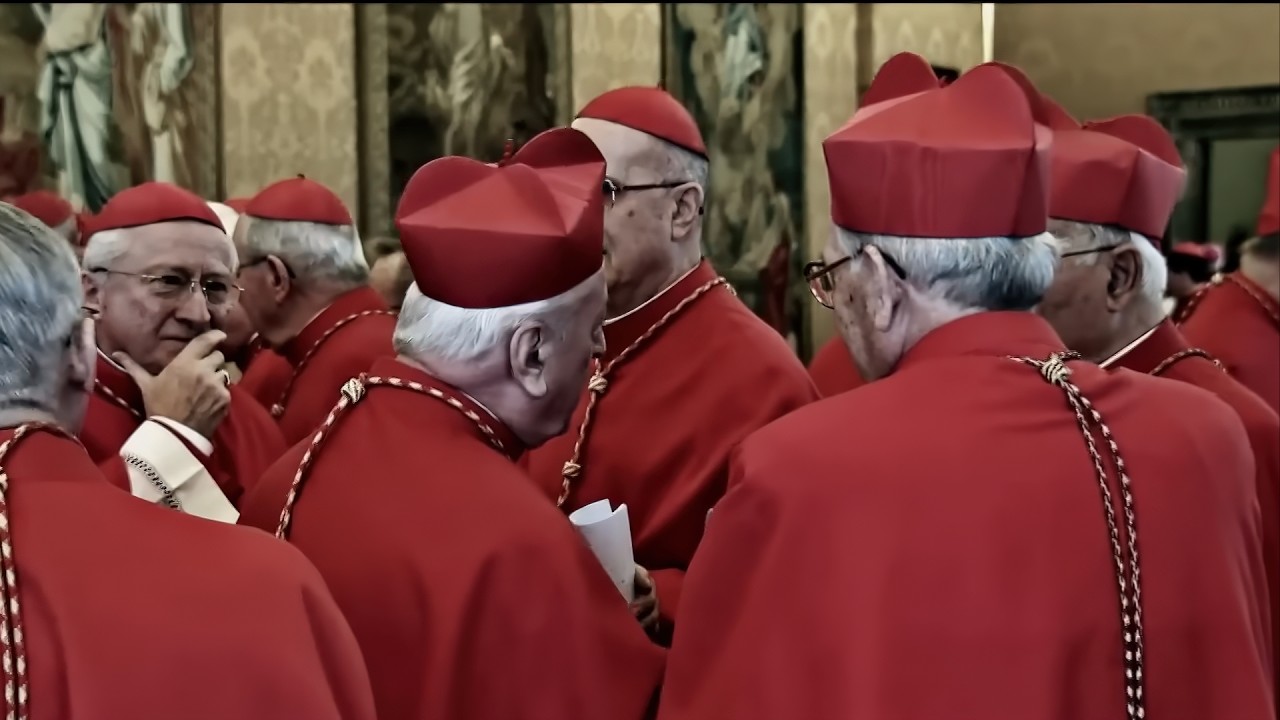


![Effondrement : notre civilisation au bord du gouffre ? Aurore Stéphant [EN DIRECT]](https://img.youtube.com/vi/FkiMqLD3_YQ/maxresdefault.jpg)