[Music] [Music] [Music] so they're constantly thinking about their way of practicing and with that constant shaping then their skills really improve but many times the way we approach our work is that we just do our work again and again and again each hour work being a kind of repetition of the same way of working we can make much faster progress in our work if we really try to shape our way of working so that in that work we are really challenging ourselves embracing that challenge as fully as we can and rising to our highest level
of focus when it comes to our cardiac health the preventive cardiologists tell us that one of the best things we can do to increase the capacity of our heart to do work is high-intensity interval training and if you take care of intensity duration is enabled so if you really try to do intervals of very high intensity workout Your Capacity to do lower level work really expands so it's very similar then when it comes to intellectual or professional work to consistently work at higher and higher levels you need moments of peak intensity that you learn how
to get your attention to its very highest level and hold it there and then have a time off and get it again to its very highest level and hold it there the difference is that when it comes to cardiac workouts you have a lot more effort at the high intensity it's very exhausting when it comes to intellectual work professional work the higher the level of focus the less energy it takes the less effort it takes in the very highest levels of focus which is called flow there's no distractions no impulses to go off task and
really no effort one definition of flow that's the simplest is called effortless attention so when you're in a state of flow things tend to go very smoothly you're able to stay on task you know without contrary thoughts or things distracting you your time flies by because you're fully engaged with the task at hand your creativity and your ability to synthesize and to learn and remember is at its very highest uh flow is a very enjoyable State and it is possible to learn to achieve flow at will in order to do that we're going to need
to go through some of the the neurophysiology of attention there are three possible states of attention depending on what part of the brain is in charge and for this model I'm borrowing the work of Daniel seagull and a great model he has of how the upper cortex relates to the lower cortex so we talked in other videos about the lower cortex and at the core of it is the amydala so the amydala is the automated detector of threats and opportunities and the low cortex is in charge of everything automated so you have automated behaviors like
those are impulses that come up you have emotional reactions you have automatic thoughts you have memories that intrude all of that is the work of the lower cortex on the other hand the upper cortex really is called the medial prefrontal cortex the very core of that is called the appraisal Center which is where you deliberately judge things as being threats or opportunities the medial prefrontal cortex is in charge of all deliberate behaviors so that includes things like abstract thinking and moral reasoning and decision making and thinking about ideals and how to be living your life
all that takes place using this upper cortex so now you can think when a person's in their highest state of focus which of these would they be using more it's a very tricky question so there are really three states of attention as I said and they correspond to whether you're dominated by one that lower cortex and the more automated that's part of what we call the threat mode or the limbic mode two the upper cortex being turned on and that is more of a mindful recollected way of working flow is actually when you have the
connector really activated so the it's called the anterior singulate and with flow the anterior singulate fully turns on and then kind of synthesizes the upper and the lowers that they're working together so when a person's in the Li liic mode they can usually feel it the limic mode is synonymous with the kind of threat mode and in that state you're going to be highly distractable and more impulsive you're going to be noticing things in your environment a lot which means that if you sit down to work and you're in that mode you're going to as
soon as you sit down you're going to notice all that's going on around you you're going to maybe remember things that you need to do so you have memory intrusions and you get taken off track by those uh or even the sense of you know maybe you're complaining to yourself about the work that you have to do or kind of dreading getting into it all of that is being stuck really in that threat mode so I want you to imagine your focus as being on a spectrum from about 0 to 10 and the lower levels
of that when you're 0 to three that's what we call that limic mode of attention you know in that mode you're highly distracted and it takes a lot of effort to focus on one thing now that's the way it should be CU if you're in a place there's lots of threats it should be hard to focus your attention on one thing so the example if you knew that people were on their way trying to kidnap you it should be hard to read Aristotle at that moment you know your your attention will be scattered you'll be
noticing things in your environment that's what this means to be in threat mode so above that you have the three to six range you could say you have the mindful mode and mindfulness a person is able to get some internal distance from the churning of the distractions and everything in the threat mode so and they learn to basically collect their attention into one simple thing I think of attention is being like a some kind of clear precious liquid you and the task at hand is a vessel when you're in that lower mode the lyic mode
it's like your attention is that liquid divided into many vessels on the table what you do then to get into the the higher mode of the mindful recollected mode of work is you pour all of the little vessels into the one simple vessel for instance of the breath you collect and gather your attention into one thing and the better you do that the more you're able to then get to the higher levels where you fully invest that one United thing into the task in hand so the problem that keeps people most stuck in the lower
mode is a habit of negative appraisals going back to the model of the brain and the upper and lower cortex as your upper cortex the appraisal Center if it judges something to be bad or something to be a threat it turns off that turning off dulls all the activity of that upper cortex and sends down a signal that activates your lower cortex in the Amala to go more into thread mode the way people do this the most is with a habit of judging things negatively and speaking about it and that's complaining or dreading so complaining
and dreading are how a person holds off that appraisal Center and keeps himself stuck in a kind of threat mode as long as the person is complaining about the work or really about anything at that time or dreading having to do the work their brain is not going to really let them get into the higher modes of focus it's going to keep them in that threat mode so the first step in in raising your level of focus is try to see the task at hand as an opportunity not as a threat see it as an
opportunity for practice see as something that you're going to embrace fully to grow in and that is called ref framing reframing in cognitive therapy is also called cognitive restructuring it means deliberately adjusting your view of the situation taking something that you're judging to be awful or bad and I really hate having to do this and said okay this is going to be a good opportunity for me to practice just using the word practice can be enough to get out of threat mode so if you can see the task at hand is something that you're going
to get better at you're going to improve in you're going to practice then the threat mode can turn off because as that appraisal Center activates with the thought of opportunity that reaches down and calms down the whole lower cortex in the amydala so that's how these things really these two parts of the cortex relate to each other and you can use that to your advantage with that practice of reframing reframe threats into opportunities for practice once we get out of the lyic mode you can get into the realm of mindful work in mindful work you
might still have distractions that come to mind and you might have some impulses and you might still notice things in your environment that bother you but now there's a bit of distance from it you're not Al you're not overwhelmed or kind of what we call fused with those distractions when they come up but instead you're able to just notice that they're there and not act on them so that's what mindfulness allows it's a kind of inner freedom and so you can notice the distractions coming up you can notice things Rising but not respond to them
in fact one great way of practicing that mode is if you simply do a sitting meditation where you allow yourself to be perfectly still not moving anything in your body even a a millimeter and what you'll do if you continue that for a while is you're going to start to notice impulses to move if you can simply be aware of the impulse to move feel the restlessness you feel the tension that comes without acting on it Gra gradually those impulses go away if you can get through a few cycles of that where the impulses come
and go you can be sure that you're firmly in the mindful mode another way of entering into the mindful mode is by focusing on something very simple like the breath the breath is great because it's always changing and you can pay attention to it through the whole cycle and as you feel you know especially the breath in the chest as you feel the your lungs inflating and deflating and you open up your attention to that fully it's easier than when some distracting thought comes up you can notice it's there and then let go and focus
again on the breath and you continue that for a little while longer and Gathering your attention completely into that one simple thing with a breath and then another distracting thought comes up you just gently let go of it and again refocus on the breath that really is practicing in a kind of physical way exactly what you need need to let go of distractions and focus on the task at hand so especially people who have trouble with feeling that they have a tension deficit would benefit from prolonging this practice even longer sometimes as long as 10
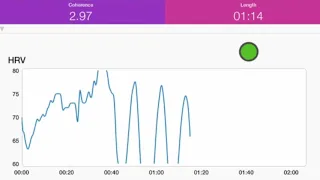
or 15 minutes before a long period of work so they can get used to really entering into this mindful work stage just to show you the physical effect of mindfulness on the body which is pretty profound want to watch this video and in it you can see a person who right now the heart rate is being measured and you can see there's no particular pattern in the upper left corner you see the heart rate just being plotted over time and you'll see the heart rate going along and not doing anything very particular and what I
can tell you is exactly at the 402 Mark the person opened up mindfully to the sensation of the breath in his chest and as he did that and recollected all his attention to that one thing you can see immediately the profound impact it has on the way his heartbeats you can see the plunging down as he's exhaling and then the returning to normal as he inhales and plunging down as he exhales and then coming back up as he inhales it's remarkable that something as simple as activating mindfulness could have such a profound impact on how
the heart beats what it's showing is that the person has gone fully into uh opportunity mode in Neuroscience or physiology that opportunity mode is synonymous with what's called parasympathetic activity in parasympathetics that's when you're when you're basically feeling safe you're have a positive view of the task at hand and you're ready for the work that's very calming for your body you know and the more you recollect yourself and really enter in you know so you can enter into that task the more you see the parasympathetic nervous system activating in many people who are stuck in
threat mode while they sit down to work they never get parasympathetic activation you never see these changes in their heart rates you know they're if you're stuck in threat mode you're going to have instead what's called sympathetic activity that's the fight ORF flight response and people can be stuck in that they feel stressed out because they sympathetic nervous system is just staying on the whole time recollecting yourself and viewing things positively so those two steps of reframing and then mindfully Gathering your attention activate this parasympathetic mode and allow you to go into very even higher
levels of focus now once you've gathered your attention fully into one thing like the breath then you can invest it in the task at hand to get from the mindful region of work into flow there's really one thing that's the most important and that is embracing the challenge you have to have the right challenge in the task at hand and really I think of that as a definite task with a time limit and with that you get intensity and from going into the higher Realms of flow you need more and more intensity setting the challenge
in work is a lot like a pole vter setting the bar if he didn't set the bar at all and he was just you know there pole vating with no bar it's kind of an absurd thing right to' be like a person throwing his body around you know with the with the pole wouldn't be a spard wouldn't be an Olympic event it's the bar that turns it into an athletic Olympic event cuz the bar introduces striving it introduces intensity and he has to set the bar right so that it really pull calls forth his best
effort it's exact same when it comes to our work if we sit down and don't have a definite goal definite task with a time limit then where does intensity go you we have to have some definite thing we want to achieve in a certain amount of time and really every task that we do allows for that in some way a good example is if you're driving somewhere so if you're going to go from Boston to New York City and you don't set a time limit you could imagine your route would be if you give yourself
eight hours to do it well then you're going to be going many other places pulling off in the side of the road going shopping on the way the yet if you set the time limit at 2 hours then it's going to be too too frantic and you wouldn't really be able to do it at least not legally the best way you know you set the time limit at 3 and 1/2 hours at that level it'll call for just the right amount of intensity the right amount of speed if you think of work like a car
you can think of the points you like you control the car through the steering wheel through the gas pedal and through the gas tank so the steering wheel is the order of staying on task and getting through you know the reframing getting through mindfully Gathering your attention really allows you to do that well to control the task now with order setting the challenge right and embracing it is really the gas pedal getting that down so that you get just the right level so that from here to New York You' be going at a constant you
know speed of 65 M hour the gas tank is the virtue of constancy so and we're going to talk about that when we talk about how to have the right approach to working in intervals so the three steps to really being able to get your highest level of attention are reframing the task in a positive way seeing as an opportunity trying to gather your attention together and recollect yourself and then fully investing it by embracing the challenge setting the right level so that you get the right level of intensity that gas pedal going down the
right level so you can really hum along then and flow in that work the best way of doing this is by trying to craft in the beginning one hour a day where you're can have your highest level of work think of it as a golden hour in this golden hour you're going to try to especially set the stage with care so that you make sure that you have the right attitude toward your work you might spend a few minutes mindfully Gathering your attention together and then can be very specific about what you want to accomplish
and to get it to set the challenge at the right level with that each day you can be working at having one especially good hour of work this is a lot like an interval training when it comes to your your Fitness so you try to achieve the highest level of intensity in a in a workout and then that raises your heart's capacity to work the rest of the day similarly if you're really trying to get to a nine or a 10 in flow you thinking of your concentration being a very high level then you're going
to be building your concentration for the whole rest of the day so your ability to work well will extend itself if you take care of intensity you will enable duration but it has to be done really well to really grow your intellectual capacities to really grow even your intelligence you have to be fully exercising into the high the highest level that you can at least once per day once you are able to have a very good golden hour every day then you can see about how to multiply it throughout the day so that you go
working intensely setting one golden hour preferably right in the beginning of the day and then after that hour which might be between 45 minutes and 2 hours actually then you can take a brief break maybe 10 to 15 minutes so that you can gather yourself again and then put again into the task and try to have another golden hour the ideal thing is where you could have five or six of these golden hours per day email is a particular problem because many times people want to do email in those breaks of work or they want
to engage in soci social media all those things because there are so many things vying for your attention is really dispersing so email is a really great tax on our attentional centers it mimics the limic mode if not putting us fully into limic mode because every email that you see is like a little vessel demanding some of that liquid of your attention If instead you can bundle that together and do it I think the ideal time for email is right before meal so a set aside time where you can be then taking care of all
the email business or social media and then you go for a meal and then it kind of clears the board again another thing people often ask about is how to handle interruptions so it might be that you're in flow you're working really well and then you get a phone call that you have to take or someone comes to your door and at that moment it's important to see the only thing that ruins flow is trying to divide your attention into so it's like you know as long as you have one vessel to hold all that
the precious liquid of your attention you can stay in flow and then when the next task comes you you just pour it in your attention into that next task and pour it into the next task and that was what we call sequential unitasking doing one task after another multitasking is when you divide your attention into several part putting it in several vessels so what you want to make sure is that an interruption doesn't become a way of multitasking so if someone comes to talk to you someone interrupts you it's important to stop what you're doing
put your whole attention into that Interruption and then when it's done put your whole attention back in the task at hand that way you can maintain this sense of sequential unitasking so really the capacity to work at your best is made up of three habits order intensity and constancy and those three habits make up really what we could call the virtue of work and the virtue of work is really the same thing when it's at its best as flow so anyone can go into flow and if you set the stage right you can do it
at will researchers talk about three different levels of flow one level is discontinuous flow and that's what we all have you know because all of us will have some activities in the course of our day and or while playing in sport or an instrument or maybe even a game you know where a person goes into flow and the important thing for one's professional life is that you learn to do this more and more at will in your job in your task at hand or in your work as a student discontinuous flow then can go to
the next level which is continuous flow and that comes with learning how to manage the in between times so that even when you're you know taking a break or relaxing you're still not dividing your attention into many parts but you're still doing the sequential unitasking one thing at a time with a sense of peace and order the highest state is called vital engagement in vital engagement it means you're bringing the ultimate reasons for your life your ultimate highest motives now more and more into the smallest actions so vital engagement is when you're living out your
ideals in every task that you do in my work as a physician the example of you know one of those ideal is service and when I'm you know really at my best in my work means that that Spirit of service that ideal is now permeating into smaller and smaller actions in my life but in order for that really to take place we have to be working at our best so being able to attain the highest level of focus the highest level of flow eventually allows us to bring greater ideals into the work that we do
each [Music] day