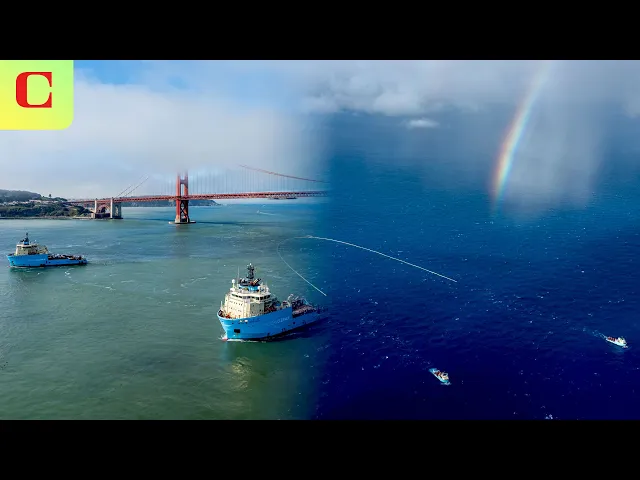
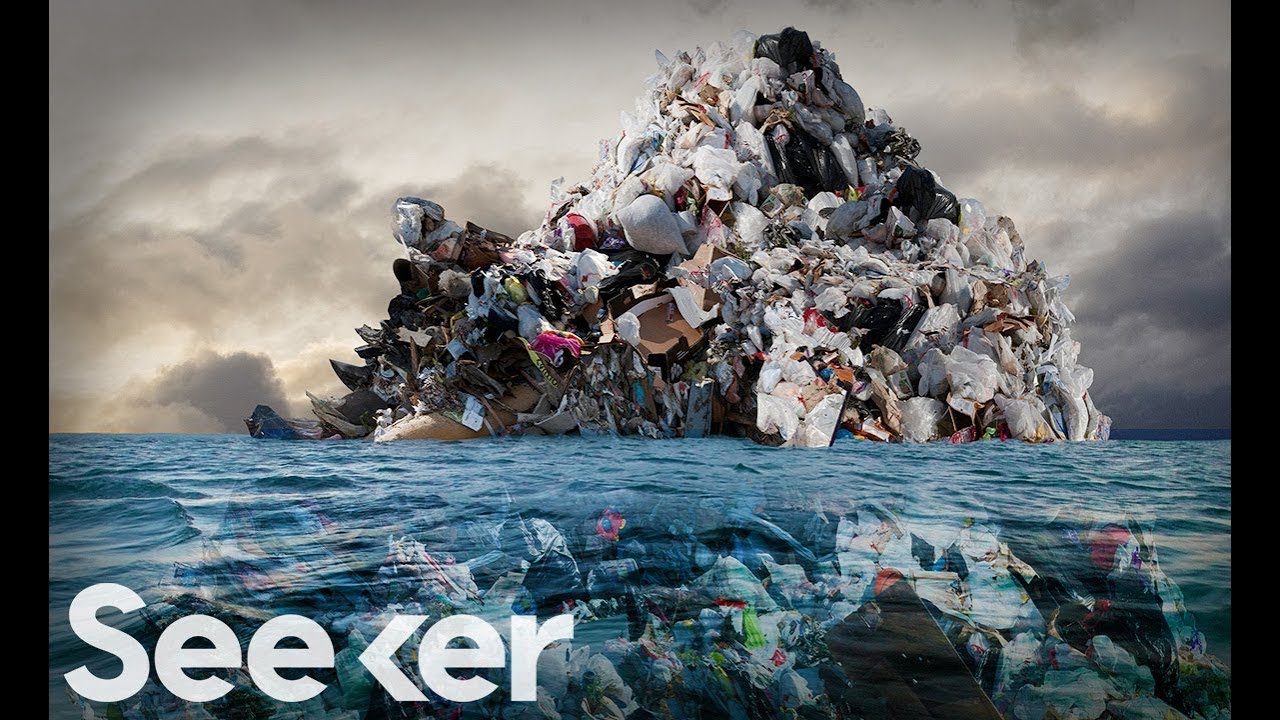
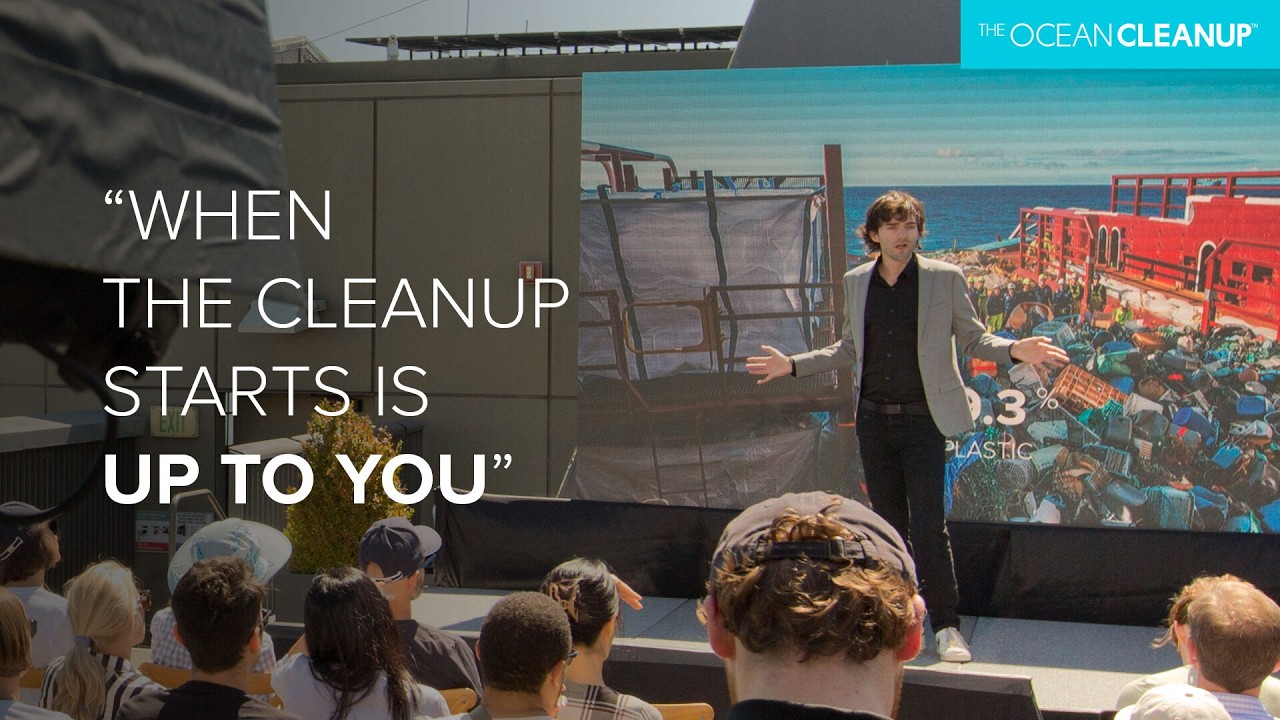
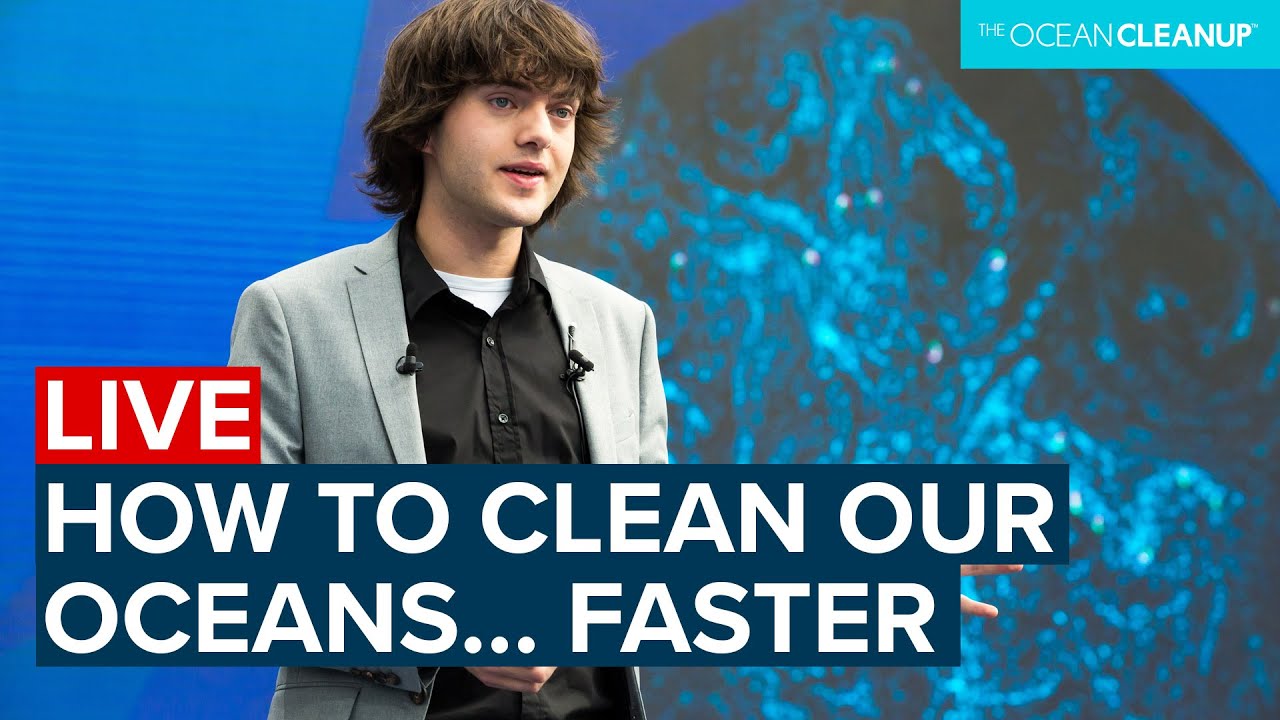
the ocean cleanup known for their ocean cleaning systems and River Interceptor Technologies returned to San Francisco to reveal their total estimated cost for eradicating floating plastic pollution from the Great Pacific Garbage Patch and the number was staggering we're here at the Exploratorium in San Francisco where the founder and CEO of the ocean cleanup buyant slat is holding a press conference to announce the organization's plans for the future buy and slat took to the stage and revealed the total cost it would take to clean up the Great Pacific Garbage Patch within 10 years today I'm I'm
very proud and excited to to share with you that the the results of the past 12 months of operations have now proven that we can clean up the Great Pacific garbage patch in a responsible way in 10 years time at a cost of $7.5 billion when it comes to the the time and the money it would take I I I really want to make clear here now this is what we can do right now you know so take the average performance of the past 12 months multiply that with a fleet of systems let them operate
for 10 years and the patch will be gone the estimated cost of 7.5 billion would be collected by philanthropic donations and grants from governments who have a stake in maintaining a clean ocean environment Bo slat explained how the plastic pollution in the ocean is costing all of us in real world dollars and cents pollution is contributing to the slowing of carbon conversion in the ocean which produces oxygen worldwide the vast amounts of plastic debris covering the ocean's surface act as a barrier from the natural process of turning CO2 back into oxygen not to mention the
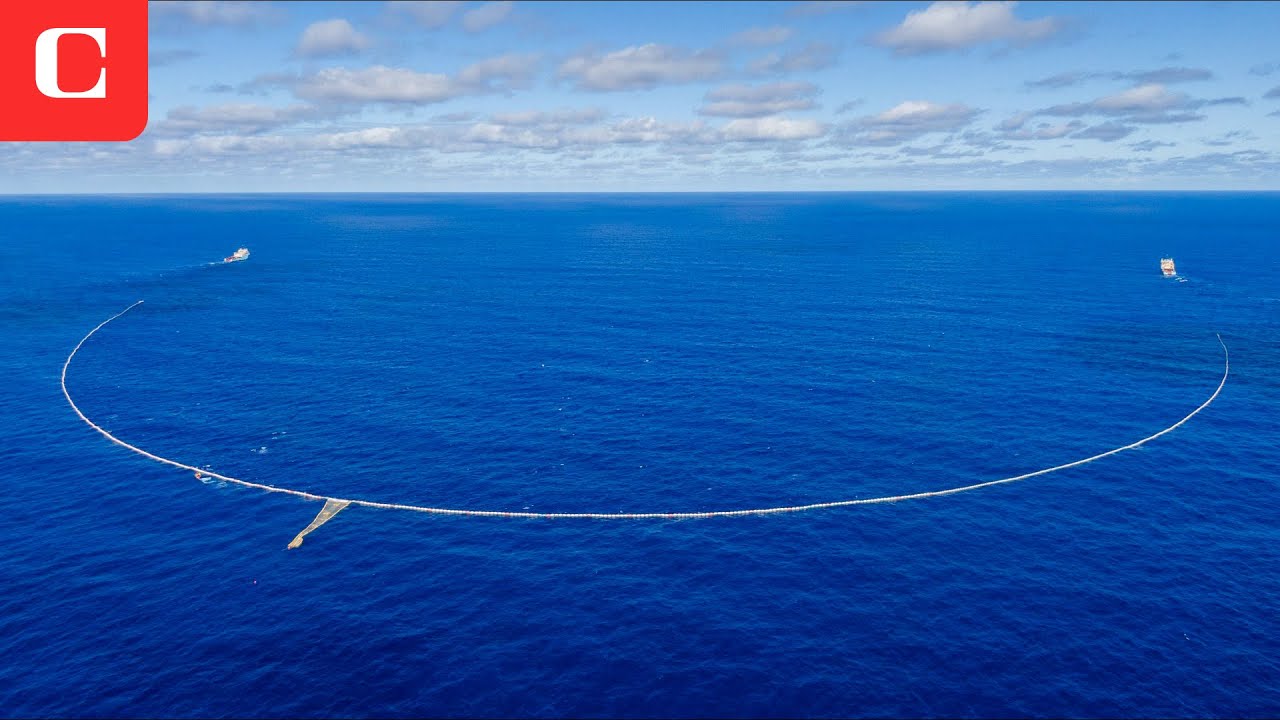
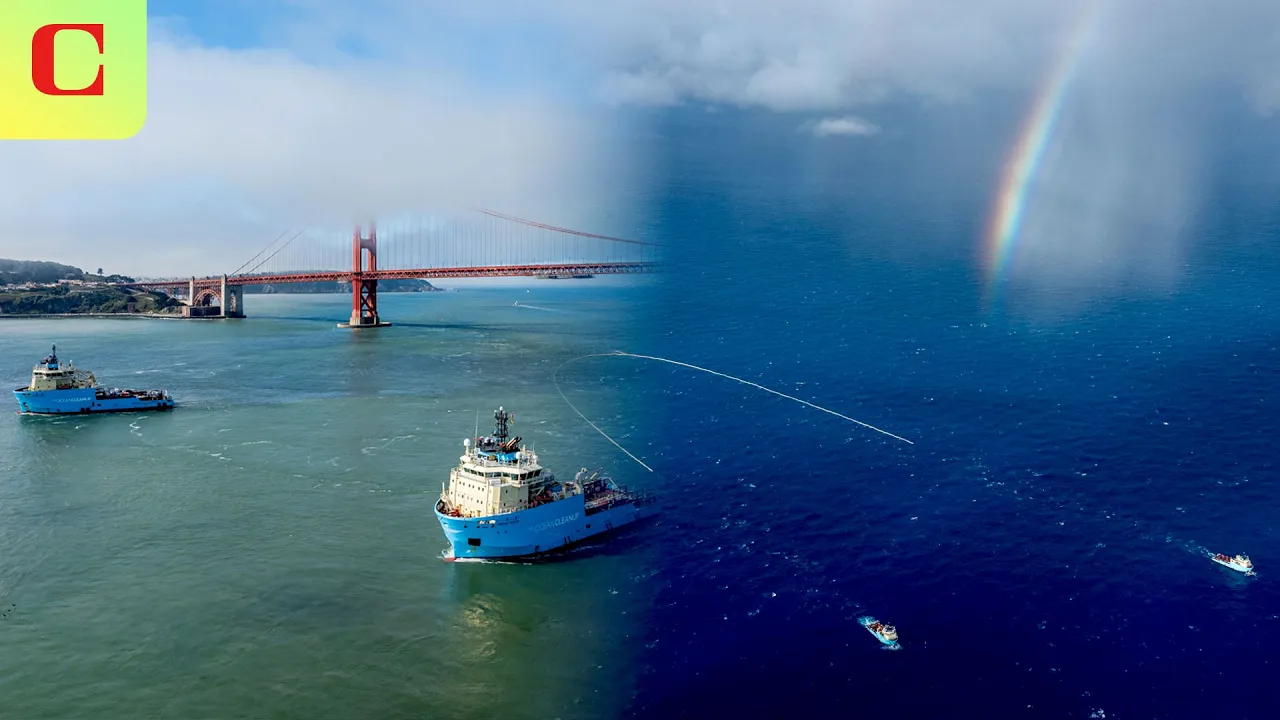
damage that microplastics are doing to Ocean wildlife and the food supply the ocean cleanup is currently using a piece of Hardware known as system 03 which is a large floating u-shaped barrier spanning 1.6 Mi or 2.5 km across and is being towed through the ocean by two large vessels at a slow walking speed collecting floating debris as it moves so here are the twin ocean cleanup vessels which Cruise side by side and drag the ocean cleanup system through the Great Pacific Garbage Patch collecting thousands of kilog of plastic pollution the u-shaped barrier directs plastic debris
floating on the ocean's surface into a massive net at the center of the cleanup system called the retention Zone once the retention Zone gets full the twin vessels maneuver to pull in the massive bag of plastic waste using powerful wenches and a buoy system and empty the debris onto the deck of the ship for sorting and recycling once on board a team of the ocean Cleanup Crew manually sort the different types of plastic collected into categories including fishing nets and solid Plastics and place it into massive collection bags to be brought back to shore to
either be recycled or pelletized for use in new products system O3 is equipped with multiple Wildlife safety deterrence including an array of underwater cameras for monitoring Wildlife encounters lighting for nighttime operations and a safety hatch which can be opened remotely to allow for fish to escape the slow speed the system moves through the water also allows for fish and sea turtles to easily swim out of the way if they happen to come into contact with the barrier buoyant slat stressed the idea of cleaning up the Great Pacific Garbage Pats responsibly and efficiently it acknowledged the
safety features for mitigating harm to Wildlife as well as the CO2 emissions that would be expelled from the two massive vessels pulling system 03 through the ocean according to the Ocean cleanups Models and projections they estimated that the energy needed for cleaning up the plastic pollution would result in expelling about 90 kilotons of CO2 into the atmosphere each year this would be equivalent to the amount of CO2 emissions produced by the small town of Wheatland Wyoming in the United States with a population of 3,300 residents according to buy and slat noting that the benefits of
the cleanup would overwhelmingly outweigh not cleaning the ocean pollution beautiful beautiful Town um but um you know honestly I think we we will be able to survive another weedland worth of of carbon emissions buyant slat went on to explain that he believes there could be a faster more efficient and less expensive way to clean up the Great Pacific Garbage Patch using computer modeling software Flo floating GPS trackers to help track the movement of floating plastic debris and new drone technology to help identify hot spots where plastic accumulation is more dense these models would allow the
ocean cleanup vessels to more precisely snake through the garbage patch following a more winding path where these dense patches of plastic pollution are more concentrated increasing the efficiency of each catch utilizing what slat calls hotspot hunting he believes based on their currently known plastic collection averages that the Great Pacific Garbage Patch can actually be cleaned up in half the time at half the cost we predict it is possible to clear the Great Pacific garbage patch in half the time at almost half the cost so that means 5 years and4 billion so this is going to
be our Focus for for the coming year you know we're going to invest one year to save five to put this price tag into context know this this $4 billion it's less than half this the amount that America is spending on Halloween decorations every year it's the same amount as was spent on Military expenditures in just the last 10 hours it's less than a quarter of a percent of the net worth of the 10 richest people on Earth and it's under 1% of the net profits of the world's plastic producers over the course of the
cleanup slat then put out a a call to the world governments and philanthropists to step up and make this happen because he and his team know that this is possible based on their annual collection numbers and calculations when this cleanup starts it's really up to you so we now call upon the world the governments the companies individuals to make this cleanup happen we caught up with buyant slat after the event for a quick interview you ever see a future where you may license or open source this technology so that other nonprofits or other organizations can
do the cleanup themselves yeah look we don't care who does this as long as it happens so you know if somebody wants to use our technology go ahead and do it right as long as the Great Pacific Garbage Pat is gone so no I think we um we have a lot of knowledge about how to how to use it how to operate it so um and of course we we don't want to lean back and expect somebody else to do it so uh but at the same time uh yeah somebody else wants to do it
Be Be Our Guest now what are your immediate plans following this press conference with the ocean cleanup are these ships going to go out and continue cleaning we have one more trip scheduled for for this year so soon our our festivals will be back in the patch for another 7 week uh run to um yeah to harvest some more plastic do some more testing and um and then the coming year we'll have um a brief pause in uh in offshore operations at least in C in terms of cleanup operations because we really want to double
down and focus on the hotspot hunting so you developing GPS trackers um getting the Drone stuff sorted out so that one year later 2026 we can actually um scale up at the level of performance that we that we want to see uh where we can clean up the patch in 5 years for $4 billion like And subscribe to cat and let us know in the comments what you think about the ocean cleanups plans to rid the world of ocean plastic pollution and thanks for watching