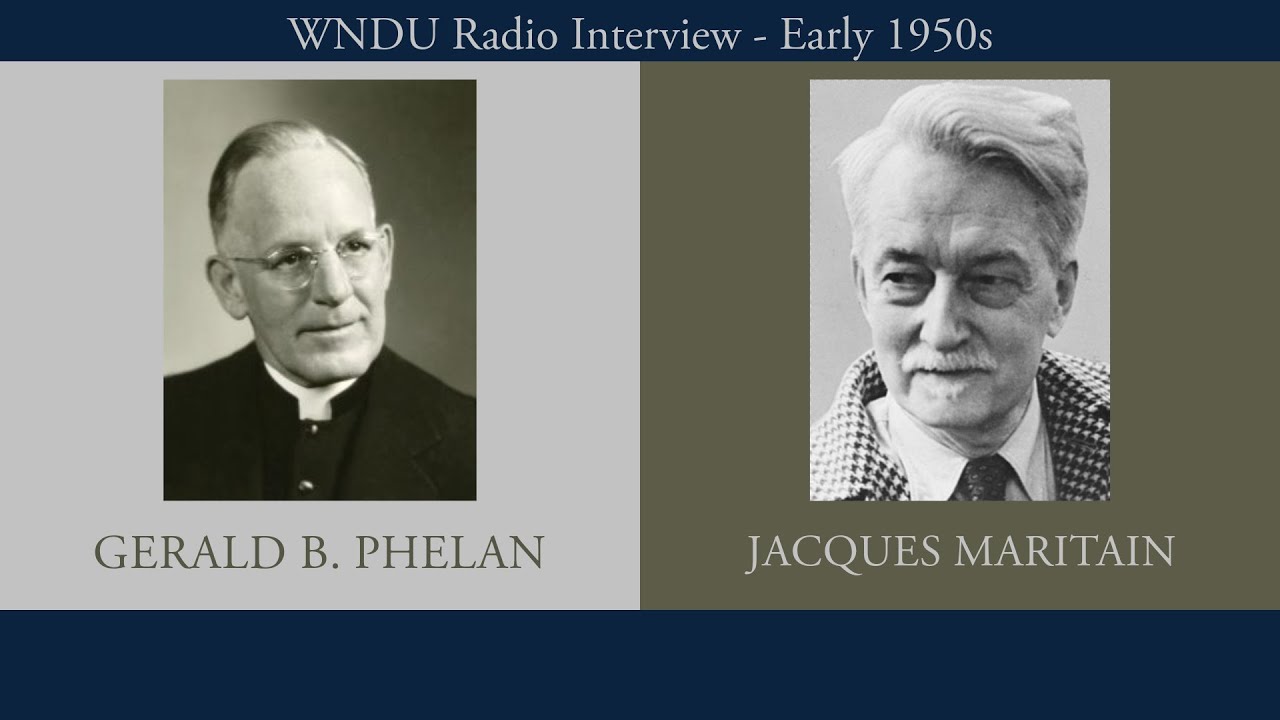
in 1920 in Arden scholasticism appeared the second book written by Jacques Maritain his first was one on on rebec's own who's thought had saved Jacques and his wife Marisa from a rat what I regard as a rather arrogant suicide pact if there was no way out of materialism life was not worth living over against the prevailing materialist mechanism Bergson introduced an insight to the evolving world in a LAN Vita which generated mechanisms and terminated in human beings in their relationship to the mystical his 1907 creative evolution ended with the claim the universe is a machine
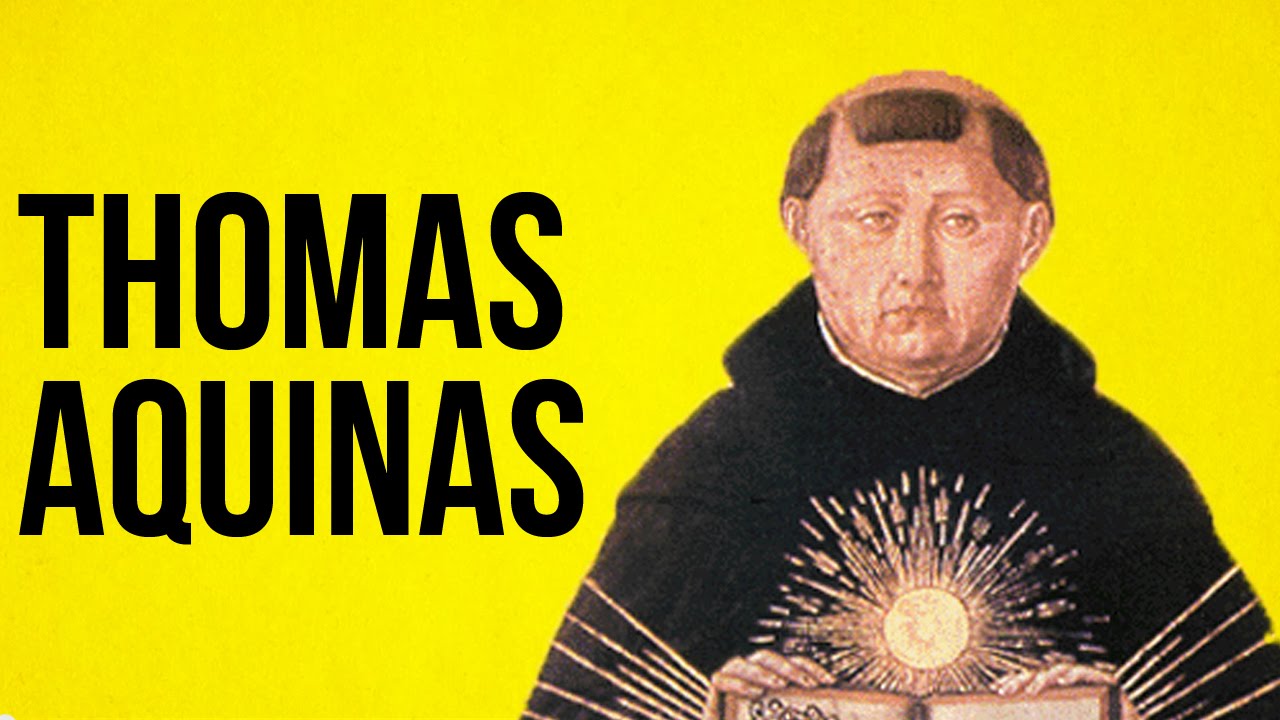
for the production of the divine access to the Elan for humans involves a dynamic creative intuition this would play a central role in merit ends later work on aesthetics releases spiritual director father Humbert Clara Salk a dominican introduced her to the work of Thomas Aquinas and the two became Arden Thomas hence the second book art and scholasticism is basically an Aquinas outside of his commentary on Dionysus as divine names where he presents the pseudo areopagus views of divine Beauty Aquinas has only a few things to say about art and beauty and that in a set
of scattered quasi aphorisms mostly borrowed from Aristotle Meriton said that one could gather them together and develop a full and complete theory of art his work he says is only the beginning he proceeds as the editor of the English tradition said to read between the lines period in 1952 that between turned out to be 423 page work creative intuition in art and poetry with jetty and Jolson is rumored to have said and I thought he was a Thomas Merton begins ardent scholasticism citing Aquinas that the beautiful is it quad quad visa and plot yet that
which simultaneously is an object of seeing and of delight as an object however of intelligence open to the infinity of being it's important to stress the lighter as Aquinas has a being is what first arises in the mind and makes the mind to be a mind it directs us to everything both the wholeness of the realm of principles and the wholeness beyond surface of individuals it is articulated in the transcendental properties of unity truth goodness other nurse thing hood and beauty and now obviously realized Martin said beauty belongs to the intelligible and descends for us
to that beauty which is Co natural to us namely beauty found in sensible things following Aristotle's techne Aquinas defines art as rector wrought co-factor Billiam correct reason for what is made merit and stresses rasul reason the intellectual character of artistic insight it has a parallel inner styles for furnaces prudence as rector Otsu RGB liam correct reason for doing again era style aquinas files Aristotle in his initial distinction between sense and intellect sense presents the individual intellect apprehends the universal however in his Nicomachean ethics while discussing intellectual virtue Aristotle says that noose our intellect apprehends both
the ultimate principles and the ultimate particulars I would add that's because we work from the notion of being which includes both individual and universal in art and prudence we're dealing with unique individuals artworks and persons and situations here intellect we might say configure eights the individual artworks and in persons it grasped that which fits which coheres with the whole situation or the peculiar piece in fact this occurs always through what's called recursion to phantasms that is to develop sensory experience which configurate the immediately given sensory situation both technically and furnaces art and prudence are habituated
modes of apprehension ways we possess ourself for making and doing yeah merit in makes the surprising claim that art is even more intellectual than prudence he doesn't explain that further but it's intriguing art produces works characterized as beautiful the basic characteristics of beauty according to Aquinas our integrity us report Co Claritas integrity means that everything is there which ought to be there Aristotle makes a similar observation when he says that a good work of art is like an organism everything is there which ought to be there and nothing that is there is superfluous to the
overall functioning proportion means two things the integral parts are in proper proportion to one another but also that the object is proportional to the observer as to the latter Aristotle noted that the term beauty cannot be applied to that which is too small and that which is too large to be taken in by the human observer Aquinas notes that things can be proportional to the observer because the observer the observer is proportionate in itself he says the sense is a kind of rotc Oh Aquinas at one place identifies Clary toss as brightness of color which
is an astonishingly reductive statement I think merit n focuses on the link between sensory form and intelligible light and insight rooted Plato made explicit by floatiness Aquinas deals with that in his Dionysian commentaries in the 12 40s Aquinas attended Albertus Magnus lectures on Dionysus divine aims stemming from that context in de poele Croat bono on the beautiful and the good and a push column formerly attributed to Aquinas Albert laid stress on terms that describe the surplus of beauty over goodness as and these are the terms he employs a light a shining radiance a splendor and
incandescent of resplendence a lighting fulgor super full gence a Claritas linked to klaris which means famous parallel to the Greek Ducks eyes glory a super splendens rooted in the substantial form this an otherwise typically austere scholastic presentation this piling up and even manufacturing of terms to describe the single property is indeed remarkable Albert is clearly struggling to give expression to a surplus in the experience of beauty beyond the analyzable sends early present properties to which it might otherwise be reduced in the expression splendor for me this luminescence is linked to proportion and consonants which are
understood as a relational aspects within the form of the object this is the source of acquaintances list of the properties of beauty or whatever the identifiable ratio involved splendors a surplus property and in the Dionysian context it is understood as the directly perceived expression of the depth of divine mystery irradiating all things Meriton interpreted this way he says to define beauty by brilliance of form is to / brilliance of mystery and he says further that it is in fact the light of being he applies that to the work of art now several times he refers
to the eternal rules of art in concluding and in the creative intuition in art and poetry he mentions the golden ratio as as found for example in the Nautilus shells as one of the rules that govern art art itself such rules would be objects of wreck the rector Accio Aquinas identifies as an intellectual virtue which has hold of the principles governing a given region but whatever the eternal rules might be artists develop breakthrough as a form that generate new rules the highest of them for merit and can only be found in the individual ended in
the individual artist and developing his work a strange conception but speaking of rules here underscores a kind of necessity in the uniqueness of the finest work or a given artists style he says that the great artists will work not against the rules but outside and beyond them this involves constant notion of genius the one through whom nature gives the rule to art however Meriton underscores that this is the work of intelligence and not of the irrational now art is imitation what is imitation not yet distinguishing fine and useful art Aristotle said that through art in
place of T sehorne's and clause men produce knives Spears and axes art here partly imitates partly completes nature imitation here concerns not copying something reproducing a function going on to what we would call fine art Aristotle said that music is more imitator than painting because while the latter there's only signs of disposition or ethos music evokes the imitation in the aroused ethos and in tragedy art imitates action so function ethos in action these are the forms of imitation for Aristotle the division of finding useful art began to show up máirtín claims in Leonardo's contrast between
the painter and the sculptor the sculptor is an artisan dirty sweaty generating the noise of hammer and chisel while a painter could be well dressed even accompany in the background by music Leonardo also spoke of exact replication as the task of painting he reported favorably about a dog wagging its tail and viewing an image of its master birds attempting to light on the railing in a painting a monkey frolicking before the image of monkey etc but Meriton notes Leonardo's practice fortunately belied his theory learning rules for producing exact replications of natural things was the aim
of the French Academy initiated by jean-baptiste Colbert under louis xiv Meriton referred to the academics ISM is promoted as a barbarous system of artistic education barbarous in spite of the technical sophistication that involved at any rate it was against academics ISM that's Suzanne led the revolt Maritain claimed that the great artists never represented nature in its immediate appearance Leonardo's theory and zoiks is practice in to the contrary notwithstanding there was a famous encounter between two ancient Greek painters zookas and horuseus the latter break the painted grapes so realistically that birds pecked at them zooks is
told him to pull back the curtain to see a real painting Horatius reached for it only to find out that drapes were painted zooks has said that fooling men was greater than fooling birds Hegel remarked that the invention of hammer and nails was more important for humankind than the production of illusion nature already does a fine job of producing things AR has a higher mission merit and has a rather long discussion of how artists treat nature the careful study of nature is supplemented by also studying how master artists master artists in studying master artists who
painted natural things to get a sense of how they rework nature he says artistic creation does not copy God's work but continues it this follows Aquinas who said that art imitates nature in her mode of production art imitates nature and her mode of production hey go follow that direction and exulting fine art over nature saying God is even more operative in history than he is in nature great art involves its inspired transformation of surface to say something of the underlying and ultimate inner discussion Christian art Maritain claims that again quote here although from other points
of view it's diametrically opposed to Christianity contemporary art is far closer to Christian art than academic art this will be one of the focal points of creative intuition and art and poetry to which we now turn in his early work Meriton identified himself as being anti modern however in his later work on creative intuition he claimed that modern painting and poetry advanced beyond the tradition and deepened the apprehension of subjectivity to become more intellectual than traditional art and prudence that provoked a book entitled shock merit an anti modern or alter alt ultra modern and as
he noted Etienne Jillson remarked when he read it as we noted and I thought he was a Thomas Merritt and in fact here developed some of Aquinas essential insights Aquinas speaks of the agent intellect which grounds the apprehension of the universal Maritain translates this as the illuminating intellect and extends its operation to the apprehension of the distinctive individual and heart and prudence Aquinas also speaks of Co naturality in the ethical and mystical orders being of one nature with a given net virtue or in some sense with God merit an extends that to the sphere of
the fine of fine arts again he extends Aquinas notion of intellect to us which is contrasted with wrought Co intellect dose is the beginning and end of reasoning as direct insight intellect is contemplative the repose of the mind in relation to the movement of reasoning American develops the notion of intellectus in the direction of special kinds of intuition but he also carries out extensions of the usual understanding of poetry in music he extends poetry from the art of words to the creative intuition which generates all art and indeed extends it to all creative activity in
whatever region of human experience there is further he extends music from harmonically patterns sound generated by instruments to what he calls inner intuitive potions based on an inner dynamic attunement generating expression than all the fine arts theory seems very far from Aquinas thought he locates the origin of these extensions and what he calls the spiritual unconscious which he claims a Scholastic knew but did not develop the corresponding theory for it the spiritual unconscious is the source of creative intuition he speaks of this unconscious as the single root of the souls powers which he also calls
the center of the human person the totality of the self and the heart root Center Hart totality seems to indicate or circle around the same reality as fun build a brand so maraton speaks of the heart as the origin of the work of art the work of art says merit on issues from the heart of the artist again he says there's a kind of musical a musical stir produced in the depths of the Living Springs in which creative intuitions are born audible only to the heart in terms of essential grounding for Aquinas intellect is the
single root imagination flows from intellect and sense from imagination to intellect and sense correspond will and appetite but this only distinguishes and relates to faculties Meriton is concerned with their operative together Ness in this work the single root is developed experience which lies in the spiritual unconscious but there's also a residue of experience in what he calls the automatic unconscious explored by depth psychology the conjunction of these two areas is the matrix of art and quoting here it is the totality of man since imagination intellect love desire instinct blood and spirit together and the first
obligation imposed on the poet is to consent to be brought back to that hidden place near the center of the soul where this totality exists in the state of creative source unquote that indeed is the heart but as Heidegger also noted the rational knowledge of our culture has developed a method it has developed a mathematical knowing detached from wisdom which Meriton says has estranged the human mind from itself and led to a withering up of the heart at times we meet only what he calls the empty contrivances of mere constructive or critical reason estranged from
the heart a special kind of intellectual intuition is involved not only in the arts is creative intuition but also in the work of great mathematicians and in the great philosophers he mentions Heraclitus and Plato Aristotle and Thomas Aquinas platonist Spinoza and Hegel here again he parallels Bergson who claimed that every great thinker operates out of a single generative intuition but he even finds a kind of poetic intuition in and I'm quoting here big business revolution religion sanctity or imposture when the mind of man attains a certain depth or mastery in the power of discovering new
horizons and taking great risks imposture is certainly a strange insertion but as in acting involves being able to grasp and reproduce a whole style of existence such intuition always involves Co naturality being immersed in it in an area of operation until one has a certain feel for its possibilities what Michael Polanyi called personal knowledge Merton has made much of what he calls the intuition of being without which one may be a great scholar or dialectician but can advance with facility into metaphysics in his preface to metaphysics he speaks of the intuition of being in terms
virtually identical with what he used to describe creative intuition the intuition of being is and I'm quoting again a sight whose content and implication no words of human speech can exhaust or adequately express and in which in a moment of decisive emotion as it were a spiritual conflagration the soul is in contact of living penetrating and illuminating contact with a reality which it touches and which takes hold of it close quotes one interesting thing here is the conjunction of seeing and emotion seeing and emotion being informed and transformed for emotion here means touching and being
touched now because this is intuition of being though it may be occasion by encountering a single individual it opens up to the whole in fact the so-called light of the agent intellect is precisely the function of the notion of being which is all-encompassing Meriton implies that insight into being too poetic intuition again I'm quoting precisely because it has no conceptualized object it etiquette tuition tens and extends to the infinite it tends towards all reality the infinite reality which in is engaged in any singular existing thing close quotes and again he says quoting the port is
confronted with the very object of intelligence that is the ocean of being in its absolute universality he experiences the radiance of the ontological mystery as the third and deepest aspect of Aquinas is conception of splendor for me Martin's focus is on poetic intuition as involved in the arts then here poetic refers to its original Greek meaning namely making poetic intuition is what he calls an intellectual flash aimed at making a work of art it is quoting again that intercommunication between the inner being of things and the inner being of the human self which Plato called
musica it has its source in the pre conceptual life of the intellect where it functions in a non rational non logical but not anti rational way of which he says music in the narrower sense may be the most significant instance reason is operative in the depths but here quoting again reason does not only consist of its conscious logical tools and manifestations nor does the will consist only of its deliberate conscious determinations far beneath the sunlit surface are the sources of knowledge and creativity of love and Supra soon sensuous desires hidden in the primordial translucent night
of the intimate vitality of the soul close quotes here the unit here the inner music which inspires creativity and all the Arts has its origin music as instrumentally produced he says has the peculiar privilege of expressing beyond any possible meaning of words the most deeply subjective singular and effective stirs of creative subjectivity too deep-seated to be possibly expressed by any other art that was a quote but since his focus here is upon the inner music a full treatment of music in itself would require another analysis beyond the scope of the present work so Meriton restricts
his treatment to art in poetry the former here being restricted to painting that is art as painting and the latter extended from the narrower to the larger sense of the poetic in poetry proper there are two musics inner intuitive potions and the music of words operating together with the imagery referred to in the words poetry signifies first through concepts subjected to the primacy of logical connection a definite set of things standing as objects of thought and second as the final aim mysterious flash of reality which as grasp has been grasped without concept in which no
concept can express that again was a quote it involves what he calls a magnetic super conceptual power expressed in the Supra conceptual power expressed in the music of the words again Maritain underscores his claim that poetic intuition itself is an intellect 'iv flesh and not an irrational impulse in classical works there's a tendency to prevent the inner music being conveyed by the words because the claims of rational expression and conceptual unfolding he says quoting again without modern poetry who it could not have become full I'm sorry without modern poetry we yeah we could not have
become fully aware of the importance of this inaudible wordless and soundless music as we pointed out earlier it is a music only the heart can hear this has his parallel in painting good mark modern painting he says awakens in us a deeper emotion and resonance and delight and love than many masterpieces of the past the old masters in the respect for natural appearances faced an obstacle to the inner deeper sense revealed after the breakthrough in Suzanne as Matisse noted the camera has freed painting to be painting classically art is set to aim at beauty but
in some of the modern forms of poetry beauty is repudiated in forms of arcane knowledge Maritain claims that beauty is not the end of fine art but what he calls the end beyond the end the atima in Plato's symposium said that the sight of the beautiful engenders art Merton says that beauty is the atmosphere surrounding the generation of the work but not the end which is the embodied form I presume he means that beauty like joy follows the work of art and like joy cannot be found when it saw it when Beauty has made the
end merit and says some academics ism is the result he cites Edgar Allan Poe art is a wild effort to reach the beauty above the word cannot best reflect this beauty above apparently academics ISM is fixed upon a self-contained sensory beauty that does not radiate the spiritual Beauty itself is among the transcendental says he said earlier beyond Aquinas and following Bonaventure he claims that beauty is the radiance of the transcendentalist United sensory beauty infused with the spiritual and nature and art is a subject of transit is a subset of transcendental beauty no as before art
involves imitation rather than art imitating nature merit incites Oscar Wilde who said nature imitates art he goes on to say that only after Giotto did we become aware of the beauty of mountains the Romans spoke of the teddy toss opium the boringness of the of the Alps of that which made the March to conquer Gaul more difficult the mesh's apparently did not stick in the 18th century Benkelman on his way to examine the sculptures in the Vatican Museum while passing through the Alps pulled down the shades of his carriage so he did not have to
look at all that ugliness the elves right Marjorie hoped Nicholson claimed it was the Romantic poets who taught us to consider the mountains beautiful I found this astonishing since mountains mountain scenery along with sunrise and sunset are the typical instances of natural beauty that people refer to when he asked what's beautiful in nature the shockingly points to a kind of historicity in the awareness of beauty whatever you want to make up that artistic imitation opens to the inner reality of things Maritain notes that Chinese painting by its treatment was able to bring out from things
their engaged soul such painters were already beyond the copying of surface the illuminating intellect reveals the inwards of things in Aquinas terms there sa there to be beyond everyday surface adjustments and scientific apprehension at the same time as providing the light of being the illuminating intellect opens up a sense of the whole of what is in and through the individual work and as with all great painting there's simultaneous manifestation of the creative self and the thing where the Chinese were full just on the things depicted none I'm sorry but where the Chinese were focused on
the thing depicted modern Western painters that focus on the creative self whose depths they were the first to discover but Meriton notes even when painters moved from transformation of ordinary surface to the rejection of it in abstract painting they still drew upon their experience of court here again laws of dynamic equilibrium laws of proportional correspondences optical laws psychophysical laws grounded on nature abstract painting involves some vital element a rhythm a contrast a contour which had been seen in nature both Henry Moore and John Dooley made the same observation for Dewey abstract art may be more
truly imitative of nature in its rhythms and energies than academic art which replicates surface the French Academy was far from that as we said it taught rules for exact copying in painting and sculpture Meriton returns again to Suzanne's revolt against academics ISM as the liberating figure in contemporary art he revealed the varied significance of visible things the very interior T of things manifest together with the inner life of the artist Peres with the work of the Academy rector Otzi oh Toby Liam does involve principles even rules but Meriton insists here as he did in his
first book they must be perpetually newborn rules modern poetry obeys more exacting laws and rules for they're free from for they are free from contingent rules each work word being in tune with the music stirred by poetic intuition for the Academy the rule was a recipe it has his proper application and computer-generated tile and wallpaper patterns which do not point beyond themselves however new forms tend to fall into the routines have become a new academic ism praising the art which broke with that merit and warns against the new academic ISM and calls for painters now
to free contemporary painting from the academics ISM of the non representational system genuine painting he claims especially after modern liberation pertains to a kind of metaphysical vastness and degree of intellectual 'ti which resemble those peculiar to poetry he observes that this advance into creative subjectivity far beyond the meat this advances in creative sorry he observes that this advance into creative subjectivity sorry once more he observes that this advances into creative subjectivity far beyond the medieval universe within which Aquinas dwelt for all the soaring truth that embody the medial medieval universe was and this is a
quote again was lacking in a great many truths that the modern man has discovered but at the price of his internal unity the chief of these newly discovered truths is creative subjectivity this is a quote again the great essential fact of modern culture is the spiritual advent of creative subjectivity distinct from the self-centered ego which came front and center in Rousseau in the arts the latter involved a brute or merely subjective emotion the result is emotionalism and a shallow intellectualism falling back on the empty contrivances of a merely constructive or critical reason estranged from the
heart to which we refer it earlier the great breakthrough of iron culture involves as he constantly repeats an obscure grasping by the artist of his own self and the things in a knowledge through union or through Co naturality which is born in the spiritual unconscious here intellect is far beyond concept and logic exercises itself in vital connection with the imagination and emotion there are ten claims that essays on in painting in poetry what occurred after Baudelaire was a much greater historical significance than the revolutions in physics and astronomy which were great indeed and that's because
it affected the spiritual life of the people of the West so for all its problems Maternity identity advanced in the deepening awareness of creative subjectivity and into a deeper awareness of the Internet's of things to conclude then for merit an fine art has its origin at the center of the soul at the root of the soul's powers and the totality of the self in the heart from which arises musical musical pulsons in a creative Petach intuition which generates the work of art this thoroughly modern conception nonetheless has its roots and Aquinas concepts of agent intellect
Co naturality intellectual intuition and the ground of the soul and intellect for merit an illuminating intellect works at the center of the soul which has become Co natural with things to be a things to be expressed based upon the flash of intellection tuition aimed at production through musical poetic to tournament my basic claim is that in creative intuition in art in poetry merit an has performed an album or a synthesis rising above the contrast of Aquinas and modern achievements and poetry and painting he gives a sterling example of how to increase and perfect the old
by the new thank you you