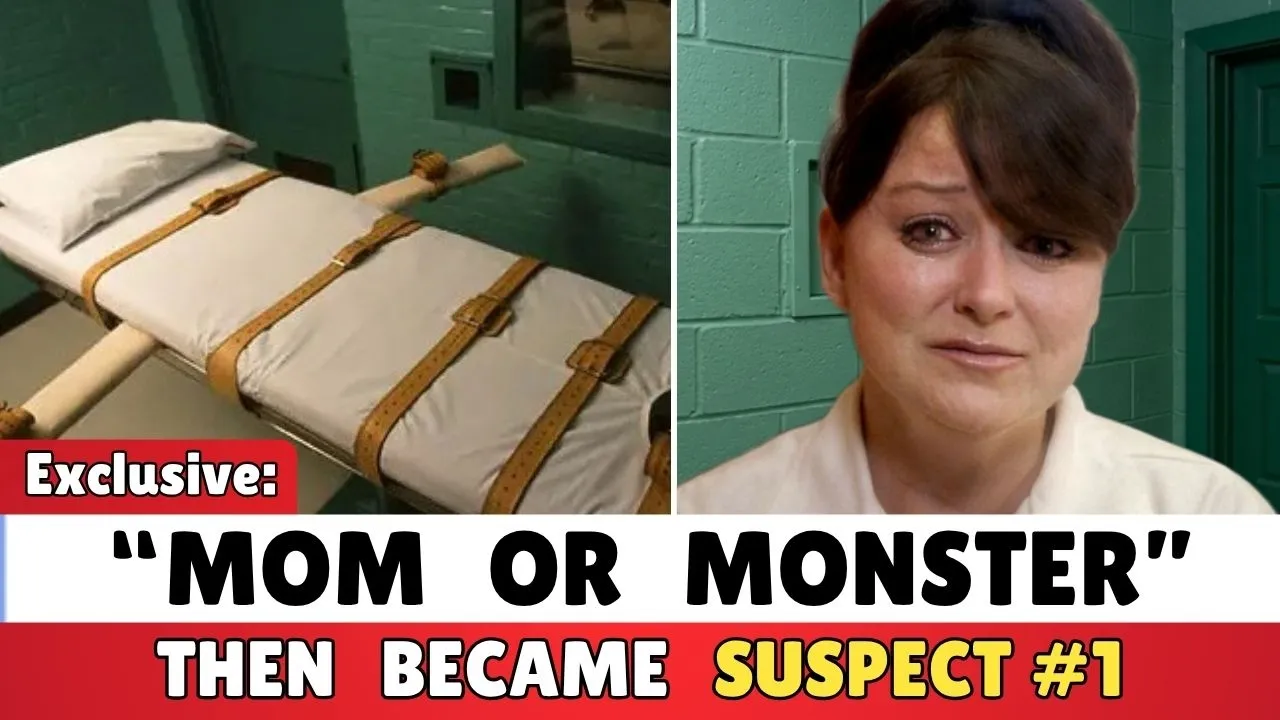
Your name's Dolly. You want to put my name down? Yes, please.
Nobody in your head. You don't know who this is? >> Nearly three decades have passed since a frantic 911 call came from a quiet suburban home in North Texas.
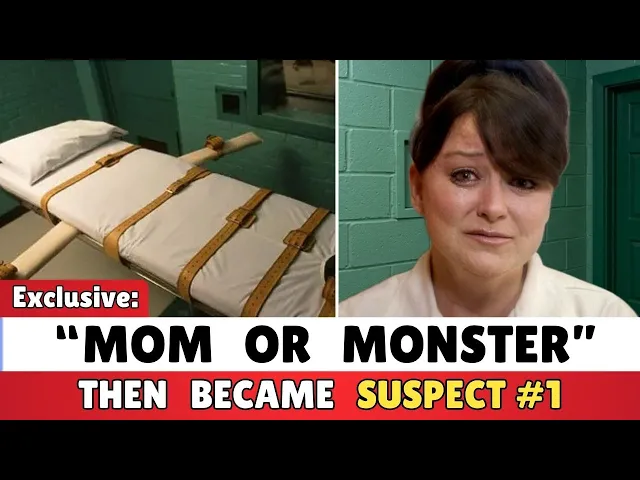
Yet, the question still won't die. Was Darly Rutier a mother attacked by a stranger or a woman at the center of a nightmare? In the early hours of June 6th, 1996, the voice on the line sounded panicked and rushed.
Darly claimed an intruder had broken into her home, attacked her, and stabbed her two little boys. Police arrived to a scene that felt impossible to process. a living room marked by violence, two children gravely wounded, and a mother bleeding and bleeding that someone had been inside her house.
The details at first suggested a home invasion. Darly described a man moving through the house, an attack that unfolded quickly, and a desperate struggle for survival. The story spread rapidly because it struck a nerve.
A suburban family torn apart in minutes and a mother left alive. Injured, terrified, and begging for help. But true crime cases don't become legendary because they're simple.
They become legendary because something doesn't fit. In the first hours, investigators began noticing small things that raised larger questions. The house did not show the level of disruption many expected from a violent intruder.
The narrative seemed like it should have produced obvious signs of forced entry, a clear trail or unmistakable proof of an outside presence. Yet, the scene resisted easy explanations. And then there was the third child, an infant asleep upstairs, completely unharmed.
To many people, that detail pointed in two opposite directions. On one hand, an intruder might not notice a baby in another room. On the other hand, skeptics asked why a ragefilled attack would stop where it did, why nothing was taken, and why the attacker would leave without being seen.
From the beginning, the public split into two camps. One saw a young mother who survived the unthinkable and became a target because grief doesn't always look correct on camera. The other heard a story that sounded dramatic but didn't feel natural.
And that's where this case locks people in. It isn't only about what happened that night. It's about how trauma, behavior, and evidence are interpreted when truth is hidden behind shock, blood, and seconds captured on a 911 tape.
As the investigation unfolded, the focus narrowed toward one terrifying possibility. What if there was no intruder at all? What if the scene itself was meant to tell a story that never happened?
Investigators began building their theory piece by piece. Not with a confession, not with a clear eyewitness, but with observations, timelines, and forensic interpretation. Each one tightening the same question.
Was Darly Routier the victim or the suspect from the very beginning? And once police made that turn, everything changed. Because when a case becomes mother versus mystery, the world doesn't just watch, it judges.
But the next discovery would either strengthen the intruder theory or cause it to unravel. A single item found far from the house and stained with the boy's blood created a question no one could ignore. In many cases, the crime scene tells one clear story.
In this case, the scene appeared to tell two, and neither felt complete. Investigators carefully mapped the home, photographed patterns, measured angles, and reconstructed the timeline repeatedly. Darly's account suggested chaos.
An intruder enters, violence erupts, a struggle occurs, and the attacker flees. But to detectives, parts of the house looked inconsistent with that kind of frantic sequence. Entry points became critical.
If a stranger entered, there should be a clear path in a damaged window quickly became one of the most debated elements of the case. Was it a genuine break-in point or a staged detail meant to explain the scene? Analysts debated glass placement, disturbance patterns, and whether the surrounding area reflected forced entry or careful manipulation.
Then there was the blood evidence. Blood follows motion, gravity, and time, not emotion. Analysts examined where blood pulled, where it smeared, and where it didn't appear at all.
According to the state's interpretation, some patterns suggested pause and placement rather than uncontrolled movement. But blood evidence is also one of the most contested areas in forensic science. Different experts can examine the same scene and reach different conclusions.
that uncertainty fuels controversy because viewers want certainty and this case offers interpretation instead. Then came a discovery outside the home. A sock found in an alley several houses away containing blood from the children.
To investigators, it suggested movement beyond the house. To others, it created even more questions. If it belonged to an intruder, why leave it behind?
If it was staged, why place it where it could be discovered at all? This is where the case becomes a psychological puzzle because every clue carries two shadows. If an intruder fled, the sock could be dropped evidence.
If the scene was staged, it could be planted misdirection. If neither, it could be coincidence elevated into meaning. And once a case develops a symbol, the symbol begins to dominate everything.
While detectives advanced their suspicions, the defense later argued that alternative explanations were never fully explored, particularly the possibility of an unknown attacker escaping during the confusion. But the most powerful force here isn't any single clue. Its accumulation.
One odd detail can be dismissed, two can be debated, but when multiple elements fail to align cleanly, pressure builds until someone becomes the answer. By this point, Darli Rutier was no longer only a survivor telling her story. She was a person whose every word and action were being examined scientifically, culturally, and emotionally.
Because the most dangerous question in a case like this isn't what happened, it's what kind of mother does this? And once that question enters the room, the courtroom becomes more than a place for evidence. It becomes a place for judgment.
But the case didn't ignite nationally because of blood patterns or a sock. It exploded because of one piece of footage, one moment on video that made millions decide how they felt before hearing the full case. If you ask people why they believe Darly Routier is guilty, many won't mention forensics.
They'll mention a video. Shortly after the boys were buried, footage from their grave site surfaced and quickly became infamous. To some viewers, it appeared to show laughter in the wrong place.
Energy that didn't match expectations, a moment that felt impossible for a grieving mother. The prosecution understood the power of perception. Evidence can be studied, but images are felt instantly.
The graveside footage became an emotional shortcut. If she could behave like that, maybe she was capable of anything. The defense offered a different explanation.
They described shock grief, how trauma can distort behavior, how people sometimes cope through denial or ritual, and how grief rarely follows a script. They argued the footage was weaponized because it was easy to show and impossible to forget. This is where the case becomes larger than one person because it reveals a harsh truth.
In high-profile trials, you're not only judged on evidence, you're judged on how well your grief aligns with expectations. Then came motive arguments. According to the prosecution, financial pressure and personal stress formed a possible explanation.
The defense countered that motive narratives can make stories feel logical without proving they're true. Inside the courtroom, both sides fought for certainty. The state emphasized inconsistencies and interpretation of physical evidence.
The defense emphasized doubt, alternative explanations, and investigative gaps. And juries don't live inside. Maybe they have to choose.
When the verdict came, it didn't end the story. It multiplied it. Some believed justice had been served.
Others believed perception had outweighed proof. Over time, the case became a cultural battleground where motherhood, violence, and trust in the justice system collided. And years later, new testing and renewed scrutiny would reopen everything.
Because when science evolves, old evidence gets questioned again, and the possibility of a missing piece returns. What if something at the scene never belonged to the family at all? Time reshapes criminal cases, especially those tried before modern forensic standards.
As years passed, Darly's supporters pushed for deeper review, arguing that advancing technology demanded another look. The state maintained confidence in the conviction, emphasizing the interpretations that led to the verdict. This phase became a long legal grind, appeals, denials, renewed attention, and constant debate.
One side sees the appeals as an attempt to rewrite history. The other sees them as the only chance to correct it. Because so much of the original case relied on interpretation, modern arguments focused on whether any physical evidence could deliver something more definitive.
Public attention returned to lab results, trace evidence, and testing. But modern science didn't deliver a dramatic answer. Instead, it delivered ambiguity.
And that's why this case is exhausting. Every development reignites the same cycle. One side says it changes everything.
The other says it changes nothing. Meanwhile, the punishment remains final. This isn't just a prison sentence debate.
It's a death row case, and that raises the stakes for every unanswered question. As the years pass, new audiences enter the story through headlines and clips, forming opinions before seeing the full record. Truth becomes fragmented.
And after all the testing, rulings, and arguments, one thing remains unchanged. A single night. a 911 call and a nation still unable to agree.
Because when every event is placed in order, one small timing gap refuses to fit.