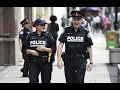
Hi guys and welcome back well there are three more lectures left joey and i are excited to be doing this she's much more attentive today than usually is there she goes well for the next three weeks the last few weeks we suspended kind of theoretically looking at police we started talking about already a Symbol of contractions view of uh in discussing police can mean different things to different people we sort of talked about police from a functions perspective as a necessary institution within society to establish law and order as this necessary institution we talked about
police in terms of uh an extension of the arm of the state and we talked a little bit about sort of what makes the state legitimate but Makes a legitimate law i guess and then that we advance the notion sort of harm principle we also talked about sort of history of policing and we trace this history today beginning of the industrial revolution establishment of the cities while at the same time sort of looking at purpose of police to begin with in the last lecture we talked about police within a Capitalistic system and we sort of
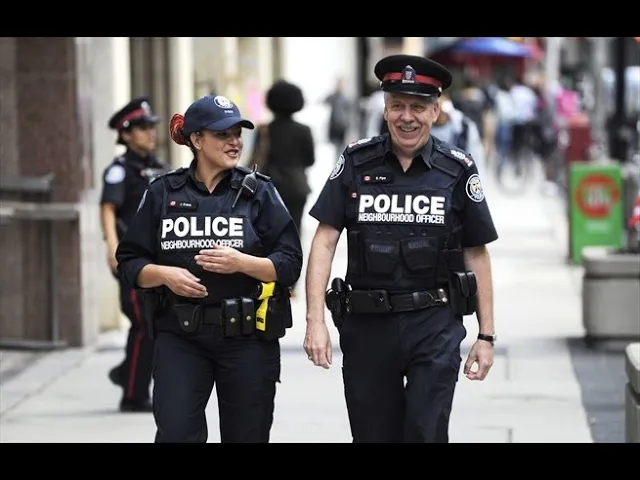
advance the argument that police is uh the protector if you will of the capitalistic uh of the bourgeois structure now for the next three weeks we're gonna sort of bring it down a couple of notches And we're gonna talk about police uh sort of from this high level theoretically and we're gonna talk some practicality we're gonna talk about today we're gonna describe what we mean by what does police look like what is police that means sort of like uniformed police officers uh today we're gonna talk about sort of what does the police do Who the
police are and how does the police do what it does so of the three w's of police who are the police what do they do and how do they do it and then that we want to start developing the definition of police within a canadian context i don't understand kind of what it looks like as a general institution in the next class we're gonna and This topic is gonna bring us basically to a discussion of what police does in a way i'm not going to identify force as one of the factors of police's definition in
the next class we're going to talk about police use of force and then we're going to end the year by talking about police corruption and how we can deal with police corruption so the plans for this lecture is to sort Of uh talk about uh police and then what does police look like what does it do and how does it do it what i mean when i say what does the police look like or for the police well demographically policing is a young profession especially compared to other professions right like uh lawyers doctors professors engineers
A police is a rather young professional most at the average age of policing is about 35 years which is rather young for example in a university environment amongst your professors the average age of a junior professor someone who's been hired in the last five six seven years is about 35 32 years old so you know comparatively policing is a very young profession uh For example in a recent study of police officers it was suggested that only about four percent of police officers are above the age of 50. well what should we take from them on
one hand it's good to have a young police forces uh they do a lot of chasing supposedly they're young they can run fast they can jump fast things like that But as we'll talk later on police really doesn't do that that often in fact you know police doesn't get chased or jump over things or use physicality in a sense that often i guess it's kind of nice to have a young police force in a sense that they can connect to young people however there are some problems with having a young police force some things to
think about yes the average age of a police officer Is 35 years and people usually work in policing you know in their 50s that seems like you know most retire in early 50s at least early to mid 50s then most new police officers constables on the street and the constables on the street are usually newer police officers right as you get more experienced you kind of move out of their sort of Constable well some of these guys are you know about your age 20 21 22 as smart as you guys are and i know you
are because well here you are in university do young people have the life experiences necessary to deal with some of the most complex social situations in you think that as a 22 to 23 year old You have the life experiences necessary to deal with people on the worst days of their lives to deal with someone who has just lost a loved one deal with someone whose loved one has just killed him let me ask you a question you walk into a uh situation the police in it you have gone on a call that there is
a robbery Okay and you walk in and there's a guy walking out with the tv you jump on this guy's back guys stealing some old ladies tv meanwhile this guy is actually this old lady's son who has drug issues and is going stealing the tv to go sell it to buy some drugs the moment you bring her son and she's on your back going like well my son what you do What do you do in a situation this is not uncommon this is a common situation what do you do you know i get about a
dozen or so phone calls a year asking for references for those of you who want to accomplish i always tell this story to the recruiter by this point the recruiter and this is my example of how i convince You guys that policing is a difficult job not because it requires you to run around but it requires you to deal with some of the most complex issues in society now are you trained enough do you have the life experiences are you old enough to deal with it i don't know if i am i'll be very honest
with you guys i'll be very friendly i have no idea if i am Now another thing to think about is what do you do with a young police officer when it comes to discussion of uh corruption well what we're doing with our young police officers we're molding them right 18 19 20 you're ready to be molded you're ready to be taught you haven't developed necessarily a life ethos They usually do that in their 20s so you're malleable you're multiple now if they want to see a change in police culture and i think we can all
believe that at least some change in police culture is necessary we'll talk about what we mean then we need to maybe rethink the way that we hire people into police If you want to see a change in police culture maybe there is a way to think about age as a important factor in hiring new police officers maybe having older police officers means that they're more likely to blow the whistle they're less likely to be intimidated by those who are Bad apples if you are in the policing force okay that's something to think about right when
it comes to age as i said there are some good things for having young police officers do they can get more involved with the community they might be able to make better connections but we have to make use of that right we have to use that to our Advantage we have to allow for those situations to happen another demographic that we can look at is gender there's very little data on sexual orientation so when we talk about january i'm really talking about male or female here uh it's rather blind really understand But the data is
sort of scarce on non-binary uh sort of study uh for very few now women have a long history in policing this part of what many people believe there has been a police female police officer uh sort of in the first world war although at that time they were more sort of like morality police they couldn't really arrest anybody give a fine vice crimes But after the second world war we saw an uptick of female police officers uh up until sort of the 1980s it was rather slow after 1980s we have seen a steady increase in
uh sort of uh female police officers in both europe and uh north america in uh canada uh the proportion of our female police officers are about 30 female uh anywhere between sort of uh You know 20 something percent to 31 32 depending on what jurisdiction you're looking at so somewhere in the mid 20s to uh low 30 percent it's definitely not 50 50 but it's much better than usual for example by comparison in 1990 only uh eight percent of uh the police force was female and in early 2000 2001 only 13 so we are seeing
a city increase that's a wonderful thing In a sense i guess this is a good time you have used the term police culture before so this is a good time to talk about police culture you see there is this theoretical approach to an understanding group that's called subcultural studies or cultural studies i mean who you're talking to there's a big debate whether or not there's a session in the subculture but that's for a different Class you see cultural studies kind of has this attitude that you learn things in groups you interact with people in groups
and you act in groups okay so how you act in one group differs from how you act in a different way but you learn how to act in groups just like a career you learn sort of move up in the group you become more authentic For example you know if you're a skater maybe on the first day you're not an authentic escape like you walk into a skatepark no one's going to take you seriously you have to work your way up you're a punk you have to do the same think of any subculture you belong
to the sport that you do or um any kind of um uh hobby that you have In all of those things you started as a novice and you moved up even video games that i call them noobs for example if you're new to video gaming and then you move up you move up in the culture same thing with if you're involved can you know any kind of uh for example forums online on reddit or things like that and gore things like that i'm just saying uh think about it like think about your Own life what
culture do you belong to what culture do you belong to well here it is uh here's a bonus mark write me um you know half a page send it to me uh post it online i'll i'll have a uh dropbox open uh tell me what subculture you belong to it can be anything right maybe you do music maybe you play sport Maybe you collect things you definitely belong to a subculture i guarantee it if you do you belong to many subconscious what's up culture brought to you is for young being a student don't use that
one but there are many that you belong to the universities isn't subculture you belong to right now here's the idea the idea is that policing has a particular culture there's a particular way of being a Police officer a particular mentality particular existence if any of you guys have had a police has had a friend who has become a police officer he might be able to testify to this they change they adopt a particular personality this is what irving goffman he's a very uh good canadian sociologist this is sort of what he discusses in a Book
he has called presentation of self he talks about how we present ourselves really as three series of masks through series of performances that you're just actors on the stage without right now i'm acting as a professor if you meet in the street and you're my friend i'm going to talk to you differently right if you're my partner i'm going to talk to you differently if You're my parents i'm going to talk to you differently if you're you know my niece i'm going to talk to you differently each person has a different each group at least
have a different impression of who i am because i put on different performances for different people and so do we all you don't talk to me the same way you talk to your moms they make you talk your Friends they may talk to a significant other no right in fact to be rude is to commit a full power act in a way that is not in accordance with the role that is expected of you so there is this idea that there is a role that is expected of police officers and we see this we see
this in data right uh we see this in data and when police officers talk about like well you Know the first thing you got to do is forget about everything you learned in uh the training the four months of training will teach you how to be a police officer even that and we talked about certain context of history of policing we talked about how really policing was born when robert pill established sort of professional policing what it means to be a police officer from the beginning Police has had that's what it means for police to
be a professional right it means something to be done there's a definition of it you have learned to act in a particular way right so that's what policing is policing is a subculture it has its own rules of behavior it has its own norms of conduct These norms of conduct are not necessarily written anymore you just have to learn it in interaction with other police officers for example secrecy is an important point of this culture and within this culture you gain various capital this is sort of what uh for those of you who are interested
in theory of throwing these names out there let me know if you want To talk about the good things to look up to put into your paper is to get a good grade right uh if you look at for example bordeaux right talks about cultural capital he says when you belong to a particular culture you belong to a particular subculture you give particular knowledge that that knowledge gives you advantage over other people and that's what they call cultural capital Police has to gain cultural capital for example police officers who are looked at as rats who
tell on other police officers might not get a backup if they're under fire they might not get help from other police officers you have to look a particular way when you're a police officer it seems that they all have the same hair and that is one reason Why we have looked to increase the presence of women in policing because one consistent observation has been that policing is a hyper masculine subculture it's very male dominated not only that but it acts in ways that now we call sort of toxic masculinity you know masculinity is not a
bad thing definitely not toxicity is Bad for both men and women you know that's what gender theories kind of raise our consciousness right that men are victims of toxic masculinity as well what do i mean by that for example police officers have a very high rate of suicide they have a very high rate of domestic abuse especially male 1 they have a high rate of uh alcohol and drug consumption On the job compared to other professions these are all red flags for existence of large amounts of mental health issues within police officers for example toxic
masculinity or what some call hyper masculinity is what tell the police up to you should not talk to someone about you a man holds the same man doesn't need Psychiatrists that's what we mean by toxic masculinity so policing it has a toxic masculinity component to it every research vessel you know when you have mental health we see it there when we look at amount of sexual misconduct we see it there again one of the highest amongst professionals it is the highest it comes to suicide they see it there When it comes to rates of ptsd
you see it there when it comes to use of violence we see it there abuse of drugs and alcohol we see it there uh use of derogatory terminology either racist or sexist or demeaning terminology we see it there you know at every as those are indicators of the existence of possible masculinity drug abuse violence derogatory behavior bullying behavior We see this all as part of the larger cultural police that people are demanding for change now nothing this is defining please don't get me wrong but that is part of the hyper masculine cultural place that we
wanted to change and that's why in addition to the fact that it is good to have female police officers it is why we have been pushing female police officers into police they are pushing women into police Fema police officers they have been pushing women into policing because the idea is that presence of women in policing will change that hyper masculine change that toxic masculinity okay that's the problem that we identified and the idea was that if women become police officers we can change This culture now i don't want to give the bad idea here i
don't want to give the wrong impression women do not become police officers forced your typical reasons that you might think i'm not saying women become police officers i sort of like you know these art police but more community work not at all in fact women are as likely to be seeking action they become police Officers that are not as likely to be involved in most all duties minus sort of uh kind of the squat parts uh they um are excluded from uh swat teams and sort of are riot teams but not because they don't want
to participate because they're often excluded through systemic sexism what do i mean by that well entrance of women into policing has Worked rather smoothly for a majority of the parts but those institutions and policing that look more less like police and more like military or as you're very reluctant to allow women in you see for you this is where this discussion of subculture becomes important right because for you to Become one of these teams to join the swat team to join an anti-riotous squad you need to be welcomed into the subculture you need to be
taken in by people you need to be mentored you need to have a tutelage in other words you need to one of those swap i should walk up to you and say you know we're not saying i'm joined schwab why don't you come help uh you know join us in our Shooting practice why don't you come hang out with us we'll show you a thing or two maybe next time on a raid come with us as a uniform the officers stay back maybe every time you take a step forward the next time there's a opening
available to invite you in women usually don't get that tutelage because there is still when we talk to people to police officers Especially police officers involved in those type of policing they still don't see presence of women as beneficial mostly because of old saint uh sort of uh terminology right like that women are weaker than men and all those things which is a reality kind of ridiculous if you think about it sure maybe the strongest man in the world can lift more than the strongest woman But you all have taken stats and most of you
have taken it with me you know about averages an average police officer the difference in women and men's strength is almost negligible although there are men who are stronger than me also many women who are stronger than me copious amount it is reasonable to assume that they will do fine in a place in Your mark it's reasonable to assume that an average female police officer is as strong as an average meal please those are things to consider sort of considering these sort of sexist ingrained behavior right we have to care about things when we're thinking
about sexist behavior we have to check our own sort of privileges as well So next time someone mentions to you oh you know uh women aren't just weaker yeah men like really let's go to any gym and see how many uh women can venture how many will have greatest strength usually those who go to gyms usually those who work out and they're honest about it i'm not one of those but i talk to a lot of those i'm very much interested in Sort of gym culture the honest bodybuilders tell you they say listen women can
do as well as we and that's an honest truth and you know when we look at sort of medical events that's true of it too but nonetheless that sexism is in that what about the other parts though have women been successful in changing police culture it's hard to tell It's hard to tell you know it has definitely gotten better but has it gotten better because we have included more women in policing or is it just that society is becoming less sexist it's not quite debate what's not up for debate is that it doesn't have the
same effect that you think it does what do i mean by that i mean that introduction of women into policing has not changed necessarily the Hyper masculine cultural policing if anything women adopt a hyper masculine identity when they are police officers and they tell us that you know when you interview female police officers they tell us you know you see sort of one of these uh discussions uh when we have an uh interview for uh police use of force they tell us that there is a problem here that there is sexism but at the same
Time we know that women have the same problems similar as these rates of problems that we discussed earlier that men's men so has it changed it i don't know i don't think so you know i'm very suspicious of new blood changing the culture because guess what it's all blood that has the power it has a cultural capital that we spoke about earlier right even if you as A new recruit think in a particular way the moment you realize that for you to advance you need to appease the older crowd the old guard then you're gonna
think like them at first you might pretend like you think like them at first you just don't say anything about it then maybe you smile a little because you figure oh i should smile right maybe you tell her a joke or two A couple of racist comments ah your sergeant does right you think it's wrong but well you know let's keep the old man happy gets you that vacation in christmas i'm not blaming right that's normal you're gaining cultural capital here brudo says that's what you should be doing if you want to be successful and
then after a while of saying that of thinking that A feeling that after a while it becomes real it becomes part of you so 40 years from now 30 years from now when you are that chief of police and a recruit walks in you make the same sexist jokes and the same racist jokes that your chief made when you walked in and that recruit knows it's as wrong as you knew it was wrong on your first day of work but that's what we mean by Subculture you see now i'm not a big fan of sort
of monkey psychology you know what i mean like you know kind of looking at climate behavior comparing it to us but as our closest cousin they just do things that are very similar to ours there was a study i had a sort of somewhat of a pleasure of being observant to it not being part part of It but being up to it this was uh at mcmaster university and uh what they did was they brought a bunch of i don't know what kind of monkeys a bunch of monkeys into this cage and this took about
you know a period of about a year this way and they hung some bananas on top of this And put a ladder underneath every time a monkey went to get the banana they would pose down the other monkeys not in any sort of fashion like police hoses down protesters or anything in a much more humane way you know in a way that would annoy more or less well after a while after a little bit of time monkeys wouldn't climb the stairs anymore because their friends were Getting hosed down right after a while every time a
monkey went to climb the stairs to their the other monkeys were dragging there might have been a liverpool now as weeks went by the monkeys got replaced they would take a monkey out of the cage and put a new monkey in now they Wouldn't hose anybody down if anyone wants to go up the stairs nobody would get holes down but every time someone went to go up the stage the other monkeys who had been moved down the vast majority would attack them and bring him down now slowly all of these monkeys were replaced by new
monkeys none of the new monkeys had been closed down But every time a monkey went to climb the stairs other monkeys would attack it they wouldn't know why original monkeys knew why they had the experience for them it was just the way you did not that they talked to men and said it's just the way you didn't think you're anti-morphosizing monkeys here right but you can think of many things in your Life that that's just the way it is or religion you are what kind of food like what kind of food you don't make what
type of things you drink what type of things you don't drink what are the just the way things are everyone else has a weird thing but you that's what we're talking about right things that you kind of go that's just the way it is it can't be any other way Then you go on a trip and you realize it is any other way people do it many others that's what we talk about subconscious i am suspicious that inclusion of new blood changes subcultures for subcultures to change old guards need to change it there needs to
be an external push no subculture changes within itself right the only way its system changes is If there is an external push system does not change itself system is not replicating your best if it doesn't get any worse right now you can move it up and down a little there's some you know tolerances built into it but there is a point that vicious system either has to change or it breaks inclusion of women in policing might have sort of pushed that tolerance limit to More of an inclusion less of a sort of toxic masculinity sure
but can't get over the hump i'm suspicious that only hiring women as an approach will be useful it's a good step but there are many other steps that needs to be taken and this brings us to the discussion of ethnicity and race and this is where i have to excuse myself as a canadian Researcher you see canadian police does not and as i said before probably until recently a few weeks ago keep did not at least now we'll see how they're going to now it's a little bit integrated keep racer ethnic data we didn't know
much about that built up of uh police and ethnic behavior As sort of ethnic minorities in policing we didn't know much about uh sort of uh and we still don't know much about the interaction between police and uh ethnic uh communities we know a little bit more about aboriginal communities for other reasons uh but uh hopefully thankfully those datas are kept but other ethnic minorities you don't know Much about some of the data that we're gonna use here is from uh american data it is good reason to believe that police in canada is different but
the trends might be the same what do i mean by that for example inclusion of ethnic minorities into policing was supposed to do two things One is sort of this are us going back to discussion of legitimization it was so much to legitimize police in certain communities so for example if you're a black community if you're a chinese community if your iranian community if you have a if you're an arab community i know that's sort of reductions a little bit uh if you're uh whatever pick your choice right italian community Maybe if we have people
of the same ethnicity policing it'll be beneficial in two ways one there will be more sort of legitimacy of police in other words maybe you look at people you go well they look like us so they want a bus you know it goes back to illusions secondly and more importantly uh might be relatedly in the same way is that sort of cultural connection right For example an iranian person knows more about acting within an iranian culture right walking into a household and looking at a situation you can define the situation probably more correctly than someone
who has had no experiences with the iranian community so it's useful in building those connections with the community building those sort of bridges with the community all right now We don't know how useful it is in many communities but some study has been done with being high in black police officers and black communities especially in united states so we have to refer to those studies when we talk about these things okay so we're kind of working a little blindly in canada but let's see if we can at least learn something well first of all there
is no reason to believe just like Hiring women that hiring more racial minorities would say change the policing from especially police in the united states which has a history in slavery which has a history in beating in the new the heads of the new immigrants which has a history in racial tensions it's a huge racial tension i don't there is no reason to believe that that kind of subculture is changing by hiring New black police officers in fact a black police officer is as likely it's not more likely to kill a blast than a white
police officer for example now that has a lot to do with the fact that black police officers are more likely to black to police black communities but nonetheless it's not like you know uh in a community go oh good it's a black police officer we don't look at the george floyd situation right one of the police officers who Understand that he had become a police officer with a black police officer but become a police officer just so he can stop this kind of behavior with the black community and build relation to the back community so
something to think about right so that doesn't really change but there is like a there's like a double whammy here for uh Police officers of ethnic minority background they are not only not trusted by their community they are looked at as sellouts they are looked at as sort of belonging to the other side they are not really trusted by the police either they have a higher rate of sort of mental health issues that have a higher rates of job dissatisfaction they are more likely to retire or quit the force early compared to their white police
officers And so allegations of racism is abundant and this notion that sort of you know who which spine do you belong to which is another part of kind of this problem of policing subculture right when you have a subculture you have these sort of boundaries that govern your subculture boundaries essence who belongs to and who does think about your subculture who doesn't belong in your subculture who would have A hard time getting into yourself type of people think about that right because for subcultures to exist for groups to exist there needs to be people who
are not part of it right that's the only way a group makes sense if everyone was part of the group there's not a group it's exclusive group it's a subculture if someone doesn't belong and that's the problem policing Subculture that when you draw the boundaries of who doesn't belong for example women don't belong i think minorities don't belong then even insertion of those people into the workforce doesn't necessarily change the subculture the subculture is going you don't belong here get out you're inauthentic even if they want to change it there is no way for it
to be changed people don't listen to you See it's a big difference between giving an order and your officers following your orders the officer is actually buying into what it is that you have to sell if you're a great let's say you're a wonderful chief and you walk in and you want to destroy racer and you walk in and say guys don't be racist anymore you think that's all it takes i don't think so i don't think it's just Words i think there is a much bigger discussion to have i will have this discussion sort
of let me talk about police corruption because this is part of police caution we're talking about here right but i wanted to give my plan in the lectures is to give you enough critical thinking skills enough things to critically think about that would allow you to write a good critical paper okay that's why time When it comes to education our police officers are becoming much more educated okay more recently police officers have become become much more educated uh more recent hires mostly have some kind of post-secondary degree they're very much interested in those post-secondary degrees
as police and uh they are uh in fact very much interested in people who are not as they have like a Police foundation background but it's sociology criminology political science friends of psych and it's varied experience you have to make a distinction between education and training though you see education is what you're getting here i'm not teaching you how to become a police officer i'm giving you ideas to think about right give me your things to think about Just something to you know ponder there isn't a training is me telling you this is how you
do things this is how things get done my job here some more race questions maybe point at things that you haven't seen before in this process right let me ask much as if while i was training you i would tell you this is how you do it exactly when you take statistics with me that's More training i'm telling you this is how you use this program this is how you do this formula so there's there's no discussion here this is how you do you just go ahead and do it as in here anything i say
is open nothing i say is written in stone and has to be there so police officers do get training a very short training and that might be part of the problem too right Something to think about that there are countries who give their police officers four years of training as opposed to three or four months that we give to our police what's useful about education though having educated police officers not necessarily trained but educated it's that they understand the complexity of life you being in this university you develop an idea of what is right or
wrong what Is ethical or not you think about complexities of life you spend your time thinking about human behavior that's what makes you a good police officer right that's at least in theory that's what will make you a good police i haven't talked about sort of what does police look like let's talk about what those police do whatever we say What do what does police do what we're really asking is how much time is police spending doing you know long fighting crimes well there are three important things that we have to talk about before we
talk about sort of what police do number one is certain difference between confidence and performance in other words the question is not maybe What does police do but what can the police what do i mean like oh please have to do too much crime fighting on day-to-day base that's right it doesn't do so much law enforcement things they may like please don't go around arresting people for some people to do things on a daily basis so maybe it's not about what police does but believe what police could potentially do And in that sense enforcement of
law and order is definitely at the top of the list right servant protect it's definitely at the top of the list of what police could potentially do police could enforce law and order if law order broke down but it hasn't so they don't need to but they could if they wanted to you know if police wanted to they could close Down all the roads i have to get permission but all that i get that but that good reason and they wanted to they could just they have no reason to do it so maybe let me
talk about what police does instead of talk about what police actually does we should talk about what police could be doing or could do if they wanted the other thing we have to talk about is Sort of committed and uncommitted what do i mean by that well you see there's this idea in policing that if you have a lot of patrolling of police officers the police are driving around the street deter crime by just separate presence by the fact that they're patrolling the street it should be much more complex than that There was a study
kansas city experiment what they did was that they divided the city into a portion of this into three sections one section of the city was uh police kind of doing what they did control another section of the police please patrol the area head up and down the street police patrols were driving another section of the city police stood Out of the uh streets in parking lots and stuff on the corner of somewhere nothing outside of the airport and every time there was a call police responded well turns out that crime rates did not define any
other three groups and all three groups crime rates remain exactly the same no difference however in the group that police patrolled the streets people actually Perceived crimes to have gone off just because they saw some bruised officers driving around so that might have been bad pr for police daddy here you have uh an idea of committed and uncommitted time in other words does it make a difference if police is actually driving around has a reason to drive around or if they're just not hanging about that's a good question Nonetheless we know that police doesn't spend
too much time enforcing law and order for example police spends four percent of their time on their duty you know on one tour of duty if you average them four percent of their time they spend uh enforcing on or that's compared to 11 percent of their Time they spend on running personal errors which is fine this is not like you're all bad police no no not at all in fact you want police to have a lot of free time just like you want firefighters to have a lot of free time in their head because if
something bad happens we want them to be free to respond to right if police had all this committed time that they had to do this and this and this and this When something bad happened out of the blue they wouldn't have time to respond imagine if you set the firefighter as well you know you're not fighting fires that often so why don't you also like you know go fix the streets well when a fire happens you want the firefighter to get there quickly right so this is not a criticism it's just saying that maybe it's
not a good way to measure what police does Based on what it is that they actually spend their time doing because all the police spend only four percent of their time forcing law and order that's a pretty important four percent i want them to get to it as quickly as possible right we'll say like oh you know the ambulance guy is just hanging about for a lot of time you know they only pick up like five people with heart attacks a day but for those five people is the difference Between life and death you want
them to get as quickly as possible same thing with the police i'm just pointing out that it's hard to define police by the amount of time that they have committed to a particular thing here's other thing a lot of things that police does we can't measure them for example let's say there is a guy following someone to uh rob their purse Police kind of knows them they know they're kind of a troublemaker as they're walking by the positions and goes you know hey gym boy come over here like what's going on man what you're doing
get out of here you know your pickpocket get out they're not gonna write that down in a book right it's just it was like an attraction so we don't know what police do then it's really hard to do this kind of Research but mostly what the way we do this research is we get police notebooks and look at and see what it is they've written in there but they don't write a lot of the things they do in there just because it seems menial the only way that we can know actually what they're doing is
if you go here for a while so that's the sort of general idea now Police on that line of work for one to say what police does it's a hard thing to in fact define because only about 20 of policing is proactive policing in other words police did this most of the time policing is a native persimmon policing is reactive please it's hey someone called us i said do this we did they don't have a plan to do that that Day it's just that's just the way it happened so it's really hard to define what
police does because police does a lot of things right at least there's a lot of things but at the same time they don't do anything but we said that on the first day didn't we then we talked about history of policing and we decided to define police from the very first definition of police We said policing is a series of menial job no great definition suited remember that still true isn't it no great definition suits policing so what should we do with this information i mean it's hard to say we don't know what police doesn't
it's hard to say what police does well maybe it's the talk of global police does They can agree that police does a lot of things we can talk about how police goes about doing it right in order to look at the means that police uses to do whatever it is that it does okay so instead of asking what do they do he asked how do they do whatever it is they do anyways Well please those things there are maybe five factors that are important in sort of discussing our police how police what is visibility you
know police this is not perceptibility right this is not like we can hear the police or smell the police or whatever it's police being seen now there's a argument that the reason why the kansas city experiment that we talked about earlier failed was because Police was driving around the city if they were actually walking around the city would have been different like driving around removes you from that position there is a canadian uh social scientist big in this sort of communication studies circles and mcluhan who said medium is the message and maybe we should learn
from that right that medium is the message here maybe the medium of presence Sends a message when you're in a car with the windows up driving by you can't connect with the community the same way you can connect with the community when you're walking around talking to people looking around feeling smelling getting a sense of your surroundings visibility is also not a thing rather it's a relationship if you want to say amir how can police be visible i'm not going to say send a lot of Police officers i'm going to send say send you police
officer strategy what do i mean by that remember before sort of krona when we could go outside and go to sporting events what did police stand when you went to you know jay's game or you went to see a basketball game where did police stan like to see the best team in toronto you know tfc police stood right up front didn't they Why did they stand right up front and not amongst the crowd they want to control you you know actually like arrest you it would be easier to subscribe no it's because they want to
be seen so if you're going to throw something at a player if you're going to do something stupid the moment you look up you see them you've got ah so visibility is not a thing if you say how many police officers should i say we Stand to be visible in larger center you could do over 10. if uh sort of b must do you could do it five or six uh it's what is it called maple leaf whatever that raptors playing i'm a basketball person as you can tell i don't like any game that you
can score hundreds that's just my thing but nothing is possible i get it uh you know people have their own thing uh i have my advice Uh anyhow enough for making i don't know why i'm picking on raptors i actually don't have any problems [Music] but anyways in a basketball game i've gone a few times you could do it like three or four police officers right it's not a big place put them up there they'll be seen they'll be visible right visibility plays a very important role In sort of our lives on daily lives uh
visibility helps police catch criminals most criminals are caught you know the two crimes that you're almost certain get arrested and prosecuted and convicted for is drunk driving and position of assault because person doesn't really need to prove anything beyond the fact that i saw you do it like i was there I don't need to bring any witnesses i don't need to bring video cameras you were standing there and you had a thing in your hand and it was stolen and so you were in possession of a stolen you know i stopped you you were driving
i saw you driving i breathalyzed you you were drunk you were drunk right you see what i mean so visibility in fact most crimes are solved through visibility you know so i saw you do it you know most crimes are Not like shallow home crimes that's not oh i smelt your cigarette on the ground or you know ah eureka found your fingerprints in here it's mostly true visibility you know by visibility we can mean uh uh a crime could have physical visibility you see it you know drug dealing prostitution things like that it can have
an investigative visibility gas symbolic visibility like symbolic Visibility would be something like for example um certain crimes that are out there in your face can give you a sense that society is unsafe that there are a lot of crimes around for example prostitution if you go to an area there's a lot of prostitution in the streets you feel like there is a lot of crime happening in reality there might be very little Actual crime under then sort of you know if prosecution is a crime in that region but nonetheless it's one of those things that
you kind of feel unsafe if there's a little amount of drug dealing going on you know you feel unsafe that's what i mean by visibility it's symbolic visibility for example down to montreal when they wanted to clean it up they didn't actually get rid of prostitutes and drug dealers you just push them into well you know few known bars then the City cleaned up now the good sort of middle class people could walk around without running into positive possibly still operating there was as much amount of problem as it was before it's just now it
wasn't as visible and police does this quite a bit police uses this kind of symbolic visibility quite a bit now please use this sort of uh Visibility as well police uniform in and of itself is all about visibility you'll be seen right that's key here uh now is that good or bad well it depends on your definitional police doesn't it police uniform can mean something positive for some some negative for many uh police uniform can be a sign that you are being rescued and helped and a superhero Police uniform can also be a sign of
oppression and uh hardship and uh totalitarianism but nonetheless police uniform means something there is a good reason why police insist on wearing their uniform it gives a sense of authority they are able to be seen there is a definition of who they are this is sort of you know Is it something to think about as social scientists because it is true that presence of police theoretically could calm people down and make them happy but sort of this what we call reassurance policing doesn't really work sort of police visibility can affect feelings of anxiety or fear
that exists amongst the general population massive amount of police presence Can make all of us feel unsafe and insecure there aren't that many of us who say listen if i go in the street and there are hundreds of cops walking around with a big gun i feel just fine you'll feel insecure at least the very presence of police and that's sort of something that we need to think about i'm going to talk let me talk about sort of police use of course The very presence of police itself the uniform itself is an imposition of force
right so we have to be very cautious how they deploy it this is why there is a good debate to be had about presence of police in schools or in community centers or in places where people go to hang out and relax do they make you feel obscure ask yourself that you know Do they make your friends supposed you see it's not about what police does it's about what police appear to be doing this is what we talked about in the very first lecture right so visibility of police can be perceived to be an intrusion
into a community while places that is not now we have to be cautious we cannot equate perception with fiction Right perception and fiction need to be perceived as two separate things but just because you perceive something it is real just because you think it's real it is real because you perceive it the way you perceive it it is real they can go up and down and say you know what it is normally if i think it is real it is real The job of the police is or at least the government on behalf of the
police is to change the perception of police now it's hard to change the perception of police when police tips at least you know in the united states they keep killing peop of police amongst aboriginal people to change black while police in canada kills aboriginal people when they show up to check up on Them that needs to stop but those police officers would say listen we are good police officers we just have a perception problem what they miss is that perception is real everything in the world is perceived in a particular way perceptions are unreal perception
as real as it gets of police itself is to be understood as an imposition of force by the government Upon its people right it needs to be understood that way because that's what it is if you showed up to my house to talk to me and i sent out an armed guard i am imposing force upon the situation because obama this guy didn't use his gun and just had it on him that's not important if i walked up to your house and i had a shotgun i put it on the table and i said hey
i'm just here to chat You will perceive that differently as i walked in with some you know chocolate and put it down and said hey here's some chocolate bar and some wine i'm here to chat right so presence of police itself niece why understand the imposition of force now police doesn't really need to impose force upon us because of this perception you see police knows that we will listen to them This is what we call presumption of compliance and superior force in policing presumptual compliance says that police assumes you're gonna listen to them when they
give you an order therefore the job of the police is not to establish law and order but to maintain it once the law order is established once it's there police just needs to put out a small fires now this place assumes you're Going to listen to them now there is a big problem in that right because a lot of people say well you know police pointed their gun at a black person and said it stopped they didn't stop they should have stopped why did they get shut up but it was stopped the reason why you
would have stopped is because police are legitimate if police was not legitimate to you the orders are not legitimate the presumption of compliance is gone there Police can't assume that everyone's gonna listen to them because there are certain communities who say well listen i have not consented to being policed by you and these are the things that we're going to talk about in the next lecture when we're going to talk about police use of force so to summarize in this lecture we kind of took a look at policing as a demographic but we did it
more as a way To kind of talk about policing subculture how they can change it we decided that all those sort of changing demographic can be useful in certain amounts of changing subcultures we talked about sort of maybe how there needs to be greater changes and we'll just take off this discussion again when we talk about police corruption and let me talk about how police goes about doing their thing he said that you know what it's very difficult to define Police for what they do but maybe we can define them but how they do it
maybe two ways that to sort of important points to be used is that one police is involved in enforcement of law and order and relatedly i guess one and a half because the board of enforcement suggested police use this force to stop to maintain law and order and this force doesn't necessarily have To be physical it can be visual can be just the way they do it so police isn't going to say always use force the very presence of a definition indicates right and next lecture when we talk about police use of force we're going
to pick up this discussion of what we mean by use of course as always if you have any questions comments concerns something you want to Talk about whether it's about sort of requirements for the course or the material or the course or you just want to sort of you know tell me that how you think i'm wrong about something that's totally fine i love having those discussions that we had in class especially who would have those discussions all the time if that's what you want send me an email we'll set up a time book an
appointment do something we'll Set up a time and we'll chat talk to you guys soon bye