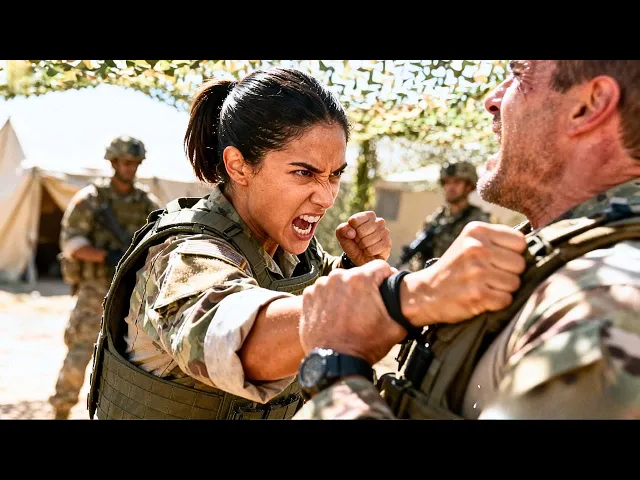
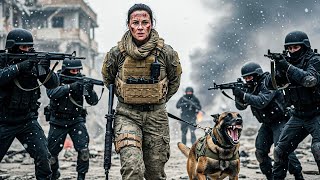
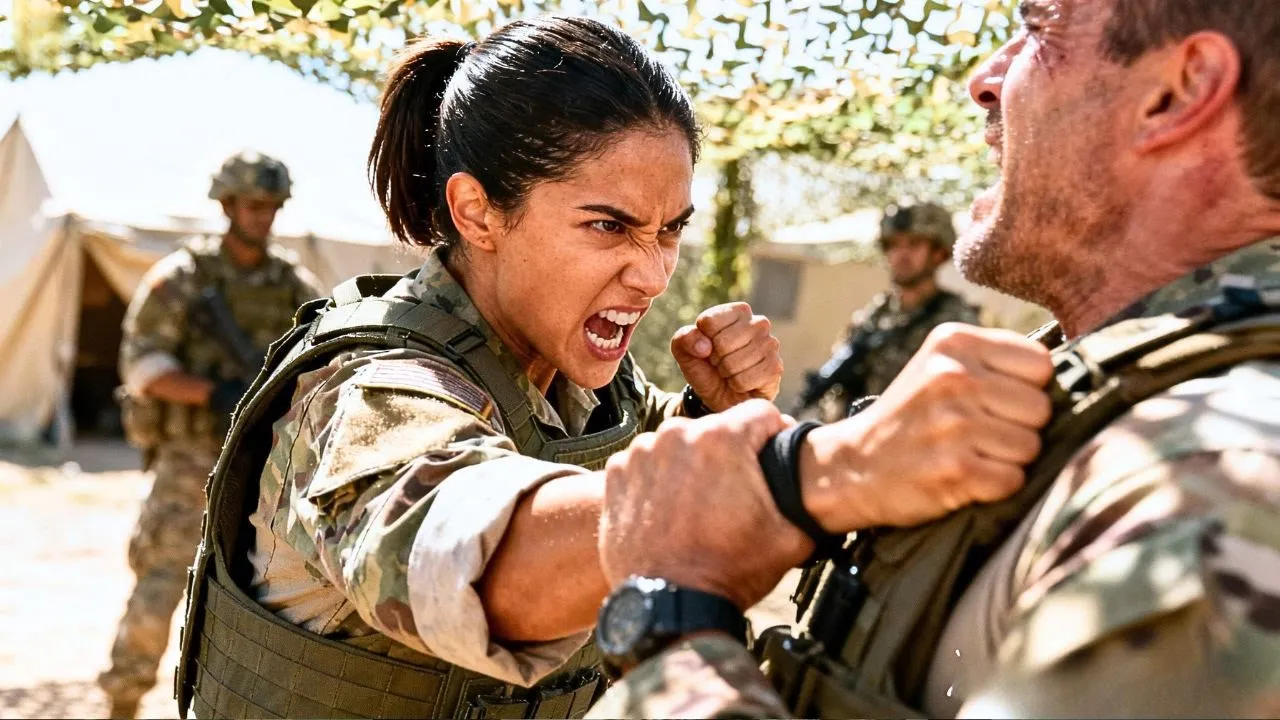
The attack came so fast that 150 Marines didn't have time to breathe. Master Sergeant Derek Callahan's fist drove toward Captain Elena Rivera's throat with the force of 15 years of combat experience behind it. She was 26 years old, barely 5'3, and everyone had spent the morning assuming she was someone's secretary. 3 seconds later, Callahan was on the ground unconscious, his elbow shattered, And the entire Marine Corps Mountain Warfare training center had gone silent. This is what happened before that moment, and why the youngest looking captain in the room was actually the most dangerous person there.
But before we get into this story, please subscribe to our channel and stay with us until the very end. Comment below with the city you're watching from. I want to see how far this story reaches. Now, let's begin. Elena Rivera's boots hit the Tarmac at Marine Corps Mountain Warfare Training Center at exactly 0600 hours. And the first person she encountered assumed she was lost. "Ma'am, the visitor center is that building over there," the young corporal said, pointing helpfully toward the administrative offices. "If you're here for the civilian tour, they start at 9:00." Elena looked down
at her uniform, complete with captain's bars clearly Visible on her collar and then back at the corporal's earnest face. I'm not here for a tour, corporal. Oh, are you with the Pentagon secretarial staff? They're setting up in the observation building. My buddy can show you. I'm Captain Rivera. I'm your lead combat instructor for today's demonstration. The corporal's face went through several shades of red before settling on crimson. I uh Yes, ma'am. I'm sorry, ma'am. I didn't You look young. I know. Elena's voice wasn't unkind. She'd had this conversation approximately 800 times in her six years
of service. Where's Colonel Michaels? The briefing room, ma'am. I'll escort you. As they walked across the compound, Elena could feel eyes tracking her movement. She'd learned to recognize the looks. Confusion, dismissal, sometimes amusement. At 26, with a face that could Pass for 19 and a frame that topped out at 5'3, she didn't fit anyone's mental image of a Marine captain, much less a combat instructor qualified to train special operations candidates. What they didn't know, what they couldn't know was that Elena had more classified combat missions under her belt than most of the Marines on this
base would see in their entire careers. The briefing room was already full when she entered. 30 senior Marines, a Handful of international observers, and several Pentagon officials turned to look at her. The conversation didn't stop. Several men glanced at her and immediately resumed talking, clearly assuming she was there to take notes or serve coffee. Colonel Michaels, standing at the front of the room, caught her eye and nodded. He was one of the few people present who knew exactly who Elena Rivera was and what she could do. "Gentlemen," Michael said, his voice Cutting through the chatter.
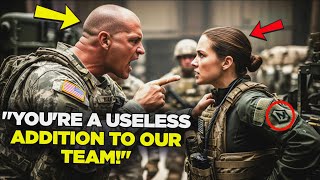
"Let's begin." The room settled. Elena moved to the side, standing at attention. Today's demonstration is critical, Michaels continued. We have international observers from 12 allied nations, Pentagon officials evaluating our training protocols, and media coverage that will reach civilian audiences. The question we're answering today is simple. Can integrated combat units perform at the same level as Traditional forces in extreme conditions? A hand went up. Elena recognized the man. Master Sergeant Derek Callahan. 35 years old, decorated veteran. Three combat deployments. She'd read his file on the flight in. Colonel, with respect, Callahan said, his Texas draw thick
and deliberate. We've been training the same way for 200 years. Why are we changing what works? Because the battlefield is changing, Sergeant, and we either adapt or we fail. Michaels gestured toward Elena. Captain Rivera will be leading today's advanced combat demonstrations. She'll be working with our top candidates in mountain warfare scenarios, close quarters combat, and tactical decision-making under pressure. The silence that followed was profound. Callahan's voice broke it. Did you say Captain Rivera will be leading? That's correct. Colonel, I mean no disrespect, but Callahan looked directly at Elena for the first time, his eyes traveling
from her face down to her boots and back up again. Is she even qualified for advanced combat instruction? Elena kept her expression neutral. This was the moment she'd been waiting for. Master Sergeant Callahan, Michael said carefully. Captain Rivera is one of the most Qualified combat instructors in the United States Marine Corps. On paper, maybe. Callahan leaned back in his chair. But has she seen real combat? Has she been in situations where people are actually trying to kill her? He paused. or is this another Pentagon social experiment where we pretend everyone's equal when the bullets start
flying? Several Marines shifted uncomfortably. The international observers leaned Forward, suddenly very interested. Elena spoke for the first time. Master Sergeant, I appreciate your concern about the integrity of this training. It's not just training, Captain. It's about the lives of the Marines who depend on what we teach them today. Callahan stood up. I've lost friends because of bad training and bad leadership. So, forgive me if I want to know that the person leading combat demonstrations has actually been in Combat. That's a fair question, Elena said quietly. She turned to Colonel Michaels. Sir, permission to address the
master sergeant's concerns? Michaels hesitated, then nodded. Granted. Elena looked directly at Callahan. I can't discuss the details of my deployments because most of my service record is classified. What I can tell you is that I've been in situations where people were trying to kill me multiple times in multiple countries and I'm standing here which means I was better at my job than they were at theirs. Classified. Callahan's laugh was harsh. That's convenient. Master Sergeant. Colonel Michaels's voice carried a warning. That's enough. No, sir. It's all right. Helena stepped forward. Master Sergeant Callahan, I understand your
skepticism. You look at me and you see someone who looks like she should be in college, not leading Marine combat training. You're not wrong to question that. But here's what I know. Today, during the demonstrations, you'll see what I can do. Not what's in my file, not what the Pentagon says about me, what I can actually do. And at the end of the day, you can make your own assessment about whether I'm qualified. The room was silent again, but this time, the quality of the silence was different. A British observer spoke up, his accent crisp.
Captain Rivera, I served with the SAS for 20 years. I've seen a lot of young officers who were excellent on paper but froze in the field. What makes you different? Elena met his eyes. I don't freeze, sir. I was taught by people who couldn't afford to freeze, and I learned from situations where freezing meant dying. Who taught you? The British officer pressed. People whose names I can't share, sir. in places I can't discuss using techniques that are still classified. A Pentagon official, a woman in her 50s with steel gray hair, stood up. Colonel Michaels, I
think we should move forward with the demonstration as planned. Captain Rivera's record speaks for itself to those of us who have clearance to review it. For everyone else, today's Performance will be evidence enough. Callahan wasn't finished. Ma'am, with respect, this isn't about gender. This is about It's always about gender, Sergeant. The official cut him off. And it's always couched in concerns about qualification and readiness. Captain Rivera has volunteered to prove herself today. I suggest we let her. Michaels checked his watch. We begin in 30 minutes. Captain Rivera, your training area is prepared. Master Sergeant Callahan,
you'll be assisting with the advanced combat demonstrations. Elena saw something flash in Callahan's eyes, something that made her instincts sharpen. "Yes, sir," he said, but his gaze stayed locked on Elena, and the look wasn't professional assessment anymore. It was personal. The briefing broke up. As Marines filed out, Elena heard fragments of conversation. Can't weigh more than 120 lbs. Pentagon politics going to be a disaster. Colonel Michaels pulled Elena aside. That got heated. It always does, sir. Callahan's a good marine, but he's got issues with the integration policies. Lost some friends in combat. Blames it on
social experimentation with unit composition. Michael's lowered his voice. His psyche valve flags some PTSD indicators. He's been borderline Aggressive in training scenarios lately. You're telling me this now, sir? I'm telling you to be careful. Today's demonstration is high stakes. A lot of careers are riding on your performance, including mine. He paused. But more importantly, if we prove this works, we open doors for every woman trying to serve in combat roles. If it goes badly, it won't go badly, sir. Your confidence is noted, Captain, but Callahan volunteered to be your opponent in the Hand-to-hand combat demonstration.
That wasn't my choice. He specifically requested it. Elena felt her pulse quicken slightly. That's fine, sir. I can handle it. He outweighs you by at least 80 lb. He's got 6 in on you in height. He's been doing this for 15 years. I know, sir. Michaels studied her face. What aren't you telling me, Captain? Elena smiled slightly. Just that I've fought bigger opponents than Master Sergeant Callahan, sir, in Places where there were no referees and no rules. The things in your classified file, they're real. The operations they hint at? Yes, sir. Very real. Then why
didn't you say that in there? You could have shut Callahan down. Because saying it and showing it are different things, sir. Words don't change minds. Performance does. Michaels shook his head. You're either very brave or very foolish, captain. In my experience, sir, The line between those two things is pretty thin. Outside, Elena found a quiet spot behind the administrative building. She had 20 minutes before the demonstration began. She closed her eyes and started her pre-mission breathing routine. The same one she'd used before insertions in hostile territory, before close quarters combat in buildings full of enemies.
Before moments when hesitation meant death, You're praying. Elena's eyes snapped open. Callahan stood 10 ft away, arms crossed. Meditating, Master Sergeant, centering myself. Mind if I ask you something, Captain? Off the record? Go ahead. Why are you really here? This demonstration, this whole integration push, what's it actually about for you? Elena considered the question. My mother was a Marine Master Sergeant, Served in the Gulf War, died when I was eight, cancer from burn pit exposure. She never got to serve in combat roles because she was a woman. spent her whole career proving she was just
as tough, just as dedicated, just as capable as any man. And she was, but the system never let her show it where it mattered most. Callahan's expression didn't change. So this is personal. Everything worth doing is personal, Master Sergeant. Your mother, she teach you to fight? She taught me to be strong, to never back down, to earn respect through performance, not demands. Elena met his eyes. She taught me that the people who underestimate you are giving you an advantage. They're showing you their weakness before you ever have to show them your strength. Sounds like a
smart woman. She was the smartest person I ever knew. Callahan was quiet for a moment. Then I lost three Marines in Fallujah. Good Marines. They died because our unit composition was wrong. We had people in positions they weren't qualified for because of quotas and political pressure. So when I see the Pentagon pushing these integration policies, I remember those faces. I remember telling their families that they died serving their country. What I didn't tell them is that they Died because someone in Washington cared more about appearances than readiness. I'm sorry for your loss, Master Sergeant. Truly,
Elena's voice was genuine. But with respect, those Marines didn't die because of integration policies. They died because someone made bad tactical decisions. Bad leadership isn't a gender issue. It's a leadership issue. Maybe. Or maybe you're about to prove me right today. Callahan turned to leave, Then stopped. One more thing, Captain. During the handtohand demonstration, I'm not going to go easy on you because you're small or young or female. This needs to be real for it to mean anything. I wouldn't want you to, Master Sergeant. I need it to be real, too. He nodded and walked
away. Elena watched him go, her mind already calculating. Callahan wasn't just skeptical. He was angry. Angry at policies he didn't agree with. Angry at losses he'd suffered. Angry at a world that was changing in ways he didn't like. And angry people made mistakes. She thought about the classified missions in her file. The compound in Yemen where she'd eliminated three hostiles twice her size in close quarters combat. the extraction in Syria, where she'd fought her way through an ambush using techniques her instructors had drilled into her until They were pure muscle memory. The training in North
Carolina, where instructors from Delta Force and SEAL Team 6 had taught her that size and strength mattered less than speed, precision, and the willingness to do whatever it took to survive. Callahan thought he was facing a young, inexperienced captain who'd gotten her position through social engineering and political favoritism. He had no idea he was about to fight Someone trained by the most elite special operations units in the world. Elena pulled out her phone and texted her mother's sister, the only family she had left. Starting the demonstration, wish me luck. The response came back immediately. You
don't need luck, Mika. You have skill. Make your mother proud. Elena smiled and put the phone away. 15 minutes until showtime. 15 minutes until 150 Marines and a room full of International observers would find out exactly who Captain Elena Rivera really was. She stood up, straightened her uniform, and started walking toward the training ground. The morning sun was climbing higher in the California sky. The temperature was already hitting 85°. Perfect conditions for mountain warfare training. Hot, dry, demanding. As she approached the demonstration Area, she could see Marines already gathering. 150 of them, she'd been told.
The best and brightest from various units here to learn advanced combat techniques. Most of them were still talking about the petite captain who was supposed to teach them how to fight. Helena heard one marine mutter to another, "This is going to be embarrassing for her. I mean," his buddy laughed, "Give her credit for trying. At least trying isn't good Enough in combat, man. People die when we pretend everyone's equal." Helena filed the comment away. She'd heard it before. She'd hear it again. But not after today. After today, these 150 Marines would tell a very different
story. Colonel Michaels was waiting at the training ground entrance. Ready, Captain? Yes, sir. The international observers are in place. Pentagon officials are recording everything. Media pool is standing by. He lowered his voice. No pressure, but this is probably the most scrutinized training demonstration in Marine Corps history. I understand, sir. And Callahan, I can handle Master Sergeant Callahan, sir. I hope you're right, Captain. Because if this goes wrong, it sets back integration efforts by a decade. And if it goes really wrong, people could get hurt. Elena looked at him steadily. Sir, the Only person who's going
to get hurt today is anyone who forgets that this is a training demonstration and treats it like a real fight. Michael studied her face, then nodded. All right, let's do this. They walked onto the training ground together. 150 Marines stood at attention. 12 international observers watched from a raised platform. Pentagon officials held their recording devices ready and Master Sergeant Derek Callahan stood in the Center of the combat demonstration area, his arms crossed, his expression making it very clear that he was ready to prove his point about integration being a dangerous mistake. Elena took her position
at the front of the assembled Marines. Colonel Michaels raised his voice to address the crowd. Marines, today you will witness advanced combat techniques demonstrated by one of our most highly qualified instructors. Captain Elena Rivera will be leading you Through mountain warfare scenarios, tactical decision-making exercises, and close quarters combat demonstrations. I expect your full attention, and your utmost respect. Elena scanned the faces in front of her. skepticism, curiosity, some amusement, a few open snears. She'd seen it all before. She began to speak, her voice carrying across the training ground with surprising authority for someone her Size.
Good morning, Marines. I know what you're thinking. Most of you looked at me this morning and assumed I was a secretary, a civilian, or someone's kid's sister who got lost. That's fine. I'm used to it. But here's what I need you to understand. In combat, the enemy doesn't care what you assume. They care about what you can do. Today, I'm going to show you what I can do. And then I'm going to teach you how to do it, too. She paused, letting that sink in. Some of you are wondering if I've ever been in real
combat. The answer is yes. I can't tell you where or when or what happened because those operations are classified. What I can tell you is that I've been in situations where people with more training, more experience, and more physical advantages than me tried to kill me, and I'm standing here. They're not. That's all you need to know about my qualifications. A ripple went through the crowd. Callahan's voice rang out. Captain, with respect, classified operations are convenient when nobody can verify them. Elena looked directly at him. Master Sergeant Callahan, you're absolutely right. You can't verify them.
So instead, I'm going to demonstrate what I learned in those operations right here, right now, in front of 150 witnesses. How does that sound? The Marines went quiet. Callahan smiled, but it didn't reach his eyes. That sounds just fine, Captain. I'm looking forward to it. Elena smiled back. And in that moment, standing in front of 150 Marines who thought they knew exactly how this day was going to go. She made a decision. She was done being underestimated. It was time to show them who she really was. The first demonstration was basic Tactical positioning. Elena called
forward six Marines and positioned them in a defensive formation facing simulated enemy approach points. The exercise was standard, something every Marine had done a 100 times, but Elena's instructions were different. Corporal Davis, shift left 2 ft. You're exposing Sergeant Morgan's flank. Her voice was calm, precise. Private Chen, lower your weapon angle 15°. You're aiming at friendlies if you fire from That position. The Marines adjusted. Elena walked the line, making minute corrections to stances, grip positions, firing angles. Every adjustment she made was immediately validated when they ran the scenario. Her positioning allowed complete coverage with zero
friendly fire risk and maximum efficiency. A lieutenant from the British SAS called out from the observation platform. Captain Rivera, how did you calculate those firing angles without measuring Equipment? Training, sir, and experience. When you've been in enough firefights, you develop an instinct for angles and coverage patterns. Which firefights specifically? Callahan's voice cut across the training ground. Elena didn't look at him. The classified ones, Master Sergeant, as I mentioned. Convenient how everything's classified. Convenient how classification works, you Mean? Elena turned to face him now. But if you'd like to verify my methods, Master Sergeant, feel free
to identify any tactical errors in that formation. Callahan studied the positioned marines, his jaw tightened. Formation solid. Thank you, Master Sergeant. Elena turned back to the group. Next exercise, close quarters room clearing. I need eight volunteers. Hands went up immediately. The earlier skepticism was starting to crack. Marines recognized competence when they saw it, and Elena's tactical knowledge was undeniable. The room clearing exercise took place in a mock building structure. Concrete walls, multiple entry points, simulated hostile positions. Elena split the eight Marines into two teams and positioned herself to observe. Team one, you're entering from the
south. Team two, north entrance. Rules of engagement. Assume all hostiles are Armed and will fire on site. Your objective is to clear all rooms with zero friendly casualties. Time starts now. The teams moved. Their technique was good. Textbook Marine Corps close quarters combat. They cleared the first three rooms efficiently using proper cover and communication. Then they hit room four where Elena had positioned a surprise element. A simulated hostel behind a non-standard barrier. Team 1 entered fast, spotted the obvious Threats, and fired. They completely missed the hidden hostel. Stop. Elena's voice froze everyone. Team one, you're
dead. The hostile you missed just killed all four of you. But Captain, we cleared the room. You cleared the visible space. You didn't clear the actual room. Elena walked into the structure, pointing at the barrier. In Rammani, I watched a squad get wiped out because they assumed clearing the visible meant Clearing the safe. The insurgent who killed them was hiding exactly where I put this target behind something that looked like permanent structure but wasn't. The Marines stared at the position. It was brilliant and terrifying. You were in Ramani? One of the younger Marines asked. Elena
paused. I didn't say that. But you just I said I watched something happen in Ramani. I didn't say I was There in a combat capacity. Her eyes met the young Marines because if I had been there in a combat capacity, that information would be classified. Several Marines finished in unison. A few laughs rippled through the group. The ice was breaking. Callahan wasn't laughing. Captain, you're telling war stories you claim you can't confirm. How is that useful training? Because the tactics are real, Master Sergeant, whether you can verify my service record or not. Would you rather
I teach them techniques that sound good in briefings, but get them killed in real combat? I'd rather you be honest about your actual experience level. Elena's voice went cold. I am being honest, Master Sergeant. Brutally honest. I'm teaching them what works when people are actually trying to kill you, not what looks good in Training evaluations. If you have a problem with my methods, take it up with Colonel Michaels. Maybe I will. Maybe you should. Elena turned back to the assembled Marines. Reset the exercise. This time, I want you to assume nothing is as it appears.
Clear every inch, not just the obvious spaces. Team two ran the exercise. This time they found every simulated hostile, including the hidden one. Their time was Slower, but their survival rate was 100%. Better, Elena said. Speed is meaningless if you're dead. Next exercise. The morning progressed with increasing intensity. Elena ran them through hand-to-hand combat drills. weapon transitions under stress, tactical decision-making in ambiguous situations. Every exercise revealed the same pattern. Elena's knowledge was deep, practical, and clearly earned through Real experience, not just classroom study. The international observers were taking extensive notes. The Pentagon officials looked increasingly
impressed, and the 150 Marines were starting to realize that Captain Elena Rivera might actually know what she was talking about. But Callahan's hostility was growing, not diminishing. During a water break, Elena overheard him talking to a group of senior enlisted Marines. Look, I'm not saying she doesn't know Her stuff from books, but there's a difference between reading about combat and surviving it. We're going to trust our lives to someone because she can quote tactics manuals. She's doing more than quoting Derek. One of the other sergeants said that room clearing modification that's not in any manual.
That's experience. Or it's something she heard about secondhand. You really think a 26-year-old captain has been in enough Combat to teach us anything new? The colonel seems to think so. The colonel's under pressure from Washington to make this integration thing work. He'd say anything. Elena forced herself to keep walking. Engaging with Callahan's skepticism wasn't going to change his mind. Performance would. She just needed to keep performing. The next exercise was hand-to-hand combat techniques. Elena called forward a volunteer, a corporal Who was about her size. Corporal Martinez, I'm going to demonstrate basic defensive techniques against a
larger opponent. I need you to attack me the way you would in a real combat situation. Martinez hesitated. Ma'am, I don't want to hurt you. You won't. Trust me. Elena positioned herself in a neutral stance. When you're ready. Martinez moved carefully, throwing a controlled punch toward Elena's shoulder. She redirected it easily, using his momentum to unbalance him and swept his legs. He hit the mat hard but controlled. Good, but that was a training attack. I need you to come at me like you mean it. Captain, I outweigh you by 60 lb. And in real combat,
the enemy will outweigh you by more than that. Size doesn't matter if you understand leverage and momentum. Now attack me. really attack me? Martinez exchanged glances with other Marines, then shrugged and came at Elena with genuine speed and force. What happened next took less than 2 seconds. Elena slipped Martinez's punch, trapped his arm, rotated her hip into his center of gravity, and threw him over her shoulder. He landed flat on his back with the air knocked out of his lungs. Before he could react, Elena had his arm locked in a submission hold that would have
dislocated his shoulder if she'd applied pressure. "Yeah," she asked calmly. "Yeah," Martinez gasped. Elena released him immediately and helped him up. "You okay?" "Yes, ma'am. Just surprised." Martinez rubbed his shoulder. "Where did you learn that?" people who are very good at ending fights quickly. Elena turned to address the watching Marines. The technique is called a standing arm throw into a shoulder lock. It works Regardless of size differential because you're using the opponent's momentum and body weight against them. With proper technique, a smaller fighter can control a larger opponent. The key is precision and speed. Show
us again, someone called out. Elena spent the next 20 minutes demonstrating variations of the technique with different volunteers. Each time, the result was the same. Marines who outweighed her by 50 to 80 Lb ended up on their backs, controlled and helpless. The mood in the training ground was shifting. The earlier dismissiveness was being replaced by genuine respect. These Marines were watching someone who clearly knew how to fight, really fight, not just demonstrate training techniques. Callahan watched from the sidelines, his expression darkening with each successful demonstration. During another break, one of the younger Marines approached Elena.
Captain, can I ask you something? Go ahead, private. How many fights have you actually been in? Real ones, I mean. Elena considered the question. Define fight. You know, actual combat, life or death. I've been in situations where if I hadn't fought, I would have died. How many times? She paused. Enough to know what works and what gets you killed. That's all that matters. But You can't talk about it. Not the specifics. No. The private lowered his voice. Is it true what they say that you're special operations? Where did you hear that? Just rumors. People saying
you're too young to be teaching advanced combat unless you've done something seriously hardcore. Elena smiled slightly. Private rumors are just stories people tell themselves to make sense of things they don't understand. Don't trust Rumors. Trust performance. Your performance is pretty convincing, ma'am. Then that's all you need to know. Colonel Michaels approached as the private walked away. Captain, you're winning them over. Most of them, sir. Master Sergeant Callahan has a different story. I noticed. He requested to speak with me during the next break. About me, sir? Almost certainly. He's going to push for a more experienced
instructor for the final demonstration. Elena felt her jaw tighten. The final demonstration is hand-to-hand combat, sir. That's my strongest area. I know, but Callahan's arguing that the final demonstration needs to be led by someone with verifiable combat experience. He's saying your classified record is convenient, but unverifiable. Sir, with respect, my performance today should speak for itself. It does to me. But Callahan has support from some of The senior enlisted Marines. They're concerned about the optics, a young female captain teaching advanced combat to experienced male Marines. They think it sends the wrong message. The wrong message?
Elena's voice was flat. Sir, the message it sends is that competence matters more than gender or age or physical size. Isn't that exactly the message we want to send? In an ideal world, yes. In the political reality of military integration, it's more Complicated. Everything's complicated until someone makes it simple, sir. Elena locked eyes with Michaels. Let Callalahan voice his concerns, then let me address them in the final demonstration in front of everyone. Captain, he's going to request to be your opponent in the hand-to-h hand combat demonstration. Good. He outweighs you by 85 lb. He's been
a marine for 15 years. He has three Combat deployments worth of experience. I know, sir. If this goes badly, if he hurts you, or if you can't handle him, it proves his point. It sets back integration efforts. It damages your career and mine. And if I handle him, Elena asked quietly. Michael studied her face. Then you prove something that needs proving. But Captain, you need to understand what you're risking. This isn't just about you anymore. Every woman trying to serve In combat roles is riding on your performance today. I understand, sir. That's why I can't
back down. You're sure about this? I'm sure, sir. Michaels nodded slowly. All right, I'll let Callahan make his request and I'll grant it. But Elena, he dropped the formality using her first name for the first time. Be careful. Callahan's not himself lately. His psychal showed some concerning patterns, anger issues, difficulty controlling Aggression under stress. If he loses control during the demonstration, then I'll control him, sir. That's what I'm trained to do. The afternoon session began with tactical scenario planning. Elena presented the Marines with complex battlefield situations and asked them to develop response strategies in real
time. The exercises were sophisticated, requiring integration of multiple combat elements, air support, artillery, infantry movement, civilian presence. The Marines struggled at first. Elena's scenarios contained variables they weren't accustomed to considering. But as she guided them through the decision-making process, they began to understand the deeper levels of tactical thinking she was teaching. Captain, this scenario is impossible. One sergeant complained, "We can't achieve the objective without unacceptable civilian casualties." "Then maybe the objective needs to Change." Elena said, "In real combat, sometimes the right tactical decision is to abort the mission. Commanders who can't accept that possibility get
their marines killed." "They teach you that in special operations?" Callahan's voice carried across the group. Elena turned to face him. "They teach you that in any operation where the mission parameters change and rigid thinking gets people killed, Master Sergeant." Sounds like you're teaching our Marines to disobey Orders. I'm teaching them to think critically about orders that don't match battlefield reality. There's a difference. Not in the Marine Corps. There isn't. Orders are orders. Even when following orders means unnecessary casualties. Elena's voice hardened. Master Sergeant, with respect, that kind of thinking is why we lose good Marines
in bad situations. The tension between them was palpable Now. Every marine in the training ground felt it. Callahan stepped forward. Captain, I think we need to address something directly. Go ahead, Master Sergeant. You're teaching these Marines techniques you claim come from classified operations and combat experience. But nobody here can verify any of that. For all we know, you learned this stuff in a classroom, and you're using classification as a shield against Scrutiny. That's your opinion, Master Sergeant. It's not just my opinion. I've talked to a lot of Marines here today. They're impressed with your knowledge,
but they're also confused about where it comes from. They want to know if you've actually done the things you're teaching them to do. Elena looked around at the assembled Marines. Does anyone else share Master Sergeant Callahan's concerns? Silence. Then slowly a few hands went up. Not many, maybe 15 out of the 150 present, but enough. Okay, Elena said calmly. That's fair. Master Sergeant, what would satisfy your concerns? A real demonstration, not you throwing around people who are going easy on you because you're their instructor. A real fight with a real opponent using real force. You're
volunteering, Master Sergeant. I Am. The final demonstration is supposed to be advanced hand-to-hand combat. I'm suggesting we make it real. You and me, full contact in front of everyone. No holding back, no special treatment. You prove you can handle yourself against a bigger, more experienced opponent, and I'll never question your qualifications again. The training ground went absolutely silent. Colonel Michaels started to intervene. Master Sergeant, that's not I accept, Elena Said. Michaels turned to her. Captain, you don't have to. I accept his challenge, sir. The final demonstration will be a full contact combat scenario between myself
and Master Sergeant Callahan in front of all 150 marines and our observers. Callahan smiled, but there was no warmth in it. You're sure about this, Captain? Completely sure, Master Sergeant? Are you? I've been sure since I first saw you this morning. Then we understand Each other. Elena turned to Colonel Michaels. Sir, I request permission to modify the final demonstration as discussed. Michaels looked between Elena and Callahan, clearly unhappy with this development, but he also knew that backing down now would prove Callahan's point. Permission granted. The final demonstration will commence in 30 minutes. Both participants will
receive medical clearance beforehand. Rules of engagement will be clearly defined. This Remains a demonstration, not an unsanctioned fight. Clear? Yes, sir. Elena and Callahan responded in unison. The crowd of Marines erupted in conversation. The international observers leaned forward with renewed interest. The Pentagon officials started making urgent phone calls. Elena walked away from the group, her heart pounding, but her mind clear. She'd known this moment was coming since the briefing that morning. Callahan Needed to be shown, not told, and she needed to prove something that couldn't be proven with words or credentials. She found a quiet
corner and began her pre-combat mental preparation. Breathing exercises, visualization, muscle tension release. The same routine she'd used before every classified mission, every dangerous insertion, every moment when her life depended on her ability to perform under pressure. A voice interrupted her concentration. Captain Rivera. She opened her eyes. The British SAS observer stood in front of her, his expression serious. Sir, I served with the joint special operations team in Syria in 2019. We had an American operator attached to our unit. Couldn't have been more than 23 years old, female, absolutely lethal. She took out three hostiles in
close quarters combat during a hostage rescue. Saved our entire team. He paused. I never got her name, operations security. But I've been watching you all morning, and your technique, your movement patterns, they're identical to hers. Elena held his gaze, but said nothing. "I'm not asking you to confirm or deny anything," the British officer continued. "I'm just saying that if you were that operator, then Master Sergeant Callahan has no idea what he's about to face. And if you weren't that operator, then you were trained by the same people Who trained her. Either way, you're the most
dangerous person on this training ground, regardless of what you weigh or how old you are. Thank you, sir. One more thing, Captain. That operator in Syria, she didn't just neutralize the hostiles. She did it in about 4 seconds total. Three men, all larger than her, all eliminated before any of us could even bring our weapons to bear. It was the most efficient close quarters combat I've ever witnessed. He Smiled slightly. I'm looking forward to your demonstration. He walked away, leaving Elena alone with her thoughts. 4 seconds. That's all it had taken in Syria. Three hostiles,
4 seconds, zero hesitation. Callahan thought he was about to teach her a lesson. He had no idea he was about to get one instead. Elena stood up, rolled her shoulders, and started walking toward the demonstration area. 30 minutes until everything changed. 30 minutes until 150 Marines learned that the most dangerous opponent is the one you underestimate. and 30 minutes until Master Sergeant Derek Callahan discovered that classified operations aren't classified because they're fake. They're classified because they're real, and the people who survive them are more dangerous than anyone realizes. The medical officer cleared both Elena And
Callahan for the demonstration. He took longer with Elena, clearly concerned about the size differential. Captain, your blood pressure is elevated. Are you sure you want to proceed with this? I'm sure, Doc. He's got 85 lbs on you. That's not a small advantage in handtohand combat. I know. I fought bigger. The medical officer lowered his voice. I read parts of your file, the unclassified parts. You've got notations for advanced combat training From instructors whose names are redacted. That's not normal for a regular marine captain. Elena met his eyes. Nothing about today is normal, Doc. No, I
suppose it isn't. He signed the clearance form. Be careful out there. Always am. Elena walked toward the demonstration area. The crowd had grown. Word had spread across the base that something unprecedented was about to happen. A female captain was going to fight one of the most experienced combat Instructors in a full contact demonstration. Marines who weren't originally part of the training day had shown up to watch. The circle of observers now numbered closer to 200. The international observers had moved to optimal viewing positions. Pentagon officials had their cameras ready. Colonel Michaels was speaking with Callahan
near the combat circle. As Elena approached, she caught fragments Of their conversation. Last chance to reconsider this, Sergeant. Prove a point that needs proving, sir. Not about proving points. It's about They stopped talking when they saw Elena. Michaels addressed both of them. Final chance to back out for both of you. This demonstration has already made its point. Captain Rivera has proven her tactical knowledge. Master Sergeant Callahan, you've voiced your concerns. We can end this now with Everyone's reputation intact. No, sir. Callahan said, we're doing this, Captain. Michaels looked at Elena. We're doing this, sir. Michaels
sighed. Rules of engagement. This is a demonstration of hand-to-hand combat techniques under realistic conditions. You will fight until one participant yields, loses consciousness, or I stop the fight. Lethal force is prohibited. Permanently disabling techniques are prohibited. Is That clear? Yes, sir. They answered together. Medical personnel are standing by. Captain Rivera, as the smaller participant, you have the right to set additional safety parameters. No additional parameters, sir. Same rules for both of us. A murmur went through the crowd. Elena heard someone whisper. She's either incredibly brave or incredibly stupid. Callahan smiled. No special treatment, Captain. You
sure about that? Completely sure, Master Sergeant. I don't need special treatment to handle you. The smile vanished from Callahan's face. We'll see about that. They entered the combat circle. 200 marines formed a tight perimeter around them. Elena could feel every eye on her, feel the weight of expectation and doubt and curiosity pressing down like physical force. Callahan started stretching, making a show of his size and strength. He was 6'2, 215 lbs of muscle and experience. He rolled his shoulders, cracked his neck, bounced on his toes like a boxer, preparing for a title fight. Aa stood
still, breathing slowly, her mind completely calm. This was familiar territory. She'd been here before, facing larger opponents, facing skeptics, facing moments where everything came down to performance under pressure. She thought about Syria. Three hostiles, 4 seconds. She thought about Yemen. Two targets eliminated in Close quarters before they could raise their weapons. She thought about every training session with special operations instructors who'd pushed her past breaking points she didn't know existed. Callahan noticed her stillness. You nervous, Captain? No, Master Sergeant. Are you? Why would I be nervous? Because you've spent all day doubting my experience, and
now you're about to find out if you were right or wrong. That's a Vulnerable position. Callahan's jaw tightened. The only person in a vulnerable position here is you. We'll see. Colonel Michaels raised his voice. Participants ready. Elena nodded. Callahan nodded. Remember, this is a demonstration, not a street fight. Professional conduct at all times. Michaels paused. begin. For three long seconds, neither of them moved. They Circled slowly, maintaining distance, reading each other. Elena's training screamed warnings. Callahan's stance was aggressive, his weight forward, his hands positioned for striking rather than grappling. He was planning to use his
size and strength advantage immediately. "Come on, Captain," Callahan said. "Show me what you learned in all those classified operations." Elena didn't respond. Words were wasted energy. Callahan fainted left, testing Her reactions. Elena didn't flinch. Her eyes stayed locked on his center mass, reading his body language, predicting his actual intentions beneath the faint. "Not going to attack," Callahan pressed. "Just going to wait for me." "In combat, patience beats aggression," Elena said quietly. They teach you that in your 15 years, Master Sergeant? Callahan's face darkened. He launched a straight jab toward Elena's head. Fast, professional, controlled. It
was a test, Seeing how she'd respond to a basic strike. Elena slipped the punch with minimal movement, her head shifting just enough to let it pass. She didn't counter. Not yet. Callahan threw a combination. Jab, cross, hook. All controlled, all within demonstration parameters. Elena deflected the first two, ducked under the third. Her movements were economical, precise. She wasn't wasting energy on dramatic blocks or unnecessary Footwork. The crowd was silent, watching intently. Callahan paused, reassessing. You've got decent defensive skills. Let's see how you handle real pressure. He came forward with increased aggression, throwing strikes meant to
overwhelm her guard. His technique was solid. This was a man who trained thousands of hours, who knew how to use his physical advantages. Elena gave ground, absorbing his pressure, letting Him think he was winning. Her special operations instructors had drilled this into her. Let the larger opponent expend energy. Let them commit to their strength. Then exploit the openings that commitment creates. But something was changing in Callahan's approach. His strikes were coming harder, faster. The controlled demonstration technique was slipping into something more genuine, more personal. Is this all you've got, Captain? Callahan's voice carried real anger
now. This is what we're supposed to be impressed by. Elena saw it then. The shift in his eyes. This wasn't about demonstration anymore. This was about something deeper, something broken inside him that was finding an outlet in this fight. His next strike came too fast, too hard. It wasn't demonstration technique. It was real. Elena blocked it, but felt the impact jar her forearm. That was going to bruise. Colonel Michaels stepped forward. Master Sergeant, maintain control. I'm in control, sir. Callahan snapped, not taking his eyes off Elena. But he wasn't. Elena could see it clearly now.
Whatever demons Callahan was fighting, his divorce, his lost marines, his anger at changing policies, they were taking over. The disciplined instructor was disappearing. being replaced by someone who wanted to hurt her. "Master Sergeant," Elena said Calmly. "You need to dial it back." "Don't tell me what I need to do," Callahan's voice was harsh. "You wanted this fight. You're getting it." He came at her again, and this time there was no pretense of demonstration. His strikes were genuine, intended to cause damage. The crowd gasped as they recognized what was happening. Elena defended, her training activating on
pure instinct. But she didn't counter. Not yet. Because if she countered the Way she was trained to counter, she would hurt him. Seriously hurt him. Derek, stand down. One of the other sergeants shouted from the crowd. Callahan ignored him. His face was twisted with fury with all the pent-up rage he'd been carrying. Elina wasn't just a captain to him anymore. She was every policy change he hated, every loss he'd suffered, every woman who'd ever told him no. His fist drove toward her face. No control, no restraint, full Power. Time slowed. Elina saw the strike coming.
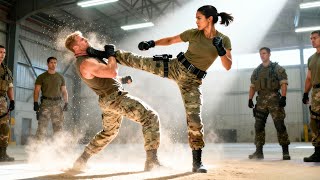
Saw the murderous intent behind it. saw that Callahan had crossed the line from demonstration to assault. She had a choice to make in a fraction of a second. Let him hit her and prove his point about women not belonging in combat roles or defend herself the way she was actually trained to defend herself. There was no choice. Her body moved on Instinct on training that had been drilled into her by the best special operations instructors in the world. Callahan's fist was 3 in from her face when Alina executed the technique. She didn't block. She didn't
deflect. She attacked. Her left hand snapped up and caught Callahan's wrist with surgical precision. Her right hand struck his elbow joint from the side, hyperextending it. Her body rotated, using his forward momentum against him, And in one continuous motion, she dropped her weight and threw him. Callahan's body left the ground, rotated completely over Elena's hip, and crashed into the dirt with devastating force. The sound of impact echoed across the silent training ground. Before he could recover, Elena had his arm locked in a joint manipulation that put unbearable pressure on his already hyperextended elbow. One more
pound of pressure and the joint Would dislocate. Yield," Elena said quietly. Callahan's response was a roar of rage. He tried to muscle out of the lock, tried to use his strength advantage to break free. It was exactly the wrong move. His struggling put additional torque on his compromised elbow. Aa felt the joint starting to give. Felt the moment of decision approaching. She could release him and risk him attacking again, or she could finish What he'd started. "Master Sergeant, yield," she said again louder. "Don't make me." Callahan bucked violently, throwing all his weight against her control.
The joint lock became a fulcrum. Physics did the rest. The sound of Callahan's elbow dislocating was wet and terrible. A crack followed by a pop that made seasoned combat marines wse. Callahan's scream cut through the afternoon air high and agonized. Elena released him immediately and Stepped back. Callahan curled on the ground, clutching his ruined arm, his face white with shock and pain. His elbow was bent at an angle that elbows don't bend, the joint visibly displaced beneath the skin. The silence that followed was absolute. 200 Marines stood frozen, processing what they' just witnessed. The entire
sequence from Callahan's attack to his injury had taken less than 3 seconds. 3 seconds that felt like they'd altered The fundamental reality of the training ground. Colonel Michaels was the first to move. Medic, get a medic here now. Medical personnel rushed into the circle. Elena stood perfectly still, her hands at her sides, watching them work on Callahan. Her face showed no emotion, but her mind was racing through the implications of what had just happened. The head medic, the same one who'd cleared them for combat, knelt beside Callahan and Examined his arm. His face went pale.
We need immediate transport to the base hospital. This is a complete elbow dislocation with probable ligament tears. He needs surgery now. Do it, Michaels ordered. Get him out of here. As medics loaded Callahan onto a stretcher, his eyes found Elena's. Through his pain, there was something else in his expression. Shock, disbelief, and maybe the first glimmer of Understanding. "What are you?" he gasped. Elena didn't answer. Michaels approached her. "Captain, are you injured?" No, sir. What happened? I need your immediate account before we bring in the investigators. Master Sergeant Callahan escalated beyond demonstration parameters, sir. His
strikes became genuine attacks. When he attempted to strike my face with full force, I defended myself using appropriate techniques to neutralize the Threat. Appropriate? Michaels looked at Callahan being carried away. You destroyed his elbow. He destroyed his elbow, sir. I applied a joint lock. He chose to resist using force against a compromised joint. The injury resulted from his decision to struggle against a technique designed to end fights through submission. One of the Pentagon officials stepped forward. We have the entire incident on Video, Colonel. The captain's account is accurate. Master Sergeant Callahan's attack was clearly outside
demonstration parameters. Captain Rivera's response was defensive. The British SAS observer joined the conversation. Colonel Michaels, I need to speak with you privately about Captain Rivera's technique. They stepped aside, speaking in low tones. Elena caught fragments. That was a Mars close quarters technique only taught to special operations Personnel. Confirms what I suspected about her actual background. The other Marines were still standing in shocked silence. Finally, one of the younger corporals spoke up. Captain Rivera just took down Master Sergeant Callahan in 3 seconds. Less than 3 seconds. Another marine corrected. I was timing it. Attack to injury
2.4 seconds. A sergeant from Callahan's own unit stepped forward. Captain, I need to say something. Elena Turned to face him. Go ahead, Sergeant. Derek, Master Sergeant Callahan, he's been struggling lately. Personal issues, stress from his divorce, some PTSD symptoms he won't admit to. This morning, before the demonstration, he was talking about needing to prove something. I should have said something to someone. The sergeant's voice was thick with guilt, but I didn't. And now he's seriously hurt because I didn't speak up. Sergeant, this isn't your fault, Elena said firmly. Master Sergeant Callahan made his own choices.
He chose to escalate. He chose to attack outside demonstration parameters. He chose to resist a submission hold. Those were his decisions. But if I'd said something, then maybe this would have happened differently. Or maybe it would have happened exactly the same. You can't control other people's Choices. You can only control your own. Colonel Michaels returned with the British Observer. His expression was grave. Captain Rivera, we need to debrief immediately. The Pentagon officials are requesting a full investigation. Military police are on route. I understand, sir. I also need to know. Michael paused, choosing his words carefully.
The technique you used, that's not standard Marine Corps hand-tohand combat Training. No, sir, it's not. Where did you learn it? Elena looked at the crowd of Marines, at the international observers, at the Pentagon officials with their cameras still recording. Sir, I'd prefer to discuss that in a classified setting. That's not going to be possible, Captain. 200 witnesses just saw you use advanced special operations techniques. The classification is already compromised. The British SAS observer spoke up. Colonel, if I may, the technique Captain Rivera used is identical to close quarters combat methods taught by Joint Special Operations
Command to their most elite personnel. I've seen it used exactly once before in Syria during a hostage rescue operation. The operator who used it was female, approximately Captain Rivera's age and had been attached to our SAS unit through some kind of exchange program that we were never given details about. All eyes Turned to Elena. She stood silent, her mind calculating the consequences of what was about to happen. Her classified service record was about to become very public. years of secret operations, of careful anonymity, of missions that couldn't be acknowledged. All of it was about to
be exposed because she defended herself against an outofcontrol master sergeant. "Captain Rivera," Michael said quietly. "I think it's time we stopped pretending. These Marines just watched you take down a 15-year combat veteran in under three seconds using techniques that are only taught to special operations personnel. Your cover is blown. So, I'm asking you directly as your commanding officer. What is your actual operational background? Elena took a deep breath. Sir, I'd like to request that this conversation happen with appropriate security clearances Present. Too late for that, Captain. Answer the question. The weight of 200 stairs pressed
down on her. This was the moment. She could maintain the cover, sight classification, refused to answer, or she could tell the truth and face whatever consequences came from it. "Sir," Elena said clearly, her voice carrying across the silent training ground. "I am a graduate of the Marine Special Operations School. I've served on classified direct action missions in seven different countries. I've been attached to SEAL Team 6, Delta Force, and British SAS for joint operations that don't officially exist. The Pentagon assigned me to this demonstration because I have more combat experience than 90% of the Marines
on this base, despite my age and appearance. The silence that followed her admission was different from before. It wasn't Shock at violence. It was shock at revelation. A young private found his voice. Your special operations. Like actual special operations. Yes, private. And all day when you've been teaching us tactics and techniques, that was from real missions. Yes. And when Master Sergeant Callahan said your experience was just from books and classrooms, he was wrong. Elena finished. Very Wrong. Another Marine spoke up. Why didn't you just tell us this from the beginning? Because my service record is
classified for good reasons, Marine. The missions I've been on, the operations I've participated in, they're secret because the enemies we fought don't get to know who beat them. And because special operations personnel maintain anonymity for their own protection and the protection of future operations, But you're telling us now because Master Sergeant Callahan forced my hand. He escalated a demonstration into a real fight, and I had to defend myself using my actual training. There's no way to explain what just happened without acknowledging where that training came from. The Pentagon official who'd spoken earlier stepped forward again.
Captain Rivera, I need to inform you that your admission just now has created a Significant security situation. We'll need to conduct damage control assessment, evaluate what information has been compromised, and determine. I understand the implications, ma'am, Elena interrupted. But I'm not going to apologize for defending myself against an assault. Master Sergeant Callahan attacked me with genuine intent to cause harm. I responded appropriately. If that compromises my cover, then so be it. Colonel Michaels rubbed his face. This is going to generate reports all the way up to the Pentagon, possibly to the White House. Yes, sir.
It probably will. Do you understand what you've done here, Captain? You've just blown your operational cover in front of 200 witnesses and a dozen foreign nationals. Yes, sir. I understand completely. And you're okay with that? Elena thought about her mother, about the female Marines who'd fought for the right to serve in combat roles, about Every woman who'd been told she wasn't strong enough, wasn't tough enough, wasn't good enough. Yes, sir. I'm okay with that. Because 200 Marines just learned something important today. They learned that capability isn't determined by size or gender or appearance. They learned
that underestimating your opponent is the fastest way to lose. And they learned that when someone with real training defends themselves, it's fast, Efficient, and devastating. She paused. If that costs me my operational anonymity, then it was worth it. One of the senior sergeants, a man who'd been skeptical of Elena all morning, stepped forward. Captain, I owe you an apology. We all do. We looked at you and made assumptions based on what we could see. We were wrong. You weren't wrong to be skeptical, Sergeant. You were wrong to let that skepticism prevent you from evaluating Actual
performance. There's a difference. The military police arrived within 15 minutes. Captain Sarah Chen, the lead investigator, was a 10-year veteran with a reputation for thoroughess. She took one look at the crowd of Marines and the medical personnel still treating Callahan's arm, and her expression hardened. "All right, everyone not directly involved in the incident needs to clear This area now." Her voice carried authority that even senior Marines didn't question. We're treating this as a serious training injury pending investigation. That means witness statements, video analysis, and formal interviews. Colonel Michaels approached her. Captain Chen, I can provide
immediate context. Sir, with respect, I need to conduct this investigation without command influence. Please step back and allow me to do my job. Elena watched the organized chaos unfold around her. Marines were being separated into groups for interviews. The international observers were being coralled by Pentagon officials who looked increasingly stressed. Camera equipment was being secured as evidence. Captain Chen walked directly to Elena. Captain Rivera, I'm going to need you to come with me for a formal statement. Understood, Captain. Before we do that, are you injured in any way? Minor bruising on my left forearm. Nothing
requiring treatment. I'll need medical to photograph that bruising. It's evidence. Chen's eyes were sharp. Assessing. I watched the incident from the observation platform. What I saw didn't look like a training demonstration gone wrong. It looked like an assault and a defensive response. That's accurate, Captain. Master Sergeant Callahan attacked you with genuine intent to cause harm. Yes. And your response was defensive. Yes. The technique you used, I've never seen anything like that in standard Marine Corps training. Elena met her eyes. That's because it's not standard Marine Corps training, Captain. Where did you learn it? That's going
to require a classified discussion. Chen's eyebrows rose. Captain Rivera, 200 Marines just watched You use classified techniques. I don't think we're in classified territory anymore. The techniques are declassified by necessity now, but the operations where I learned them and the instructors who taught them remain classified. Fair enough. Let's start with what you can discuss. Chen pulled out a recording device. This is an official statement. Captain Elena Rivera, can you walk me through exactly what happened from your perspective? Elena provided a detailed account, Callahan's escalating aggression throughout the day, his challenge to full contact combat, the
moment when his strikes crossed from demonstration to assault, and her defensive response. Chen listened without interruption, occasionally making notes. When Elena finished, Chen said, "You applied a joint lock that resulted in elbow dislocation." Why that specific technique? Because it's designed to end Fights immediately through pain compliance and submission. It's effective regardless of size differential, and it neutralizes the threat without requiring lethal force. You could have used a different defensive technique. I could have, but given Master Sergeant Callahan's size advantage and his emotional state, I needed something that would end the confrontation immediately and definitively. Half
measures against an opponent who's lost control are how people get seriously hurt or killed. So, you made a tactical decision to maximize your defensive effectiveness. Yes, Captain. That's exactly what I did. Chen nodded slowly. I'm going to be honest with you, Captain Rivera. Based on the witness statements I'm already collecting and the video footage we've secured, this looks like clearcut self-defense against an unprovoked Assault. But the political implications are massive. A female captain severely injuring a male master sergeant during a high-profile integration demonstration. This is going to generate attention you can't imagine. I understand that,
Captain. Do you? Because this isn't just about you anymore. This is about every woman trying to serve in combat roles. You just became the face of that entire debate. Elena's jaw tightened. I didn't ask for that. No, but you have it anyway. and how this investigation concludes will impact military policy for the next decade. Chen leaned closer. So, I need to ask you directly. Did you use excessive force? No, Captain. I used the minimum force necessary to stop an assault from a larger, stronger opponent who'd lost emotional control. If I'd used less Force, he would
have continued attacking and someone would have been seriously hurt. Possibly me, possibly him, possibly both of us. And if you'd used more force, he'd be in the morg instead of the hospital. Chen's expression didn't change, but something shifted in her eyes. That's a bold statement, Captain. It's an honest statement. I was trained by people who taught me how to kill efficiently in close quarters combat. I was trained by people who Operate in environments where hesitation means death. What I did to Master Sergeant Callahan was restraint, not excess. Because you could have done worse. Significantly worse.
Chen turned off the recording device. Off the record. Who trained you? Off the record. the best operators in the United States military. People whose names I can't share. People who've been in more firefights than most Marines will ever see. People who taught me that combat Isn't about fairness or matching force levels. It's about surviving and making sure the threat doesn't. And those operations in your classified file, they're real. Every single one of them. Chen was silent for a long moment. Then she reactivated the recording device. Captain Rivera, pending the completion of this investigation, you're being
placed on administrative leave. You'll remain on base, available for further questioning, but you're relieved of all Training duties. I understand, Captain. One more thing. The Pentagon officials are requesting a full declassification review of your service record. They want to know exactly who you are and what you've done. That's their prerogative. You don't seem concerned about that. Elena thought about her mother, about the women who'd fought for the right to serve, about the 200 Marines who' just learned that their assumptions were Wrong. Captain Shen, I've spent 6 years operating in the shadows, doing missions that don't
officially exist, fighting enemies who don't know my name. If revealing my service record helps other women get the opportunities I had, then I'm willing to make that sacrifice. That's very noble, Captain. But you understand you'll never operate in those shadows again. Your face is known now. Your capabilities are known. That ends your effectiveness as a covert operator. I know, but maybe it begins my effectiveness as something else. Chen studied her face. You've thought about this? I've been thinking about it since Master Sergeant Callahan challenged me this morning. I knew that if I accepted, if I
fought him the way I was actually trained to fight, my cover was over. I accepted anyway. Why? Because some things are more important Than maintaining operational security. Like proving that women belong in combat roles. like showing that capability matters more than gender or size or age. Elena paused. Like making sure my mother's sacrifice wasn't in vain. Your mother, she was a Marine, died from burn pit exposure after the Gulf War. Spent her whole career fighting for respect she deserved, but never fully received. Today, I fought for her. Chen's expression softened slightly. My mother was army.
She faced similar challenges in the 90s. I understand what you're saying. She stood up. All right, Captain. That's all for now. Stay available. We'll have more questions as the investigation proceeds. Yes, ma'am. Elena left the interview room and found Colonel Michaels waiting in the corridor. Captain, we need to talk. Yes, sir. They walked to his office in silence. Once inside, with the door Closed, Michael's sat heavily behind his desk. Pentagon just called. They're expediting a partial declassification of your service record. They want to release enough information to contextualize today's incident without compromising ongoing operations. How
partial, sir? They're declassifying your attendance at Marine Special Operations School, your attachment to various special operations units, and a general outline of your deployment History without specifics on operations or locations. Basically, they're confirming your special operations without revealing exactly what you did. That's more than I expected, sir. They don't have a choice. 200 Marines watched you use techniques that are only taught to special operations personnel. The British SAS observer has confirmed you used methods identical to what he saw in Syria. Keeping your record classified at this Point would create more problems than it solves. Elena
nodded slowly. What about Master Sergeant Callahan? He's in surgery now. The orthopedic surgeon says the elbow dislocation is severe. Torn ligaments, possible nerve damage. He's looking at 6 to 8 months of recovery, and he may never regain full function. I didn't want that, sir. I know, Captain, but he made choices that led to This outcome. Michaels pulled out a file. This is Callahan's psychological evaluation from 3 weeks ago. It was flagged for concerning indicators, unresolved PTSD, anger management issues, difficulty accepting policy changes. The psychologist recommended mandatory counseling before Callahan continued in training roles. Was that
recommendation followed, sir? No. It was overridden by his unit Commander, who said Callahan was too valuable to pull from training duties. Michael's voice was bitter. So, we left a Marine with documented psychological issues in a position where he had authority over other Marines. And today, that decision nearly resulted in you being seriously injured. Or worse. Or worse, Michaels agreed. The investigation is going to find institutional failures beyond just Callahan's actions. His unit commander is probably going to face disciplinary action for ignoring the psyche vow. The command structure that allowed today's demonstration to happen without proper
safety protocols is going to be scrutinized. And me, sir, you captain? You're probably going to be commended. The preliminary witness statements all support your account. Marines are saying Callahan attacked you Unprovoked and you defended yourself with appropriate force. Even the Marines who were skeptical of you this morning are now saying you showed remarkable restraint. Elena felt something tight in her chest begin to loosen. I was worried they'd see it differently. They saw exactly what happened. A smaller, less physically imposing marine defended herself against a larger opponent who'd lost control. And they saw that your training,
your real training, made the Size difference irrelevant. Michaels leaned forward. Elena, you proved something today that needed proving. You proved that properly trained women can handle themselves in combat situations against larger male opponents. That proof is going to change policy. That was never my intention, sir. I just wanted to teach good tactics. I know, but intention doesn't change impact. Your actions today are going to reverberate through the entire Military establishment. A knock on the door interrupted them. The British SAS observer entered without waiting for permission. Colonel Michaels. Captain Rivera. I apologize for the interruption, but
I need to speak with Captain Rivera immediately. Sir, I'm in the middle of Elena began. I know, but this can't wait. The British officer looked at Michael's. Colonel, with your permission, I need to have a classified conversation with Captain Rivera about operations in Syria. Michael's eyes widened. You're confirming she was there? I'm confirming I served with an American operator in Syria whose techniques, methods, and physical description match Captain Rivera exactly. If she's who I think she is, then what happened today makes perfect sense. And the international community needs to know about it. Why? Elena asked.
Because Captain Rivera, if you're the operator I served with in 2019, then you single-handedly saved 12 British SAS operators, three American SEALs, and four kidnapped aid workers during a hostage rescue operation. You neutralized three heavily armed hostiles in close quarters combat in approximately 4 seconds, allowing my team to secure the hostages without casualties. He paused. That operation has been classified by both our governments, but given today's events, I'm requesting permission to declassify Our afteraction reports. Elena's mind raced. That operation had been one of her most dangerous, a nighttime raid on a compound where Western hostages
were being held by an extremist group. She'd been inserted as part of a joint task force. And when the operation went sideways, she'd been the only operator in position to stop the hostiles from executing the hostages. Sir, I can neither confirm nor deny, captain, I watched you fight today. I Know it was you in Syria. Your movement patterns are identical. That specific technique you used on Callahan, the standing arm throw into joint manipulation. That's exactly how you took down the second hostile in that compound. The British officer's voice softened. You saved my life that night.
You saved all our lives and the world never knew about it because the operation was classified. Michaels looked between them. Are you saying Captain Rivera has been operating at this level since she was 23 years old? I'm saying Captain Rivera has been one of the most effective special operations personnel in the Western Military Alliance, and nobody knows it because her gender and age made her the perfect covert asset. Nobody expects a young woman to be a highly trained killer. That's why she Was so valuable in that role. Elena felt exposed in a way she hadn't
felt in years. Her operational identity, carefully protected, was being stripped away piece by piece. "Sir," she said quietly, "if you declassify that operation, you compromise future operations that use similar tactics. I've already discussed this with my command. They agree that the tactical benefit of maintaining your specific Role is outweighed by the strategic benefit of demonstrating that integrated combat units can perform at elite levels. He looked directly at Elena. The world needs to know what you're capable of. Not for your ego, but for every woman who's been told she can't serve in combat roles because she's
not physically capable. This isn't about making a political statement. Everything's political, Captain. You Know that. You've been operating in politically sensitive environments for years. The difference is now the politics work in favor of something important, proving that capability transcends gender. Another knock. Captain Chen entered. Colonel, I've completed preliminary interviews with 53 witnesses. All 53 confirmed the same sequence of events. Master Sergeant Callahan escalated beyond demonstration parameters and attacked Captain Rivera With genuine intent to harm. Captain Rivera defended herself using appropriate force. Zero witnesses describe her actions as excessive or unjustified. What about Callahan's unit? Michaels
asked. His own Marines are being the most critical of his actions, sir. Several have come forward with reports of previous incidents where Callahan displayed inappropriate aggression during training. Nothing was formally Reported because he was considered too valuable to his unit. Chen's expression was grim. This wasn't a one-time incident. This was a pattern that finally escalated to a breaking point. Recommendations. Court marshal proceedings against Master Sergeant Callahan for assault on a fellow service member. Disciplinary action against his unit commander for failing to act on the psychological evaluation. Complete review of protocols for identifying and addressing Marines
with PTSD and anger management issues before they're allowed in training roles. Chen turned to Elena. As for Captain Rivera, complete exoneration. Her actions were justified, proportionate, and professionally executed. Elena felt relief wash over her, followed immediately by concern. What happens to Callahan? That's not your concern, Captain Chen Said. Yes, it is. He's a Marine with 15 years of service and documented combat experience. He's clearly dealing with psychological trauma that wasn't properly addressed. What happens to him matters. Chen's expression softened slightly. That's generous of you, Captain. Considering he tried to seriously hurt you, he's a broken
marine who needed help and didn't get it. The system failed him. I don't want to see him Destroyed because the system failed. Michael spoke up. Captain Rivera, your compassion is noted, but Master Sergeant Callahan made choices today that resulted in serious consequences. He'll face military justice for those choices. I understand, sir. I just want to make sure he gets the psychological help he clearly needs. That's going to be part of any resolution, Chen assured her. Whether through court marshall or other Disciplinary proceedings, Callahan will be required to undergo comprehensive psychological evaluation and treatment. The British
officer cleared his throat. Captain Rivera, I need your answer about the Syria operation. Will you confirm your participation so we can properly acknowledge what you did? Elena looked at Colonel Michaels. Sir, that's above my authorization level. It is, Michaels agreed. He picked up his Phone. Let me make a call to Pentagon. 20 minutes later, after a series of increasingly highlevel phone calls, Michaels hung up and looked at Elena with something like awe. Captain Rivera, the Secretary of Defense has authorized partial declassification of your service record, including your role in the Syria hostage rescue operation. They're
also fast-tracking a classified commenation to public recognition. Apparently, today's incident has convinced senior leadership that the strategic value of acknowledging your service outweighs operational security concerns. Elena sat down slowly. Sir, I don't understand. Why would they? Because, Captain, you just became the poster child for combat integration. The Pentagon wants to use your service record to demonstrate that women can perform at the highest levels of special Operations. They're turning you into a symbol. I don't want to be a symbol, sir. I just want to do my job. Too late for that, the British officer said, not
unkindly. The moment you defended yourself in front of 200 witnesses, you became something larger than yourself. The question now is whether you use that platform to help other women or try to hide from it. Elena thought about her mother, about the hospital room where She'd died, whispering to 8-year-old Elena that she should never let anyone tell her she wasn't good enough, about the promise Elena had made at her mother's funeral that she would prove women belonged anywhere they had the skill to serve. "If they're going to make me a symbol," Elena said slowly, "then I
want to make sure it's a symbol that actually helps people, not just propaganda. What do you mean? Michaels asked. I Mean, if the Pentagon is going to acknowledge my service, I want them to also acknowledge the institutional failures that happened today. Callahan didn't get the help he needed because the system prioritized operational readiness over marine welfare. That's not a gender issue. That's a leadership issue. If my story is going to be told, then that story needs to be told, too. Chen nodded approvingly. Captain, you're thinking strategically. Good. I'm thinking about the next Marine who's struggling
with PTSD and anger issues. I don't want them to end up like Callahan, broken, and facing court marshal because nobody helped them when they asked for it. Michael stood up. Captain Rivera, I'm recommending you for immediate promotion to major. I'm also recommending you for reassignment to a training development role where you can shape curriculum for integrated combat units. And I'm personally going to Ensure that your recommendations about psychological support for Marines are forwarded to the highest levels of command. Thank you, sir. Don't thank me. You earned this through performance. Every bit of it. Michaels extended
his hand. Your mother would be proud, Elena. The words hit harder than any of Callahan's punches had. Elena felt tears threatening for the first time all day. "Yes, sir. I hope so." The British officer stepped forward. "Captain Rivera, one more thing. The 12 SAS operators you saved in Syria, we'd like to formally acknowledge your actions. With your permission, we'd like to invite you to the UK for a commendation ceremony. Sir, I was just doing my job. No, Captain, you were doing your job extraordinarily well under impossible circumstances. There's a difference. He smiled. Besides, the lads
have been wanting to properly thank you for 3 years. They've been calling you the ghost because nobody could tell them who you actually were. Now we know and we owe you a debt. Elena nodded overwhelmed. I'd be honored, sir. As the meeting broke up, Elena walked outside into the late afternoon sun. The training ground was empty now. All evidence of the day's events cleared Away. But she could still see it. The circle of Marines, Callahan's attack, the moment when everything changed. Her phone buzzed. A text from her aunt. News is already spreading. Are you okay?
Elena typed back. I'm okay. It's been a difficult day, but I'm okay. Your mother would be so proud of you, Ma. I hope so. I really hope so. She put the phone away and started walking toward her quarters. Marines she passed stopped And saluted with a respect that felt different from before. Not just protocol, but genuine acknowledgement. One young female marine approached hesitantly. Captain Rivera, I just wanted to say thank you for what you did today, for proving we belong here. Elena looked at the private's earnest face and saw herself at that age, uncertain, determined,
ready to prove something to a world that doubted her. Private, you don't need me to prove you belong here. You belong here because you earned it, just like every other Marine. Don't let anyone tell you different. Yes, ma'am. But still, thank you. As the private walked away, Elena realized the British officer had been right. She wasn't just Elena Rivera anymore. She was a symbol whether she wanted to be or not. The question was what kind of symbol she would choose to be. Elena stood in the hallway of the base hospital 3 days later, staring at
the door to Callahan's room. She'd been standing there for 5 minutes trying to decide if visiting him was the right thing to do. A nurse approached. Can I help you, Captain? I'm here to see Master Sergeant Callahan. Is he accepting visitors? He is, but I should warn you, he's in a lot of pain, both physical and emotional. The doctors say his elbow will never Fully recover. He's looking at medical discharge. Elena nodded. I understand. I'd still like to see him if he's willing. The nurse studied her face, recognition dawning. You're the one from the demonstration.
The one who Yes, I am. He's been asking about you, wondering if you were okay. The nurse's expression was complicated. Go ahead. Room 314. Elena knocked softly before entering. Callahan was sitting up in bed, his right arm immobilized in a complex brace. His face was pale, older looking than it had been 3 days ago. He looked up as she entered, and something flickered in his eyes. Shame, anger, resignation. She couldn't tell which. Captain Rivera. His voice wasn't sure you'd come. I wasn't sure either, Master Sergeant. Silence hung between them, heavy with everything unsaid. Finally, Callahan
Spoke. I owe you an apology. A real one, not the kind they make you give in court marshall proceedings. You don't have to. Yes, I do. Callahan's voice was firm, despite the pain evident in his face. I attacked you not in a demonstration, not in training. I attacked you because I was angry and broken and looking for someone to blame for everything wrong in my life. You didn't deserve that. Elena pulled up a chair and sat down. No, I didn't. But you didn't deserve to be left without help when you were clearly struggling either. The
psyche val, you know about that. I know the system failed you, Master Sergeant. I know you showed signs of needing help and nobody provided it. That doesn't excuse what you did, but it explains it. Callahan looked at his ruined arm. They're saying I'll never Have full function again. Probably medical discharge within 6 months. 15 years of service ending because I couldn't control my temper. 15 years of service ending because the core didn't give you the support you needed after multiple combat deployments and documented PTSD. Elena leaned forward. Master Sergeant, I read your service record. You're
a decorated marine with an exemplary record until the last year. Something changed. The system should have caught that and helped you. They didn't. that failure is on them, not just you. You're being awfully generous to someone who tried to hurt you. I'm being honest about systemic problems that need fixing. If we only blame individuals without addressing the institutions that failed them, nothing changes. Callahan was quiet for a long moment. I watched the video of the demonstration Of what I did. He paused. I don't even remember deciding to hit you like that. It was like something
else took over. All the anger, all the frustration, all the grief about my Marines who died in Fallujah, it all came out at once and you were the target. Have you talked to the psychologist about that? every day, twice a day. They're saying I had a PTSD triggered Dissociative episode. That when I was fighting you, I wasn't really seeing you. I was seeing everything I've been trying not to deal with for 5 years. Elena felt a pang of empathy despite everything. Are they helping you work through it? Yeah. For the first time in years, I'm
actually dealing with it instead of pretending it doesn't exist. Callahan met her eyes. I heard about your service record. The declassified parts. Your special operations. Real special operations. I was not sure what I am now. You're a symbol. I heard the Pentagon is using what happened to push integration policies forward. Using you as proof that women can handle elite combat roles. Whether I want to be or not. Do you want to be? I mean, Elena considered the question. I want my service to matter. If that means being public about it instead of Operating in shadows,
then yes, I want to be that symbol. For women who come after me, your technique, what you did to me, I've been thinking about it. That wasn't luck or adrenaline. That was training. Serious training. It was. And if id kept attacking, you could have done worse. Much worse? Callahan nodded slowly. I spent all day telling everyone you weren't qualified. Turns out you're more Qualified than almost anyone on that base, including me. Qualification isn't the point, Master Sergeant. The point is that we judged each other based on assumptions instead of evidence. You looked at me and
saw someone who didn't belong. I looked at you and saw someone who needed to be proven wrong. We were both wrong about what mattered. What does matter? That we're all Marines. That we're Supposed to take care of each other. That when someone's struggling, we help them instead of ignoring it until something breaks. Elena paused. You broke, Master Sergeant. And I'm sorry the system let you get to that point. Callahan's eyes glistened. Nobody said that to me. Everyone's been focused on what I did wrong. Nobody's acknowledged that maybe I needed help I didn't get. Well, I'm
acknowledging it now. You deserved better from the core, from your command, from the people who were supposed to have your back. Thank you, Captain. That means more than you know. Elena stood up. I should go. You need rest. Captain, one more thing. Callahan's voice stopped her at the door. I have a daughter. She's 17. She wants to join the Marines after high School. I've been telling her it's too hard, that women can't handle the physical demands, that she should choose something else. And now, now I'm going to tell her about you. About watching someone half
my size and 15 years younger handle me like I was a training dummy. About learning that my assumptions were based on fear, not facts. He paused. I'm going to tell her to be like you, to Prove people wrong through performance, not arguments. Elena felt emotion tightening her throat. That would be good, Master Sergeant. The Marines need more people willing to challenge assumptions. Captain, I hope you get everything you deserve from your career. And I hope my daughter gets to serve under officers like you someday. If she joins, tell her to look me up. I'll make
sure she gets good training. Elena left the hospital feeling lighter than she had in days. Callahan's apology had mattered less than his understanding. He'd learned something. Maybe that made everything worthwhile. 6 weeks later, Elena stood in front of a packed auditorium at Marine Corps Base Quantico. She'd been promoted to major and assigned to develop new training protocols for integrated combat units. Today was her first major presentation To senior military leadership. The audience included two star generals, Pentagon officials, representatives from allied nations, and media covering the military's integration efforts. Elena felt the weight of their attention
like a physical thing. Colonel Michaels introduced her. Major Elena Rivera brings a unique perspective to combat training. Her service record, recently declassified, includes multiple special operations deployments, joint task force Operations with allied nations, and a hostage rescue mission that saved 16 lives. Today, she'll present her recommendations for training protocols that ensure all Marines, regardless of gender, receive the preparation they need to succeed in combat roles. Elena stepped to the podium. Thank you, Colonel. Before I begin, I want to address what happened 6 weeks ago at the Mountain Warfare Training Center. That incident has been characterized
many Ways. As a demonstration of female combat capability, as proof of integration success, as a symbol of changing military culture, but what it really demonstrated was a systemic failure to support Marines dealing with psychological trauma. The room went silent. This wasn't the opening. anyone expected. Master Sergeant Derek Callahan attacked me because he was broken and nobody fixed him. He showed signs of PTSD and Anger issues that were documented and ignored. The system failed him and that failure resulted in a serious training injury and the end of a decorated Marine's career. Elena paused. If my recommendations
today only focus on gender integration without addressing mental health support for all Marines, then I've missed the point of what happened. A general in the front row leaned forward. Major Rivera, are you suggesting that integration Challenges are secondary to psychological support issues? No, sir. I'm suggesting they're interconnected. Marines struggling with change, whether it's policy changes, operational changes, or cultural changes, need support navigating that struggle. When we don't provide that support, we get outcomes like what happened with Master Sergeant Callahan. We get good Marines making terrible Decisions because they're not equipped to handle the stress they're
under. Another general spoke up. You're defending the man who attacked you? No, sir. I'm identifying the institutional failures that contributed to his attack. There's a difference. Callahan made choices he's accountable for, but the system created conditions where those choices became more likely. A female Pentagon official stood. Major Rivera, your empathy toward Master Sergeant Callahan is noted, but the integration debate isn't about his psychological state. It's about whether women can perform in combat roles. You proved they can. Shouldn't we focus on that success? With respect, ma'am, if we only focus on my success without addressing why
the confrontation happened in the first place, we're setting up future conflicts. The next Master Sergeant Callahan won't attack a special Operations trained major. He'll target a regular Marine who doesn't have my training, and that marine might get seriously hurt. We need to prevent the attacks, not just prove we can defend against them. The room erupted in conversation. Elena had just reframed the entire integration debate in terms of mental health support and institutional responsibility. General Patricia Morrison, a three star with a reputation for straight talk, Raised her hand for silence. Major Rivera, I've read your service
record. I know what you're capable of. I also know you could use this platform to advance your career, to become the face of integration success, to leverage your story for personal benefit. Instead, you're using it to advocate for a marine who attacked you. Why? Elena met the general's eyes. Because my mother taught me that respect is earned by doing what's right, not what's convenient. Master Sergeant Callahan needs help, not just punishment. Every Marine dealing with PTSD and anger issues needs help. If my platform can get them that help, then I'm using it correctly. Even if
it complicates the integration narrative, especially if it complicates the integration narrative. Ma'am, simple narratives don't change complex systems. We need to acknowledge complexity and address it headon. General Morrison smiled. Major, I like The way you think. Present your recommendations. Elena spent the next hour outlining comprehensive training protocols that integrated physical preparation, psychological support, leadership development, and cultural adaptation. She presented data from allied nations with successful integration programs. She shared insights from her own special operations training and she repeatedly emphasized that successful integration required Supporting all Marines through change, not just preparing women for combat roles.
The response was overwhelming. Military leadership approved her recommendations for immediate implementation. The Pentagon committed funding for expanded psychological support services. Allied nations requested copies of her training protocols, but the most meaningful response came from an unexpected source. As Elena Packed up her materials after the presentation, a young woman in Marine Corps uniform approached. Major Rivera, I'm Private First Class Callahan. Derek Callahan is my father. Elena's breath caught. Private Callahan? I didn't know you'd enlisted. I joined 3 weeks ago. My father told me about what happened at the demonstration. He told me I should find you,
that you'd teach me what I need to know. Your father and I, our interaction was complicated. I know. He told me everything. How he attacked you, how you defended yourself, how you visited him in the hospital afterward. The young woman's eyes were bright with emotion. Major, my whole life, my father told me the Marines weren't for women. That we weren't strong enough, tough enough, capable enough. Then you proved him completely wrong. And instead of hating You for it, he learned from it. He's getting help now. Real help. And he's supporting my decision to serve instead
of fighting it. I'm glad he's getting el private. He told me to tell you something. He said to say that you gave him something more valuable than an apology. You gave him perspective and that perspective saved his relationship with me. Elena felt tears threatening. Your father is a good marine who was dealing with trauma he didn't know how to handle. I hope he finds peace. He's working on it. The therapy is helping. and knowing that I'm here following in his footsteps but doing it better. That's helping too. Private Callahan extended her hand. Thank you, Major,
for everything. As the young woman walked away, Elena realized this was the real impact of what had happened. Not the policy Changes or the training protocols or the media attention. The real impact was one father and daughter healing. One marine getting the help he needed. One young woman pursuing her dreams without being told she wasn't good enough. 3 months later, Elena received orders for a new assignment. She was being sent to the UK to receive formal recognition from the British government for the Syria hostage rescue operation. The 12 SAS operators she'd saved had Requested she
be honored publicly. The ceremony was held at the Royal Military Academy, Sandhurst. Elena stood in dress uniform as a British general read the citation for extraordinary heroism during a joint special operations mission to rescue Western hostages from an extremist compound. Captain Rivera, serving in an advisory capacity with British SAS forces, single-handedly neutralized three armed hostiles in close quarters combat when the rescue Operation encountered unexpected resistance. Her actions directly saved the lives of 12 British operators, three American SEALs, and four civilian hostages. Her courage, skill, and decisive action exemplify the highest standards of military service. The
12 SAS operators she'd saved stood as she received the commenation. Their applause was genuine, heartfelt. Afterward, they gathered informally. The team leader, now a major himself, Approached Elena. We wanted you to know. We've been telling your story for 3 years, training new operators, teaching close quarters combat, discussing what to do when operations go sideways. We always talked about the ghost who saved our mission. Now the ghost has a name and a face. I was just doing my job that night. No, Major, you were being exceptional at your job. There's a difference. He paused. We've been
following what happened in California, the demonstration incident, how you've used that platform to advocate for better mental health support. That's the same person who saved us in Syria. Someone who fights for what's right, not what's easy. Elena smiled. A very smart woman once told me that respect is earned by doing what's right. I'm just following her advice. your mother. Yes. She never got to see Me succeed in the military, but I hope she knows somehow that I'm trying to honor everything she taught me. I think she knows, Major, and I think she's proud. The media
coverage of the UK ceremony reached back to the United States within hours. Elena's story, special operations veteran, hostage rescue hero, advocate for military reform, captured national attention. News outlets wanted Interviews. Veterans groups wanted her as a speaker. Young women wanted her as a role model. Elena accepted some invitations and declined others. She gave interviews that focused on institutional reform and mental health support. She spoke at militarymies about the importance of evaluating people based on capability rather than assumptions. She avoided becoming a pure symbol, insisting on staying grounded in Practical work that helped real Marines. 6
months after the demonstration incident, Elena received a letter. The return address showed it came from a veterans treatment facility in Texas. Inside was a handwritten note from Derek Callahan. Major Rivera, I'm writing from a PTSD treatment program. After my medical discharge, I hit bottom. Depression, anger, feeling like my life was over. But then I remembered what you said in The hospital, that the system failed me, and that failure deserved acknowledgement. I decided to stop blaming myself for everything and start working on healing. The therapy is hard. Confronting what happened in Fallujah, dealing with survivors guilt,
learning to manage anger. It's the hardest fight I've ever been in, but I'm winning slowly. I wanted you to know that my daughter graduates from boot camp next month. She's top of her class in Physical training and marksmanship. She tells her instructors that she's going to be like Major Rivera someday, a Marine who proves that capability matters more than assumptions. I'm proud of her, and I'm grateful to you for showing her and me what's possible when we stop letting fear and prejudice make our decisions. Thank you for visiting me when you had every reason not
to. Thank you for advocating for mental Health support when you could have just focused on integration success. Thank you for being the kind of leader the Marine Corps needs. Respectfully, Derek Callahan, former Master Sergeant, USMC. Elena read the letter three times, emotionbuilding each time. This was why it all mattered. Not the commendations or the policy changes or the media attention, but the individual lives changed for the better. She pulled out Her phone and texted her aunt. Callahan wrote me, "He's in treatment, doing better. His daughter is graduating boot camp, top of her class." The response
came quickly. Your mother would be so proud of you, not for winning the fight, but for what you did after, Elena typed back. I hope so. I really hope so. One year after the demonstration at Marine Corps Mountain Warfare Training Center, Elena stood once again before a crowd of Marines, but this time she was the base Commander at the Marine Corps Special Operations School. Her promotion to lieutenant colonel had come with an assignment that felt like destiny. Training the next generation of elite Marines, both male and female, in the techniques and tactics that would keep
them alive in the world's most dangerous places. Among the new class of candidates was Private First Class Callahan, who'd excelled in every training pipeline and earned her spot in The special operations program. Elena addressed the assembled candidates. Welcome to Special Operations School. You're here because you've proven you have the physical capability, mental toughness, and dedication required for elite service. Some of you are men, some of you are women. In this program, that distinction doesn't matter. What matters is whether you can perform when it counts. One year ago, I was involved in an Incident that became
very public. A larger, more experienced marine attacked me, and I defended myself using techniques you'll learn here. That incident has been analyzed, discussed, and used as an example of many different things. But here's what it actually proved. Proper training beats assumptions every time. You'll face people who doubt you. People who think you don't belong here because of your gender, your size, your age, your Background. Ignore them. Don't waste energy arguing with skeptics. Waste energy becoming so undeniably skilled that their skepticism becomes irrelevant. That's what you're here to learn. Not just how to fight, but how
to be so good at what you do that nobody can reasonably question your capability. Your job is to earn respect through performance. My job is to give you the training that makes that performance Possible. Welcome to the hardest challenge of your military careers. Welcome to special operations training and welcome to proving that excellence knows no gender. The candidates snapped to attention, their faces set with determination. After the briefing, Private First Class Callahan approached Elena. Thank you for accepting me into the program, ma'am. You earned your spot, Private Callahan. Your performance in the selection pipeline was
exceptional. My father wanted me to give you this. She handed Elena a small box. Inside was Derek Callahan's combat action ribbon from Fallujah, the deployment that had broken him, but that he'd carried as a reminder of the Marines he'd lost. A note was attached. I carried this for 15 years as a burden. My daughter should carry it as inspiration. Please give it to her when she graduates. And thank you for making it possible for her to serve in the ways I never let myself imagine she could. Elena looked at the young woman standing before her,
determined, capable, ready to prove herself, just like Elena had done years before. I'll present this to you at graduation, private. Your father wants you to have it. But you're going to have to earn Your graduation first. Yes, ma'am. I intend to. Good. Then let's get to work. As Private Callahan joined her fellow candidates, Elena reflected on the journey that had brought her to this moment. From the East Los Angeles neighborhood where her mother had raised her through classified operations in hostile territories to a public demonstration that had changed military policy to this, training the next
generation of elite warriors. Her mother Had been right. Respect was earned through performance, not demanded through arguments. And the people who underestimated you were showing you their weakness, giving you an advantage they didn't even realize they'd given. Elena had been underestimated her entire career. People had looked at her and seen someone who didn't belong. Too young, too small, too female. They'd all been wrong. And now she was ensuring that the next generation of Marines Would never have to fight the same battles she'd fought. They would be evaluated on capability, trained to excellence, and given the
opportunities they deserved based on performance, not prejudice. 150 Marines had watched her fight that day at the Mountain Warfare Training Center. 200 had witnessed what happened when assumptions met reality. Those Marines had gone on to their own units, their own commands, carrying the lesson With them. Never underestimate your opponent, and never assume that capability can be judged by appearance. The ripple effect of that one demonstration had changed military culture in ways large and small. Women were being accepted into special operations programs at record rates. Mental health support for all Marines had been expanded and destigmatized.
Training protocols now emphasized capability over physical attributes. But The most important change was the one that couldn't be measured in policy documents or statistics. the change in how Marines looked at each other with more respect, with fewer assumptions, with understanding that excellence comes in forms that don't always match expectations. Elena walked across the training ground toward her office. The California sun was warm on her face. The mountains in the distance were clear and sharp Against the blue sky. She thought about her mother, who'd fought for respect her whole career and never fully received it, who'd
died believing that her daughter would face the same struggles, the same prejudice, the same barriers. Her mother had been wrong about that. The barriers were still there, but they were falling. The prejudice still existed, but it was being challenged. The struggles continued, but they were Getting easier with each generation of women who refused to accept limits others tried to impose on them. Elena had been one woman in a demonstration circle facing one opponent in one moment that lasted less than 3 seconds. But those 3 seconds had proven something that needed proving, had changed something that
needed changing, and had opened doors that needed opening. Her mother would have been proud of the fight itself, the perfect technique, the Decisive victory, the absolute competence under pressure. But she would have been even prouder of what Elena did after the fight, showing compassion to an opponent who'd attacked her, advocating for systemic change instead of personal glory, and using her platform to help others instead of elevating herself. That was the real legacy, not the medals or the promotions or the media attention. The real legacy was every young woman who joined the Marines believing she belonged
there. Every Marine struggling with PTSD who got the help they needed before something broke. every person who learned to judge others by performance instead of assumptions. Elena had been underestimated her entire life. She'd been dismissed, doubted, and told she didn't belong. And she'd proven every single one of those skeptics wrong. Not through argument, but through Undeniable excellence. That was a lesson worth teaching, a legacy worth building, a fight worth winning. And as she watched the new class of special operations candidates begin their training, men and women together, evaluated on merit, supported through struggle. Elena knew
that her 3 seconds in that demonstration circle, had bought something far more valuable than vindication. They'd bought change that would outlast Her career, outlive her service, and create opportunities for generations of Marines who would never know her name, but would benefit from the doors she'd kicked open. Her mother had taught her that respect was earned, not given. Elena had earned it, and now she was teaching others how to do the same. One marine at a time, one training class at a time, one generation at a time, until the day when nobody would be surprised to
see a 5'3" woman take down a larger Opponent in 3 seconds. Because capability would finally matter more than assumptions. That day was coming. Elena could see it in the determined faces of her students, in the changing policies of the institution, in the letters from Marines who thanked her for proving what they'd always known was possible. The fight wasn't over. It would never be completely over, but it was a fight worth continuing, a battle worth Winning, a legacy worth building. And Elena Rivera, special operations veteran, combat instructor, advocate for change, was exactly the right person to
lead it because she'd learned the most important lesson of all. The most dangerous opponent is the one you underestimate. And the strongest warrior is the one who refuses to accept limits others try to impose. That lesson had served her well in Syria, in classified operations across Seven countries, in a demonstration circle in California, and in every moment since. And that lesson would serve the Marines she trained, the institution she helped reform, and the culture she helped change. 3 seconds had proven what needed proving. The rest of her career would be spent making sure those three
seconds meant something that mattered.