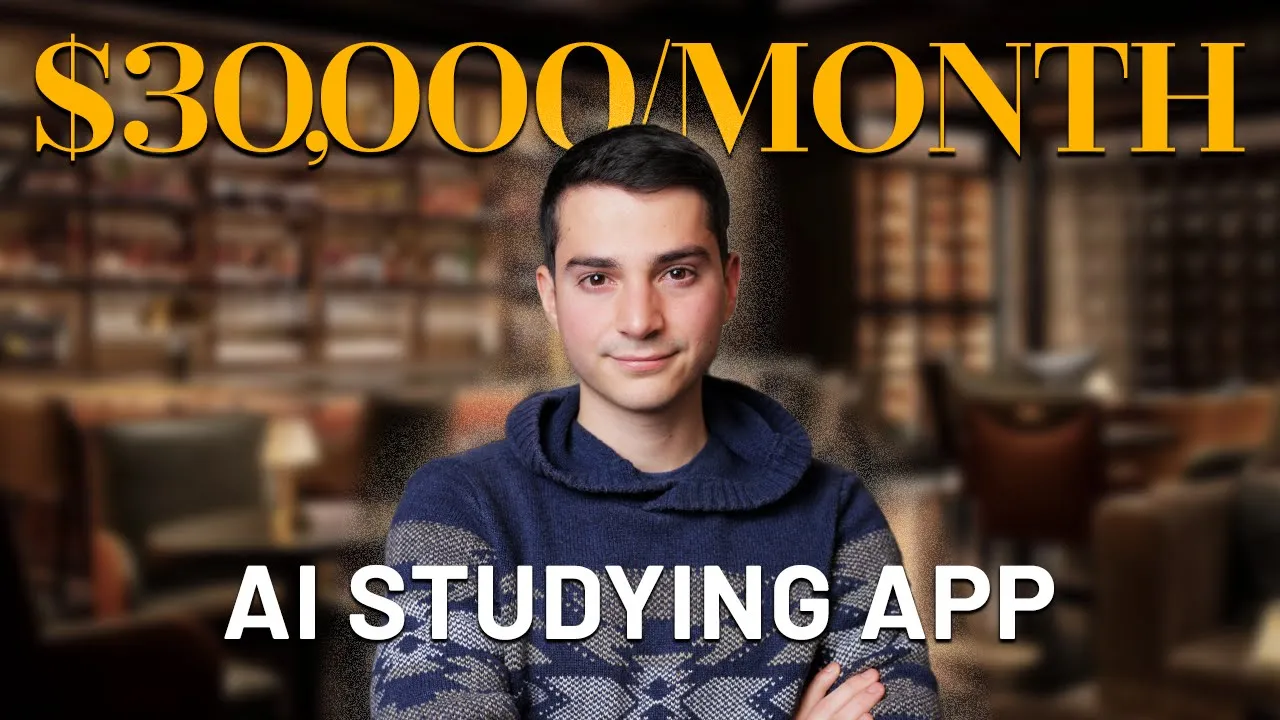
Julian hello so you're the founder of wisd doia which is an AI generated flashcards app that recently started to pick up some traction on Tik Tok and it's a Founders Inc company um but when we met I think a year and a half ago you were working on something completely different yeah that's right um before WIS doia which we launched almost a year ago we spent a whole year uh going through like four Pivots a lot of iterations it it took a while to find something that has had decent traction and we almost ran out
of money and died before getting there so uh yeah which is natural it's a part of the journey so I want to work backwards so I guess we'll start off with the last few months where you guys started to see traction you know effin came in with the with a check I think three or four months ago now right uh what was the turning point where your startup that Was almost dying suddenly you know kind of had this random seemingly to me random like burst of success and you know you made your Tweet last week
that went kind of viral about how you guys are generating like 300K a year now yeah exactly the Turning Point well I think it's you know startups are something that is are so hard that it's almost like it requires some so many mistakes to get to a point where you actually start to go down a path that makes sense Or maybe not go down a path that makes sense but develop a process and a mode of thinking that allows you to operate much more intelligently and I'd say the perhaps the biggest turning point in our
philosophy that eventually led to this discovering WIS doia is that instead of like committing really hard to ideas we felt really strongly about we decided to uh like almost not really having a choice because by the time we scrapped the last idea which was mind flow a Social app we spent six months developing um and spent like over $100,000 which and it ended up with almost no traction we we had like three to four months of Runway left and we're like we even if we wanted to we can't afford to like go another 6 months
on one idea if it doesn't work so it's like we need to spend like one to two weeks Cycles like really going hard on testing like identifying what are the riskiest hypothesis around an idea that we want To test and how do we invalidate or validate those the riskiest hypotheses around an idea within a week or two and if we think we cannot uh validate or invalidate the riskiest things within a week or two we shouldn't even the idea what would validation or invalidation look like though like how do you know that something is worth
working on I think um there's a lot of factors to it uh there's there's both like just like what Is the external validation or Market in our case for this we got kind of Lucky in that what gave birth to wisd doia the specific idea behind it was that someone put out a tweet Julie woo saying my dream AI product would be to turn everything I'm reading and learning into AI generated flash cards so I could reflect on it more easily that tweet blew up got over 2.5k likes 300K views and David and I who
were my co-founder we were looking for an idea that you Know we we were excited about we loved education had been building it in it for a couple years now and and so the market validation around it is like wow we've been given it a gift here if we can actually execute well on this there's like pretty good initial Val validation that helps a lot so that's the external side then of course there's the the internal like how do you actually build or experiment or talk to users to try to get signal on what matters
the most About your idea early on and I I can talk I can expand there if you'd like yeah so I think one thing that's interesting is that feels very repeatable like there are a lot of there's always you know every week There's a new tweet of like my dream AI product is that you know goes viral and it feels like if someone is is in a position where they don't know what to work on next or they're in a similar boat where their startup is about to die They can kind of just sit on
Twitter and wait for people to to tell them what they want then how did you go from you know this tweet that got a bunch of likes to then validating that it was something to work on because ideas that sound good are very different than ideas that people would pay for yeah yeah uh it's very true and I would pretext this by saying that ideas can really come from anywhere you just have to be very open to identifying the opportunities That are right in front of us right there's so many opportunities in front of us
that we often don't see um and I think like when we saw that idea it wasn't just that the Tweet went viral it was the fact that um uh David and I had already been building in this space for a couple years and we really liked it uh before that we started to explore AI related ideas so we were already thinking a lot about Ai and David and I like we really love building like Learning tools and personal growth tools and we when we first like started daing with AI we were like wa this is
like a paradigm shift in what's like possible um to solve so many of the problems that have existed in education or learning uh with AI so we're very super like interested in the space had already been building with it AI was a game changer and the specific idea just had enough initial validation to the point where like this can be a really good starting Point for us and we'd see the potential to expand Beyond this initial idea of like AI generated flashcards and then how did the Tik Tok kind of like put come about yeah
so we we launched a product shortly after the first like hundred users we kind of like reached out to them on Twitter manually uh so much who were you reaching out to uh I was reaching out to people that had engaged with the Tweet so it it Not only was it initial validation it was also Like hey these people have shown interest let's reach out to them I reach out to a ton of them it led to a lot of good early feedback or first hund users came from here I also got my Twitter account
banned because I sent too many DM M but you got banned yeah yeah yeah so I had to make a new one I appealed it like four times never worked out but anyways it's fine happens part of part of the journey and um our first thousand users We got it because we put our tool on an AI tool directory future pedium there's many of these so if you're building an AI and the benefit of the hype hype is like double-edged sword but part of the benefit in it is that people are interested so these AI
tool directories spurred up that helped us get our first thousand users and or organic content but then yeah like after a couple months of building iterating what really helped us get uh a sort of 10x increase and Virality was influencer marketing so that that was um the big turning point in a way and even before this I think an important part um that we figured out that really helped with influencer marketing down the line was we we first made this like flashcards app and initially we wanted to make it for um lifelong Learners people like
David and I cuz it's like we want to build a product for ourselves right but very quickly we started to realize like oh Wait this is probably better for students um but you know we're like ah but students may not always want to learn and you know the school system's kind of broken so it was kind of like an internal debate of whether we should focus on students or not but I think this was a really important part in our story of being mature enough to realize that we have to put our own like desires
and like wishes apart and really focus on like who needs this the most and who Is like most willing to pay as well so we started generally with students but in our onboarding we asked what type of student are you are you a high school undergrad Masters PhD medical law or something else and by knowing who our users were and how they engage with the app and which converted from free to paid we ended up noticing that medical students in specific were seven times more likely to convert from free to paid than the average student
and they were Three times they used it three times more than the average student so what did this mean now whenever we started to explore distribution channels uh like Tik Tok we knew that if we targeted Med students specifically our CAC to LTV or our CA to average order value of initial purchase that ratio was going to be optimal uh for Med students because we knew that they were the most likely to convert so I think one thing that's really cool about that is I see Similarities and and kind of how things unfolded with ultra
you know furcon put out a tweet Ultra is our email product that we're building the studio um furcon put out a tweet saying like you know can you believe that email hasn't been reinvented in like you know decades building a new app AI meets email whatever I put out a tweet saying I just deleted my superhuman subscription at that point I did actually cancel my superhuman subscription but the app was Barely usable um but I was like okay I'll cancel it I'll go all in on on Ultra and we got a bunch of replies because
of you know we added the at reply if you want to try it out and we did the same thing we got like I think something like you know 50 to 100 uh replies on the on the tweet and we just went in and we manually dm'd everyone and that's how we got our first 100 users after that it was a question of how can we dump in as many people into Like the top of our funnel so that we can then look in post hog and see you know these are the types of users
that are most likely to convert from our landing page to the product to turning into a user that recurs on the second week or yeah exactly I I I think that's a good process and I was thinking about this um earlier today like like what are the sort of core steps that we've taken along the journey and I think the first is like initial validation like do People actually want this like get your first hundred users what feedback are you getting how hard was it to get those first 100 users the more friction and actually
one of the uh best pieces of advice we've gotten along our journey it came from ubber he told us that when we first launch all right you launch it spend the next next two weeks only on marketing don't do anything else because this will help you one get users and validate get initial signal but also if You spend like two full weeks only on marketing and distribution and like no one's coming to the app or staying you should probably try something else right like if you spend so much effort on like marketing and nothing's really
clicking that's not good but anyways if you get past that initial first step of like the first 100 users I think like the big Next Step there is uh if makes sense like start to monetize because one of the riskiest assumptions one of the Riskiest hypothesis as I alluded to earlier is are people willing to pay if they are how much and who is most willing to pay uh because paying indicates uh How deep the pain is right so that's step two and then I'd say the third next step is what you're mentioning here is
how do you get to a point where you have consistently healthy top of funnel right how do we get in 100 500 or a th000 new people into the door every day because if we Have that that is like the fundamental ground layer that you need to start experimenting like crazy if you don't have enough top of funnel um growth then you won't have enough data to run experiments on your funnel on viral growth loops on retention on all these things like so you can't really make significant product improvements that make sense and are data
driven until you have your your uh top of funnel figured out so now you're at a point in the Story where you figured out that your that med school students were the most likely to actually be your Target customer or ideal customer that would actually pay money for the product how did you then go after them yeah so um the core thing we started trying to do is influencer marketing uh and primarily on Tik Tok uh and this is where you have to figure out like an experiment like what channels work best uh uh for
example Alex from leap who you just Talked to Twitter worked best for him why because Twitter is full of like Tech people Engineers startups Etc works really well for him for us met students don't really use Twitter that much so it's not like a great channel for us um but they actually a decent amount of them are on Tik Tok so that's where we went so first is a channel then the second one is like the approach well obviously if we know met students are best let's go and find met student Influencers um because they're
obviously going to be the ones with the audiences uh that have the most Med students with them I think one thing that we found that was pretty tricky with one of our consumer social products was when we reached out to these influencers a lot of them just wouldn't reply yeah um and I think that's because they have so many people in their DMS all the time either asking to work together or just like you know like fans um how did you start the Process of working with these specific influencers I guess it might have been
easier for you guys too because it was med school students instead of just like your typical like guy from the Midwest yeah definitely for honestly we've we didn't really experience that much friction in our conversion rates with reaching out have been pretty good and I think that's a testament of uh the product being really good and being really targeted to like the Target Demographic so that's why like if if you're like reaching out to a lot of influencers and you're not getting good conversion that could be signal that you maybe don't have the target market
right because just think about it if you're an influencer yeah you want to make money and advertise but you also want to advertise things that are going to be super valuable for your audience and if you see a products like I I don't see how this could be valuable for my Audience even if there's money involved you you know you want you you've built trust that's why influencer marketing is so valuable because you're buying trust so if you think you would lose trust by advertising a product that's not valuable to them uh they may not
want to do it so I think that's like you have to you should reverse Eng generative you're not getting good conversion I remember I saw there was the supplements company I forget what it was called or which one It was but they put out there was a study or like one of their Founders on was on a podcast and he talked about how once they worked with Andrew huberman their you know like their a like their their customer size shot up by like 100% or some crazy number just because Andrew cuber has built such a
deep like trust with his audience and they look at him as an authority figure in the space where it's like if he's pushing something it's probably good for me Because I've learned other things from him that turned out to be good for me yep exactly yeah and you you can imagine that huberman Tim Ferris these like big people they know this they know their audiences trust them so much and if they advertise a product that the audience is like oh this must be great let me go buy it and then the product ends up not
being great or has some like health problems um that in the case of huberman's example then they're going to Be like what the hell huberman I thought I could trust you and then boom you lose trust so yeah you have to advertise products that align how long ago did the the med school Tik Tock or influencer stuff start start working it started uh working I think it was 3 or 4 months ago uh when we had the first like big viral video that uh yeah like 10x St weekly Revenue that week um and ended up
generating us like 15 to 20K in revenue for like one video but I remember when We were talking about it earlier you were saying that it actually started to taper off like yeah yeah so it's interesting I mean I think a good way to think of influencer marketing is kind of like startups right like you're kind of like most aren't going to work most videos aren't going to work so you're kind of like trying to maximize your bets and hopes that one or some go viral and so what happened is um we did get a
few viral videos but they were primarily Coming from this this one uh uh girl and and so because it was working we increased our budget the next month and only the same girl like went viral we increased it even more the following month I think spent like 15K or something on influencer marketing and still like no viral videos uh so it's it's it's hard it's hard to know exactly how to read into that as well like okay do we keep on taking shots on goal and hope it ends up working or like Um is this
channel not as good as we thought uh or should we go back and focus more on the product for some time and then come back to influencer marketing it's a big open question but yeah yeah it's it's a hard thing to like get consistently right how big was the audience of the girl whose content was working for you uh when we started working with her she had around 100K she now has like 160k followers so she wasn't like on Tik Tok relatively she Wasn't like a huge major like act like it was more of like
a micro micro influencer kind of yeah but like we paid her an initial deal for three videos which by the way if you feel pretty bullish on someone and their quality of content uh you can usually do a multi video deal to get like better like costs per video uh sort of uh pricing but yeah with her yeah the first video got like a million views the second one I think got like uh 300,000 and the third like 800,000 and how much did you pay for each of them it was around $600 each it's not
bad yeah yeah so it was like more than like 20 30X return yeah I'm starting to see a theme and Alex kind of talked about this on the last episode too but it's like everything works from a marketing perspective it's mostly about where can you get the most value for your money based on like what you have in your network or what resources you have yeah exactly yeah I I yeah I Listened to the podcast and I think it's a really good point because um and especially the point on like your resources like what are
you guys like best at right like what are your strengths how can you best leverage that um and like one caveat i' I'd mention uh for example is my co-founder David and I um I focus on like the tech side uh right I was an engineer before um David focuses on design product that those are like his core strengths and so We have like a gap in expertise around distribution like we've gotten much better at it over time but it's not like our strength and also it's not just like we've gotten like good at it
but also because we're so good at these other things if we focus on like growth which is in our core strength and is it's also like the opportunity cost of like oh well that means I'm not coding or David's not designing or doing product work so ideally you have someone that Can fill that Gap and dedicate themselves fully to it we've we've done at least decently well in doing that as like a side thing that obviously is important to invest time into but uh yeah I I think it's like yeah everything works but like who's
your team what are your strengths how can you like complement those or how do you determine priorities based on those things as well you know I feel like there's something to be said about when you have a small Team there almost always feels like there's more and you're you're strapped for for Capital it almost feels like there's always more value in learning a skill yourself than bringing on an external person and definitely more than hiring like an external agency um where it's like in the studio now we've seen Founders come in with engineering backgrounds and
very little growth backgrounds but then in just a year like Alex is a good example of this even like The fluid team they learn how to Market themselves instead of just relying you know specifically on like someone outside of their team and that also influences how you build the product you know if you're a video editor and you learn animation that influences how you think about like creative like the creative direction of a video altogether and I think that people are now kind of like going to upw work for Everything and I'm guilty of this
too where it's like if I don't want to do something I just look for someone on upwork to do it for me whereas I think that there are much longer term gains in just spending the time slowing down for like a week or two and just adding on an extra thing to your kind of like skill set yeah actually like um we've worked with two marketing agencies and I think even though it brought some good things and we learned throughout the process I Think it was a mistake to do both of them how much did
you spend on them uh one was like 5K a month this was for mind flow the previous idea because we were building a social app so we're like yeah we got to turn out a lot of content and grow don't build a social app don't build a that's a recurring theme on this part now don't build a social up uh yeah anyways and then the other one um was 4K a month and it was a performance marketing agency we we actually just Stopped working with them but yeah it was the same deal it's kind of
like okay David and I are super busy marketing is in our strength let's hire someone that's really good and and we had this bet on Performance Marketing which is basically just ads uh for the most part that like influencer marketing is great but like you don't know what's going to work and it's really hard to measure CS um whereas ads is like measurable you can see it and if it works you just Click a button and increase budget and boom you don't have have to go reach out to like a million more people um so
it's way more scalable way more measurable um but you're about to stop working with them but we're we're going to stop working with them so it's not that we're not bullish on ads per se uh actually we got like our Google ads to um be like profitable right to have a CAC below our average order value and way above our LTV which can I ask what what those Numbers are yeah so our our CAC with the Google ads uh we have it at around like $25 our average order value which you're infamiliar uh average order
value we think is very important it's like basically like when someone makes their first purchase first payment what is the average um value of that order right and this includes annual plans us ours is $32 because 30 to 40% of people pay for an annual plan um and then LTV of course is LTV is $119 so yeah a CAC that beats average order value is phenomenal right so CAC $25 average order value $32 LTV $119 uh pretty good numbers overall so we're like scaling Google ads and that has gone pretty well um but the problem
again is like yeah we we didn't really know much about ads when we brought this agency that's why we brought them but um throughout the four or five months we worked with them because we didn't understand like ads super Well I think you run into this trap of like you you can't ask like great questions the accountability is less also they don't have as much context as you do uh so they may not think of as good keywords to do on search uh Google search ads for example so it's kind of like you have the
benefit of context and also you care infinitely more than anyone ever will about your business so like you know an agency is like splitting their time between all these Clients if you're like hey increase the budget they might take a day or two especially with performance agencies just because of the amount of money that's involved unless you're paying like 10K a month on a on a retainer yeah it's either a bunch of vas in like the Philippines running your ad accounts for you and you're just talking to like the face of the agency or it's
like some guy in the US that's managing like 60 different accounts um and I think Because of that we decided not to work with any ad agencies and instead I would just get on calls with all of them and like a lot of them are are my friends so I would just be able to like sit down and walk them through my dashboard and they would kind of show me like you know you need to be using search instead of performance Max or you know with your your meta ads here's how you want to better
split test campaigns or you know not spending enough for you just to be Able to to to AB test you know this many creatives that was kind of like a huge Fast Track instead of you know either one spending a bunch of time onboarding an agency spending a bunch of money working with them or just to like just starting myself from scratch and just watching YouTube videos and you know hoping that that fills in all the knowledge that I need yeah exactly um and actually like um maybe the the final thing that comes to mind
here that's Important is uh what we're planning on doing now that we're not working with the agency uh David my co-founder is taking lead on like managing the Google ads and whatnot but I actually think the ideal balance for things that you don't understand well is instead of hiring someone to do that thing it's do it yourself but find like a a really good coach right like someone you meet with once a week or once every two weeks that way because if you just go into it not Knowing and then like not getting mentorship you
could also get lost you could waste a lot of time uh and even though you save money like time is also of course Very especially with ads you could waste a lot of money on ads that just are very clearly not done the right way yeah exactly like you're you're just the the thinking is always how can you learn as fast as possible if you hire an agency that delegates learning in a way right like oh I don't need to learn this Very much because they'll handle it if you do it yourself it's like oh
[ __ ] I have to learn everything but it's much more effective to learn if you do the thing yourself and you have like a good Mentor alongside with you that can like course correct and have like a tighter feedback loop from you know someone that's good at it so and it's like much less expensive if you're meeting with someone once every week as opposed to hiring like a whole agency you the next Thing that's interesting about about Wiz doia right now is you guys had raised I think something like four or 500k um but
you have a very small team yeah you know how do you think about who's working on what how do you delegate um between growth and and Engineering how do you figure out what to work on every week yeah definitely so uh at the core of it we have uh David and I as the co co-founders uh David or I I work on the technical part for the most part oh and Also we have two contract Engineers as well and these are both people um Juan and Leonard they're exceptional um really really really great Engineers but
I say it's a good combination of really good engineers at a at a fairly like affordable like rate so I think that's always like the ideal but it's like very hard where did you find them so with Juan it was through a referral Juan uh is Ecuadorian he lived in Ecuador and he got a visa to come to the US um but he Still doesn't know English very well so he's a really good experienced engineer but he's still learning English so I I speak Spanish I'm Colombian so it's kind of like leveraging that strength of
I speak with him entirely in Spanish while he's still like learning English but of course without knowing English it's like your value in the market is is a lot lower uh and then with Leonard Leonard's 18 uh he's in high school which is crazy is it the Leonard who was here for aisf That's right yeah yeah I didn't know he worked at wi doia no yeah yeah awesome yeah so he works with us he's really great I mean that's how we found him cuz he put in like the founders Inc Discord like yo looking so
funny looking for something so it's come like very casually even now we're we might potentially hire like ahead of growth that's like a friend of ours so it's like we're not like actively hiring but if there's like really good people um That can make a a substantial difference like you know and we have the the funds and we'll definitely consider it um but yeah um I focus on the tech technical side mostly coding and managing the engineers uh and fundraising and then David does almost everything else design product I you know I help him think
and collaborate on ideas and vision but he leads most of the product decisions David also leads uh marketing for the most part I of course help too but That's kind of how it's mostly split up um amongst everyone what are some of the experiments you're running right now product wise yeah so I think experimentation is probably one of the most valuable like no exaggeration most valuable skill sets you can acquire and systems that you can develop for operating uh as a Founder um and it applies to everything right you can run experiments on on growth
channels distribution channels um as well as your Product and I like to break down the product into uh several different pillars uh that are important one is your funnel right like what is your funnel all the way from like when someone one hits your landing page all the way into like you know going to the actual app like maybe having the first Magic Moment experience uh signing up and then you know retaining as well as converting to paid right what does that funnel look like What are the percent drop offs at every point the second
is viral growth loops and this is the thing we're most focused on right now viral growth Loops is how do you get users to bring on more users onto the app right and Alex mentioned this cuz I was uh the previous episode Alex from leap U because I was talking to him literally the day before about yeah if you get he mentioned this but it's worth iterating uh repeating if you get your referral rate to one which Basically like one user every user that comes refers someone new it's basically infinite growth right um even if
that number is 08 like on average a user refers 08 um what happens if if you bring 10 people the those 10 people will bring eight people those eight will bring six ta da 10 people leads to 31 new people that means that for the price you pay to acquire 10 you get 31 for free so so wisd doia is primarily a desktop app how Do you what are some of the things you do like actually tactically in the product to get people to refer their friends like on iOS apps you do the typical like
invite five contacts to ski the weight list or Tik Tok went really viral by adding the little watermark in the bottom you know the bottom third of their video so that when people shared it on Instagram you could see that it was from Tik Tok um what are you guys doing yeah so we're running a ton of Experiments here and the way we're kind of like breaking down uh how to come up with these experiments is thinking about when should we ask for a referral where should we ask the user to do a referral um
how should we and and how should we um do that right and so right now we're mostly experimenting with where right so we first started in like your first generation experience you you you upload a document you hit generate and you get A set of questions and we asked like oh you do you want to share this deck of cards with a friend that was the first place now we're experiment with putting it like somewhere in the flow of the experience like after three cards asking them to do it there um we also have one
like a share uh link with friend like um in the header so right now we're just trying to figure out like where can we put this that has best conversion maybe it's also in the signup flow like the Last step in the sign up um that's where we're experimenting the other question is like how do you just say like hey share it with your friends here's a link um or do you maybe provide rewards right uh and rewards can come in two forms either you just give them money or maybe you give them a discount
on your premium your like paid product subscription or you can even I think a more creative approach is what if you uh feature gate some things or limits if They refer for example on wisd doia you're limited to generating 15 sets of cards per month for free what if we lowered that to five but every friend you refer and invite increases that limit by three so you go from like 5 to 8 to 11 to 12 right so these are all experiments that we want to try running to see what ends up working best and
of course other than that it's social features right right now WIS doia is a single player sort of experience if we Build more social features does that add more value do people want that and how my that affect referrals dude Quizlet got me through all of high school CU it was like people would make the flashcards I think I I went through an online high school and so the books we used were very standard like across like the basic California public education um and so for every like homework assignment or for every you know like
test that was coming up I could just go On Quizlet and I would see other people's um like question answers that they had created and I would put those into flash cards and I would literally just you know space repetition and just like go through everything until I like had a basic like a pretty good idea of what would happen on the test the next day and then I could go in and usually I I would end up with with decent scores off of Just other people's Quizlet flash cards yeah yeah 100% I think quiz
got Like the sharing really done really well the ux was like simple enough where it was like easy to use and like fun to share is that something you're thinking about doing yeah for sure uh especially like I think one thing they did really well as well is SEO right like you can search up like you just copy paste a question and then the the answer comes up and it's from Quizlet exactly yeah so they have really good SEO that's something that we definitely need to do Um better at U so yeah I think there's
a lot to learn there but even Beyond like the social features Quizlet has it's it's kind of like again thinking from first principles how do people today especially Med students naturally interact or study together when and if they do and what does that look like is there a potential to create a better experience there um because you can do the basic we'll do the basic things for sure that have a higher confidence Interval but uh yeah there's the potential to innovate on social features as well for learning that we're curious about while we're talking about
education I think you had a very interesting kind of like college progression everything from Tony Robbins in your freshman year to then you know other things happened um how would you say your college experience led to you becoming a Founder yeah um well I went through the Education system as we all do I went to college as well studied computer science at Texas A&M University but I I think like most people I was very frustrated by my experience with the education system right where it's it kind of like for like you're forced to like kind
of like memorize things you don't feel like as creative as free um you want to work on your like own side projects um but like school can like take away time sometimes like you're learning something And you don't really know why you're learning this thing you just like lack autonomy creativity and all these things that are very valuable so um yeah yeah I I mean I took this to an extreme as well in in the sense that um I ended up uh doing something very unethical and hiring people to do my homework uh when I
was in college um be why because I was I had gotten a full-time offer from uh Goldman Sachs which I did an internship with I was in my last year of college I Was doing a startup uh my previous startup visce it was like a glass store for factory workers in Mexico I was doing that working on that I felt that it was so meaningful I was learning so much I was a CTO leading a team of Engineers just growing tremendously um and then I had a school in the way that was getting in the
way it was like getting these homework assignments that like really didn't feel that valuable I felt like I was learning way more Technically from like actually building the startup so I made the an ethical decision of prioritizing my values for growth and impact over my value for integrity and I think that was like in essence the core mistake that I made in hiring people to like do my homework uh ended up getting caught um got suspended from school for a year uh it was really bad um my parents were like yo what the [ __
] like uh my dad is a doctor and my mom is a microbiologist and Professor so Super like high well educated people and very high integrity people so they could not understand like how this happened I told Goldman Sachs what happen and they were like yo like we need to see what we're going to do two weeks later they rescinded my offer so I lost the offer um and uh yeah best of all I went back home to live with my parents for some time because I had a year off I guess and uh the
only thing I had was the Thing that sort of got me in trouble in the first place the startup and my parents like were you know why are you working on this like this hasn't gone anywhere which like true we didn't really have like meaningful results and the start of the only thing I felt like I had like we had just lost our best engineer it had been two years with no significant traction um yeah it's like everything seemed so great at one point and it just Completely crashed the next Point um I went on
a silent Retreat the day I got suspended from uh my University and it was really transformative in the sense that I got to reflect deeply about like what had just happened and the two core there's a lot of things that I learned but the two core things I mentioned one of them that the core mistake was that I valued impact and growth so deeply that I for uh like gave up my value for integrity which I think is a very Tempting but very dangerous thing to do it taught me to be like more authentic and
true to myself and the other thing is that I realized and this is like where all the personal growth that I had done I you know went to a Tony Robins seminar when I was a freshman in college was super transformative changed so much for me and this was like the first real big test that I had of like holy [ __ ] like everything's like downhill uh how do we pick oursel back up and you know I Realized at that point that it's like yeah I can feel sorry for myself and like feel so
bad for like what I did and the consequences but with any new detour you take in life you have the opportunity to turn whatever path you're on into a golden path a path a path of opportunity and and so I realized wait a second if I have to go back to school that means that I can do more internships and I have like way more Time to prepare for them as well and like Le code my butt off and so I did and Le coded like crazy I ended up doing like n 38 interviews with
19 companies and got rejected from almost all of them um but ended up getting offers from LinkedIn meta Google and another company almost all the F yeah it's pretty funny how like most of the normal or like average companies like rejected me but some I maybe I prepared better for them by the time I got to them um and so yeah Did internships with LinkedIn with Facebook um was exceptional I was like golden Sachs was cool but this was like a whole another level uh it was really cool but what that taught me was that
wow the only real failure in life is a failure to learn because if like you're going to [ __ ] up especially if you're like a founder or you have like high risk appetite which I do which gets me in trouble sometimes but is kind of like core to my nature but you're going to [ __ ] up you're going to fall down you're going to do stupid [ __ ] you're going to sometimes be do things that lack Integrity hopefully not too often and hopefully you learn from those um but the most important thing
to me is to like is not that that thing was a mistake or a failure but rather that the only real failure is not taking the opportunity the golden opportunity to learn from those mistakes so yeah that was a corn mindset that I developed and Things I think turned up much better because approached the whole situation with a growth mindset and looking for the opportunities and growing where I could I don't even know what to say after that pretty crazy yeah and then went to meta I was there for internship LinkedIn chose meta's full-time offer
uh that brought me out here to the bay and I was with them for a whopping like 10 months until I decided to burn my boats and Take the quantum Le to become a founder and that was almost like two years ago and so you know you kind of you went through traditional education you succeeded by you know like the standard of you got a job you got interviews at or you got you know roles at Facebook whatever you said Google like half a Fang um but then you gave it all up to work on
a startup and play a completely different game yeah do you think your education was something that or your Experience in education was what set you up to do that or do you think it held you back longer I think it held me back longer because I always felt that I had to some degree like more ambition or curiosity than what school was fulfilling for me I don't know I felt like there was something more and I didn't want to wait till like finish college to like start going on this path that I wanted to go
on and so in that Sense School felt like a distraction because it took away time it took away autonomy um and um yeah like fortunately I did find like some cool like cool people that were like-minded in college U I didn't go to like a super crazy good University like an ivy league so there wasn't as many of those people but uh yeah overall like I felt like it detracted value and delayed me in some ways um which which I think like is kind of what makes me So uh like passionate and obsessed about like
learning and education because there's a lot of people like myself that are trapped in the education system Leonard's another one that feels like this the the engineer that works with us he's like he's out on Twitter tweeting about like I had homework this week I couldn't work on my startup It's the funniest thing ever it's crazy yeah we need and I love build space uh farsa company because of this because it's Like yes like like create a path for someone so people that they want to take the traditional path right like school can be really
great for some people but some people really feel trapped there um so how do you create more autonomy how do you inspire greater creativity critical thinking and um and all of these things that are so fundamental uh to us as humans in the education system so one thing I was talking to Adam about recently um from third web is you know AI is is about to change and you know I think Mark HRI tweeted about this too it's very obvious now but AI is going to fundamentally change how Education Works right because now for the
first time you can really it's like having personalized tutors for literally everyone and that becomes super useful at a younger age where you know now instead of just kind of being thrown into a classroom and forced to learn at the pace of you know The people around you you can actually have a tailored experience that you know keeps up with you moves faster if you're able to move faster is able to give you more depth into topics that it understands that you're interested in instead of just throwing you into a curriculum that to be honest
wasn't really designed to give anyone depth in a certain concept or in a certain topic and so you've spent a lot of time now Researching education specifically with AI for wisd doia have you seen any companies or have you seen any anything interesting kind of emerging in AI education from a literal like like systems perspective from like a process perspective yeah well I think the one of the most interesting changes in the industry is that historically like attech education Tech technology has has firstly I think been about access to Quality like learning or Education or
content right so you see like corser LinkedIn learning Master Class conomy um all of these platforms were are were really great in the sense that they've created like really good content that are almost like close to free uh for many of them and really high quality that's really great I feel like that's a really fundamental starting point but now the problem that almost all of them face is that content's great but like people lack motivation or they Can be like boring you you take this course and then it's like what do I do like how
do I apply this or like you know some of them have like assignments on like great like or do this little pop quiz or whatever but it's like not very engaging it's not very personalized it's kind of like boring and so you face this dilemma in the process of learning of should I just passively almost mindlessly consume this content this information that I'm Learning or should I actively engage in some form and if I do actively engage how do I do it and how do I make it fun I mean for me when I tried
learning coding for the first time I would spend time on corsera just because it felt productive you know I spent an hour of of learning how to code today so it was a success or whatever but then the biggest learnings came from just failing at trying to build my own social app and following these like Indian guys on YouTube as they built Instagram clones and I think what and you know I I definitely had a lack of fundamentals and that showed because I was trying to put typescript code in JavaScript code and wondering why it
was breaking um or like putting python SE like you know python functions inside of like my Javascript file and like wondering why the whole thing was breaking but from doing that enough and from spending enough time kind of like you know Bashing my head against a wall like not not being able to understand why stuff was breaking I actually learned how to code and now I'm at a point where it's like I can build something and I'm confident that I can build something end to endend and ship it to production and it'll work but to
be honest the biggest change after that was I went to school like I went to Berkeley I study computer science and that's where they filled in The fundamentals of like here's how data structures work here's what object oriented programming was and then once I had that with this like background of kind of understanding kind of seeing having built stuff before then I was able to really learn how to code and I was able to actually you know become not a full stack developer but I was own as far as have with Engineers manage them and
I what real timelines look I Can you know I can of where you know where complexity would would you know what part of a project is more complex than the other what can be outsourced to a to a guy on upwork you know I think that with chat GPT now that whole process is streamlined right because I can now you know I use cursor if I was where I was three years ago I could just go in and say why isn't this working and it would be very obvious to an AI that there's python functions
inside of a Javascript file yeah whereas stack Overflow in Google didn't really help me with that and I think that you know now there's like the GPT store now we're seeing a bunch of people kind of like building out these like AI co-pilot AI assistants for any vertical and I think that that mixed with like a road map. sh type of website where it's just like a road map of everything that you need to learn about like engineering when you there's like a an interesting mix Between the two where it's like once someone figures out
how that works I think education will change forever yeah definitely um I and I can provide a little more context on the learning science of like what you went through that's also helpful um just for like what happens with a lot of people but basically there's this really interesting framework in learning science called Bloom's taxonomy it's like a sort of like pyramid with six Levels and it kind of talks about like how there's lower order levels of learning and higher order levels of learning and of course if you engage in higher order levels of learning
the learning tends to be more effective but what does it look like it's like you start at the very bottom with remembering something like what is the capital of France then you go into understanding like how does supply and demand work then it's kind of like uh Applying like take something you learn apply it to a different context then it's analyzing which is breaking down like what's the relationship between a cell and a mitochondria and how much energy it's able to produce and then evaluate uh right like is this marketing plan good is it not
why or why not you have to like break it down and really analyze it and then finally at the highest level is what building is it's creation right how do you like create or Build like new knowledge so if you engage at the highest level building that's really great because it's kind of like you're putting everything you know into into action into something like actually tangible but you you can run into the problem that you run into where it's kind of like I'm building but I don't even know what I don't know and my knowledge
gaps uh and my lack of conceptual understanding May Limit my understanding to getting to a solution so I kind of so it's hard because you need like both to an extent but I think when you first build in most cases it better contextualizes like what happened with you on when you see the concept it's like it it gets solidified better because like oh this is what I could have used when I had that problem that one time and the more connections you can make between what you're learning and the sort of context of your Life
the better that's going to retain in your mind and the same thing goes for building a company right when you look at what happens in the office it's like we're starting to see people share playbooks of what worked for their growth for example like yeah there are a few you know you ARB Alex kind of doing the influencer strategy Lexica event where it's like you guys all took a very similar strategy or very similar Playbook and you were able to all get Results from it there's the same concept of like the same you you hear
versions of the same advice kind of go around like oh don't build an as Silo you know work on on on shipping to production don't just like featur like don't just stack features you know stuff like drive a bunch of Trac traffic to top of funnel before you worry about trying to optimize and I think that's something you get from being surrounded by other people that are either a few steps Behind or a few steps ahead of you that not everyone has access to and that's where I think AI kind of like fills that gap
for the rest of the world but if you can or for for the general kind of like person that is trying to learn something or trying to build a company specifically there is huge value in just like the online communities online Discord groups in-person communities if they're in SF where you really do FASTT trck your learning instead of you know Going through the mistakes and and kind of going through the failures that you know someone like you had to go through over four years Years A lot of that they can just learn from and have
it condensed into one year um exactly I guess my question to you now to to end things off is if we were to do this podcast in a year what would you want to have accomplished by then for for you to consider this last year's success H I like to think of My Success more in Terms of like the like who I'm becoming and what I'm creating um as well as what processes and systems I've built like habits rather than like the just the achievements I think achievements are good and maybe for that uh I'll
Bank on uh Alex's same goal of 5 million AR but probably more like I I try to like reverse engineer that it's like okay we want that but like how do we get there I think one of the most fun biggest goals To that we think can enable that is getting our referral rate to one right and building those viral growth Loops so with doly wise those are the top two that come to mind um other than that it's like uh what a succcess I think it's also like being profitable which we're not too far
away from let's go um so yeah we're almost there um what else yeah and then just like having good good habits like waking up at 6:30 a.m. every day Starting to produce music so having like several tracks out by then um yeah I think those are some of the core things but yeah yeah that's probably what I would say far if you made it till the end comment shout out corsera we'll see you next week