[Music] Earth home to 8 billion people including those who've never seen a car held a smartphone or use the internet hidden away in forests and isolated islands around the world are these unique tribes with peculiar traits strange practices and a lifestyle reminiscent of the Stone Age get ready for a wild adventure as we unveil some of the most unusual tribes in the world Kai tribe down in the jungle of Papa resides the kowai tribe A Tribe that Embraces nature and all that it has to offer while shutting all doors to civilization and technology in the
past the kowai tribe also shut doors to contact and practice cannibalism against those considered enemies but the practice has been reduced in recent years as the tribe gradually opened up to contact kowai people had just been discovered 35 years ago in 1978 when a Dutch Reformed Church missionary Johannes Feld heisen had an accidental encounter with the kowai people since then he tried to find a way to search more of the tribe by using a local guide from the neighboring CTO tribe in the past they often came into conflict with the CTO people in which many
of the conflicts ended up in head hunting or cannibalism however in recent years they are mostly known for their tree houses built on banion or Wan Bon trees the houses are made to be 8 to 15 M off the ground while some are about 45 M standing on a Tall Tree don't be surprised all that it takes to build these houses are tree branches SEO bark and retan ropes for fastening no hammers screws or Nails as amazing as these houses are the construction lasts around 3 days and is worked by the coroi men and as
scary as they look the houses are actually safe since it is built on a tree the house has a wooden barrier to prevent little children from falling and a long hanging ladder to climb on another strange practice of this tribe is that they Count Their Days by using their houses a corai treehouse should last 3 to 5 years before they make a new one apart from the common advantage of having a shelter a treehouse boasts a lot of other advantages first the people are protected from insects and wild animals in addition they also feel a
lot safer than in the past since enemies could come and kidnap their children and wives to be killed or enslaved but if the tree houses are not strange enough the corai live according to age and gender surprisingly men and women live separately with the children staying with the women as soon as the little boys learn the modus operandi of hunting which includes walking quietly in the jungle for several hours they can join the men in in the corai tribe women marry very early while men marry very late this is because the marriage system requires men
to pay a dowy or prepare a feast isn't the corai tribe just unusually interesting a tribe that believes so much in love and harmony but don't be deceived conflicts happen a lot which are usually related to Witchcraft theft or marriage problems while witchcraft cannot be easily proven adultery and the accused will get punishments that could range from cannibalism to murder while the corai tribe live on trees meet the tribe that lives in the sea mochen tribe you can conveniently switch mochen people for sea Gypsies and in fact that describes them more the mochen people have
lived out on the Waters of the mayak archipelago for hundreds if not thousands of years and in fact they spend their entire lives on board their cabang boats they only go ashore to shelter in temporary camps during monsoon season from the day they're born until the day they die shockingly mochen Legend tells that this way of life is a punishment Meed out on their people by an ancient queen against her adulterous mochin husband but it is clear to those who have met and studied them that the mochen Do Not view their nomadic lives as a
punishment by being on the sea for two long they have an intimate knowledge of the sea and live entirely off fishing and beach combing the mochen people fish by free diving without scuba gear of any kind which has given them an amazing capacity to hold their breath and unbelievably sharp underwater Vision after Scavenging produce from the seabed and water they use them to barter for rice and petrol with Traders from the mainland which is almost the only contact they have with the outside world mochan society is composed of extended family groups Each of which lives
and travels together in a Flo Tilla and has a family head the families practice ancestor worship mediated through a shaman figure and hold festivals and rituals to appease the spirit world through offerings trances and dance they have a strong belief in an unseen spirit that protects them and guides them in their life Journey but a tribe that does not trust in strength or Spirits is the assaro Mudman the way they emerge from the jungle is like a slow incoming tide they have a kind of dramatic movement that leaves you in confusion and their gray coated
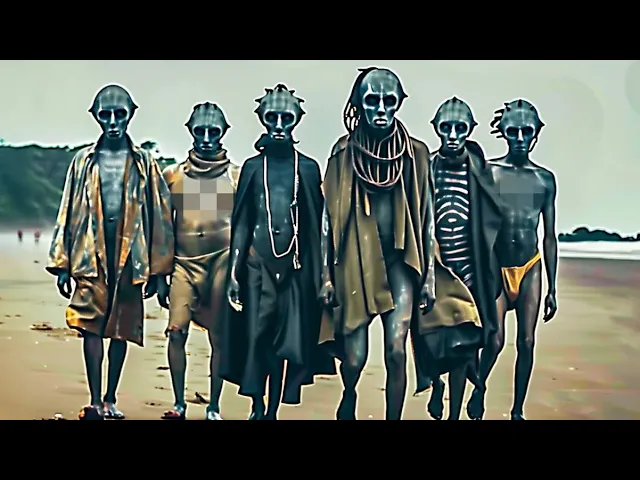
bodies finished with oversized fright masks are shocking and intimidating before you know it you have chills down your spine wishing you were never in the jungle they are the assaro Mudman once among Papua New Guinea's poorest people and its rock stars While most of the over 150 tribes on the island are as colorful as the exotic birds with which they share the Jungle the mudmen are the least adorned they go about smeared neck to Toe with white clay keeping to a single file walking glacially slow constantly looking left right behind ready for anything some of
them have arrows knocked in their bows While others have Spears and clubs some wear red painted bamboo on their fingers extending for several inches and filed to a razor Point like giant claws they move about silently and so you would have mistaken them for ghosts you must know that many people have been found to go to war with smeared mud but in the case of the assaro Mudman they wear it to avoid war their prowess as Warriors has always been inflated and although literature and Legend have ascribed them special martial Powers their only real advantage
in a battle is their Fierce and scary looks the assaro Mudman believe that if you can generate fear you do not have to go to war it all started centuries ago when the assaro were just shy and and retiring jungle dwellers one day they were attacked by a much more powerful tribe and fled into the nearby assaro River when their asants reached the river They Came Upon figures coated in white and gray River mud believing they had encountered the ghost spirits of the assaro they had killed the aggressors fled in confused Panic realizing what had
happened the assaro decided to take advantage of the situation by coating only their bodies with mud they spared their faces because the water of the assaro river is believed to be poisonous they knew their faces had to be just as scary so they used rocks sticks and whatever they could find to create simple masks as predicted when they appeared in this form their former enemies fled and the peaceloving assaro inherited the reputation of fierce Warriors talking about peace a tribe that does not really Embrace peace is the sentinelles tribe you see only a few people
knew about the Sentinel until the death of an American Tourist who illegally visited the isolated North Sentinel Island drew the world's attention to this tribe they are known to be one of the few uncontacted tribes in the world and that's partly courtesy of geography because North Sentinel is a small island off the main shipping routes surrounded by a shallow Reef with no natural Harbors the protective laws enforced by the Indian government are not helping matters and the fierce defense of the sentinel's home and their privacy makes it all Mission Impossible but they're not entirely uncompacted
over the last 200 years Outsiders have visited the island several times and it often ended badly for both sides because no one wants to die just yet we can't really be sure of their population however according to a 2011 census effort and based on anthropologists estimates of how many people the island could support there are probably somewhere between 80 and 150 people on North Sentinel Island although it could be as many as 500 or as few as 15 The Sentinel Le people are related to other indigenous groups in the Andaman Islands a chain of islands
in India's Bay of Bengal but they've been isolated for long enough that other Andaman they just live their lives weaving mesh baskets and they use wooden ades tipped with iron to cut and shape wood Salvage Crews anchored near the island in the mid 19 1990s described bonfires on the beach at night and the sounds of people singing but so far none of the Sentinel language is known to Outsiders since they can't be approached anthropologists usually make a point to refer to People by the name they use for themselves but no one outside North Sentinel Island
actually knows what the sentinelles call themselves let alone how to greet them or ask what their view of the world and their role in it really looks like one certain thing is is that they don't care much for company and they've expressed that clearly even without a common language that you can understand they are terrifying right but maybe not like the agoris the agoris are a sect of athetic shite sadus who practice a unique and extreme form of Hinduism they are known for their bizarre and unconventional rituals such as dwelling in cremation grounds smearing ashes
on their bodies using human skulls as utensils and eating flesh from human corpses they are also devoted to Shiva the God of destruction and transformation and seek to attain Liberation from the cycle of rebirth by transcending the boundaries of Good and Evil Purity and impurity and life and death the craziest part is the origin and history of the agoris are shrouded in mystery as they are a secretive and Elusive group however some Scholars Trace their Roots back to the ancient capala and cuka sects of Hinduism which emerged between the 7th and 8th Century CE these
sects were known for their radical and tantric practices such as the worship of fierce deities the use of intoxicants and the performance of sacrificial rights over time these sects came together and evolved into the agori tradition which was founded in Northern India by Baba kinaram who was unanimously agreed upon to be the founder of the tradition the agoris follow a manistic philosophy which holds that everything in the universe is one and emanates from Brahman the Ultimate Reality they believe that every person's soul is Shiva the Supreme manifestation of Brahman but is covered by eight major
bonds that cause ignorance and suffering these bonds are sensual pleasure anger greed Obsession fear hatred pride and discrimination the agoris aim to break free from these bonds and attain Moa or Liberation by realizing their identity with Shiva to achieve this goal the agoris engage in various practices that challenge the conventional Notions of Purity and morality they deliberately embrace the impure the polluted and the abhorent as they believe that these are also manifestations of Shiva and that nothing is inherently evil or sinful they also seek to transcend The Duality of life and death by associating themselves
with the dead and the dying they believe that eating human flesh helps them to break down their ego and connect with the Divine they also believe that it helps them to absorb the wisdom and power of the Dead by living in cremation grounds they believe that it is a place where the cycle of life and death is played out and where they can learn to transcend it they also smear themselves with Ash from the dead as they see Ash as a symbol of death and transformation to them smearing the body with Ash help helps to
connect with the dead and to learn from them they often meditate naked cover their bodies with Ash and use human skulls as meditation bowls these are just a few of their known practices as they prefer to be secretive in all their doings while some tribes are not that welcoming One Tribe that has received outsiders with open arms is the HBA tribe the HBA are an ethnic group with an estimated population of about 50,000 people living in Northern Namibia in the kunani region and on the other side of the kunani river in southern Angola maybe once
or twice you must have seen a picture or two of people from this tribe they are renowned for their unique adornments and their continued adherence to tradition their women are bare breasted and heavily decorated with symbolic jewelry and they are mostly known for covering their bodies with AJ a mixture of animal fat and ochre which gives their skin and hair a reddish hue traditionally the HBA people live in wooden Huts that encircle a sacred ancestral fire and their daily work revolves around rearing and hurting livestock for a long time though they avoided contact with the
modern world continuing their quiet lives of pastoral cattle hering in the barren corner of Northwestern Namibia for Generations they had no contact until the 20th century after the first European expeditions in the remote area it is noted that the HBA people are polygamous with the average HBA man being husband to two wives at the same time their marriage system is also different from what you'd expect as young himba girls are married to male Partners chosen by their fathers from the start of puberty to the HBA people boys must be circumcised before puberty and immediately they
get married they are considered a man but that's not the case for a HBA girl no HBA girl would be considered a fully-fledged woman until she Bears a a child however before this marriage can take place there must be transactions of cattle which are the source of their economy this in other words means no cattle no marriage in these transactions there is bride wealth which can be negotiable between the groom's family and the bride's father depending on the relative poverty of the families involved in order for the bride's family to accept the bride wealth the
cattle must appear of high quality next is Sami tribe you can find the Sami people in four countries which are Norway Sweden Finland and Russia unlike other tribes of hundreds of people the Sami tribe has a total population in the four countries at approximately 880,000 of whom around half live in Norway and of the half who live in Norway around 2,600 make their living from hurting reindeer while the majority of the region of Northern Norway is actually used for raising reindeer traditionally most Sami people have supported themselves through fishing livestock farming and hunting along the
coast and alongside the large rivers farther Inland today a large proportion of the Sami people live outside the traditional Sami areas and have moved into the towns of Northern Norway or to the Oslo area even more they still live in traditional Sami settlement areas but earn their living in the modern service sector industry travel and the public sector Sami culture has many unique forms of expression which include joik one of the oldest song traditions in Europe a Jo is dedicated to a person an animal or a place and the harmonies reproduce the qualities of the
object of the song there's also the gakti which is the traditional Sami clothing another unbroken living tradition mostly used when dressing up for celebrations or parties also the Traditions that have been maintained by the Sammy are their crafts such as tin embroidery Pearl embroidery weaving shoelaces jacket seams wood carving and knife making are assiduously maintained despite the Sami tribe embracing civilization they won't trade their traditions for anything making them stand out wherever they are Kubo the kuo are the last unknown tribe to be contacted in the Amazon as they made their first Contact in 1996
they are known locally in Brazil as the Catos which literally means clubber in Portuguese and subsequently they became known as the head Bashers in the popular press wondering how they got these names this is because they carry War clubs that they use to fight in battle unfortunately seven of the Brazilian government's fi members have been clubbed to death by members of the Kubo tribe surprisingly the FI has not sought to capture or reprime the individuals involved saying that these indigenous amazonians did not know about Brazilian laws that prohibit killing such as these and therefore could
not be prosecuted while they have been given strange names the coros call themselves The slala they speak a language in the Pano linguistic family that is closely related to the northern Pano dialects that the mtis and myuna mat's Indians speak however unlike other tribes that live in the Javari River Valley such as the matis myuna matzas and maros they do not tattoo their faces however they are readily distinguishable by their characteristic haircut which is closely cropped in the back and longer in the front most of the kuros are still uncontacted and most of what we
know about them comes from contact with a small group that lives near the FI Outpost at the Confluence of the IUI and itay rivers in the Javari river valley of Brazil the reported leader of this group is a woman called Maya who was reported to have been involved in the killing of a Brazilian government fi official according to reports the FI officials asked Maya and the kubos to return a tarp that they had borrowed Maya helped lure the FI officials with smiles to an area where other kubos were waiting to Ambush them and also helped
hold the arms of one of the victims as other kubos used War clubs to bash him in the head and kill him the k rubo Warrior who participated in the killing of the FI members was later identified as tavin who offered a reason for his killing saying we didn't know you then if you know anything about tribes in the Javari River Valley such as the mayoruna matsis then you must know they practice infanticide and kubos are not left out when a child is born with a birth defect such as a cleft pallet the baby is
killed unfortunately cleft pallet is often frequent in Amazonian Indian populations due to inbreeding even older kuo children are sometimes sacrificed for example Maya killed one of her own daughters when she was Ill with malaria she said that she killed her because she was afraid the disease would spread to others Masai the Masai tribe is a Neolithic tribe from East African countries such as Kenya and Tanzania they have a culture centered around the belief that God created cattle especially for them and they are the custodians of all the world's cattle for Messi life revolves around a
massing and grazing large herds of cows and more than using cattle as a primary income Source they also play an important role in MSI communal life families and clans establish alliances through the exchange of cattle but consuming the meat and milk of cows is considered a sacred Act One that binds them to their creator for hundreds of years the Masai moved and grazed their herds throughout the rift valley without causing damage to the land or its resident Wildlife they did this mainly by migrating seasonally across large swats of territory leaving the land plenty of time
to recover before cycling back to graze it again since their diet also traditionally relies on the milk blood and meat of their livestock the trib's hunting of game was limited and non-disruptive to the larger ecosystem decades ago the best way Young asai men proved themselves as Warriors was with the ritual killing of a lion this could be done either single-handedly or in a group using only their iron Spears As Weapons typically only male lions were hunted in this initiation right known as Alo since female lions were considered sacred progenitors of life though ritual lion hunting
is now outlawed in East Africa and Messi will now only kill a lion if it is threatening their lives do the fierce bravery of the morani is still revered today one other thing the Messiah are known for is their physical Beauty not just their graceful physiques but for their unique Garb and body ornamentation the most iconic massai garment today is the Shuka a woven thick cotton blanket usually red with a striped or checked pattern in blue or black which is worn wrapped around the body though it isn't traditional in a historical sense the Shuka only
replaced animal skin clothing around the 1960s and was purchased rather than made by tribes people today the shooka is worn by virtually all Masai across East Africa the signature garment has been widely emulated by modern fashion designers including Louis Vuitton and many high-end jewelry designers have also taken inspiration from Masai jewelry in particular the intricately beaded brightly colored necklaces and bracelets worn by both men and women the Messiah are also known for their singing and dancing but among many the best known is the adamu or jumping dance in this ritual young Messiah men Gather in
a semicircle while rhythmically chanting in unison then each takes a turn stepping in front of the group and jumping several times straight up in the air as high as he can the adamu usually accompanied by high energy whoops and carefully observed by msai women standing nearby functions as a of strength for young Messi Warriors hoping to attract wives African safari Travelers are often thrilled by the display and some even attempt the jumping dance themselves very few can approach the heights reached by The Warriors though they have been practicing since childhood apatani tribe the apatani are
a tribal group of about 60,000 people living in the zero Valley in the lower suban Siri District of arunachal Pradesh in India the women in the the tribe wear nose plugs which in a way disfigures them and makes you wonder why they chose to be like that it all started many years ago when the exceptionally beautiful women of the tribe were captured by neighboring tribesmen in the past to prevent this from happening the village Elders proposed that each woman insert nose plugs and also have facial tattoos to make them less attractive to the Raiders the
dark tattoos were Inked on the women's faces typically around the time of their first period perhaps the practice began as a precautionary measure to protect the women from abduction but it grew to become a vital part of apatani culture and tradition this age-old tradition was observed until the 1970s when the government imposed a ban on nose plug incisions at present only the last generation of older women from The apatani Villages have prominent facial emblems a reminder of a cultural practice that is now chronicled in the past apart from the nose plugs the tribe is also
known for its colorful culture with various festivals intricate handloom designs skills in cane and bamboo crafts and vibrant traditional Village councils called bullan this has made zero Valley a good example of a living cultural landscape where man and environment have harmoniously existed together in a state of interdependence even through Changing Times such coexistence being nurtured by the traditional customs and spiritual belief system brocka tribe the brocka can be found in the Aryan Valley renowned for the people who are according to Legend the descendants of Alexander the Great's armies Legend has it that the brocka people
are the remnants of Alexander's lost Army who stayed behind in his conquest of the indis river valley in truth this Aryan distinction dreamed up long ago due to the fair and rare appearances of the isolated peoples of the brocka is not supported by genetic evidence still this isolated culture takes pride in its myths and their uniqueness over the years Travelers have been drawn to this unusual Valley providing fuel to their storied beginnings and even their own Aryan preferences though their Origins are up for debate they don't joke with their purity preferring to marry within the
tribe don't blame them if they marry outside the group it can only mean the discontinuity of their physical appearance there are also several claims of polygamy and polyandry which is another cultural practice that is peculiar to the tribe the tribe also has food restrictions which include eggs and dairy including milk and butter while the reason is unknown we can agree that the brocka tribe is very unusual thank you for watching see you in the next video