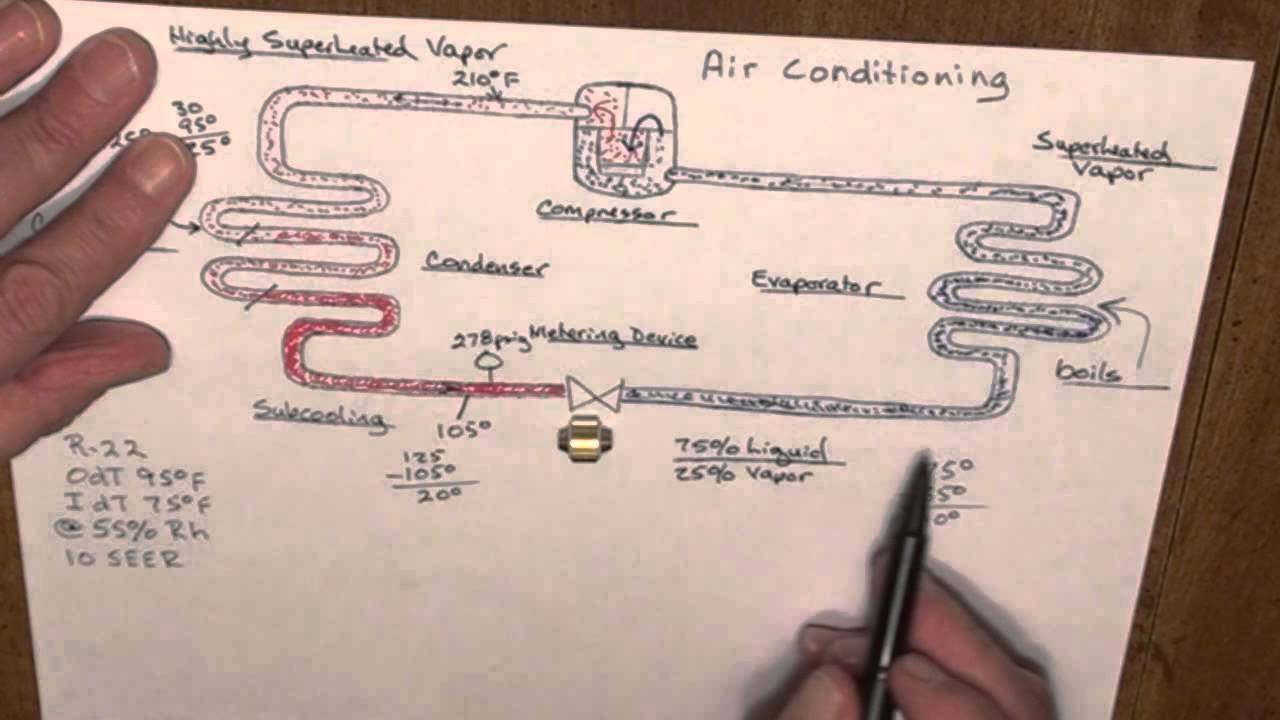
so our liquid line continues to flow to the inside unit and on the inside unit we have our next component our next component we're going to use a black pin and we're going to draw a circle with an x through it that circle with an x through it is a symbol and that symbol has of course an hvac two names one of the names is called a metering device it's also called an expansion device and its job is to restrict or meter the flow of refrigerant from a high pressure liquid to a saturated a low
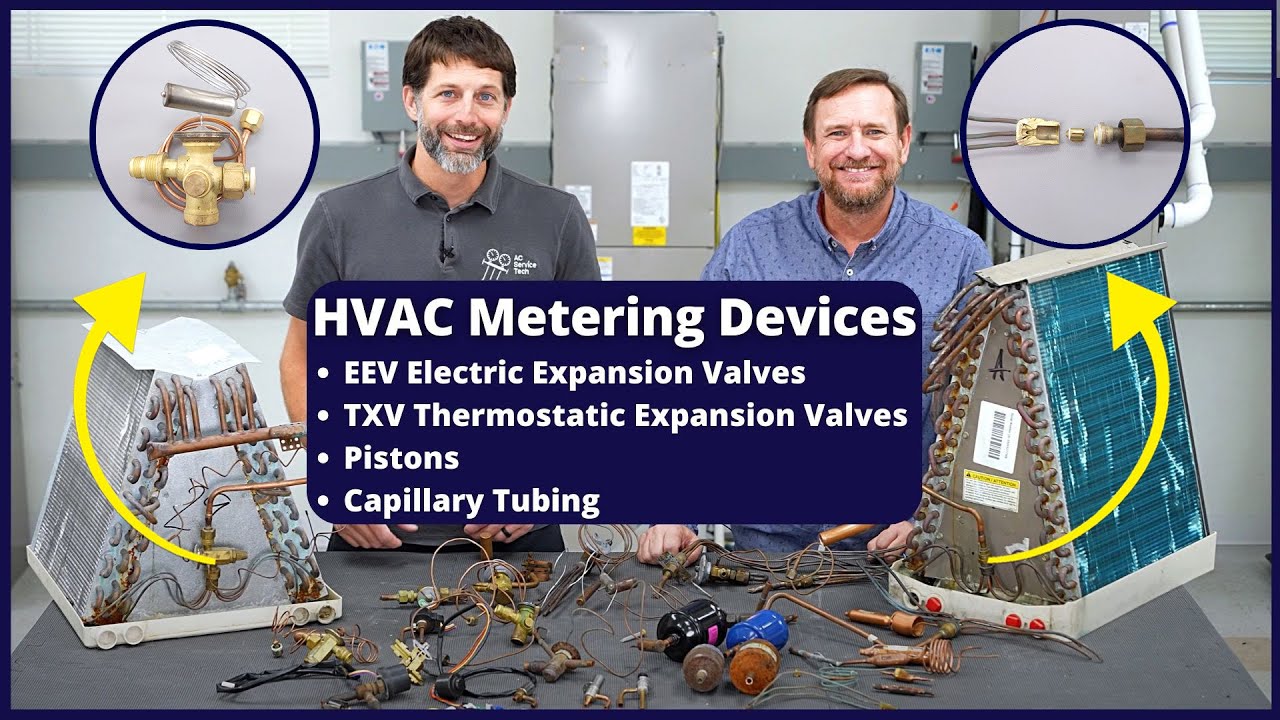
pressure saturated mixture we're going to talk about this word saturated later on but it the metering device also called an expansion device it restricts the flow of refrigerant from a high pressure liquid to a low pressure saturated mixture coming out of our metering device is approximately 75 percent liquid and 25 flash gas and we're going to talk more about this later but this is going to be low pressure so high pressure comes in low pressure comes out medium device now there's three basic most commonly used types of media devices behind this unit we're going to
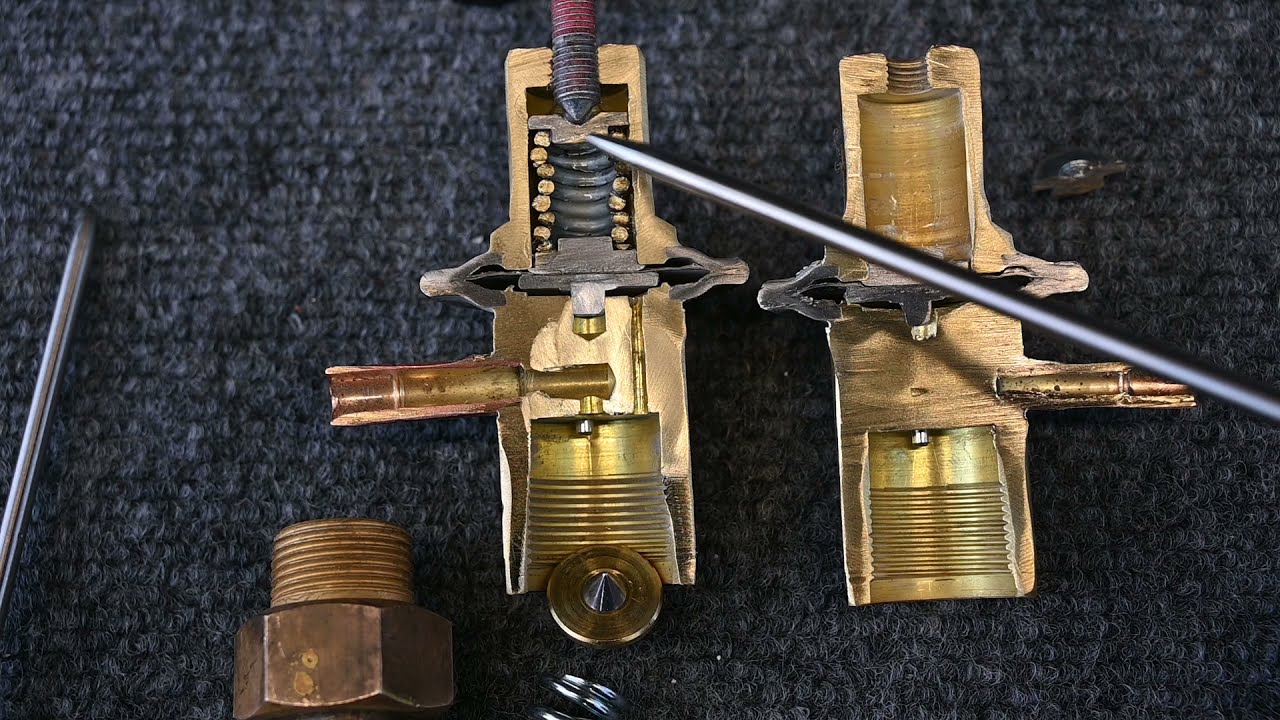
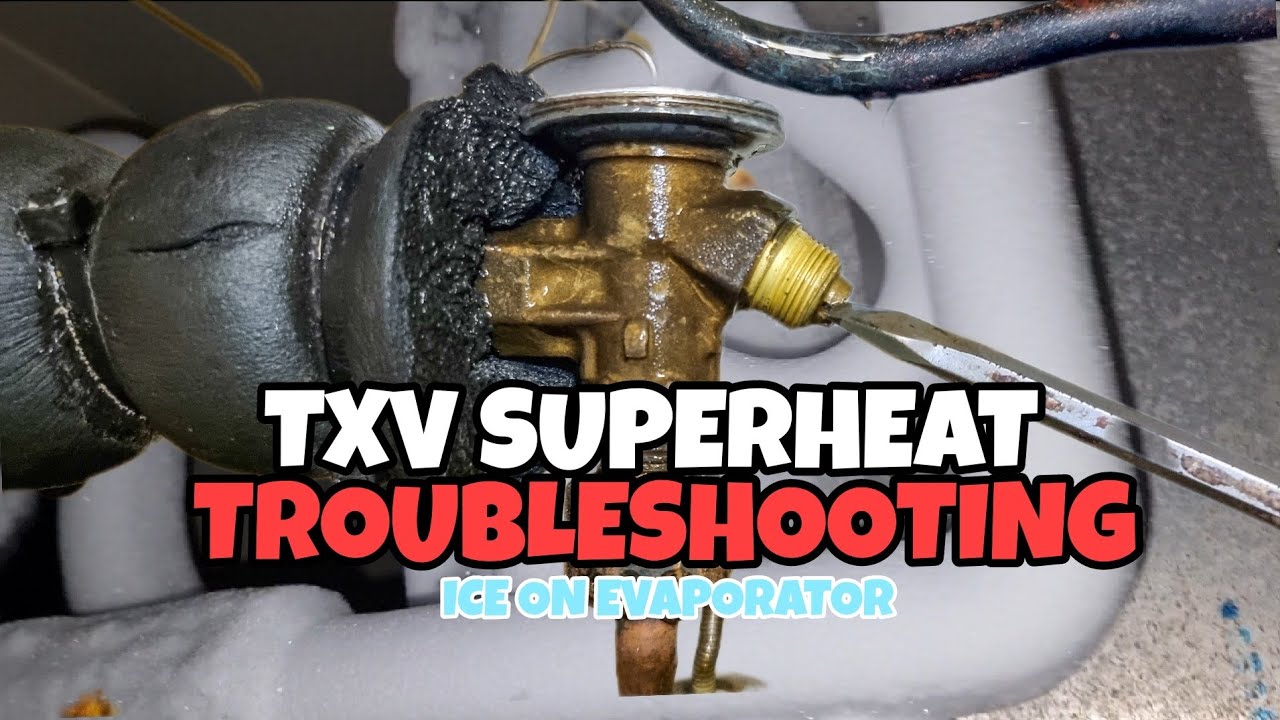
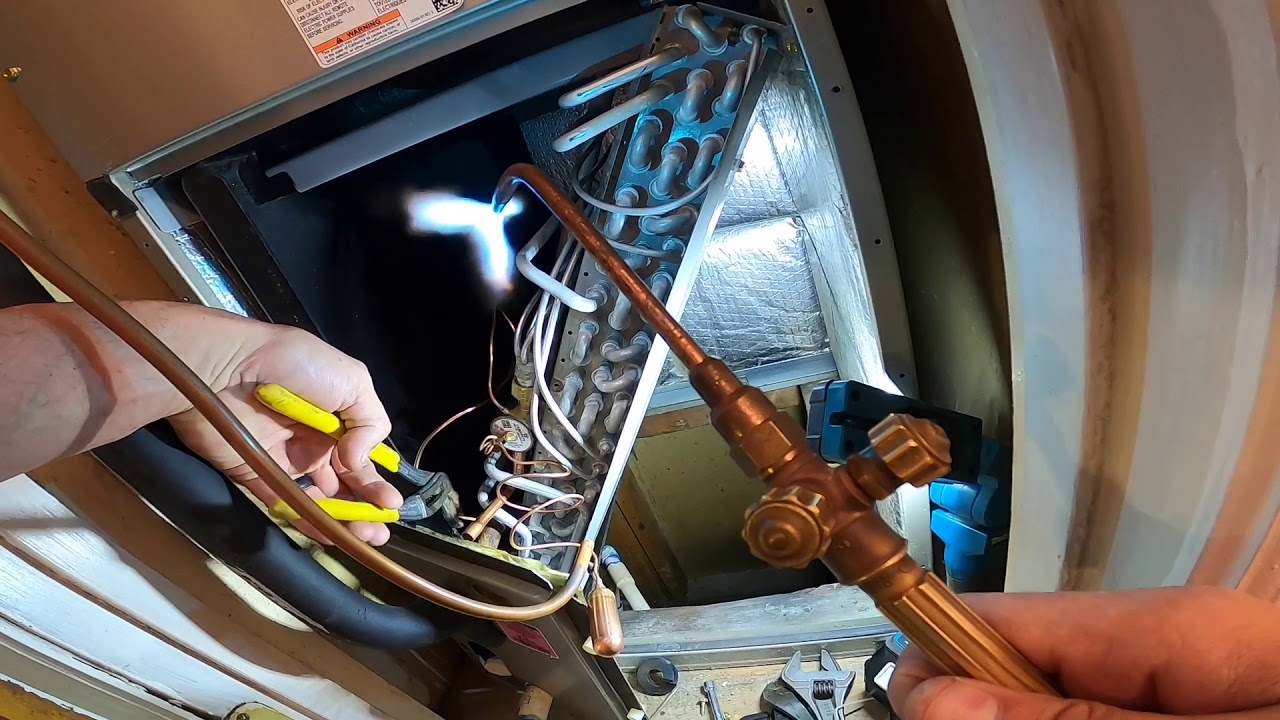
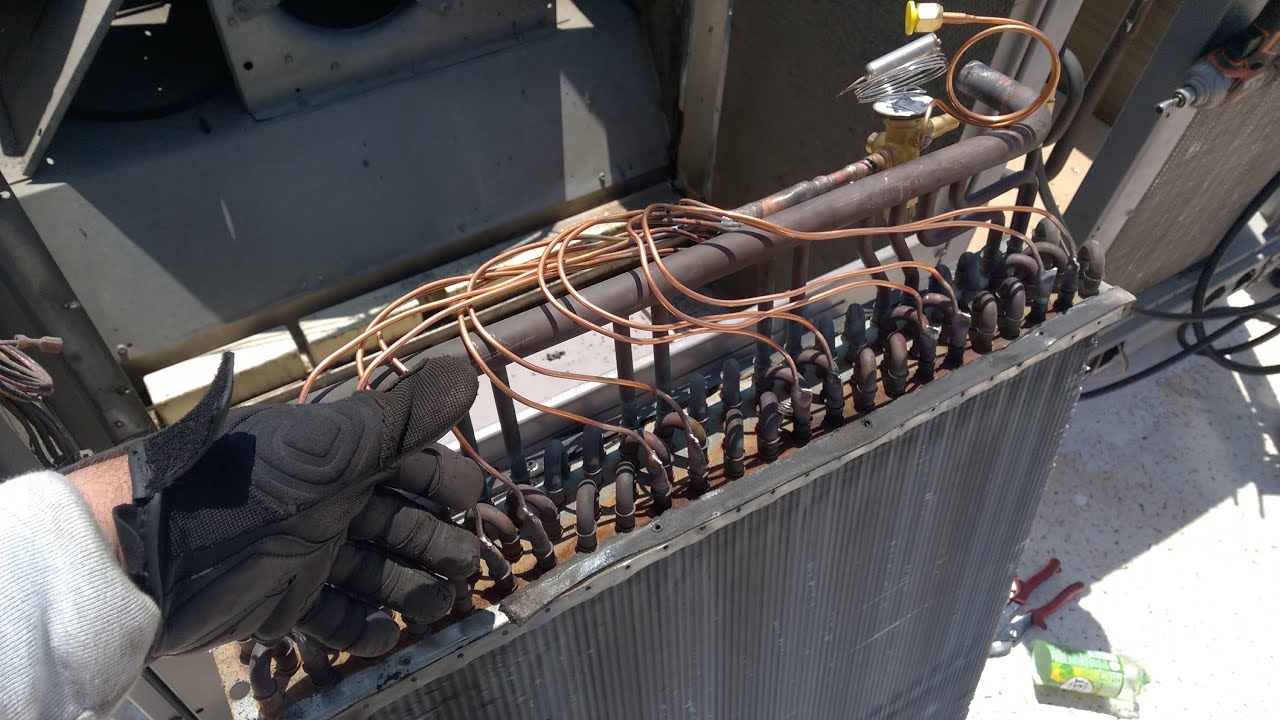
see this type of metering device and this is my favorite it's called a thermostatic expansion valve so what it's going to actually do is open and close and adjust it has several components on it such as a sensing bulb and it's got a equalizer tube on it it's really cool we're going to go into way more detail about these later but the refrigerant comes in as a liquid comes out as a low temperature low pressure saturated mixture on this side of it we notice all these tubes these are called distribution tubes and this little component
right here is called a distributor what we're doing is taking that low pressure saturated mixture and distributing it to multiple spots in the coil this allows the second law of thermodynamics to be more efficient and we're actually able to transfer heat through the coil more effectively so here we can see our thermostatic expansion valve metering device expansion device in the system so this liquid line goes up to this point from here it's low pressure coming out this is our distributor these are distribution tubes and these tubes carry refrigerant to multiple spots in the coil so
we're going in in this case in one two three four five six different locations and we come out as one two three four five six different locations so it's just divide and conquer essentially let's not get too hung up in that but this is a specific type a thermostatic expansion valve it's a valve so it opens and closes let's talk about some other types of metering device this one is also very popular this is a fixed orifice it's a metering device it's also an expansion device it's not a valve but it is a expansion device
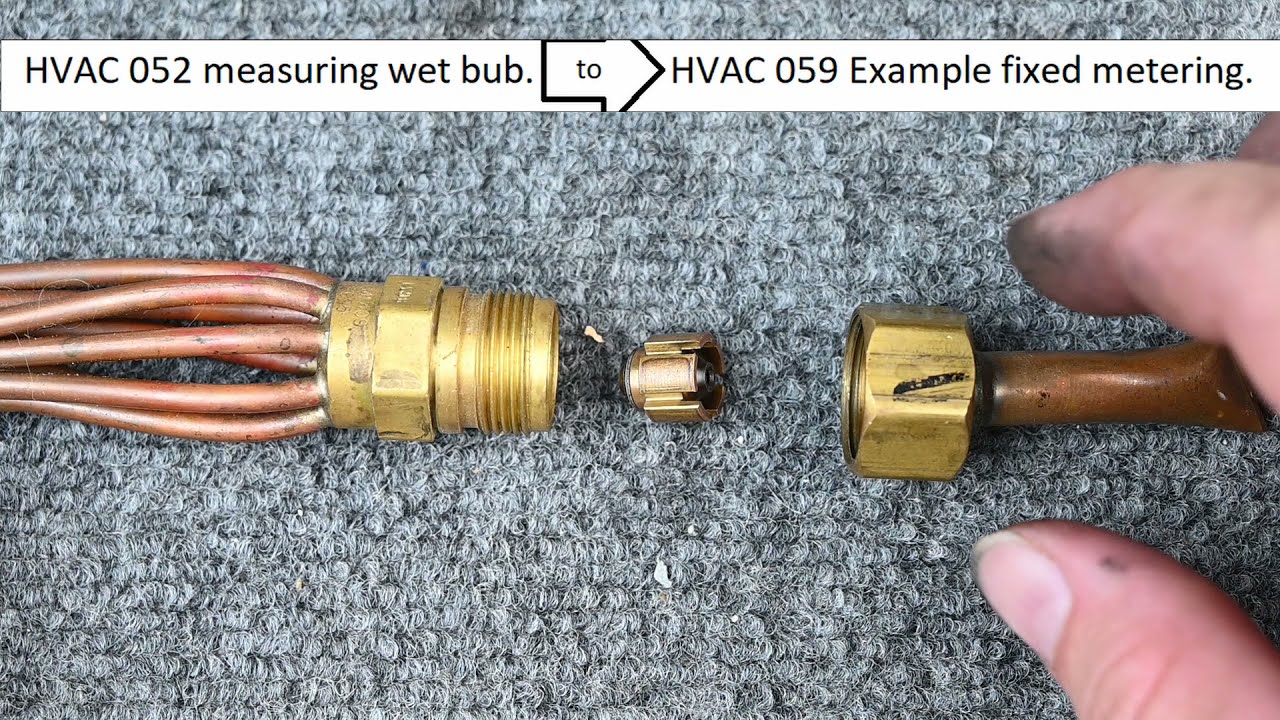
as we unscrew this fitting the metering device will actually be inside and inside of here notice the hole in the very very center that hole is an orifice and the hole is a fixed size so it's a fixed orifice expansion valve so we're going to do is we're going to pop it out and we can see what it looks like and if you see you can actually look right through the hole there in the very center i don't know if you can see the hole right there so the sizes hole is going to be very
important and the device always matches the compressor and the size of this is a 0 eight zero connect this with the compressor we'll be doing this later on but it's a fixed orifice or a fixed hole metering device and these are also called pistons because the hole that they fit into if we put this together and shake this it actually can hear that little piece move back and forth now in ac mode it's always shoved up one direction and it only flows in one direction in ac mode but this is a fixed orifice meeting device
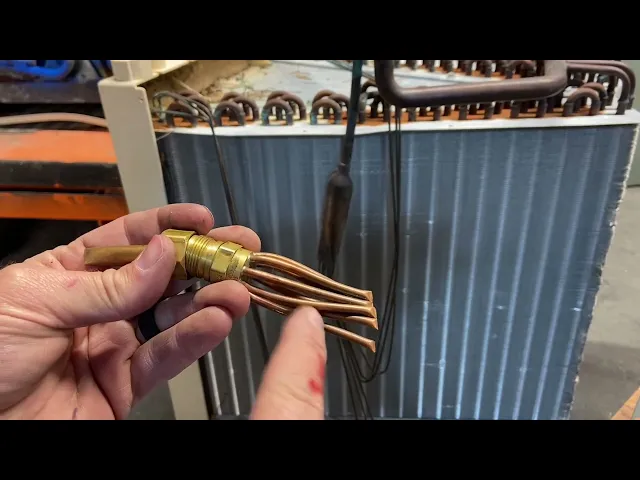
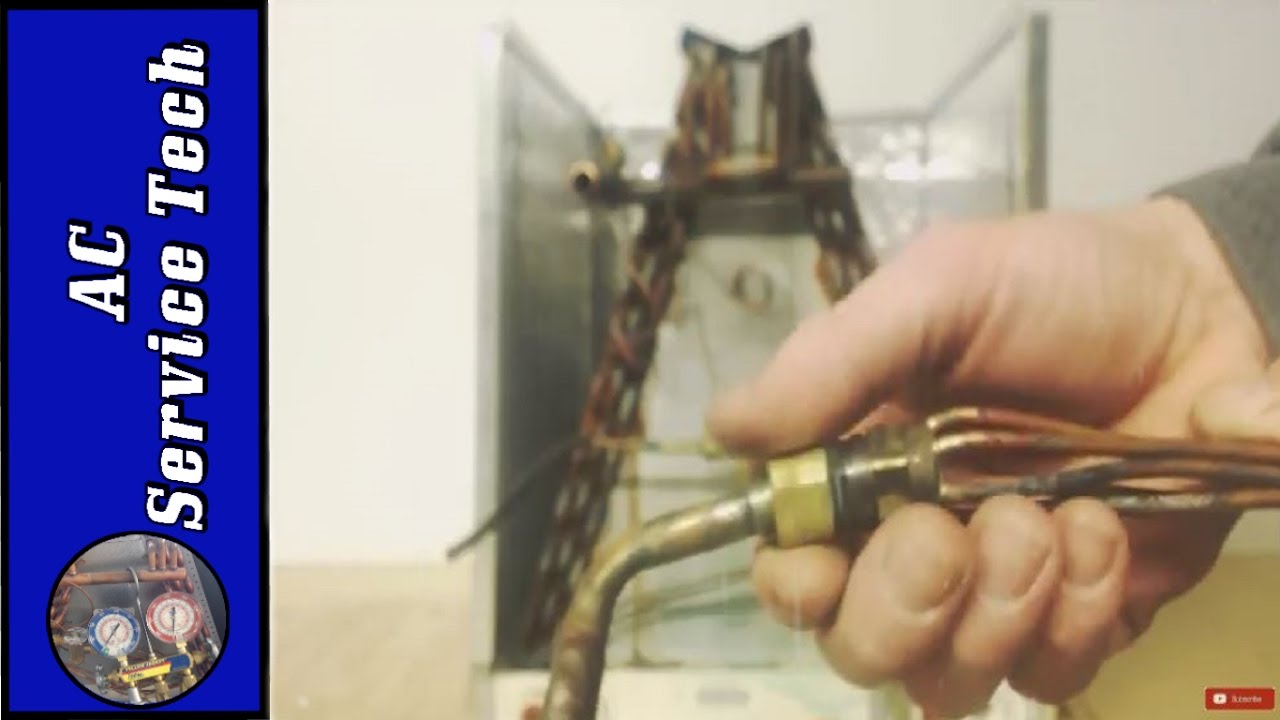
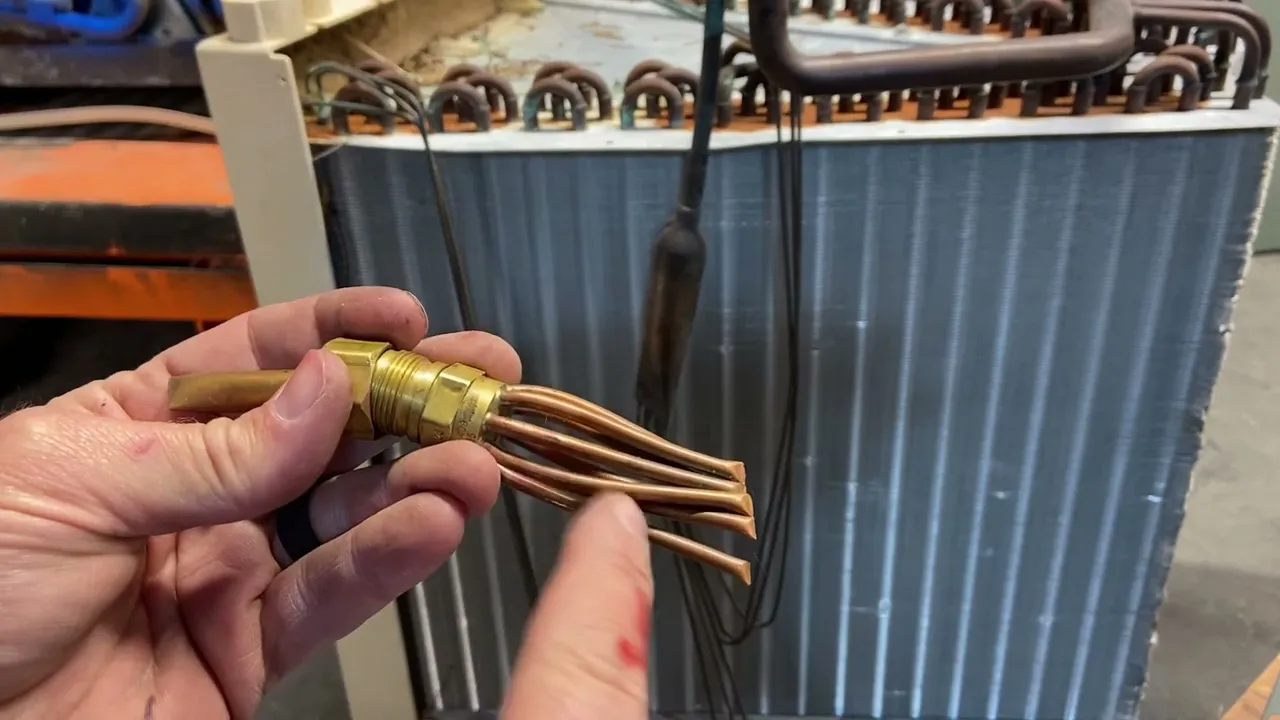
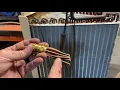
also called a piston but it is a fixed worst meeting device it is also an expansion device and these are distribution tubes the other metering device that is used in older systems the other metering device that we use in older systems is also a fixed style metering device this is our liquid line running in and in here sometimes the screen but more importantly notice how this has all of these little pieces are brazed into it these tubes are very small these are what we call capillary tubes and the size and the length of these tubes
together make make it a metering device so this is our metering device right here these tubes look how small these little tubes are now a lot of people get these tubes mixed up with these tubes these are distribution tubes these are capillary tubes this is your meeting device if you notice there's a significant size difference these are much larger than these tubes are so the manufacturers actually calculated how much tubing they need what size tubing and the length of that tubing to make it have the correct amount of pressure drop so this is a capillary
tube and you can always tell because they have some kind of a funny end like this and they're usually braised together like this all these little bitty ports braised in there capillary tube now they still distribute the refrigerant to multiple locations in the coil so here you can see the capillary tube still distribute into multiple places very similar to the distribution tubes we have one two three on this side and also on the other side we have another one two and three but it's still these tubes themselves are the metering device now not all capillary
tubes have multiple lines in this case this is a single capillary tube and this is actually off of a refrigerator we have another capillary tube here that's just a single tube that runs in a lot of window units you'll see a single tube like that running in that is the actual metering device now you can replace capillary tubes they're very difficult usually you're looking at you're looking at some other significant repairs but here's an example of one type of capillary tube the distance of this tube and the size of this tube makes up the metering
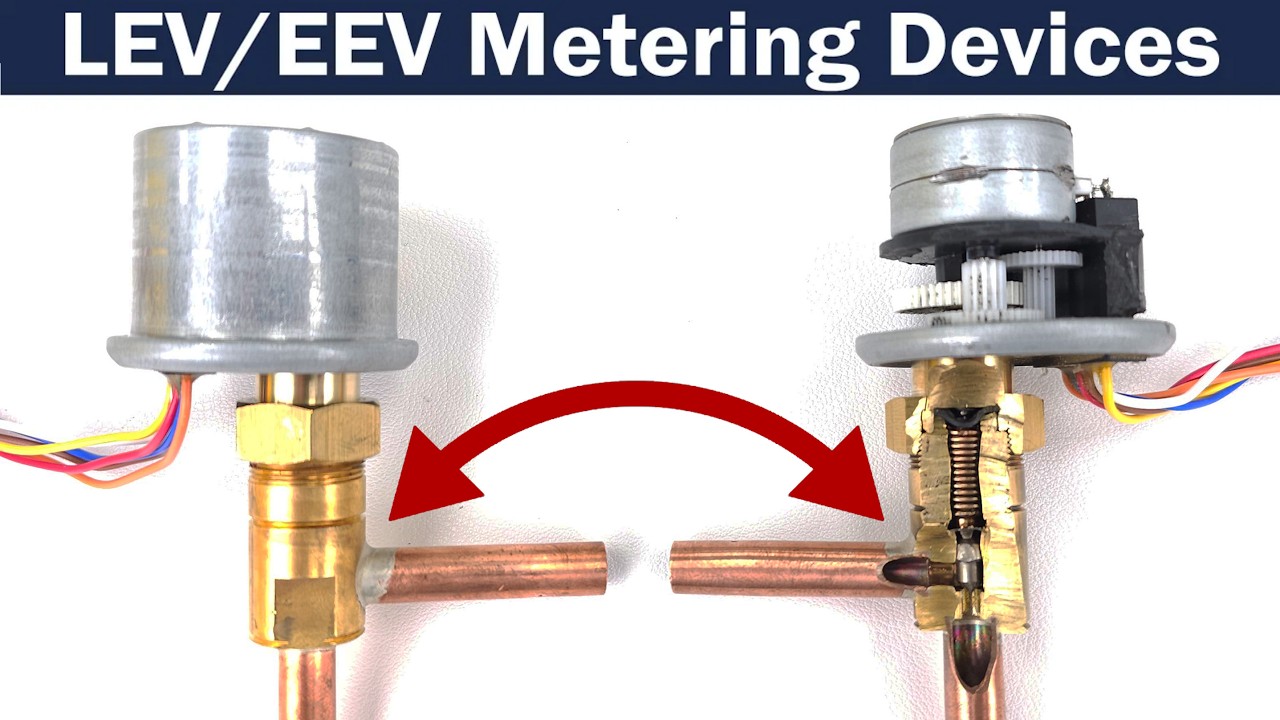
device and these all come with charts refrigeration what type of refrigerant you're working with the horsepower you have all these numbers you need to use to calculate the length and the sizing of the tubing so this itself capillary tube this is a metering device this is a metering device and this fixed orifice right here is also a metering device all of these are expansion devices this is an expansion device this is an expansion device and this is a thermostatic expansion device they're all expansion devices they're all midi devices they all restrict the flow of refrigerant
from a high pressure liquid to a low pressure saturated mixture approximately 75 percent liquid 25 vapor and we'll get into that also more soon let's talk about why it's so important to have that pressure drop all of these are metering devices all these are expansion devices so we're going to go back to our old friend here we use for demonstrating our gas laws remember that what the compressor did was decrease the volume when it decreased the volume it increased the temperature and the pressure so we're going to do that again really quickly we're going to
shut our little valve off to seal our system we're going to increase the pressure we saw our pressure went up and also our temperature went up as well we decreased the volume now we're going to do is allow for expansion we're going to decrease the pressure instantly as i decrease the pressure instantly we also see that our temperature dropped instantly as well it allowed for that refrigerant or the air in this case to expand when the air expanded we had a pressure drop and a temperature drop so i'm going to also do is close this
valve again and i'm going to increase the volume of this system as i increase the volume the pressure is going to decrease it's going to be below atmospheric pressure let's see what happens to this gauge so in other words we're going to cause more expansion if you notice i increased the volume my pressure dropped and also my temperature dropped as well and if i allow this gas to come back in we'll increase that so this is why we need to know that it's an expansion device it's also a metering device restricts it from a high
pressure liquid to a low pressure saturated mixture approximately 75 liquid 25 vapor so study that we're going to have a whole lot more information on these meeting devices how they work how we charge with them and how they operate as well as more meeting devices this is just that first step to understanding meteor devices and why it's so important