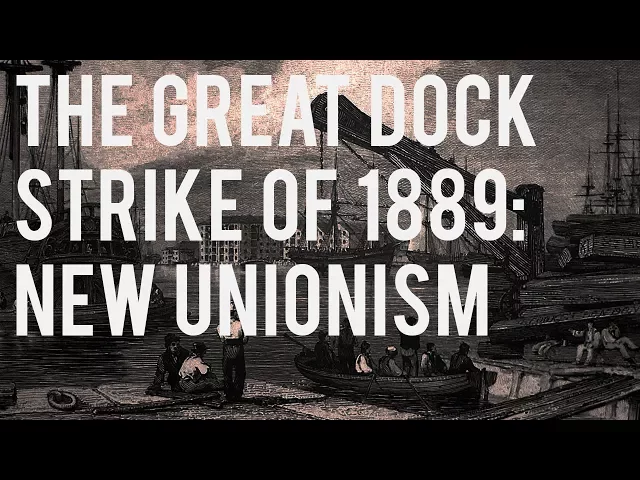
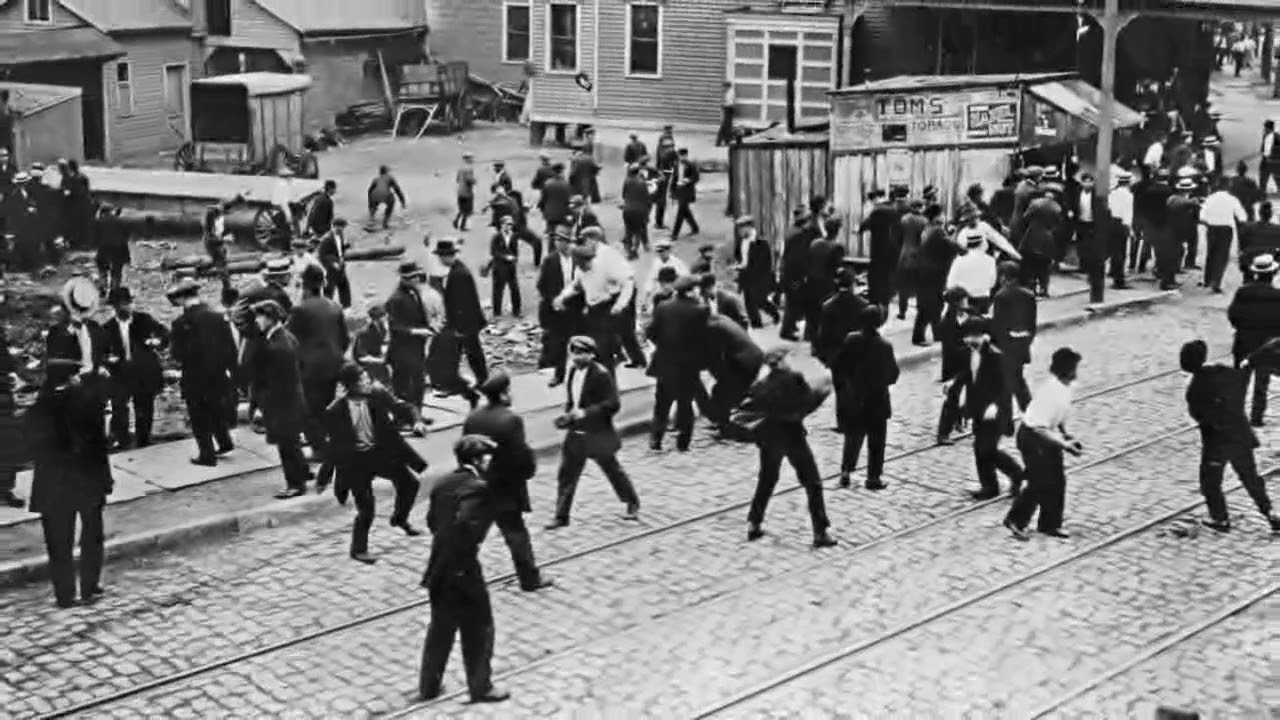
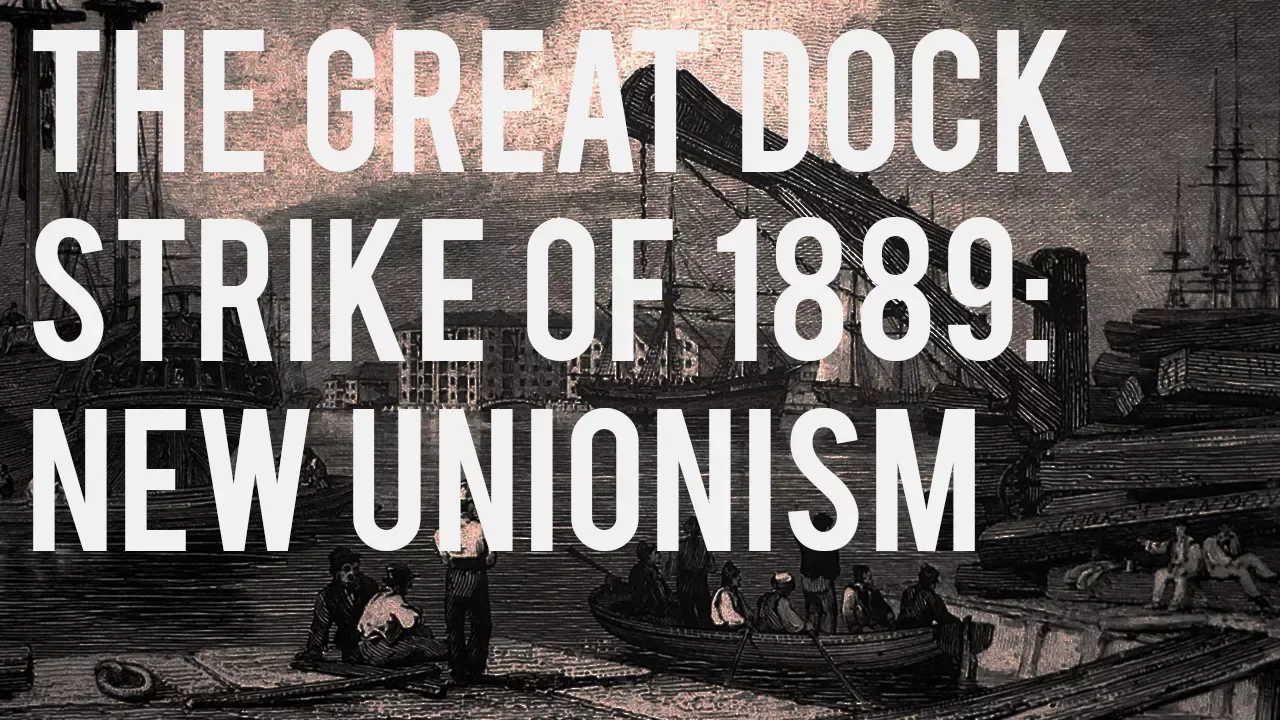
[Music] the great doc strike of 1889 was the culmination of a long struggle in the British labor movement that fought tirelessly for workers rights led to trade unions being legalized in 1871 and finally emerged as a mass movement that ushered in the era of widespread unionization known as new unions that we see today Colonel G Elbert the general manager of the Millwall docks said that the poor fellows are miserably clad scarcely with a boot on that foot in a most miserable state these are men who come to work in our docks who come on without
having a bit of food in their stomachs perhaps into the previous day they have worked for an hour and have earned five pence their hunger will not allow them to continue they take the five pounds in order that they may get food perhaps the first food they have had for 24 hours Benjamin Tillett had already been involved in earlier efforts to unionize and in 1887 formed the tea operatives and general laborers Association the union struggled though with membership varying unstable E between 300 and 800 workers the men on the docks will pay bonuses depending on
the weight of their workloads this was called the plus system and was used by the companies of the docks to pay the men unfairly changing the rate per weights regularly in keeping the men competing for jobs then till it to write a letter to the company directors on behalf of the Union about the plus system but the letter was ignored in the Union was deemed too weak to act on the 3rd of August though a meeting took place headed by a group of men determined to start a new union around 3,000 men were present at
the meeting until it was said to be furious at the intention to start a new Union but the speakers convinced the men of the need strike and by the 14th of August 1889 work at the site dot could come to a halt ventilates Union flourished though and the number of men on strike eventually grew to around a hundred thousand the strikers organized marches through the capital and picket lines of the gates of the company's practice was that the man had to line up at different times per day to get work usually just a few hours
work this was to keep competition between the men high and drive down wage goes the strikers demanded that workers would not be discharged without four hours work and that work would be given out only to fixed periods per day they also demanded that minimum wage be raised to six pence now the biggest problem for the strikers though with the blacklegs workers who continued to work while the strike went on this is why picket lines became so important so the workers were shamed sometimes violently into not working or at least reminded that as one striker said
it's because of you that our wives and kids are starving the companies though held strong not giving in to the strikers demands and although the marches attracted donations the fund slowly dried up and morale started to drop it was though through the fortune of a recent innovation that the strikers would eventually secure success the telegraph was invented by Francis Ronald's in 1816 and by 1858 the first transatlantic Telegraph had been made reducing the time it took to send a message from Britain to America from 10 days to almost instantly so while by the end of
August the strikers funds had almost entirely dried up a surprising number of donations started to come in from sympathizers in Australia where the newspapers had reported on the great strike as being kept update by the Telegraph by the end of the strike 37,000 273 pounds have been donated from Australia without which the doctrines that have almost definitely failed while the Australian donations were undoubtedly raised out of sympathy for the strikers historians have cited Australia's shifting disposition between Legion to British Empire and to Australian nationhood have a motive for donating so much while socialism nationalism and
imperialism rule central topics of nineteenth-century political discourse donating to workers in Britain sort of to both maintain sympathy for the mother country while simultaneously asserting superiority the irony may be that the Telegraph was laid specifically for business reasons but without it the massive uptrend in unionization that was seen from the dock strike all the way to the 1980s some 100 years later may not have been quite what it was if you like these videos and would like to support me making more you can follow me on Twitter Instagram Facebook by clicking the links in the
description below you can like this video and subscribe to the then and now channel to see more and if you're feeling really generous you can pledge the little of dollar towards the creation each new video you can click here to find out more thank you you