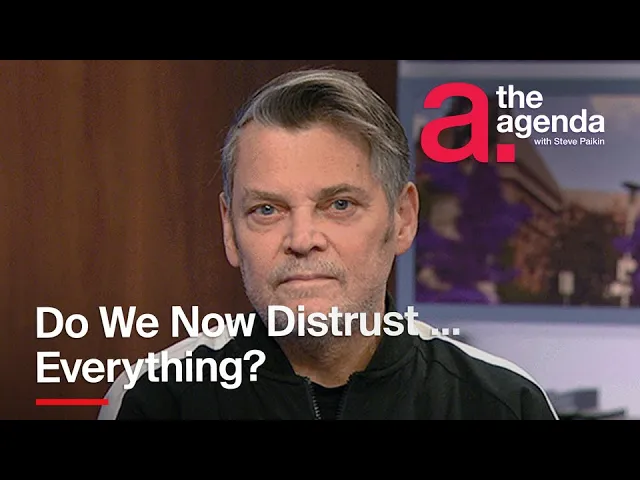
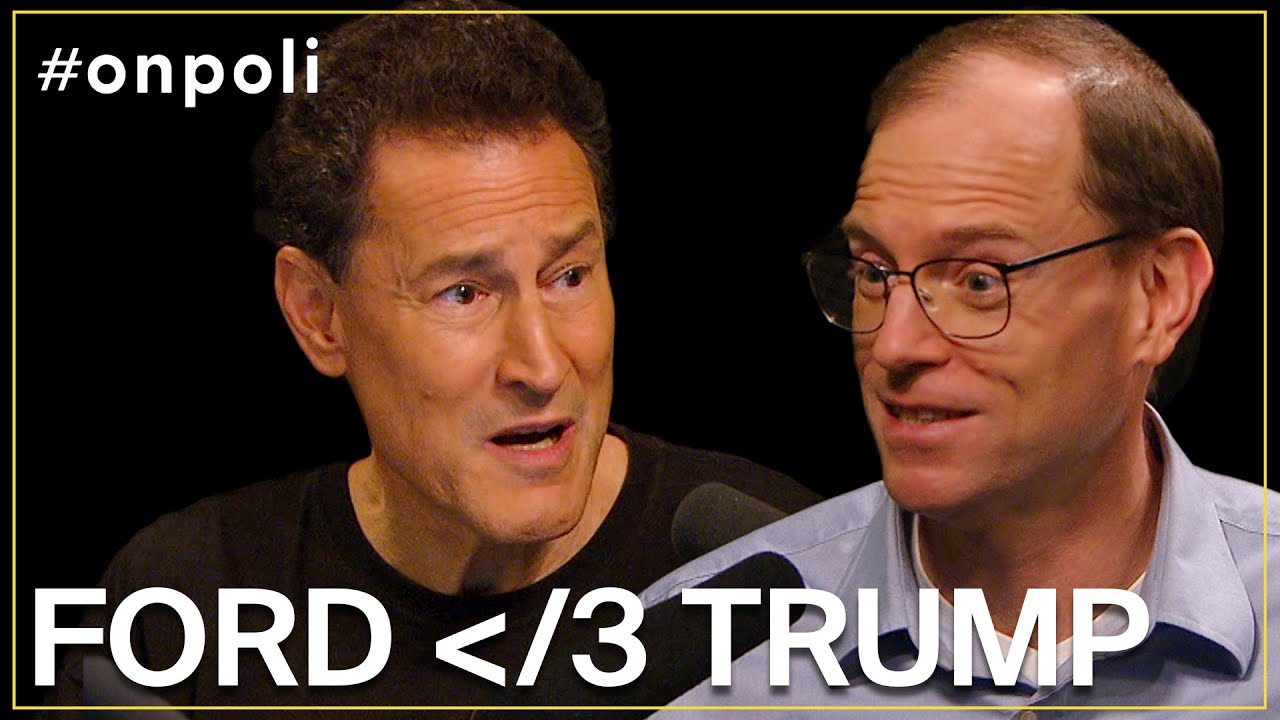
question authority think for yourself we've all heard these slogans before but what happens when they go too far what happens when they slide into a distrust of everything from science to Media to government in his new book question authority a pmic about trust in five meditations author Mark kingwell offers his answer and a roadmap to getting trust back he's also a professor of philosophy at the University of Toronto and we are delighted to welcome him back to Studio it's great to see you again great to see you a long time you used to hang out
in these parts for quite a bit I was on your culture panel for a long time on Studio to the previous show that's right yeah you were in here every week well it's good to have you back let's dive in you point out more people are going to cast electoral ballots in 20124 and next year 25 than at any other moment in human history and so far if you look at what's happened in 2024 from 10 Western governments facing election this year they all either lost or they all certainly lost vote share that's the first
time in more than 120 years of recordkeeping that that has happened question what does that tell us about the political moment we are in well the two things I mean the the first of all the the stats about the super democracy year uh or period are remarkable uh that would seem on the surface to indicate that it's a good time for democracy because a lot of people are going to the polls and exercising their franchise uh but what we've seen so far is that there's a big push back against incumbency and to me that suggests
that uh there's a great deal of discontent with the current Arrangement and whether that means uh late capitalism in in some kind of death throws U environmental and climate crisis or simply just a a kind of shift of thinking about the nature of government and the relationship of of citizens to government uh that really is going to take a long time to shake out but this push back against the incumbents is something that I think political theorists have to pay a lot of attention to and politicians should be worried about you know I remember having
our current un Ambassador Bob Ray in that chair many years ago and we tried to talk political theory about why you know this party loses and that party wins and so on and he said you know sometimes it's possible that just at the end of the day the folks want the ins outs and the outs ins does it get more complicated than that I don't think it does at some level you know it's uh but but the problem is that say goodbye to the old boss here's the new boss and uh people think that they're
getting change by exercising this kind of choice to to get rid of you know kick the bums out um it's not necessarily going to change in the ways that they want so uh I think if you look at the you know everyone's focused on the American election um what is that vote about a lot of things but one is certainly a discontent with the way things are seen to be arranged and that would mean not just Washington and inside the Beltway politics but just the idea of of government having a kind of say in people's
lives so a lot of it is just discontent unfocused until you get in front of that Ballot Box and then you say you know what I don't like this guy or this this woman uh I'm gonna vote for something different or what I imagine is different having said that you write the remarkable thing about human societies is that they function at all what do you mean by that well I think we should always remember this first of all go back to the original point isn't it amazing that so many people even have the capacity to
vote and that they are allowed to have a say in how they their daily Affairs are ordered it's a relatively new phenomenon in world history yeah and we forget about this I mean we tend to think of political history in terms of maybe decades but we should think of it more in terms of centuries the liberal idea the idea that we can disagree about certain fundamental things but still live together peaceably that idea is only about 400 years old in terms of its its influence on the western world uh it's an achievement and it's a
fragile achievement so the the the franchise itself is a great thing to see we have to of course abide by the results and the results sometimes can be uh unsettling they can even be self-defeating that's what I think a lot of people worry about that the uh democracy can become its own enemy but um one of the reasons I wrote this book was to try to highlight some of the things that start out as good intentions uh wanting to be uh informed and uh have your your authorities transparent arent to you to justify power not
just exercise it and how that that desire for justification and transparency can sometimes turn around on itself I suspect we could have a great debate about what the greatest invention of all time was everything from the iPhone to the screw which is a pretty important invention as well however I mean if you read this book you might think that the invention of trust is the greatest invention of all time you you want to put that on the record sure I mean trust is a technology first of all I think that's one good way to think
about it it is uh it driven by human desire or need to have certain goods made possible that we can't achieve alone and so we need to trust trust then becomes evolutionarily adaptive because it allows us to accomplish goals and survive challenges that we couldn't do otherwise uh in in that sense it's the basis of institutions of functioning bureaucracies of uh exchanges contract uh so anything that's really basic to human interaction has an element of trust in it would you go so far as to say that without trust in the institutions which are the foundation
of democracy democracy must fail yes I would I would absolutely say that and I think that's one of the reasons we have this focus on uh critical trust deficits in institutions and we can take them institution by institution one of the reasons I started writing this book was to try to to focus sector by sector uh media politics Academia science uh public health and try to see how the Trust In Those institutions or the the structures that govern those aspects of Life had eroded over time and why and of course you can that's that's an
encyclopedia all by itself just detailing providing the evidence of that that crisis of trust so I wanted to move then to a kind of critical analysis why is this happening why are people losing trust in institutions and what can we do about it so that's really what what this book is we're going to get to the what can we do about it in a second but but uh let me follow up on that last point we seem to be in a time which is really different from say when we were kids where you actually did
have a pretty good amount of trust in some of the bigger institutions that kind of governed your world but that's all been rep I don't know but all so much of it has been replaced today by our trust in our tribe we only care about what's happening in our tribe and we don't want to know from anything else how problematic is that for democracy well very much so and and you know it highlights a couple of interesting things one is that trust often functions best when it's invisible so uh you know to call it a
technology would seem to suggest oh it's a tool in front of us on a table a workbench or something like that that's not how it works it works by being a kind of implicit uh Arrangement an attitude and I would even argue eventually a kind of psychology being in the world uh whereby we can engage in activities with an expectation that they're going to work out for everybody so uh what happens is when when that expectation is not there or if it's put into question there's a KnockOn effect kind of Rippling out of dysfunction and
getting back to the the point where trust is functional and and invisible is very hard tribalism and uh a kind of shrinking of the uh trust basis uh is definitely a danger we again this is a a positive achievement of the last few centuries that we could have radically decentralized societies where I don't need to know who you in particular are I'm on the subway or I'm I'm in a public space I don't want to even know who you are you're a stranger to me but we have certain relationships that are embedded in the institutions
that surround us and you know this kind of um estrangement is actually a great great possibility but it means that the counter counterveiling force is Retreat to the community the the tribe the family and ultimately to oneself and one's own opinions which become for some people the only Authority there is we love the Mark Twain line don't we about statistics there's lies damn lies and statistics so let's put some stats on the record here Sheldon you want to bring this up here this is according to the Edelman 2024 trust survey they come up with this
every year 60% of Canadians worry government leaders are purposely trying to mislead them 60% that's up 7% from the year before and what about us in the fourth estate 55% think the same of journalists and that's up 5% from 20123 and we'll follow up with a quote from your book Mark we live in a time when many of the strongest habits we have are bad bad for us bad for others bad for the environment bad for politics bad for everything we care about but humans are creatures of habit and breaking harmful ones is hard work
all right let's get into it what are these bad habits we're having trouble with well I the interesting thing to me is that it starts with a good habit which is what's sometimes called uh epistemic autonomy so the idea is that think for yourself and that you shouldn't simply uh go along with something that somebody tells you just because they tell you that's a virtue and it's a virtue in the Aristotelian sense that it needs a cult ation over time so you get into the habit of thinking for yourself and then you get better at
it uh the problem is that epistemic autonomy starts to erode another equally important thing which is epistemic humility that sometimes you don't know what's going on and you should defer to Authority because every time you think that you're right you might be proven exactly wrong and both are in incredibly short supply today well both are and that's really interesting and they both have this this deep root in uh you know both of them you could say are are as old as Socrates Socrates says you know challenge authority but he also says I I know that
I'm ignorant uh so you know we get um the the famous psychological case is the so-called Dunning Krueger effect where people constantly overestimate their expertise at certain things uh and you know the idea that that if the plane is in trouble I could probably land it if I had to uh most of the time when we think we can do things we can't and there are people who are better at many of the things that we think we're good at so this balance between autonomy and humility is really hard to achieve and again I think
that the the notion of habit or virtue as habit is really helpful here because you get into a kind of balance a mean uh between these excesses so yeah you're questioning Authority when it's appropriate to do so but you're also deferring to Authority when for example and take the recent uh pandemic uh you really don't know the science better than the scientist do and you might think you do but you don't but we're addicted to conviction well that's another problem yeah and it's in the background of all of this I I call this addiction to
conviction docah holism uh from the Greek uh word for opinion doca and uh I think it's an appropriate way to to think of it as an addiction because first of all addiction literature think thinking about addiction is very close to our contemporary discourse we have addiction issues and all of all kinds I'm suggesting that everybody might be prone to addiction to conviction because that there payoffs in the short term I get to feel right I get to have my biases confirmed I get to make sharp lines between in-group and outgroup uh so there's reward to
thinking that you're right but there's all kinds of downsides that eventually come to light there are politicians all over the world and Donald Trump of course is just the the most recent example of it who have managed to convince people that the game is rigged that you you don't have a chance the system is unfair if you're mad as hell and you don't want to take it anymore you are Justified to feel that way because let's face it you don't have a chance now they're not completely wrong about that are they well no and it's
funny you use that that language because it reminds me I talk about it in the book Peter Finch's performance in network uh where he's actually going mad but but the moment at which he he breaks out and and shouts you know I'm mad as hell and I'm not going to take it anymore it becomes a rallying cry people are opening their windows in Manhattan apartment buildings and screaming it into the street I think we can all relate to that uh the problem is you know and Trump again is a flasho if an Exemplar if not
actually a cause uh when you think the game is rigged then the only sane position to take is to grift harder than the other guy and to be a better con artist than the con artist and that is toxic that That's a classic Collective action problem a race to the bottom every every time you try to get advantage that way you erode the game and you make the game worse for everybody including yourself so we all lose for you're winning but the competition is almost irresistible in some cases because it starts with this idea that
I'm not going to be ConEd anymore well you know what pump the brakes a little bit uh maybe it's not a con if if somebody in the media say are they deliberately trying to to to change your mind or make you think something well doubtful but even if they are use your mind and fight back think for yourself but if it's vaccinations for example maybe you should defer to Public Health experts because vaccinations are public good um well there's going to be a new health and human secret Health and Human Services secretary in the United
States the thinking is going to shift on that well it's going to be interesting what happens there and and you know on the one hand yes question authority as you point out uh it's a good thing in a democracy on the other hand are we at a point right now where where the critics have just gotten so good and the monetizing of outrage has gotten to be just such a fundamental part of everything that um that we can't do anything anymore well does it feel that way sometimes it sure certainly feels that way sometimes I
don't think it's a feeling that we should indulge too far because that feeling of helplessness or of uh the game being totally corrupted is exactly the kind of outcome that you know the real grifters like because that's when you take advantage when everybody thinks that that uh there is no profit in playing by the rules uh that you're you're a dupe if you believe in anything uh that that this is the collapse of of you know human civilization really because to go back to the earlier point if we can't trust one another we can't build
things we can't do things together and that that starts from you know even the smallest kind of Co Cooperative task to the largest on the other hand mark look who's going to be president of the United States come January 20th and I'm not saying this to be critical it's just it's an empirically provable fact that he has not played by the rules at basically any stage of his life yeah and he's going to be the president again yeah what lesson are we to take from that well come on I mean it's those are dark days
those are dark facts I mean I wrote most of this book before the in fact the the book was released officially on on us election day which was also guy fox day if you want to you know do the thing but um and I I remember at the time when he was convicted of of the felony charges and I I went back and I changed the manuscript to every descriptor instead of ex-president I changed it to convicted felon and I took great satisfaction for about 15 minutes in doing that uh all of the all of
the things the the standards of behavior and uh accountability that we used to take for granted are up for uh account they they are um I think this is an opportunity though I want to be optimistic that we have to go back to basics and rethink all these things and say why did almost you know or more than half the United States population who voted vote for this this person who is manifestly unqualified uh well there's there's a crisis there and uh if we're at a critical point maybe you know maybe the critics are right
that this is a tectonic shift liberal democracy is over we're into some kind of post- liberal post National post something uh condition I don't think so I think this experiment of liberalism where we can live together and we can have functional institutions I think this experiment continues you uh you like The Matrix e you like The Matrix M you you use the metaphor in the book you know take the red pill you're going one way take the blue pill you're going another way do you see similarities between critics of authority on both the left and
the right you're nodding yes but they're different right they are different in some different but the the similarity is striking because the the red pill uh idea which comes from the Matrix became has become a widespread right-wing um meme uh Trope and the idea is that you take the red pill because you want to see things correctly you want to see reality as it is and so then you are based in the language of the right which is directly opposed to what the language of the left which is you are woke uh although these days
anybody uses woke is probably right writing for the national poster or something it's it's a a debased word but uh but woke versus based becomes a handy way of looking at the both of these are programs of seeing through punching through appearance to reveal reality and in so far as their their uh projects of Revelation they have the same energy but what they're they're claiming to reveal is different in each case systematic this systematic that uh the basic impulse is again as old as Plato you know you find it in play cave the Shadows on
the wall are not real we have to find really real things right and it's not just the the things that are being projected onto the wall that's just ideology we have to get out of the cave altogether that that idea of Revelation as a kind of seeing through or punching through is very basic to our thinking I prefer to think that the impulse of both the Bas and the woke the red pill and the other tropes what what they really should be engaging in is imminent critique look at what's going on inside yourself and in
your own thinking this idea of punching through it's very seductive but it has its problem that it can go in almost any direction and so that's the thing I I mean I happen to believe that that the uh the red pill movement is more dangerous than allegedly woke things partly because I think this wokeness is is over described but in both cases there is a logic that is tempting and yet dangerous America seems quite steep de at the moment in red versus blue pill thinking how about in Canada are we H yeah I think so
I you know to a lesser extent the interesting thing about political discourse in Canada has always been its its susceptibility to American ideas and Trends and we see that especially in in the the long wake that that Trump is putting not just on us but the rest of the world uh so a figure like um Pier POV is uh is figured and maybe wants to figure himself as a kind of Quasi populist Canadian populism rejects that though you know that I know he does but but he he can't help it almost right he's being pushed
in that I I wanted to say Canadian populism of uh the history that I remember is is leftwing NDP CCF yeah CCF right Prairie populism and I mean that's the tradition that I grew up in politically uh so I think that's still part of the Canadian Zeitgeist the political awareness I hope it's uh the the 's a lot of yammering right the social media we haven't even talked about the the politics and the dangers of social media but there's a lot of of puffy discourse and I think the realities uh are are not as extreme
here's a quote from the book trust becomes impossible when there is even suspicion that an institution is beholden to a political agenda do you think Canadian institutions are now beholden or captured by an ideology to some degree they are uh I think there there's valid criticism of um the CBC as a national broadcaster and uh it's apparent to some um you know I quote Tara Henley who is a Critic a media critic former CBC employee who has detailed her uh argument about uh left-wing capture in the CBC we should just say when people say that
about the CBC they really mean English language Del that's right and and that's a very good point because uh you know the the very idea of National broadcaster in this country itself is a remarkable achievement once again uh something that we would not want to Simply dismantle or get rid of that it's the thing that historically has stitched the country together and continues to in some ways so even if there is amounts of of capture ideological capture here and there uh the institution itself is more important than that and I think the that's one kind
of class of argument about the media uh I think you could say the same thing about Academia which is often classed in as a an institution that's been ideologically captured uh and sure there's there's a lack of viewpoint diversity in in some academic circles but Academia is has often seen itself as a Critic of the established order and so it's it's not surprising that you're going to get people who are more reform-minded or radical than you would in the rest of the population how many philosophers in your department at University of Toronto oh we have
a big department like 80 people how many 80 how many do you think are conservative uh yeah very few yeah it's true yeah so people are reasonable to sure to wonder where all that's going and but I would also say I don't think in a lot of of Philosophical Investigation it matters what your politics are I mean I'm a political theorist so I you know political philosophy of course it matters uh but if you're doing analytic epistemology I don't think your politics actually come into it okay moving on to this um on the right groups
like qanon it's easy to see the connection to outright conspiracy theory and that nothing seems as it is qanon I don't know for my taste q and On's a little out there I suspect you feel the same way about it we don't see that degree I don't think of conspiracy thinking on the left as we do on the right how come huh how come I'm not sure about that I I agree that uh there is there's certainly a lot of system systemic thinking on the Left Right the left is interested in things like unconscious bias
systemic racism those can feel conspiratorial in the sense that they're they're institutional uh but but the conspiracy the actual idea of a conspiracy that there is some directing intelligence or some group and a secret cabal somewhere uh that does seem to to be more favored the right and I think it goes back to uh in in American politics anyway it goes back to kind of anti-government thinking anti-intellectual thinking that that is uh long supported by these outlier groups uh so I I suspect that uh the the conspiratorial impulse takes on this this kind of uh
anti-government quality uh but then it's the anti- everything quality right so um the one thing I would say is that conspiracy thinking does to some degree appear to look like critical thinking that you see on the left so critical social theory or critical uh legal Theory uh critical race studies that can look to people like a kind of conspiracy theory and I don't think it is because I don't think those those systemic or um institutional analyses are actually saying there's some secret cabal mind you I remember Barry zwicker the media commentator a pretty left-wing guy
coming at things from the Progressive point of view he was in that chair saying 911 was an inside job yeah that's that's so weird to me I mean it's sure I mean the other thing you know to go back to the the larger question of epistemic humility uh what counts as proof to people I think this is part of what I wanted to to address in the book uh what do you believe and how do you believe it and we can talk about media trustworthiness and sources but but people's fundamental reflection about the state of
their own knowledge is is largely imperfect people don't think about why they think things and I know that's that sounds kind of second order third order philosophical but you need to do it if you're going to go around the world as a political actor you have to ask yourself why you believe things well how do we I I often heard people describing what's been going on in the United States over the past year as a fever and for those who thought Donald Trump was a disease and a fever uh they thought Harris Victory would break
the fever and we'd go back to a kind of a more normal kind of politics yeah uh didn't happen so what's going to break the fever in your view well there is this sense that that uh polarization feeds its own uh dysfunction um that the uh the kind of the raising of the temperature enhances the the incentive for other people kind of perverse incentive to enhance their own temperature that's true so that counts as a fever to break a fever like that I think it really is a matter of uh obviously institutional change would have
been a good thing so Administration uh of a more sane type would have been very good for for the great Republic to the South that's not going to happen then you have to start falling back to institutional guard rails regulatory controls is that going to happen that's a big question right now people are looking at the the cabinet choices for example and wondering if there's going to be a complete gutting of of these institutional guardrails uh and then on the level of of individual citizens you have to to not give up I think there's there's
a a clear danger of what some people call self-exile or interior Exile you know I I'll just become uh a kind of uh refusenik of the political order but that's that's not a responsible form of citizenship uh it might be a luxury that that we indulge too much in Canada because we're right next door and we can say oh you know we're not prone to that fever we're we're you know healthier and saner up here well you mentioned Health I'll pick up on that and let's finish on this so when the when the new head
of Health and Human Services Robert F Kennedy Jr talks about wanting to take the fluoride out of the water making vaccinations voluntary um making suggestions that people are that there's more autism nowadays because of vaccinations that people have taken uh the appropriate response to all of that is what look through the evidence right it's got to be evidence-based whatever your decision is uh and that that's the one place or the one manner in which we can balance these these goals of being autonomous questioning Authority asking for transparency wanting to see the proof and also being
humble maybe I don't know everything about vaccinations just because I don't want to wear a mask or don't want to have someone tell me I have to wear a mask that's not a good enough basis for having an antiva Theory you need proof you've been at this three decades eh reading these books and getting us to think about these big things good on you man uh this one's called question Authority a poic about trust in five meditations Mark kingwell has been our guest great to see you again thanks so much thank you Steve thanks a
lot