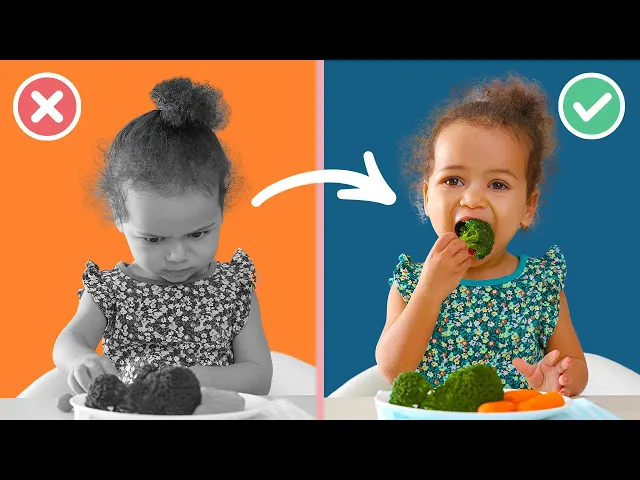
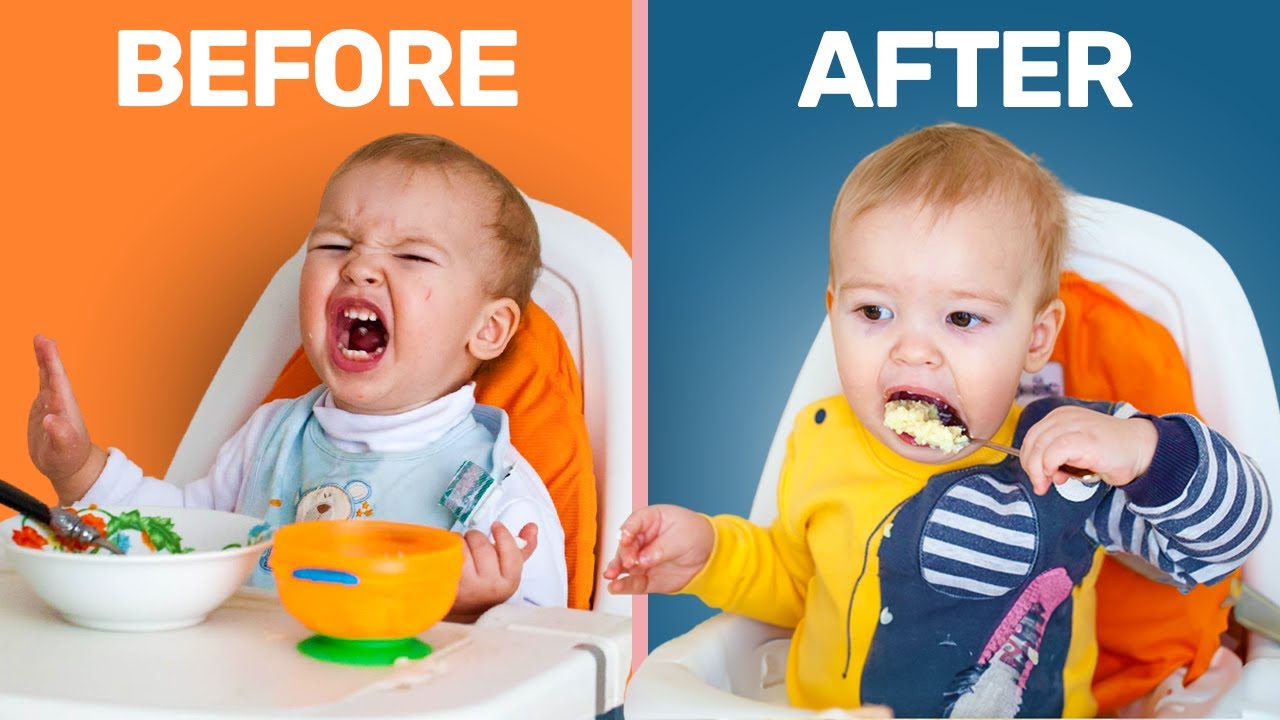
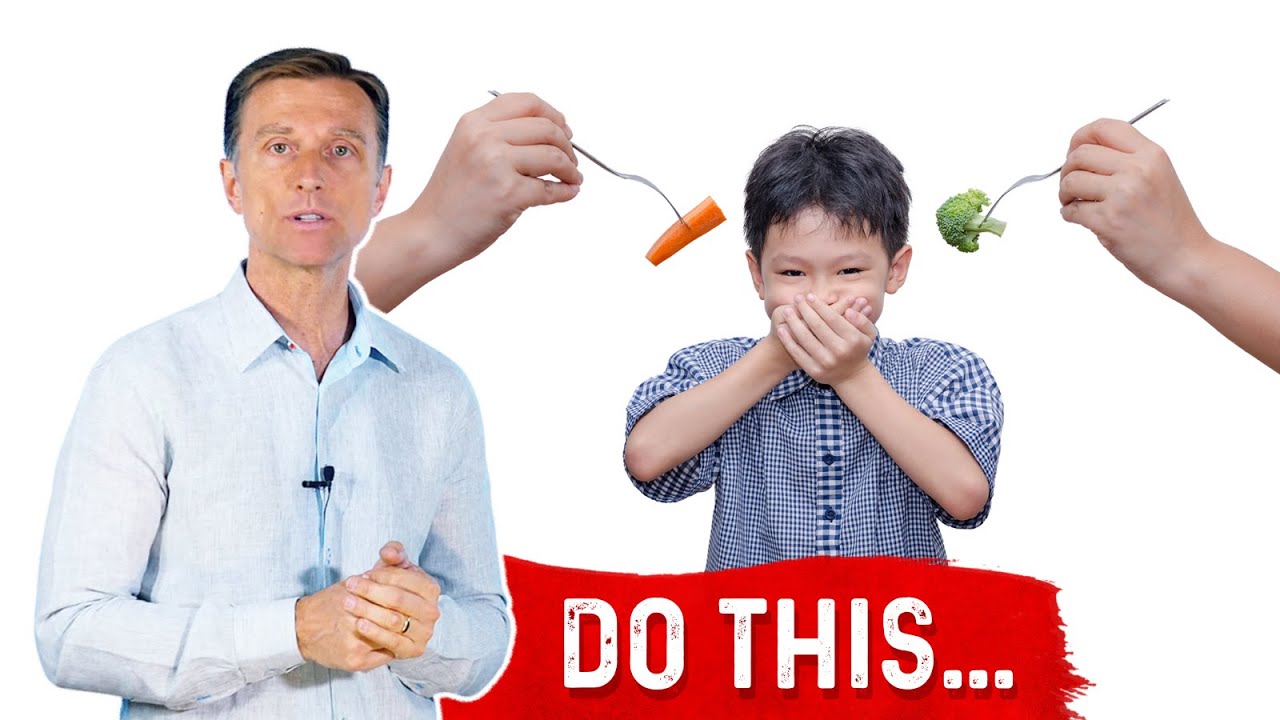
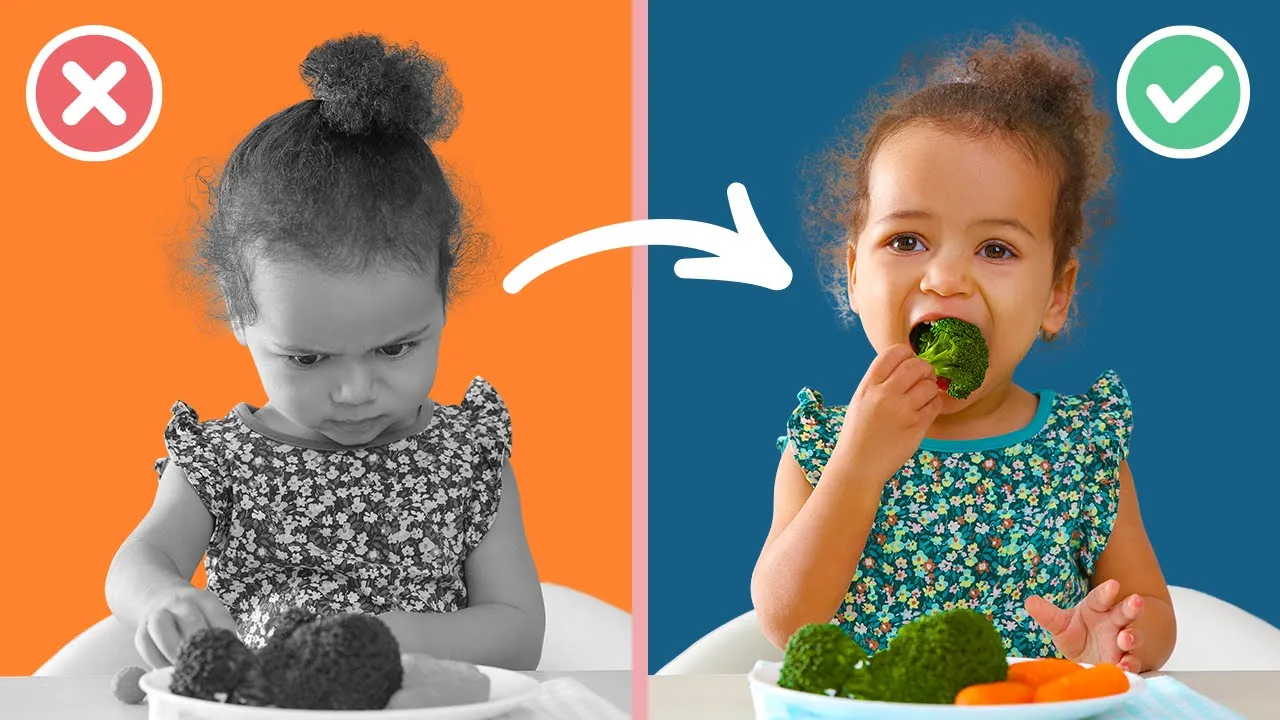
- Toddlers have a genuine fear of trying new food. And as a result of this fear, when they come to the table and see a bunch of new food that they've never tried they quickly become overwhelmed and they'll either run away, tantrum or shut down. But if you were to serve food you know your toddler likes alongside the new or non-preferred food, your toddler will be willing to sit at the table and start eating their preferred food while exploring the non-preferred food.
Not only does this one simple step avoid a meltdown and save the whole dinner, it also ensures that you don't have to make an entirely separate meal for your toddler, which is really an easy trap to fall into but one you'll want to avoid because it actually reinforces that they don't need to eat what you provide. While this tip works really well, it probably won't solve all of your picky eating struggles on its own which is why I have five more coming up to help make meal times much more pleasant for everybody and get your toddler one step closer to trying new food. Now, toddlers love snacking on foods and drinks but letting your child constantly snack takes the edge off their hunger, and if they're not hungry they're going to be far less willing to try new food.
So one simple way to increase your toddler's willingness to try new food is to stop the constant grazing and have your toddler eat five meals a day which is spaced roughly two and a half hours apart. By doing this, your child is going to be much more receptive to trying new food because they'll be truly hungry when you present it to them. So from today, try to space your toddler's meals two and a half hours apart and make sure you only give your toddler water between those meals rather than juices or milk, because juices and milk can be quite filling and reduce their hunger.
Something you might not realize is that your toddler's willingness to try food can actually be positively influenced by social modelling. But, simply being present while your toddler eats; or eating at the same time as them, but eating different food to them, will actually not encourage them to branch out and try new food. You need to be eating with them and eating the same food as your toddler.
This was illustrated in a study completed by Adessy and her team in 2005 where they looked at the behavior of children who were between two to five years of age when they were introduced novel food. So in this study the children were introduced the novel food in three different situations. In the first situation, there was an adult present but they didn't actually eat any food.
And in the second situation, the adult was present but they were eating food of a different color. And in the third situation the adult was present and eating food of the same color. And what they found is that the children were actually more accepting and more likely to eat the new food if the adult was eating the same type of food or food of the same color, rather than merely being present or being present and eating food of another color.
So if you want your toddler to eat that non-preferred food so for example, a banana, you need to sit down with your toddler and also eat a banana at the same time. This next tip is really easy, but very effective. One of the many reasons toddlers refuse to try new food is because they're concerned about what the new food will taste like or how or feel in their mouth.
And an easy way around this is to pair that new food with sauces or dips that they're already familiar with and enjoy eating. These will help to mask or eliminate the flavor and texture of that new food, making it easier to introduce. Essentially, letting your toddler smother the new food with their favorite sauce or dip helps to get your toddler to try that new food.
And with time increases the variety of foods that they are willing to try and eventually eat. So if your toddler won't eat a new food don't be afraid to experiment with sauces and dips like ketchup, hummus, salsa, yogurt-based dressing, peanut butter, mayonnaise, pesto sauce, sour cream, cream cheese, barbecue sauce, and many more. Another reason toddlers often refuse to try new food is because they don't like how it looks.
I've lost count of the number of times I've put new food in front of my kids and had them tell me that it's yucky after one glance. But there is a great way to overcome this obstacle. The key is to present the food in a fun and creative way.
Now, don't worry I'm not saying you need to create an artwork every mealtime. It can be as simple as using cookie cutters to make fresh fruit and vegetables into fun shapes or animals, placing food on skewers or toothpicks, arranging the food to make a face or a shape or changing up the cutlery. For example, my daughter is not a huge fan of corn but loves unicorns.
So I got a little creative and bought some unicorn corn holders, and the next time we had corn, I gave her these corn holders and this novelty of using the unicorn corn holders made the corn appear more appealing. And guess what? She took her first bite of corn.
Now she happily eats corn with or without her special unicorn holders. So don't be afraid to be a little creative during mealtimes. And if you want some ideas on tools that can help you achieve this, and make sure you click my mealtime essentials list by clicking the link in the description box below.
Something really important I want to mention to you at this point is don't give up. The key to overcoming picky eating is lots of patience but most importantly, continuing to expose your toddler to the new food multiple times. Repeatedly exposing your toddler to new food without pressuring them to eat the food will help them become more comfortable with that food and get them one step closer to eating it.
In addition to incorporating these tips into your day there are also a few things you want to avoid doing when you are trying to encourage your picky eater to try new food, as these common mistakes can make picky eating a lot more challenging. So make sure you watch this video next to discover what these common mistakes are so you can avoid making them with your little one. And if you'd like this video make sure you hit the like button and subscribe so you don't miss the next one.