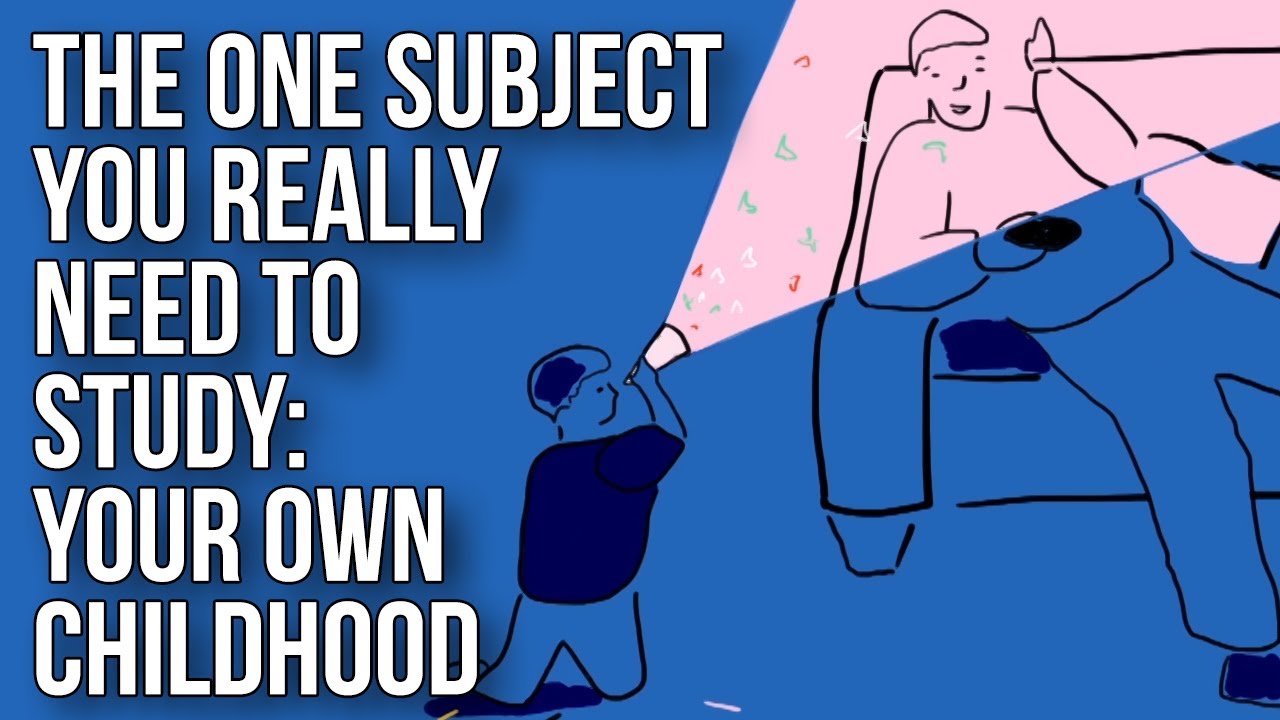
in certain moods the founding principle of modern psychotherapy that it is all to do with one's childhood can sound especially irritating why should we be forever tied to things that happened infinitely long ago one hardly ever sees one's mother now and dad might have died 20 years ago and anyway aren't genetics more important nevertheless the maddening idea refuses to go away as we'd love it to there is too much in the end that keeps backing it up our characters appear to be miserably determined by dynamics that unfolded within the family circle before our 15th birthdays
we can accept well enough that we once learnt to speak an entire language around our families tens of thousands of words hundreds of declensions and a host of complex rules of syntax were all picked up while we played in the garden or drew sunflowers in the kitchen it should by extension be no more implausible that we simultaneously learnt an entire emotional language that is now as much part of our nature as our native tongue a language about how to express love what we can expect of men and women the declensions of desire and what the
rules are around happiness we need to think about our families a lot not necessarily because we like or miss them it's the opposite we need to reflect on them in order to get over them we should be unembarrassed about our search for the details of how our particular family like all families was and has rendered us mad we may feel that it is a uniquely western neuroses especially one afflicting people who have spent too long in therapy to go on about one's parents and their contribution to one's unhappiness to be 25 or 62 and still
turning over in one's mind often while sobbing how mummy or daddy have been responsible for spoiling one's relationships or ruined one's life but lest we be overly struck or appalled by this approach we should keep in mind that every society whatever its level of development appears to entertain extremely elaborate ongoing thoughts about its ancestors and their powerful impact on the lives of the living from cambodia to peru papua new guinea to burkina faso the patterns are the same one's parents or relatives die and one then has to handle their ghosts or spirits with immense care
because the dead are known to have powers to cause grave mischief they may unleash guilt they can destroy sex for us they may put a curse on our ambitions at work they can cause us insomnia or chronic stomach pains much time and energy therefore has to be spent managing their memories which might involve bringing them presents honoring them with cakes or songs or if all else fails and their characters are too mean and far gone actively trying to drive them away into the netherworld in madagascar in the ceremony of famadiana every year the dead have
to be unburied and are invited to a big party in the village where their relatives sacrifice oxen and dance with their corpses above their heads in the hope that these ever more moldy cadavers will rest easily in the months to come quite what one might have to do to keep an ancestor from ruining one's life may change from society to society but the underlying feeling that one must try something is universal one might have to listen to them or treat them to a dance or one might need to lie on a couch and analyze their
hold on one psyche through free association but the idea is fundamentally the same the spirits of the past have the power to throttle the present the headaches or the impotence the paranoia or the bad marriage have to do with ghosts mummy and daddy are everywhere doing unholy things and the wise pay them enough attention to loosen their punitive grip and get on with their lives how to overcome your childhood is a book that teaches us how character is developed the concept of emotional inheritance the formation of our concepts of being good or bad and the
impact of parental styles of love on the way we choose adult partners