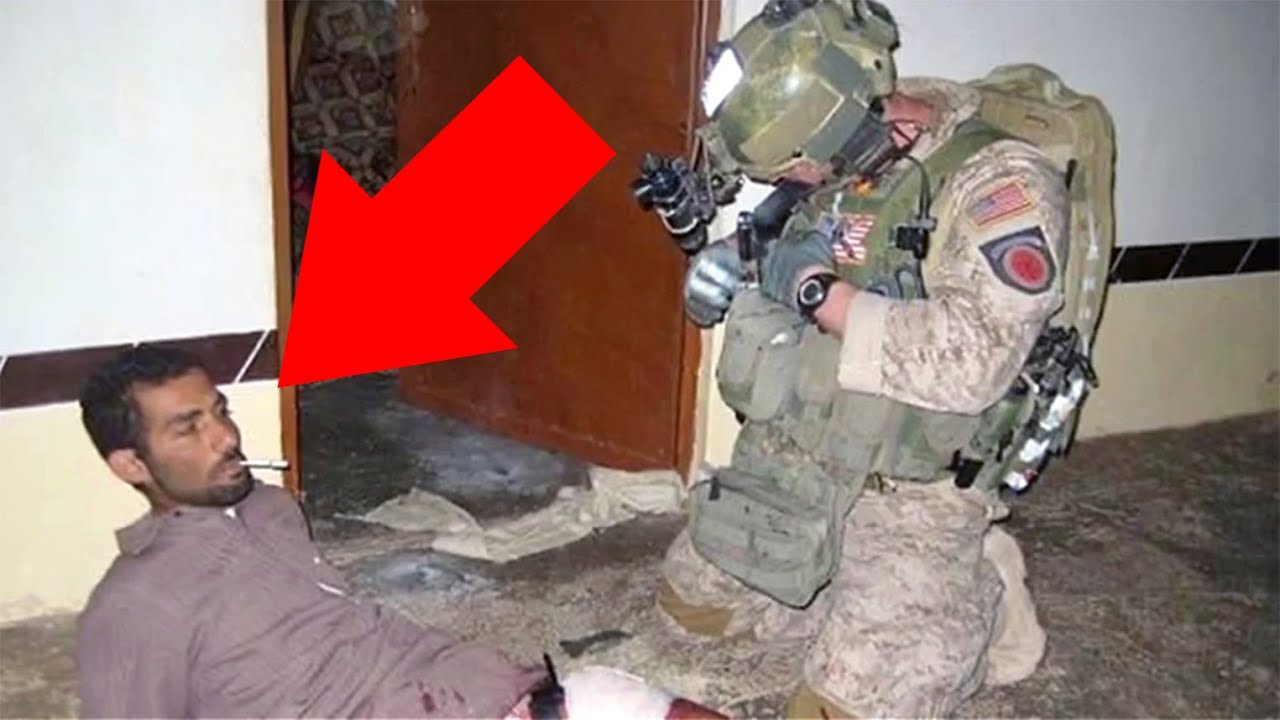
Basra, Iraq. It's one of the most dangerous fronts of the raging insurgency inside occupied Iraq. Bullets are flying from all sides as the soldiers are taking cover behind the husk of a building.
Over the radio come instructions from their higher ups but the soldiers have had enough. After throwing away the radio and checking the gear they all get ready to do something their sergeant and his bosses are going aren't going to be very happy with. Basra has been relatively stable in the wake of the invasion, but all that progress has begun to be undermined by an influx of insurgents to the city.
Coalition intelligence suspects that insurgents and terrorist sympathizers have penetrated the city's police forces but lack the evidence to prove it. What they need the most is hard intelligence and, even better yet, targets. Individuals that can be removed from positions of power and influence, like cutting the cancer out of healthy cells.
If the coalition fails here, all its efforts to date will have been in vain. The British are taking point in the investigation into Basra's corrupt police forces, with MI6 and the Special Air Service tasked with sniffing out the length and breadth of Basra's corruption. Intelligence services have worked to cultivate informants amongst the population, but none are able to offer insights into the goings on of the Basra police force.
This will require British boots on the ground, an extremely dangerous proposal. While both American and British special forces include soldiers of various ethnicities, the local SAS contingent has no other option but to send two white British soldiers undercover into the city. The men have been extensively trained in infiltration techniques and know how to blend in with the local population.
They wear native garb have grown out their beards, and have dyed their hair black. It's not a perfect disguise, and the men still have a British accent- but their mission is to tail an Iraqi police chief in a locally sourced vehicle and make a note of his movements. They shouldn't have to go far from their car, and nobody in Basra is in the mood to make small talk with strangers on the street at the moment.
SAS soldiers Campbell and Griffiths enter the city in their small car, a beater that doesn't look out of place with the rest of the city's vehicles. Their target is a police chief suspected of corruption and colluding with insurgents, and their job is to shadow him and observe his routine, making note of his comings and goings. Other intelligence assets will follow these leads to sniff out the man's entire social and professional circle, building a case either for or against his innocence.
It's a simple job compared to any number of other extremely dangerous things Britain's most elite warriors can be called upon to do. But it's still dangerous; there's strong anti-western sentiment in the city, stoked along by insurgents and terrorists who have pushed a steady stream of propaganda painting coalition forces as criminals, murderers, and worse. The average civilian doesn't know what to think about coalition troops but knows that the ensuing war between them and the insurgency has cost a lot of innocent lives caught in the crossfire.
Then there's the old guard- those who formerly enjoyed power and privilege under Saddam's reign. Many of them went underground when the coalition invaded and have worked their way back like a cancer into positions of power. There's nothing more they'd like than to get their hands on two elite British soldiers.
Adding more fuel to the fire is the recent arrest of an Iraqi police official believed to be corrupt. Basra police forces don't believe the accusations, fostering a deep resentment amongst the police officers. Despite the threat, though, Campbell and Griffiths complete their mission, successfully tailing the police chief as he visits with various contacts.
The men have made careful note of their observations, the case against the police chief is only getting stronger. But for now, all the two men must do is get back to the safety of the coalition forward operating base outside the city- but to do that they must pass through one of many police checkpoints set up in the wake of a campaign of improvised explosive devices and other terror attacks against the civilian population. The police officers manning the checkpoint are immediately suspicious of the two silent men as they hand over their identification.
It doesn't take a very close inspection to realize that the men are not arab, and the police begin to question them. The SAS soldiers are forced to fess up to their identity but claim to be British contractors visiting the city. There's some debate amongst the police, but they're not buying the story.
The conversation gets even more heated; one of the officers is now leveling his Kalashnikov at the car. Two move to either side of the vehicle and open the doors, attempting to drag the men out. Campbell and Griffiths don't know if these officers are corrupt, terrorist sympathizers, or simply angry at the deception.
What they do know is that they can't take a chance either way. Brandishing concealed pistols, the men open fire, killing one of the police officers and injuring others. The small car pulls away as the officers begin to return fire while others rush to police trucks and give pursuit.
The small car is not designed for a chase, though, and the thick traffic is only making things worse. The Iraqi police truck smashes into the back of the car and sends it spinning, nearly flipping the vehicle as it careens into a wall. The chase is up as Campbell and Griffiths look out of their car at a wall of police officers, all with their weapons leveled at them and shouting angrily.
The soldiers are dragged out of their car and thrown into the bed of a police truck, enduring multiple kicks and punches along the way. A short drive away, the men are taken to Al Jameat police station and thrown into a cell. The angry officers begin to beat the men, demanding information from them.
By now, there's no doubt that many are, in fact, colluding with local insurgents- and that suspicion will soon be borne true. The SAS men have been trained to withstand torture and interrogation techniques; they say nothing despite the beating that they endure. Local media is called into the police station where a photo of Campbell and Griffiths is taken.
A TV broadcast goes live with photos of the men, and accusations that the men murdered a police officer and would thus be faced with execution. All the way in Bagdad, the SAS's Special Forces Support Group learns of their capture and reviews images of the beaten men. Immediately, a 20-man team from A Squadron of the 22nd SAS Regiment boards helicopters with their equipment and sets off for Basra.
During their flight, other SAS operators in Basra conduct their own reconnaissance and confirm that the men are being held in Al Jameat police station. American forces also learn of the capture of the men, and immediately, a US Air Force Predator drone is dispatched to Basra. The drone loiters unseen high over the city, its powerful cameras and infrared sensor trained on the police station.
A helicopter also moves into position to recon the prison, as plans are drawn up to recover the two men. The drone's powerful sensors allow American intelligence to relay the estimated size and strength of the police garrison to their British allies, who are even now mounting a rescue party. All involved know that time is of the essence; the men might be either killed or moved at any moment- and once they have been lost to the shadowy underworld of the Iraqi insurgency, it's doubtful they will be seen again.
There have already been videos of captured Western contractors being tortured and beheaded by insurgent groups- the humiliation to the west of two of its best soldiers being tortured and executed would be a massive propaganda win for the insurgents. For the British and American forces near Basra, it's unthinkable to lose two of their own. An assault force made up of infantry aboard armored vehicles is drawn up, an entirely British contingent, while the Americans provide air support and recon overhead.
Like loitering guardian angels, US drones and combat aircraft pose ready to back up their British allies in case the situation goes south. Over the prison, the Predator drone observing the comings and goings into the compound is painting a disturbing picture- there's very real fears that the corrupt police will try to move the men out and soon. The hastily assembled force is ready to roll- but there's just one problem.
They don't have permission to act. A world away back in Britain, British decision-makers are learning of the capture of two of their elite soldiers. All know the significant propaganda coup this will be for the insurgency if the men are killed, and yet the situation in Iraq is incredibly tense.
Any incident could threaten to tip a very fragile, relative stability into full-blown anarchy, and the last thing that political and military leaders want is a high-profile incident involving coalition troops and Iraqi police forces, a PR disaster that could fan the flames of insurgency across the nation. It's a tough, horrible decision to have to make- but an assault into the prison to rescue the men is simply not possible. The order is relayed all the way across the world to local command outside of Basra.
The men of the rescue force are utterly stunned to hear that they do not have permission to go get their brothers in arms. Instead, they have been ordered to attempt a more diplomatic approach. Two British officers will enter the prison with an ultimatum demanding the men's release- it's hoped that the presence of a heavily armed British force outside the police station-slash-prisons gates will convince the local police chief.
As the convoy pulls into Basra, though, there are already signs that things are slowly going bad. The TV broadcast has spread the news of the capture of undercover British soldiers like wildfire across the city. Locals are angry to hear that the men murdered a police officer, though naturally, there is no mention in the news of the probable corruption of the police who attempted to arrest the men in the first place.
By the time the convoy arrives at the police compound, an angry mob is already waiting for them. Regardless, the two British officers leave their armored vehicles and enter the compound to attempt to negotiate the surrender. The sight of the armed soldiers turns things from bad to worse.
One protester picks up a rock and throws it at a British Warrior IFV, harmlessly bouncing off the armor. Like a dam nearing bursting, that one act is enough to open the floodgates. Rocks begin to assail the British forces, who have all been ordered not to return fire unless fired upon.
The men endure the assault of rocks, with several being injured. Tensions mount; amongst the crowd could be a suicide bomber or insurgent, using the throng of people as cover before launching a surprise attack that could take many lives. Then comes the first molotov, smashing into the side of an armored vehicle.
Others quickly follow, and the British scramble back behind their vehicles to avoid the onslaught. One Warrior IFV starts burning, and more British soldiers are injured. The crowd is briefly pushed back by bursts of automatic fire over their heads, but more join the crowd every hour.
On the roof of the police station, Iraqi police have set up machine gun positions, aiming down at the British. Overhead, helicopters begin ferrying in reinforcements, and the British assault force soon numbers around 600. Inside the police station, Major James Woodham has been making a case for the release of the SAS soldiers.
He has been allowed to see the men, who show the marks of having been beaten, but the Iraqis refuse to release them. They say that the men must stand trial for murder, but the British know it will be little more than a show trial with an inevitable execution afterward. Back near the Basra airport, where British forces have made their base, there's a request for an Arab-speaking lawyer to be sent to the prison.
British leadership is still seeking a diplomatic solution, but that looks increasingly impossible- sooner or later, the police will have to take action, if for no other reason than to appease the angry mob outside their gates, which grows by the minute. The men's commander is asking acting British field commander Brigadier John Lorimer to authorize a rescue- but Lorimer can disobey a direct order to take no violent action. Everyone, however, remembers Iraqi militants sawing off the head of a US contractor a year and a half prior.
Major Rabia Siddique, the arab-speaking British army legal expert, arrives at the prison. The crowd jeers her, even spits at her as she makes her way to the compound gates- the Muslim British officer is called a whore and worse by the angry men, but she retains her composure. On her way into the prison, though, she notices the faces of several known insurgents- there's little doubt that the situation is getting incredibly dangerous.
The Iraqi judge inside the prison, however, refuses to hand over the men despite them being protected by a legal agreement between the Iraqi government and coalition forces. For an hour, she attempts to negotiate, but to no avail- and then things go from bad to worse. Several more molotov cocktails are hurled at the British, and they respond by opening fire on the Molotov throwers.
Several men are gunned down as they attempt to immolate British vehicles, and others rush out to drag them away to safety. This only angers the crowd even further, and a group of them surge forward, managing to grab one of the British soldiers and beating him unconscious. He is being dragged away by a group of men when his comrades come to his rescue, opening fire on the kidnappers and killing them.
Another Molotov arcs across the sky and lands a perfect hit on the turret of a Warrior IFV. The flames manage to work their way inside, forcing the men to rush out of the stricken vehicle as they attempt to extinguish themselves. Miraculously, despite receiving serious burns, none of them will die.
The same can't be said of the crowd pressing the assault, as warning shots turn into a full-blown firefight. Thousands of miles away, British leadership watch the worsening situation through a live feed provided by an American Predator drone. Despite the violence outside the prison, there is hope that Major Siddique can negotiate a release inside the prison.
The problem is one of national importance and much bigger than the lives of just two soldiers- if news breaks that corrupt police attempted to execute two British soldiers, popular opinion could turn dramatically against the war as the British public loses all hope that Iraqi institutions can be saved. This will undermine the entire reconstruction effort, and leave Iraq a haven for insurgents and terrorists who'll take the reins over from withdrawing coalition forces. An assault on the prison must be avoided at all costs.
Inside the police compound, there's good news at last. The Iraqi judge agreed to hand over the prisoners if the British could get a signed letter from the Iraqi national government authorizing them to be released. British contacts with the Iraqi government quickly relayed the request, and within an hour, it was approved.
There's just one problem- the courier delivering the letter cannot make his way into the prison due to the mob. Through a side entrance though, police officers have allowed several dozen armed insurgents into the compound. The loitering Predator captures the act, sending alarm signals throughout the American and British chain of command.
Inside the compound, armed militia storm into the judge's office, who's forced to acquiesce to their demands that the men be handed over to them. Major Siddique and one other British officer will also be taken prisoner. The real prize, though, is the SAS soldiers, and they are dragged away and out of their cells.
The insurgents fear that the British are going to launch an assault on the compound, so they force the men to dress in local clothes to try to conceal their identity. They plan to sneak them out of the compound, right out from under the nose of loitering drones and helicopters. But Griffiths and Campbell know that if they are dragged away, the next time the world will see them is in a video of their torture and execution released via the internet.
As they are forced outside, the men see a chance to try to signal the overhead air assets and begin to fight with their captives. They're quickly overpowered and dragged into the trunk of two waiting cars before being thrown in- but the scuffle has alerted loitering surveillance assets. Despite not having a clear ID on the two soldiers, coalition intelligence immediately suspects that the bundled-up men are Campbell and Griffiths.
A Predator drone and Lynx helicopter follow the vehicles to a house nearby, and meanwhile, the SAS force from Baghdad, which arrived an hour ago, begins moving into position a few blocks away. Exactly how what happens next was initiated and by whom remains unknown, but later, the British government would claim it had authorized a raid after the fact. Someone local, though, knew the danger that Campbell and Griffiths were now in and disobeyed direct orders to issue a single command: Go.
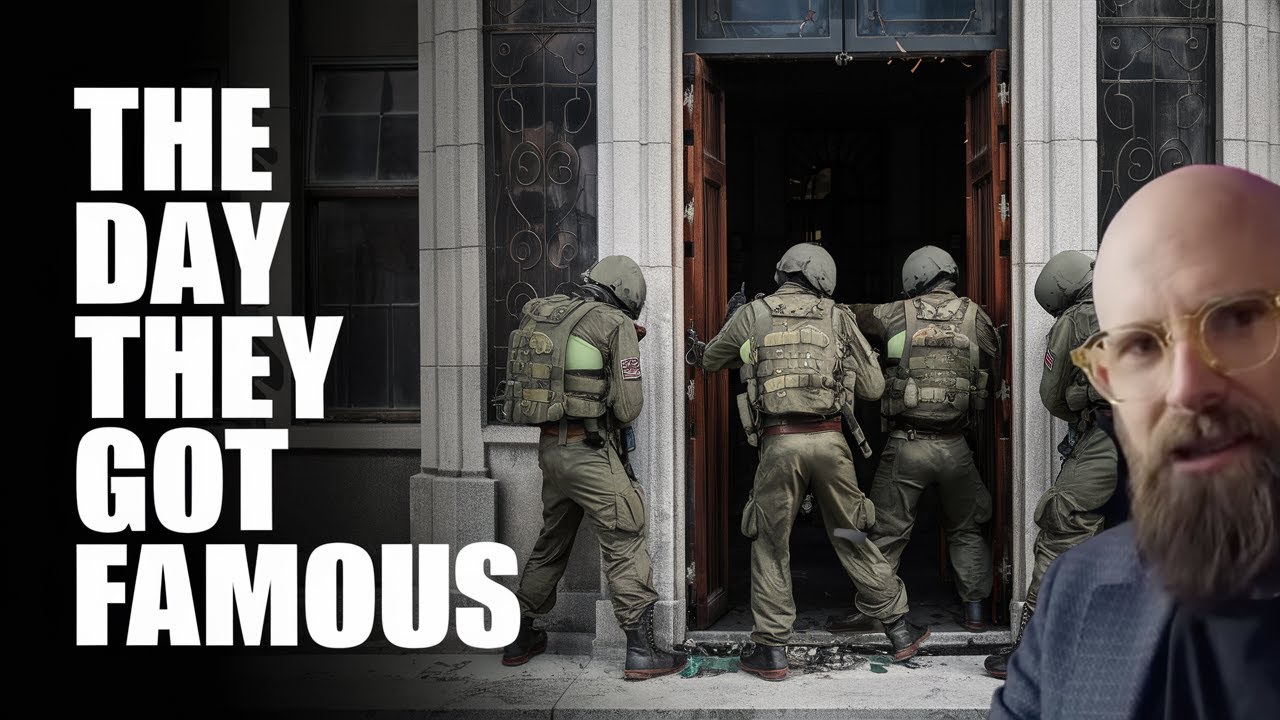
Immediately, Warrior infantry fighting vehicles and Challenger tanks force their way through the crowd and smash into the walls of the compound. Machine gun fire bounces harmlessly off their thick armor as Challengers break through the concrete wall and make holes for the deploying infantry. An intense firefight breaks out, but the British forces overwhelm the exterior defenses as they rush through the courtyard to the main building.
From perches several blocks away, hidden snipers eliminate machine gunners on the roof of the building, silencing their gunfire for good. The sudden violence deters the crowd from pressing ahead, though several militants peel off and attempt to attack the assaulting British. Cannon and machine gun fire from Warrior IFVs tear the men to pieces long before they get to the outer walls.
Inside the main building, British soldiers sweep room by room, eliminating anyone who doesn't immediately surrender. However, the attack on the station is a feint meant to lull the insurgents in the target house into a false sense of security. Relieved that the British failed to realize their men were no longer in the police station, the insurgents congratulate themselves and begin to make plans for the captives.
Their phone calls are intercepted by coalition electronic signals intelligence, which quickly learns that the group identifies itself as Iraqi Hizbollah. Suddenly, windows on two sides of the house are broken, and flashbangs are tossed in. With a deafening roar, the grenades explode as the SAS assault force breaks down two doors to enter the home.
They move with well-practice precision, and the blistering assault into the home is an overwhelming show of force. And yet they're surprised to discover nobody's home. The insurgents have mysteriously disappeared, leaving the home through another entrance right before the assault force had gathered outside of it.
The men had likely believed their catch secure and left to put other plans into motion, then simply disappeared into the night as they realized their safe house was being raided. Inside a locked bathroom in the now-empty home, Campbell and Griffiths are found blindfolded and handcuffed. The rescue operation goes off without a hitch, and the two SAS men are safely retrieved.
Yet the incident sparks outrage amongst the troops, who believe the British military leadership betrayed the men. Attempting to balance the rescue of the two soldiers versus sparking a national disaster across Iraq, though, senior British military leadership stands by their decision to attempt diplomacy- and yet no charges for insubordination are ever levied against any of the on-the-scene commanders who took part in the unsanctioned raid. Now go check out US Special Forces vs Wagner Group- Battle of Kasham, or click this other video instead!