companies are terrified of opening up a new channel which overwhelms their support teams and their support teams are constrained by budgets and and the budgets are constrained by how many humans they can so you know customer service leaders have been in this challenge whereby they've been trying to move pieces around and optimize to try and get the best type of service they can but often this translates to trying to squeeze the most possible out of a bot that's not very effective or trying to negotiate the rate of a BP agent down to as small as
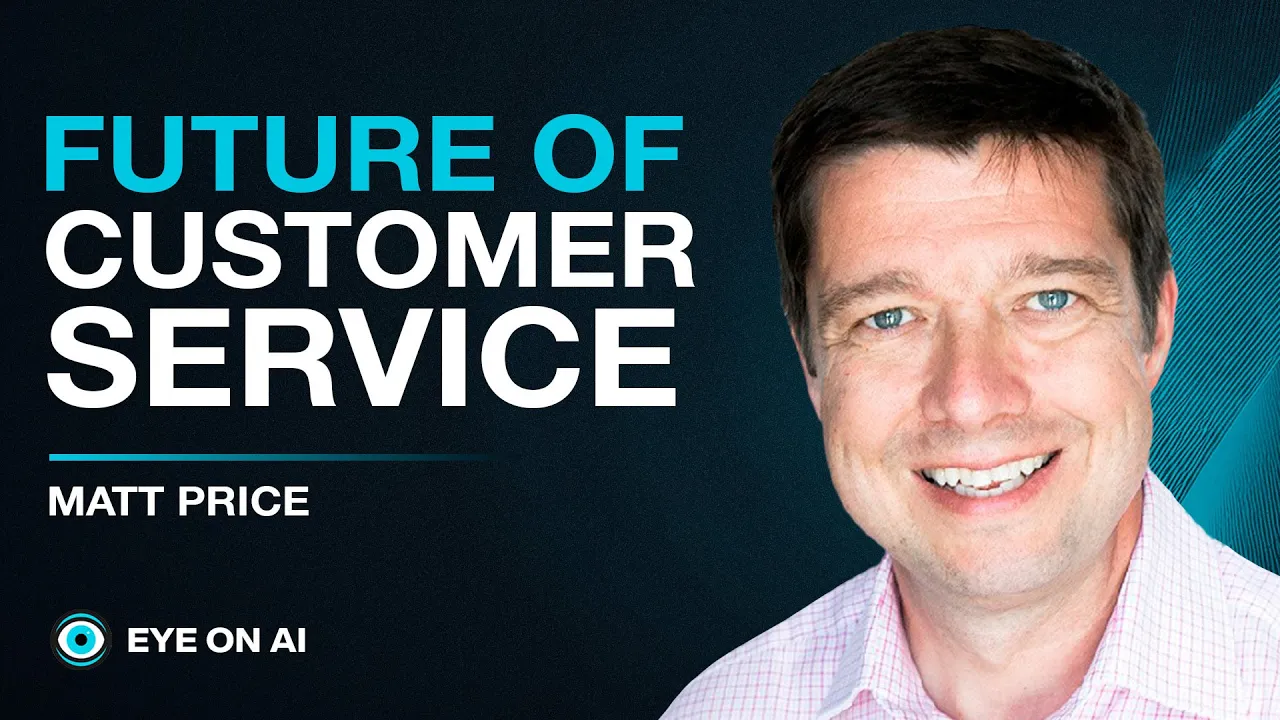
possible and what you end up with this is this very disjointed assembly of parts and you know unfortunately being in in a generative AI bot and just dropping into that isn't going to change the picture at all unless you take a look at holistic service design and make it simpler go ahead and introduce yourself how you got to Crescendo what Crescendo is how it got started and then all start feeding in with questions I I'm price I'm the CEO of Crescendo um Crescendo is a customer service company that was assembl by some Founders who were
really excited about the potential that generative AI can bring to to customer service um what the company does is actually provides all of the technology and all of the people that automatically handle all the Peaks and valleys in support demand across all channels anytime you want 24 by7 um and what we've found is this integration of the technology in the people is the only way that you can ensure that you can deliver you know the best possible quality for customer service so it's better by than people by themselves and it's better than AI by itself
yeah and and AI generative AI chat pods have really taken over uh uh all sorts of functions but custom service it's moving into customer service pretty quickly um how good are the the chat Bots are your chat Bots based on um API calls to uh to one of the big proprietary models or have you taken a an open- Source model and fine-tuned it um and how generally do you think uh chat Poots are going to perform in this am the short answer is yes they can be excellent um the longer answer is that there needs
to be a lot of care and attention and expertise to make sure that they can be excellent and and live up to the Quality expectations um that that people have so there's been a big gap on moving from experiments to real life uh production environments um we use all of the great work that's been done by the uh company such as open Ai and and the other models those off linguistically and and the ability to actually assemble information and deliver it and Converse with a uh an end user or a customer a second to none
um and um so what we do is we stand on the shoulders of those giants and we've delivered a huge amount of Ip that makes them work in real life and integrates them into uh the the people part of the uh of the equation and um really just takes away a huge amount of the risk and complexity uh that exists if you do it yourself yeah uh and until now with with the generative AI uh chat Bots which are both both voice and and text right uh you've said in the past that that uh that
customer service was more about deflection than engagement uh can you talk about that about about what still exists I mean I was on a call yesterday uh very frustrating call uh with with a uh actually not a call call a chat with a a chat bot some rule-based chat bot that uh was not getting me where I wanted to go you know the the challenge is is the reason why most customers are are faced with this uh is is twofold firstly they haven't been able to get the generative AI into production and there are a
number of reasons for for that most equality um secondly is there's a misalignment of incentives uh there are the the old chatbots are provided by technology companies who are making a a lot of promises on how much that chatbot can stop people reaching the humans and then on the other end of this uh are the uh bpos who are trying to get as much human interaction and time as possible because that's how how they get paid um we've discovered by blending the two you you take away this misalignment of incentives and you can really optimize
for the very best you know cust customer experience and so you don't try and make the AI do more than it should do or it can do at that at that point in time so we actually constrain it quite significant L uh to really just handle the things they can but what what we do then is make sure that when it does handoff it's handing off to somebody who is at um a level beyond what the AI is actually been doing um and this integrated experience and being able to tune this integrated experience because because
we we can um design the service search means that you don't end up repeating yourself you don't fall through cracks you don't end up going to um you know multiple layers and the results are really encouraging and surprising um going back to your question around then on deflection versus deployment we are not trying to deflect people from stopping them from talking to humans then what we're trying to do is have the AI do the best possible job it can and if can't then hand it hand it to a human yeah you in practice what we
then start to see is because of that quality and when people get get excited about this by focusing on Quality Companies start to deploy it in many many different places within their organization they move it from being something that's hidden on the website because they don't really want to talk to people to putting it front and center in their product and because the AI can actually resolve many of the inquiries they can do that for the same budget that it took to or less than it took to deliver the old type of experience so seen
dramatic increases in the level engagement for a lot lower cost PR action of businesses yeah and this is a point I don't think I mean I think a lot of people have felt this intuitively but uh that don't necessarily understand that it's really it has been B into these customer service platforms is one that uh bpos uh historically have been paid by headcount which means uh that that uh the the more people they throw at a problem uh the more they get paid uh which uh which isn't really aligned with a customer uh I mean
with their client not not the customer uh that's calling for customer service and that a lot of organizations deliberately in the past uh do deflect uh away uh customer inquiries I mean uh I was trying to get in touch with a company yesterday and there's uh there's a a Twitter link and a LinkedIn link neither the Twitter nor the LinkedIn can you message to uh and there's no email no phone number number uh you're just stuck with what they have on the web page and and then uh for companies that do employ a b uh
oftentimes those calls are maddening or or unsuccessful and and there's also all of the uh uh the the phone menus and and hold music and recording all of that is a sort of deflex customers away from uh the company and and do you think that how intentional do you think that has been it's been very intentional because companies are terrified of um opening up a new channel which overwhelms their support teams and their support teams are constrained by um budgets and and the budgets are constrained by how many human as they can so you know
customer service leaders have been in this challenge whereby they've been trying to move pieces around and optimize to try and get the best type of service they can but often this translates to trying to squeeze the most possible out of a bot that's not very effective or trying to negotiate the rate of a BP agent down to as small as possible um and what you end up with this is this very disjointed assembly of parts and you know unfortunately being in in a generative AI bot and just dropping into that isn't going to change the
picture at all unless you take a look at holistic service design and make it simpler um it isn't going to change it so you know I come from a a a software customer S software background my co-founders come from contact center background um and by fusing the two organizations together and really trying to think of this as an endtoend product product um we've found so many different places where we can optimize uh the experience and basically rebuild the experience from the bottom up so customer service leaders can focus on being service designers in partnership with
us rather than being you know systems integrators or you know you know or procurement agents or or people like that these different sources yeah and as you were saying that then U the once you have a a system like that in place that uh that instead of deflecting customers engages customers uh you want it out front you don't want to hide it uh and that's how B that's how do that's really is our mission is that we want to the first experience that we create is some something that compan is incredibly proud of and and
can deploy further and and that's what's happening um you know it's very exciting to see and it's very exciting to see the potential business impact of when you can lean into engaging with customers and have more conversations with customers what you oncover of as all of these hidden things that the customer does want to talk to you about but hasn't been able to and there's been a lot of studies but more customer engagement leads to better attention and leads to better sales correct you know it's a classic and very simple model yeah yeah it's uh
I'm sure there are studies but it's also uh sort of common sense right the more you engage uh and and so in in uh Your solution you have uh generative AI uh driven uh chat Bots are there voice or text uh how and then you have uh human agents with the under the same umbrella uh how much training is there with the human agents to work with the uh with the AI because I can see with a Bolton solution uh that you know a company you know buys a chatbot and puts it on their website
uh and then you run into a problem and the chatbot has to hand off to a BP that's not in the same same organization I can see that that um yeah there there problems with that uh and but to get around those problems how much training do you give the human agents with uh the AI I mean are they familiar uh W with AI how it works do they see the the conversation or hear the conversation when it's handed off I'm curious about that yeah um your first point by the way is really interesting is
that and again this is on service design is that constant re recalibrating what the AI and the skills of the a are and then handing that off to a human that has skills that are next Lev is a is something that's challenging in itself and something obviously with the fact that we have uh a very extensive um um human capital and the AI that we can merge we're constantly redesigning that service and and and understanding that calibration so that's really important um then when you start to look at the AI to human interaction um there
are some very basic things like you suggest is that making sure that when there is a a transfer to the human agent they understand and they can view the context um they they have tools that we use using same AI that can do language um um comprehension and response so that's the core level but what we found in some of our early product design work and when I say product design it's not technology is the technology plus the human interaction some very interesting things happen so um the team leads become accountable for the quality of
the AI and the humans in interaction so this very much the incentivized closed loop of making sure that the AI quality is there and human quality is there and and and constantly improved but you can take it to the next level then and say okay what if the whole team was accountable for the quality of service then you suddenly have all of the service agents being your quality control monitors and updaters as part of that Loop and you start to get this flywheel going that that dramatically raises the quality of service and and constantly in
innovates those interactions and because we provide that service those iterations happen very very quickly whereas actually if you're working with different segments like uh uh a bot company who is then integrating to a CRM system which is then going to Bo those Cycles can be weeks yeah as change processes and so the um which doesn't work in the rate of innovation that's happening with AI ability right right and and you you have not only a use AI not only in the uh conversational interface you have a I analyzing the conversations on the back end is
that right yeah this is yeah this is a reflection really of of how the whole service stack both from technology and human gets redesigned and needs to be continually iterates so the first thing that we did was we understood the the idea that to get generative AI into production it has to be super high quality so we we actually built a our own technology to analyze and and and review every interaction score it across a number of criteria um and then um adjust very very quickly and and trap any air trap any erors and and
really score that quality that started from really just the generic system but then that gets used um for every customer that we bring live is that we're iterating and testing them such that the quality is is is incredibly High what what became apparent then was that the same system was also good at assessing the human elements and the end to endend so so a customers can get full visibility end to endend of the quality of service whether it's being delivered by the AI you know or by the human it happens on every interaction um and
we obviously build best practices around that so it reinvents how quality assurance is done with then organ ations our customers don't really need to know that or how what what they do like is the dashboard that they get which allows give them full transparency and scoring of every service interaction and they do like the fact that because we only charge by outcomes um we will commit to if something dips below the certain quality of service that they would expect or we would expect to give them which by the way is very high then we'll credit
them back for that um interaction so A simple piece of AI technology provides so many different um opportunities for uh service improvement and and and um you know bringing together the economic incentives between us and AA yeah so that's interesting you you uh charge by outcome as opposed to by headcount and that that sounds that just makes a lot more sense I mean I was really surprised to hear that BP's charged by headcount because what's the incentive for the BPO to be efficient uh but in this case uh by outcome uh that aligns really well
with uh with your your customer uh and and how has this affected the jobs um in the call center because historically those jobs were grueling and there was very high turnover uh because people don't want to stick around it seems like this would make the job uh more interesting for the call center employee yeah when when we um first designed the the the service the we went and spent a week in a a contact center the whole team um in the Philippines and we sat next to agents we looked looked at every role and it's
it's true the the way that customer service contracts are Outsourcing contracts has been structured uh have been in such a way that the drive towards metrics lead to behaviors that that and and job um roles which are not really very fulfilling for humans so what you see is people copying and pasting chat answers from notepads into chats um that that and really you know just just the service agents really just performing very Manu very manual test what's interesting then is If You observe um agents where escalations have come through and T or if they move
on to certain things once you unlock the ability for them to actually use um their depth of knowledge or their empathy or or deeper skills how much more fulfilling that that those roles are and the uh you know it's not unusual for a traditional contact center to have 50% attrition of of customer service agents every year which is huge compared to most Industries and very expensive for for the businesses and that cost obviously gets passed on to the clients uh overall what we're finding is that with our approach whereby the AI is handling a lot
of the repetitive work and in many cases generative a is very good at it it can take context ear in conversation or historical contracts it rephrases every time for the for the customer and it's very adaptable and then hands off to a service agent who has the tooling and and has more meaningful work the the retention goes up the satisfaction goes up as well so again a lot of it's um a lot of this is just rebalancing and continually rebalancing between the capabilities of the AI and human and making sure that the experiences integrated very
well not just from the customer but for the for the human agents as well yeah uh but that's an important point because there's such a drum beat uh around AI that it's that it's replacing or that it will replace humans but in this case uh there's a natural attrition in call centers because people don't stick around but once you implement implement this kind of a solution that's right uh people do stick around so uh uh it's it's kind of the opposite of what one would or the media predicts that's right I mean you know we're
we're one of the fastest growing you know companies that delivers AI technology and we expect to be hiring um ra more people uh in in the next 12 months yeah um the um the training that goes into um setting this up for a particular customer let's say it's a a bank um certainly the human agents are trained on on whatever part of the banking uh Service uh the the customer services focused on uh but how do you train the chatbot are are you using um sort of uh traditional I mean traditional it's only been around
for a few years but uh you know retrieval augmented uh generation where you're you're uh you have a vector database you load up with the customers uh data and then uh the chatbot answers from that or you uh just fine-tuning uh a model uh to talk about a particular industry how how do you handle that yeah no we would we take a customers's um set of knowledge and and we will use that you know in a in an R approach to to to then help provide the answers and the what we focus very carefully about
though is have that knowledge making sure that knowledge is very accurate and it's contained and and the AI is trained in such a way that it will only use what what you give it um um and again here are some of the challenges of making this work because in order to do that there's a lot of tooling there's human expertise on how to craft that information and a lot of the early attemps are what okay we got these fantastic LMS we're just going to train them on our knowledge basis that our whole knowledge base that
exists um almost certainly in fact in our case every knowledge base contains inconsistencies and it contains hidden information it contains old information and so the curation of the information that goes into it is very important so what we tend to do is very much contain uh the set of knowledge to begin with and then we'll iterate and we'll grow that and that gives us Far and Away the best quality and the reason we can do that is obviously we don't mind about handing off to one of our humans to answer the question if the AI
can't again you know the alignment but there's there's a lot of work to do that now and this is part of the transformation and why a lot of experiments within companies on Genera AI for customer service get stalled and we we tend to pick them up here so what you also have to do on that is then you have to have ai experts uh who are training getting right models you have to ret redo how you do knowledge expertise and and Knowledge Management um change how you do workforce management with within within an organ you
know within an organization so um there are so many jobs that need to be upgraded and changed in order to actually make this work um obviously that's part of what we can bake into the service and it means people can go live very quickly yeah um and I was looking at um um one of your press releases uh before the call and you've grown very quickly uh you you there was a recent acquisition of um me it was would you call at a b or a company with with a lot of call centers that then
you brought into the tent uh and and you bring along with that those call centers all the customers that they've been servicing uh so have have you uh seen a a an increase in satisfaction among the customers that you brought in through that acquisition yeah the the interesting thing about doing I mean maybe provide a bit of context on this so you know Crescenda started up technology plus people company we we were growing fast and we were hiring um AR Service agents and deployment and got to a point whereby from the delivery of service that
we were looking at ways to accelerate that um coming from the technology side myself um working with our partners on there it blew my mind how well operated this company was you know how optimized and how good it was at managing people and and and and building models around you know to the extent that it would be very very hard to replicate you know in house uh for organizations and then also how things could be organized to deliver a lowerer cost service or a flexible cost of service so um the idea is you can put
a bot on 24 by7 and it can speak Chinese to somebody in the middle of the night but what happens when you do a live transfer to to to a human you typically in order to stop a live transfer for a particular language you need to employ 24 people just for that one dimension the advantage of using an outsourced you know a BP is that there is this pooling of resources or this ability to scale that that makes that scale it's going to happen so I was incredibly excited about again this next level of being
able to provide a differentiated seamless service and have and just wowed by the level of expertise that we can deliver that that you probably most mid-market customer service organizations wouldn't be able to wouldn't be able to do um so going back to your question the um the customers that were engaging with who were really just um had had a labor only relationship with this business um companies called partner hero that one of the in the top um uh and the reason we really wanted to merge with them is that they had very much focused on
this high-end quality end the market which fits very well with our solution um I think what's interesting in that we're seeing is the ability for us now to handle their requests in in a very different way so now we're coming up to holiday season now and many customers are asking many companies are asking oh can can you add some more agents please as moreb see you know how about we talk about this in the capacity that you need and then how about we address some of we address that by committing that we'll handle your capacity
but we'll do that with a combination of technology and people um oh by the way at the same time um your cost per interaction will go down and at the same time by the way we're ready to switch on these new channels when you are in these new languages and and shifts that and immediately they get it it's this is these the service improvements I've been trying to trying to achieve as a customer service leader for a very long time and and now I have a bender or somebody I have a trusted relationship with that
can help me make that happen and it's I think it's I mean it's obviously very exciting for us and it's it it's it's exciting for us to see the how all of the people who are working the operations managers who are working with these customers eyes light up because they are now empowered to solve uh these problems for their customers too yeah you mentioned Chinese how many languages can you handle uh 56 wow uh so the bot is your your AI is uh trained to to respond in 56 languages do you have ai human agents
who can speak all those languages um there might be one or two um more uh um obscure ones that we uh that we're not servicing at the moment but I would say we're servicing most those languages and if and if there's demand for additional ones then yes we can do that the which again is goes back to just the scalability and quality of a of an incredibly welld designed and and well-run um you know people operation it's uh it really opens the doors to a lot of opportunity yeah uh so the market it seems to
me is virtually endless because not only do you have all of the the bad uh customer service is still using phone menus and understaffed uh call centers so you're on hold um and not only uh is that your Market but there's a lot of people that have never really done customer service uh who if it's uh outcome based pricing presumably that's cheaper than the headcount based pricing uh now have this available to them so how how big do you think the market is the um I mean the outsourced EPO Market alone is is half a
trillion uh wow dollars the um I think there are a couple of other vectors there that we think that using this approach more companies will move from inhouse to external um because they won't think about it as offshoring they'll think about it as just using BP or business process Outsourcing using those exact words they are they are finding an expert partner who can actually deliver uh something that would is harder and more expensive to deliver in house I mean BP has become synonymous actually with please find me some cheap off Source labor you know and
which is absolutely not the case so we think the market will grow through that and then the market will grow because the results that are being seen from increasing the number of interactions now we see companies who are turning on voice for the first time um because it's an incredibly powerful way uh you know to interact the number of interactions um throughout service interactions will grow exponentially as well so exactly there's the current market there's the expansion of the market by providing better of this and and then the growth of the number of interactions you
so it's uh it's uh very large yeah uh and and you were saying that um that you know you're you're sort of built on the top of these Giants that have created this this uh generative AI technology um and it's it's still very new uh and as these models progress and we're going to see uh even though there's talk of the the progress slowing down but but certainly they're going to get better um how do you see that uh impacting uh customer service where where these uh models uh get to the point where they can
uh do complex reasoning or uh or even take action as agents uh develop uh how how do you see that impacting customer service the from an End customer perspective if you have a good service that you've got in place where the where you have ai and human seamlessly interacting where the human can do the job and the AI can do the job um you won't see much difference except more work will be done by the AI now as we've discussed very few Services actually look like that but from a crescendo C perspective you might not
see too much change because we're providing a high level of service end to end um obviously as as thei proov we we expect that more and more of the work can be done by the AI um we will adapt our model such and our training of the people and our staffing of the people so it's complementary to that and and they're doing they're doing few you know fewer tasks um and and will constantly iterate and grade that but that's probably the only thing that the custo our customer needs to see is that quality stays super
high and probably their incremental cost serve their incremental cost per unit will go down from us but time goes yeah uh at this point when you're talking to one of the voice agents can you tell its AI um yes you can and um and we are somewhat deliberate in that so it needs to be a conf conversational experience but you do know it's AI um then part of the privilege of being involved in this is understanding is also seeing some of the social dynamics and social changes that are happening so our voice AI has been
live now for a number of months and obviously you part of our research team and and actually when I say our research team it's the extended research team it's the people that we talked about it's the agents and it's everybody's looking and an understanding of what these interactions like and feeding back as to what what's happening but there's another Dynamic I'll give you an example we had um um we went live with a force spot for um for an event it was actually the Albuquerque Balloon Festival and it was something that said lots of inquiries
such as where do I park can I bring my dog and and the AI is you know very good at handling those questions and you listen to some of the conversations and initially when people come on they think that they've got a voice ivr and they're like oh got to go through a tree and I'll say speak to agent yeah and and we train the AI to say um more than happy to transfer you to an agent but I'm actually quite knowledgeable as may I if you give me a try or you know or respond
respond to that and then they'll say question about tickets because they think they're still in in vvr in v and they I'll come back and say give them an answer after one or two questions I suddenly you see this transferral from the person calling in saying this might be helpful to me and this is maybe a little a bit of fun and what we see then is the time that the people are spending on the line now is a lot longer because actually they feel like there's not somebody at the other end trying to cut
them off or or or sh not they're not wasting anybody's time and we see calls of 15 20 minutes with 30 or 40 questions of people interacting with the AI and and it's that level of change at every level uh you know of the interaction is St that's very interesting um another of our customers uh provide secure routers um and when we first went to Market we thought that okay these would be bought by home automation technical people you know and so the AI would do some work and then we would have the human was
a unsurprisingly it's the product was bought by people who have who are had high degrees of concern about security so um the population was um a lot of over 70s uh were buying and that was an interesting experiment for us so how how does that demographic start to engage with um and you know they it would chat and occasionally they would people would say are you um are you real or are you a robot comes back and says I'm a robot and it says and then it was like okay and it carries they carry on
answering questions yeah so this shift such sh a shift and to people and if the AI is good people people will love it and they will continue to engage and it's a such a shift that we're seeing now you mentioned it before from deflection to engagement whereby it doesn't cost our clients anymore uh to spend more time on the phone have more interactions do it through multiple channels and multiple languages it's what customer service has been waiting for you know yeah and and uh do you do you uh build a profile of the uh person
calling in so when they call in next time uh you know who they are and know uh you know what their past problems are or something like that yeah that's uh we really just started to do that with some CL the the first part was really just handling um you know just handling the inquiries uh very very well but now we get to this New Horizon of of understanding prct context um and and and and grouping that information uh together and making the digital agent aware of what's happened before and really the problem is no
different from solving the problem of handing off uh doing a live transfer to a human you know you're just retaining context and and and and adjusting but historically trying to do that Within These very brittle process driven pieces of software that you have to piece together in customer service was incredibly difficult and nobody was really able to aain you could get some customer history but you couldn't get you couldn't understand the previous tone of the customer or previous context or the other information that he gave you as part of as part of that service interation
but the answer is yes I mean the opportunity there is really exciting is there anything I have't ask that that you want to uh leave with listeners he um no I think I would just recap is that um you know that this is generative AI is transformative um there is but you've got to think ju Beyond just what that gets deployed into the current architecture thinking more broadly about you know the opportunity to redesign make the services um how they happen and then figure out the best way to do that um is uh is what
a lot of people are overlooking and I would encourage people to look deeply into what it actually really takes to get this live and actually maintain it