Rolling & Action! Okay! Better!
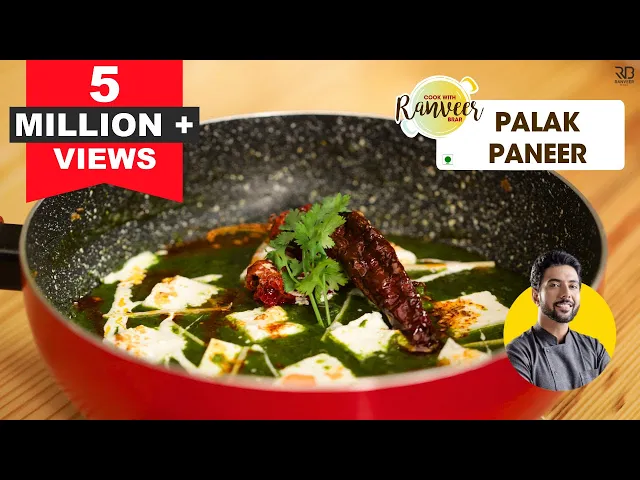
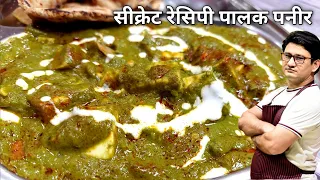
Hi! I was in the mood of making "Palak Paneer" today. It's not that difficult.
It's actually not that difficult. Like all good things, It is just a matter of three things. .
Technique, Proportion & magic. So technique and proportion I will teach you. But for magic, You'll have to do ten "Surya Namaskar" every morning.
Not that difficult. First, I'll chop the onions Finely. As fine as you can.
Or else Grate them. Now what. .
Ginger garlic! Chopped ginger, Chopped garlic. So ginger, garlic & green chillies.
Now it's very simple. Here goes clarified butter and very little oil. Very little!
So that the clarified butter doesn't burn. And here are whole spices. Everything could be Indian, but Paneer isn't.
Why? Because as a society We used to worship milk so much From the Aryan's and Aryan Wrath times, That curdling the milk was considered a misfortune. If you would curdle the milk, they would throw out of the village.
Because cows and milk were worshipped so much. So this culture of curdling the milk and making the Paneer, Was actually taught to us by the Europeans, Typically Portuguese. Portuguese came and they saw cheese making And they wanted to try the same in India!
So from cheese they made Chena And the process of sieving (channa) Channa became chena. And from there. .
. Paneer was slowly evolved. In the versions of Paneer, I personally find Turkish.
. Version very interesting. In Turkish it is known as "Penir" What they do is, they make Paneer and leave it in salt water.
Otherwise Paneer goes stale very fast. Paneer in salt water lasts longer and It hardens a bit but then it lasts longer. So remember to try out Penir, If you're a vegetarian and your going to Turkey.
Again, Garlic and cumin are essential elements. Because No matter if it's Indian, Western or Arabic food, The combination of cumin, garlic and spinach is divine. The garlic has to be lightly toasted.
That note of toasted garlic Has to be there in "Palak Paneer" If it's not coming, so i'll always say that toast the garlic And pour it on top. Asafoetida! On the other side I'll just Take the coriander seeds, Toast and crush them.
Nice! Onions are light brown now. As they will get light brown, I'll add in the dry spices.
In dry spices, Turmeric powder, Coriander powder, Red chilli powder Now the question is. . .
Restaurant style Palak Paneer So for restaurant style Palak Paneer, add dry fenugreek leaves. It's very important. Add it when the spices are cooked properly And when you are about to add the tomatoes.
After this, As the fenugreek leaves becomes aromatic, add tomatoes. This is also the trick To make it restaurant style. Okay!
Now add water So that the tomatoes get soft. So I always add very little Chopped spinach to my gravy With the spinach puree. Chop as fine as you can.
So that you get the taste of the spinach And not the big leaves in your mouth. Be that "Saag Ghosht" "Saag Chicken" or "Saag Paneer" The thought of their evolution is very simple. The thought of their evolution was That all the green ingredients that were grown in the farms were taken And added together in one pot.
Spinach leaves, dill leaves etc. There was a time when 18-19 Green ingredients were added and a "Saag" was made. Everything that was green, was put with the meat to cook with the meat.
And this origin Is the true origin of saag meat, saag paneer Or later. When the meat and greens were cooked together, Automatically what came out was this version of a Beautiful "Saag Paneer" But slowly the supply of greens Were decreased, we stopped entering the farms. In the market, spinach Was easily available and grown.
So they took spinach, evolved the concept of it And "Palak Paneer" was created. That more or less in the history of "Saag paneer" "palak Paneer" That's where it started from. Nice!
It's the magic of dry fenugreek leaves. And. .
Here we go! Wow! It's amazing!
It smells like a restaurant! Now. .
. Coriander! Again very important.
It's toasted coriander And We don't have to cook too much, that's why I've added after the masala is cooked. Water! Very little cream!
And. . Here goes spinach puree.
Very nice! Spinach is pre-cooked. So it's not like.
. Spinach is not cooked. It's already blanched, Boiled.
. . Boiled and pureed.
So we don't have to cook too much. Cook it just till the masala is Fully incorporated in the spinach puree. Beautiful!
Beautiful! Just keep stirring it. There will be bubbles in it, they will start spluttering And then will spread all over the place.
Like this is happening now. All your clothes will be ruined and then you'll say "Ranveer Didn't tell us" This part needs more hard work. Not exactly hard work but patience.
Because spinach. . .
There's a rawness in spinach. And for the rawness to go, the oil has to come up. If the oil won't come up, the taste won't come and if the taste won't come.
. . Grate very little nutmeg.
Very little. So that you get the hint of it and not the taste of it. There is one more restaurant style trick.
This I don't tell anyone, telling you for the first time. One drop. .
One drop of kewra water. That's it! Only one drop.
They won't be that fragrant, but That roundness will come from kewra and nutmeg. The flavours are gonna get rounded. Right!
And that's Very very important in Palak Paneer. Let's check the salt and spices And add paneer. Wow!
Amazing! Done! Nice!
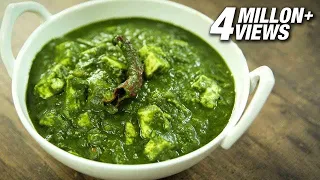
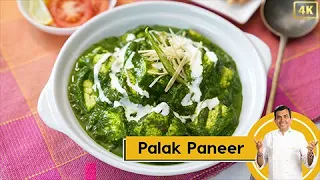
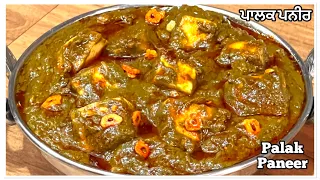
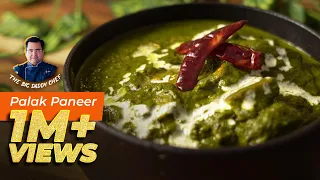
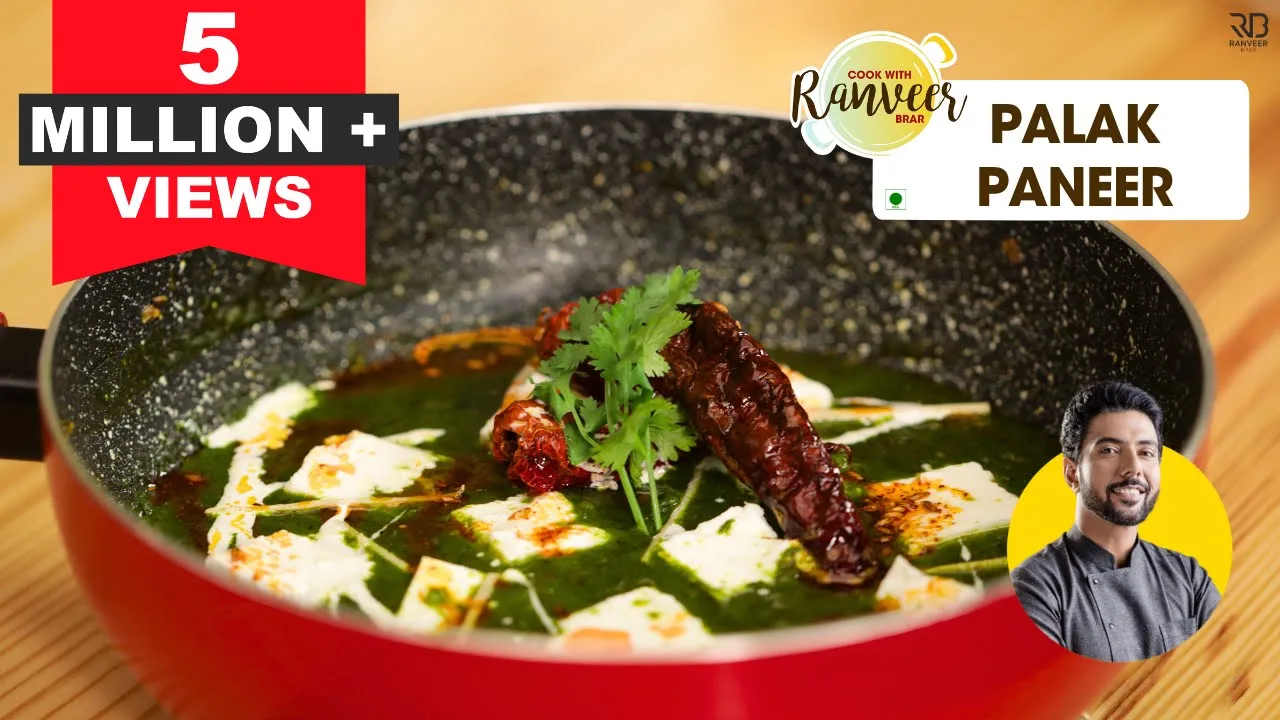
Okay! Here is Palak Paneer! Just because I cannot leave it like this, I'll make a Rogan (tempering)for it.
Ginger julienne! As the oil heats up, add red chillies. One drop of.
. Kewra water. Just a little cream!
And we are done! No! Not like this.
Now. . Coriander!
Just 2 pieces. Now we are done!