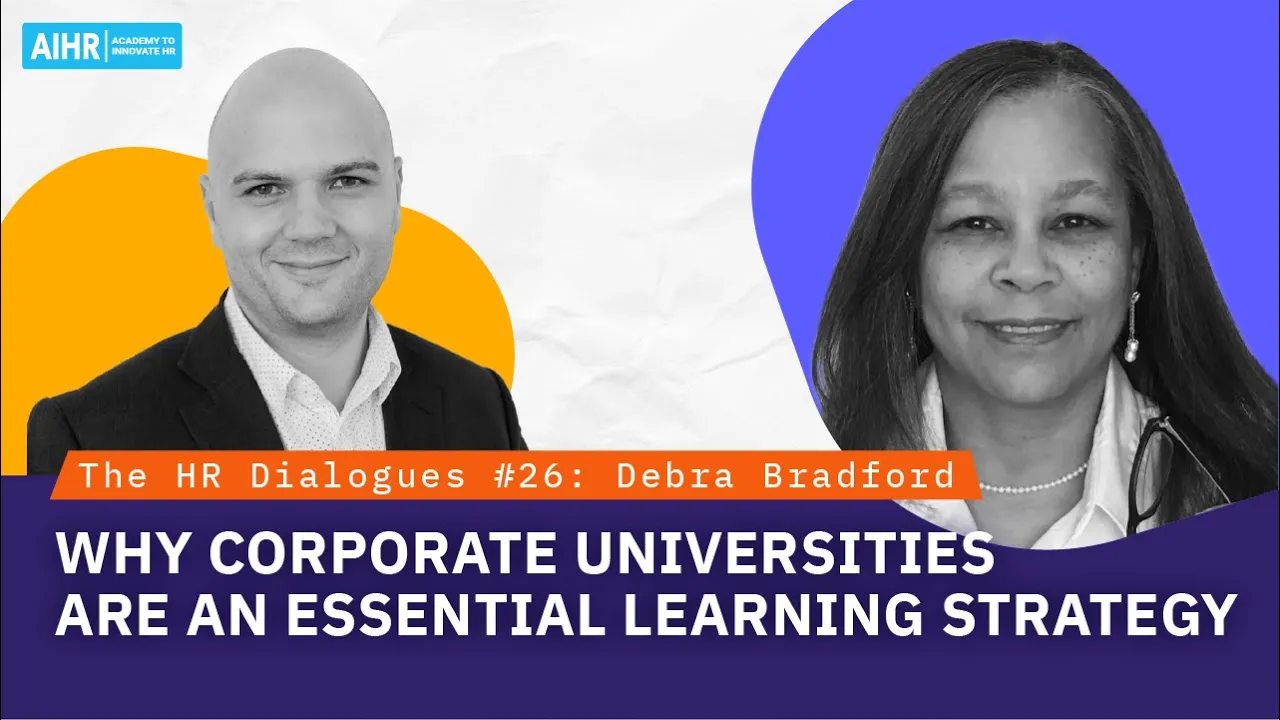
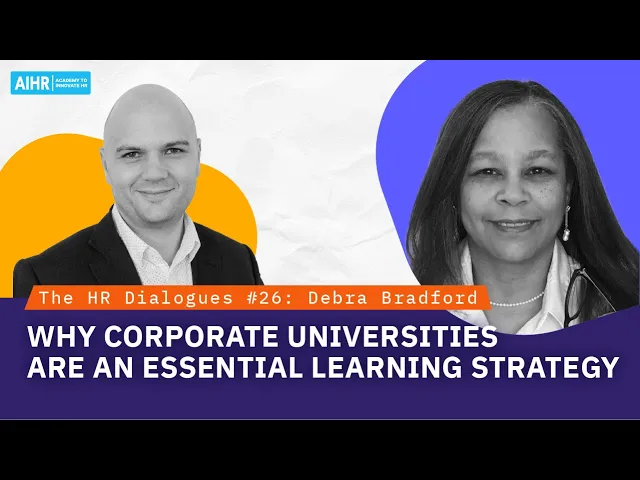
welcome to the HR dialogues a show where we talk about HR and the future of work I'm your host Dr daa felsman and today I'm joined by a very special guest Deborah Bradford welcome to the HR dialogues where we learn from people practitioners as they navigate the emerging world of work debah as introduction so many ways to introduce you HR executive business consultant Professor who is Deborah what brings you to our episode of the HR dialogues well hello to everyone in the audience and thank you for for having me today on the show really I'm
an old-fashioned country girl who was literally blessed with strong business acuum I excel at people strategy by combining strategic HR compliance regulations transformational OD leadership coaching and all of this to align employee behaviors with organizational goals and the management style of senior uh Stak holders I am definitely a Serial entrepreneur have uh started many businesses sold a few ran a few right into the ground but when it comes to people's strategy I am very much about Pro business but Pro business along with Pro people that's me I love that balance between the two and I
think especially in today's world of work such an important one to have to be able to balance business needs through a people lens um Deborah where are you joining us from I'm joining you from Reading Pennsylvania which is about 45 miles Northwest of the city of Philadelphia in Pennsylvania perfect fantastic so Deborah before we jump into our topic today um we like to get to know our guests a little bit better on the HR dialogues and I think to Kickstart I'm going to ask you the question what piece of advice has stuck with you in
your career two things one my love of numbers uh sort of early in my career I realized is my uh accounting career was moving forward my bosses were saying people are numbers like you can't advocate for both and I'm like why can't I so this uh mind opening and heart opening fact that you can do both judiciously and fairly without having to say I'm all for the people and not for management and all for management compan and not for people but I would say what truly gives me my strength is being able to align my
work with my personal values so that I sleep very well at night even after a knockdown drag out with several clients Debra what brought you to the HR side um of the business you've mentioned you started out in accounting I was more often than not explaining why we need to be good to the people in our organization versus just the understanding of the financial bottom line so a mind opener to me was the triple bottom line when it became a thing to talk about it really was under Cor corate social responsibility but I was like
light bulb hello people and I feel that my ability to take a soft initiative that isn't uh very obvious on the cost or the savings and turn that into Financial numbers that mean something to the financial mindset of leaders makes makes a huge difference but for me it was because I was stunned that I'm driving home after work going I wasn't talking about the retain into earnings they weren't upset about that as an owner I would have been upset about that but they were upset at my advocating for an additional 30 or 40 Grand to
go to something that was going to end up returning two or three times that amount of value uh to the company so it was that debate uh realizing that I had this um cycle going on or pattern and then just going into the pattern instead of fighting it and saying no I I'm All About Numbers it's like no I think I'm making a shift here no that's fantastic and um Debra give us a bit of insight just in terms of what keeps you busy today what does your day today look like and what do you
get involved in well I uh run a small consulting firm I call it a boutique uh we just are a very small team we get to take on the clients that we really want the work that we really want we don't just say bring any and all work to us but really that ties my time up uh developing other HR professionals is a passion I didn't realize I was so good at it uh but my kindness I think and understanding of the challenges in HR uh helps a tremendous amount but I also spend a lot
of time in research and development on what does the public want what can we put together how can I help you do it love that and I think that brings us very nicely to segue into the the topic that we'll be talking about today and Debra we wanted to explore corporate universities and to take a step back today and reflect on both our experience pertaining to firstly what are they and do they work and to really start looking at in an economy that is very tight at the moment where organizations really have to be intentional
about how they invest and where they invest a lot of questions being asked about people development and people development investment specifically and what that's going to look like in future so let's start with the basics when I say corporate University what is that and what does that mean corporate universities in my experience also show up under various names and various guises for a very small business it could just mean their training program that they're developing in house but for very large corporations they are doing it I really have to say I've seen those corporations that
have done a very good job but they have had to invest a tremendous amount of money excuse me on the trial and error because the first iteration maybe didn't quite get the results that they needed and then that could be the end of the entire mindset right there for that Corporation other corporations have gone uh farther so perfectly to your point smaller organizations it might just refer to certain training programs that have in place focused on for example developing middle management or developing Future Leaders or some technical skill sets whereas you know I think some
of the global organizations put a lot more structure around that and run various acmis from salesy to you know um leadership of the future academies women in Tech always the first like oh let's not worry about how we manage our people but let's make our sales team memorize that script and get out there and deliver but you're right I wish we could see more of that intentionality toward the overall organization especially their their sea suite for succession planning get that knowledge out of that brain into some piece of technology and I and I definitely agree
with that because I think the the organizations that I've seen do it successfully they do have quite a widespread but it's really based on a very good understanding of what are the call them capabilities call them competencies call them skills that is going to make us successful as an organization because I do believe that corporate universities ories that focus on very broad Strokes in my view at least is a little bit too generic to really make a difference in their context yeah I agree I think that I think there are two sides of that one
the uh trainings developed by corporations can be so specific that they become obsolete much sooner than they believe that they will but then um this is going to go a little off center I also feel that when CEOs and SE Suite executives are sitting down and they're looking at their quarterly or yearend numbers they do two years down the road look at that training that's been developed as an asset and then they want to make that for sale whether it's to the general public at large which is a mistake because it was developed specifically for
them inhouse and their needs the language will be very different inside of that corporate training than I would expect as an outside person going oh $49 I'm gonna I'm gonna take this training really really quickly and then that turns out to backfire on social media when their customers are saying oh I paid for this training but it didn't give me what I thought it was going to give me so there's a there's a real wide conversation to have about that but this balance for me between you know because I think there's pros and cons right
because you can Outsource your corporate University and just send people through you know I think a very good and I think there's a lot of really good corporate educ Executive Education programs out there um versus on the other side to have things that are contextually specific for us what we are doing and I've always found in organizations this balance to have the conversation to say we want to know what's happening outside but we also want to be able to localize certain core elements around what's going to make us successful what is our competitive advantage and
you know we see it in various guises right the insert company way you know of leading or the insert way to sell and I think it's interesting for me that in especially the environment that we find ourselves in this Blended approach in my opinion at least seems to be yielding a lot more value and benefit from a long-term sustainability point of view being able to flex up and down working with best-in-class Partners around the table but then on the other side also knowing what is unique to your context and environment and what you never ever
want to Outsource somewhere else absolutely agreed and companies are very good in stating their differentiators very very good but how do they take that differentiator and make it something that's heartfelt so that that value that service that level is expressed by all employees at all levels of the organization regardless of which stakeholders that employee is dealing with and therein lies another challenge for corporate universities if they're not including the fundamentals of the topic the way um let's say uh your organization would do or if I'm creating a piece of customized training that I would do
if the fundamentals are not there what you're doing is you're teaching someone how to mimic versus learning and when someone truly learns something oh now you have the power of their independent personality and how their personality is going to work with that line knowledge and how that knowledge is going to spin around and come up with amazing ideas but if the fundamentals are not a part of the training now you have someone who's paring what you've told them but you're not going to really achieve the uh I would hope to believe the fundamental goal which
is creating better ideas and stronger platforms and your engineers come to work going aha that's sort of what we are looking for and when we have that the cost of developing the University not a challenge or the cost of Outsourcing it not a challenge because we see the value you know I sometimes smile when you know we also speak to clients and and we usually get two pieces of feedback right when we do academies the first question is always around you know how practically applicable is the learnings going to be to my environment which I
think is a very fair ask definitely which is a very fair statement to make however I do believe and this touches on the point that you've just mentioned this blend between wanting to understand call them fundamentals Theory where things come from what the concept really is and then that translation component around what do mean in your environment and you know how do you go and apply it uh further in terms of creating that value I think that fool call it a value chain or development cycle is such an important component because what I also fear
especially in the complex environment that we live in today is that we get to a point where people only learn little fragments in the moment and we start actually diluting The Learning Experience so people never holistically understand and are able to make connections between seemingly unrelated Concepts now I know I'm preaching to the converted here but let's get back to a corporate University if I am a business leader and you are speaking to me wearing an HR hat how do I sell this to business to showcase the value to them beyond the argument around that
training is important I really think the pain points are there so for me sales selling is more of a relationship building once I get to know an executive I know I'm not selling this person anything for about a year I'm getting to know them and as they get more comfortable with me they do start to share let me tell you what happened last week or last month and I'm like aha now you trust me enough to tell me something about the experiences that you're having so now we can have a conversation and for my small
business it's even more challenging because a good number of time a chro will come to me and say hey Deborah I've got X number of people out want to get trained give me a price yeah there are so many variables like do you want to do this in four weeks do you want to do it in 18 weeks like there are so many variables to design a program that's going to fit the learner and meet the goals of the organization who is funding it so it does become a challenge but as soon as those pain
points are understood very easy conversation and in uh our marketing we can surmise the pain points and we can start to explain them and if you're feeling anything like that perhaps you want to open up your calendar for a quick uh meet and conversation to see what we can do about it but if you can't reach and communicate the pain point or your understanding of it or you're concerned about it I don't really think that it that's a sale Point yet still warming up the audience maybe but not a not a time to close nonetheless
if we work hard in our sales wearing our sales hat we really are helping the general public they don't know they need us until we help them see that they need us and then once we have that consensus let's uh develop something but even with uh coursework that has already been developed it's already on the market it is the supervisor SL manager's responsibility to make sure that what you are buying in education is a fit for your need and is going to reach help you reach the goal that you have created and I think that
that can that misalignment can become a future complaint from that person because on our platform we we offer money back but we also try to make sure there is an alignment between what you're getting and what you think you're getting you mentioned two really important words there right I think the first one is know the pain Point um and know what the need is and because those are not necessarily always the same you know I think sometimes people buy things to address a particular pain point but it's not solving a dee rooted need it's kind
of solving a symptom of something else and then I definitely believe and you know similar to you that you're going to have to phrase it then and take people through a process there of saying but what does this actually look like because I think the world where you know I come in and I buy only a training that is a slight small onetime point in time solution engagement I think there's so much more value that we can offer given the types of channels we have today you know you think about you know immersive learning think
about e-learning think about all the different types of virtual realities that we get within the educ ation space today but it does call for a bit of a different conversation around when value will materialize and what value is going to look like and maybe to bring that back to your earlier point I sometimes wonder if that's not why sales gets all the attention because first we can see what the outcome there is going to be my experience it's usually sales first then we start worrying about digital Talent then we worry about leadership development for the
future and by the time we've set up and established everything we want to start a cycle again and there are so many stakeholders that get left out in the cold little bit of which I think HR you know and I'm always biased towards the HR professional I think HR gets left out in the cold quite a bit after we've done all the work for everybody else and setting them up then we realize but oh my goodness we've not developed our own people we don't have an HR academy uh in place exactly 100% agreed and back
to your original Point uh of trying to understand the pain point with the prospect or client is a challenge because I've had a lot of clients come to our consulting firm with an underscore here's the root problem please get in here and fix it and we take the mindset of I'm sure you're right but we want to just do a little Discovery before we put together a plan for something we haven't seen and when we get involved we find out that the pain point is true but the underscore problem is not coming from where the
leader thought it was coming from the discovery shows that it's coming from someplace else so again strategy is still critically important especially in education because an organization that let's say has an engagement with your company and they are enjoying the CH the uh training excellent Mark that down because so many organizations will sell you training that's watered down it's not really robust and you don't know it until you're halfway through it and you're like oh my God can I get my hour back and you cannot so I I agree with all that you're saying but
it is is not um a simple problem so Deborah what does good look like and I know that's such a broad question that we can probably spend hours hours on but I mean what are some of these things to look at because to your point I think a lot of people um you know content is King these days but content is also everywhere so it's no longer just the content piece that actually makes the difference it's for me the whole package you know where does the content fit is it contextually relevant how is it portrayed
I think the first non-negotiable is what makes it so cost prohibitive and that is that the training is being delivered in multiple modes it's not just uh reading text on a screen and even if you can change the color of the background and the color that all wonderful but that's one mood some people don't learn well that way some people need video they need something that excites them or they need the story told in a story format other people are bullet point people just give me the bullet points and let me go and this is
a question that has uh many sides because we're talking about adult Learners and adult Learners already know who they are you can't tell them okay here's how you're going to learn the way I can start out with a kindergarten or first grader because they are like is that how I learn adults are not that way so that is i' I'd say the first thing but the second thing would be quality of content and how valid and reliable that content is against the measures of my organizations concern for Success So when you say what does good
look like if they have a measurement tool let's start with that measurement tool let's have someone let's say sit in to um just overview or or audit my training and at the end let's complete your your measurement tool and see how well did we do I think sticking towards you know I think the mode conversation is a very important one especially these days around a core focus on accessibility for people with regards to digital learning I think such important work that is taking place um you know in that particular space and then on the other
side I do like the view around that let's agree on what success looks like for you align to your business I am going to be slightly sneaky here and ask you the question around return on investment because most people will ask that question immediately to say you know if I'm going to invest x amount in a corporate Academy or even just in a basic leadership development program I want to know what the ROI is going to look like and yes we know there's models out there we know they work in levels and maturity Etc but
let's talk the real deal what does ROI look like in terms of people development in organizations well on a personal note if I am working with my team I want to see them return to work when they're finished with the training and be able to do something better and if it's not better I'll take different even if different is mistake I'm okay with that they can make a few mistakes we're not no one's going to die and we might learn something the mistake might turn out to be uh brilliant but I think that that is
very important and I think that is the first level of Roi is what you're seeing now it depends on the training um category because if we are certifying professionals who are already employed and are being put through the training by their employer then the employer wants to see that they pass the Certification Number One and that could simply be the ROI because being able to say that everyone on my team as a certified professional is huge especially in the human Sciences like magnet hospitals they want everyone to have a bachelor's degree and everyone to have
a certification in the area uh that they work so I would say that that is the obvious but also when organizations are developing their employees that's a personal Roi for that employee so that feeds into so many initiatives from HR from recognition all the way to reward all the way to development even your succession planning because I know what knowledge my executive has so I need to have four people learning those same things and coming up the ranks so that if ever there is growth and that executive goes somewhere else I've got another executive or
two or three to select from who are ready to fill that but if I have no internal development process even if I'm putting it together with some internal and some external you still need to have a a plan for keeping your knowledge inside of your organization and growing your knowledge so that your organization grows but I think that for uh the biggest challenge is when I say oh we can probably do this at for $5,000 per person on your team it's wait a minute what is that and then I'm working from that position forward but
I don't find it to be a challenging conversation because I'm not going to put that number out there without understanding what you need and having put it together and I can show you all of the components and it is very much like a cafeteria style process with me at some point standing over your shoulder as a salesperson saying this will void your warranty that's not going to get you where you need to be you know that type of thing but it is a broad conversation to have and often just the personal fulfillment of the employee
who's receiving the training can be the ROI all by itself it can turn an employee who is 100% compliant but not committed into a 100% committed employee who's going to bring you 200% return the day after training than the 90% they were giving you the day before I also believe the you know that L&D sometimes falls into the Trap that all HR functions fall into where we typically look at success as defined from our functional domain right whereas you know if you continue you look at it that way you will forever be held Ransom to
operational metrics like you know how many people went through this what was the adoption what did that look like um you know how did that translate back into the workplace whereas I do think that if you start looking much broader than that you start seeing the impact points in other components like you mentioned you know in terms of I learned a new skill I'm doing something slightly differently because I'm doing something slightly differently I'm more engaged how does engagement translate to productivity for example and those type of metrics are more complex to Monitor and more
complex to measure but I do think they are much more valuable when we start thinking Beyond can I call them the face level you know metrics that I know is important but the story can't stop there a really good instructor or facilitator can be all the difference in just one attendee's attitude or mindset about what they're learning we when we are standing in that role when I am standing in that role I feel like it's outside of being a mom the most important job that I get the blessing to do is to help people have
that aha moment and change the way that they think because employers today for most jobs not all jobs we're not hiring people to move data from here to there we're hiring you to think and then you decide how the data should move should it move from here to there where maybe 60 years ago we were like just look at us if it's a green light you move it if it's a red light you know back to Ford motor and GM and all of those studies that that happen today we want human uh interaction we want
the mistake potential but we want it because we want to give our employees a challenge and an opportunity to show some creativity even in an industry where there's seems to be no creativity there is a little bit and I think we should celebrate that right so I think sometimes we become extremely rigid also about what these things mean I am you know a firm supporter and believer that experience drives a lot of different elements from an outcomes point of view and I think we sometimes don't think about that holistic experience and we just think about
the program or in the moment and not where it fits which is you know back to our original Point around corporate universities why I sometimes do like the fact that it forces us to think Beyond one program it forces us to think about a journey over time at different levels with different engagements that people have depending on their reality because that should also change depending on their career within the organization they are not always going to be in one area in one role in one skill set and I do believe that academies exactly right that
Mobility question that we sometimes have and I do think thatmy and corporate universities are great ways to foster that I'm going to sneak in the question to you because I get this one a lot and I'd love your view on it you know in that type of landscape learning culture how do we build a learning organization how do we establish a culture of learning I think everything starts at the top leadership is about um modeling the image that you want to see others model as they're following you so if I'm leading a team or I'm
leading an organization and I want them to start being you know get that fire of knowledge running and and on fire on on Blaze again chances are I'm going to show them that I'm taking it serious by doing something with them I wouldn't do it by myself because that's sort of is elitist and maybe I'm the only one that gets to do this no how about we're all going to do it together and and now that I say that since I would be involved it has to be something fun we have to learn something but
it also has to be fun where we can play a little bit and not act so seriously but if that's what your leader is doing and your leader is doing it with you it's going to take off like fire but now if I send a contingent even if there are ex you know top Executives it'll take off but it's going to be slower because I didn't do it myself so I think that we do have to lead by example and you know we all know the parents I think we're in a close enough generation who
told us not to smoke while they were smoking didn't work so I think if you really want to take off you have to model the way but secondly it has to be a part of the Strategic plan for the organization it has to have behind it it has to be seen as something that is important for the forward movement of the organization and isn't it like use my words everyone that's exactly what you're doing but if you you are not making it punitive meaning you're sending your employees who didn't do the job the right way
last month and now their punishment is that they have to spend two days in training they know it's a punishment and that's exactly how they're approaching it like oh God I can't believe I have to do this no Roi on that just a little bit of punishment happened that's it so that's what what I would say they need to do but I think also having um an incentive behind it is always good I love when I see corporations say we're going to when I mention that they'll say we'll put a budget behind it but we
want to make it reasonable so even if it's 1,500 per employee per year for their own development and then in the um uh productivity evaluation system I want it there I want it to be something that's measured so we're measuring how employees are working toward the corporate goals but what about their personal career goals let's make sure that that is a part of their development as well because again we're looking for fulfilled employees I know that's probably more than you wanted and I'll stop because clearly once I get the train going I keep think that
that is I think that's very valuable I must say I think the the the leadership enablement versus the leadership support argument I think is a really good one to have you know it's a a lot of chro do this and I was also guilty of doing it you know when I was in in that position where you want to showcase the importance of something so I join for the first 10 minutes to kind of tell you how important it is then I disappear and my behavior tells you that you know there's something more important than
what I've just told you to be focusing on that I need to pay attention to um love the fact also the alignment with and I think we've sometimes ignored this quite a bit that yes there's training that has to achieve organizational goals but it has to be aligned towards individual choice and intent as well you know I sometimes believe that learning cannot be a punitive component learning has to be a choice that somebody also makes to say but I want to learn I see the value of it I see the benefit thereof and you know
I'm a stickler for routines and rhythms and habits and if you don't create those within the organization and an environment that encourages those different elements you know learning never takes place um you mentioned earlier you know things just need to be slightly different even though it's mistakes you'll take the mistakes you know if people are learning and in a learning culture they will make mistakes they will take more risks as well you'll get higher rewards but there will also be a lot of learnings along the way and I think sometimes we stifle that because we
say you know but I've sent you on training you're supposed to be how to do this in a perfect way um and I'm we're our own biggest you know kind of victim and derailer in that regard and I think that's something just to be careful of around the fact that there's some unintended consequences of our behaviors that we are not necessarily able to monitor Debra I want to start wrapping up for us it's been an amazing conversation maybe a few takeouts before I ask you for some closing thoughts I think the first one really to
talk about the fact that if you do establish a corporate University you need to understand why you are doing it what is the Strategic int behind it and what is it actually going to accomplish we also spoke quite extensively about the benefits and the limitations of internal versus external um coming to the conclusion that very often depending on what your objectives are a blend of the two solutions actually serves you best as an organization getting the best of what's happening in the market staying relevant but also then knowing what is your competitive Advantage where you
really want to spend your time and effort and focus your resources to make sure that you can drive your way your competitive advantage of doing it we spoke quite a bit about learning cultures and how they need to support the organization how leaders need to be involved in that and we spoke about the fact that what are some of those things to look out for and really take away when evaluating either a Learning Partner or evaluating just some of your own internal learning initiatives and content around their value and their Roi and how we should
be thinking very differently and measuring Roi differently in terms of our initiatives debah last comment I'm going to ask you for give some advice to HR professionals listening today that you know might have been in this role and environment where they've been had to defend learning initiatives you know all their life up to now how do we encourage them how do we motivate them that it's a battle worth fighting oh listen you yourself as a professional whoever is listening want to be developed think of where you were five years ago and where you are now
or perhaps where you're intending to be when it comes to your own knowledge in five years from now your direct reports or or those that you have charge over especially if you're leading Human Resources need to also be developed because businesses are moving fast faster than we've ever seen and in order for Workforce to be ready the knowledge needs to already be implanted otherwise you're going to hurt your company by being behind the curve and having to react as opposed to be proactive so be proactive with your education and your learning look for programs that
are fun and if if you don't understand them reach out and say Hey I want to have a conversation about your service or your product because we actually love those conversations debah where can people follow you and find out more about what you're doing where's the best place to connect with you you can connect with me at Deborah bradford.com website or on LinkedIn at Deborah my middle initial is D Bradford you can find me there thank you very much for sharing your wisdom and sharing some of your battle scars with us in this conversation as
well um we will definitely catch up soon and to our audience have a great day further

![What is Talent Management? Definition, Process, and Strategy [2023]](https://img.youtube.com/vi/NwufHwariTI/maxresdefault.jpg)
![Power BI for HR | How to Build an Interactive Dashboard & HR Data Analytics [2024]](https://img.youtube.com/vi/kqmqO_OPEbE/maxresdefault.jpg)