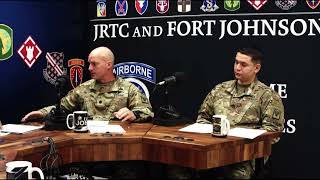
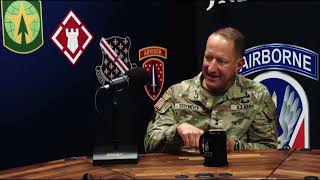
this is The Crucible the jrtc experience [Music] [Applause] this is light fighter lessons in this series we discuss infantry warfighting skills and Lessons Learned in a decisive action training environment for large-scale combat operations at jrtc hi uh Colonel Matt Hardman commander of operations group here with the first class Tyler manship uh Muldoon 7 platoons aren't for third platoon Bravo Company 2505 thanks for joining us on another episode of The Crucible so like up front I'm in I'm in uh I'm in the presence of of really um a celebrity at least in the circles I run
it uh commanded I commanded Bravo Company 2505 uh 2003-2004 and uh there's some folks out there uh from my past that are super excited that I'm sitting here with uh Muldoon 7. and so kind of for the audience uh and we just got done doing a rotation with first brigade 82nd uh the devils and uh 2505 provided uh two companies provide an opt for support and a bunch of leaders that did an outstanding job as uh oct's here in the rotation and got the opportunity to talk to us aren't uh first class manship for a
little bit and we were talking about the defense and you you gave this like 30-minute LPD to me on the defense I was like Blown Away with uh talk to General and Eve All American six about it and um yeah just really impressive it no I shouldn't be surprised everything we expect out of a great non-commissioned officers uh for sure but you guys are coming back here in April of uh 2023 and um so I thought this would be a good opportunity to kind of talk about you know what did you learn from this experience
uh what are you going to take back to your platoon what are you going to focus on uh as as you help prepare your formation for large-scale combat operations and so um you know up front hey tell me about your career uh where'd you start out in the Army where all of you been sorry sure so uh I mean thanks for having me sir thanks for thanks for agreeing to do this so I um I'm 29 years old from Fayetteville native so you know everybody around me all their parents were all in the Army it
just seemed like a logical progression in my life it's all the people I looked up to were in the Army so joined the army at 19. um ended up luckily getting stationed at Fort Bragg in first brigade 82nd ironically which company were you in I was in a Bravo Company 2501 I was uh with Geronimo okay so um after after that I you know deployed with uh Geronimo 2501 and um immediately upon my return I went and uh did three years as an RI over in the mountain face Ranger school and then came right back
to uh the center of the universe and um I'm currently a platoon sworn over in uh 2505. okay the mall dimpleton so when did you uh when'd you go to Ranger school what year uh I went to Ranger school in 2015 graduated in 2016. so I I spent a little bit of time in the winter what phase did you uh do do twice uh I did Darby twice okay I was a Christmas Exodus recycle okay so I I uh filled patrols my first um Darby cycle and I was uh I was coming from a scout
platoon and um I think that I just had a much more relaxed mentality going into that first phase of of Darby and I was a lot of things going into Ranger school but relaxed was not one of them I could understand that I was I mean looking back on it it was uh it was a little bit silly what right were you I was a E4 promotable okay so um I was I had already graduated arslick um and I was for whatever reason just Ultra confident that I was going to just you know 62 and
through like I was I was just gonna be you know straight through Ranger school it was going to be no problem and uh I I had a rude awakening waiting for me when uh when I got to Darby because um you know I failed patrols which is like it's not something a leader ever wants to hear like hey you you did not do your job well enough I I could maybe accept spots like hey you you fell asleep too many times or peers would be a tough hit as well but patrols like definitely definitely hit
me pretty pretty hard um luckily I had a very very long time to think about it because we uh we recycled into Christmas break for the Ri so I was there for about three weeks and then luckily we got to go on a Christmas break ourselves I came back and then restarted Ranger school and I think it was January 3rd and uh that was not pleasant but it was the one of the most meaningful experiences that I ever went through and it's one of the reasons that I was proud to go and be an RI
is because that that developed my character more than more than anything and when I talked to young soldiers about like Ranger school and you know try to get you know the the E3 for E5 population to go to Ranger school the number one thing that you get out of that is you know the you get your hardest day number one like they're since that time I have never encounter today that I haven't been able to look back and say well at least it's not Ranger school yeah um even in combat so uh that was very
valuable and then you know after uh after that I went straight through I started taking it a lot more seriously and um luckily I had uh had a good group of peers had some good RIS that taught me exactly how to how to operate and I just needed to be a good person and not give up dude it's awesome um you know my in my experience in that school I mean hugely humbling experience and um you know I think that's a big part and like what you said like being just a good human being right
like that's the foundation all this and I mean we're all like every day we wake up we're struggling to be good human beings right it's it's active work to be a good human being um but the uh now the humility part of this is really being open to be to learning right and um that's a huge part of jrtc right like um you know this is like a group Ranger school right unit level Ranger school in a lot of ways and it's a huge learning experience here if you're open to it you know if you're
open to learning uh when did you go to jump Master School uh I went to John Master School in 2016 2016 was a big year for me yeah um so I graduated Ranger school and my platoon started at my graduation ceremony put uh put E5 rank on me and my and then pen my Ranger tab um so I think I think it was October of 2016. I graduated Ranger school or a jump Master school and that was also a little bit of a humbling experience because I once again thought that I was just going to
Breeze through this school knocked out um the nomenclature test easy I'd prepared for it knocked out pre-jump easy prepared for it written test easy and then I got to jmpi and jmpi was a monster and uh I got my I gotta go on re-entry Bravo for you know those of those that don't know that's like the fifth and last attempt that you have to uh to pass jmpi so well I got to do jump Master School twice yeah and uh the second time resulted in me uh going to jump Master school um the Monday after
I got married um which you know made me really popular in my house going forward uh but uh no it's awesome and uh you know and I'm bringing it up because it's like the expectations of being in you know an Airborne leader right and Ranger qualified jump Master qualified um you know it's not about the badges everything you describes about these experiences that we have that are really character building as well as in viewing you know Leaders with with expertise uh going forward so um yeah and so you know as you prepare for this uh
next experience of you know being a platoon Sergeant uh leading your platoon uh through Dr TC you know tell me um you know about your experience here would you learn um ocing uh you know platoon from uh thread Devils sure so I mean there's there's a several like practical things that I learned in in deficiencies that you identify and that you learn from um Red Devils have a uh they've got some different assets than we do they're employing the new isvs which I think are fantastic and the way that they employed those was amazing for
kazavac resupply and so as their filling that Gap um the entire time I found myself questioning like how I'm going to do this without that asset yeah and um so there's some some practical things yeah so this um this you know one of the things I I you know had a baton Commander talk about this the last tactical kilometer of sustainment you know would you learn about the last tactical kilometer of sustainment you know uh that you know as you think about doing this here in about six months right because you know the unit that's
here it's the man in the arena right like you know you you watch what they're doing and you're like man that's hard right I don't care who it is it's hard um and and no one in doing are two different things is what I've kind of experienced watching here but so what did you observe being like wow like that that's a real problem that I'm gonna have to figure out how to solve so I think uh my I used to have a platoon surgeon that would would say all of the time and I think it
it I was constantly reminded of this over this rotation is that nobody is coming to save you so when we talk about the last kilometer of sustainment I think that ncos and particularly at the company and Below level need to adapt a mentality of self-sustaining um now as far as you know the last kilometer of sustainment outside of that I think that there's a myriad of of Creative Solutions that I think other organizations excel at you've got sling loads you've got um you know caches you've got a half a dozen techniques but I think that
the overall mentality that we need to adopt is sustainment one of the biggest problems was water yeah and that's every rotation right whether it's a billion degrees out or 35. um you know the division is you know embraced like we're going to be 60 pounds or less right um which sounds like counter-intuitive to this like hey you got to take care of yourself in this uh and All American six has talked about like hey we owe at the division Brigade Battalion level that we're getting this to companies not you know from the from the Cog
perspective like we did that it's the physical part of getting water into the canteen brutal yeah I don't I really think that we need to revert back to older school um methods of of water resupply like like I did in Ranger school yeah like the the iodine tablets and the modern version of that we have all kinds of Technology now that that is sufficient and meets all kinds of army standards there's you know a couple of different water filters that every every time I see you know an organization out struggling for water I always ask
myself why doesn't the platoon have some form of ability to get water themselves like the the old school watering quartering party um and I think that that's that needs to be a Way Forward because there's so much weight that's associated with water and what are cans water bags are so fragile that you know the the sling load the uh the speed balls all of those things aren't necessarily a reliable as reliable of a method for water resupply and I think that driving your vehicle up to a platoon or company's patrol base is at times like
it's it's not going to be sufficient so you're going to have to send members of your company or platoon in the absence of the ability to self-resupply send them back a kilometer yeah to to go get that water and then they're carrying water cans back and forth so we had a rotation here um where we had this conversation on rsy with a baton and you could see the Battalion Commander command somewhere here to look at each other and like like it's almost as if the light bulbs went off over their head and they came in
the next day and they're like all right so this Hey sir you know you asked us how we were going to get water into the canteen so we took our companies and we actually went out and we practiced doing it on a stopwatch and we learned a ton and like we like we're taking way too long we got to reorganize and then the next day they came in they did it again and um when they went out into the fight they never culminated based on sustainment because they'd rehearsed it and they actually understood how long
it took to move an element back with the right amount of security to bring the water back forward from you know d-truck Point somewhere but it yeah I remember having to do that in Ranger school having to go as part of a squad collect everybody's canteens which then gets it have you labeled everybody's canteens you're you know um and then refill in canteens and and getting enough practice at it to be very proficient at it um you know so I think some of this that's what it gets to is like we got to practice some
of these I mean and they're not really you know they're they're in like the ranger handbook and stuff like we just got to do it yeah um and we by the way we can do um water purification here at JROTC so if you come like we can do it uh iodine tablets uh there's certain spots that we've tested the water and we know we can do it or if not we'll we'll do it constructively um as well because that's exactly what we want we want people um that sustainment is not a limiting factor and you
know in All American six is like hey we gotta drive like we got to drive this from the division down to be pushed and sustainment so really the company problem is how do I get the water into the canteen not whether or not I have water right right um what did you see you know how like in your in your platoon uh how do you build like the log stat to feed the company locks that I mean do you do you run status cards in your platoon uh so we don't I actually ironically I literally
just made a format for a status card three days ago um I find them on the global he'll send you a copy based off of off of this last rotation um I do have a log stat format yeah I keep laminated um that keeps track of my days of supply of water uh MREs all my class five and everything like that so status card so what you built this status card I wish you would ask I got a couple digital copies but it was probably good and cathartic to build it yourself um tell me the
why behind that because there's folks that I mean again you know smart people that have never used the status card to explain like the why behind a status card so I think uh the the primary purpose of a status card is number one your your team leader it should be your team leader that's filling out the status card typically in in Ranger school it's your bravo team leader that's I'm that's maybe an overly rigid interpretation of that somebody in that Squad a leader in that Squad needs to figure out by person exactly how much water
that individual has identify what key weapon systems that person has what special equipment that person has how much ammo they have so that those problems can get cross-loaded or addressed prior to some sort of catastrophe um we had a conversation about risk not too long ago and the time to bring up that you're running out of water isn't when you're out of water the time to bring up that you're out of ammo isn't when you're out of ammo well and so this idea too of like Risk right like Hey we're going to take care of
ourselves you know if we're carrying 90 pound rucksacks we're never going to get to the objective right right and so you know we're constantly at the company level of sustainment we're constantly blade running of like 60 pounds is probably really the max that we should be carrying right in the division standard 60 pounds and that aligns with all the data right the data says like hey if you're carrying um you know x amount of your body weight you're going to crush yourself right um and for most for average that's probably 60 pounds is probably about
30 percent for an approach marks load sustainable um but to sustain that we got to constantly be making the system work and the system is only as good as the inputs right right and the status card is the discipline of that system and those inputs and it gives a team leader ownership it gives a squad their ownership at the end of the day I think the number one thing that you get out of that isn't necessarily you're gonna get the inputs one way or another because a platoon's aren't gonna gonna walk around a a good
platoon Sergeant is going to walk around a good squad there is going to walk around and check to see hey how much ammo do you have how much water do you have there's we have lace reports it's it's built into our systems yeah the thing that matters to me about the status card and the thing that matters to me about the log stat is the ownership aspect of it it's giving your subordinate leaders a the the ability and the freedom to to own their part of of the fight and when we talk about what is
a team Leader's role um everything that happens in their team they're responsible for the lives of of three other soldiers and everything that they do or don't do and so I think it's important to make sure that that team leader has entire ownership and feels like they have the freedom to have ownership of that team um and I think that the the status card is a really good way of doing that and it's going to be painful at first yeah they're you're going to have people that take shortcuts you're going to have people that don't
take it seriously and that's with everything and I think that once once you're able to explain the why and demonstrate the why then it matters now I have ownership now I now I care about it as a team leader I think the the Fantastic thing about jrotcs it's full of wise if everything that you do is either like is is always exploited if if you fail to dig in we talked about risk as far as digging in if you fail to dig in and then you take additional casualties like there needs to be a conversation
amongst your squad amongst your team okay this was preventable so if we're training like we fight and we're taking this training seriously and this is supposed to replicate combat those two people that just were notional casualties would be dead in real life why because we didn't dig 18 inch fighting positions yeah that's a little ridiculous no I agree and I mean and then the wrist shifting too of now we're short two people in the fight yeah right um yeah and you know so we you know we push and we talk at uh the leader uh
training program I mean standardized products right so having standardized range cards right these are habits and discipline any crazy thing like you live in a platoon that does status cards you'll have private so grow up and won't know any different they're like well this is just what I'm supposed to do as a team leader I've watched my team leader do this for the last two years this is what I'm supposed to do as a team leader um likewise with sector sketches range cards um opporters um you know these they they provide I think a structure
and a discipline to do the things that we know if we're if our habits and our formation improve the odds of success but to your point is like the why right we got to explain the why Behind these things hey I'll give you my why so my why of the standardized products it's easier to train right it's easier to provide so if I have a standardized uh status card in for every team leader in Biko 2505 well you know company Commander can produce those we can have a couple spares on hand it's easier to inspect
because hey everybody you know if their status card and it looks the same uh it's easier to train um going forward which gives us resiliency you know as as we have you know leader turnovers we have casualties or we got to change around organizations um awesome uh what else you taken away from here that you really want to drive within your platoon well I mean I I think that the most important things like you know there's all these these pragmatic problem sets and there's these all these um kind of Niche things that you'll see that
you're like hey I really like those CCP markings I really like you know the the way that they they did X Y and Z but I think the most important thing that I for whatever reason always have to relearn actually has to do with culture so developing character not necessarily over skill like you still want to train skill but prioritizing character over skill and I think what I mean is um you know back to the Ranger school analogy like the number one thing that that's doing for you is developing your character well what I saw
during JROTC was you know some individuals that were highly skilled very technically skilled and knowledgeable that whether it be Fitness or whether it be um resiliency towards the end started to not perform and then you see some of these individuals that maybe you looked past at the beginning just start to shine and really Step Up um there was a there was a sergeant Josh bullduck in um Charlie Company Red Devils and he in a a mass Cal event his fire team got separated from the rest of the company he is now operating alone and unafraid
has no idea that anybody else is alive and so at that moment he decides all right well we're going to go to the objective I love it man he took his fire team and was going to go seize a foothold in second season I love it with his fire team which was like 2K away I love it the the company you know they're in the process of consolidating and reorganizing and they're like where is this fire team they've got accountability of all their casualties and you know they were just separated and they're trying to locate
this fire team so by the time they get on you know get this fire team on comms they're 200 meters away from sagacita from oh man this fire team leader was going to go seize that footage is that not the most inspiring thing in the world yes so when we talk about culture that's the type of leader that yeah that I want you know maybe it's the most that's the most 80-second Airborne you know um no it's totally I mean it's like we can replicate that right like that mentality and you know and so you
know these are crazy things right like you know we bring sorry man I got like got me fired up you know I think back so I had a guy uh you know uh at the time specialist Campanelli um falling behind in a in a force March we're uh doing a company Sixth Lane when I was a battalion Commander and um he uh he's fallen behind and they hadn't slept in like two days this is an Alaska rough terrain you know the first heart's like hey you know camp like he's fried first starts fried it's like
why you know what's going on man come on I thought you were gonna step and the first turn just kind of wondering that question and like hey what's happening with you know camping alley like Steps it out digs deep gets it done it turns out he broken his fibia right he finished the he finished the 20K movement on a broken leg now we don't want guys to get hurt and all this stuff we're like nobody I mean everybody in that formation is not gonna look left and right just like in Charlie 1504 and know that
they're around people they're gonna lay it all out there to get it done and um I mean that is really that's I mean you just gotta bottle that up right and uh and sell it because that's the secret sauce and uh it's awesome to get a it's a great story I appreciate you sharing that um you know this uh you know my my uh my college soccer coach yeah I called him before taking the time command and you know I just kind of wanted to pick his brain on leadership and you know he talked about
how um you know he changed the way he recruited pliers you know he he went from trying to recruit the very very best players from a talent perspective and to your point about character right and and I think we've mold character too right um but he's he said you know I realize if I just found the right people with the right mindset capacity and skill would follow and I think that um in the patience that you describe of like hey there's people that are going to be a little bit late bloomers if we nurture them
if we develop them likewise it's a great performer sometimes we Overlook like Hey listen like I know you're doing great but here's some areas you got to work I mean this is like the foundation of leader development right we provide counseling and feedback like we gotta nurture this this character um to help the folks that are you know have a bunch of untapped potential like research potential for folks that are high performing to you know continue on and to to Great Heights um that's it's awesome um okay so how do you approach leader development as
a platoon song so I think that that's uh I think that's the the existential question of my time um because I I genuinely ask that question all the time and I think that if you're a platoon Sergeant or if you're a leader who's not always asking that question um you might be wrong like I think you need to constantly reevaluate uh the way that you approach developing soldiers so you know to to the point of like striving to develop character uh it is my belief that I I can teach you technical skills I can teach
you how to operate a piece of equipment I cannot teach you character traits now that doesn't mean I can't develop them but I can't teach discipline the only thing that I can do in order to increase the amount of discipline for example is place you create a dynamic situation in which you either show discipline and are rewarded for it or you don't show discipline and there is some sort of associated punishment for it yeah consequence right so like right it's like yes we do the right things and and the consequences are positive we fall short
and the and the con you know discipline has a kind of can have a connotation it's just doing doing as many of the right things without being told as possible right yeah yeah that's I mean that's exactly where I was going to go with that is that jrtc is is that is one of those Proving Grounds where it's it's an amazing learning experience and I'm glad that it exists for units prior to going to combat um because it shows it number one it gives you that Dynamic situation uh repeatedly you've got 10 days of constant
if I don't do the right thing even when it's hard there's some sort of associated it's always going to get exploited I don't know how it always manages to to get exploited but it's always the one position that falls asleep is going to be the one position where the enemy tries to breach and I you know it's it's always um it's a it's a really interesting situation but my my yeah I mean like as a brigade Commander coming through here like um my failure as a brigade Commander to adhere to the one-thirds two-thirds I got
time thieves my Battalion commanders on a couple missions pretty bad it absolutely got exposed right like that yeah the Brigade paid the price the subunits like paid the price for for my failure um you know back to the Ranger school I got it was not a perfect Rangers right um you get exposed right I mean High you know leadership laboratory of high stress and pressure all the time but that's like where we grow yeah I mean I I definitely think that so the the first turn of the company um that I was watching described this
instead of the uh the eighth circle of hell you described this as the eighth phase of Rainier School yeah right I mean seriously this first sergeant slept like 30 minutes the first 72 hours um he was first of all phenomenal he was a monster um and he was really good at his job and I really really like there was there is a lot of things that I watched him do just the little things that I'm I for sure am going to take back with me and it just adjusts my perspective I think more than anything
like examples is as soon as he came into the alpha alpha there was a a platoon sword and with a manifest who was getting accountability of all the soldiers he had a red lens on and without being in the alpha alpha alpha for two seconds he was like hey put a poncho and we'll be over that guy and it's like it just reminds you it I don't know why I always have to learn the same lessons over and over again um but I do and it just reminds you that the the little things matter all
the time yeah you know it's funny you you what you said about you know just having the opportunity to to watch like a real Pro and learn from them you know I got I was a task force senior at National train service the Brigade trainer out there and I mean I gotta watch nine Brigade commanders and gotta learn from every single one of them and I think that's one of the huge values you get to be an OCT you get to come here you learn from other people's experiences and you know we tend to highlight
like you know or oh hey this unit did this wrong or whatever like most of what I learned from watching other people was like wow like that's like really amazing I wish I would have thought um and it's this ability to to be able to learn from other people in a vicarious way and you know to spoke with your Brigade Commander Colonel Taylor um and they got a chance to talk with uh journal and Eve and you know I thought 2505 maximize this experience coming down here I mean the the two companies uh opt for
uh came uh did Squad live fires and then really got after the Reps uh from doing you know defense you know defense as well as offensive operations and then you know guests of CTS I mean you know it's like you guys squeezed every bit uh out of the opportunity to come support you know jrtc rotation but I think that's what like great great teams do right great teams take you know take taskings turn them into missions which then become opportunities right right um going forward all right hey what advice uh would you give you know
the pl's platoon Sirens out there and listening to this uh based off what you you know what are the three big takeaways uh that you've taken from you know getting to watch at JROTC rotation up close and personal uh all right so the I think the the three biggest piece of advice I would say is um to not get so lost in the weeds of the daily taskings and the the weekly um you know the the taskings that that are always happening um don't get so lost in the weeds that you forget about long-term development
uh develop Niche skill sets and and depth of knowledge in you know members of your platoon so essentially talent management so it have a long-term development strategy jrtc is supposed to be a culmination of your training and so luckily we're in a place right now where we're about to start our train up you know going into Squad live fire so I have the ability right at this moment after going to JROTC to to focus on who based off of their personalities would be best suited for certain jobs operating a raven Javelin Etc um standards and
discipline like I'm I'm an NCO and everybody always gets so tired of hearing standards and discipline but at the end of the day it makes the difference right it makes the difference to arrive at a patrol base and regardless of where you are regardless of how tired you are and how far you walked you dig your 18 inch fighting position you just do it and you just do the right thing all the time even when nobody's looking standards and discipline matter and you as a team leader need to have ownership of your team you as
a squad leader you need to have ownership of your squad platoon Sergeant PL you are responsible for everything that that your platoon does and I'm a big fan of uh Jocko willink's ownership like extreme ownership philosophy and I think that once you adopt a mindset like that then you'll start to see the culture in your in your platoon change well I mean I think part of that too is not externalizing all your problems yeah right like you just take responsibility hey this is mine and I'm responsible for it and you know I don't get to
blame baton or company I don't get to blame the enemy I don't get to blame the bad weather uh it's a very stoic view of the world but it is you know it's not externalizing like I'm going to control the things that are within my control um you know not not yelling at Squad leaders and team leaders because like okay like if I didn't tell you if I didn't give you enough time if I didn't coach you to do it then how can I be frustrated with you and I that's one of the things I
see with standards and disciplines is a tendency to like as soon as we get corrected as a leader to snap at people below us versus like no I didn't prepare you I didn't train you I didn't tell you what the standard was I didn't ensure that you knew how to do the standard so now I don't get to be frustrated with you I gotta I gotta take responsibility for making sure I've prepared you all right what's the third one um I would say understanding Doctrine so crazy talk yeah I I know um a lot of
people don't like Doctrine and I think that uh in some ways the the war in Afghanistan and Iraq and fighting in an Insurgency um kind of started to push us away from our own Doctrine um but like the the sentiment I I said to you that in our last conversation like before you can think outside the box you first have to understand the box I see many leaders all the time that are always trying to um acts act out some sort of TTP that that was successful you know for their platoon Sergeant or their squad
leader this one time without understanding why yeah it was successful so understanding your own Doctrine will definitely Empower you to then make those out of the box decisions yeah you know I think like you know an easy one is like the troop leadership procedures right like the reality is like that's time tested from hundreds of thousands of reps of running Patrols in World War II Korea Vietnam Wars after training events I mean it is really it it works you just gotta like actually to your point like Know It And You Gotta Get Enough practice at
it that you know how to really do it and do it efficiently um and uh yeah there's no shortcuts and gimmicks that's what I've found over and over again and um and I've made made that mistake right you know personally um you know I was here as a battalion Commander I I did not invest in training and developing my staff well enough to truly execute the military decision making process efficiently right it's like ah like I know how to do it I'll just like you know not enough detail um to synchronize the plan and to
you know for me that was a big learning experience and kind of going forward really made sure I truly understood it and then I trained it in people right you know so at the platoon level like it's not just enough it's a platoon start to know the troop leadership procedures but everybody below you has to know them and you gotta practice it a bunch that's where we get good at it yeah I'm with you um those are three great you know lessons to take out of this uh for sure um all right we yeah I'm
Gonna Let You what questions you got for me now you get to interview me what do you think are defines a successful unit and let's say a highly successful unit and a less successful unit here at jrgc so um you know it goes back to some of what you said I mean I think it all starts with discipline and standards right and um in a mature way right you know it's it's not not to be Martin That's but it's like there's a real why Behind these things um and you know I think it that's how
you that's how you remove a bunch of the friction right like when um you know Joel and Eve talked about this with the team at the start of this rotation it's like hey we're never going to be perfect but we're going to try and be perfect every single day and I think that act of of trying to be perfect of doing the small things right even when we're not being told or nobody's looking those things aggregate together and become exponential in making your own luck and um you know you can see it in a unit
right you walk up to a company um and you can see a unit where um people are in the right uniform uh leaders are correct in things but correcting things in a mature way um you know when when I see team leaders bouncing around checking on their soldiers um I know we're going to be in a good place and and the discipline and standards part gets back to a predictability like I trust the people on my left and right because I know they're gonna I've seen them repeatedly do the small things right um you know
one of the most influential things I've read is uh Command Center measure Hall retired former uh star major for the ranger regiment in the 90s produced this uh this white paper called the fundamentals of combat and how to train for it I'm paraphrasing but he said the fundamental determinative success or failure in combat is how a soldier feels about his or her peers an immediate leader and so if in a fire team if you know I trust the soldiers on my left and right and I trust that my team leader cares about me by checking
what's in my canteen by checking my Ammunition by checking my weapon and making sure it's clean by ensuring that I've done a fighting position I may not like it all the time right but when it goes bad I'm gonna trust and follow them when when I see my peers on my left and right doing the same thing so I got a team leader that's like Hey we're going to do this we're going to do it together and I got peers that are like I'm with you I'm gonna be up pulling security my confidence that things
are going to be okay um it really I think discipline and standards breeds trust um you know I I look at this rotation one of the things that really inspired me was the degree to which uh platoon science first science really fought through the cash back problems and they weren't easy and it wasn't perfect all the time because it's hard we make it hard um but there's no way that that paratroopers from 182 don't believe that their leaders are going to do everything possible to get them off the battlefield and uh that trust component all
I think comes back to discipline and standards like um and it's not just going to happen it takes leaders owning it and and bringing it into existence and it will never be perfect and so we we can't let that get in the way of us striving to be perfect uh every single day um so that's I think up front uh is one I think in a second one and it's a theme you talked about I think it's humility right like it's the starting position is that everything that we're doing is really hard right it's not
necessarily all complex some of it's complex but it's all hard uh getting some way to dig an 18-inch fighting position after walking 10K through the woods at night uh at two in the morning in the rain is hard it's hard uh you don't want to do it I don't want to do it uh but you know we're probably at the point from conditioning and experience that will do it right but then you know getting other people to do it and do it in a way um you know the best leaders in the world um I
think compel people to get things done because you know followers don't want to disappoint them that's a really I mean that that takes a lot of practice to lead that way um but you know I I think humility [Music] um leaders that are um open uh to feedback about hey this is what we did well this is what we didn't do well these are experiences I've never had before I haven't had a lot of experiences at it and open to learning right not externalizing all the problems starting with self and saying okay hey this Mission
didn't go well well maybe it didn't go well because there were you know it was a platoon facing of Italian but you know what I really appreciate hearing and I think the units that that learn fast us here are the ones that are like okay I got it we were fighting a battalion but did we dig 18 inch fighting positions hey do we have sector sketches you know had we really started our EA Dev from where we wanted to kill the enemy right when you find units that like yeah yeah I got it we were
being attacked by a baton that's a really hard problem anyway so let's focus on what we should have done better like that's that's units that like are unstoppable because they're just gonna get the degree the speed at which they're going to learn um you know and training is going to be phenomenal and oh by the way those are the units they're going to learn faster in combat right and I think that that's the you know that's a key to winning in combat is learning faster than your enemy um you know and then I think another
one is um you know I think from a focus on fundamentals and you this is something that she talked about like hey like until we Master the fundamentals let's not be worried about like the trick play right um you know it's amazing uh good unit grounded in fundamentals with good leadership and trust and discipline can can solve a ton of problems and can probably do that over and over and over and over again and I look at like some of the best units I've seen in the Army you know um you know have the opportunity
to to see some of our you know Special Operations units um doing the thing downrange and I was just I was blown away by their grounding and fundamentals I was blown away by their humility I mean these are Elite people um that are curious about things are introspective about what they're doing and they're incredibly disciplined right and I I at the end of the day I think it's a secret sauce to being successful not being satisfied with doing one rep of react to contact at the squad level but doing it until the PFC can lead
the squad and not get it wrong right and that's a that's a squad that you're not going to defeat on the battlefield um in turn in terms of units that struggle I mean I think the biggest barrier is coming in here thinking you got all the answers I think that's a really dangerous thing going into combat um I think this idea that discipline is going to naturally that somehow we're just going to decide in combat that we're going to be disciplined um it's just not how it works right um if you stand up on the
objective uh at jrtc you're probably going to do it in combat um we're going to fall back on our habits we're not going to rise to some level um and those would be the two things that I think stand out that are just barriers to learning right most units we're fortunate our Army's pretty good uh most units figure that out but sometimes it just takes a little bit more pain here um you know in training to figure that out hey um great questions uh great conversation you know I I just really appreciate um me for
me like I I walked away from our conversation the other day um really inspired right I'm not trying to make you blush on camera uh but you know your humility is a non-commissioned officer and commitment to the profession um I mean this is the secret sauce you know for Army going forward um and you know I appreciate your investment in uh in your leaders and and your soldiers and I look forward to seeing you back here in April and we're gonna have a conversation after your rotation in April I look forward all the way H
minus thank you for joining us on The Crucible the jrtc experience The Joint Readiness Training Center is the Premier Crucible training experience we prepare units to fight and win in the most complex environments against world-class opposing forces we are America's leadership Laboratory [Music] again we'd like to thank our guests for participating this podcast was created and produced by Mr John mabes it was recorded and edited by Chief Thomas rich and research by first lieutenant Anthony Joe intro vocals were done by Mr Robert Chopper special thanks to Captain Jermaine branch and Mr Jeff England from public
affairs be sure to like and follow us on social media to keep up with the latest War fighting ttps learn through the crucible that is the joint Readiness Training Center follow us by going to https colon forward slash forward slash l-i-n-k-t-r dot e e forward slash jrtc [Music] we'd like to thank our partners at the center for Army Lessons Learned of the combined arms Center especially the jrtc call observations Detachment be sure to follow them on social media as well follow them at https colon forward slash forward slash www.army dot mil forward slash c-a-l-l don't
forget to like subscribe and review us wherever you listen or watch your podcasts and be sure to stay tuned for more in the near future Crucible the jrtc experience is a product of the joint Readiness Training Center