how did life on earth become so diverse encompassing millions of species how did animals come to be designed the way they are and what do their shapes tell us of their history how has the struggle to survive molded the shape of life and what can we learn from the survivors and how did we humans arise from the complex tapestry of life on earth but our story begins with a simple question was there an animal Eve that gave rise to all of this diversity it is an ancient puzzle that scientists have finally begun to solve this
desire to categorize living things is almost as ancient as science itself Aristotle was perhaps the first to codify a system for classifying animals by their internal and external similarities during the mid 1700s the Swedish botanist carolus linnaeus developed a standard method for naming organisms he introduced the idea of genus and species to him animal organisms were perfect and unchangeable creations a hundred years later Charles Darwin shook the world his theory said that species could actually change over time what's more it also implied that all animals may have descended from a single common ancestor Darwyn suspected
if only we could travel millions and millions of years back in time that we could witness the birth of the Earth's first animal in the beginning the earth was devoid of living things then about three and a half billion years ago something completely new appeared life for two and a half billion years single-celled organisms dominated the earth they were minuscule creatures completely enclosed in a fragile membrane these were living pulsing beings but they were not animals somehow cells developed a language that allowed them to work together when they did it was a turning point for
life on Earth the very first animal had begun to take shape but what was this first creature the first animal would really have been something very simple you would not have had a head a brain a mouth or any internal organs not even bones it would have been something made up of a bunch of cells a bunch of animal cells those cells would have to cooperate to work together for the common good of the animal so what would such a creature have known like and even more importantly is there anything like it still living today
incredibly such an animal still exists and it thrives in these waters and that is why Diaz has come to Indonesia local legend Hans Bettina is a retired medical doctor affectionately known as the grandfather of diving in northern Sulawesi their capes many especially but tuna knows exactly where Diaz can find what she has come to study and points the area out to her and there's a fairly deep trough here and here the Marianas he tells her that she must go to the foot of a volcano called Manado tua there she will find a reef that ends
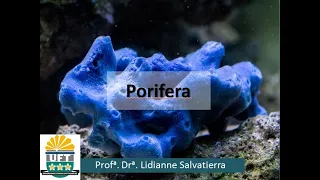
in an underwater wall plunging hundreds of feet into the depths there she will find what she seeks ever since Darwin put forth his theory of evolution scientists like Diaz have puzzled over animal origins at long last she and others think they have found a creature that links us to a moment in deep time - the first animals of Earth it is a creature that is somewhat alien in its appearance a being without a nervous system muscles limbs or a brain its body is defined by a loose assemblage of cells it is the ancient sponge when
I encounter a sponge it just takes my breath away I just want to stop and look you know they're just so alien so old I mean so ancient and so different to anything else you find in the bottom of the sea when I encounter a sponge and just in all not only by their presence but their giant size Beauty but they are so different so different and you just cannot stop yourself asking questions to this animal what are you how did you grow to this size how do you manage to through every day what did
you do you know how do you eat just their soul alien forms of life and at the same time they're so present that is just it just leaves me in awe I think they're beautiful they're original they are mysterious they have lots of secrets that we have to unveil you see and that formation and attractive things they keep a lot of Secrets that I think are very important sponges don't give up their secrets easily their apparent simplicity is both provocative and perplexing at a distance they seemed solid but a closer look reveals a labyrinth of
tiny holes tunnels and chambers unlike our bodies sponges have no definitive shape they are as varied as their many habitats scientists have described more than 9,000 different species of sponge they thrive in salt and freshwater environments around the world turning up in the most bizarre and unexpected places from the frigid waters of the poles to the warm seas of the tropics Diaz recognizes the sponge as a vibrant animal but for centuries scientists have debated whether in fact this was true even today it stretches the imagination to think of this odd organism as an animal to
the untrained eye it barely seems alive at all when we think of animals we conjure up something entirely different and almost move they feed themselves they reproduce and care for their young they engage in fierce territorial battles in comparison a sponge seems lifeless if it is an animal that certainly conceals its true nature hi to help her unravel the mysteries of the sponge Diaz has teamed up with biologists and conservationists markered Minh great mostly shallow waiting for you today I can't wait the Birdman has spent years as a marine researcher in Indonesia who knows these
waters and the reefs they Harbor today Diaz has her sights on a reef wall that drops hundreds of feet into the deep together she and Edmund will descend the cliff face searching for sponges that live only here the samples they collect will provide a window into a fascinating world the microscopic realm where sponges are most active and dynamic spine cells are unique in the animal kingdom but in order to study the miraculous abilities Diaz and Edmund will have to gather living samples and transport them to the lab we need sponges to study in the lab
and so we have to collect specimens but we need to just cut a small section to be examined and because it doesn't have a nervous system we are not really hurting it in time the cut area will grow again as if nothing had happened to it all animals rely on cell to cell communication but Diaz and others have been able to show that sponge cells have a unique way of working together to witness these abilities is to be amazed cell-to-cell communication is very important for all organisms but in sponges it's uniquely important because in sponges
cells carry out all the functions that other organisms are taking care of by specific organs like the heart the nervous system or the skeletal system or the blood so sponges have many responsibilities to perform unlike most of our cells those of sponges retain a special freedom they can continuously reinvent themselves performing some truly miraculous feats if a sponge is passed through a sieve its cells are separated but somehow the cells still recognize each other over several hours they begin to come together building many new sponges no other plant or animal can resurrect itself this way
while the sponge appears strikingly different from other animals it does share some basic hallmarks of animal life its cells are held together in part by a protein called collagen which is possessed by all animals on earth collagen which is the most abundant protein in the animal world forms the supportive system for the sponge body so even in the form of small fibers that all sponges have that give support to the cells or in the form of strong and stout fibers that give rigidity and support that the sponge needs to achieve larger sizes most people when
they think of sponge they think on their bath sponge and when you have a bath bone in your hand you're holding is a soft skeleton that is made of collagen but unlike the bath variety many sponges aren't soft at all in addition to the soft collagen of the bath sponge many have millions of brittle crystalline spicules embedded in their bodies spicules are microscopic structures that help give a sponge its rigidity and form speakers are an incredible tool for us today to identify most of the sponges that are living in the oceans you can identify a
species or a group of sponges not only by the type and the size of the spicules they have but the way that they are arranged in the sponge body for most sponges the glassy spicules act as a kind of fingerprint magnified their dazzling array of shapes and sizes are as beautiful as they are unearthly if the sponge is indeed an animal it must eat to survive how does it feed itself when it has no obvious mouth a sponge is actually a fantastic pump which requires an incredible coordination of cells to function it's a living filtering
machine it lives by sucking in water and filtering out food particles these seemingly motionless creatures are working extremely hard in order to feed imagine that to get an ounce of food a sponge have to pump over a ton of water through itself now can you imagine doing that yourself drinking a ton of water to get an ounce of food to your body Diaz has studied sponges for decades yet she has never seen them feed in the wild until now if you have to make the invisible visible Diaz injects a harmless colored dye into the water
near the body of a sponge one of the ways we can test for the rate of water flow that move through the sponge body is to inject a colored dye and measure the speed at which it is pumped through the sponge I try for me this is the first time I've done this and I've been really looking forward to the opportunity for years I'm so excited to try this experiment when I start seeing the color dye coming out for the sponge in less than two seconds from when it was applied I could not believe my
eyes this steady and strong continuous flow of water continuously coming out of the sponge was an incredible realization of the dynamic existence of this organism it's an incredible sight to witness these ghostly exhalation czar proof that the sponge is actively pumping with no mouth it sucks water directly through its sponge like body walls which are shot through with millions of narrow canals and tiny chambers how does it do it what secrets hide within the belly of this beast the best way to find out is to enter one of the many portals into the sponges secret
inner world drifting along with countless single-celled organisms we feel the tug of a current in the wonderland within this sponges cells all work for the common good but they do it in wildly different ways as the current draws us on we pass sponge cells that are making new spicules the walls themselves are treacherous they can simply engulf their unfortunate prey as we are drawn to ever narrower passages the current slows until millions of tiny beating hearts these are Kawana sites cells whose whip-like flagella powers the pump the flow quickens again as it whisks us away
through the labyrinth of canals that need out into the sponges central cavity what once seemed barely alive is actually a living animal more complex than we could have imagined the sponges pumping does more than satisfy its hunger for food in fact it's sex life depends on pumping as well half a billion years ago these were the very first animals to reproduce sexually the first to combine sperm and egg to create offspring set adrift some sperm will be lucky enough to enter another sponge of the same species if the sperm are truly fortunate they will fertilize
the eggs within our intimate tour of the sponge reveals a creature full of surprises from feeding to reproduction it engages in elaborate behavior more than a mere aggregation of cells the sponge is in fact a living thriving animal though of ancient design sponges continue to thrive in today's diverse and crowded world in fact they play a vital role in the lives of many other animals since they first appeared sponges have formed a multitude of strange symbiotic relationships these sea cucumbers just a few inches long take advantage of the sponges pumping action as food particles too
large for the sponge to absorb flow by the sea cucumbers use their tentacles to snag them it's a free lunch all thanks to a sponge on Indonesia's crowded reefs sponges provide sanctuary to a whole host of different creatures small species of fish hide within their walls or perch cryptically upon their turrets in return for a safe haven some animals are willing to give up their freedom permanently this little sponge is called Venus's flower basket as it grows it weaves its glassy spicules together sometimes forming a living refuge for a pair of shrimp here they mate
and grow and if they become too large to escape they are confined forever within this prison of spun glass sponges unwittingly protect their animal partners in other unusual ways the sponge crab Clips off a piece of sponge and then proceeds to wear it like a hat since most sponges are inedible the crab benefits from the camouflage but not all sponges are so easygoing asbestos luma is a sponge that kills its hair-thin spicules are covered with tiny hooks perfect for snagging a helpless crab larvae specialized cells is out of the sponges body migrate around its prey
and digest it alive with cells wandering in and out of its body this sponge seems like a character from science fiction not a likely candidate for the title of the first animal on earth yet sponges are ancient so remarkably old that scientists have often wondered if they were our forebears could it be that these primitive creatures so different from other life-forms gave rise to all the other animals including us you