when you're getting started on a ketogenic diet it's good to have something that you can reference you can come back and look at so this entire video will be timestamped with very clear chapters so you can either watch the whole thing right now or you can save and bookmark this video and come back to little chapters that apply for given points when you're on your ketogenic Journey okay so I wanted to do this video as an updated 2023 version because so much has changed in the world of ketogenic research and it's good to have a
refresher to understand how to do it properly so let's first jump in with what a ketogenic diet is if you're brand new to this or if you just need a refresher on it okay a ketogenic diet is a fasting mimicking diet okay what that means is we are reaping the benefits of a fast but by having food in our system still because we get all these benefits that come from fasting and we see that with epileptic patients and in the early research in the 1920s right right but we can't expect people to fast forever so
researchers found that okay if we just deprive the body of glucose we can actually have these same benefits so what the ketogenic diet is not is it's not just copious amounts of garbage meat and cheese it's a very well-crafted diet with moderate amounts of protein relatively high amounts of fat low amounts of carbohydrates and moderate to high amounts of vegetables and now we're even seeing small amounts of fruit in there so we're going to go ahead and break it all down now from a survival and sort of evolutionary standpoint the reason the ketogenic diet works
is because your blood glucose your blood sugar never goes down to zero okay it's a common misconception that when you do keto and you don't eat carbs you're going to go hypoglycemic and that's not the case so what actually happens is being in a ketogenic State as it's called means that your liver is producing producing a different nutrient it's producing ketones and your liver is producing ketones because you are not consuming carbohydrates so what happens is the brain needs glucose so the brain starts sucking up a lot of the carbohydrates that are naturally floating through
your bloodstream even if you're not eating carbs and what this would mean is that your muscles would starve right well the body doesn't want your muscles to starve so in an effort to provide the brain with adequate amounts of carbohydrates and glucose the body produces ketones so the liver produces these ketones and they feel your body and to a certain extent feel your brain but the primary sort of evolutionary reason behind the ketogenic state is to actually allow the brain to soak up the glucose so that our body doesn't have to before we get into
the how2 portion we have to look at sustainability and fortunately now we have new data new data from 2022 from larger scale MAA analysis that show us like is the ketogenic diet sustainable and the short answer is yes and is it safe and the short answer is yes and a lot of even the opponents of the ketogenic diet have now turned a page and said you know what yeah it does work equally and sometimes even better than other diets there was a 2022 study published in nutrient reviews that found in the first year of a
ketogenic diet there were improvements in HDL cholesterol levels there were improvements in Tri glyceride levels improvements in fasting glucose and fasting insulin levels and various other improvements upon lipid markers and glycemic markers all the way up until 12 months after 12 months it was no better than other diets but it wasn't worse or wasn't unsafe so the point is that you have all these amazing things that happened inside of the first year and after the first year you can decide hey if I like this I want to keep going with it and if not he
whatever move on to something else that's fine you got a good year out of it then there was a study that was published in diabetologia in 2022 that was a metaanalysis looking at over 20 papers okay and it determined that with all of this data compiled that the ketogenic diet is a very viable dietary solution for metabolic syndrome so for metabolic dysfunction for mitochondrial issues for potentially diabetes and uh things like insulin resistance and the study said and I paraphrase quote the ketogenic diet is a safe diet and provides promising approach is for metabolic syndrome
even if optimal carb proportion must be explored what this means is two really cool things means hey actually we're seeing like they're recognizing that it is a safe and effective diet for metabolic syndrome and actually works really well even if carbohydrate proportions need to be explored what that means is that depending on activity level we can actually EB and flow how many carbohydrates we have before it was kind of set in stone be like don't have more than 20 well things have evolved and I evolved like I have sometimes 50 sometimes 60 gram of carbohydrates
when I'm in a ketogenic State depending on how much I'm exercising we'll talk about that as we go so let's go ahead and move right in to the fun stuff so what ketosis is not it's not junk food it's not processed cheese it's not all the hyperpalatable stuff that's out there these days it's good wholesome food living as close to the Earth as you can eating a whole food diet let me get that across it is not what people think it is it's not just processed meat and cheese it's also Al not diabetic keto acidosis
that is not going to happen unless you are a type 1 diabetic keto acidosis comes from when you do not produce insulin and Ketone bodies get too high this is not going to happen if you are a normal functioning human that produces insulin if you are a type 1 diabetic perhaps you need to investigate further it is also not bad for the kidneys even if the protein levels are higher which they are on the ketogenic diet now compared to what we looked at five or six years ago there was a study published in the British
Journal nutrition and I quote qu low carb diets and corresponding high protein diets are not harmful for renal function okay what this is saying is based upon the randomized control metaanalysis looking at multiple papers no issue with the kidneys by going on a low carb diet or corresponding high protein diets that go with a low carb diet so don't be freaking out there it's not the end of the world what should your macronutrient ratios look like now okay we used to say more like lowish protein like 20% prote protein now that we're understanding that protein
does not kick you out of ketosis okay it does not protein is still good to go and protein might be one of the main benefits of being on a ketogenic diet we want to lean more towards 40 or 50% of our calories from protein and we want to have about 40% of our calories from fat and about 5 to 10% depending on the activity level from carbohydrates when you look at the fats you should be predominantly monounsaturated fats from avocados from Olive Oil from avocado oil from macadamia nuts second to that you want polyunsaturated fats
from fish oil from Omega-3s from some other nuts and seeds things like that you want about 20% of your fat calories to come from saturated fat and the saturated fat that you should be trying to get more of things like steric acid which is the most benign sat saturated fat if you want to call it that you're going to get that in good quality Dairy you're going to find meristic acid in Dairy so lean towards Dairy as more of your saturated fat Source whenever you can not saying that a good nice cut of meat is
bad but you don't want to overdo it too much when we say protein does not convert to glucose we used to think that excess protein would turn into sugar that it would stimulate what's called glucon neogenesis where your body takes proteins and turns it into carbs because the body needs it it turns out that gluconeogenesis is demand driven okay this means that the body will only turn protein into glucose if you are actually demanding it if there is a need for it so it's not driven by Supply so you don't just eat protein and it
magically turns into glucose you only turn it into glucose if your body is in a serious deficit need for it and that has nothing to do with what you supply it that has more to do with does it break it down from your tissue or not so which leads to the next question are you going to lose muscle on a ketogenic diet now the evidence is fairly clear that despite mild decreases in Anor robic performance and Mild decreases in one and two rep maximum strength lifts there really is no difference between the muscle loss that
you would have on a ketogenic diet or the muscle loss that you would have on any other diet as far as the research is concerned there's a l a little bit more of a regression to the mean demonstrating that before we used to think that ketones were crazy muscle sparing and that they would spare Lucine and that you could like really be in a heavy heavy deficit and not break down muscle but now we're starting to regress a little bit more towards the mean as we have more research and what that means is we see
okay yeah there's actually some benefits like with ketones being present where you might spare a little bit more muscle but really it's just like anything else it's like any other diet what makes the keto diet more beneficial is that you're more satiated generally and you don't have as much of a desire to eat so it's easy easier to be in that deficit and generally speaking you're eating more protein because carbs aren't in the equation so you have more protein available as far as your calories are concern so you prevent catabolism that way prevent muscle breakdown
that way all in all the ketogenic diet is very very safe as a way to lose weight and spare muscle contrary to what people believe let's talk about how to get into ketosis here because these are six very important steps and some of them have changed the first thing I want you to do outside of of course cutting out the carbohydrates that's the obvious stop the nighttime snacking this sounds so minute and minuscule and nuan but it's very important there are studies now that demonstrate that insulin sensitivity is jeopardized quite a bit when you eat
late at night or even into the evening hours so for the first week getting into ketosis my Stark recommendation be to stop eating at like 5 or 6 p.m. commit to that for a week because what it will do is it'll allow your nighttime fasting period overnight to be a couple hours longer than it normally is for every hour that you're not eating and you're longer into a fast if we want to call it that that gives you so much more horsepower in terms of how quickly you get into ketosis so that's step number one
step number two is increase your poly and monounsaturated fats don't just dive into keto and do a bunch of saturated fats in the beginning okay the evidence is pretty clear it's very clear that poly and monounsaturated fats convert into ketones faster than saturated fats saturated fats take a long time to break down because they're saturated and there's lots of carbon chains that are bound together so they have to be cleaved off and that takes a while poly and monounsaturated fats are easier to break down in the body enzymatically and therefore they also convert to ketones
significantly faster so when it comes down to wanting to create ketones fast macadamia nuts olive oil uh olives in general avocados avocado oil some good nuts fish fish oil things like that those are the things and even MCT oil although technically in a weird way that's a saturated fat that is a very complex discussion but MCT oil is also great number three I would recommend you do three days of glycogen depletion style workouts that sounds monumentally scary no all that means is go to the gym do resistance training and train a little bit of every
body part do two to three sets of every body part what this is going to do it should only be like a 30 to 50 minute workout you just want to train your whole body with resistance training cuz that's going to suck up all the glycogen as much as you possibly can for those 3 days the quicker that you can burn through your glycogen stores the carbohydrates that stored in your muscle the quicker you can tap into using fat so you have to get through that first layer of stored carbohydrates in your muscles first and
the best way to do that is glycogen depletion workouts so go in there do two or three sets of squats then do two or three sets of shoulder press two or three sets of chest press two or three sets of lat pull Downs just burn up the burn up the glycogen then after day three start doing low intensity cardio like zone two so your maximum heart rate is maybe like 65 to 70% of your max heart rate okay that is going to once the carbohydrates are depleted aerobic activity in cardio mobilizes fat mobilizing fat is
always a good thing but if you're not glycogen depleted the mobilization of fat is just going to go through beta oxidation it's not going to go through actually going through the liver and converting into ketones so deplete carbohydrates first with those workouts then move into 2 or 3 days of easy cardio for 30 to 45 minutes and you'll find you start producing ketones pretty quick the next very important thing is during these first five or 6 days increase your electrolytes importantly your salt if you're experiencing keto flu it is generally an electrolyte imbalance and it's
because your body is losing electrolytes because as your insulin levels get lower doing keto you lose electrolytes this has been known for a long time but it's very important if you want to combat the keto flu you keep the electrolytes high but you also understand that this is a natural transition of your mitochondria and your cells adapting to a new fuel source the next one that wasn't talked about as much that's now been fairly new in the last year or so is the importance of stabilizing the microbiome early on when you look at the data
you see that the microbiome shifts on the ketogenic diet are disadvantage like they're they're not exactly advantageous they're not good for the first few months and that's because you have a radical shift to the gut microbiome and then after four four or five months then the microbiome actually becomes more diverse and better than often times was before especially on a standard American diet this is because the gut biome takes time to readjust and recalibrate especially when all of a sudden you're reducing the starches that would normally feed the microbiome so I firmly believe that towards
the beginning it's exceptionally important to increase fiber because the fiber is going to feed the microbiome and I think it's also important to add a good quality probiotic in this is a very important piece especially during the first few months as your body's adapting to entirely new subsets of of food and fuel okay I put a link for the one that I recommend it's called seed very very cool technology and they do a lot of stuff for the low carb Community it's not a specific low carb symbiotic it's used throughout all different diet types but
it's the one that I use and the only one that I would really recommend because most of them are pretty snake oily and pretty weird honestly so they do a lot of the research themselves they put the money where their mouth is they're really legit and the technology is absolutely wicked cool it has a capsule inside of a capsule so cool technology so you're getting proper delivery of the probiotic and also has a Prebiotic that's why it's called a synbiotic so the link down below will save you 15% off if you want to try them
out which I highly recommend no matter what kind of diet you're doing but especially if you're doing keto you try them out it is definitely something that can help you adapt a little bit faster and even if you don't feel it initially it's going to help that transition into that ketogenic State a little bit better as far as your gut and overall microbiome is concerned so that link down below using Code Thomas 15 for 15% off an additional hot tip that might help you through this whole process too is the more that you can just
sip on some bone broth throughout this first 5 6 7day period the better off you might be too you're changing things in your gut that's going to help you out with some extra collagen and some gelatin but it also just keeps you satiated the next thing you have to learn is that insulin sensitivity in the beginning is your friend now what I mean by that is you want to do whatever you can to help improve insulin sensitivity so that the carbohydrates that you do potentially consume like even little remnants get soaked up into the muscle
really quick and don't float around the bloodstream inhibiting Ketone formation if you have lots of glucose in the blood you're going to stop ketones so ketones form when glucose is lower and stable and when the body has no choice but to produce ketones so if you're insulin resistant and your cells aren't soaking up glucose that glucose is staying in the bloodstream standing in the way of the liver producing ketones so we need to remain as insulin sensitive as we can and there's a few tips that we know now that we didn't even know 5 years
ago that you can apply to remain insulin sensitive number one is boring and that is adequate sleep we did not realize how much sleep played a role with insulin sensitivity stop eating when it's dark out so that you can sleep better studies are suggesting that the more you eat with your circadian q's and daylight rhythms the better that's an easy one number two is green tea green tea is a very potent insulin sensitivity stimulator okay it does this through glute 4 translocation helps glute four come to the surface so overall a very good thing egcg
as well as the antioxidants are very powerful for that so soak up that green tea as much as you can adding cinnamon to whatever meals you can during this first week especially cinnamon is an insulin mimicker so it helps glucose get into the cell again lowering those glucose level so you can produce ketones apple cider vinegar is very interesting okay apple cider vinegar slows down the digestion of starches so let's say you ate a bunch of veggies and you were concerned oh my gosh there's a few carbs in these veggies apple cider vinegar used as
like a dressing or even a couple tablespoons or a shot with a glass of it whatever that is going to slow down the breakdown of disaccharides into monosaccharides it affects our enzymes so we don't digest those carbs as fast so they don't Skyrocket our blood sugar as fast very big tip there and very simple one is move your body as much as you possibly can it is called insulin independent glucose uptake the more you move your muscles flexing anything like that walking moving full range that soaks more glucose up into the muscles more than any
other diet tip or hack or anything i' throw at you move the body soaks the glucose up up into the cells and you can produce ketones better how do you know you are burning fat how do you know you're producing ketones without testing The Telltale way is you're satiated you feel not that hungry and ketones do that ketones can blunt gin levels they can reduce hunger but also you just feel satiated you're not having the whole satiation obscured by glucose spikes and falls right so that's a very important piece that's number one secondly you notice
an improvement in your aerobic performance you notice that when you're exercising hey like I'm not gasping for air as much when I'm doing mild aerobic activity I kind of feel like I could do my cardio longer that's a very subjective but important thing to know that you're utilizing fat better you also start noticing a radical shift in your focus so when you first start keto you get kind of foggy because your body's like grasping for glucose but it's not quite producing ketones yet so you're like n what the heck but then all of a sudden
the brain starts utilizing ketones at the same time as glucose and you're like laser focused and you feel it okay so that is a very very big one and then the last one's kind of funny you start noticing like sort of a fruity taste in your breath that is called Ketone breath and and it goes away but it's a very clear indicator that you're now producing ketones which leads me into the next thing how do you test your ketones because a lot of the stuff out there the ketone strips are great those are the ones
you pee on okay those measure what is called acetoacetate the problem with measuring with urine strips is that it's highly flawed in terms of how much they measure and when you urinate you're only measuring excess ketones you're not measuring your actual amount you're only measuring the excess amount of ketones that are coming out through your urine so it doesn't tell you an accurate picture of what you're producing it only tells you what you're excreting so in the beginning when your body is ruthlessly terrible at producing ketones it just produces a bunch because it thinks it
needs to you're going to register this super high amount okay but that doesn't that's not indicative of what you're actually utilizing and then a lot of people find after a few weeks they're not registering on the ketone strips anymore well that's because you're no longer producing excess ketones you're producing just the amount you need so they're not showing up in the urine so people freak out they start doing all this restrictive stuff and reality is you're just testing via the wrong method I recommend testing via blood or testing via breath and if you're going to
test via blood use something like a keto Mojo meter that tests beta hydroxy uate in the blood and if you're going to use a breath meter I recommend that you use the biosense because it measures fractionated breath which measures fractionated acetone in the breath which is a complicated discussion but that's the only breath meter I would recommend otherwise acetone is a flawed measurement as well and you want to have your Ketone level s generally above 0.5 Millo people are going to tell you that higher ketones is better the research now suggests that we do not
Chase ketones we Chase results okay if you are producing a half a Millo of ketones that means you're still producing ketones and your body is utilizing what it needs and you don't have copious extra amounts that's fine the higher the Ketone levels sometime does equate to better cognitive performance but that's not the goal generally with weight loss okay the other thing that we didn't talk about in previous videos that is now a thing today measure your glucose monitor your glucose wear a continuous glucose monitor measure your glucose don't just measure your ketones it's called the
glucose Ketone index and that's the ratio of your glucose to ketones so the higher your ketones in theory the better right not necessarily needs to be that way but if you have ketones at like 2 Millo but your glucose is also high that means you have a poor glucose to Ketone ratio okay but if glucose is relatively low like 880 90 and your ketones are high that's a good glucose Ketone index or ratio so you always want to look at that so measure your glucose too and if you had to choose one I'd almost recommend
you choose your glucose over your ketones believe it or not fat adaptation the first 3 or 4 weeks you can expect a decrease in performance okay if you work out you might expect a little decrease in your physical performance because what happens is the mitochondria and our cells they need to get used to utiliz in ketones now ketones take a different bus into the cell than glucose does and it's like supply and demand it's like if all of us sudden we need a bunch of different Transporters to carry ketones in we got to build those
Transporters first we can't just magically have them so it takes time for the body to develop that transportation system and once that transportation system is activated then you start reaching what's called fat adaptation and that takes in process like a couple of months to really rev up and really like four five six to really reach its peak okay so you'll continue to get better and better and better and better at things with keto for like 6 months and then after that you kind of plateau and you just enjoy it right then you're adapted it's called
fat adaptation so remember that with great power comes great responsibility and you might have to deal with a little bit of sluggishness for a tiny bit to achieve the amazing benefit okay let's talk best time to exercise to get a benefit there's some recent research now coming out on what are called exer keines or exines potato potato exor kinds are molecules that are secreted by our muscles when we exercise and there's a number of them there's hundreds but dozens that we really look at and research right now and these exines are telling us that we
get different benefits from exercise at different times and Flash Forward to overall like what we need with keto the evidence suggests that training in the morning in a ketogenic state is going to allow for more beneficial Ketone formation and better glycemic response what that means is training in the morning specifically with keto really works well you'll produce more ketones and you'll modulate glucose better you can work out whenever you want though just move I don't want to get too nuan and broken up in it but if you want to produce more ketones the morning is
the best time for someone on a ketogenic diet what are the best proteins to eat now a lot of this has changed because we used to say just eat the fattiest cuts of meat that you possibly can but the more that we realize with this what we call regression to the mean the ketogenic diet we realize that although the human body is what's called an open thermodynamic system meaning we still look at physics and math with thermodynamics but we also understand that as an open thermodynamic system our body has a lot of variance day to
day with how many calories we actually need so much to the point that it's very very very difficult to measure however thermodynamics do still apply so what we're finding is that okay if someone is doing a ketogenic diet and they're only eating fatty cuts of meat and they're ending up at 4,000 calories per day and they're gaining weight and don't know why it's tough because maybe they're getting too many calories in their meat they don't realize it now there's Nuance here of course with the Randle cycle and all kinds of different things that's complex but
I say that as a disclaimer because that could be misconstrued right point is is that I recommend going from lean to moderate fat cuts of meat okay so chicken maybe some leaner steak some leaner fillets maybe some New Yorks that don't have copious amounts of fat and if you have a ribeye Maybe have it a couple times a week or something like that don't be afraid of it but kind of remember those rules about the fat quantities that I talked about I would still argue that eggs are probably the best protein Source on keto just
because the Abundant amino acid profile abundant EA profile fish are probably a close second and then kind of the other meats that kind of come in there and of course if you need to supplement with some protein powders I don't think it's the end of the world if you need to get your protein allotment up I think one of the most important things you can remember on a newer age ketogenic diet is prioritize Pro protein above the fats okay you will have more flexibility if you prioritize protein than if you prioritize fat if you prioritize
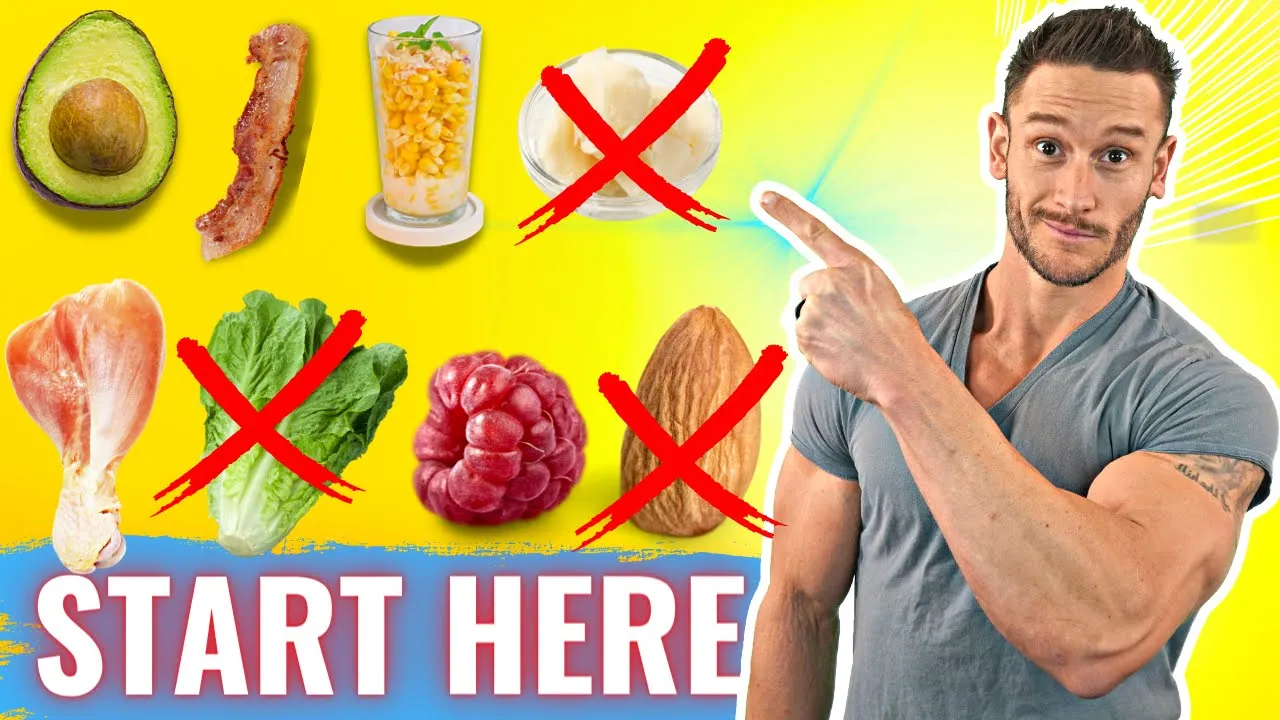
fat you might accidentally go overboard way easier than you would with protein veggies with veggies some of the research has changed but a lot of what's changed is my opinion and my own experiences I'm going to go ahead and say if it's leafy if it's green if it's cruciferous and especially if it's fibrous eat as much of it as you want okay I first of all I highly doubt that you're going to end up with like 40 gram of net carbs from vegetables and if you do I actually applaud you because you're probably going to
be so satiated from that much in the way of veggies that you'll probably lose some serious weight okay so even if you were knocked out of ketosis so don't chase ketones Chase results stop worrying so much about that broccoli kicking you out of keto that you're missing the forest through the trees okay you still want to lose some weight and I know people are anti- vegie and I know there's the carnivore community that believes a certain thing and there's the Fegan community that believes a certain thing but I still believe in food quantity and I
think that vegetables have a lot of benefit when it comes down to a ketogenic diet purely from a satiety and fiber standpoint so again I doubt you're going to hit 30 or 40 grams of net carbs when it comes down to vegetables so for all intensive purposes just if it's leafy and green just eat it okay now regarding net carbs with everything else you do need to be concerned with things like almonds and all the various nuts right with nuts those carbs add up and they add up quick you don't realize it but you know
what else they add up in calories 1 ounz of almonds we're talking close to 200 calories you see what I'm talking about it doesn't take much and it's a small handful and you're there's 200 calories there's 200 calories I just don't think you should lean into nuts and if you do lean into nuts lean into macadamia nuts that seem to be more satiating and at least have a more more of a metabolic benefit they're also one of the lowest carb nuts so definitely re recommend macadamia nuts macadamia nuts peely nuts Sacha inchi seeds are sort
of my big three when it comes down to the nuts that you would eat a lot of and the good news is they're kind of expensive so you're probably not going to eat a ton of them anyway so instead of saying almonds are cheap so I'm going to eat a crapload of those say I'm going to go for the expensive nuts so I don't eat a lot of them and get more of a benefit just trust me on that fiber should be a priority shortly behind protein I think protein before fiber but fiber here's the
interesting thing especially if it's soluble fiber I think you're going to be able to get away with a lot more than what people think okay fiber ferments in the gut and it converts into something called berate which is a short chain fatty acid which if you want me to get biochemical on you butyrate is only one hydroxy group away from beta hydroxy berate which is a ketone body and there's some rodent model evidence from decades ago that actually suggests that berate may actually help promote beta hydroxy beate formation what that simply means is more fiber
might actually help produce more ketones and I have experienced that firsthand anecdotally so I can't Scouts on or say that this is exactly what the research says and 100% evidence-based but I can say it's partially rodent model evidence-based and Thomas Del anecdotally based so aim for the fiber go for the skies go all the way interesting newer stuff surrounding fruit specifically berries fruit is made up of a couple of different types of sugar fructose glucose and sucrose which is a hybrid of fructose and glucose together you want opt for fruits that have more fructose fructose
does not Spike insulin or it does in a very small amount so fructose does not inhibit ketogenesis when it's in a small amount so you can get away with having probably up to 3/4 of a cup or a cup of fruit per day especially if it's right before or after a workout I'm going to leave that right there and just let that stew because sometimes that fruit is all you need to satisfy that Sweet Craving and test your ketones if you eat the fruit and it kicks out then maybe you shouldn't do it but I
can almost argue that most of you are going to be able to have some fruit the best sweeteners in my opinion this is revamped a little bit allulose is one of my favorites now okay allulose is interesting because it also has the power to sort of bind to the same transporter that glucose would bind to so if you sprinkled some allulose on fruit you could actually reduce the amount of carbohydrates that are absorbed into the bloodstream from the fruit okay so allulose is one of my favorites next up is going to be monk fruit shortly
after that is going to be Stevia then kind of bottom of the barrel I like it but it just barely makes the cut is AOL AOL is still a sugar alcohol I still think that it's not the best thing if you're going to have a ton of it but I think little bits here and there for baking and stuff like that totally fine what drinks can you load up on coffee tea heck you can have diet soda if you want let's just make it easy I don't think it's the best thing but sure uh things
like Zia things like carbonated water those are all fine okay just a void things that have carbs okay I love to drink like just sweet tea That's sweetened with like Stevia or something throughout the course of the day alcohol alcohol is going to take priority from the liver to digest it and to deal with it to metabolize it okay it is a poison it is a toxin so that means Ketone formation and all other forms of metabolism take a backseat to the alcohol metabolism okay lots of studies now demonstrating suppression of melatonin suppression of overall
digestive enzymes all kinds of things elevations in cortisol that are chronic affecting pancreatic cells okay through kind of like changing diversion of blood flow alcohol not good stuff when it comes down to insulin resistance when it comes down to Ketone formation so I would just say one or two times per week try to limit the amount I know there's keto wines and things like out there there but remember you're missing the forest through the trees keto is good because it's forces you to go back to Whole Foods and really being like authentic with what you
choose so if you're making the concerted effort then try to reduce the alcohol every 8 weeks you should re-evaluate your calories okay because every 8 weeks the body tends to kind of shift metabolically not on the clock but roughly based on Research every eight weeks or so what this means is if you are looking at your calories and you're really having low calories at 8 weeks you might want to take a twoe break and then go back for another 8 weeks it's called a diet break and 8 weeks seems to be the magic number so
diet for 8 weeks then take 2 weeks off that 2 weeks off does not mean that you need to add carbs it just means you increase your calories you're not magically losing weight because ketones are magical you're losing weight because of thermodynamic effects but also just because of various different open open thermodynamic systems the Randle cycle and a number of other things that come into play with the ketogenic diet take a break now and then especially every eight weeks it's a perfect time to reset and recalibrate supplements that I think are critical now for the
ketogenic diet one person or two people or a million people might say if you need supplements it's not a wholesome diet and I do kind of agree with that however on a ketogenic diet I think there's room for optimization through proper supplementation it's not about filling a gap so to speak however I challenge you to really get enough magnesium in your diet these days really because it's so depleted so number one I would recommend about 400 to 500 milligrams of good quality magnesium I recommend magnesium uh di magnesium melate so a form of magnesium melate
that's more sustained release definitely recommend that that's I think a given for anybody uh electrolytes just because again insulin levels are lower you're losing more minerals so I would recommend like a th000 to 2,000 milligrams of sodium per day through electrolytes especially if you're exercising and sweating I used to recommend vitamin D but I'm not as big of a fan of synthetic vitamin D now that I look at the research I see that synthetic vitamin D depletes retinol bioavailable retinol a so now I've shifted more towards cod liver oil I feel like cod liver oil
gets us our Vitamin D it gets us our vitamin A it has pro-resolving mediators in it and there's a lot of benefits as far as brain and heart and overall just General Health with Cod Li oil so I usually recommend about 1,00 to 1500 milligrams per day of cod liver oil more if you're not eating seafood and getting enough Omega-3s in I recommend about 2 and 1 half to 5 gram of creatine per day for neutop brain effects and for training effects you don't have to do this but if you're working out the creatine will
help you retain some of the intracellular water that you lose on a ketogenic diet then of course a probiotic like I mentioned and you can phase this in and out I like to add probiotics in Let the Body adjust a little bit then bring them back let the body adjust cycle them in and out so the body is always guessing a little bit or if you're someone that likes to stay on them you can totally do that too let's pause for a second let's say you're watching this video because you needed a refresher and you
realize now you're gaining weight on keto and you don't know what's going on or you stopped losing couple of very simple things the number one thing and it's a literal number one for me is that I see like so many people hundreds if not thousands of people that I've talked to if they actually stack their calories and they count them they're eating way too much fat because fat burns fat no fat just equates to whatever thermodynamics need we need and like if we have more of it fat stores just as easy if not easier than
carbs so like if you're in a surplus with extra fat you're going to store fat so the easiest lever to pull is reducing the fats remember if you weighed 200 lb and now you weigh 150 lb and you're still eating the way that you were eating at 200 lb even if it's keto you're going to start gaining again because your basal metabolic rate is changing because you're getting smaller and fat will still store that is a very common misconception that fat only burns fat no fat will still store if you're above your needs so reduce
fat a little bit as the first step if you're gaining check your sleep this is a big one if your sleep is going south on keto you need to take a break from keto sleep is the most powerful performance enhancing and body composition improving drug you could ever imagine I will leave it there prioritize sleep above everything else the next one is you've over uh passed your carb threshold that's simple easy one to look at okay you're eating a t too many carbs you're not quite producing ketones you're in this gray area where you just
feel like garbage and that kind of coincides the next one which is just you're stressed out stress and keto don't mix keto is an oxidative stressor if you are stressed out on top of it that is too much and you're pushing yourself beyond that hormetic curve and this last one which is really stuff that's come out over the last year here glucose tolerance when you do keto for extended periods of time you will become what is called glucose intolerant just like you developed the ability to get Transporters to soak ketones and fat into the cell
well if you don't use the Transporters for glucose and carbs now and then you'll lose those and then you have to rebuild them up so what I recommend you do is every couple of months take a few days to train or exercise with some carbohydrates before your workout what this is going to do is it's going to allow the cells to remain and just continue to know how to use glucose because you don't want to be glucose intolerant and then accidentally go have a bunch of carbohydrates and have this crazy high blood sugar Spike that
makes you feel like garbage for 3 Days right that can happen if you're glucose intolerant so what you want to do is you want to lean into okay I'm going to feed myself 30 or 40 gram of good healthy carbohydrates maybe some honey maybe something like that and then go out it's going to make sure that you keep those shuttle buses in storage you keep them there ready to go and don't send them to the junkyard just yet right you want to keep them ready just in case you have carbs that is a very important
rule to maintain glucose tolerance so I hope that you've learned something out of this video I hope you get a chance to apply some of these things and that you've re-evaluated how you do keto as always keep it locked in here on my channel I'll see you tomorrow