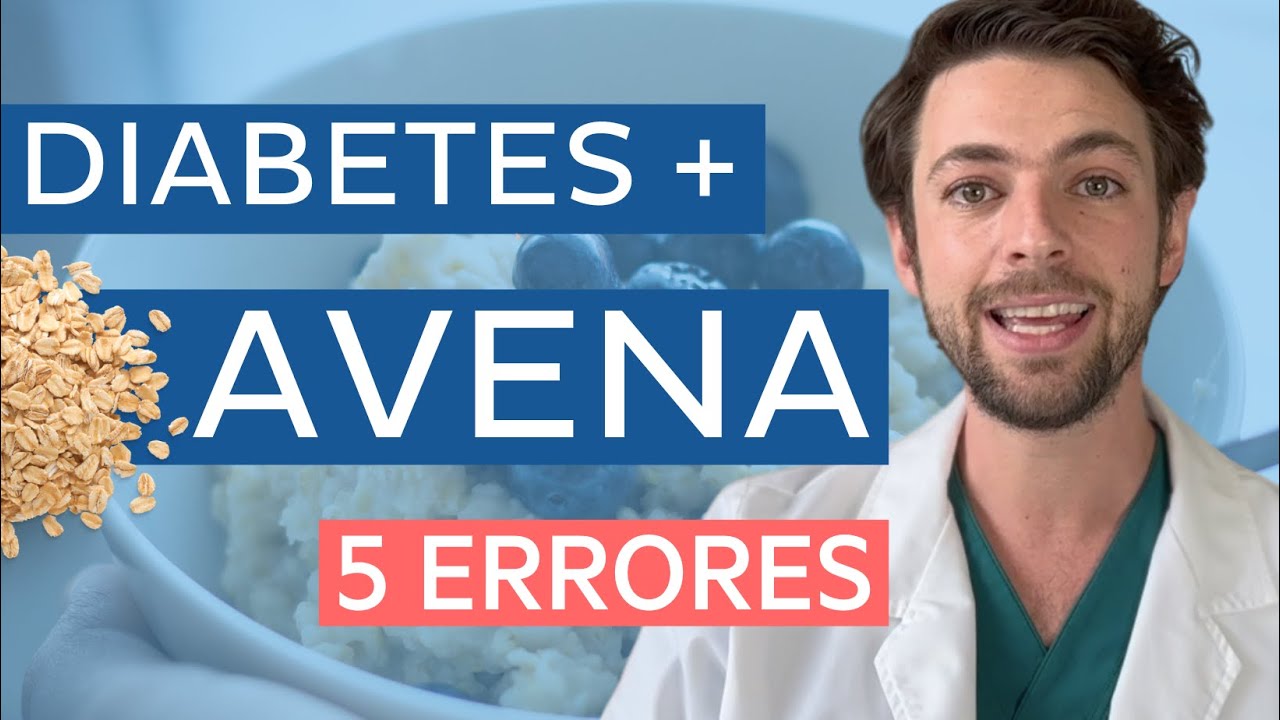
There are foods that are not only cheap, accessible and easy to eat, but also have countless benefits for your health. One of them is oats, which we are going to talk about today. Oatmeal is a whole grain that has countless benefits for your health.
I am Dr Juan Ignacio Veller, I am a cardiologist. I invite you to listen to these few minutes how oatmeal can improve your health in every way, with very few adverse effects. If this class has been useful for you to follow us on our channel, I will explain how oatmeal works from the point of view of how it works in your body, from the mouth to the intestines.
Oatmeal is a type of cereal grain that has this soluble fiber, which has been linked to weight loss, because we are going to talk about what happens in oats, in the stomach. It will generate satiety with very few calories, that is, you will not be hungry for a longer amount of time, it will reduce fat at the blood level and especially bad fat at the intestinal level. I will tell you how it interferes with the absorption of this fat, it will help you control blood sugar, but there are also studies that I will tell you later.
The evidence that shows or actually shows that there would be a decrease or a delay in the onset of diabetes. A better metabolic profile. And finally, it prevents some types of cancer, such as stomach cancer.
It all starts here in your mouth when you eat oatmeal. Oats again is a cereal usually consumed together with other foods, one or two tablespoons at breakfast, for example, during the afternoon or added. As it is hard, generally you are going to chew more than usual.
This chewing more than usual will generate saliva and that saliva will improve your oral health. First point in favor of oats. On the other hand, when oats come into contact with water, since they are soluble, they will dissolve and form a kind of gel.
It is going to advance to your stomach and in the stomach it is going to do two things. One is going to slow down how the stomach works. I mean, the stomach is doing.
It will take longer to work, to get rid of that oatmeal mixed with other foods. On the other hand, the stomach. Thanks to that growth is going to slow down.
When the stomach is full and distended, it will notify your brain through some more complex mechanisms that you are full, that you are no longer hungry, and this only with about 100 to 150 calories that contain more or less 2 tablespoons of oats. That is, very few calories, great satiety, little hunger. And this can contribute to weight loss.
As we will see later. Once it passes the stomach, the oats will reach the small intestine. A number of very interesting things happen in the small intestine .
I told them the oats are going to transform in contact with water, in this case the small intestine into a kind of gel of a kind of film, a kind of net. For you to understand, different nutrients are absorbed in the small intestine. For example, fats require to be absorbed salts that come from the liver and are called bile salts, which are composed mainly of fats as well.
Now, when the small intestine wants to absorb these fats, sugars and other things, it is going to be impeded by this gel film. In other words, it will cost much more for fat and sugars to pass into your bloodstream. On the other hand, these bile salts that help the absorption of fats are also going to be trapped in these films, in these gels.
In these networks. And they will complicate fat absorption even more. That is why it is said that the consumption of oats and whole grains, frequently containing soluble fiber, can help lower cholesterol and especially the bad cholesterol called low-density lipoprotein known as LDL.
This happens. I'm going to tell you about the scientific studies now it also helps to reduce sugar, and this is very important when sugar is absorbed directly, such as bad sugar, white sugar, the sugar contained in ultra-processed sugars are absorbed very quickly by the intestinal mucosa and this generates abrupt sugar peaks in your body. These spikes generate a harmful body and insulin response.
Now this oatmeal gel will prevent those peaks from occurring and the absorption will be much slower and more continuous and in less quantity. This will not only control or help control your sugar, but some studies show that there could be a benefit in delaying the onset of diabetes or improving control of. Sugar in diabetics.
Finally, oatmeal will fulfill most of its functions in the colon. Notice, once the oats reach the colon, up to that point almost nothing has been digested, it has had no changes, it has just turned into a gel, it has been mixed with other substances, with other substances, etc. But even the colon nothing happens.
Not much will happen in the colon thanks to alcohol. Why? Because oats cannot be digested by humans.
There is no lack of enzymes, but there are some very special bacteria in the colon that have special enzymes that can digest oats and that's what they are going to do. And since they don't use oxygen, it's called oatmeal fermentation. Fermentation of oats has mainly two end products or two things that are going to help us.
Notice the large intestine is going to produce gas and short chain fatty acids. These gases, methane anhydride, etc. they are going to produce what I am going to tell you right away.
But in conjunction with short-chain fatty acids, not only will they improve overall intestinal health, but they will allow the proper growth of certain bacteria or bacteria called good bacteria . These good bacteria, the final product in quotation marks from oats, which is a prebiotic, will act by lowering the pH of the colon by releasing lactic acid. This will allow our colon to work much better.
They will fight bacteria that are generally harmful, they will decrease the amount of toxic substances in the intestine and they will allow a greater fluidity of the stool. All these benefits are also associated with the fact that some of these bacteria, product of the consumption of oats and other fibers, will produce certain types of vitamins such as vitamin B. A special type of vitamin B is associated with these bacteria.
But let me tell you what the gigantic function of the vein in the colon also has a downside. The production of gases. When we talk about the adverse effects of oats, when you start consuming oats, if you don't start little by little your abdomen can swell , you can have flatulence, bloating, discomfort.
So what is recommended is to consume oats. It has almost no contraindications, except for exceptions. Take care of celiacs and take care of certain very special types of patients.
But one of the almost only side effects is gas production. So what do you do? It starts small.
At first add a little oatmeal in your breakfasts to your yogurt. Note that it is natural or the preparations in the morning and is gradually increasing. It will probably not generate side effects, but remember that the first weeks you can have this only adverse effect because it is really a cereal, a very noble cereal grain.
Now what does the evidence say? Because up to here I told you what in theory it does in the intestine, in the mouth, in the stomach. But the evidence is very compelling in some ways.
For example, the strongest evidence is related to cholesterol. There are many studies that show, mostly observational studies and some small experimental studies, that oatmeal lowers bad cholesterol and total cholesterol in the blood. So, for the patient who has high cholesterol and who is medicated.
Consume oatmeal in your diet in conjunction with a diet low in saturated fat and trans fat. I mean refined bakery products, white bread, refined wheat. We have a video of this you can see how it would decrease cholesterol levels, especially bad cholesterol.
The evidence in this regard is acceptable. That is, it is very likely that there is a relationship between the consumption of oats and the decrease in cholesterol with respect to diabetes and sugar. As I told you before, the studies as well as the physiology also show that there would be a decrease and better control of sugar.
But this. The most interesting studies still show that diabetes would take longer to develop and even in diabetic patients. When accompanied by the vein of a healthy diet, a healthy life, with exercises, with good mental health, etc.
, it would have benefits in the control of sugar. So the evidence in favor of controlling the sugar in oats would also be acceptable, a little less acceptable than cholesterol, but it is also quite robust evidence in the quantity, not so much in the quality of the studies regarding cancer. There is a lot of evidence that oats would decrease colon cancer.
This is from colon to stomach. This evidence is quite robust. There is also talk of colon and bowel cancer , although this evidence is a little thinner, a little softer.
However, it is a good hypothesis, because oats and also the insoluble fibers that we are going to talk about, improve. The quality of the stool and the stool, because they make it more, bigger, easier to progress and also increase the movement of the intestine, the insoluble fibers mainly and I have this cardiovascular diseases. Although the evidence is not so strong in showing how oatmeal lowers blood pressure, a healthy life, which includes oats, exercise and proper psychology, prevents diseases such as heart attacks, stroke, hypertension and any cardiovascular disease, because prevention is The most important and among the healthiest foods that we have available is oats.
Then. In summary, oatmeal alone has not shown because studies are not large and powerful enough that it would decrease or improve cardiovascular health. But in conjunction with a healthy life, oatmeal is likely to allow you to live longer and better.
Now you will tell me Perfect, doctor, but how much oatmeal should I eat per day? And what other things can I eat? You should eat about 25 grams of fiber, which is not the same as oatmeal.
I'm going to count women between 20 and 25 per day and men between 25 and 30 35 grams, 2 tablespoons of oats have more or less 20 percent of the amount of fiber that you need in a day. So you need that other 80 percent. Where does it come from?
Well, most soluble fiber, such as oatmeal, comes from the pulp of fruits, apples, strawberries, etc. On the other hand, insoluble fiber, the one that we have not yet talked about but which is the fiber that does not dissolve in water, is mainly in the peels of fruits, in some nuts, in some seeds. And you also have to incorporate it to improve your intestinal quality and bowel movements.
Remember that oats not only have benefits in this regard, but also in reducing weight. Then. Eat breakfast with oatmeal, but it includes fruits, it includes vegetables, beets, lettuce, for example, they have many insoluble fibers.
As conclusions and recommendations I want to tell you two things. There is no medicine or magic food. There are a set of behaviors that you must and must have to have a healthy life, a healthy weight and the least amount of diseases.
Among them is regular exercise, as many days for as long as you can. As long as you do not have contraindications, you should ask your doctor about a good diet that includes fruits, vegetables, eliminate sugar and ultra- processed foods, and among them eat fiber. In this case I am talking mainly about oats and also mental health is essential.
If this kind of oatmeal was useful to you, leave us your like, subscribe and follow us. I send you a big hug from our place in the world.












![¡10 ERRORES MAGNESIO!⚠️❌[REVELADO Cómo tomar MAGNESIO CORRECTAMENTE]✅](https://img.youtube.com/vi/K4TF3Cuawcg/maxresdefault.jpg)