The elasticity of demand allows us to know how much the demand varies when we raise or lower the price of a product. By understanding the elasticity of demand, you will know: How much demand increases as the price decreases, and how much demand decreases as the price increases. To know the optimal selling price of your product, it is essential to understand the elasticity of demand.
The greater the elasticity of demand, the greater the variation in demand due to changes in price. The lower the elasticity of demand, the smaller will be the variation in demand in response to changes in price. Elasticity is often high for low-need products like some electronic accessories, or highly replaceable products like clothing.
That is why discount campaigns for such products always work. On the other hand, the elasticity is usually low in basic necessities such as fresh food, or irreplaceable products such as electricity or water. That is why, although the prices of these goods rise, the demand does not decrease.
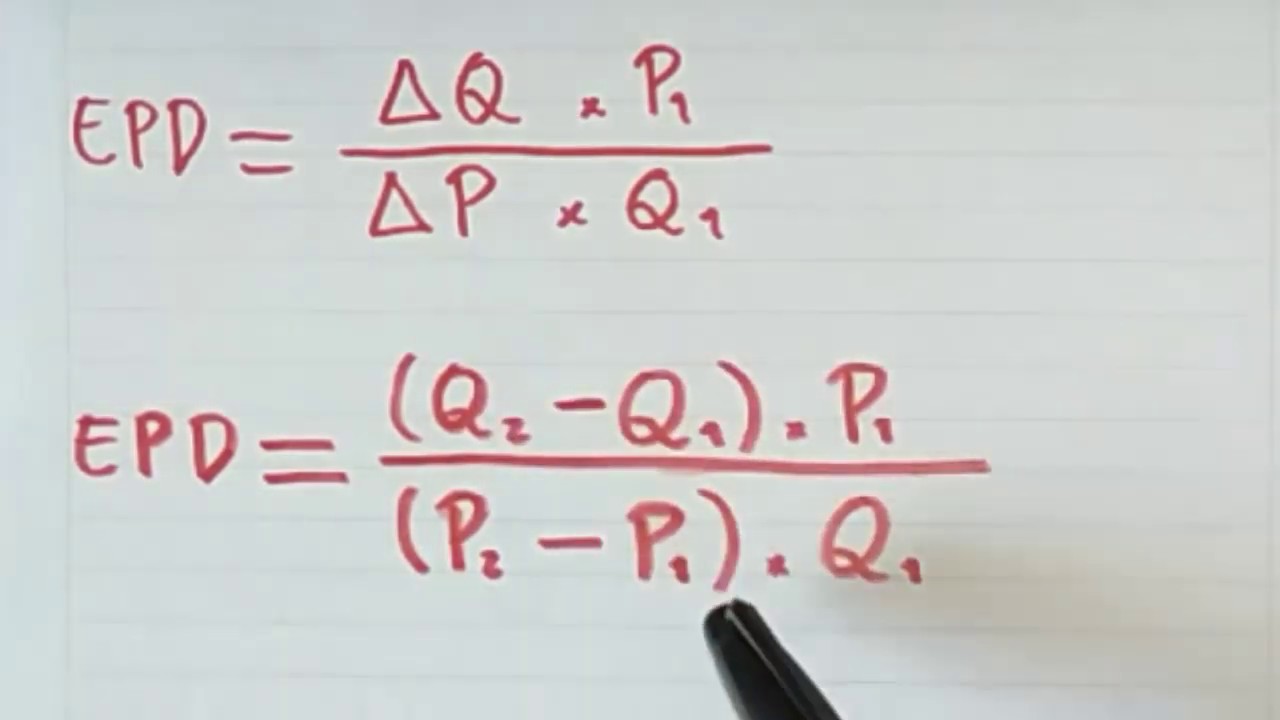
As you may have already deduced, the elasticity of demand is the relationship between the variation in demand and the variation in price. Hence its formula: Elasticity of demand = percentage change in demand / percentage change in price. The percentage change in demand = ( final demand quantity – initial demand quantity) / initial demand quantity.
The percentage variation of the price = (final price – initial price) / initial price If the elasticity is equal to 1, it is unitary, because the percentage variation of the demand is equal to the percentage variation of the price. If the elasticity is less than 1, it is inelastic because the percentage change in demand is less than the percentage change in price. If the elasticity is greater than 1, it is elastic because the percentage change in demand is greater than the percentage change in price.
These three types of elasticity are what we see in real cases. In theoretical cases, two extreme types are added. One is perfectly elastic, when the elasticity is equal to infinity.
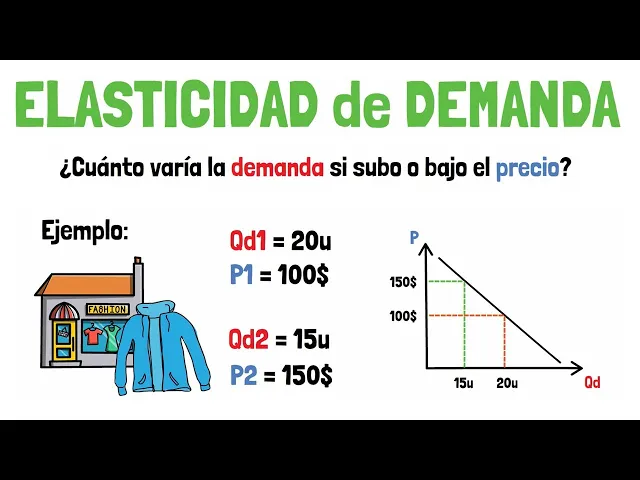
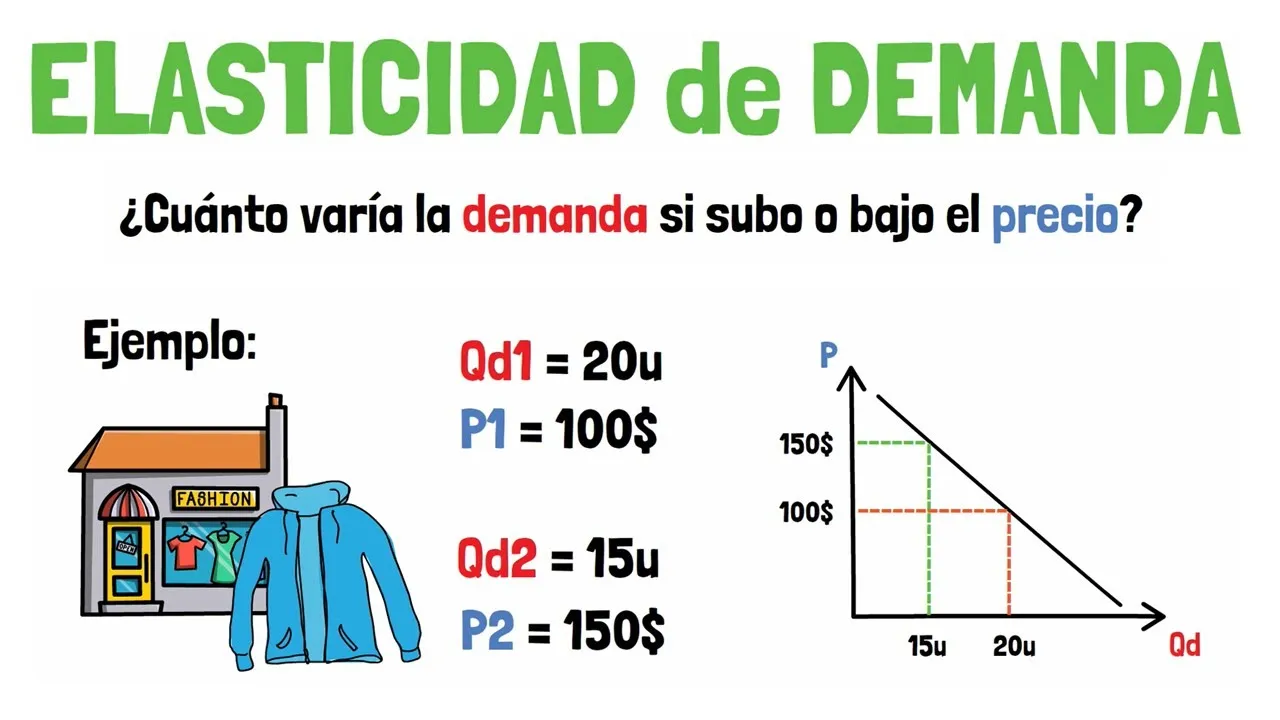
Two, it is perfectly inelastic, when the elasticity is equal to zero. Let's see an example. A clothing store sells 20 bags per month at $100 each.
By increasing the price to $150 each, the quantity sold was reduced to 15 bags per month. Graphically, we can represent it this way. To calculate the elasticity, we will use the formulas.
Percentage change in demand = (15-20)/20 = -0. 25 Percentage change in price = (150-100)/100 = 0. 5 Elasticity = 0.
25/0. 5 We take 0. 25 and not -0.
25 because for the calculation of elasticity it is used the absolute value. As a result, we have elasticity equal to 0. 5, that is, it is inelastic.
Apart from the elasticity of demand, we also have the elasticity of supply, which is used to know the effect of price changes on the quantity of supply. The concept and formulas are the same as those for demand, except that, in the case of supply, rising prices cause supply to rise, and falling prices cause supply to fall. I hope this video has helped you understand it better.
Thank you very much.