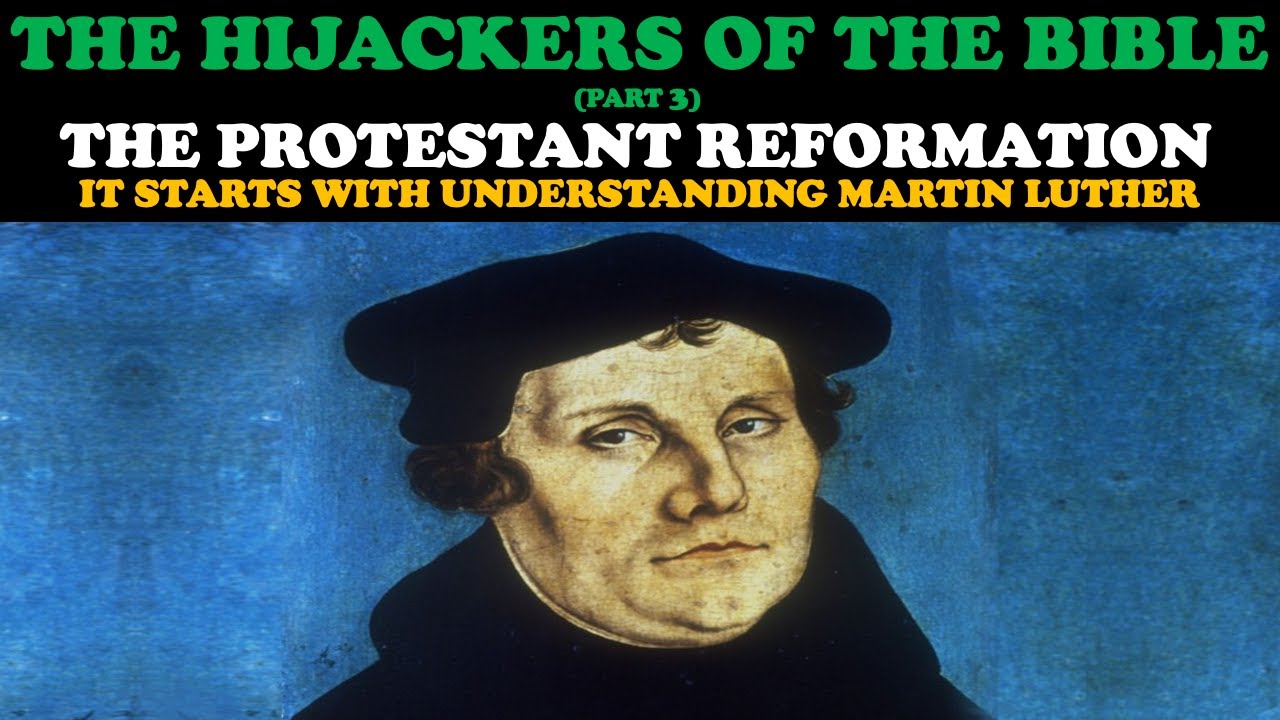
In the last part of this series, we dealt with the beginning of a major topic that finally needed to be tackled and addressed. We started speaking of the third hijacker of the faith, and we began discussing the Protestant Reformation. But before understanding the Protestant Reformation, we learned about the main influence of this Reformation, who was Martin Luther. This man has been upheld in our history as someone who changed the world, and although he is a very well-documented figure, as far as I can tell, there are very few of us that actually know much about
him. We know of him, but we don't know about him; and for a person in a movement that so much of our modern history is built upon, we should not be ignorant of either him or it. The reason for this series is to explain how our faith has been hijacked. Many of us believe that we are just following the Bible and that we are doing what the Bible says, but in the end, sadly, many will be surprised to know that they were not just following the Bible and that they were just deceiving themselves. The truth
is that most people follow religion, and because they find a few verses in the Scriptures that match what they think they believe, they come to the conclusion that they are following the whole book. We are tasked by Yahusha that we shall love Yahweh our Elohim with all our heart, with all our soul, and with all our mind (Matthew 22:37). However, many of us fall very short of this. We don't strive to know Him truly; we don't prioritize seeking Him out daily to understand Him and His ways. You see, for the most part, we all have
the Scriptures, but most choose to only read certain books and certain sections while ignoring all the others. They ignorantly believe that they truly understand this faith. Again, very sadly, in the end, many people will be very surprised to know how deceived they were. Trust me, you don't want to recognize this at the end, but now, when you have the chance to rectify and fix this. The truth is that too many people following Christianity are not following the Scriptures; they are following religious practices that have been adapted and changed over the centuries. They may have certain
differences from what we see from Rome today, but they all come from the same foundation that Rome laid centuries ago. You must understand it from this perspective: the foundation that was laid by Rome is the foundation in Christianity. Over the centuries, there have been additions and changes that have been implemented when building the faith that you may practice today. But when you dig deeper and examine the foundation, you can see it comes from Rome and not from where the foundation was truly laid: from Yah, and that is with Israel. The Hebrews were the only ones
in a direct relationship with Yahweh; this is what the Bible is about. They are the only ones who were in covenant with the one true God, and it is through their interactions with Yah—following their ups and their downs, their culture, and following the Messiah that was sent to them—that we can understand Yahweh and truly follow Him the way He desires. The Romans were pagans; they were never in covenant with Yahweh, and though they adapted their religion to Christianity in the 4th century, they never truly tied themselves to the obedience of Yah. They were a part
of the tares that Satan planted in the same field where our Messiah planted His good seed. Over the centuries, there have been changes and movements that have brought us to modern times, which make us feel like we are separate from Rome. But in fact, we are just an adaptation of the original foundation that they laid. If we truly desire Yahweh and to be in His kingdom, this cannot be so. While we individually study the Scriptures to show ourselves approved, Yah willing, this ministry will continue to teach the history of these movements that we all have
been influenced by. The Protestant Reformation is a major part of our history; the way we are today would not be so without this period of time and the Reformation from Martin Luther. We all know of it, but again, we don't really know how it started and what changes came from it. In this part of the hijacker series, now that we know of the foundation that Martin Luther came into the faith from, we will now understand the Protestant Reformation and what changed because of it. Let's begin. Okay, so when we left off, we stopped after talking
about indulgences. We will get back to that later, but let's go back to talking about Luther. After the lightning incident, he became a monk and became obsessive about earning his way to heaven. He prayed every day throughout the day, as every monk must do, and he went to confession at every opportunity he could. But he felt he was not making progress. He confessed and confessed, and yet he knew that if he were being honest with himself, there were always some bad thoughts that he had forgotten to confess. Or perhaps if he had been thorough in
confession, he would have experienced a sinful pride over that thoroughness, and now he was obliged to confess that pride. The bottom line was that he knew he wasn't getting anywhere, and it was torturing him. And rightfully so, because obviously, that does nothing—confessing your sin to man. He knew, according to all that he understood of the Roman Catholic Church's doctrine, that a sin must... be recalled and then confessed before it could be repented of and forgiven. But he was troubled because he felt he tried as hard as possible to find and confess every sin. He wondered
how the others did it. Was he more sinful than they were? He concluded that he must have been, and therefore he must try even harder. He would confess negative thoughts about one of his brethren, or his impatience with something that morning, or his poor attitude toward prayer. If he had no sense to confess, he would confess his pride and not have any such sins. Johan Vitz was the vicar general of the Augustinian Friars, of which Luther was a member. He supervised Martin Luther and saw how much Luther was troubled. He took a personal and fatherly
interest in Martin Luther; he was a highly important figure in Luther's life. So remember him. Okay, so it's important to know and understand—when you're trying to understand the Protestant Reformation, it was not like some second thunderbolt struck that made Luther jump into questioning the Church. It was a process. Part of that process began with him understanding his role as a seeker of truth, and from that so-called role, it would conceivably lead him to question what was thought of as received and unquestionable truth that the Roman Catholic Church gave. He began to think: at what point
did loving the Church mean questioning the Church? At what point did one have an obligation to boldly and forthrightly, though lovingly, help the Church see its errors? These were his thoughts, and let me say right here that as I study this part about him, I agree with those thoughts. It's highly important to engage in this type of critical thought in regards to our faith. The problem with most people today is that they don't engage in this type of thought. They will disagree with everyone else except their church that they grew up in or the religious
doctrines they've known all their life, where sometimes they will even know things are off, but they just brush it off because they don't want to be negative or start a problem. Let me just say that if you personally have not ever gone through this critical type of thinking when examining your faith, it is highly probable you currently live in deception. I'm just putting that out there. Anyways, these thoughts that came from Luther were inspired by his reading of Aristotle and Thomas Aquinas' writings before humanism really took hold and people really started following the philosophy of
Plato. The traditional way of thought during the Middle Ages, before the Renaissance and the Reformation, was Scholasticism. Aristotle and his writings were a major part of this period of thought. Aristotle and his writings were incorporated into Christian theology. Again, these people were not actually practicing what the scriptures taught when Paul warned the brethren, "Beware lest anyone cheat you through philosophy and empty deceit, according to the traditions of men, according to the basic principles of the world and not according to Messiah" (Colossians 2:8). So Aristotle was the standard, but Luther began reading Thomas Aquinas' writings, and
Luther began to notice discrepancies with Aristotle. He began to question why the Church embraced Aristotle's philosophies so much. You see, in many of Luther's early writings, he said many times that the study of the Bible was simply unheard of in his early years as a monk. There were no Bibles in the pews, and the average layman had almost no idea of what was written in this book. They heard bits and pieces of it read aloud in Latin during the mass they attended, but the idea that there was a book containing all their doctrine and instruction
did not exist in Luther's early years as a monk. So basically, from the 4th century AD to the 16th century, when the Protestant Reformation came about, the faith of Christianity was not upheld by the biblical scriptures but upheld by Roman Catholic doctrine. Just understand that. You see, even for these Christian monks like Luther, biblical material was filtered through the institution of the Church. The Church taught what they wanted everyone to know. This goes back to the foundation I keep talking about. Understand that all these years, this was how the foundation of the Church was set.
People understood the scriptures by what the Roman Catholic Church determined was okay to preach and teach about. People were not really used to reading the Bible by itself, and even if that wasn't possible because of the printing, those that were tasked with teaching the Bible were not starting from the foundation of the scriptures, from the beginning of Israel and the Covenant and working it all the way to Messiah. They just skipped parts and taught what they wanted everyone to know about the scriptures. Again, people were not really used to reading the Bible by itself. So
the thing is that even monks, priests, and theologians were typically kept removed from it, meaning there was an intermediary in how they learned their Christian doctrine. It did not just come from the reading of the scriptures by itself. But by the time Luther entered the monastery, because of humanism and the printing press, this began to change, and monks were allowed to read the Bible. By the time that he entered as a monk, Luther said that the other monks did not read their Bibles very much or at all. It's likely that because Luther was an avid
reader of his Bible, that was what drew attention to him. Now, after he moved from being a novice when he entered the monastery and became a monk, he was no longer allowed to keep his Bible. At that point, he was limited to only reading scholarly books. So after he became a monk, Luther only had... Access to the Bible during his private time in the library of the monastery by fall of 1508 stopped; it sent Luther to Wittenberg. This would now be his home base. In March of 1509, Luther earned his first theological degree, Bachelor of
the Bible, and in the fall of that year, he got his second theological degree, which was a Bachelor's in Peter Lombard's Sentences. This book was universally thought of as the most important theology textbook of the Middle Ages. In 1512, by request of Stalets, he began his doctoral studies, and in the fall of 1513, he was awarded his doctorate degree. He learned completely through Rome and received his earthly degrees from the Roman Church. I mention all of this so that you never misunderstand the foundation that he came through. The Holy Spirit was not his teacher; the
Roman Church and their education were his foundation. This foundation is still the standard today. In order to be an accepted preacher or teacher of the Word, people today ask you what theology school you went to as your qualification. They don't ask, "Have you read the whole Bible and what is your doctrine?" They want to know what earthly teacher and institution taught you the scriptures. It's absolutely ridiculous and hypocritical, but whatever. So now that Luther received his doctor degree, he was able to begin teaching the Bible. He began teaching on August 1st of 1513 at Wittenberg.
Now that he was a teacher, he was able to diligently read and study the Bible on his own. His first two years, he taught on the Psalms. Two years later, he taught on Paul's Epistles to the Romans, and two years after that, he taught on the book of Galatians. One of his most important insights in his first two-year period that he taught the Psalms was that the only way to read the Word of God properly involves seeing beyond the mere words. He felt to read legalistically and simplistically was to misguide oneself. Therefore, one must not
merely see what the devil could see—which is to say the words on a page—but see what only God could see and would reveal to those who desired it, which was in the words and around them too. He believed that this superrational element gave the words their vital context and deeper meaning. He felt that to truly read the Word of God and not merely the words of God, one required revelation and the anointing of God Himself. He felt that to read the Word of God in any other way was to miss the spiritual truth and therefore
to miss the main point of reading it at all. You see, this is a feeling that plagues most today, which is why people don't read the Bible on their own. The reason why they go to churches is so that pastors can explain the Bible. They follow this thought that came from Luther: that you need a special anointing in order to understand the Word. You can't just rely on the Holy Spirit to be your teacher, but you need a revelation and an anointing in order to understand the scriptures. You must understand the foundation of this thought,
and this way of thought is something that is supported by Martin Luther. Now in 1513, just as Luther was beginning to teach the Bible at Wittenberg, Giovanni D Lorenzo di Medici ascended to the papal throne and became Pope Leo X. He was the pope who reigned during the time of Luther's approach to writing his 95 theses. As I said in the first video, I do not believe this was a coincidence that this movement began during the papal reign of Medici, but whether it was a well-played-out conspiracy or just the fact that the wickedness of the
papal system got out of control, it honestly does not matter. None of this was about Yah's Kingdom, so we will discuss the events that led to October 31st, 1517—a significant date in Luther's story. Over the years, Luther began to struggle with his understanding of God. In one of his writings, just a year before his death, Luther wrote a preface to his collected Latin works. In it, he tells how, on the path to his great breakthrough, he had actually come to despise God. He wrote, "I did not love; yes, I hated the righteous God who punishes
sinners. Is it not enough that God crushed us miserable sinners with his law? That he has to threaten us with punishment through the gospel too?" That's the foundation of this man. You see, he struggled with understanding God and was caught up in Romans 1:17, "For in it the righteousness of God is revealed from faith to faith; as it is written, 'The just shall live by faith.'" Whenever he came across the phrase "the righteousness of God" in the Scripture, it terrified him, because he knew that he was an unrighteous sinner who fell far short of God's
righteous, perfect demands. But in 1517, he recalled a turning point in his life, which is called the Tower Experience. Luther was in the cloister at the Black Cloister in Wittenberg. He says that God had given him insight while he was sitting on the toilet. This is when he rediscovered and believed the Bible differently than what was told to him. In this experience, he realized that that verse, Romans 1:17, was not talking about the active righteousness that God demands, but the passive righteousness that He freely gives to those who believe the gospel. The sinner is justified—declared
righteous by God through faith in the work and death of Jesus—and this revelation was a conversion experience for him. When he discovered that God gives His righteousness as a gift in Christ, he felt that he was altogether born again and had... Entered Paradise itself through open gates, and this moment changed him. For Luther, this was the Reformation breakthrough that led to the moment of his change, and a lot changed from that insight. He also began to question appealing to Mary and the other saints before we appeal to Jesus himself. For Luther, any appeal to Mary
and the saints instead of to Jesus himself became a satanic twisting of the holiest and highest truth in the universe. It was therefore antichrist, and he knew and believed that to expose it as such was the most important thing imaginable. He believed that the devil had overtaken the Holy Church and that somehow he, the lowly monk from Wittenberg, had been entrusted by God with the task of declaring this to the world. Now, let me just say this: as you hear this, you may start agreeing with some of these revelations. I want to remind you that,
of course, you would—these are some of the reasons why you follow the Protestant Church and you're not a Roman Catholic. You agree with most of these revelations as well, but it's the overall foundation of the faith that's the problem—the problem that stems from replacement theology. But I do not want to jump ahead too quickly. What I'm saying is that just because you agree with this revelation, it does not validate the whole Protestant movement. Let's keep going. So before we go to the 95 Theses, let me get back to indulgences. If you remember from the last
part, I spoke about indulgences. The Roman Church's practice of selling indulgences was one of the main factors that led to the Reformation. The Church created a market, and going to Heaven became linked to the monetary world of debts and surpluses. The Church used indulgences as a way to raise money. Then, in 1476, Pope Sixtus IV realized that the market for indulgences didn't need to be confined to those millions who were alive and sinning but could extend to the multiply millions who had already died and were in purgatory. Sixtus decreed that the infinite treasury of merits
that they had could be sold not just for sins committed by the people living, but to people who wanted to use them to alleviate the sufferings of their dead relatives in purgatory. Every deceased person was now someone for whom an indulgence could be purchased, and this was the major backdrop of this period. It's important to understand that during this time, up until then, nobody really challenged the Church publicly, and the few that did did not last long. So the culture that they set and established was the culture that people identified with and took part in.
It's important to understand that. So now we're going to go over the main controversy. In order to do this, we'll discuss this character right here: Johannes Tetzel. Johannes Tetzel was a Dominican friar. He had extreme powers of persuasion with the crowd, and so the first Medici pope, Pope Leo X, and I want to say this: please note that during this discussion of the Protestant Reformation and Martin Luther, whenever I mention the pope from now on, the first Medici pope is who I am speaking of unless I say otherwise. Okay, so Pope Leo X bestowed upon
Tetzel the title of Commissioner of Indulgences in Germany. Basically, if you needed to raise what was then the equivalent of billions of dollars from the back of a wagon, Tetzel was your man. Tetzel arrived in Jüder just 25 miles from Wittenberg, where Luther was based. He was there to set up his papally sanctioned medicine show. What he was selling was Heaven itself, and people traveled from many miles around to hear him, convincing people to trade their money for eternal paradise because the pope himself had sanctioned and approved him to do so. Anywhere he went, the
sign of the papacy was displayed and intentionally visible. Wherever he preached, this special indulgence that the pope had sanctioned, that Tetzel was selling, was through Archbishop Albrecht, who needed the funds. He would split them evenly with Rome, as was the usual practice. The main reason Tetzel didn't come into Wittenberg, where Luther was, was because he had direct competition from another person who was raising money via indulgences. But many people in Wittenberg had heard about this opportunity to have their sins forgiven for a simple cash payment, and many Wittenberg citizens went to purchase their indulgences. So,
as a local preacher in Wittenberg, Luther heard all about what was going on. He knew Rome was playing on the ignorance and foolishness of the faithful with that indulgence business, and though it had been going on for many decades, it had never come quite so close to him while he was a man of the faith who had some kind of say about it. It came even closer to him when later some of the people of his town showed to the confession booth of his parish and glowed with pride as they showed the priest the indulgence
certificate that they had purchased from Tetzel. They expected a lower penance from Luther because of the indulgence; in their mind, they had already paid in advance for the sins they were confessing. So, Luther saw and heard all of this with his own eyes and ears. The effect it was having on the simple people trying to live out Christian lives was profound. They had no idea they were being used by the Church for its own plans to build buildings they would never see; we're talking about the Vatican and all that stuff in Rome I spoke about
in other videos. They were using those people to fund the lies that we see and believe today; they were playing the ultimate long game. Luther was said to be bothered that money was being sucked away. From those who had so little, but it bothered him more that the Church, via the practice of selling indulgences, was actually leading the faithful away from Christ. To him, that was the far greater scandal, and he felt someone must speak out. In February of 1517, he preached on the subject of indulgences, and then in March he did so again. Now,
he was far from the first priest to do so, and he explained to his flock that the paper they purchased meant nothing if they were not genuinely contrite for any sins they had committed. And if they were genuinely contrite, the paper still meant nothing because God forgave their sins anyway. But the popularity of the indulgences drowned out any criticism of them, and it was from this that the Reformation was said to be started. The date that is always given as the beginning of the Protestant Reformation is October 31st, 1517, which is something I also find
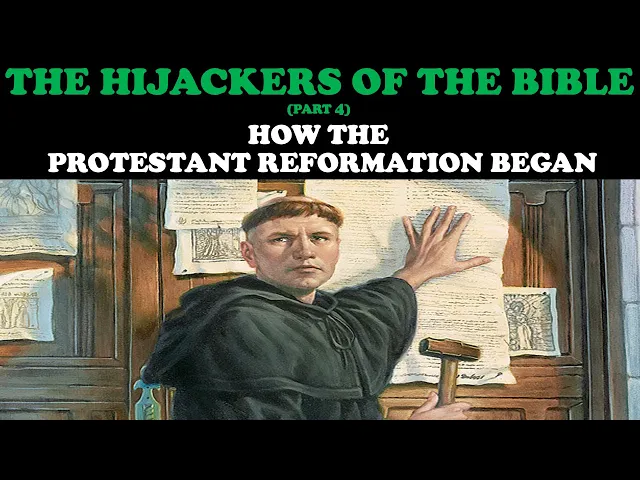
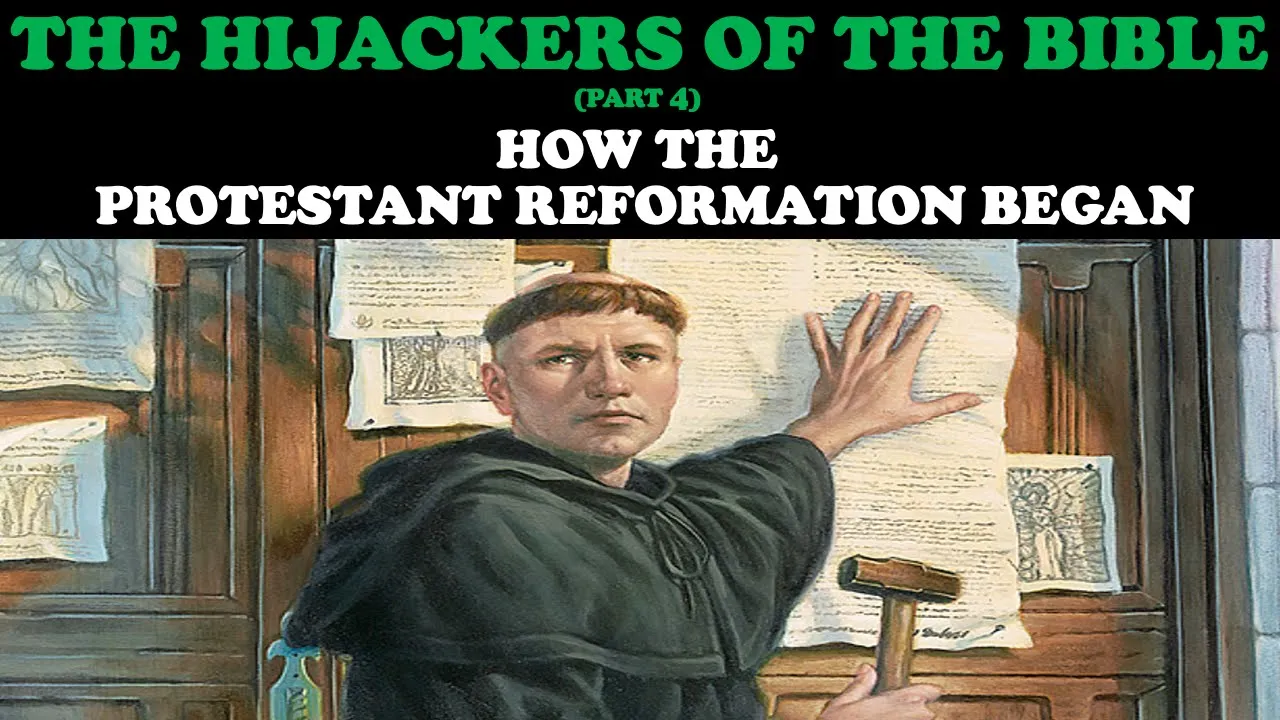
to be very interesting, being that this is the date of Halloween. But this date is used as the date when Martin Luther nailed his 95 theses to the door of the Castle Church in Wittenberg. But it's important to know that this is not actually what happened; it's just told like this for theatrics. But as Eric Metaxas explains the facts in his book, I will give it: on October 31st, 1517, Martin Luther addressed an important letter to Archbishop Albrecht of Mainz. If you remember, it was in Albrecht's name that indulgences were being peddled far and wide
by Tetzel. Luther wanted to let the honorable Archbishop know of it, so that the faithful under Albrecht's care would no longer continue to be torn away from the faith. Luther thought of and considered that naturally, this would be something that an Archbishop should be concerned with. The narrative of this was that Luther was said to be humbly bringing something important to the attention of someone who ought to care and who ought to be in a position to do something to correct it. Some of the letter states, "Under your most distinguished name, indulgences are offered all
across the land for the construction of St. Peter. Now, I do not so much complain about the quacking of the preachers, which I haven't heard, but I bewail the gross misunderstanding among the people which comes from these preachers and which they spread everywhere among common men. Evidently, the poor souls believe that when they have brought indulgence letters, they are then assured of their salvation. They are likewise convinced that souls escape from purgatory as soon as they have placed a contribution into the chest." He posted this letter along with his theses, which I will get to
shortly. It was said many times that he did not know that this letter was going to be the beginning of a movement, and as I continue, I will look at it in this way as well. But how this is told in the mainstream is so different from the facts presented. The image in our collective minds of Luther pounding the truth onto that door for the world and the devil to see is just fiction. They have dramatized this event in order to tell a certain version of their story. That version of the story implies the man
doing this heroically understood that it could lead to his excommunication and probably horrific death by fire, and it was the first shot in a war of a movement. That's how the version of the story is told in the mainstream, but this is just not accurate. He felt that he was doing something good, something that the Pope and others would surely recognize as such. At this time, they were not his adversaries. He did not know how personally invested Archbishop Al was for the success of Tetzel's indulgence campaign. He wished to tell the Archbishop of his concern
and to provoke an academic debate on the subject among the Church theologians at Wittenberg. He just wanted to debate. Luther was trying to tell the Archbishop of his concern and to provoke an academic debate on the subject among the Church theologians at Wittenberg. He only posted the theses because he wished to debate with his fellow academics, and following his posting, an academic debate on the subject was scheduled. But no one showed up for the debate. It is said the reason was because Luther posted these theses in Latin, and most of the people in his town
did not speak Latin. If it were not for the reaction of Archbishop Albrecht and Tetzel, the whole thing might just have fizzled away. But the point about this is that the beginning of the Protestant Reformation was not as dramatic as it has been made to seem, and it was not that big of a deal when Luther posted his letter and his theses. This debate or argument was not about the falsehoods of the Roman Catholic Church in totality; it was a desire to debate indulgences. The main arguments presented by Luther in the 95 theses were that
the Bible is the ultimate Christian religious authority and that humans can only get to heaven through faith in God, not by doing good deeds. Some of the points are as follows: 5. The Pope either desires nor is able to remit any penalties except those imposed by his own authority or that of the canons. 6. The Pope cannot remit any guilt except by declaring and showing that it has been remitted by God. 25. The power which the Pope has in general over purgatory corresponds to the power which any bishop or curate has in a particular way
in his own diocese and parish. 47. Christians are to be taught that the buying of indulgences is a matter of free choice, not commanded. There were 95 of these. Type of points, if you notice, even Luther called the Roman Catholics Christians, and I'm just pointing that out for all who still cannot get past me labeling the Catholics with their Christian label. But in any case, this was the main issue being raised: indulgences. He was not challenging the full doctrine of Rome; he was just challenging indulgences. He was still a monk in the Roman Church and
still under the authority of the Pope when he posted his letter and thesis. Let’s keep going. Albert and Tetzel reacted to Luther. Tetzel was so outraged when he read Luther's thesis that a few weeks afterward, he was pedaling his IND Indes near Berlin. He is reported to have said, "In three weeks, I will throw that heretic into the fire, and he will go to heaven in a bathing cap!" Now, Albert is said to not have opened the letter until more than two weeks later, on November 17th. He already was not happy because he was in
financial difficulty due to Tetzel’s sales being down, and he wasn't bringing in the amounts that Albert had been counting on. So, Albert didn't know what to do with the letter, but he knew that it required some sort of response. He couldn't just throw it away because Luther, the monk who had written it, was the head of the theological faculty at Wittenberg and the vicar general of eleven monasteries. So, two weeks after reading the letter, he handed it over to the theological faculty at his own university in Mainz, hoping they could advise him on how to
proceed. When they responded, they passed the buck to Rome. So, Albert brought the case to Rome, and this is how the controversy started. Luther also sent his thesis to his friends and allies that he respected, to help stir up a debate. Christopher Schur, I don’t know if I said that right, was a humanist from Nuremberg and owner of a printing press. He read what Luther wrote, and he thought that Luther's thesis should be reprinted. He reprinted them in his town of Nuremberg and circulated them. Shortly after, it was reprinted in Nuremberg; other editions were printed
in Basel and Leipzig too. In fact, the Basel edition was produced in an elegant pamphlet form, which made it spread even faster. The speed at which Luther's thesis spread was unprecedented for the time. He was, in fact, one of the first people in the history of the world to go viral. You see, the arrival of the printing press had changed everything in the world. If the printing press did not exist at the time of Luther, the Protestant Reformation would not have been anything to speak of. But the new invention of the printing press allowed Luther's
words to spread, and apparently, those with the printing presses took part in spreading Luther's words. Luther, from that point on, used the power of the printing press and was a writer of many works, and this is why this movement is so well documented, because he wrote a great deal, and his writings were sent to the printing presses. You see, the business of the printing presses was they printed what they thought would sell and then they sold it, and Luther's writings sold very well and did so for decades, though they say Luther never received any royalties.
Okay, so let's keep going with the controversy. Tetzel decided to clap back, and toward the end of April 1518, he gave a full attack on Luther, calling him a heretic in zeal to protect the Roman Church. He characterized Luther as a heretic and put Luther against the Pope and the Church. Tetzel's argument would be the main premise for Luther's problems because he wrote, "Be silent and revoke all you said. Unless you do so, the Church will crush you. Amen." He framed the debate as Luther standing against the Pope himself. In June, Luther responded with sarcasm,
accusing Tetzel of being a self-serving money grubber, and taunted, "If you are foolish enough to wish to debate me, I am here in Wittenberg waiting." Now, Albert, like I said, had sent the thesis to Rome about two months after he had received them. But because the thesis had been published in a number of cities and were making their way around Europe, we don't actually know when the first copies got to the Vatican. But we do know it got there, and the Vatican put the whole matter in the hands of a Dominican named Sylvester Masolini, who
took the name Prius at the Vatican. He held the title of Commissioner of the Sacred Palace, and it fell to him to examine the thesis and then determine if it constituted heresy, at which point Luther would have to appear before the Inquisition in Rome. And now it was official that someone from the Church would have to respond to Luther, and Prius did. Prius wrote, "As I intend to sift your doctrine thoroughly, Martin, it is necessary for me to establish a basis of norms and foundations." Third foundation: "He who does not accept the doctrine of the
Church of Rome and the pontiff of Rome as an infallible rule of faith, from which the Holy Scriptures too draw their strength and authority, is a heretic." Fourth foundation: "The Church of Rome can make decisions both in word and deed concerning faith and morals, and there is no difference except that words are better suited. In this sense, habit acquires force of law, for the will of a prince expresses itself in deeds which he allows or himself arranges to have done. Consequently, as he who thinks incorrectly concerning the truth of Scriptures is a heretic, so he
who thinks incorrectly concerning the doctrines and deeds of the Church in matters of faith and morals is a heretic." Work had a lot of jabs in it, like just as the devil smells of his pride and all his work, so you smell of your own malevolence. The conclusion of Prius was straight to the point; though he basically said that whoever says that the Church of Rome may not do what it is actually doing in the matter of indulgences is a heretic. Luther must now, therefore, travel to Rome and face Inquisition. Luther wrote a reply to
Prius: "I am sorry now that I despise Tetel. Ridiculous as he was, he was more acute than you. You cite no scripture, you give no reasons. Like an insidious devil, you pervert the scriptures. You say that the church consists virtually in the pope. What nominations will you not have to regard as the deeds of the church? Look at the ghastly shedding of blood by Julius II. Look at the outrageous tyranny of Boniface II, who, as the Proverbs declare, came in as a wolf, reigned as a lion, and died as a dog. You call me a
leper because I mingle truth with error. I am glad you admit there is some truth. You make the pope into an emperor in power and violence. The Emperor Maximilian and the Germans will not tolerate this." Luther then wrote a longer explanation of his Theses, titled "Resolutions." He mailed a copy to Stalpitz with a long letter asking him, as head of the Augustinian order, to forward the document to the Pope in Rome. Luther was trying to make the case directly to the pope and wanted to make clear that he in no way wished to undermine the
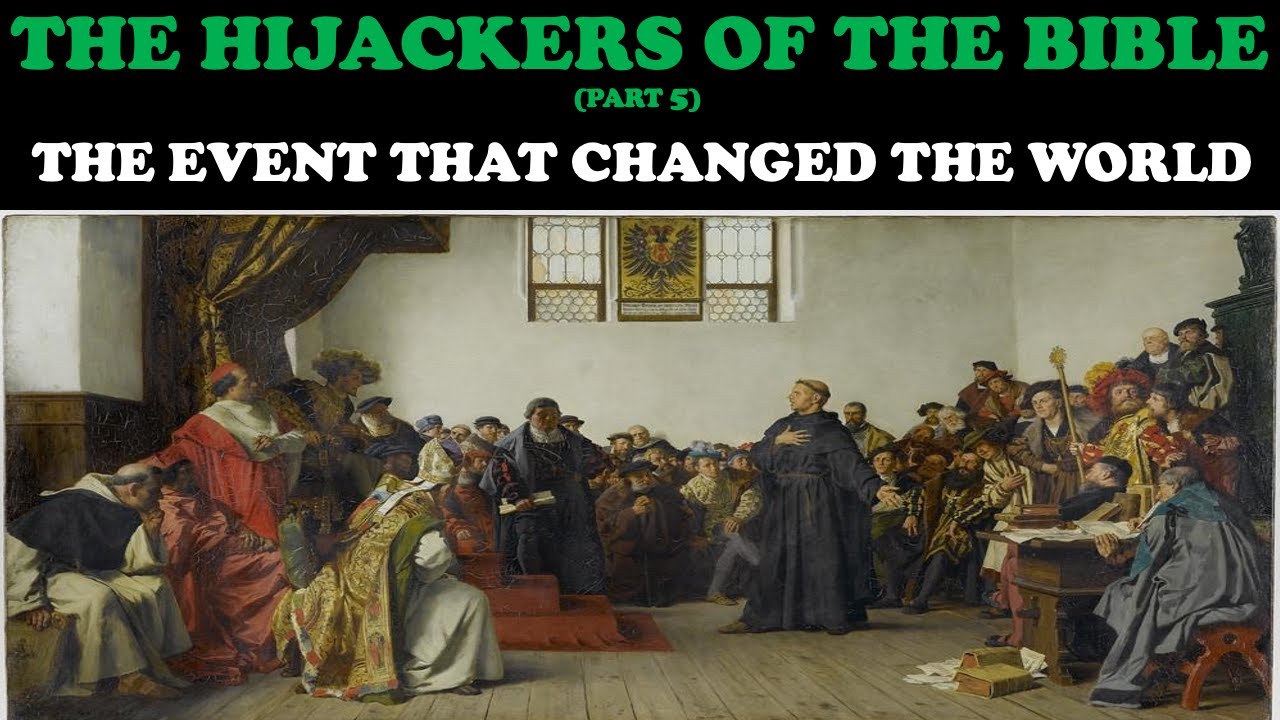
authority of the Pope and the Church. From this, for the next three or four years, there were formal meetings and debates regarding Luther that would lead to the biggest part of the Reformation, which was Luther's appearance at the Diet of Worms. For time's sake, I will not go through all the details that led up to it; they're actually inconsequential. I think from this explanation you can better understand the argument on both sides and see where all this was going. While learning of this and hearing Martin Luther's stance, it is easy to see how the world
has gotten so caught up with Martin Luther. It is the constant story of "the enemy of my enemy is my friend." Because of his rebuke to certain doctrines of Rome, it is easy to place him in a position that we commend him. He could be likened to many of us on social media who have a problem with this world and its leaders, using our voices to speak up against what we disagree with. The thing that is unique about Martin Luther is that what he was doing was never done before, at least from within the Church.
I mean, you must know that right before the times of the Reformation and Luther, the Church had the Spanish Inquisition and deeply persecuted the true Yahudim that would not convert to Christianity and come under the authority of Rome. They didn't use a printing press; many of them resisted Rome and were persecuted all the way until they were removed from Portugal and sent to Africa. They resisted the Church, but there was no movement behind them. This was quite different because it was something that happened within the organization. So, as we read this history and go over
these events, it's easy to see the enemy, which is the Church of Rome, and therefore root for the underdog, which was Luther. When you get down to the bottom of it, this is simply what the world has done. But through this history, there is something that most people have ignored, and they don't actually recognize that though much of Luther's premises he was writing about and standing on were based in truth, his main argument was not about our Father's true Kingdom. It was all about a fight over Christendom, which is to say the Christian world. He
was not putting Yahweh and His authority at the forefront; he was debating theology in regard to the scripture based on the foundation from Rome. You will see that this will continue over and over with him while he never actually got to the true matter of the scriptures, which is Yahweh, His dominion, and His kingdom. You see, throughout the scriptures, our Father has pleaded with longsuffering to His children that if they would just repent and turn back to Him, follow Him and His commands, and put Him first, He would restore them, heal their land, and uphold
them. This is always the promise, and the argument that Luther had with the Roman Catholic Church was not about Yahweh nor this promise, but about doctrine and philosophy. They turned Christianity into philosophical debates that later spurred the creation of all the different denominations that we know of today. You see, later on, after all of this, someone disagreed with some of Luther's theology, and then he would form a new denomination. Another didn't agree with another part, and they formed another denomination. This was repeated over and over, and you will see that this is how the world
of Christianity that we are in today was formed. Luther was just a spark of it. You see, the Protestant Reformation was just the next evolution of the Christian world, where people debated more about scripture than actually about following our Father and making His kingdom the priority. It seems that this mindset about our Father and His kingdom being the priority is prevalent today because we are now so close to His kingdom coming. Martin Luther was not bringing the true faith from the scriptures into reality. It's important that you understand that. That's why most of us are
not Lutheran but Baptists, and that's mainly because we come... From the influence of the Church of England—more on that later—my point is that we are not Lutheran because much of his theology we did not agree with or we evolved from. There are some Lutherans today, and they are literally the worst to talk to because they carry the spirit of Luther and debate from his premises, not ever understanding that the whole premise is a distraction and has nothing to do with the true faith Yah has brought forward. Most of the time, they go to theology school,
and they get caught up in philosophical debate, thinking they're smarter than everyone else, and don't recognize they are completely distracted from our Father's truth and His way. Nothing about Christendom has any parallels to how our Father guided and led His people throughout the books of what we call the Old Testament, and we can see this is why people don't read it and the churches avoid it. It's because the faith is completely different, and it's not because of the fact of Yahusha and His sacrifice that makes it different; it's because of the lack of reverence and
worship of Yahweh and the lack of desire to be obedient servants to Him. It's also because of the replacement theology, with the church replacing the Covenant with Israel. This is why so many Christians can claim Christ but have no true understanding of Him or what He actually came to do and what He is coming back to do. Again, beware lest anyone cheat you through philosophy and empty deceit, according to the tradition of men, according to the basic principles of the world, and not according to Messiah (Colossians 2:8). Or also, "But avoid foolish disputes, genealogies, contentions,
and strivings about the law, for they are unprofitable and useless" (Titus 3:9). "Oh Timothy, guard what was committed to your trust. Avoid the profane and idle babblings and contradictions of what is falsely called knowledge; by professing it, some have strayed concerning the faith. Grace be with you. Amen" (1 Timothy 6:20-21). People use these scriptures all day to defend themselves, not recognizing that they all are speaking from the spirit of Luther and debating understandings and points of doctrine that have nothing to do with our Father but just point about philosophy. You will see later that the
argument about whether Yahusha’s body is truly the bread or if it was a metaphor is a huge point of contention and debate. Lutherans and Calvinists go back and forth about this daily. I heard a Christian rapper that I used to rock with make a whole album about this type of stuff when, if they actually followed the Scriptures and understood our true faith, they would recognize that these points are foolish disputes that philosophers have deemed important when the ultimate responsibility that we have is to just be obedient and do as the Scriptures have told us and
guided us. We will speak more on this later, but the point I am making is that the foundation that Martin Luther came from is a false foundation from Rome. Instead of removing all influences and mindsets that came from this foundation, Martin Luther chose particular ones and debated them, and because he got attention, he started a movement. The movement was not about putting the Most High as our priority; the movement was that people could now disagree with the Church of Rome. This is the main change that the Protestant Reformation brought forward. Please don't miss that. I'm
going to repeat it: the Protestant Reformation movement was not about putting the Most High as our priority. The Protestant Reformation movement was actually about the fact that people could now disagree with the Church of Rome. This is the main change that the Protestant Reformation brought forward. Now, this Reformation has brought forth not just one enemy, which was once Rome, but now the root of Rome has branched out to many different branches, and now each branch wants to claim that they are in the truth. Let's be clear, and that's why this is a part of the
hijacker series. If your branch starts from Rome, you are not in the truth. That includes the Orthodox Church. For many who want me to touch on this church, I will get to it later, but let's get clear about this: if your branch starts from Rome, you are not in the truth. If your branch starts from Rome, you are not in the truth. The branch starts with Yasharel because they are the ones who are in covenant with Yahweh. He made a covenant with them and has given the other nations Yahusha as a light that will lead
them to Yahweh. Rome hijacked the covenant, and that's why they are the first hijackers. All these other movements that spring forth from the Protestant Reformation are just branches that come from the root of Rome, and those that follow them are distracted and do not truly know our Messiah more than they know religion, which is the ultimate point of the Protestant movement. The reason this video and series is being made is so that you can wake up and come to our Father in truth. Do you know what people have done in our modern society in regards
to Christianity? They start their belief in the Scriptures from Paul. They start reading their Bibles from the New Testament and they start with Paul. There are many different points that people have in regards to Paul, and I am not ready at this time to start that discussion, but listen: no one should ever start their belief by reading Paul first. You can't understand Paul without understanding his foundation. Paul was first a Pharisee, which meant more than just being one who persecuted followers of Yahusha; it actually meant he... Was a strict follower of the Torah, Paul was
a follower of the Torah, which means that his life was built upon the foundation of the Torah, which is from the Old Testament. If you try to understand Paul when you never understood the foundation that he started from, of course, you're going to misunderstand him. But this is precisely what is done today, and that all goes back to Luther. Just look at his progression of teaching. When he first started teaching the Scriptures over eight years ago, he only went to Psalms in the Old Testament, and everything else was from Paul. His foundation was off, and
this is the foundation so many Christians have today. What I am saying is that the Protestant Reformation that we have been influenced by was not a period in time of truth contending for the faith; it was another movement that led the world into confusion—confusion that gave Satan more strength to organize and deceive. I'm going through this history meticulously so that you can be assured of it and recognize that this has nothing to do with Yah. So, as you rebuke and reject these doctrines of men, you can do it from a place of confidence, knowing that
you are not rejecting Yah, but rejecting the traditions and the philosophies of men. If you desire a Father's Kingdom, it's time to worship Him in spirit and in truth. So, in order to do this, we need to reject these lies. Martin Luther and the Protestant Reformation was another agenda where we see Satan hijacking the authority of our faith and planting more tares. So, in order for you to wake up and combat this, it is highly important that you wake up, read your Bible from the beginning, and come to our Father in truth, fully coming out
of all these lies, falsehoods, and distractions. Identify them, rebuke them, and cast them out. In the end, though, please know the choice for this has always been yours. Take it seriously, and please make the right choice today. Be blessed. Hallelujah! Praise Yah! Okay, thanks again for watching. If this has blessed you, please make sure to like it and share it with others. If you haven't done so already, please make sure to subscribe to this channel. Y'all willing, I try to upload every Friday. Also, please don't forget to subscribe to this channel on Facebook and Instagram,
as well as on my website, truthunedited.com. As always, I’d like to thank all who donate and contribute to this ministry. Your donations are truly a blessing to this ministry and they help very much. I thank you for your love and support and for letting our Father use you. You're truly a blessing, and I truly appreciate your support. Be blessed. Okay, thanks again, everyone, for watching. I love you all!