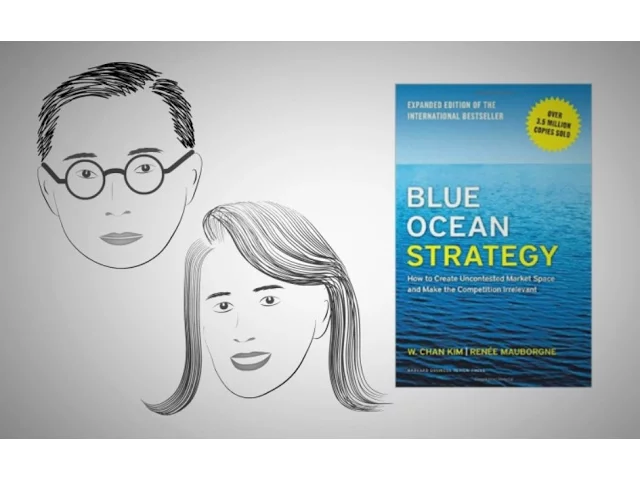
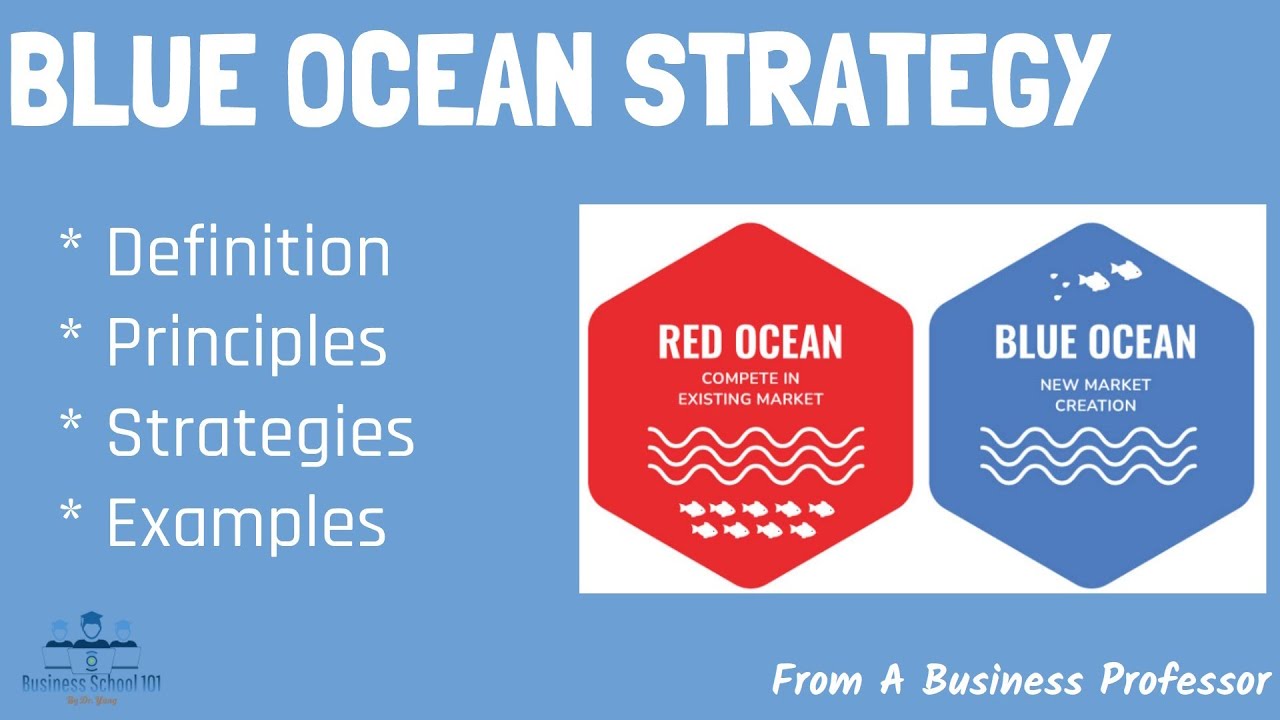
I recently read the book Blue Ocean strategy by authors W Chan Kim and Renee mabor everyone knows that if you want to be successful in business you need to beat the competition right well according to professors W Chan Kim and Renee mabor striving to beat the competition in an established Market is a bad business strategy if you try to enter an established market like the fast food market with the hopes of outperforming the competition you are adopting what the authors call a red Ocean strategy in today's world thanks to the rise of technology and the
widespread access to information it's too easy for businesses to enter an established market and saturate that market when a market is saturated the only way to succeed is battling for market share which turns the market Waters bloody and red hence the term red Ocean strategy if instead you focused on sailing past red oceans in search for Blue Waters of untapped Market potential you'd increase your chances of survival and profitability when authors W Chan Kim and Renee mbour studied 108 new businesses across 30 different Industries 92 of those businesses adopted a red Ocean strategy and aimed
at outperforming the competition the remaining 16 businesses adopted a Blue Ocean strategy and avoided competition in search for a new category that they could dominate when looking at the collective profits of all 108 companies across several years the 92 red ocean businesses only accounted for 39% of the total profits that meant 61% of the profits were generated by just 16 blue ocean businesses upon further study the authors discovered that the blue ocean businesses went on to dominate their respective markets for 10 to 15 years after their initial launch so how can we use a Blue
Ocean strategy to find an uncontested ocean of opportunity and dominate a market for over a decade to find the answer let's look at how a company called cassella wines used the Blue Ocean strategy to create a new category of wine that would become the bestselling wine in Australian and United States history when cassella wines set out to create a successful new wine product they knew that competing with existing wine brands in the traditional manner would be extremely difficult they would need to establish their brand over the span of several years and hope to win several
Awards along the way to gain the favor of existing wine drinkers so they decided to take a different approach instead of focusing only on wine drinkers like most wine businesses do they focused on beer and cocktail drinkers consumers in adjacent markets of other alcoholic beverages who either infrequently drank wine or avoided wine allog together they approached these non-customers of wine and asked them a few questions like why did they avoid drinking wine and what was it that specifically discouraged them from drinking wine these non-customers of wine shared many of the same reasons for avoiding wine
the first thing they mentioned is that purchasing wine is intimidating having to choose from such a large variety of wines makes the process of purchasing wine overwhelming secondly to most non-wine drinkers wine is unpleasant to drink it's either too bitter or harsh or too sweet and lastly wine didn't seem very much fun to drink compared to beer or cocktails it seemed too fancy stuck up and elitist so cassella set out to make a wine that would appeal to these frustrations of non-wine drinkers while at the same time still producing a wine that would be considered
high quality to most wine drinkers what they came up with was a wine called Yellow Tail non- wine drinkers actually found it very easy to drink it was sweet enough to keep their palletes fresh and keep them wanting more but not too sweet as to be associated with cheap wine cassella had created a new category of wine that was fun easy to drink and relatively high quality however what ultimately caused a large portion of non wine drinkers to embrace the new category of wine was its incredible value Yellow Tail was a highquality Innovative new product
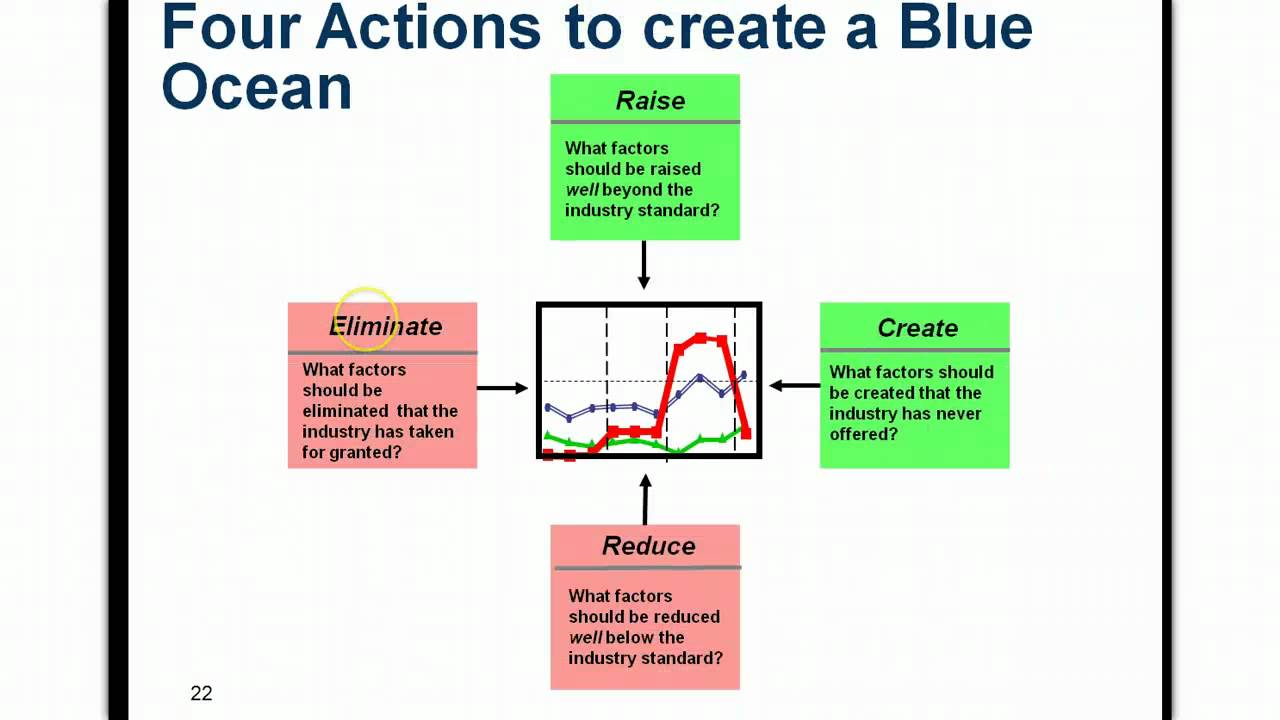
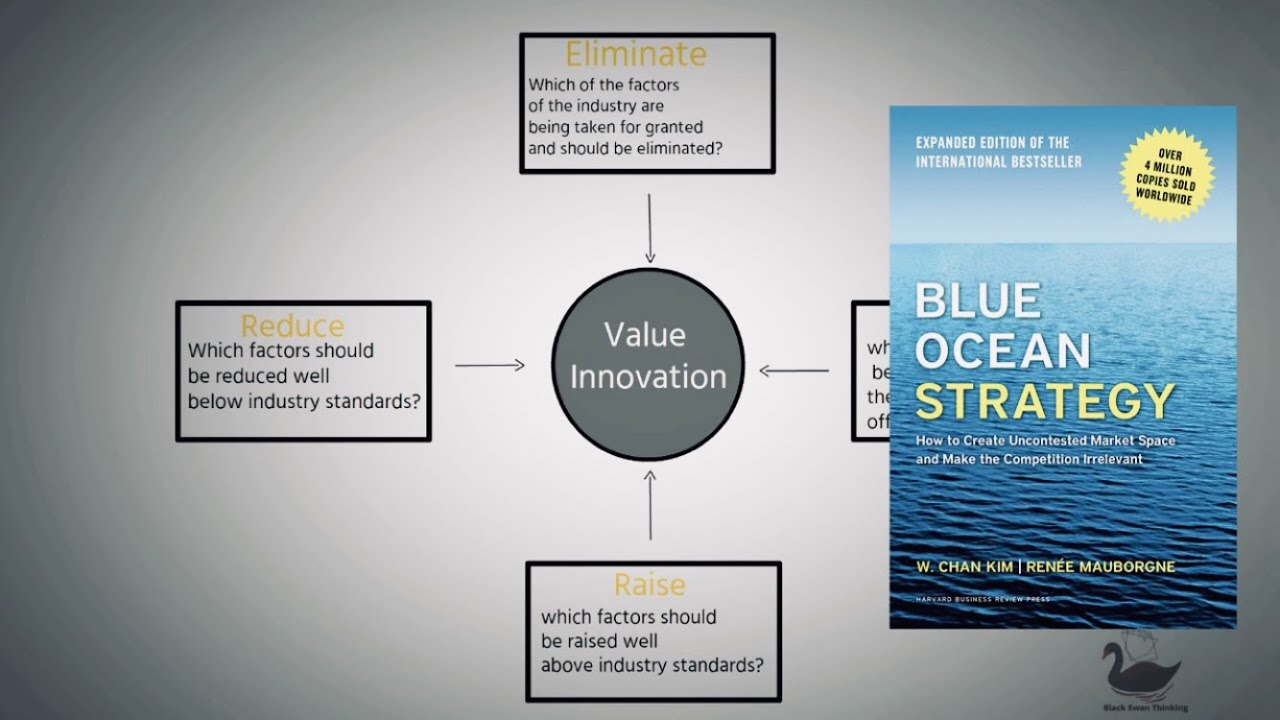
at an incredibly good price a price that was comparable with most beers the ability to create an Innovative new product while at the same time keeping costs low is what the author call value innovation and it's at the heart of every blue ocean business to achieve value innovation and discover blue oceans of opportunity Cassell wines adjusted four levers during the development of the Yellow Tail eliminate reduce raise and create first they eliminated the aging process of their wine and saved money on Oak barrels and storage costs then they reduced the inventory to just two wines
a white chardonnay and a red sh as by focusing on what they could eliminate and reduce from the standard practices of wine making they could reduce the cost of their product while simultaneously increasing the appeal to infrequent or absent wine drinkers who valued something much simpler after eliminating and reducing they looked at what standards they could raise they raised the freshness and drinkability of their wine so it was easy on the pallet like beer or cocktails and finally they looked at what they could create by incorporating practices from adjacent markets like the beer industry they
created a new wine label that was simple and somewhat adventurous like many beer labels it just had a picture of a kangaroo and stated that the product was from Australia it didn't have the age of the wine and it didn't have fancy terminology that stressed the Art and Science of wine making they then came up with a bottle that could be used to bottle both white and red wine the first of its kind this is something that the beer industry had been doing for years with a variety of beers in the market playing with these
four levers allowed cassella wines to create its own wine category of fun unintimidating easy drinking wine it attracted a whole new group of customers to the wine market in an area of the market that cassella wines could dominate for years to come and because they created the category of fun easy drinking wine they had a huge head start on the competition making it extremely hard for competitors to steal their market share this is the power of Blue Ocean strategy and there are several businesses who have used the strategy to dominate their Market another blue ocean
business example is 5H Hour Energy the mini energy drink that you see on the counters of almost every convenience store 5-hour Energy created the new energy drink Market of 2 O bottles and it maintained a 93% market share of that market category despite competition from major competitors like coch and Red Bull because they created the category and got out to a huge lead on future competitors they continued to dominate that category today if you are interested in finding Blue Waters for your next business idea and dominating a market for years to come start by focusing
on the frustrations of customers outside of your current market space then look at existing products or services within the market and ask yourself four things what can I eliminate what can I reduce what can I raise and what can I incorporate to create something new and attract infrequent or absent customers by pulling these four levers you can gradually develop a product that that defies the status quo and creates a new product category that you will dominate so stop focusing on how you can beat the competition and start focusing on how you can make the competition
irrelevant that was the core message that I gather from Blue Ocean strategy it's an Innovative book that I think every aspiring entrepreneur or business person should read I highly recommend it if you would like a one-page PDF summary of insights that I gather from this book just click the link below and I'd be happy to email it to you if you already subscribed to the free productivity game email newsletter this PDF is sitting in your inbox thanks for watching and I hope you have a productive week