This video is going to be a critique of universalism, which is the doctrine that ultimately all shall be saved. Not just all human beings, but according to many expressions of this, all demons as well. We'll get into that, but this won't be a comprehensive critique.
Instead, we're just going to focus on church history and especially how universalism originated and was dealt with in the early church. I think approaching this topic from a historical angle like that brings some fresh perspective. In particular, I want to highlight three aspects of universalism in the early church.
Number one, universalism always had a rocky relationship with orthodoxy from its emergence in second century Alexandrian Gnostic teachers through the multiple waves of controversy about origin. An early Christian who affirmed universalism, it never really got a firm footing within the church. Number two, universalism has tended to be more speculative and philosophical in character as opposed to textual or biblical in its motivations.
We'll talk about that. And number three, universalism in the early church involved not just a different view of the final destination of reality, but a different framework for the entirety of reality, including creation and sometimes even the doctrine of God. I'll explain each of those.
Before I dive in, I want to do a book recommendation. That's Sam Storm's Understanding Prayer: Biblical Foundations and Practical Guidance for Seeking God. This is a really great book, and I know a lot of us struggle with prayer.
Well, who doesn't? Most of us. And this book, I found just incredibly helpful, and I wanted to recommend it to you.
I trust Sam Storms. Both theologically, I trust him. He's a good theologian, but I also trust him spiritually as a pastor and as a guide for the practical sides of this.
And uh it's it's just so helpful on practical questions like praying for pleasure. Something we don't think about a lot. Praying against anxiety, praying for peace.
My favorite chapter was on warfare prayer. Chapter 11. If you think a demon is afflicting you or someone else, how do you pray in light of that?
It even gives sample prayers to pray. Really helpful resource. So I'm going to put a link in the description.
Uh would love to recommend that to you. Now before we dive into church history on universalism, let me say why this topic matters so much and why I think we have to and and a little bit about the spirit with which we should approach it. Universalism is becoming more popular it seems with each passing decade.
And I don't think that there is any Christian tradition that can avoid this. It seems to be everywhere. Obviously we think of some of the big flash points among evangelicals.
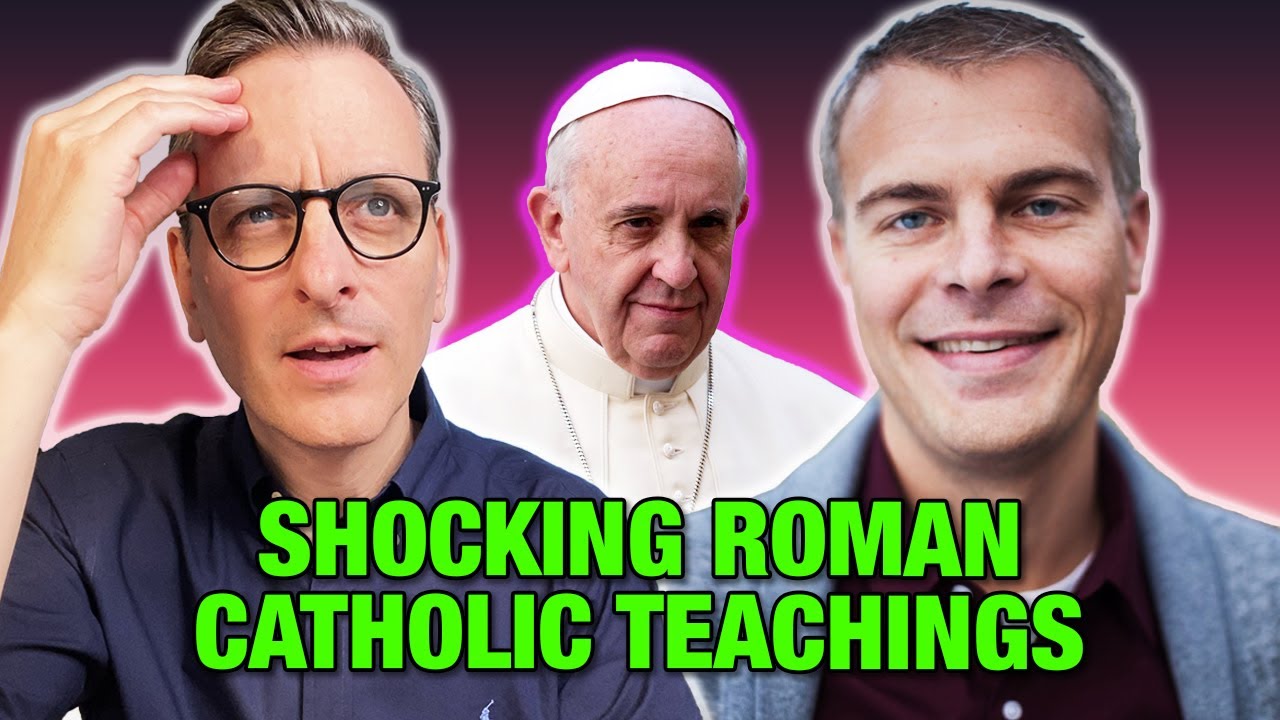
You think of different reactions to Rob Bell's book, Love Wins back in like 2011, 2012. Among Roman Catholics, you think about responses to various things that Pope Francis has said, like his six 2016 statement, I like to think of hell as being empty. Among Eastern Orthodox Christians, you think of reactions to David Bentley Hart's 2019 book that all shall be saved.
But there's lots of others both popular level and academic uh in in all different Christian traditions. Universalism is on the rise. It's also a big topic for those who are leaving their faith, those who are deconstructing or questioning.
It's also right in the mix with a lot of those stories as well. So, this issue is not going away. If you're doing theology in the 21st century, this is just one of those things that's likely to come up.
Now, this video is going to be critical of universalism and instead affirming particularism, which is the idea that some portion of humanity will be saved as opposed to everyone. But let me say that the motive for that, boy, this is a tough topic. It is this is brutal because the motive for that at least I I don't my motive is not uh you know a partial charity is or a selective charity as though we only love some people or we don't want the best for everybody or something like that.
On the contrary we should desire that every person experience salvation every person come to know Jesus. I think actually the attitude modeled for us by the Apostle Paul in Romans 9:3 is something to try to move towards. I often pray I I have tremendous love in my heart for non-Christian friends.
I often pray, you know, I feel this overwhelming love for them. I think we should try to get our heart in the grooves of Romans 9:3. And you know, we're not um trying to assert ourselves over them.
We want to lay down our lives. That's what Jesus taught us to do. And so when we acknowledge the reality of final separation from God, we should do so soberly and with grief.
It's something that confronts me. I don't feel comfortable with this doctrine, but I think we need to do so. I think we need to reckon with this.
So the motive for rejecting universalism is that it's a very problematic doctrine. And I think for here's my experience. For many people, universalism seems initially attractive, especially if it's just sort of casually considered.
And it's often perceived to be well of course that's the most charitable view or the the view that is really happy like the what what you'd find in the best possible world it' be universal salvation. But the more you think about it the more you start to see complexities that arise especially when you look at it from the standpoint not just in the abstract but in in terms of concrete experience and history and tradition and you start to face questions like what about Satan himself? Will Satan be our brother in heaven worshiping God?
If so, how will that come about? Will it be with his repentance or without? Will he undergo punishment prior to that?
You know, these questions get into debates among universalists like the ultra universalism versus restorationism and this debate that's going on. And uh there's a lot more to that as well. But uh ultimately what I think I need to say is universalism is not a simple or casual view.
And in fact ultimately the weight of scripture and tradition are pretty decisively against it. I think Michael Mccclimman is correct in his analysis in this amazing two volume book which I hold it up and it's like half the screen here. This is a lot of research went into this.
This is just a this is a model work of what historical theology can be. You just work through the tradition and I'm drawing a lot from this for this video. Basically what he says is toward the beginning while universalism has undeniable curb appeal for the theological driver by the universalist house proves to be not a very livable place.
That really resonates. I think that's right. Why is that?
Well, let me work through three reasons for this that we can see as we approach this as it's working out in the early church. First, universalism has always had a tenuous relationship with orthodoxy. And you see this in the early church.
Mleman's book goes through this uh thorough overview and what he shows is that there's two great influences toward universalism in church history. In the early church, you have origin and in the modern era, Jacob Bow uh who was a 16th and 17th century Lutheran mystic. But universalism didn't start with origin.
It first emerged among certain gnostic teachers in and around Alexandria in the 2n century and those in turn influenced origin and possibly Clement of Alexandria as well. Furthermore, origins universalism was always controversial. Uh I think here's the thing is uh you know you get these different waves of controversy surrounding origin.
First around the turn of the fifth century and then again in a more protracted way throughout the sixth century. Ultimately, Origin's views are rejected at the fifth ecumenical council in 553 AD. Though, this is tricky because the condemnation is bound up with other aspects of origins theology like his doctrine of pre-existence souls.
And so, there's some dispute on exactly what's being condemned here. Some have tried to argue that it's just his christologology that is being condemned at this council as opposed to his esqueological views or his views of the end times, but that seems very unlikely. uh it's not just about the council's cannons.
You have to look at the reception of this council. And Mccleimman notes that for some,400 years or until the mid 20th century, theologians and historians regarded the condemnations pronounced at the fifth ecumenical council in Constantinople in 553 as aimed at origins universalism. The simple fact is that universalism did become widely perceived to be outside of the bounds as you move forward from the sixth century until very recently.
You find it here or there. I'm not saying it's never present, but in orthodox circles, it's always kind of looked at as an outlier view and as a problematic view. Isaac the Syrian in the 7th century may have been a universalist.
You can find people after this, but for the most part, it's pushed to the side. Now sometimes what people argue is that prior to the sixth century origin uh universalism was more of a common view or sometimes what people will say is that in the west you have Augustine and the the way the western tradition goes is away from universalism towards particularism but in the east there's a more friendliness to universalism and it's true that we can point out some universalists in the petristic east but the truth is that it's always controversial even prior to the fifth ecumenical council in both the east and in the west. So on the one hand we have some major thinkers who appear to affirm some kind of universal salvation.
Ditimus the blind, Theodore of Mapsuestia and Gregory of Nissa. I'll say more about Gregory in just a moment. And you also have, which is really interesting, people like Gregory of Nazanzis and Maximus the Confessor that are disputed in their views, but they seem to be a bit more ambivalent.
They they don't seem to just outright condemn universalism as though it's an impossible thing for Christians to hold, though there's some disputes about their views. But on the other hand, a larger majority of the early Christians were against universalism. That includes, and and I want you to see how they were against it.
So even Gregory's older brother Basel and other dominant church fathers like John Chrisostum, I want you to see their argumentation. It's not just that they rejected, it's how they reject it. Basel, for example, references the teachings of Christ about hell and then says, "Although these and the like declarations are to be found in numerous places of divinely inspired scripture, it is one of the artififices of the devil that many men as if forgetting these and other statements of the Lord ascribe an end to punishment so that they can sin more boldly.
" He goes on to argue against that. Similarly, John Chasm when he's preaching through uh I think it's 2 Thessalonians 1 and the reference to eternal destruction there. Okay, he starts out the whole sermon saying that there are some people who think that this is just temporal, not eternal.
He says that's wrong. And he sees that at kind of at odds with the plain reading of scripture. So what I'm trying to highlight here is the way they're arguing.
You know, Basel thinks this is a trick from the devil that encourages sin. John says this is just people trying to downplay the reality of hell and so on and so forth. That does seem to be the more predominating position in the east despite what some will claim.
And those concerns about this being basically from the devil. This idea of universal salvation are sometimes specifically tied down to origin. Origin was always a controversial figure.
Always. Not just after the 553 verdict. For example, the great Coptic writer and saint Shenuta of Atria rails away at origin as teaching the lies of the devil.
You can read McCleman's summary of that. It's pretty fascinating. So there's always controversy.
I let me read rather than just go through the entire I'm trying to give a brief overview here rather than go through every possible example. Let me give Richard Bacham's summary which I think is fair. He says until the 19th century almost all Christian theologians taught the reality of eternal torment and hell.
Here and there outside the theological mainstream you find annihilationism. And then he says it's even less that you find universalism. Since 1800 the situation has entirely changed and no traditional Christian doctrine has been so widely abandoned as that of eternal punishment.
I think that is true by the way that it's this is one of those issues. It's sort of a watershed issue where you see the differences in the modern instinct versus the preodern instinct but the overwhelming majority the weight of the theological tradition is against this view. So that raises a question second comment here what is generating universalism in the early church and the truth is that it seems to be more speculative and philosophical in its character and in its motivations as opposed to biblical.
And I'm not trying to make a judgment here about every universalist. I know today I'm not trying to say we know people's motives, okay? There's a lot of different expressions of universalism today.
But I think it's true of the early church as a generalization that we can find these two sort of different instincts for facing this question. One is more textualist and I'll use the word exoteric and that rejects universalism and the other is more speculative and esoteric. So exoteric means intended to be understood by the general public.
Essoteric means intended to be understood by only a select few especially those with special knowledge. This maybe is coming a bit out of the the gnostic uh second century idea uh the gnostic teachings in the second century where you have that because you get this correlary with universalism where you often get a kind of elitism like there's a privileged enlightened few who sort of know better because of something they've seen or experienced and that is that I'm not saying everywhere but you find that a lot in the early church in so far as universalism comes up. It's so frequently the case that you can almost use this question of universalism as sort of a test case for differences of theological method.
And the reason for that is that biblically it's very hard to make a case for universalism. I I'm not trying to be offensive to people here. I know universalists will disagree with me about this.
But the simple fact is the texts that speak of all can be understood as speaking in a more limited or qualified way. For example, a lot of passages are speaking about all people without distinction as opposed to all people without exception. There's ways to understand those texts in a particularist frame.
But the biblical passages warning about these two distinct locations, heaven and hell, or two different classes of people like the sheep and the goats. These are more difficult to interpret in a universalist way. So in other words, you can find isolated passages that might sound either way, but when you try to put them all together, the universalist sounding passages are much easier to reconcile to particularism than the particularist passages are easy to reconcile to universalism.
It's the end of a long day and I really hope I said that right. If I didn't, I know you'll know what I mean. So, you know, it just looks like in scripture we have two different destinations, both of which seem to be, you know, opposite and everlasting.
Whether it's we're talking about the sheep and the goats in Matthew 25. I'll I'll put up an example from Daniel 12:2, but there's so many of these. Now, the least controversial expression of universalism in the early church is arguably Gregory of Nissa because he doesn't have origins doctrine of pre-existent souls, for example.
He's he's not viewed as controversially by the later tradition, which is interesting. Um but even Greg Gregory arguably had some philosophical ideas that are really driving the boat here. One of them is his doctrine of evil as naturally depleting itself.
The Greek scholar Constantine Serpanas notes the strongest and perhaps most convincing argument of Gregory in support of universal restoration and salvation is the finitness of evil as non-existent. So you'll find Gregory arguing that evil must be removed from existence and reduced to complete annihilation and when every creature finally rests in God after having gone through a purification process and so on and so forth. Now that is not to say that Gregory doesn't appeal to scripture.
uh a a particularly important verse for him and other universalists as well is 1 Corinthians 15:28 and Paul's language of God being all in all. But these passages are interpreted within this larger vision of creation and in particular a doctrine of humanity that sees evil as this unnatural intrusion that must be removed in connection to the final resurrection. So there's disputes a little bit about how to read Gregory, but he seems to think that the unity of humanity in Christ requires universal salvation.
So that's interesting. That leads to the third consideration here I want to develop here. Universalism in the early church is not just a different vision of the ending of the story of creation, but it's a different vision of the whole meaning of the story.
In other words, it's not just a different outcome, it's a different conceptual framework. altogether. So if you imagine a novel that has 29 chapters and someone comes along and just changes chapter 29 to be give it a happier ending but leaves chapters 1 and 1 through 28 the exact same.
That is not what universalism does in its petristic expressions. Universalism in the church in the era of the church fathers affects the whole not just the ending. Ultimately, the question that comes up here is, is reality ultimately a synthesis or is it more of a dialectic?
The biblical story, here's one way to put the contrast. I hope that doesn't sound too abstract here. Put it like this.
In the biblical story, you have a transcendent God who's radically distinct from the world and a linear progression of history uh in which good and evil are ever more expanding. But these early expressions of universalism tend to have this idea of a kind of primordial unity of all things in God. And then they view history in terms of cosmic symmetry and synthesis.
So in other words, put it like this. In the biblical account, you have creation, fall, redemption. In the universalist view, it tends to be something more like unity, diversity, reunion.
And so this will often sometimes lead uh this will often lead to a different view of creation and sometimes even a different doctrine of God. That's why in origin you have pre-existence souls. So origin who is the biggest influence toward universalism in all of church history arguably has this idea of pre-existence souls.
That's not an incidental part of the universalism. That's an important thing. You can put this very briefly from one this passage in origin and and his on first principles when he says the end is always like the beginning.
This is how universalism is often working out. It's this it's understood as this kind of recalling of things back to their original state. So that's why I'm I'm muting my phone here.
That's why origin is so insistent on Javier texting me. He'll probably watch this. um on that that's why he has pre-existent souls as an such an integral part that's why that was so controversial this is all together um put it and and that's why universalism is often seen by these early Christians as metaphysically necessary it's what must happen let me just give an example of this to help show how this is playing out later on a bit after origin you have Steven Bar Sudali who's a Syriak mystic in the fifth century and he writes this book and he's advocating for universalism and this is being contested by his contemporaries like Jacob of Surug and Philoxinus of Mabog and the concern that comes up is pantheism okay so for example here's what Steven says and listen to the logic of this all things are destined to be co-mingled in the father nothing perishes and nothing is destroyed nothing is annihilated all returns all is sanctified all is made one so just pausing there those words, all returns sum up what I'm trying to get at here.
This is a common universalist view. You saw again there the 1 Corinthians 15:28 passage, God shall be all in all. But it's this onlogical framework.
What makes Steven's theology so problematic is this idea that basically the world is consubstantial with God. And he's he's in other words, he's not just turning up the volume on God's love and grace toward everyone. He's actually reducing the distinctness between God and the world.
Here's how he goes on. Demons receive grace and men receive mercy. The distinctions that are below are abolished and everything becomes one thing.
And then he even talks about God. Distinctions in God are sort of abolished. Now, of course, this what Steven is saying here is more radical than other expressions of universalism.
But I'm citing this to show one example of this vision of oneness that's often driving the boat. Uh even where you don't have pantheism, you often find this idea that all things must return to their source. So you're not just changing chapter 29, you're changing chapters 1 through 28 as well.
It's a vision of everything. And this is the uh becomes a great irony because universalism aims to increase God's love and grace. But it risks actually reducing them by making them necessary.
Because rather than a God who chooses freely to give grace in contingent circumstances, you have this crushing ontological monism where all things return to their original source. Um and that does have a lot of association with gnostic ideas as David Brachie points out here. You can read this quote.
Now again a lot of people are going to come along and say well those are just some eccentric features of petristic universalism. You know we can lop those off. We we don't have to go with origins idea of pre-existent souls.
We don't have to have this pantheistic vision that some mystics had. Just lop off all those things and just keep that all shall be saved. In other words, leave chapters 1- 28 the same.
And let's just make changes to chapter 29. But here's the thing. There's a reason why this ontological vision of oneness so often undergurs universalism because it's hard to see what grounds it apart from that.
Put it like this. If you lose the primordial unity, what confidence do you have for esqueological unity? Without this foundation that all things are one, what is our confidence that every creature will choose God, that every creature will be saved?
The the concern here is a deficient view of evil. Why can't it be that Satan will forever hate God and that certain demons will forever hate God? And here's the scary thought, that certain human beings will forever hate God.
And this is where the the sort of practical consequence of this discussion plays out is this sobering reality that it's possible to enter into a state of permanent irrevocable enmity toward God and judgment from God. And the the upshot of that is an urgent reminder of the need to repent. And this is why universalism has this very real street level consequence especially in how it typically plays out that we want to tell people the choices that we make every day between good and evil are literally shaping eternity and their consequence and reverberation goes on forever.
Uh and reality is a dialectic. Created reality is a dialectic. Good and evil are forever expanding apart from one another.
It's a different vision of everything. That seems to be what I think the scripture teaches. So, I hope this very broad overview of the early church contributes to this discussion.
Obviously, so much more to say, especially about scripture on this topic. If you're interested in more on the nature of hell, I do have one academic article in Biblopica Sakra, a theological journal that's on CS Lewis's view of hell. It's called a losing battle against reality.
You might be interested in that. I'll put a link in the video description. Um, there's lots of other questions I want to explore in other videos.
I want to do a study on annihilationism and the nature of hell and those things. I've obviously not gotten into that here. My next video though is going to be a critique of full predtoism, which I consider to be one of the fastest growing and most dangerous esqueological views.
So, keep your eyes peeled for that. That's the idea that everything's already happened and we're already in the new heavens and the new earth, which I consider to be just about the worst form of theology imaginable because it takes away all our hope, but it's more common than you'd think. And so, I'm going to make a video on that.
All right, thanks for watching everybody. Let me know what you think in the comments. [Music] [Music] Heat.
Hey, Heat.