Welcome back to this next video of the series this is the second video and in today's video we're going to be looking at how markets work in the previous video we talked about what exactly is economics we uh also talked about the PPC curve we talked about opportunity cost and we talked about the basic economic problem in today's video we're going to do the continuation and in last like last video uh I talked about how Economics is all interconnected so in today's chapter everything will be interconnected to the last chapter and we disc discussed that
economics is all about efficiently allocating resources because of the unlimited ones so in today's chapter we will actually look at how these markets work how are resources allocated and it uses the principles of demand and Supply to allocate these resources we'll then have a look at stuff like uh equilibrium we will look At the consequences of price changes we will look at elasticity of demand and supply and we will look at the entire market economic system the different types um of um market economic systems we will have a look at market failure and um we
will then have a look at um the mixed economic systems uh we look at the definition and we'll look at a lot of other stuff so this is a bit of a bigger topic compared to the last topic so um Yeah so I think let's just begin and let's start off uh and start this discussion with the difference between microeconomics and macroeconomics so economics is split into two um sections I think I can call it sections or two parts right and that is the microeconomics and the macroeconomics okay so um economics is split into these
two right the microeconomics and the macro economics and we're going to be talking about both Of them in just a moment so what is the difference between microeconomics and macroeconomics and it is required uh for you to know this difference because um it's is said on your syllabus so microeconomics what is microeconomics micro economics is the study of individual markets and what does that mean okay so let me just write that down right here so microeconomics is the study of individual markets and um let's just let's just copy and then paste it Right here okay
so microeconomics is the study of individual markets okay what about macroeconomics microeconomics is the study of the entire economy as a whole okay so if you want to summarize these two definitions this is how you would actually say it okay so microeconomics study of individual markets microeconomics is the study of the entire economy now I'll explain further I'll not just leave it like this of Course okay so with microeconomics an example is let's say we are studying the effect of a price change on the demand for a good okay that is an individual Market if
it is the price change on the demand for a certain type of good that is actually an individual market so microeconomics deals with more of the producers and consumers right because it's an individual Market okay the producers and the consumers actually Operate these markets they are the people who operate in these markets so if I study the effect of a price change that is microeconomics let's say you still don't understand let me Define macroeconomics now with macroeconomics with macroeconomics as I said it's the study of the entire economy okay now an example of this is
the total size of the economy example employment rate right if I'm looking at the employment rate if I'm looking at the economic growth if I'm looking at the GDP right of the entire economy that is macroeconomics okay macroeconomic decisions are made by the government and microeconomics decisions are made by the producers and consumers those are the two differences between microeconomics and macroeconomics okay so the difference between micro and macro is microeconomics the decisions are made by the producers and the consumers with Macroeconomics the decisions are made by the government okay and with macroeconomics it studies
the total size of the economy with microeconomics it studies the individual Market okay so that's another difference microeconomics study of individual markets microeconomics the study of the entire economy now why are we learning this is because our syllabus is designed in a way we first learn microeconomics so in here we will learn about Supply demand Equilibrium labor stuff like that and then in macroeconomics we start talking about exchange rates we start talking about employment we start talking about um economic growth and so on so forth so we start talking about macroeconomics remember microeconomics is this
is actually done by the government okay this is done by the government and this is done by the consumers and the Producers okay that's another difference so one difference is that microeconomics individual Market macro is the entire economy okay now let's move on to actually the main thing of today's video is how these markets work now as we said in the previous video is that every most of the resources that we use are scars okay and we need to allocate this properly and that's actually what the study of economy is so in this the subtopic
here is Actually the subtopic actually here is the role of the markets the role of markets in allocating so let's have a look at this now the role of markets in allocating let's start off by in allocating resources actually resources okay the role of markets in allocating resources now what is resource allocation okay it's kind kind of Self-explanatory right allocating resources providing resources but in an economics term resource allocation is the way in which economies decide what goods and services to provide okay so let's write this down right here resource allocation paste it right here
resource allocation is the way in which the economy is decide what goods and services to provide how to prod how to produce them and for who to produce them They say these are the three economic questions that you must ask yourself when you study economics first thing what of the what goods should I produce second how do I produce them and third is who do I produce them for in economics we look at these three questions and these questions are actually termed the basic economic questions right and you already know what basic economic problem is
so that means if I solve these three questions I Can solve the basic economic problem do you see how everything is tying up and this will make sense if you have watched the previous video so I would highly advise you watch the previous video let's say you've come only specifically for this video yes it's fine but if you have time I would really advise you to watch the previous video it's because the way I teach is I teach interconnected because everything in this syllabus is interconnected you will See that in chapter 6 we start using
every chapter and we make chapter 6 happen right and that is why in the start is very important to start from the beginning basic blocks like needs and wants resources factors of production and then they all link together so resource allocation is actually used to solve this economic problem remember in the first episode the first chapter I said that in economics we need to solve the economic Problem and this is actually the first way is to in simple terms answer these three questions what to produce how to produce and for whom to produce so let
me write that down so these questions are termed the basic economic um the basic economic questions okay so I'll paste that as well for you to write down so these questions are called the basic economic questions why they call this this is because it is used to solve the basic economic problem Okay another definition that you must understand here is what a market is because you can see in this definition right here you can see in this definition we we are mentioning the word markets what is a market okay what is exactly a market when
because in economics you will see that we we we say Market Market Market everywhere Market okay what is this Market a market is any set of arrangement that brings together all the Producers and consumers of a good and service that's the definition of a market okay so the definition of a market is a set of arrangement that brings together all the producers and consumers of a good and service what does this mean the producer will produce of course the good the consumers will buy these Goods what's happening a market is happening this Arrangement that we
have done of the producers and the consumers are called the market I'm Hoping so far so good we've just quickly talked about resource allocations talked about a bit of the basic economic problem and we've talked about the market okay so now let's actually go deep inside into how to solve this economic problem for microeconomics okay so in a market goods and services are bought and sold right that's a market and in a market we use the principles of demand and Supply okay So this is how and and actually this is very important because this is
a price mechanism what is price mechanism price mechanism is when the goods and services are bought and sold in a market and an equilibrium price where the demand and Supply are equal so when the demand and Supply are equal okay at an equilibrium price where the demand and Supply are equal this is called price mechanism okay and I'll just write that down as well for those people who like it Written okay there are many people who understand more when they read so that is why um many times whatever I say I put it also on
on the screen okay so goods and services bought and sold in a market at an equilibrium price where the demand and Supply are equal are called the price mechanism and this is very important because sometimes they do ask the definition of this now why do we have this price mechanism because the price mechanism helps us answer those Three questions that we talked about before what what are the three questions I'm going to keep repeating them what to produce how to produce and whom to produce it for this price mechanism will help us answer these three
questions why do we need to answer these three questions because it solves the basic economics problem do you understand how everything is getting interconnected that is how economics works okay and even if you have seen my old videos I Like to always interconnect everything because even in past paper questions everything is interconnected and that's why sometimes I say you must finish the entire syllabus then only start doing past papers because topicals are quite hard and that is why even in this way in this in this case what I'm doing right now I'm finishing all the
theory all the theory um lessons and then we can start doing past paper questions so it's much more easier for you as well because Everything is interconnected right you will you will notice that questions are talking about stuff in chapter one talking about stuff in chapter 6 all together in just one question so very important to understand how everything works okay so as I said the price mechanism answers the three uh basic economy questions and producers will produce the good that the consumers demand the most right logically if I want this product the producer will
B to Produce that product right and that is actually what the price mechanism is okay so now we're going to start talking about demand and Supply because remember I said that in a market there's always demand and supply and those are the factors demand and Supply so now let's have a look at demand and let's have a look at Supply so let's start off with demand okay demand is the the first one that we need to have a look at okay so Demand right Here okay let's put it on the the second page can I
put it on the second no right there okay so there go demand what comes to your mind when you hear demand well what comes to my mind when I hear demand is want or the ability to you know get something if I demand something I want it right I need it okay I want it okay and it's actually it's more of the definition right if you just think of demand demand is wanting Something okay I demand this I want this right that is what demand is demand is the want and this is now the economics
definition demand is the want and the willingness of consumers to buy a good or service at a given price and you need to cram this definition because this definition is used almost everywhere okay I'm going to paste it right here his demand is the want and the willingness of consumers to buy a good or service at a given Price okay as I said again what what comes to mind when you think of demand let's say I raise this entire definition let's say this definition was not here what comes to your mind when you think of
demand want right so demand is the want and the willingness of consumers to buy a good or service at a given price okay now under demand we need to know a few terms before I I explain more is we need to know something called um individual demand individual demand is Demand from one consumer okay and market demand is the demand for a product from the the total demand for the product market demand so the total demand for the product is called market demand demand from one consumer is called uh individual demand so I'm just going
to put that also that you need to know right here okay so I've put those two individual demand is demand from one consumer market demand is um for the product is the total demand for the Product okay so I'm hoping that is also clear now once you know this we need to understand the law of demand because remember I told you how a market works is through demand and supply of course but we're now focusing just on demand the law of demand is quite simple and I think you must have heard of this before okay
if I increase a price okay maybe you answer this of course I cannot talk to you but maybe you answer yourself right if I increase the price of a Certain product okay let's say the price and and an example I give usually is let's say let us say the price was $5 for one pencil let's say and now the price is $10 am I going to buy this $10 product or will I stop buying it well if it was me I'm going to stop buying it because now it's $10 I'd rather buy an alternative okay
IID rather buy a pen or rather cheaper pencil of another brand same company by the way if it's the same Company it moves from $5 to $10 will I want it or will I not want it you can ask yourself that and that's where the law of demand comes into place the law of demand what do the law of demand state the law of demand states that an increase in price leads to a decrease in demand and a decrease in price leads to an increase in demand right if let's say one day there's a sale
actually a sale is a very example a very good example sorry there is a sale and suddenly the Price of your favorite uh favorite toy or favorite type of cloth clothing brand has suddenly he got a 50% discount the price reduces by 50% I'm going to rush into that supermarket and buy it and why is that and that means there's an increase in demand everyone is going to rush into that Supermarket no that's why in sales everybody is at the supermarket because the demand increases because the price reduces so that's exactly what the law Of
demand says and it's very important in economics because producers actually use that and they they make the products the price according to that okay so let's P the law of demand the law of demand States that an increase in price leads to a decrease in demand and a decrease in price leads to an increase in demand okay and you can just visualize this by saying okay if I increase the price what happens to demand of course it's going to fall if I Decrease the price of course the demand is going to rise okay that is
what the law of demand is and you must also remember this relationship between the two they have an inverse relationship vice versa relationship if I increase price increase demand if I decrease price increase demand vice versa okay so that is done right that is I've so far talked about what demand is I've talked about individual demand I've talked about Market demand and I've talked about the law of demand okay now so far I think it's it's it's quite easy to understand I'm hoping there shouldn't be any difficulty so far but demand is very important in
a market because if you have the ability to pay it then only you can afford it or then only you can actually buy it right and the demand comes to to a very good play is because producers need to think of Demand right if this product is Demanding of course I'm going to produce this more and if it's in demand I'm going to rise the price for a producer right because if I Rise the price people are still going to want it but again we will come into the more in-depth in just in some time
in this video but in just some time we look at factors of demand because they're factors of Demand right stuff like pricee and stuff there's a lot of factors okay now now there's something that you need to remember with Economics is the graphs okay so we we will learn stuff with the graphs as well um and here is the first graph that we're going to have a look at and this is a graph of uh which I'll just explain in just a moment um so this graph here what does it State this graph here um
has said that if the price Falls from 80 to 60 the quantity demanded has increased from 300 to 500 okay so when there's a decrease in price there is an increase in demand okay so what do we Call this when there is an increase in demand due to the price okay and this I'm going to word this very properly because you need to understand this when I increase the demand the increase in demand due to the change in price because I've changed the price there's an increase in demand this is called the extension in demand
okay I can write this down I can write this down right here is that when I increase the demand because Because when I increase the demand because of the price because i'm reducing the price there is an increase in demand that is called an extension in demand and the opposite will be a contraction in demand when I decrease the demand due to the change in price so when there is a decrease in demand due to the change in price that is called a contraction in demand I'll I'll put it down as well so that it's
not confusing anybody Again this is in respect to no other factors being changed okay so I'll put this down as well okay so when there is an increase in demand due to the changes in price so when there's an increase in demand because of price that is called an extension when there's a decrease in demand because of price that is a contraction in demand okay I'm hoping you have understood that that is the first graph That you need to or that's the first terminology of a graph you need to remember okay let's look at the
second terminology what about when there's a change in the factor okay what if there's a rise in demand because I change a factor and we're going to look at changing factors later okay right now we are saying that if I only change the price if I only change the price what happens if I only change the price that is called an extension and if it Increases of course and if I change the price and demand decreases it's called a contraction but what if there's a a rise in demand due to external factors and we will
look at the factors later and example of a factor is advertising for example if there's very good advertising the demand for a product will increase or let's say there was a phase where fidget Spinners were very popular and uh it depends on the target audience of This video but I don't know when you're watching this video I'm hoping it's not that old but there was a time where fidget Spinners used to be very popular okay and that is because of fashion maybe it could be due to advertising or I don't know how it suddenly just
became so popular suddenly the demand for those product just suddenly just rised it exploded okay maybe that's because of fashion okay suddenly everyone wants That thing that is a factor and the rise in demand because of that okay because of the change in factor causes the demand curve to shift okay we need to also understand that now when the demand curve shifts okay when when the demand curve shifts we need to also understand that okay so when the demand curve shifts okay you need to now remember this when demand curve Shifts when does it shift
I'm going to keep repeating this because I know graphs can be very challenging for many people so I'm going to keep emphasizing on this is when the demand curve shifts to the right okay like this you can see in this diagram when it's this line is Shifting to the right okay now remember the demand curve is always slanted like this it's always slanted like this it's always a negative Gradient right a supply curve is like this positive gradient that's how you remember it okay so whenever whenever it is moving to the right that means okay
that means that there is a rise in the demand because of the factors because of the factors okay and I can even put this down right here okay a rise in demand for a product due to the changes in other factors excluding Price because above we said when when we increase the price there is an extension but now when the demand increases because of the factors then it is going to shift to the right okay and this is very important to learn this because in many questions you will be asked to draw this okay so
I want you to understand this right let's see what is happening in this diagram in this diagram you can see the price is the same there's no change in price okay There's no change in price but there's a change in demand so that means there's a shift in in the right in this case it's a it's a extension or a contraction an extension on a contraction can either go up or can either go down that is how an extension or a contraction works but when it is with factors it is either right or it is
either left I'm hoping this is it can be a bit confusing but this should be I think I think it should be understood well right so the Price is the same price is the same because there's no change in price there's a change in the factor so when there's a change in the factor it's going to shift to the right okay and the opposite it's going to shift to the left so when there's a decrease in demand it's going to shift uh to the left so it's going to shift to the left for example it's
going to go from here it's going to shift to the Left that is when there's a decrease in demand due to the factors okay due to the factors okay and now let's have a look at the different factors that causes the shifts in the demand curve we just paste the factors of production right here and then we'll go through each one of them one by one okay so here are they are let me just paste them okay here they are so let's go over Each of the factors of production one by one um let's see
if there's a way to just give me a second let's just reduce the size okay let's just do them one by one because I'm not able to fully get it so let's just do it one by one okay let's start off with the first factor of um that causes the shift in the demand curve remember just to quickly summarize I said there is two ways that demand can change okay one way Is price and the second way are factors okay with price it's quite straightforward either the price price increases or the price decreases and with
the factors we have a few of the factors that we need to decide or we need to sorry discuss just now in a second okay so there's two ways that a demand can change and we need to know the curves of both of them remember I said when there's a change in price there is either an extension or a Contraction where was that we we wrote that somewhere here right here exactly when there is an increase in demand because of the price there's either an extension or a contraction right so if there's a decrease in
demand that means there's a contraction because the price reduces okay um yeah uh increases sorry so there's a decrease in demand because the price increases so that's called a contraction when the demand changes Because of factors okay that is when there's going to be either a shift to the right or the shift to the left if there's an increase in demand then it's going to shift to the right if there's a decrease in demand it's going to shift to the left okay so let's now look at the factors these factors that affect or shift the
demand curve to either the right or the left so let's have a look at that right now okay so if I one by one I'm just going to paste them one by One so these are the factors that cause a shift okay so let's start with the first one the first factor that causes a shift in the demand curve is consumer's income okay and we're going to explain each one of them one by one so consumer's income arising a consumer's income will increase the demand why is that let's say compared to a rich person a
person with $50,000 and to a person with $10,000 the person with the $50,000 is More likely to spend on a product compared to the one who has $10,000 right so the consumer income is one of the factors that affect the demand if a consumer has a very high income so in a country let's say all of the consumers have very high incomes then that means the product for the demand or the demand for certain products will be much more okay for example the demand for a TV okay TVs are quite expensive right so only the
rich People only the people with high incomes can afford them so if there are many consumers with a high income then the demand for the TV is most likely to be higher okay so this is the first factor that would actually affect the demand curve okay and remember here these factors either cause a shift to the right or the shift to the left okay because these are factors that affect the demand let's go to the second one the second the second one is the taxes On the income if there's a rise on the tax in
the income okay that means if there is more tax on the incomes that means there will be less demand because if there's more tax then that means my income will be less if my income is less then that means there will be less demand for a certain product which will cause a shift to the left remember anytime there's a decrease in demand there's going to be a shift to the left if it's because again If it is because of a factor right because if it is because of factors then it's going to cause a shift
to the left or the right if it's cause of price it's going to have an extension of contraction very important I'm constantly saying it again and again remember a demand curve has two types of Curves it has an extension in contraction and it has a shift to the right and the shift to the left if there's a change in price which causes The demand to change that means it's going to be either an extension or a contraction and either one will be depending on whether demand is increased or decreased if because of the factor the
demand has changed there's going to be either shift to the right or shift to the left I'm hoping that is understood okay and properly let's go to the third Factor the third factor is the price of substitutes and what do I mean by price of substitutes okay let me just paste This right here for price of substitutes it says that substitutes are Goods that can be used okay instead of a particular product for example let's say there's tea and there is coffee okay yeah okay they've given an example here so let's say there's tea and
coffee they're substitutes let's say the price of tea has increased so high that now I cannot afford tea so I switch to an alternative which is coffee right so now I switch to Coffee so the demand for coffee is going to increase okay so that is called the price of substitutes if my substitutes price has increased uh sorry has decreased then I'm going to switch to that right like for example the price of tea has increased so high that I cannot I don't want to afford it or I don't want wanted it now I will
switch to coffee because it's cheaper right so the demand for coffee increases so that's the third Factor price of substitute Quite self-explanatory let's go to the next one this is price of the compliments okay so we talked about price of substitutes what about price of compliments price of compliments what it means is that usually for example cereal and milk go together right there is cereal and there's milk they go hand in hand right if the price of cereal goes up okay if there's a rise in the price of The cereal then I'm going to stop
buying milk okay that is an example just an example here they've said for example printers and ink let's say the price of printers has increased so high that people stop buying printers then why would I need ink the demand for ink will also reduce so here it says that here as as you can see it says here that a rise in the price of a complimentary good will reduce the demand for the particular product okay so if there's a Rise in the price of the complimentary good there's going to be reduced of demand for the
other uh product right so there will be causing the shift to the left because demand is decreasing okay so now we've talked about I believe four factors we'll move on to the fifth factor which is changes in consumer taste and fashion previously I talked about the fidget spinner um fidget spinner example right and all of a sudden everyone wanted fidget Spinners Right so that is a change in consumer taste and fashion okay suddenly everyone wants this product so the demand for that certain product will increase okay let's move on to the next Factor that's quite
uh self-explanatory I also talked about advertising if there is effective advertising then there's going to be better demand there's going to be a rise in demand for that certain product okay that is why people do advertising okay so the degree of advertising is also Another Factor so when there is effective advertising the demand will increase for that certain product and it will shift to the right okay so that is all for demand and I'm going to summarize it because I've said a lot of information so I'm going to go one at a time just summarize
it quickly so that you understand properly we first talked about what demand is I think I think that one everyone has got it right demand is a willingness and want of a Consumer to buy a good and service at a given price we then talked about individual demand and we talked about market demand you need to know the two we then have to look at what the law of demand is and I said usually you don't even need to PR this you just think about it when the price increases will I want to buy it
or will I not want to buy it you know if the price increases I don't want to buy it so the demand will decrease right so that is what the law Of demand is after talking about the law of demand we talked about this very very important aspect or very very important topic is the demand curves first of all we said the demand curve is always having a negative gradient it always has a shape of this and you can see it through all our diagrams it's always this because this is very important because a supply
curve is like this a demand curve is this a supply curve is this so this is a supply curve this is a Demand curve okay so very important you even know how how it looks okay next thing is we said that when the demand changes because of price let's say I increase the price the demand Falls then there is an extension or a contraction okay so in this case if the demand increases there's an extension okay if the demand decreases there's a contraction okay and how do you show an extension or a contraction you show
it with arrows that moves along the line so It's either an extension or it is a contraction okay so you can show it along the lines when there's a change in demand because of factors then there's going to be either a shift to the right when there's an increase in demand or a shift to the left when there's a decrease in demand I'm hoping this is understood properly okay so you need to know those two we then tackled the factors the different factors that causes demand to change here we add Consumer's income I'm hoping that
you have understood taxes on incomes price of substitutes price of complement the consumer uh changes in consumer taste and fashion and the degree of advertising so those are the factors that affect demand let's now move on to supply okay so that was everything that you need to know about demand okay now we move on to supply okay so this is the demand is for for the the the consumers type of side let's now look at Supply Who does the supply these are producers remember in the definition of demand we said that this is the willingness
and I can even take you back right there we said that for demand uh in the definition it's the willingness of consumers to buy a good at service with Supply it's the want and willingness of producers and you'll see that in just a moment when we actually um write the definition of supply so let's write the definition of supply first of all again Coming from just like what we did with demand what comes to your mind when we think of Supply so if I just copy paste Supply right here what comes to your mind when
we think of Supply okay well in my mind when we are supplying something we're giving out something we're Distributing something we are supplying you know it's quite I think everyone knows the word Supply I want to supply this I want to give out this okay so Supply is the want and Willingness of producers to supply a good or service at a given price that is the definition and I'm just going to copy that and just show you right here okay so Supply is the want and willingness okay here the keyword is the want and willingness
of producers it's the want and willingness of producers to supply a good or service at a given price let's now have a look at the law of supply what is the law of supply similar to demand but this time it's a Bit different the law of supply says that when I increase the price there's an increase in Supply why is this because there's more profits right when the price increases when the price increases the supply is also going to increase because I want the most profitable um Pro profitable products so if there's an increase in
price there's going to be an increase in Supply and if there's a decrease in price there's going to be a decrease in Supply this is Called a positive relationship between price and Supply okay so that is something that you need to know next we need to know the diagram for Supply remember I said this one has a positive gradient so if I can paste it right here this is actually how a supply curve looks like and you can write you can see it right here that if I increase the price the quantity Supply increases sometimes
you don't even need to cram how the the the Diagrams look you can just think logically if the price increases the quantity supplied will increase therefore it's going to be a relationship like this and that is how it's going to do now similar to demand I don't need to explain so much here is that if there's a change in Supply because of price there's going to be an extension just like demand okay but I'm going to for the purpose of it I'm going to still copy and put it right here that If there's an increase
in Supply because of the change in price so I'm going to past it right here that if there's an increase in Supply due to the change in the price then there will be an extension when will there be a contraction when there's a decrease in the price um when there's sorry a decrease in the supply when there's a decrease in the supply because of the price there's going to be a contraction just similar to to demand the exact same Thing um and that's what you need to do okay so again same thing that we had
to look at if there's a change in price if there's a change in Supply because of price there's going to be an extension or contraction now let's look at the factors remember oh same thing again like demand if there's a rise in supply for a product because of the factors then it's going to shift to the right so same thing like demand if there's going To be a rise okay if there's going to be a rise in the supply because of the factors the factors we're going to look at in just a moment just like
demand then it's going to be a shift to the right just like the other one right so I'll even show you the diagram here I'll even show you the diagram okay so this is the diagram of when it shifts to the right so when the supply increases because of the factors there's going to be a shift to the right And when there's going to be a decrease when there's going to be a decrease in the supply there's going to be a shift to the left okay and we can even write this down of fall in
the supply because of the factors will cause it to shift to the left okay so I've kind of explained it right here just like demand almost the same things let's now have a look at the factors so let's have a look at the factors that causes the shift in the Supply curve so either shift to the right or shift to the left so we'll put that right now so what causes the the the supply curve to shift to the left or shift to the right let's start for the first one and the first one is
changes in the cost of the production okay so let's have let's look at this first okay and let's explain this first so what do I mean by changes in the cost of production now remember for a supplier or for a producer they need to always Look at the cost of production if my cost of production let's say to make a certain type of product I have to put less amount of money to make it then the supply is going to increase right if the cost of production is less then I want to make this product
and therefore it's going to shift to the right in this example they' have said that when the cost of production Rises as you can see here when the cost of production Rises let's say it's more Expensive to make a product then I don't want to supply it right if the cost of production of a certain product is very high then that means that the product itself the price is going to be so high that I don't want to make it because my profits will be so less that means the Supply will fall and that means
it's going to be a shift to the left okay so that is our first Factor the second factor is when there's changes in the quantity of the resources available for Example many people don't want to produce diamonds why don't they want to produce diamonds they don't to produce diamonds because they're so limited they're so hard to acquire right and if they're so hard to acquire they take so much time in in my production they take so much time and therefore you know I don't create it so that what will what will that happen Supply will
fall shift to the left if the amount of resources Rises let's say they discover a lot of Wood and my product is made out of wood and now I can suddenly get wood so easily and so quickly okay if I can get it so quickly it's just nearby to my shop if I can get this wood so easily then my Supply is going to rise and then it's going to shift to the right okay so I'm hoping so far you've understood let's go to the next Factor the third factor is technological changes what does I
mean what do I mean by this in our production processes we always use Technology or most of them of course the most advanced ones they use technology okay they use technology when they are producing anything right so when there's new technology when there's new technology it's going to increase amount or the ability to produce more products at a given amount of time so if I can produce so many amounts of uh products in a less time then it's going to sh that means I want you know this this machinery and I able to produce This
product very quickly so my I really want this I want to make this product so the supply of this product is going to drastically increase so this the the the supply is going to increase which causes a shift to the right remember whenever Supply increases it's going to shift to the right just like demand whenever demand increases it's going to shift to the right when demand Falls it's going to shift to the left when Supply Falls it's going to shift to the left similar They both work together it's just the law of demand and Supply
they kind of work a bit different and the factors are of course different let's move on to the last factor and the last factor is the profitability of the other products let's say one product is more profitable than the other product of course I'm going to create the more I'm going to produce the more profitable product this is quite explanatory this is very easy to understand is that if my Product if one of the product is more profitable than the other right I'm going to create the more profitable one I'm going to supply the more
profitable one so the one that is more profitable I'm going to produce it so the supply increases for that and therefore it's going to shift to the right and for the other product the uh the supply will fall so it's going to shift to the left okay so those are the factors that affect Supply okay again I'm going to Quickly recap just like what I did for demand first of all Supply what is that that's the want and willingness of producers not consumers producers to supply a good or service at a given price then we
talked about the law of demand the law of demand is kind of not similar to law of demand but law of supply states that if there's an increase in price then I want to create it right so if there's an increase in price there's an increase increas in Supply if there's a decrease in price there's a decrease in Supply okay so that's the relationship between the two similar to demand we have either price as that changes the supply or there's factors if there's a price then there is either extension or contraction if there's because if
the supply changes because of the factors then it's going to shift either to the right or either to the left okay and then we talked about the different factors cost of Production the resources how easy I can get them how how easy they are available the technological changes so in this case if there's new technology I can create a product so much faster for this particular product I'm going to start creating that product and then the profitability of the other products okay so if one product is more profitable than the other then I'm going to
start producing that product okay so so far we have talked about demand and supply and Remember the market always works in demand and Supply it always works in the principles of demand and Supply right we we introduced that in the start of this video that a market always is is is actually in the basis of demand and Supply now there's another concept that you need to talk about here and this is called the market price and in in in particular we need to talk about equilibrium price okay so I'm going to start off with market
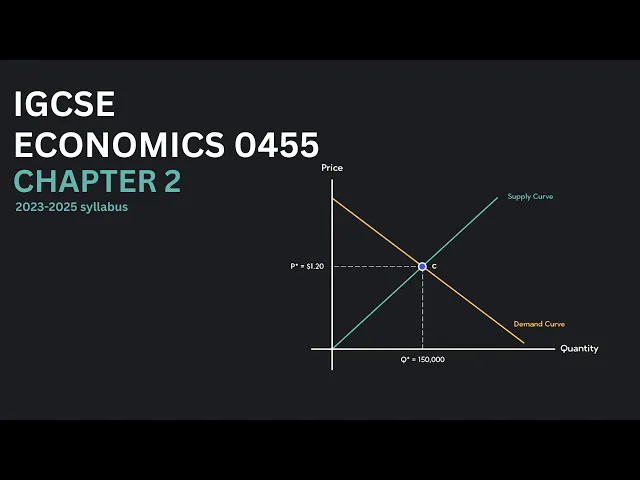
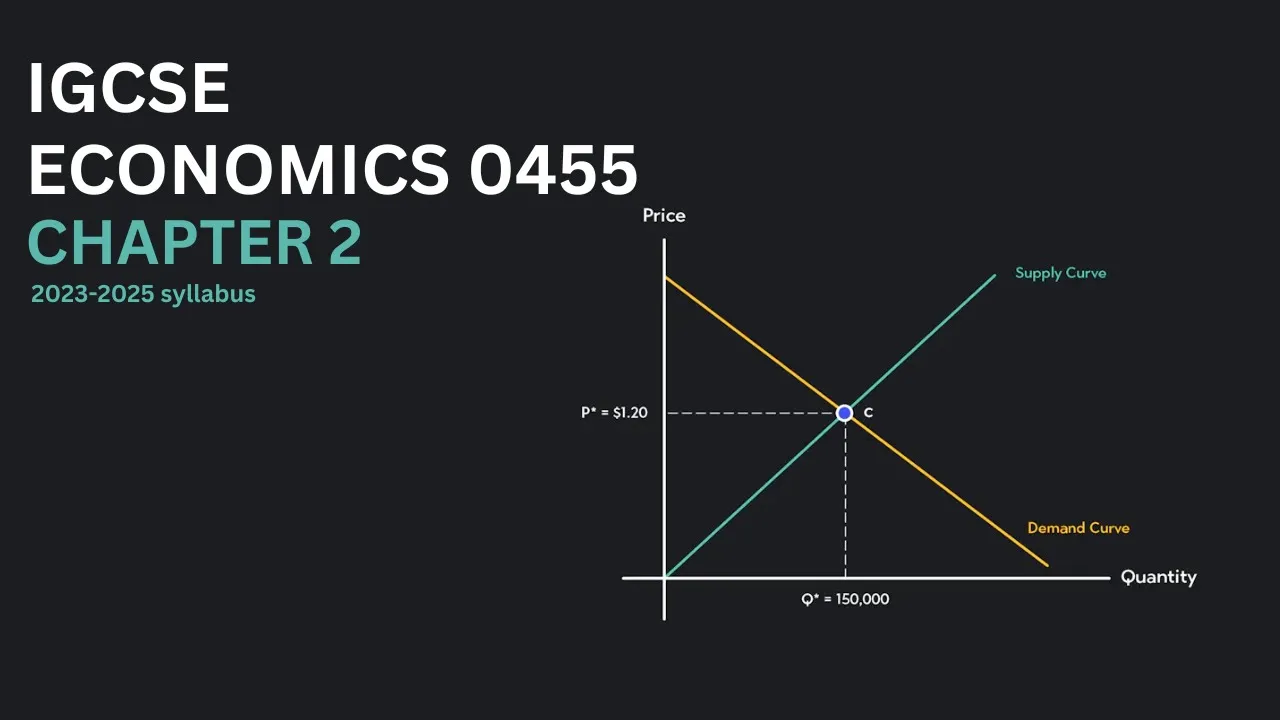
price and let's Start off talking by about market price so what is market price when we're talking about market price there's a very important definition that you need to know in this and that is called equilibrium price what is equilibrium price equilibrium price is when the demand curve and the supply curve they meet okay meaning they intersect and you will understand this by this image that I'm just going to show you on the screen right now is that when the demand curve Remember when the demand curve [Music] um okay let's just put it right here
and I'll explain so when the demand curve remember demand is always the negative gradient so this right here is the demand curve this is the supply curve when they meet at this point when they meet this point this is called the equilibrium price okay this is called the equilibrium equilibrium price so when They ask you to Define what is equilibrium price you're going to say that this is the price at which the demand and the supply curve meet okay so this is the price at which the demand and supply curve meet what about dise equilibrium
price this equilibrium price is the opposite so this is the price where none of them move so I'm just going to write the definition here the market equilibrium price is when they meet okay and you can see in this Diagram here theyve met okay and this equilibrium price is the opposite this is the price where they don't meet okay dise equilibrium price is the price they they don't meet okay so that is what you need to understand here small topic small subtopic here about equilibrium prices not that much not that hard to understand but all
you need to understand is equilibrium price and this equilibrium price okay now we need to talk about a little Bit about price changes okay and it's a very small small subtopic here but you need to just talk about what happens when the price is above the equilibrium price and what happens when the price is below the equilibrium price that's all you need to understand in this whole topic so the best way to explain economics is through diagrams and most people do not like diagrams but I mean you have to I guess just learn how to
to put Implement these Diagrams so that's all you can do I mean yeah okay so there's this diagram here okay now in this diagram where is the equilibrium price remember this equilibrium price is where they meet so where do they meet they meet here now okay let's now talk about the price elasticity of demand and we're going to first off start off this topic or the subtopic by defining what exactly this ped stands for so price elasticity of demand simply refers to the Responsiveness of the quantity of a demand um two changes in its price
so when I change the price what's the response of the quantity demanded that's simply what we're looking at so this is the definition of the peed so as you can see here the PED of a product refers to the responsiveness of the quantity demanded to the changes in its price so let's say we have a certain product here let's call it just product X and we now change the price of this product X What's going to be the response to this change in price to that certain quantity demand demanded of this product is it going
to rise is the demand going to rise is the demand going to fall because of this change in price and that is what we monitor using the price elasticity of demand now very important to calculate price elasticity of demand we have a formula for this and this right here is the formula I'm just going to paste it right here so the formula for peed of Any product is it is the percentage change in the quantity demanded over the percentage change in price we know how to calculate percentage change and to calculate percentage change okay it
is the or it's the new minus original over original time 100 that is how you can calculate the percentage change of anything okay and here we're going to be calculating the percentage change of the quantity demanded and we're going to be also then Having a look at the percentage change in price now that's how you calculate ped alongside ped a very uh a quick example just to further explain what ped is and I'm going to be using a graph for that definition or for the explanation of this so let's say we have a graph right
here okay I'm hoping you can clearly see this graph and this graph as you can see if I can just quickly describe what's happening to this graph you can see that um from this graph it's Going from A to point B and you can see the price is reduced from 80 to 60 so when I reduce the price from $80 to $60 what happens to the quantity demanded is it goes from 300 to to 500 so the quantity demand has increased once I reduced the price okay now let's look at the PED okay so for
example how do I calculate the peed of this certain example okay now the PED from above is the percentage change in quantity Demanded over the percentage change in price so let's look at the percentage change in quantity demanded first what's the new value the new value is 500 what's the old value 300 and over the original value * 100 if I divide this by the new value or or in this case so that was 500 - 300 ID 300 and now let's find the change in price the change in price is going to be 80
- 60 over 80 80 - 60 over 80 * 100 and once you Get this or in fact sorry it actually should be 60 - 80 but then again you always ignore the negative because the negative uh there can never be a negative quantity demanded but in this case you can just write 80 - 60 60 - 80 same thing okay so this will give you an answer of 2.67 so this 2.67 is in fact called the p d okay so that's how a simple example of how to calculate uh the ped of a certain
product due to the Change in the demand due to the change in the price okay so now another very uh important uh thing that we need to talk about is that when there's a change in price okay so when there is a change in so this is the change symbol so when there is a change in the price um and it makes a higher change in quantity demanded so means it makes a higher change in quantity demanded because when I change the price it makes a higher Change in quantity demanded then these products are are
called price elastic demand they are price elastic demand because these values are always above one so when the price elasticity demands so when the peed is above one that means that these goods are elastic okay these goods are elastic and this is how we can make a lot of um you know like um conclusions when we calculate this value ped so when you calculate this ped and this value that you've calculated is Greater than one then we say these products have a price elastic demand these products are elastic because their value is greater than one
so whenever you want to know if a product is a price elastic or is elastic meaning that when I change the price it's going to have a greater change in demand that means it's elastic and that means the elasticity the peed is always going to be above one okay looking at some other stuff is that when the value Is equals to one what about when the value is equals to one when the value is equals to one we say that it is called a unitary price elastic demand what about when it's less than one when
it is less than one that means basically it is inelastic demand so I'm going to make a graph here uh just to quickly understand what I've just said so when the PED is greater than one it is elastic demand okay this is just to summarize everything when it is less than one we Say this is inelastic demand okay this product is inelastic this product is elastic again what is the definition of elastic elastic simply means that the change in the price is going to cause a greater change in demand okay within elastic a change in
the price will make a smaller change in demand okay I'm hoping you understand this very clearly because with elastic demand when I change the price there's going to be a greater change in demand Within elastic demand when there's a change in price it's going to make a smaller change in demand okay and what about when it's equals to one when it is equals to one we say this is called unitary elastic demand and when it is equals to so we call it unitary um price elastic demand okay so when the change in demand and the
price are equal it is called unitary elastic demand okay so these are the three main ones that you you're Supposed to remember in our syllabus there are a bit more and you can look at them at the notes but these are the three ones that are usually tested and therefore I'm going to be talking about these three okay now coming like just like demand and Supply where we talk about of course the definitions and all the features we have to always talk about what affects ped okay how can this ped be affected and now we're
going to look at this uh basically all the Different uh factors that affect the PED so here as as as it says here what affects the ped and we're going to start off with the first one which is the number of substitutes like why is one product you know more uh greater change in demand why is when I change the price of this product the demand is so much more compared to when I change the price of this product that is what I mean by what affects ped so the first one on what affects ped
Is the number of substitutes if a product has many substitute products then that means it will have an elastic on what does that mean that means that if I certainly okay you know what a substitute good is right let's say we have t and we have coffee okay let's say I suddenly increase the price of this tea everyone's going to move to coffee that means the quantity demanded for T is going to drastically drop so the demand for T is going to be way less Compared to the change in price which therefore means it is
very elastic okay so here they've given an example of Coca-Cola which has many substitutes such as Pepsi and Mountain Dew thus a change in the price will have a greater effect in its demand so the change in the price will have a greater effect in the change in demand or in the demand itself and therefore the more the number of substitutes the more elastic that product is the second factor that Affects the peed is the time period so when we look at time period here it is a time period talks about Demand right so the
demand for a product is more likely to be to be elastic in the long run some is more likely to be elastic in the long run what does this mean for example if the price Rises consumers will look for cheaper substitute over time right over time they're going to be looking at cheaper substitutes so over time I'm going to be in a lookout that oh this Product is better than this product so I'm going to switch so the longer they have the more likely they are to find one so those certain goods are more elastic
again I'm going to constantly keep repeating what elastic means elastic simply means that when I change the price the effect on the demand is much larger than the change in price that is what we mean by ped okay or that's what we mean by elasticity so when some good is more elastic that Simply just means that the demand has changed significantly compared to how much I've changed the price let's say I changed the price by so little but the demand has increased by so much more okay and the last factor that we need to talk
about is the proportion of income spend on the commodity so let's have a look at that now okay so when we talk about this one in in simple terms it's simply says that Goods such as rice water these are Necessities they have an Elastic demand that means that no matter the price I still have to buy them okay so those are in elastic demands for example healthare no matter how expensive healthare is you still have to sort of get that healthare so even if the healthare price Rises tomorrow you still have to you know pay
the same medication price when you get a certain uh disease or something than it was yesterday so if you change the price it's not going to be affected but then Again that's where the government comes in so that you know there's not inflation and there's not a lot of people that exploit the consumers that is why we actually have the government and in fact we're going to be learning about that in the next chapter on how the government basically controls the entire economy okay now stuff like luxury goods such as cars in the other end
will have a high price elastic demand that means that price of a cars If it suddenly Rises right not everyone is is going to be uh wanting to buy that because a price of a car takes so much of their income that they have to be very careful when they you know when there's a change in the price but for example if there's like a lollipop okay the lollipops price is so little that it's not going to be affecting your entire demand if if if if you're getting what I mean that sometimes some people will
not even Notice the price of a lollipop changing because of how small it is because of how small percentage of your income it takes but in the other hand if it's a house or if it's a car if the price of that rises by so much more the demand is also going to be quite elastic meaning I don't want to buy that car anymore because the price is too much and I cannot afford it according to my income now let's look at the relationship between peed and the revenue and how it Helps producers now producers
can calculate the peed of the product of course and then you just look at what product is more profitable that's it right if a product is elastic then the producer can lower the prices to increase Vue if it is in elastic then I can rise the prices for more Revenue that's simply what I'm going to say okay so I'm just going to put that down a producer wants to make profit okay and it has to look at these two stuff so it Needs to first of all this is the main two things that you need
to take from this part of the the course that if it has an in elastic demand if it has an elastic demand the producer can lower the prices to increase the revenue if it has an inelastic demand so if I show you here so if it has an inelastic demand then the producer can rise the prices to increase the revenue so those are the two things that are very important that you need to know when talking about this Let's now move on to P which is price elastic Supply the PS of a product now similar
to demand so let's let's just put this as a subtopic um so let's put this as a subtopic so price elastic of Supply so just just like demand we're going to be also defining this okay so price elasticity of supply or the PES of a product refers to the responsiveness of its quantity supplied right in front of your uh your eyes here it is the first of all that The PES of a product refers to the responsiveness of its quantity supplied to its changes in prices and the PS of a product is equals to the
percentage change in the quantity supplied over the percentage change in price just like kman very similar here now what affects the PES very important there are two things that affect the PES and the first one is time of production and the second one is availability of resources coming from its name time of production simply Says that if I can produce certain product at a very quick rate then that's going to have an elastic Supply right because I can easily make this product so it's going to have an elastic Supply however the next effect that the
the next thing that affects the PES is the availability of resources if something is very available to me for example if there's a forest just near me and I have a wood factory then that means that my wood is going to be in lotic in Supply But if I'm finding it very difficult to produce or to find certain types of products or resources for example Diamond then that means the supply will become in elastic okay because it's very difficult to actually obtain those resources therefore the price is going to be in elastic or that good
is going to be in elastic in fact so yeah there you go those are just that's all you need to know for PES a lot of it is borrowed from ped use that same Knowledge that you learn from ped to PES and that is what you need to know for this we're now moving onto something called the market economic system okay so here is simply talking about how the government controls everything in the market what are the advantages what are the features and so on and so forth so let's look at that now and we
are finally done with the demand and Supply like the topic of that now we're going to go over the market economic system And how we use the principles of demand and Supply to handle our Market the market economic system so we've talked about the supply we've talked about the demand and now let's actually just talk about what actually revolves around a market we've talked about what a market is and now we've also talked about the you know the laws of demand and Supply so how does this market economic system works okay so in a market
economic system okay all the Resources are allocated by the market what does this mean so if I just quickly you know just put this down here uh this is how I'm going to introduce the topic this market economic system all the resources remember about resource allocation right all these resources are allocated by the market when we talk about the market we simply are talking about the producers and the consumers okay so we are talking about The producers and we are talking about the consumers where there is very little government intervention in this resource allocation now
if you ask yourself how do producers and consumers allocate Resources by themselves we use something or we use actually demand and Supply to actually decide that for example if a producer wants to make something he's going to look at the metric of demand he's going to look at the demand he's going to look at the PES Right he's going to say that if I increase the price of this what's my demand if I do this what's the demand okay so the producer is looking at the demand the consumers are looking at the Supply right so
that is how it actually work so consumers are looking at demand producers are looking at Supply they both are looking both metrics and they decide how to allocate resources for example a diamond a diamond is cars in in in nature it has a lot of demand and Therefore the price can increase and you know you can get a lot of profit for producers right so that's actually how the resources are allocated let's have a look at the features and maybe you can kind of understand this a bit better on how the market economic system works
so let's look at the features and we're going to go over each of the features one at a time let's start off and get the basic one out of the way and we need to know and I've already talked about This is that all the resources are pro are owned and allocated by private individuals Okay so we've already talked about this one so I don't think this one should be a big of uh big problem the next one is the government refrains from regulating markets that means that the government does not have a say in
this market right so they basically just refrain from regulating the market now this actually there is a downside for example if there's a certain producer he Can exploit consumers maybe he's very good at some certain type of product he can actually exploit the consumers okay so that's a reason why in today's world we don't have these types of markets we don't have a mar we don't have a a market economic system okay later on we will tell you what we have we have something called the mixed economic system but right now we're just talking about
the market economic systems okay so generally in this in this chapter we Start off by talking about demand and supply and then we talk about the economic systems the types of the economic systems and how we use those two demand and Supply in order to make decisions so this is in fact the first economic system that we actually talk about which is the market economic system okay and the market economic system is not really a very good type of system because as I said it's only you know it's controlled by the producers And the consumers
and there's no one to regulate what is happening so there is no government in other words there is no intervention from the government this is a very very bad disadvantage because many producers will start exploiting the consumers for example if there is uh cigarettes for example because it's so addictive these producers can start giving a price of $1,000 for just a packet of cigarettes because there's no one to regulate the market another Example is that the producers can start maybe hunting wildlife and selling the skin or something like that so there's no regulation in the
market which can be really bad and therefore in this today's world I believe there's no Market economic system okay let's move on let's look at the other features so we have looked at two features the next feature is what to produce is solved by producing the most demanded good like I said if it's very demanded then I'm Going to produce that good right that's as simple as that okay and that's why I I bring back the topic and that is actually why we learned about demand and Supply before we actually come to this the next
feature is what how to produce is decided by which is the most efficient and which is most efficient combination of resources now if you have noticed we talked about the three economic questions what to produce how to produce which is the last one for Whom to produce so let's talk about for whom to produce we produce for the people who are willing and able to pay for goods what's the definition of demand you see how everything is getting linked up and in fact in chapter 6 I will start saying remember chapter one remember chapter 2
we talked about this remember chapter 3 we talked about this everything in an economics is tied up because it's one entire market and everything is tied up so if I say Something in chapter one it's going to be important for chapter 2 if I say something in chapter 3 it's going to be important in Chapter 2 because actually demand and Supply is almost the the basic building blocks of Economics so when someone says 10 years down the line After High School what did you learn in economics and they're going to say demand and Supply so
it's sort of like you know it's the the maic generic idea of of a a subject where you know you Just need to know about demand and Supply because everything revolves around demand and Supply okay so I have hopefully gone over the features of what a market economic system is and I have talked about exactly what this is so let's look at the advantages and disadvantages because we always talk about that in economics so let's have a look at the advantages of this type of market economic system uh oops Sorry uh Bas yeah okay um
let me copy it and paste it right here okay advantages let's look at the advantages now okay there's two advantag that that come with this uh or in fact a bit more than that but let's look at them okay so the first thing is there is a wide variety of quality goods and services why is that now because this Market revolves around looking at consumers and producers the producers are going to be Listening to those consumers let's say the consumer want more of this product the producers are quickly going to react to that because they
only rely on what the consumers want if the consumers want this I'm going to make for you this if you feel like this product is not good enough I'm going to make a better product because that is how the competition works the businesses are going to listen to the consumers and therefore because of the competition Between every business the quality of the goods and services will be very very good because quality is ensured to make sure that consumers buy from them because that's the only metric that separates business a for example to business B okay
that's the only metric this has more quality Goods so if I have more quality Goods I'm going to buy from business a right Common Sense next let's look at the next Advantage the next Advantage is firms will respond quickly To Consumer changes in demand like I said producers are always going to listen to the consumers right so if I suddenly change my mind and I suddenly want more of this let's say if I have tea and coffee and suddenly most consumers be like you know what tea is really not good for me I'm going to
switch to coffee and then suddenly everyone starts getting coffee these producers are going to notice that and I'm going to quickly look at that and Will quickly respond to the consumer changes in Demon because remember this Market only revolves around producers and consumers so the producers are going to be keenly looking at what these consumers want do you want this I'll make for you this do you want this I'll make for you this right and because of the competition there must be quality Goods you must quickly produce them and you must efficiently produce them so
I've said the word here the next Advantage is there will be high efficiency why is there be high efficiency because producers because the producers will actually want um to to uh maximize the profits and to maximize the profits I indeed need to be efficient I need to use my resources very efficiently and I produce more with less resources so that's actually another advantage that these producers are going to be very efficient the last advantage that you Need to talk about is that since there is hardly any government intervention the firms will find it very easy
and inexpensive to start these businesses okay there's not going to be any restrictions I don't need to buy this type for this this type of form I don't need to buy this type of form I don't need a work permit I don't know this I don't need that so because of that the firms will be very easy and very inexpensive to start and run which is Actually a big Advantage for the consumers because the consumers will have a wide variety of goods like we said in the number one advantage there will be a wide variety
of quality Goods okay everyone there's going to be different firms and they all want to satisfy the consumer on so there will be a wide variety and because of the competition I have to have quality goods and services so those are the four um advantages that come with the market Economic system but in fact in this economic system like I've said from the start it's not really good so there's going to be worse disadvantages there's going to be worst disadvantages for a reason so now let's have a look at the disadvantages and you will see
that there will be more disadvantages than advantages clearly telling us that we should not use this system so now let's have a look at the disadvantages okay let's look at the Disadvantages let's look at the first disadvantage the first disadvantage is only profitable goods and services are produced so only profitable goods and and services will be produced in the start of this um U you know in this topic I said an example of cigarettes right cigarettes are not good for you right but because it's addictive because it's so much in demand they can rise the
prices and they're going to only produce that that's really bad because remember Later on or in the next uh in this video but just later on in this video we will talk about what Merit goods are what demerit goods are and and something called Market market failure we'll talk about something called the market failure the market failure we'll talk about that later but only profitable goods and services produced what means by that is that public goods and some Merit Goods Merit goods are basically Goods that have a positive impact on the Society for example uh
maybe some type of sports facility or some type of health facility or some type of educational facility right those are all called Merit Goods they benefit me they benefit the whole society this stuff will not be produced because they may not be demand for that for example street lights Okay who wants to make street lights who will make these street lights no one's going to make these street lights because street lights are Actually something called free Goods because I'm going to only benefit from these Goods I'm not going to be paying the goods because if
I install uh street lights no one is going to pay for those street lights you know no one's going to pay for that so there will be no street lights that is a public good right it's a public good no one's going to pay for for that anymore so those stuff that are not in demand may not be produced which is a very drawback it's a big drawback And affects the economic development let's look at the next disadvantages firms will only produce for consumers who can pay for them for example if some consumer or many
consumers are actually willing to pay for some type of product like a humongous amount of of price okay then the people who are poor will never be able to afford because if the rich keep buying from them and and the producers keep profiting from them then they're just going to continuously put It at that price so poor people who cannot spend much wouldn't be produced for and therefore as it would be non-profitable of course if you if you start doing like $10 for bread and stuff like that you know the the poor people um you
know they're not going to be able to afford it okay and therefore it's going to be because they're not going to afford they not not necessarily not going to afford it but necessarily is that the producers are earning more Profit when they sell 20 $ and a lot of people are buying when it's $20 so why should I put it $10 right know poor people uh they're always going to be suffering because they cannot afford it so that is again a very bad externality and stuff like Necessities must be at a certain price in fact
you'll learn later that governments actually have a value for certain products that are Necessities like bread milk they have to have a cap right they have to be a limit Because of poor people otherwise there'll be a vast death rates let's go to the next disadvantage the next disadvantage is only profitable resources will be employed what does this mean only profitable resources will be uh employed what this means is that some resources will be left unused unused for example um in a market economy uh let's say Capital intensive production is favored over labor intensive what
does this mean is that For example Machinery Machinery is better than labor so why should I use my labor there's going to be no jobs then right why am I going to be using labor because if my Machinery is more cost effective it's more efficient I'm never going to ever have Labor which causes unemployment which is bad for the market which is bad for the entire country and bad for the economy as a whole so this can lead to unemployment let's look at The next disadvantage harmful demerit Goods may be produced because it is profitable
like the example I gave of cigarettes same thing applies here cigarettes are a demerit Goods because it does not give a positive effect on the society but they're going to be produced because they're profitable right why are they profitable people are addicted people are going to keep buying them no matter the price and in fact that's the reason why stuff like the Mared goods are very expensive and because people get addicted to them people want to pay for them so the taxes are so high for that because the government knows that I'm going to get
a lot of money because people are going to continuously buy from from me no matter if I increase the price or not okay so that is very very important um yeah next um let's look at the negative impact on the society negative impact on society involves um You know externalities basically for example they will be ignored by The Producers why will they be ignored for example pollution let's say I have a fishing business if I have a fishing business I'm not going to start caring if you know by mistake I I pollute the water or
the sea because no one is actually regulating me right no one is doing the regulations I don't really care so this is called externalities externalities is basically when people Are affected for example if I have a factory near a house the people in the house are actually going to be affected by my smoke this is called an externality and therefore governments have to regulate but remember in this market economic system there's no government so no one is going to regulate it okay and the last one is something called Monopoly right a firm will be able
to dominate for example as I said previously if there's a certain Comp who can dominate the market then they're called a monopoly right they're called a monopoly you might have heard of this this is called a monopoly company if they are able to dominate or they are able to control the entire Market they are called to be a monopoly right so if they're a monopoly then they can actually dominate or control the market supply and because of that no one's going to restrict them for example if I have a company that supplies power And I'm
the best in the entire economy I can do whatever price I want because no one is going to compete with me okay and that is what actually these are the disadvantages and as you can say there are way more disadvantages than advantages which clearly means that this economic system is not very good okay you just need to know for the idea and that's actually why we study it because you need to know why we don't use it right and that is how you do the Economic system now throughout this advantage and disadvantages I came up
with a or I talked about a few vocabulary I that you need to know for this syllabus and I'm just going to paste it right here these are the ones that you need to remember what a public good is a public good as I I I kind of mentioned uh it with the street lights example it's basically a good that can be used by the general public and the consumption cannot be measured you can't Say I'm using the light more than you you cannot say that right because street lights a very good example right I
am going to use some person is going to use the street lights more than the other person but you cannot charge them right the next one is mer Goods Merit Goods create a positive effect as I previously mentioned they cause a positive effect on the community and they should be consumed more for example schools hospitals and all the examples I gave Previously subsidies are Financial grants this is very important but we didn't talk about subsidies because there was no government in this but a subsidy is simply a financial grant that is given to firms to
lower the cost of production a subsidy is given by who a subsidy is given by the government and the government will give these producers so that you can lower the cost of production lower the the prices because I want everyone in this economy to Afford stuff like milk butter or bread so I'm going to pay you so that you can lower your cost of production because I'm paying you so that your cost of production is less your profit is more your prices are less helps everyone and the government can of course get this money from
tax but again we will talk about more details of how the government can help the economy later on in chapter 4 five and six where we just talk about microeconomics right now we talk about Microeconomics we talk about the market and next up we're going to be talking about the different markets and something called market failure which can occur and that's very important so we'll talk about market failure and now we will finally talk about the system we use currently which is where we have the government which is called the mixed economic system so let's
talk about that um right now okay let's now go to market failure and government intervention so Um we'll start off with what public goods are and when we have the definition of what a market failure is we simply have to talk about where the market fails in in terms of um like when we look at a market we have the two sides right the demand and the supply so with market failure we're looking at the negative impacts between the interaction between the producers and the consumers in our market so that's what market failure is and
that is why we will later On learn about the government intervention and why it's actually ineffective to use the market system and why we need the government to intervene between the producers and the consumers so before we we begin with the actual market failure and you know going deep down into the different negative externalities between the two we need to have a look at some of the you know Common terminologies and we'll start off with the first terminology which is Public goods okay so we start off with public goods so public goods are simply Goods
that you cannot give a value to cannot be measured um in terms of consumption so these are Goods that are used by the general public and they will benefit from so these consumptions can be not measured for example that I think I've given an example in the previous part was street lights you cannot measure the consumption of street lights and Therefore those are public goods so of course producers would not produce public goods and therefore this is another reason why the market failure or the market economic system could be a fail because you would produce
street lights because you cannot first of all profit and you cannot measure how much a consumer uses that the next terminology that you need to know is Merit Goods so with Merit Goods here's the definition of Merit Goods Merit goods Are simply Goods which create a positive effect okay so we have two types of goods here we have the Merit goods and the Dem Merit Goods so the Merit goods are are something that would have a positive impact in the society an example of this would be Healthcare or education or you know anything in in
relation to something that would benefit the society as a whole so stuff like health care and and education is not a must for every Consumer to have so producers would not you know want to produce something like this because the profit margins for this would be of course less so this is another reason why the entire market economic system would be a fail because producers will not look at these Merit Goods so what are we trying to do in in this part of the the chapter is discussing why the market economic system is not a
proper way of addressing the economy okay and later on we will Get to know or we will get to see our current economic system which is the mixed economic system and why we actually have the government intervention so so far we have looked at two ideas or two types of goods that are not produced by the market economic system because of the following reasons public goods because you can't measure them they don't have a profit Med Goods is because um you know this is not needed by the society or the society Doesn't have demand for
this okay look at the next one the next one would be external costs so external costs when we look at external costs we're basically looking at the negative externalities so this was the opposite of the Merit Goods so negative externalities what is negative externalities when we look at negative externalities just like the other one this is the opposite so this is negative impact on the society now what would Negative impact on the society be for example pollution from a factory right I am not engaging in the production of these Services however if my house is
for example next to a factory I'm going to be affected by the pollution that this um you know certain business does in the production so because of that um I can be affected and therefore again we have no no one in in between the producers and consumers to intervene or to make a set of rules so that's again We're lacking that middle person between the producers on the consumers so that's another reason why the market would fail um moving on we have the external benefits the external benefits are simply positive externalities so we have external
costs and external benefits with this these are positive impacts on the society due to the production or consumption of certain goods for example um let's say there is a certain business and to access that business they make Better roads right due to the neighborhood because they've recently opened a business so even though I'm not dealing with the production of whatever that business is doing I'm still going to benefit from the better roads and you know in this um this is in fact a benefit in instead of a failure in in the market failure or the
market system but um yeah so that's one of them so now the other two which would be private costs and private benefits let's have a Look at those two so with private cost and private benefits I have just put it here so private costs are simply costs that um are to the producer and to the consumer so what does this mean so when when the producer you know when the producer and consumer interact with the production of a certain good production and consumption so for producers it would be production for consumers it would be consumption
okay what is the cost of production that is what private Costs are for producers it's the cost of the production so those are private costs and these again just terminologies they're not related to anything related to market failure we'll talk more about what market failure is using these terminologies so right now you don't really need to understand how they applied for market failure but rather what they mean so private cost what do they mean for a producer um it's the cost of production next for private Benefits what about private benefits private benefits are benefits to
the producer or consumer because of the production so the the it's basically the difference it's the the difference the opposite of private cost is private benefits so private costs are cost due to the production benefits are the uh benefits due to the production and consumption of a certain type of good okay so those are the um kind of meanings that you need to know in order To understand this um topic and then us also one extra note you need to know is what social costs are so you need to know what social costs are social
costs are simply external costs plus private costs okay so this is a definition that they sometimes ask in questions and uh they they make you you know sort of relate the two terms and get what the social costs are so the external costs plus private cost or social cost so and of course you would predict what social Benefits are social benefits are external benefits plus private benefits okay now since we have covered the terminologies we can now actually go into what market failure is and why we don't use the market system okay already from the
disadvantages you know that you know the market system is not the most effective way to deal with the economy so we already know that the market system is not right but we want to go deeper into that and look at the Different ways on why it fails as a proper mechanism so first of all let's try to Define what market failure is you know when we talk about market failure or when a market is said to be like if a market is failed what does that certain what does that you know intend to mean so
a market failure and here's the definition a market failure is when the price mechanism fails to allocate resources so in the first chapter when we talked about demand and Supply we Said that demand and Supply always revolves around allocation of resources in the most effective way so when a producer is producing something I'm going to produce something in the most effective way when I'm a consumer I'm going to make a smart decision on what type of good I should buy because I have limited money so everything in economics is about efficiency and with this type
of system it's basically failing to allocate these resources effectively you Already have an idea of why it does this because we talked about certain Goods above like demerit Goods we talked about um we talked about stuff like public goods you know those are not actually produced in this type of economy so it is not efficiently allocating these resources already so that's basically what market failure is when we think of market failure you need to first of all think of the price mechanism okay we need to Talk of the price mechanism and what is the price
mechanism the price mechanism is simply the allocation of resources okay so now let's look at the causes of market failure so this is actually the main topic now and we're going to be using some of those uh terminologies some of those meanings that we just learned into these causes of market failure so that you understand them much better so let's start off with the first one and the first one states that when The social costs exceed the social benefits we already know what social costs are social costs quick reminder social costs are external costs plus
the private cost social benefits are external benefits plus private benefits so when the social cost mean meaning the negative part the negative part is greater than the positive part right so when I'm getting affected more than I'm getting benefited that is when there's market failure that happens so that's When market failure arises remember market failure is the allocation of resources right when it fails to allocate these resources properly so it would fail to effectively allocate these resources if there's a negative impact compared to the positive impact so this is going to be our first cause
of market failure let's look at the next cause of market failure the next cause of market failure is the over provision of demand Goods so What does this mean so here it says that stuff like uh Demar Goods first of all what are Demar Goods I think I mentioned about what Demar goods are but Demar goods are Goods where no matter the the the bad impact it has on you um people are still going to buy them for example alcohol or cigarettes or something like that despite it being you know bad for your health they're
still going to keep buying it because it's it's a demerit good right because of addiction because Of SE several other factors that we can get into but Alcohol Tobacco that's the reason why tax on those some some of the governments Implement a higher tax on those types of products just so that you can you know lower the cost of that Demar good so in here if the the demand for a Demar good is very high The Producers will only focus on producing Dem mared Goods which is bad for the entire economy because if producers competitively
within the market only Compete for that certain type of good prices will go lower and of course the the demand for those products will always be high so they will always profit for those why is that a bad thing because um the entire Market will be affected because of having these types of goods right so this has a negative externality it has a negative impact on the society because there's always going to be demand for demerit goods and because of this this type of Goods good is going to be over produced okay and likewise we
can see the opposite for merit Goods because Merit Goods stuff like education and stuff is not that much in demand right there's going to be less of that stuff like public transport schools Hospital those are all Merit goods and because they are not in so much demand they're not going to be produced so they're going to be under produced the next Factor we're going to be talking about is the lack of Public goods so lack of public goods I think I've already explained it in the definition of public goods but basically you can't you can't
measure how much I consume a certain type of good and you cannot therefore profit from these types of goods so why would why would some producer produce this type of good okay that's as simple as that's the best way to explain this is that if a producer is not profiting okay and why would I want to produce that right it's going to be a Loss for me so that's again another reason why the government has to intervene and in fact after we finish market failure we're going to now learn the actual proper economic system that
we use in today's life in the day-to-day lives and why that system is more effective compared to this system that we're talking about which is the market economic system okay so so far we've talked about like four points on market failure let's look at the next point the Next point is the immobility of resources now what does this mean so IM immobility of resources simply states that when there are resources that cannot move between their optimal uses right for example we have Labor labor is a certain type of resource right so when the labor doesn't
have occupational or geographical Mobility we've talked about this in chapter 1 we talked about Mobility if you don't understand about that then go review that again so we Have occupational mobility and we have geographical Mobility a quick summary occupational is simply when I am changing the use of the actual um you know type of Labor type of good geographical uh Mobility is when I'm moving geographically right when I'm moving from one place to another what is the mobility of that okay so that's what we're talking about the immobility of resources so when these resources cannot
move between the optimal uses then that Means market failure is going to be arise now one of the most important points and the L point that we're going to be talking about market failure is about the Monopoly so you must have already heard about this we talked about this in just uh like 10 10 15 minutes ago in the other uh section a monopoly is simply a company that dominates in the market and the problem with the market economic system is that monopolies exist okay because if I have A if I'm very good at producing
uh one certain type of good and I'm very efficient in that then I can exploit the consumers right and there is no one to stop me so if I'm the best at producing let's say coffee if I'm the best at producing coffee and the my demand for that certain coffee is very high then that means I have the power in the entire economy and I can raise the prices so high and people will have no substitute for example okay because Maybe I'm the only one who produces this type of good if I if I produce
a good a and I'm the only one who produces good a and there is a lot of demand for good a I can suddenly decide to increase my price very high and people have no option but to still pay for this for example another example that would be would apply here is that if I am the only Hospital in an entire country I am the only one who can cure for someone so if my prices are very high then that's Going to exploit consumers because I'm the only one who has a hospital and you have
to come to me for health and therefore again I'm exporting consumers so there's no one to stop me for that so those are actually all the reasons that cause a market to fail right this is the reason why we don't have an market economic system in today's world okay there is no middle person between producers and consumers right producers will always want profit and consumers Will of course always want quality for the goods and therefore there's always um a misbalance I would say that and therefore we learn about this next economic system which is what
we use in today's world called mixed economic system so now let's have a look at what this mixed economic system is you already have an idea of mixed economic system because our countries in today's world uses the mixed economic system so if I quickly summarize what mixed Economic system is and what's the difference between market economic system and mixed economic system so it's mixed coming from its word mixed mixed means that there is always a producer and consumer on one side and in the middle so in the middle of the producers and the consumers there
is someone else and that is the government so I'm I'm sure you're familiar of this type of system because we use it in today's world where they Producers in one side and their consumers on the other side in the middle is the government what we just talked about was market economic system what happened in market economic system in a market economic system we just simply have producers and then straight to Consumers okay so there's no middle person between producers and consumers and we looked at the advantage disadvantages and we looked at what causes these market
Failure okay so now let's talk about mixed economic system why we use mixed economic system what are the advantages and how we use the mixed economic system to resolve the market failure that was the reason why we talked about market failure before introducing mixed economic system is because this system was created so that we can resolve those market failures and make a better system compared to to market economic system so I'm hoping that um helped you understand What mixed economic system is let's have a quick look at the features and maybe you'll understand better through
that okay so looking at the features we start off by saying that um both the public and private sector exist so what this means is again as as any producer could either be a public sector or within the private sector so the both public and private sector exist both types of producers exist both type of firms exist and that's one of the Feature of the mixed economic system now the very important feature of this mixed economic system is who makes the decisions between the market system who makes the decisions so here it says that the
planning and the final decisions are made by the government while the market system can determine the allocation of resources so the mixed economic system is simply a type of system where a mixing the market system and wherever There's market failure the government is going to come and resolve that okay if that makes sense so I'm introducing the government just to solve market failure okay and that creates our own system the allocation of resources haven't changed we're still going to use the same laws of demand same laws of Supply same laws of all of that but
now we have a government to intervene between the two parties the producers and the consumers okay let's have a look at the advantages And you will clearly see why this is a better one because like the previous one there were less advantages more disadvantages here there are more advantages less disadvantages so looking at the advantage it's almost like the opposite of market economic system the disadvantages of market economic system is the advantages of this type of system so with the advantages here we say that the government can simply solve market Failure so in that way
the government can produce public goods they can promote Merit Goods they can um you know provide the Necessities to Consumers they can do all of that the government has that power okay and the government will also keep the externalities in control in the previous um slide of the previous discussion we talked about the pollution from a factory if I'm a house next to a factory and I'm getting affected by the pollution no one is Going to stop me in the other system but in this system when the government is there I can keep these types
of stuff in control right I can have certain types of laws where the emission of smoke has to be less or you cannot have a factory next to a house this that so on so forth the government makes these decisions in order for the entire economy to work properly okay so here again is why we it's an advantage because the government can actually stop harmful Goods Monopolies externalities so on so forth finally The Government Can okay there's two more the government can provide jobs in the public sector so since now we've introduced um an entire
government there's of course going to be jobs related to this there's going to be jobs related to a lot of this type of stuff for example building these public goods building these Merit Goods providing these Med Goods providing these Necessities so the government Actually can create jobs which of course increases employment has better job security and also the government can Implement stuff like um you know minimum wage you can have certain types of um you know more jobs that the government Pro provides and of course the government is looking out for the economy so of
course they're going to try their best to make everyone have a job so there's going to be job security okay which was not there in the other Case because in the other case The Producers only cared about their own stuff so it's a disadvantage in in for the consumers now the last Advantage for this one is that the government can also provide financial help to these organizations now why would the government help a producer we talked about this in the the last chapter we talked about something called subsidies so subsidies are simply Financial grants that
are given to the Uh by the government to these firms so that I can lower the cost of production for a certain business and when I lower the cost of production my price of the product is less so for example you know Goods like bread Goods like milk those are Necessities to everyone you know bread milk you can name it so what the government is going to do is provide all those businesses that make bread milk with a certain financial help so that their overall Cost of production falls down they will still profit and the
price PR will be less of that good so it's going to help everyone right the producers get the money the consumers get the low price it's helping everyone and how does this government get get the money they get the money through other ways we will learn in chapter 456 how like taxes and you know consumer income the income tax stuff like that so we'll talk about that later on where these funds come from the Government but for now you just need to know that the government can help the economy through its different ways let's now
look at the disadvantages that come with the mixed economic system because they are still disadvantages and with the disadvantages the first biggest one is that taxes will be imposed because for a government to do anything they need money they need funds as well right you cannot certainly give um Financial grants to producers when you Don't have money so something called the tax system was invented which was in order to um get a percentage of your income get a percentage of of certain prices to the government so that the government then uses those funds to put
back into the economy and it's a cycle that keeps going on and on okay the second disadvantage is the laws and regulations can increase production costs and therefore reduce production in the economy so I'll give an example for This I'll stick to the same example that I've been using and that is the um that is the example with the pollution of the factories now let's say the government says I I am not allowed to cause this much pollution so I have to find a way right I have to cut down my type of pollution and
maybe I have to buy a new machine to that is that's more efficient and doesn't pollute more that is of course increasing production cost and that eventually is bad for the producer Okay because if I increase the production cost then the price of the good is going to increase which is bad for the entire economy okay the next disadvantage is the public sector organizations will still be inefficient and produce low quality Goods because of the government right there will be low quality Goods because the greatest Advantage with the market economic system was the quality of
the goods because there is so much competition you Know it's because of the competition the quality of the goods were very high but now once the government enters they're going to start doing regulations on setting up firms regulations on starting up businesses so it becomes harder to you know start a business as well right because of the laws and the regulations it becomes quite hard okay so we talk about you know those types of stuff now a quick other terminologies that you must know is Stuff like subsidies taxation because um and and then later on
in chapter 5 uh 456 we talk about actually how the government gets these types of incomes and the stuff the government has to do to get these types of goods uh these types of the money so that they can actually uh make an impact on the economy so that's what we're going to be discussing in 4556 so right now do you don't need to really worry about how the government gets its funds okay so for Now that would be all that the mixed economic system does and that is why we use the mixed economic system
over the market economic system um you need to know the difference between both market and mixed we've talked about both deeply and we've looked at the features advantage and disadvantage it's very important to understand all of the advantage disadvantages and features because in the questions you're going to be used you're going to apply these um You know these types of notes the advantage disadvantage features into answer form so you must know each of them in order to make a good answer okay so I'm hoping you've understood the economic systems and the two types of economic
systems that we will learn in the next chapter we will go more in depth into um microeconomic decision makers which is stuff like banking money households how does a producer pick the workers how does trade unions form what Are firms in production we will look at Revenue we'll look at stuff like that so we'll go more in- depth into the producer side more in-depth into the microeconomic decision makers okay so I'll see you in the next video