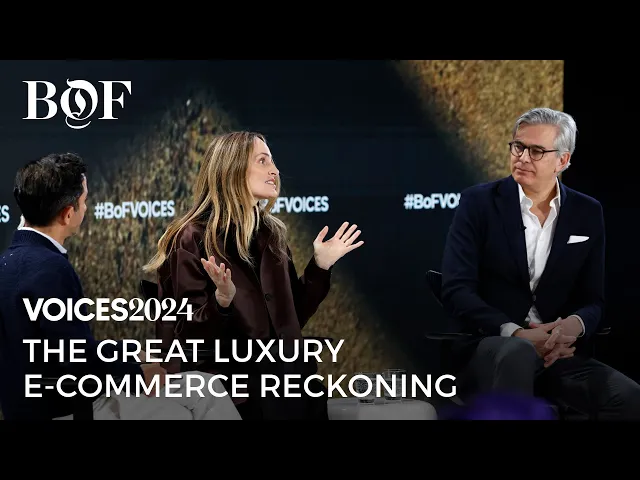
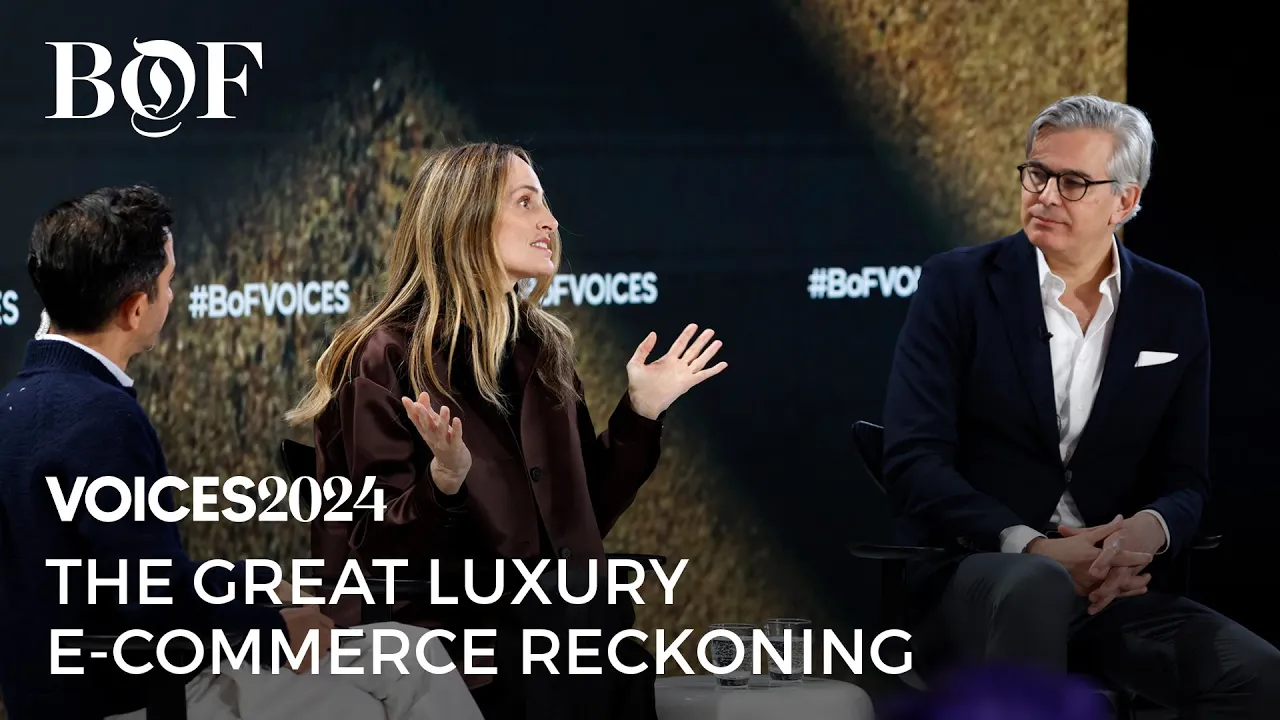
[Applause] [Music] that was dramatic yeah rumors of our demise have been greatly exaggerated okay well let's get into it um before we talk about all of the stuff that you guys have been working on in this extremely complex operating environment I want your very quick take of what you think went wrong where where did where you I I went through some of it very quickly but what were the maybe one or two things that you think were most significant Michael let's start with you I mean I think you summarized well what happened in terms of
the outside pressures and if I have to distill it many companies were just not prepared for that something like that could happen and I think did we know this was going to happen this sudden slowdown and aspirational demand no but I think we were well prepared no debt High variable cost an understanding which customers are profitable which are not so we had to react like anyone else and we did react but we were at least better prepared I mean high level of debt and inflation and high interest rates you have a problem suddenly you need
cash a Prof model that was never cash producing so I think the essence was we had to deal with all the pressures also and we felt them but we were more prepared I would say but did you think the underlying or do you think the underlying business model like leaving aside some of these external factors like inflation and high interest rates and you know high levels of debt that some of these companies had taken on the underlying business model you still believe in it I absolutely believe in it because there is a consumer that wants
to shop like that it's like in the late ' 80s every airline in the US was in chapter 11 but no one said will people fly of course they fly but the players at that time hadn't understood what the customers want and then there were came some new entrance and so there is a huge demand of professionals working less time they want to consume luxury they want to buy it I think we're in a cycle there's not a structural challenge but as a company that wants to serve customers you need to find the right model
and to fine tune and if you had it yesterday doesn't mean you have it tomorrow and that's the traditional game so I I'm I I don't declare that uh online luxury is over on the contrary okay Lauren what's your take what went wrong you have a different Vantage Point smaller business um maybe had to navigate some other challenges because some of the investors the types of investors that I mentioned were you know invested in your business what what what went wrong from your point of view and how have you navigated the last 12 to 16
months um well our Focus has always been connecting the best designers with the best customer understanding the customer understanding the industry has always really been at the core of what we do um and I think we saw private Equity enter our space um I think you know a lot of really clever guys in suits thought how hard could this be um and you know maybe approached it with the same way as say they had success with a grocery chain in Canada suddenly the thought that they could apply that logic to Fashion because the product is
seasonal of course um and we've we saw that that is not uh the case and the people that really know this business and this industry and understand this customer are the ones that are going to succeed so given that you're both clearly Believers in this sector I want to know what you're doing now um to withstand some of this pressure there's still a depressed Market when it comes to aspirational customers there's still kind of consumer shock from high prices um which we learned about yesterday you know prices on average have increased across the board for
aspirational customers around the world like you know 20 25% um so what what are you doing now Michael we'll talk about the merger in a minute but as a like in terms of the operating model of my Theresa which ever since I met you I was always really taken with your focus on longterm value of customers talk to us about that I mean exactly what Lauren just said it's the customer you need to know who the customer is what they want and then cater to that and and it is of course shifting changing but that's
it's the customer and and we have I believe done a very good job in defining who we want to serve the ones that consume more but particularly more regularly and we have seen that this customers very resilient they're very demanding we see at the moment that these customers want more experiences than ever be it in the way they live their life sort of the amount of clothes and accessories we sell for going on vacation has doubled but they also expect from us more experiences than just access to product and and and that is there is
we have very privileged in serving these top 3% they are resilient I mean the the mood is good stock stock markets up real estate except for Asia is is stable commodity prices up so it's not that they're not willing to spend but you have to be attractive you have to create desirability and then that is the essence if you pin it down to like financials it's exactly what he said you can invest a ton of money in attracting customer and entertaining customers as long as you have the customers that over a long period of time
spend and and since 2015 I mean we have a cohort model the cohort of new customers of 2015 are still each year spending more for the last 9 years so this cohort that we attracted in 2015 in totality is still growing and if you have a model that works like that you can still screw up but you're fundamentally in a good position so you once told me this story Michael I'm probably not going to remember it exactly right so correct me if I'm wrong but you know there was this like excessive investment that a lot
of these companies made in customer acquisition you know search marketing social marketing all that digital marketing and you know because they were all competing against the same Search terms in the same places the price of that marketing you know it grew yeah but you looked for signals like your company my Theresa you found signals of knowing which customers to Target like how did you what were you looking for in those early interactions with potential customers that helped you know they would be a cohort that would be still spending nine years later as I said I
mean you can spend a lot of money in customer acquisition costs which is largely online marketing if you get the return if you get the stickiness of customers so the logic that we applied from the beginning we're not bidding for traffic I mean I hope no one does anymore you're not bidding for Revenue many companies still bid for Revenue we're bidding for customers and so our whole attribution logic and and and bidding landscape technical landscape we rebuilt in 2017 I mean our average CAC is about €170 to can you explain what CAC is to everyone
who doesn't know I'm sorry I'm so into it customer acquisition costs so in in in that lingo how much do you spend until someone buys and so the average customer acquisition cost is 170 you can spend 100 on a pair of sneakers and you have a you have Revenue but that customer statistically will not buy again and you can pay 500 to acquire someone that buys a jacket double dressed cust me jacket that custom customer will come again and again and this is just too little you you ask for triggers what type of products people
buy if someone buys a bag interesting an expensive bag has very little predictive power whether this is a returning customer or not because a bag can be the onetime Indulgence and luxury or it could be the 15s bag but there are products there are payment methods there are addresses time of day shipping methods we build a model an algorithm before AI was a word um and it's feeding all on this and is looking for triggers what correlates with a big LTV lifetime value and this is how we organize the whole company not only in bidding
in services in operations in the warehouse that is what we try I love this because it's the science the left brain side of retail but another thing that deteriorated a lot over the last five or six years with a lot of these luxury e-commerce retailers is the right side the curation the creativity you know you could log into these websites and they all looked the same they had all optimized around the same product page the same everything looked the same so to the customer they were indistinguishable and interchangeable so they would just go where the
cheapest price was you could find all the same products all the same Brands all the same stuff so the only way to compete was on price which led to discounting Lauren talk to us at Moto operandi one of the things you pride yourself on is curation talk to us about the importance of curation in the future of luxury ecomerce um well I think going back to grocery and and a lot of times like the big you know the the big retailers the experience of shopping for clothing is the exact same of shopping for your groceries
it's just an endless scroll with the same fonts and um it lacks any sense of individuality so what we really pride ourselves on is differentiation you have you know my Teresa is very much like the North Star in our industry for a beautiful well-run company great service um so for a small retailer like us uh where we really win is on differentiation so we lean into curation we lean into design uh young designers emerging Brands uh 2third of our designer assortment are new brands that's how um um and then from there you know we really
lean into storytelling um we have beautiful photography editorial and you know that's why the brands want to be with us because we are brand enhancing um we will connect the best product with the best customers and at the end of the day we have the finest customers in the world um so I think that's why everyone keeps coming back talk to us about your customers because you know I was talking in the intro about that small cohort of customers that both you and Michael have kind of gone after but in very different ways you have
this model which was kind of a pioneering model in the industry which was to sell based on Fashion Week to do trunk shows like the ones that you know people would do in the pre-digital era where you know if you were lucky you could go meet a designer and Order clothes in advance like that is a nice experience for your customer but it also gives you interesting information that you can use elsewhere in your business talk to us about that um so yes we do 600 trunk shows a year that's a big differentiator for us
so the runway shows happen in New York London Milan Paris where there we're photographing the collection and then we make it available to our customer that's an incredible customer acquisition tool because it's a very small subset of women who are going to want to shop the most expensive pieces from the rway pay for it 6 months in advance and wait for it so right there without an algorithm without an AI we know that's the best customer um and with that it also gives us um an incredible amount of data um it was actually Imron who
you know really was the one who was encouraging us to use the data that we were getting from trunk shows So within seven minutes of a collection going down the runway we can tell which styles are going to hit in which colors in which sizes in which reasons uh regions so when we take that information and we use that to inform our inventory bu that inventory is going to sell through significantly higher um that leads to much less waste at the end of the season therefore we are not a promotional business we focus on full
price sales we are a full price business like that we have had the healthiest uh margins and sales in the last six months um that we've had in our entire existence and it's really this flywheel of information we can layer on top of that you know a hybrid marketplace where then we are taking items from a designer's Marketplace putting that on top so we can be incredibly conservative with inventory but be able to provide the best assortment and curation that exists okay so you know it's really interesting to hear both of your strategies cuz there's
similarities and differences um you made it through this slowdown but we have to talk about what's coming Michael your big news last month this is the first time you're talking about it in a public place so I have the opportunity to ask you a few very quickly you didn't know when you invited do I get to ask question I didn't know I didn't know but I had an ink it might happen and so um it just worked out nicely for us but um in in a quick one minute the rationale for the deal to take
on why app which growth is slowing unprofitable really complicated Tech infrastructure how do you make that work I mean that's another question but why did we do the deal and and and it comes back to what both of us believe it's the customer and despite all the problems that has been written about the challenges that the business is facing if you talk to customers and I talk to a lot of customers Nea Porter Mr Porter there is still amazing Brands there is loyalty there's love and emotions these were the Pioneers in our sector and and
in a different way but in the same way yukes I mean yukes was started 25 years ago they were the absolute Pioneer of doing offse online and so the reason we feel this is a unique opportunity is because there are these powerful brands that stand for something and and and and I can only compliment you Mota stands for something there's there is a clear differentiation and these three brands they stand for something and we are fundamentally convinced that we can make this work because the issue is not in the front the issue is in the
back there are technological challenges there is a level of complexity that is mindboggling I think the the approach the company took was to manage complexity we will try to reduce it instead of managing it can you talk to us a little bit about that because I understand that part of your plan you know there was this massive rep rep platforming that happened at ukap Porte group where they moved all of the businesses onto the same Tech stack and one of the things I understood was that actually the tech stack that they built wasn't great for
full price like Mr Porter n aorte type um uh businesses and it's not necessarily ideal for the UK's off-price business either so like how are you solving this technology problem because this is like actually one of the most costly challenging things to do you're absolutely right and just let me allow it's not approved yet so it's a pending deal I have to I said that in my intro so our idea is and and I think the landscape you described is even more complex because that infrastructure that joint infrastructure they created was also intended to serve
the services part so with the same technology they are they were and are serving other people's online shops so maybe on paper maybe not even on paper it made sense but it's just not workable and you need to separate you need to give give the different businesses the tax stack they need because then you can reduce the complexity um it has been announced already that the the services business is is is going to end I mean that has been initiated before even even that transaction was was was agreed and by separating we can provide the
off-price business a much slimmed down streamlined solution and then of course the big question for any investor was what do you do with the luxury business and there we have of course this huge strategic Advantage we have a tax stack we have an infrastructure that serves a luxury business and even though it is very different in positioning the fundamental feature needs are the same so the vision the idea which is a difficult exercise is to bring the luxury part the Neta Porter Mr Porter onto our platform that we have developed that is uh we have
launched last year in April it's it's running like a charm um and that's that's the and it's a two to three exercise we have not been shy about it when when we announced it to our investors that part but then we believe it will really unlock the power and focus it's really about focus focus on your business focus on your customers and today there's so much energy going into the back instead of the front end exciting customer inspiring customers I think that's hopefully that's the one we will solve for Lauren you said you had a
question for Michael you're probably not going to be able to answer it I was wondering um how do you plan to differentiate the you know the different the different titles good question no surprise the first basic fact and we have announced that is we will keep these companies separate separate buying teams separate editorial teams separate marketing teams we are highly curated which is great to our customers we we only carry about 250 Brands and women's wear but it comes with a cost and it should because otherwise you're not differentiated we are not the website to
go for emerging Talent we have a great creation of established Brands if you look for emerging Talent net aort has about 800 and emerging Talent is not contemporary it's also luxury there are fantastic designers young designers that do in terms of Fabrication in terms of material amazing luxury products but they're not on my Teresa but they should be on on on Neta Porter and are and will be the other point is Neta Porter because of Natalie has this strong voice this editorial leadership always that's actually not what my laser does we serve a customer that
is so product focused and wants to immediately go to the product and these are just two examples that we will fight defend because when they become similar we didn't achieve anything we actually lost a lot of money uh I have time I think for one last question Michael and I I want to leave it with you you know in in my work as a Management Consultant I worked on a lot of post merger integration it sounds as bad as it is um and you know one of the challenges with the uket a Porte merger was
a cultural Clash you know the two cultures were so different you're now bringing together ukes which has its culture you're bringing together Neta Porte and Mr Porter which very much has the culture of Natalie and you know all of the kind of Legacy that she left and you have my Teresa what are you doing like what work are you doing in that kind of post merger integration on the soft side I understand all the tech infrastructure I understand the plan to keep the brand separate but how do you how do you make it work from
like the human perspective I mean if if people ask me what are you what keeps you up at night it's actually not the tech I have great technical Engineers I trust them we will solve that what you just mentioned is also when you look into the history of UK's n Porter that was and is the biggest challenge and and it is respect it is communication it is relationship building it is the right balance between fast and slow it's all of that which there is no mechanical textbook on that it's people and our business is not
only in the customer side people it's Al on the employee side people it's a people business it's about emotions I mean no one needs what we sell but they want it so it's an emotional business and that I don't give you the 10 steps because I don't have the 10 steps for this cultural integration was the one remark we don't want to integrate the cultures we want to respect the different cultures because they feed the different brands we want a company that has some operating principles some values but we believe there is a logic for
a cultural Advantage being founded and run in Bologna I mean yukes is a bologna company and it's Scrappy and it it is aggressive and was always that and it's a bologna culture and if you think about Neta por and Mr Porter it is Natalie but it's also London yeah and then you have my so don't even start okay I put that all in a blender it's something very non tasteful will come out of that no respect it but still provide a framework we want to be one company and we want to have everyone together three
beautiful lines all behind the same bar I I look forward to tasting that wine I'm really grateful to both of you for sharing that I mean it is a lot to have navigated this environment and I think we all learned a lot from this conversation so thank you very much [Music]