Everyone talks about moving forward. Everyone says you need to push harder, work longer, stay focused, but nobody tells you what happens when [music] the weight gets too heavy. Nobody explains why some people seem to move through life with ease.
While you feel like every step takes [music] everything you have. This story matters because most of us carry things we don't need to carry. We hold on to burdens that slow us down, drain our energy, and make simple tasks feel impossible.
We think [music] this weight proves we care, proves we're responsible, proves we're strong. But what if the real strength is knowing when to let [music] go? Listen to this story.
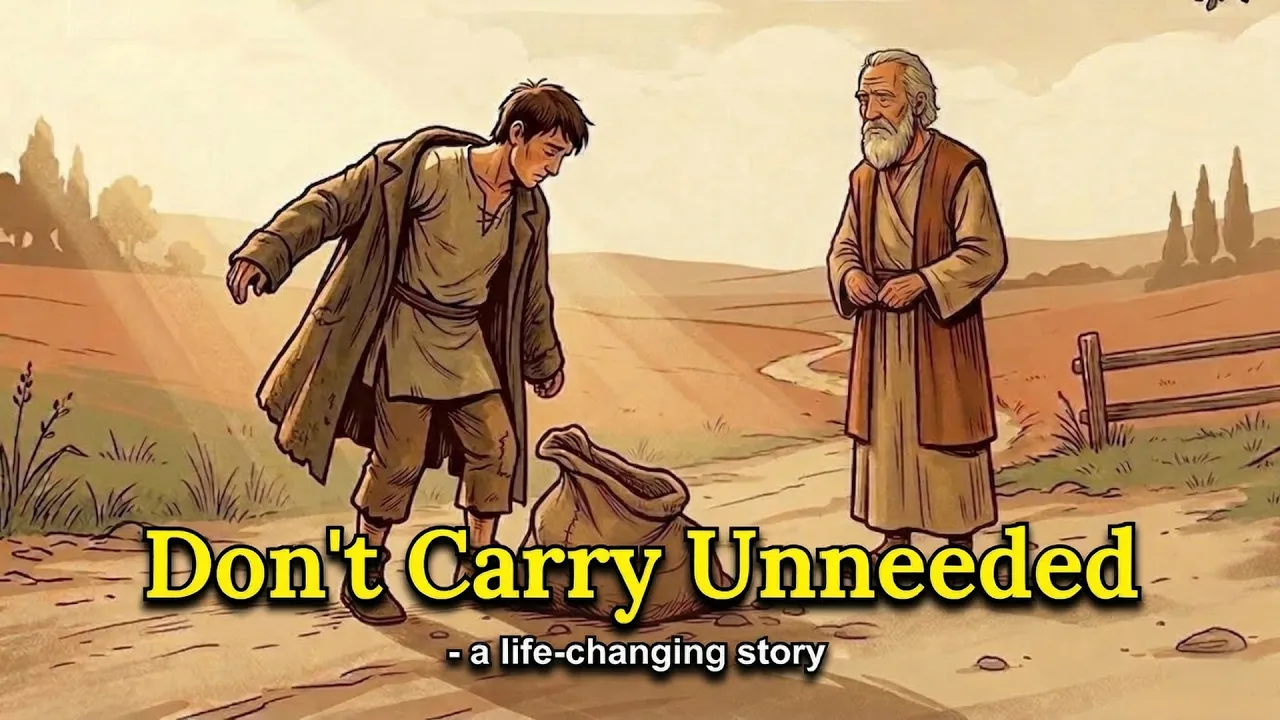
It changed how we see struggle. [music] There was a young man who worked in the fields outside a small town. His name was David.
Every morning before dawn, he walked two miles to reach the land he tended. Every evening after sunset, he walked those two miles back home. David was strong.
He took pride in his work. But lately, [music] something had changed. The walk that used to feel easy now left him exhausted.
His back at, his legs trembled. Other workers passed him on the road, moving faster, arriving earlier, finishing their tasks. While David [music] struggled to keep up, he began waking earlier to make up the time.
He pushed himself harder in the fields. Still, he fell [music] behind. His frustration grew.
He watched younger workers, older workers, even those who seemed weaker than him accomplish more with less effort. One evening, an old farmer named Samuel stopped beside David on the road home. "You look tired," Samuel said.
David nodded. "I don't understand it. I used to be faster.
Now everything takes twice as long. " Samuel walked beside him quietly for a moment. Then he pointed [music] at David's coat.
"That's a heavy coat for summer," Samuel said. David looked down. [music] He wore a thick winter coat, the same one he had worn for months.
[snorts] He had put it on during the cold season, and simply never taken it off. "I didn't even notice," David said. [music] "I've been wearing it so long.
I forgot it was there. What else are you carrying that you forgot about? " Samuel asked.
David thought about this question all night. The next morning, he left the coat [music] at home. The walk felt easier immediately.
But Samuel's questions stayed with him. What else was he carrying? [music] He started paying attention.
At work, he noticed he spent the first hour of every day worrying about mistakes he made the week before. He replayed [music] them in his mind, feeling angry at himself, imagining what others thought. This worry accomplished nothing.
It just made him tired before the real work even began. He was carrying yesterday's failures into today's tasks. David noticed something else.
Every time someone gave him advice, he felt defensive. He spent energy explaining why things were harder for him, why his situation was different, why their suggestions wouldn't work. Even when the advice was good, even when it could help, he was carrying his need to be right instead of his desire to improve.
He saw more. Every small inconvenience felt personal. Rain on the day he planned to work felt like an attack.
Equipment that broke felt like betrayal. Other workers success felt like his failure. [music] He carried resentment for things that had nothing to do with him.
David decided to try an experiment. Each morning he would name one thing he was carrying that he didn't need. Then he would practice setting it down.
The first day he chose yesterday's [music] mistakes. When the memory of a failure appeared, he acknowledged it once [music] and returned his attention to the present task. The voice in his head that wanted to replay the error over and over grew quieter.
The second day, he chose his need to defend himself. When another worker offered advice, [music] David simply said thank you and tried the suggestion. Some advice helped, some didn't.
Either way, he spent less energy protecting his ego. The third day, he chose resentment toward things he couldn't control. Rain came.
Instead of feeling angry, he found tasks he could do under shelter. The day passed faster than he expected. [music] Week by week, David felt lighter.
The work didn't get easier. The walk didn't get shorter. But his experience of both [music] transformed completely.
Samuel noticed the change. "You move differently now," he said. "I'm carrying less," David replied.
"Most people never learn this," [music] Samuel told him. "They add weight every year. A grudge here, a regret [music] there.
A story about why life is unfair. They pile it on until they can barely move. Then they wonder why they're so tired.
" David understood. He had been [music] that person. He saw others still trapped in that pattern, moving slowly under invisible weight, convinced their burden was just how life felt.
"Why don't people see it? " David asked. "Because you [music] get used to weight gradually," Samuel said.
"You don't wake up one day carrying 100 lb. [music] You add an ounce this week, another ounce next week. By the time it's crushing you, you've forgotten what lightness feels like.
You think [music] the heaviness is normal. You think everyone feels this way. David thought about his friends and family.
His brother complained constantly [music] about a neighbor who had offended him 3 years ago. His friend Marcus still talked about a job he didn't get 5 years earlier. His cousin refused [music] to try new things because she once failed publicly and couldn't forgive herself.
They were all carrying weight. They were all exhausted. None of [music] them connected their tiredness to their burdens.
David started sharing what he learned. Not his advice, not his preaching. He simply mentioned his own experience.
How he had walked the same road for years getting slower and slower without understanding why. How he discovered the invisible [music] weight he carried. How his life changed when he started setting things down.
Some people dismissed him. Some got defensive. [music] But a few listened.
They tried the same practice. They began noticing their own unnecessary burdens. [music] They experienced the same transformation.
Here's what most of us don't realize. We think being tired is about how much we do. We blame our schedule, [music] our responsibilities, our circumstances.
We say we have too much on our plate. But often the real problem isn't what we're doing. It's what we're carrying while we do it.
You can do difficult work with energy and peace if you're not also carrying yesterday's regrets, tomorrow's worries, other people's opinions, old resentments, imagined [music] judgments, the need to prove yourself, the fear of making mistakes, [music] and the weight of perfectionism. Think about your own life right now. What are you carrying that you don't need?
What stories are you replaying [music] that accomplish nothing? What grudges are you holding that only hurt you? What fears are you dragging along that keep you [music] stuck?
A single regret you can't release might be costing you hours of mental energy every day. One relationship you can't forgive might be draining the joy from relationships that could bring you happiness. A mistake you made years ago that you're still punishing yourself for might be the reason you can't move forward now.
A practice is simple. Every morning, name one thing you're carrying that you don't need to carry. Then make a choice to set it down.
Not forever necessarily, not perfectly, just for today. When your mind picks it back up, [music] notice that happening. Gently set it down again.
This isn't about ignoring real problems. It's about distinguishing between useful thought and useless weight. Useful thought leads to action.
It helps you solve problems, learn lessons, make better choices. Useless weight just makes you tired. It replays the same loops without producing new insight.
It keeps you [music] stuck in patterns that don't serve you. You'll know the difference by how it feels. Useful thought energizes you even when it's difficult.
Useless weight drains [music] you even when nothing is happening. Try this for one week. Name one burden each morning and practice setting it down throughout the day.
Notice what changes. Notice how much energy you actually have when [music] you're not using it all to carry things you don't need. Most people never do this.
They accept exhaustion is normal. They think moving through life should feel this heavy. They see people who seem lighter and assume [music] those people just have easier lives, better circumstances, more advantages.
They don't see the invisible difference. They don't see what those people chose to put down. You have more control than you think.
[music] Not over what happens to you, but over what you carry with you afterward. If this story meant something to you, share it with someone who seems tired in that way. You now understand.
Someone who's carrying more than they need to carry. Don't tell them what to do. Just share the story.
Let them discover their own weight. [music] Let them make their own choice about setting it down. Sometimes the greatest gift you can give someone is helping them see they have a choice [music] they didn't know they had.
And if you want more stories like this, stories that help you see your life differently, subscribe to this channel, hit the notification bell. [music] This community is built by people who are choosing to carry less and live more. Share in the comments one thing you're choosing to set down today.
Your words might be exactly what someone else needs to hear to begin their own journey toward likeness.