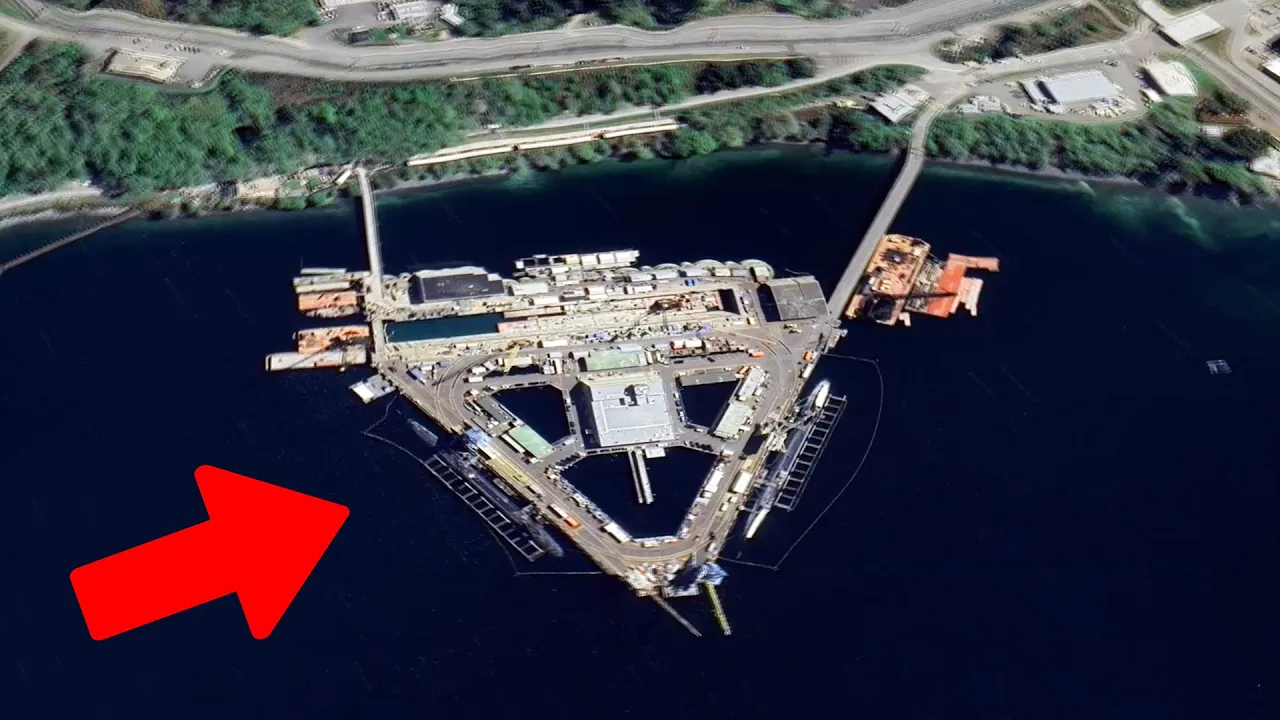
hidden beneath the waves and carved into remote coastlines submarine bases are some of the most secretive and strategic military facilities in the world join me we're going to dive into the mystery of 15 secret submarine bases starting with number 15 the Ulin Naval Base the Ulin Naval Base on hyan Island is located in the South China Sea and it's one of China's most secretive and important military installations this remote base which is shielded by rugged terrain dense forests and not underground facilities it plays a central role in China's Naval defense and deterrent strategy it's location
Southwest of Hong Kong in the South China Sea a critical body of water for shipping and geopolitics provides China with a crucial strategic Advantage despite being an island Ulin is relatively accessible by Naval vessels but its inner infrastructure is highly protected it's built into the natural terrain to reduce the risks of attack and civilian access to the base is extremely limited if not right out impossible the use of the underground spaces for military assets isn't unique to China but it is a notable feature of their military strategy the underground infrastructure at Ulin is worth more
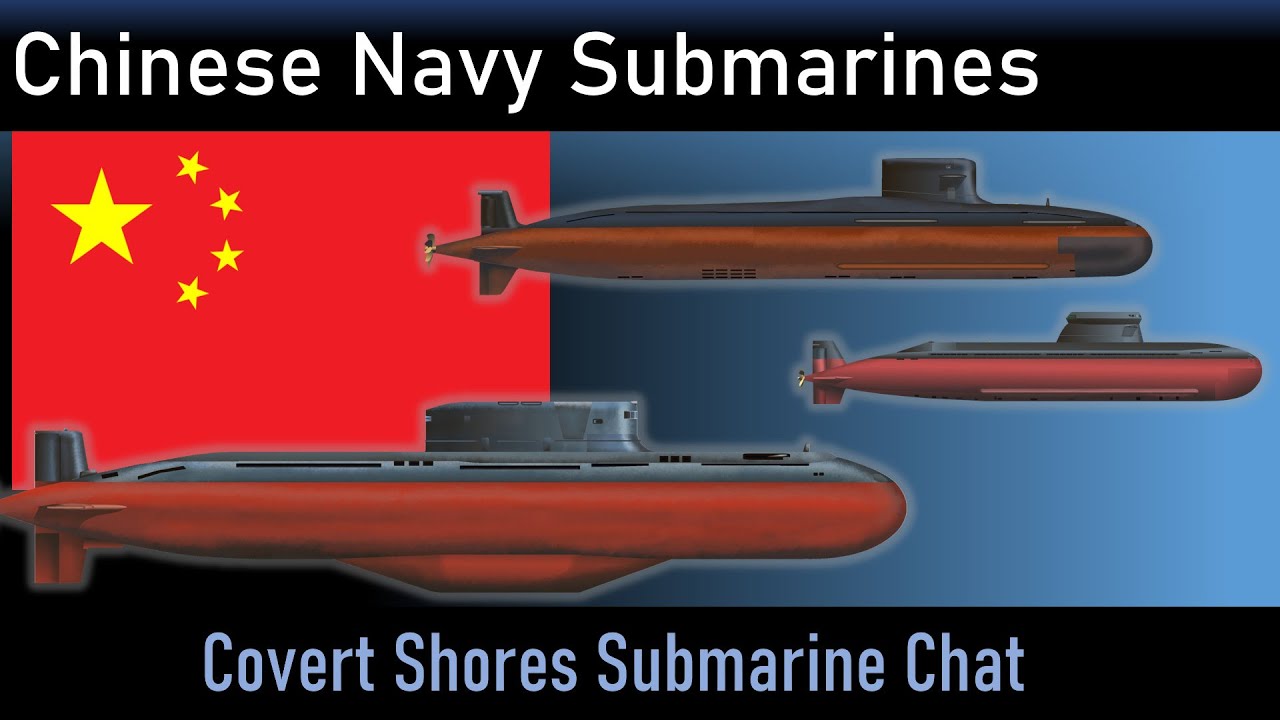
than $18 billion indicating both the scale of investment and the importance of those operations it is also home to a significant portion of China's growing submarine Fleet including the type 093 nuclear powered attack sub these Subs are capable of carrying Torpedoes and cruise missiles which enhances China's Naval Strike capability at any given time the Ulin base Cas is likely to house up to six of them in 2023 an image surfaced of a type o93 submarine entering one of the underground tunnels at Ulin and this is a rare site captured by a commercial satellite from planet
Labs it immediately sparked Intrigue this image was seen as a Bond James Bond moment for many evoking imagery of spy films with secretive underwater bases however this is a reality that China has deliberately constructed to protect its military assets number 14 s Mor SRO Mor located on the baron sea along the cola Bay is a closed City in the merx oblast region of Russia known as vinga until 1951 it served as the primary administrative base of the Russian Northern Fleet making it one of the most secretive and important sites for Russia situated 16 Mi Northeast
of ranks seor is a significant Naval Hub notable for the subarctic climate and position within the Arctic Circle the area's history dates back to the 1920s when a Timber procurement office was founded in M and A team was sent there to help with the logistics by 1933 the bay was selected as the base for the northern Fleet during the pre-World War II period construction began though much of it was halted with the onset of the war vinga one a naval Airfield was built nearby and British forces used it to protect Arctic convoys during the war
after World War II Soviet authorities resumed construction transforming the area into a fortified Naval Base several Mor is a vital part of their infr structure it houses numerous Subs surface ships and supporting infrastructure and its role is the main Naval base for the Russian Northern Fleet and it's placed under tight security and restrictions because the town is closed to the public details about operations here are sparse adding to its mystery as one of the most secretive Naval bases in the world in addition to that Naval importance the area does have some of the most advanced
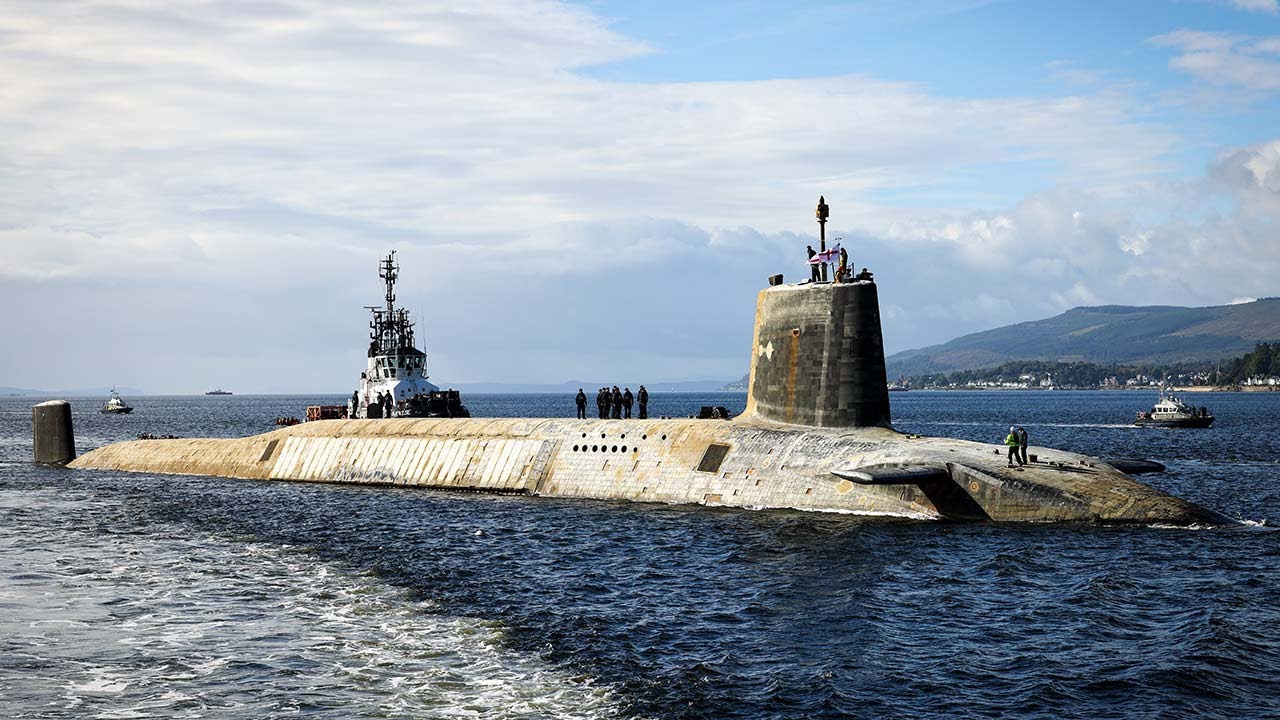
and largest dry docks on the cola Peninsula those docks are crucial for maintaining Russia's Fleet particularly its nuclear-powered submarines which are Central to Russia's defense strategy number 13 Clyde Naval Base his Majesty's Naval Base Clyde located in Scotland is one of the most closely guarded military installations of the United Kingdom it's often referred to Simply as Fastlane it's a pivotal component of Britain's National defense strategy the base is situated on the eastern shore of the Garlock which is about 25 Mi west of Glasgow the location was chosen during the Cold War due to its Geographic
advantages the secluded yet deep navigable Waters provide secure Anchorage and allow for Rapid convert access to the North Atlantic and Norwegian sea hmnb Clyde is not a single site but it encompasses multiple facilities the two primary ones are fast lane the main base home to Vanguard class nuclear powered and nuclear armed submarines as well as astute class attack submarines and NAD cport which is located about 2 mes west of Fast Lane the base also hosts the 43 Commando Fleet protection group Royal Marines task with guarding the subs and ensuring the security of the nuclear Arsenal
the base operates under strict security protocols as a designated closed site unauthorized access is virtually impossible the surrounding area is monitored by Advanced systems and access to the base is heavily restricted with armed guards and physical barriers at all entry points even Personnel working on site are subject to rigorous Security checks and constant monitoring these measures combined with the secrecy surrounding the base's operations have earned Clyde a reputation as one of the most impenetrable military sites in the world number 12 the US Navy Acoustic Research Detachment the US Navy Acoustic Research Detachment is one of
the most secretive bases in the country situated in the remote town of Bay View Idaho on the shores of Lake pandere this base plays a critical role in the development and testing of subs and Naval technology lake pandere is Idaho's largest and deepest body of water and it's the ideal setting for the Ard due to its quiet under Disturbed conditions at a depth of about 1150 ft the lake is deeper than Scotland's lock nest and has remarkable Acoustics due to its clear waters and environment its isolation away from the usual Coastal Naval bases allows for
an unparalleled level of secrecy and control over research the base was established during World War II and over time evolved into a specialized location for testing advanced technology its main function is to evaluate various subsystems for the US Navy particularly focusing on Sonar systems since its Inception has been crucial in the development of nearly every major submarine technology used by the Navy especially when it comes to underwater Acoustics a large portion of the testing occurs in the intermediate scale measuring system now that's a th000 fft diameter circle on the lake bed where hydrophones are placed
to monitor the performance of submarines or components access to the Ard is tightly controlled the base's research is classified and Personnel working there are highly restricted with stringent security protocols surrounding the testing operation its location in Bay View with its remote nature does help to maintain its secretive status and Bay View itself has a population of fewer than 500 people making it an unlikely location for such high stakes military operations The Continuous quiet and isolation of the surrounding area further ensure that research remains hidden from Outsiders number 11 Olaf Olaf is a former Royal Norwegian
navy base located in Norway near truma carved into the rugged Arctic terrain hidden beneath 900 ft of rock and permafrost this base was designed to be nearly impervious to detection and attack during the Cold War Olaf's faern lies along European route E8 at the entrance to rordan near balaan this location deep within the Arctic Circle provided the Norwegian Navy and its NATO allies with a secure Outpost for operations in the North Atlantic completed in 1987 the facility was intended to be a secretive and heavily fortified Naval Base it covers a 270,000 ft and includes 140,000
ft of living quarters and 32,000 ft of dock space notable feature here is its 1100t Dry Dock capable of accommodating six submarines simultaneously the entire base is accessed through a 3,000 ft tunnel which opens into an extensive underground network of docks the facility is protected by its location within a mountain which Shields it from aerial surveillance and provides insulation against extreme weather the base was equipped to House advanced research facilities making it a hub for technological innovation and after its decommissioning in 2009 Olf ver was sold to a private company the sale included the possibility
of repurposing the base for civilian uses such as oil rig maintenance but the base's subsequent use by Russian linked companies raised concerns about potential Espionage and security risks number 10 c-based xand radar the c-based xand radar is a floating self-propelled mobile radar station created to support the United States missile defense efforts it plays a role in tracking ballistic missile threats and enhancing the groundbased midc defense system unlike stationary systems the SP spx1 is positioned on a floating platform offering flexibility to be deployed in various locations it's mounted on a fifth generation cs50 twin Hall semi-submersible
oil platform which was converted in Texas the radar system is housed in a massive flexible Central Dome within which an 18,000lb xand radar antenna sits this radar operates with 45,000 transmit receive modules and can track objects from over 1,200 miles away its ability to discern Warheads from decoys a critical function in missile defense is what makes it a significant asset in the defense system the SPX 1's ability to travel across the Pacific makes it a versatile asset for missile defense the radar system however has not been without its challenges it's failed to intercept test Targets
in certain tests and face some issues with its software Ware and mechanical components nevertheless the radar has contributed to the US's ability to monitor missile threats getting close to the xps1 is extraordinarily difficult not just because of the secrecy surrounding it but also due to the challenging geography of its deployment adak Island where it's nominally based is isolated and difficult to access adding another layer of protection to the radar Systems Operations the vessel's movements are not widely shared and its maintenance schedules and operational Duties are closely guarded secrets number nine Subic Bay Subic Bay is
a large Deep Water Bay located on the west coast of Luzon in the Philippines approximately 62 Mi Northwest of Manila historically it was home to a major US Navy base which included extensive submarine and Naval facilities while the base officially closed in 1991 following the eruption of Mount Pinatubo Subic Bay continues to be an important region now repurposed as the Subic Bay Freeport Zone with active commercial industrial and Naval operations the bay itself has been recognized for its advantages providing sheltered deep Waters capable of accommodating large ships including submarines and this has made it an
ideal location for military assets that require secure and protected Waters the area's history dates back to the Spanish Colonial period when it was first identified as a potential Naval port in the 19th century it became a prominent base after the Spanish American war with the US Navy Taking Over Control in 1899 The Americans built out extensive infrastructure turning Subic Bay into one of their primary bases in the Pacific by the mid 20th century the bay housed a naval air station and substantial Marine facilities access to the area especially to the former Naval base and its
restricted zones remained controlled and difficult to penetrate primarily due to its continued use for military purposes the US Navy and Allied Forces have continued to use the bay for logistical maintenance and refueling stops especially for submarines and other high-tech military vessels this level of confidentiality surrounding the exact scope of Submarine operations here in the bay is pretty high many of the activities and facilities are considered classified contributing to its reputation even after the closure of the US Navy base the region continues to Harbor sensitive military infrastructure which is not openly discussed or publicly available number
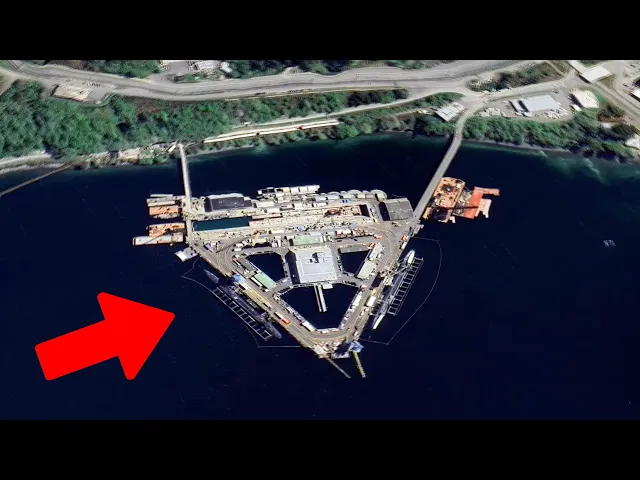
eight Naval magazine Indian Island Naval magazine Indian Island is a highly strategic US Navy installation located off the four forested Coastline of Jefferson County in Washington about 20 mi north of Hood Canal Bridge it acts as a critical last stop for Navy ships loading food Fuel and Munitions before heading out into the Pacific including long deployments as far as the Persian Gulf the bay spands an area of about 4.3 square miles and it's home to more than 100 ammunition storage magazines colloquially referred to as Igloo these structures made of concrete and designed for storing Conventional
Weapons range from the small storage units requir manual handling to larger ones equipped with forklift access the Island's also equipped with 1600t long pier capable of supporting vessels up to 55 ft of draft at low tide the naval magazine Indian Island is frequented by a variety of military ships including aircraft carriers destroyers guided missile subs and US Coast Guard vessels along with commercial barges for instance loading submarines with Torpedoes can take up to 6 days using specialized equipment such as cable end pulley systems the island also houses the US Department of defense's largest container crane
known as Big Blue capable of lifting up to 89,000 lbs of ordinance at a time around 160 people work on the island including military personnel civilians contractors and reservists all commuting daily due to the lack of on Island Housing the surrounding Waters and the unique location of this island make it an ideal albeit highly controlled environment for the storage and transport of sensitive materials additionally the island is connected to marrowstone Island but it's separated by the Port Towns and ship canal further isolating it from any civilian presence moving on to number seven the zabad Elita
zabad El litaa is a highly secretive Russian naval base located on the cola Peninsula near the Norwegian border it's part of the Russian Northern Fleet and it is a significant Fleet in the Russian Navy it's positioned within the litaa Fjord which is about 120 km from merms the facilities are closely associated with the operation and maintenance of nuclear Subs making the basa critical to their nuclear deterrent policies Winters here are severe with the area experiencing about 43 days of polar night each year now this isolation and inhospitable terrain characterized by Rocky ground swamps and numerous
Rivers makes the base highly difficult to access historically the area was initially developed in 1939 under the name bassis Nord as part of their expansions during World War II however the base became obsolete after the German invasion of Norway in 1940 Malaya l the first facility constructed became the Home Port for Soviet Union's first nuclear submarine the K3 leninsky kamol in 1958 for decades very few have been able to confirm any details about the operations here further amplifying that secrecy but in the 1980s and90s the Soviet Union faced challenges maintaining the security here the area
became known for its environmental concerns too primarily due to the accumulation of radioactive waste from Soviet era nuclear submarines these concerns have led to widespread calls for for cleanup and monitoring by environmental groups but much of the area remains off limits number six the submarine based Bangor Naval submarine based Bangor is a critical US Navy installation located on the kitp peninsula in Washington state it serves as the primary home for the US Pacific fleet's Ohio class Triton ballistic missile Subs which are key to the nation's nuclear deterrent strategy the base is known for its remoteness
extensive security and its vast underground infrastructure making it one of the most secretive facilities in the US Bangor was originally established in 1942 as a site for shipping ammunition during World War II and the US Navy purchased about 7,600 acres of land on the Hood Canal for about 18 million bucks laying the foundation for the Ammunition Depot by 1973 the Navy selected Bangor to serve as the Home Port for the Ohio class Trident Subs this base was officially activated in 1977 and soon it became the sole Home Port for the Pacific fleet's tridon Subs it
houses the strategic weapons facility Pacific which maintains and stores the missiles and nuclear warheads used by the Trident Swift pack also handles missile testing calibration and assembly playing a really important role in the US nuclear deterrent capability the only direct rootes to the base are heavily guarded and any attempt to approach the facility without authorization is met with strict enforcement from the US Navy and the Marine Corps they've been tasked with the base of security since 1978 so Bangor is home to nuclear warheads and Trident missile components which are stored and maintained under extreme security
given the base's critical role in National Defense any leaks of its operational details or security could have severe consequences the US Navy has made sure that only a limited number of personnel have access to the sensitive areas of the base and any public information about the facility is minimal and hopefully they're not coming after me number five Cape wrath Naval Base Cape wrath the northwesternmost point of Mainland Britain is a remote boat Headland in the Scottish Highlands housing the cape wrath Training Center the ministry of Defense owned site spans about 23 square miles and it
serves as a training ground for NATO forces separated from the mainland Cape wrath is reachable only by a passenger Ferry followed by a single Track Road that dates back to 1828 this terrain is dominated by Pete bogs locks and steep Cliffs with limited infrastructure access is tightly controlled particularly during training periods when observation posts and Sentry stations are operational the military use of Cape wrath began in the early 20th century it was formalized with bylaws in 1933 and initially served as a naval Gunnery Range the site expanded its scope after the mod acquired it in
1999 today it's the only location in the northern hemisphere where NATO forces conduct integrated Land Air and sea assault training despite the military use though capath is recognized for its value it's designated as a special protection area special area of conservation and site of special scientific interest this region is is a Haven for wildlife its Cliffs have over 50,000 nesting seabirds including puffins and razor bills however the site's dual role as a military range and ecological Sanctuary creates tension with occasional fires and noise impacting the local animals incidents in 2002 like a misfired shell which
landed near inhabited areas and the 2008 fire underscore risks associated with live fire exercises Cape R's broader landscape is part of the Northwest Highlands geop Park that's recognized region encompassing about 770 square miles what sets cap wrath apart though is the inaccessibility and the tight control of information limited access roads Sentry posts and the unpredictable scheduling of exercises makes it nearly impossible for unauthorized people to enter or get any information number four Harvey Point defense testing activity the Harvey Point defense testing activity is located in North Carolina it's a classified US Department of Defense facility
this site has played a critical role in military operations and training since its establishment during World War II the origins of Harvey Point traced back to November 1942 when the US Navy acquired about 1,200 acres of land for $41,000 the base along with nearby Naval Air Station weeksville formed a critical defensive network with weeksville specializing in lighter than air operations using blimps for Coastal surveillance today Harvey Point is a Cornerstone of clandestine military and intelligence training its primary functions include parent military training for agencies like the CIA FBI and ATF and the facility also serves
as a training ground for elite military units including Dev grw commonly known as Seal Team 6 the FAA designates the airspace around Harvey Point as restricted barring civilian Aviation traffic the peninsula is accessible only by a few roads which are heavily monitored perimeter defenses include fences cameras and armed patrols while entry is strictly limited to authorized Personnel this isolation combined with its designation as special use airspace underscores its role as one of the most secure facilities in the US Harvey points often compared to its sister facility Camp Peri in Virginia both sites serve as hubs
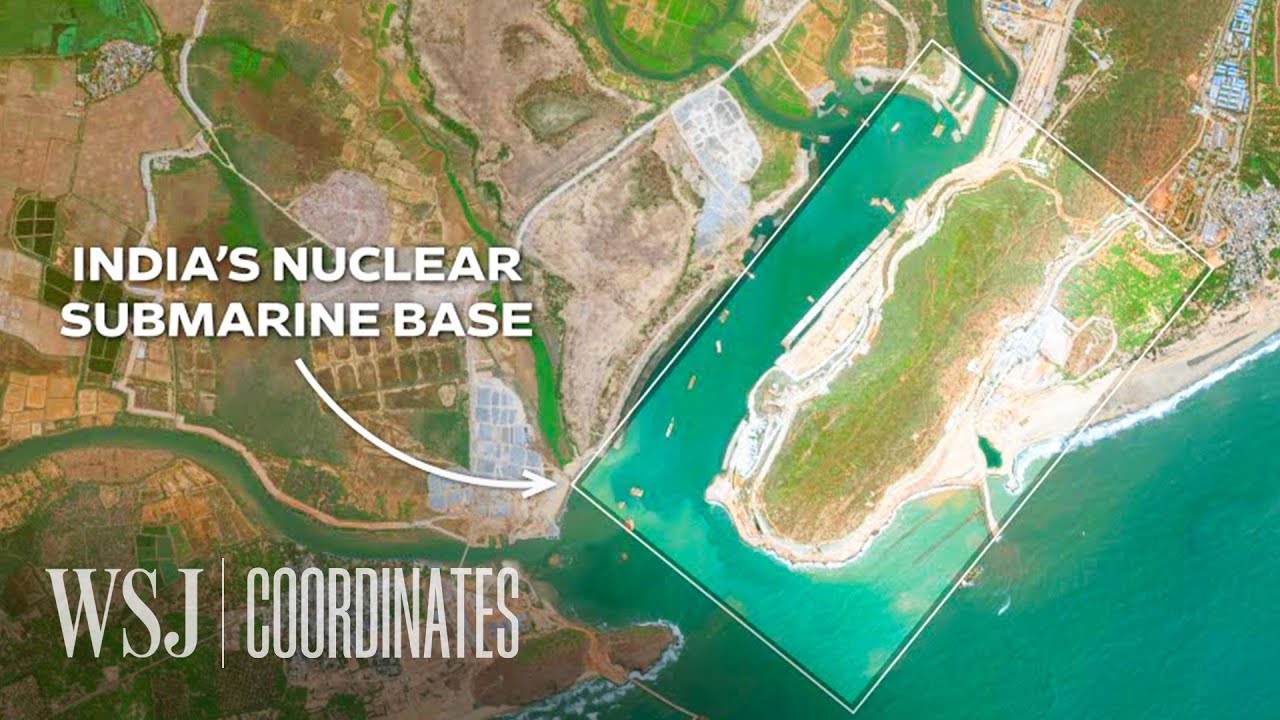
for intelligence and counterterrorism training however while Camp Peri is widely associated with CIA training programs and colloquially known as the farm Harvey Point is more closely tied to high impact explosives and field operations together these facilities form a network of critical infrastructure supporting us defense and intelligence Ops number three the inss Vara located near the Coastal Village of Ramil in Andra Pradesh inss Vara is a high security Naval facility under construction located about 43 Mi south of visakapatnam it's designed to support nuclear submarines and maintain their covert Ops its construction signals India's plan to counter
Regional threats and strengthen its position in the Indo Pacific the base's location on the Bay of Bengal provides direct access to important sea routes and the rugged terrain around the area makes it possible to build underground tunnels and Chambers where submarines can move without surfacing this reduces the chance of any detection by satellites or patrols and this place spans about 7 and 1 12 square miles and can house at least 10 nuclear subs including the air hun class and the new S5 class vessels modern underground docks repair yards and command centers will ease the Navy's
logistical burdens which have grown here as a mixed Port security is key at ins Vara the area is under tight restrictions and natural bar limit any unauthorized access submarine movements remain hidden thanks to Advanced stealth measures and deep Chambers and round the-clock surveillance adds another layer of Defense visak katnam has long served as the Eastern Naval command's primary base sharing the port with commercial traffic however they can cause delays and congestion inss Vara solves that issues by providing a dedicated facility for submissions this separation streamlines their Ops for both surface and underwater fleets but beyond
improving Logistics ins Vara is is a strategic response to shifting Regional conditions China's Naval buildup along with its support for neighboring fleets has pushed India to bolster its own underwater strength by hosting nuclear submarines India reinforces its deterrent posture and extends its operational range in the Indo Pacific the space Also enables more patrols helping secure critical shipping lanes construction challenges include Cyclones high humidity and the need to protect delicate systems from saltwater corrosion but despite the obstacles the project Pro continues with estimates suggesting it could be fully operational by 2025 or 26 at a cost
of about $3.7 billion once complete ins Vasa is set to be a key element in India's Maritime strategy allowing a deeper reach and faster response across vital sea corridors number two Naval Base Point LMA Naval Base Point LMA in San Diego California is one of the US Navy's most secure vital installations military clearance is required for entry and the base operates under tight protocols surveillance systems patrols checkpoints they're constant fixtures here ensuring the area remains inaccessible to any unauthorized Personnel the military presence here at Point Loma dates back to about 1795 when Spanish forces began
constructing Fort guaros at ballist point and by 1845 the site had been abandoned by Mexican forces and in 1846 US Navy Captain Samuel Dupont claimed the area during a Mexican-American war following the Treaty of Guadalupe Hidalgo in 1848 Point Loma formerly became part of a US territory in 1852 president Millard Phil Moore designated 1,400 Acres at the southern end of the peninsula for military use the area became Fort Rose crans named after Major General William Rose crans and was developed into a coastal artillery post the fort transitioned into Naval operations in 1945 with the Navy
radio and sound laboratory taking it over by 59 the Navy had a formerly acquired the site and established the Navy submarine Support Facility and later renamed Naval submarine Mar Base San Diego over the decades it was evolved to support Advanced submarine operations and related activities and in 1998 the base was Consolidated with six other Naval installations under the designation Naval Base Point LMA Point LMA is home to submarine Squadron 11 and other submarine commands it plays a really important role in housing maintaining and deploying nuclear powerered subs the baaf triest a pioneering deep sea exploration
vessel was stationed here at Point LMA in 1958 its successor the TS 2 operated from the base until 1984 in March of 2023 the base gained International attention when President Joe Biden visited alongside the prime ministers of Australia and the United Kingdom to announce a trilateral agreement to supply nuclear powerered subs to Australia even military personnel require specific clearances to access many areas within this base its status as a nuclear subhub adds another layer of security with protocols designed to safeguard both the vessels and the sensitive information associated with their missions number one Camp Century
Camp Century a hidden Relic from the cold war is one of the most secretive military installations ever constructed buried under approximately 100 ft of ice in Northwestern Greenland this US base was rediscovered in 2024 using Advanced radar technology constructed in 1959 Camp century was exstensively a scientific Outpost designed to conduct Arctic research this explanation concealed its actual purpose a covert initiative known as project iceworm the goal of this secret program was to assess the feasibility of deploying hundreds of nuclear missiles under the Arctic Ice providing the United States with a strategic Advantage during the Cold
War the extreme remoteness of the site about 150 mi from THU Airbase offered natural protection and secrecy Camp Century faced immense operational challenges the dynamic nature of the ice sheet caused tunnel walls and ceilings to shift under the immense pressure threatening to collapse sections of the base Greenland's extreme climate with sub zero temps and Relentless winds made life and maintenance arduous by the mid 1960s it became clear that project ice wor was unviable the movement of the ice was unpredictable and maintaining a stable launch system for nuclear missiles in such an environment proved impossible in
1967 the base was abandoned while the nuclear reactor was dismantled and removed hazardous materials including radioactive waste chemical pollutants and biological remnants were left behind under the assumption that they would remain inomed by the ice indefinitely the base lay hidden for decades until 2024 when a NASA research Mission over Greenland inadvertently revealed its location scientist aboard a Gulf Stream 3 aircraft were using highly Advanced radar designed to map ice sheets in three dimensions the radar detected anomalies beneath the ice revealing structures that didn't correspond to Natural formations this discovery stunned researchers that not only shed
light on a hidden chapter of Cold War history but also raised critical questions about what lay buried beneath the tunnels Camp Century represents a cold war gamble that merged military ambition with arctic exploration its rediscovery offers a rare glimpse into the geopolitical strategies of the mid 20th while serving as a stark reminder of the environmental costs of such Endeavors the base now stands as both a historical artifact and a pressing environmental concern highlighting the unforeseen consequences of military projects in fragile ecosystems thanks for watching Everybody I'll see you next time thank you to our channel
members