Welcome to Illustrate to Educate! Don’t forget to subscribe and ring the bell for more simple and objective videos on topics that matter. In this video, we’re going to look at a simple explanation of anarchism as well as the arguments for and against anarchism.
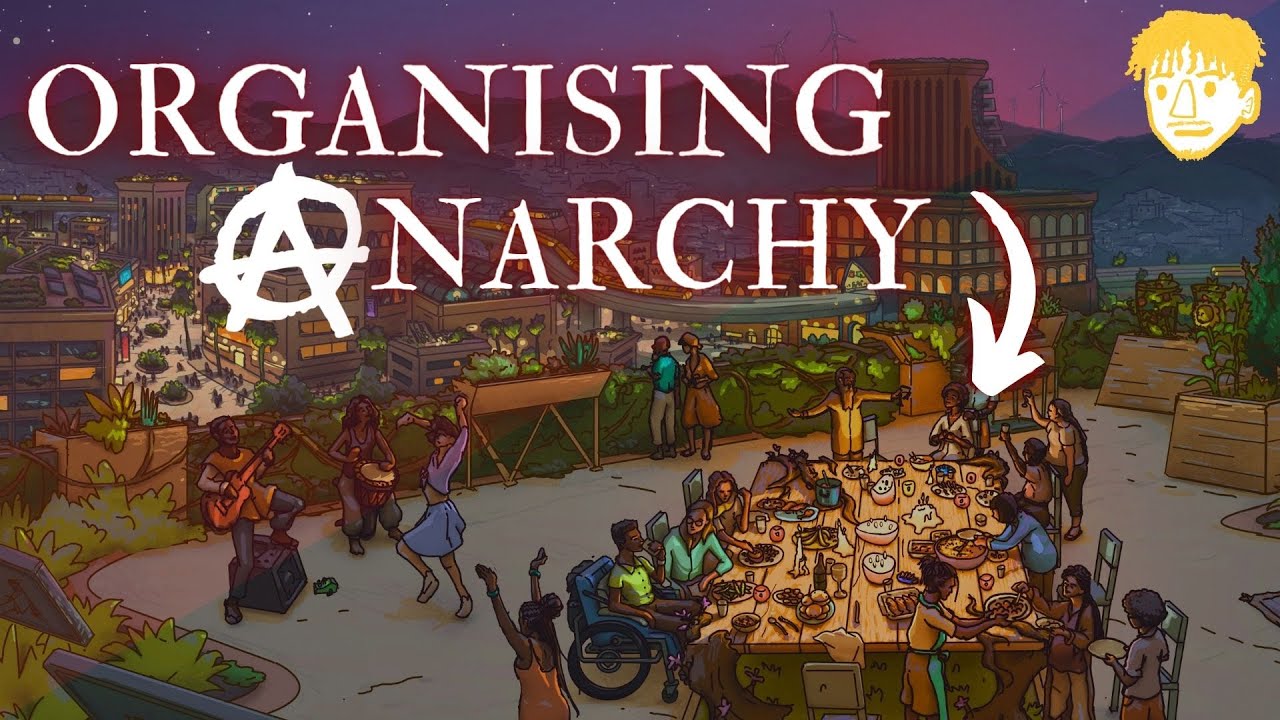
Anarchism is a political philosophy and social movement that advocates for the abolition of centralized systems of power, such as governments and hierarchies, in favor of decentralized, self-governing communities. Anarchists believe that society can be organized in a way that allows for the maximum amount of individual freedom, equality, and cooperation. There are many different forms of anarchism, but some of the most well-known include: Anarcho-communism, which advocates for the abolition of private property and the establishment of a classless, stateless society based on communal ownership and cooperation.
Next is Anarcho-syndicalism, which seeks to abolish the wage system and replace it with a system of workers' self-management and direct democracy. Also there is Individualist anarchism, which emphasizes the importance of individual freedom and autonomy and is often associated with the writings of figures like Emma Goldman and Max Stirner. Anarchism has a long and varied history, with roots in both classical liberalism and socialism.
Some of the key figures and movements associated with anarchism include: The French Revolution, which inspired many early anarchists with ideas of liberty, equality, and fraternity. Pierre-Joseph Proudhon, who is often considered the first self-proclaimed anarchist and wrote the influential work "What is Property? " in 1840.
Mikhail Bakunin, a Russian revolutionary and writer who was a key figure in the anarchist movement of the late 19th century. And Emma Goldman, an American feminist, anarchist, and writer who was a prominent figure in the early 20th century. Anarchism has been influential in many social and political movements throughout history, including labor movements, feminist movements, and anti-colonial movements.
Anarchist ideas have also been influential in fields such as education, psychology, and environmentalism. It is worth noting that anarchism is a diverse and contested philosophy, and there are many different interpretations and variations of anarchism and its advantages and disadvantages depend on the specific form of anarchism being considered. However, generally speaking, those who support Anarchism emphasize the importance of individual freedom and autonomy, as well as equality and cooperation among people.
They also point out that Anarchist ideas have inspired many social and political movements that have sought to challenge oppressive systems and hierarchies. Next, supporters point out that Anarchism is often associated with a strong commitment to direct democracy and grassroots participation in decision-making. Lastly, those who support some forms of anarchism, such as anarcho-communism, envision a society without economic inequality, where resources are shared and the needs of all members of society are met.
Those who are against Anarchism often criticize it for being unrealistic or utopian, as it calls for the abolition of centralized systems of power that many people believe are necessary for maintaining order and protecting people's rights. Next, they point out that some forms of anarchism, such as individualist anarchism, have been criticized for placing too much emphasis on individual freedom and autonomy at the expense of community and collective action. Also, those against Anarchism point out that it has often been associated with violence and extremism, particularly in the form of bombings and assassinations carried out by anarchist individuals or small groups.
Lastly, those against Anarchism say that it can be hard to put into practice, as it often calls for the complete overhaul of existing political and economic systems, which can be difficult to achieve in the real world. What are your thoughts on anarchism? Feel free to comment below.
If you enjoyed this video, be sure to subscribe to Illustrate to Educate to support more simple and objective videos on topics that matter.