Between 2001 and 2019, the war in Afghanistan claimed the lives of over 2300 United States military personnel, while over 20,000 more were injured. In total, over 6000 Americans and 100,000 Afghans lost their lives in the conflict - as well as costing the United States upwards of 2 trillion dollars of taxpayer funds. In August 2021, the United States finally withdrew the last of its troops from the country, but the impacts of American involvement in the Taliban-controlled country continue to last to this day.
Though Americans often focus on the cost of the conflict in Afghanistan to American soldiers and taxpayers, the cost to the people of Afghanistan have been far greater. At least half a million Afghans, including government forces, Taliban combatants, and civilians, have been either injured or killed. What was life like in Afghanistan before the United States and its allies got involved?
What was life in the country like under occupation by American forces? And what impact did US imperialism have on the nation’s citizens and government? History - Foreign Involvement in Afghanistan First, let’s start with a brief history of foreign involvement in Afghanistan.
The United States’ occupation of Afghanistan was lengthy and involved, but the 21st Century was not the first time that foreign interference with the country happened. The Soviet Union first invaded Afghanistan in 1979; during that time the US supported both resistance fighters in Afghanistan and diplomacy efforts to encourage the Soviets to withdraw. However, the post-Soviet struggle for power gave rise to the Taliban and Osama Bin Laden.
And as the Taliban refused to expel Bin Laden and associates, and continued to support international terrorism, the United States changed its tune. The United States first occupied Afghanistan after a terrorist attack on the World Trade Center and the Pentagon took place on September 11th, 2001. The US and its allies began a military compaign on October 7th of 2001 in Afghanistan, which targeted not only terrorist facilities, but also the Taliban’s military and political assets.
During the decades of US occupation in Afghanistan, American forces killed the leader of the terrorist group Al-Qaeda, Osama Bin Laden. Since 9/11, there have been no other major attacks by Afghanistan-based terror groups on the United States homeland, but the United States remained in the country for years. US Imperialism and Military Influences Now let’s take a look specifically at how US imperialism and its military presence have impacted Afghanistan’s political system and government.
Ever since the American attacks in 2001, in retaliation of the attacks on the US in September 11th, and the fall of Kabul on November 13th, 2001, American diplomats and intelligence agencies were quick to report that the Taliban had been so decimated that they no longer posed a threat. NATO ambassadors who landed in the city of Kabul believed that the US and its allies had triumphed over the Taliban, and after years of war between the Taliban and Soviet and American forces, the country could have a new start. Citizens of Afghanistan had been subjected to so many years of war and brutal repression by religious extremists, after all.
However, then-American diplomat, R. Nicholas Burns, and his team flew around Afghanistan in Black Hawk Helicopters without fear for their safety. Burns and other diplomats strolled quiet Kandahar streets and had tea with local tribe leaders, feeling a sense of peace and calm.
Burns and some others, however, had concerns that the Taliban was so immersed in Afghanistan society that it might not disappear. Despite the concerns, Americans maintained such a strong sense of victory that CIA specialists and elite special forces units quickly moved on to fighting in Iraq. However, America had badly miscalculated the extent to which the Taliban had spread across the country.
Osama Bin Laden and his deputies, as well as other members of the Taliban, found refuge in Pakistan and regrouped while America’s attention moved elsewhere. Then Taliban combatants returned back over the border and began driving up suicide attacks and roadside bombings by as much as 25% in the Spring of 2007. This caused American troops to need to return to villages in Southern Afghanistan that the US had previously considered “liberated.
” US President George Bush received massive blowback for his decision to shift troops to Iraq during this time. The reasoning for electing to engage in the war in Iraq likely had to do with the fact that Iraq was so oil rich, providing access to an essential resource. This isn’t the only time that an American President’s decision to withdraw troops from Afghanistan has been criticized.
Both President Joe Biden and former President Donald Trump decided to end the military efforts in Afghanistan, which has been said to have serious consequences for the viability and the security of the Afghan government. Some say that President Trump’s actions in Afghanistan led to the chaos that ended in the full withdrawal. For instance, the decision to hand over Bagram Air Base to the Afghan Government meant that Hamid Karzai International Airport became the only possible avenue for non-combatant evacuation operations.
Not long after the evacuation, Afghanistan’s president, Ashraf Ghani, fled the country, prompting the government to collapse in Kabul as the Taliban began gaining more power. The Taliban quickly took control of Kabul at a speed that took most people by surprise, since before the fall of Kabul, people could take commercial flights out of the country - and many Afghans planning to leave were taking needed time to sell property and settle affairs. Touted as America’s longest war, the outcome of the conflict in Afghanistan, to many former military leaders, was not worth the cost invested.
External Influences Since the United States withdrew from Afghanistan in the Summer of 2021, many neighboring countries that were used to an American presence doing the so-called “heavy lifting” of keeping the Taliban at bay experienced an increased burden. Because the Taliban was acting primarily out of Kabul, the expansion of militant networks is particularly important, causing greater insecurity across Afghanistan’s borders - Which is a concern for as many as a dozen nearby states. The largest neighbors of Afghanistan, Iran and Pakistan, may have the most at stake and the most influence over the country.
The significant shared borders between Afghanistan and both countries, as well as historical, ethnic, linguistic, and cultural connections, put greater demand on these countries as the Taliban regime begins to have international effects. Life in Afghanistan Before US Involvement So, what was it like before the US got involved with Afghanistan? Well, during the 1990s and leading up to the initial invasion of Afghanistan by the United States, Afghanistan had a far simpler government system and treasury than it has today.
The Economist reports that the country’s treasury was a safe box in the Kandahar compound of Mullah Omar, their then-leader, suggesting that the country’s government has grown since then. However, the strict rules and harsh punishments that the Taliban are famous for today became ingrained in Afghanistan society during the period immediately preceding the US occupation of Afghanistan. From 1996 to 2001, harsh Taliban rules - especially those regarding the limited, practically non-existent rights of women - ruled Afghanistan.
Women were banned from going to school, holding most jobs, and were forced into marriages. Lack of conformity with numerous Taliban moral ethics could result in brutal punishments, beatings, and even death. However, the Taliban fell after the US invaded Afghanistan in 2001, shortly after the attacks on the World Trade Center on September 11th.
Before the invasion, according to some Afghan women, there was no infrastructure, legal system, educational system, or anything. The past 20 years, mostly during the US presence, in Afghanistan, was what recreated the nation’s education, legal, social, and economic systems. So, let’s take a look at the United States’ 20-year-long occupation of Afghanistan.
Life in Afghanistan during US Involvement Reports suggest that between the 2001 invasion by the United States, and 2007, there were improvements in healthcare, education, the economy, and quality of life. However, life after the war escalated, and then later, when the US withdrew from the country, was not always so positive. The United States cannot absolve itself of responsibility for the harm experienced by civilians in Afghanistan.
Naturally, living under military occupation can impact society, government, and even daily life for people living there. What's more, the United States military presence actually directly killed innocent civilians. In 2021, the United States killed ten members of an Afghan family, seven of which were children, in a drone strike.
The drone strike was targeting an aid worker whom intelligence officers believed was someone else. The mistake cost ten innocent civilians their lives, a costly mistake. Within hours of the strike.
American officials announced they had thwarted an attack but failed to mention the civilian casualties. And later, it emerged that intelligence analysts had seen children on the scene of the attack moments before the strike. It wasn't until two weeks later, after family members, journalists and others in the community shared evidence that the strike had targeted the wrong person, and the U.
S. defended their action, calling it a righteous strike, that the Department of Defense finally admitted their mistake. It took video reconstruction of the strike to raise serious questions about the US version of events for the government to be held accountable.
The Pentagon eventually apologized for the harm, something that rarely happens, and pledged to compensate surviving relatives and help them relocate. Some of the survivors made it to California last year, including two aid worker brothers, Bimal and Romel Ahmadi, and their families. However, the survivors have not only lost ten of their loved ones and are going through understandable grief, but also are struggling to adapt to life in a new country after being displaced.
Community group volunteers supporting the families report that they feel abandoned by the United States government, which has yet to compensate them as promised at least as of May 2023. High rent, food, and utility costs and relocation costs all plague these families, who have gone through unimaginable problems due to a preventable mistake by the U. S.
government. Reports suggest in the past, condolence compensation for Afghan victims families from the U. S.
government has been between $131 and $35,000, usually falling around a few thousand dollars. Yes, you heard that right. The fact that there is so much information available about typical condolence compensation for Afghan families suggests that this isn't the only time that the United States has messed up and, as a consequence, killed innocent Afghan civilians.
This means that living under U. S. occupation during the early 21st century meant both fearing the growing influence of the Taliban and fearing that you are loved one would be collateral damage in an American attack.
But when the U. S. promised condolence payments for a drone strike, they might have actually done more harm than good, forcing the family to leave, partly because the public announcement of the payments made them a target and risk their safety in a nation overwhelmed by an economic crisis since the Taliban takeover.
The family had no other choice but to move to the US, and then the US failed to make good on their promises. Can you believe that? Ironically enough, the drone strike was the United States government's final military action before withdrawing its troops from Afghanistan, which led to a collapse of the US backed Afghan government and the Taliban's takeover of Kabul.
Then days of chaos ensued as tens of thousands of Afghans sought to flee the country. Before the drone strike, life under US occupation wasn't exactly smooth sailing. In fact, just three days prior, the Islamic State Khorasan, also known as ISIS K, carried out a suicide bombing that killed more than 170 Afghans and 13 American troops outside the Kabul airport.
Actually, some ex-military leaders who were stationed in Afghanistan have expressed regret about how the US handled the conflict in Afghanistan. One official argued that after September 11th, the US should have held its fire and avoided any bombing or strikes. What do you think?
Should states have been involved in Afghanistan? To fully understand the impacts of the United States withdrawal from Afghanistan, it's important to look at what life under the Taliban is like for Afghans throughout the country. Unexpected outcomes - life under Taliban.
Though unsurprisingly, much has been negative under the Taliban's brutal regime. There have been some surprising and unexpected outcomes associated with their rule. A former envoy to the Taliban for U.
S. President Joe Biden and former President Donald Trump even said that the threat of terrorism from Afghanistan has not increased. The Taliban has actually been attacking the local affiliate of the terrorist outfit known as the Islamic State, considering it a deadly rival that must be addressed.
Some Afghans say that Afghanistan is better managed today than Pakistan is. While others suggest Afghan television stations are freer to report the news than people in India and Turkey. Some former political leaders have even gone as far as to say the Taliban are running things properly.
Even crediting the Taliban for backing the restoration of pre-Islamic sites. However, this is not the perspective of all Afghans, especially those from ethnic minorities and those who are female. The Taliban's management of the country's currency and economy has also been unexpectedly competent.
When the country's currency, called the Afghani, crashed and reached record lows during the winter of 2021 after the US withdrew its forces, clerics turned to advice from a central bank, but did not have the means to stabilize the currency through bulk buying. The U. S.
had frozen a whopping $9. 5 billion of Afghanistan's foreign currency reserves by imposing strict capital controls. As well as cracking down on hawalas and smuggling, the Taliban managed to limit money leaving the country and stabilize the Afghani.
The Afghani is now about just 7% lower against the dollar than where it was the day before Kabul fell. Further, companies no longer have to pay for private security, reducing building project costs by over 50%. Can you believe that?
Would you have ever expected the Taliban would have some success under its rule? But it doesn't stop there. Reports suggest the Taliban have improved economic law enforcement across the board in Afghanistan, with tighter controls at the border, prompting massive gains in recorded exports and customs revenue.
Between March 2021 and March 2023, overall annual revenues went up by about 10%, reaching $2. 3 billion in March 2023. Not only that, but Kabul is seeing signs of better law enforcement, with roadworks held up by illegal squatters for years finally being pushed through by Kabul's mayor, Hamdullah Nnamani.
Street vendors have also been corralled into designated vending areas, and substance users have been largely put into rehab. Tens of thousands of street dogs have been vaccinated against rabies. Dirty restaurants have been closed, and roundabouts have been beautified to improve the quality of the city.
At least to some, life under the Taliban might not be entirely negative, though it certainly depends on who you ask. However, this may not all be just about the Taliban's expertise and capabilities. The Taliban has far less to deal with than the previous governmental regimes in Afghanistan.
The state has become far more capable, prompting many of the improvement seen under the Taliban's rule, especially around law enforcement and the economy. However, Afghanistan's current rulers do not have to contend with their own insurgency, unlike previous rulers. The country killed an estimated 69,000 soldiers and police in the two decades between 2001 and 2021, while also making economic development dangerous or even impossible throughout the nation.
The Taliban has been experiencing far different conditions than many prior leaders, and the means by which these results have been accomplished are questionable. But we'll get to that later. First, let's get to the question that's been on all of our minds.
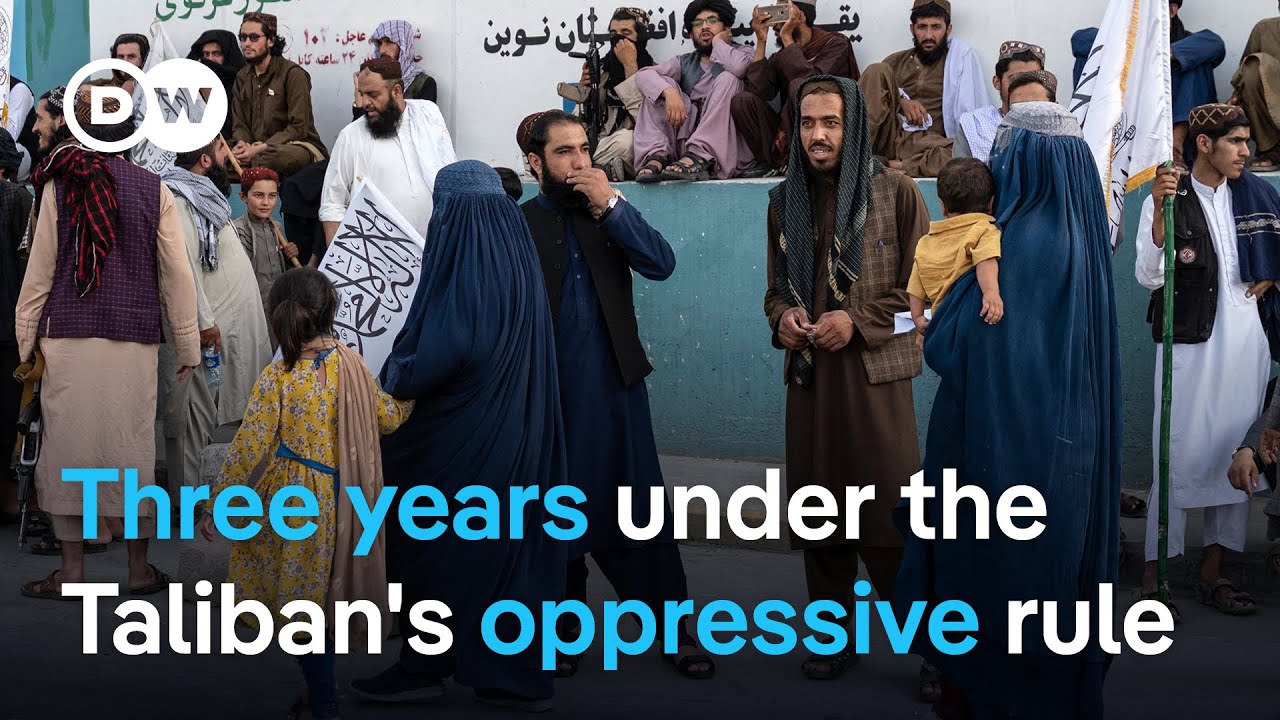
What is life under the Taliban actually like? Daily life today under Taliban rule. The Taliban's influence has impacted a number of different aspects of daily life and has especially impacted certain ethnic minorities and women.
According to the United Nations, an estimated 700,000 people have lost their lives. Middle class people working in sectors that depend on foreign support like businesses, hospitality, non-governmental organizations and the media are the most impacted. Some have had to turn to sex work in secret, which can be difficult and dangerous given the strict Taliban dress code and the inability to bribe police.
Most Afghans live in the countryside, totaling 75% of the population. Years of drought have impacted those communities, and now sales of crops have declined as people restrict what they buy and how much they eat. An estimated 97% of Afghans live below the poverty line, according to the United Nations.
Between 2019 and 2023, the number of Afghans needing humanitarian aid increased from 6. 3 to 28 million. The United Nations has seen shortages in available humanitarian aid, so millions of Afghans have been removed from those provided for food aid.
A major group of people who have been impacted by the withdrawal of American forces from the country are hawala dealers, who are operators of a major money transfer market in Afghanistan. For years the Hawaladars - the well-connected financiers who run the market - helped the Taliban finance their insurgency. They are projected to provide twice as many commercial loans as the Afghanistan banking industry.
Given their support of the Taliban, hawala dealers often thought they had no reason to fear the Taliban, having foiled previous efforts by national leaders like Ashraf Ghani and Hamid Karzai, who attempted to regulate their largely untaxed trade. However, they might have been too hopeful. The Taliban has forced hawaladars to keep computerized records and have enforced know-your-customer requirements, shutting down non-compliant businesses.
But even non hawaladars have been impacted by Taliban's rule. Much of Afghanistan has been plunged into hunger, stemming from volatile global food prices and an economic crisis related to the withdrawal of Western support. The withdrawal of the US and other Western countries led to a collapse in foreign investment and remittances, as foreign banks even began to refuse to facilitate transactions with Afghanistan.
As a result, the economy shrank by 35% between 2021 and 2022, immediately following the American withdrawal. Politically speaking, the country has seen incredible political conflict. The Taliban naturally refuse to share power with their local rivals, the mullahs, or conservative Muslim leaders who are generally hostile against other religions in Afghanistan are primarily Pashtuns, which make up Afghanistan's largest ethnicity.
On the other hand, the Tajik group, the second biggest ethnic group in Afghanistan, is the mullahs' major opponent. There's a high risk that Afghanistan may see a return to the ethnic conflict that ravaged the nation during the 1990s, which preceded the initial takeover of the Taliban. In order to fully eradicate any opposition, the Taliban has also been associated with extrajudicial killings.
Militants have also opened prisons to release thousands of prisoners. At that same time that women were barred from working and girls were removed from schools, medical facilities have been destroyed, civilians have been killed and thousands of people in Afghanistan have been displaced. Despite the Taliban's interference with terrorist organizations called the Islamic State, there are still ties between other terrorist organizations like the Pakistani Taliban and al-Qaida.
This has stood in the way of the Taliban's international acceptance. At the same time, the country's economic desperation is leading to an increase in street crime. In Kabul, mobile phones, personal possessions and even electricity cables have been stolen.
All forms of entertainment in Afghanistan have been banned for everyone, including music, television and socialization between sexes outside of the family. The Taliban and women's rights. Women and girls have been subjected to especially strict rules and policies under the Taliban.
In fact, Afghanistan is actually ranked as the worst country in the world to be a woman. Only in Afghanistan are women not allowed by law to study beyond secondary school or work in most professions. It started with a declaration in August 2021 that banned co-education between girls and boys, prohibiting men from teaching girls.
But soon after, many girls schools were closed and hundreds of female students were banned or expelled from their schools and their universities. One U. N.
study found that 80% of Afghanistan's school age women and girls are not being educated. Thousands of women have been educated underground. One way that women have gotten around the bans on education is by educating women and girls in Islamic religious schools, called madrassas.
When the Taliban comes around, teachers switch from teaching subjects like math to teaching about the Koran. 87% of women in Afghanistan are illiterate, and two thirds of girls do not attend school. The Taliban also has banned women from working for non-governmental organizations and United Nations agencies.
Some individual ministers and governors have granted exceptions to NGOs and UN agencies, especially in health services. Women are, however, allowed to work at private companies like banks and telecommunications firms, though they are meant to work in separate spaces. Women also can no longer run bakeries, act as flight attendants, or run medical centers where they treat male patients.
All government offices now require daily religious classes and a test for employees to maintain their jobs. Women have been largely restricted in their lives outside of work, too. Women were ordered in August 2021 to stay indoors at home, because Taliban soldiers are not trained to respect women.
Yeah, you heard that right. Women are the ones expected to change their lives because of untrained male soldiers. Imagine that.
Women can no longer be issued driver's licenses or use public transportation without a male companion, called a maram. Women can't travel outside of the country without both a maram and a legitimate reason, and they cannot play sports. Afghan women hardly have a say in their lives, including who they marry.
Between 70 and 80% of Afghan women face forced marriage, many of which are married before age 16. Some women are actually sold off by their families due to the crippling poverty affecting many in Afghanistan. Many families realize that even an abusive husband could be better positioned to take care of their daughters than they can.
It is not uncommon for young girls to be sold to be married to far older men. In fact, some have claimed that the Taliban has demanded that women from some villages it conquers must marry its unwed fighters. Though the Taliban denies such a thing.
Age differences can be as large as 50 years. And even if a woman tried to get a divorce, they would likely never marry again and lose custody of their children. Women only can retain custody of their children in Afghanistan until the age of seven, when they're given to their fathers.
Afghan women are required to wear burqas, a traditional modesty garment that tightly drapes over the head all the way to the ankles. Women wearing burqas are fully covered in unidentifiable and public, which some Afghan women find to be oppressive. Women are not allowed to drive with unrelated men, though some find loopholes by driving in taxis driven by unrelated men.
Women also are barred from public parks, women's gyms, and women only public baths. Women have also been banned from TV dramas and female TV presenters are required to cover their faces. Not only that, but women cannot participate in radio and TV shows where presenters are men, and women have been warned against using Facebook, TikTok, Twitter and other social media.
Can you imagine living with so many restrictions? Not only that, but some of these misogynistic regulations actually endanger women's health and safety. For instance, the Taliban's rules require women to have a marjoram or a male guardian in order to leave the home to visit the doctor.
If a woman's husband is at work and she does not have sons, she may be unable to go to the doctor. You might be wondering what happens to the women who dare to disobey the Taliban's many strict rules. Well, for one, Taliban militants from the Ministry of the Propagation of Virtue and Prevention Of Vice often drive around Kabul looking for Afghans to publicly shame and punish for violating moral codes.
Punishment can include whippings and other beatings. Some dare to hold underground mixed gender weddings, sometimes with heavily made up women wearing nail polish and men dancing in basements or other hidden venues, which can be punishable by execution. Can you imagine such an extreme and brutal punishment for merely celebrating with friends?
Taliban officials have gone to many extremes to punish people who do not conform to their rules. People who have stolen have had their hand sliced off. People accused of adultery have been stoned to death, and the Taliban have even used bulldozers and tanks to topple walls on to men who were accused of being homosexual.
The Taliban actually established a female moral police department to police women in Afghanistan to ensure compliance with these abundant laws. Women didn't always have so many limitations in their rights in Afghanistan. Women who formerly worked as teachers, personal trainers, engineers and in other professions are now made to do housework.
From 1996 to 2001, the Taliban ruled Afghanistan and women were essentially invisible in public life and were banned from going to school and were not allowed to work. The war in Afghanistan and insurgencies within the country sought to put an end to these oppressive policies. Harsh methods.
The Taliban's methods for achieving some of these ambiguous or even positive results are ethically questionable. Customs officials are deterred from taking bribes because of the Taliban's unusually harsh Sharia law punishments, such as hand amputation. While this is cut down on the proportion of businesses that bribe customs officials significantly, with rates dropping from 62% to just 8%, the harsh method of the Taliban Sharia law can be devastating.
The Taliban's economic priority is paying their fighters. One mini budget from 2022 allowed 41% of spending to be done for defense and security, which is significant for a country no longer at war. The spending is understandable given that the Taliban has an army of between 150,000 and 200,000 police.
Plans to recruit 50,000 soldiers, and plans to buy anti-aircraft missile systems to knock out American drones. Experiences of Afghans who relocated to the US. Many Afghans who have relocated to the United States over recent years have experienced feelings of isolation and helplessness.
Given the financial burden of America's high cost of living and the challenges of resettling in a new country. In the two years following the United States withdrawal from Afghanistan in 2021, over 76,000 Afghans have arrived in the United States. Of the tens of thousands of Afghans who have resettled in the US since 2021, many find that the just 90 days of refugee support they received are insufficient to address their immediate needs, and definitely did not cover the costs of landing back on their feet.
The United States government has a federal refugee cash assistance program that covers $325 per adult and $200 per child monthly for eight months. But that can hardly put a dent in the cost of rent and living in our country. On top of that, many refugees coming from the country do not speak English.
Resources that could theoretically be useful, like counseling and mental health services, are not always available in languages that are accessible for many Afghan refugees. Even if the resources were available in languages spoken by refugees, refugee support agencies are often so overwhelmed that it can be difficult to navigate these services. Not only that, but both Afghan refugees in the United States and the people still living in the country must carry the weight of their lost loved ones and neighbors, which can be traumatic.
The added weight of displacement for refugees forced to move out of Afghanistan to seek safety can make life extremely difficult for thousands of Afghans all over the world. Conclusion. So what are the key takeaways of all of this?
What can we learn from the United States occupation and withdrawal from Afghanistan? Let's take a look. First, the United States government continually struggled to implement a coherent strategy and underestimated the time required to rebuild Afghanistan.
Creating unrealistic timelines and expectations and prioritizing spending quickly. This led to increased corruption within Afghanistan. Further, many of the institutions and infrastructure that the US implemented were not sustainable.
While reconstruction should provide lasting relief and act as a foundation for Afghanistan's society and government. In reality, many projects went unused or fell into disrepair. American officials implemented short term projects with little consideration for sustainability and the capacity of the Afghanistan government to take over once the U.
S. left. The prevalence of insecurity in the country also undermined these reconstruction efforts.
The US left Afghanistan in a state of disarray, abruptly vacating after harming countless Afghan families. Amidst their attempts at eradicating terrorist leaders. While some changes under Taliban rule could be perceived as positive, many of the Taliban's laws and practices severely affect ethnic minorities and women.
After living for decades under war occupation, extreme weather events like drought associated with climate change, economic crisis, food insecurity, and widespread unemployment, people in Afghanistan are understandably in crisis. If you liked this video, you might also like why the Taliban and ISIS hate each other. Or check out what actually went wrong in Afghanistan.