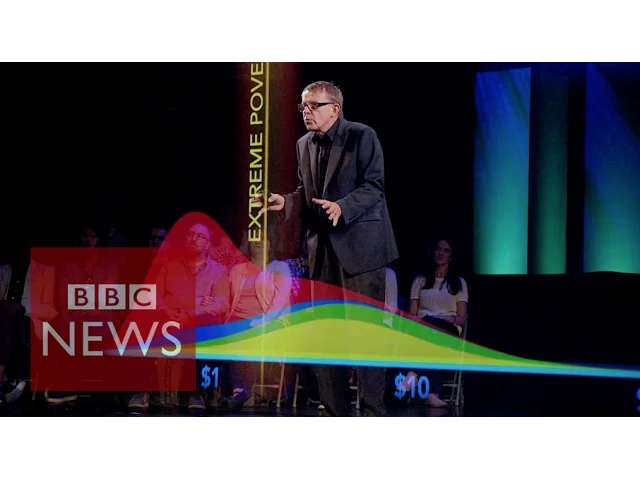
this shows the percent in extreme poverty in the world 0% 50% and 100% and each uprise here represent 10 years here we are at 1900 and this is where we are today now I'm going to start all the way back 200 years ago the time of Napoleon 1800 what was the percentage of extreme poverty in the world then staggering 85% only a few was out of extreme poverty and then came the Industrial Revolution and did it improve H not much 1850 it was just down here to 80% and 1900 it came down to 70% and
then further on to 1950 50 here this is when I was born just before I was 2 years old here 55% and we have to go all the way to 1970 to reach 50% the year when half the world population was out of extreme poverty and half of it was still in extreme poverty and then only in my adult life has it started to drop a little faster and I stopped here at 1990 when it was down to 35% now this year is not the first time the United Nation put a target a goal for
extreme poverty the former goal was to half the extreme poverty from 1990 up to 2015 where we are now and many people at that time said that's mad that will never work so it's very exciting for you now to learn you know where is the last estimate where is 2015 and the estimate is oh I have to put a special stick here because it it's it's here 2015 this is where we are now and the estimate is 12 12 let me show you this fantastic Trend here you know how it went down from 85% coming
slowly down a little faster down and then down here was the goal achieved well it's not easy to measure extreme poverty there is an uncertainty but there is no doubt that this trend is fast going down and that the last goal was indeed achieved however I'm a statistician and I know that just because you see a trend like that that doesn't mean that it will continue in the same direction it may level off like this because the last lap is often the toughest but on the other hand you can see that it's not impossible to
achieve this new goal to end uh extreme poverty all together I'm going to show you where extreme poverty has been and how it has decreased this is the world and here are the population back in 1800 in each of the regions in Total 1 billion here is the J stick of income and I'm going to put down these people to show their incomes first Europe and they spread out here and then americaas on top of that then come Africa and on top of it the most populous region Asia including Australia and as I showed you
before almost all people there were living in extreme poverty on all regions in the world now I'm going to show you what has happened I start the world and look with Industrial Revolution the population grew here and the incomes expanded here mainly because of increased income in Europe and America and then in the 20th century population continued to grow here and incomes increased even more here and there changed the whole pattern of the world it became a divided world the world view you grew up with with a rich West here and with poor Africa and
Asia here but in the 1980s the amazing growth of China and the other tiger economy in Asia and India they start to get out of poverty they close this Gap and they are coming over on this side and the shape of the world change again and look now Africa is following I call them the lion economies of Africa and here we are today in a completely new shape of the world for those of you who still think about the world as the rich and the poor I'm going to give you a New Concept I'm going
to give you a new term the middle what we have to do is to look at those who recently came from extreme poverty and into the middle to to learn what does it take to go from here to [Music] [Music] there there's the view from the top of the so it looks like that there is not too much wind on the top so is soaring uh and we can see that is controlling the the flight uh he has decided to uh let the the bird uh Glide you will have a look at uh his signs
so now he tells him okay just Glide stay where you are so Jack Olivia is on the ground here spreading his arms which says just to keep gliding