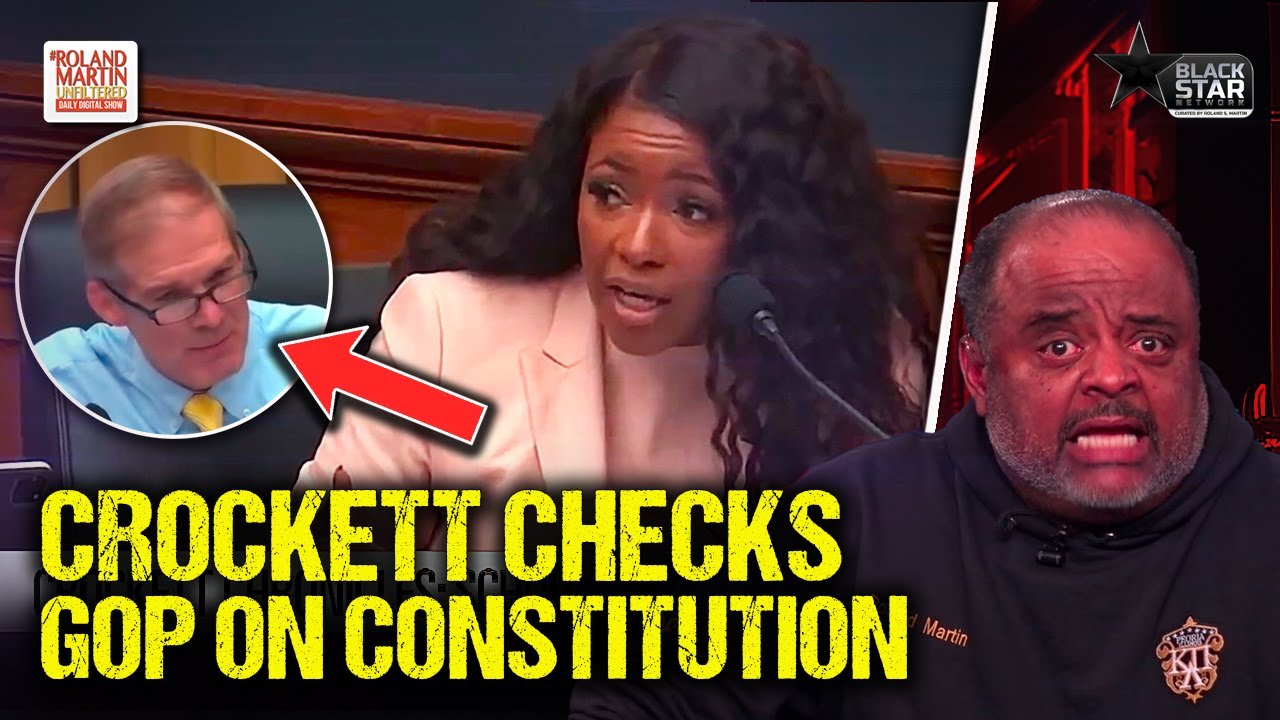
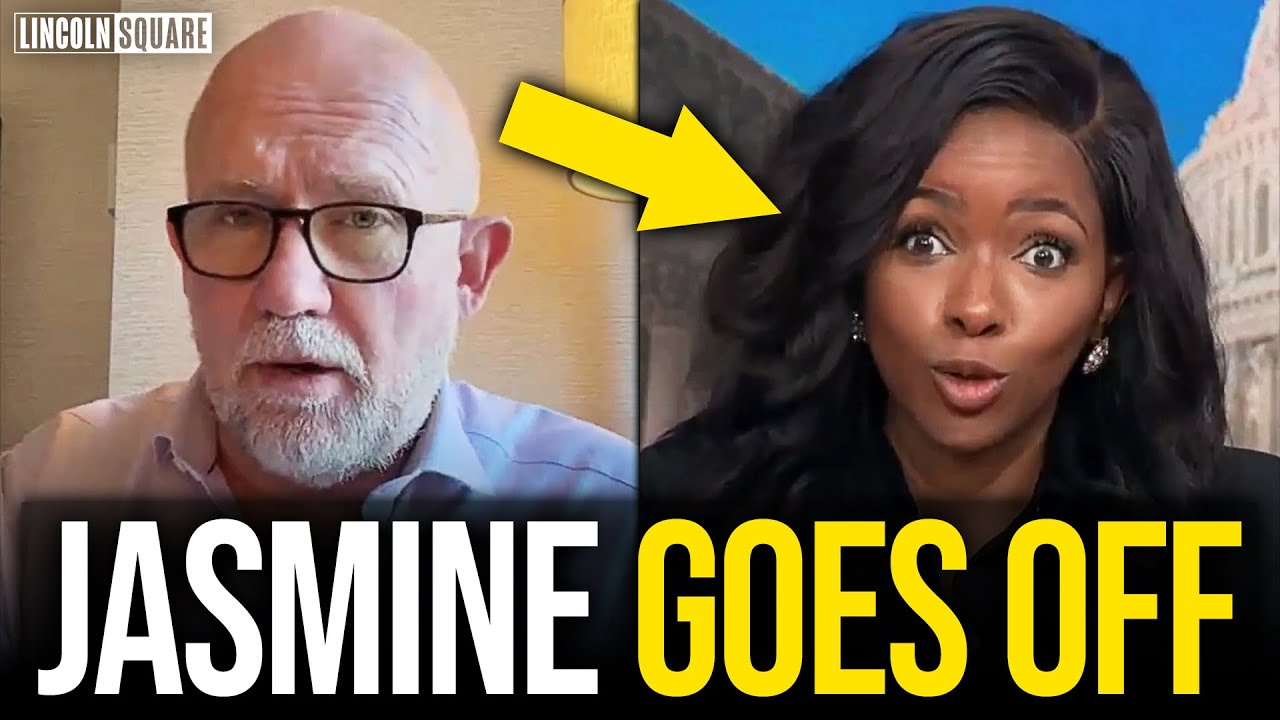
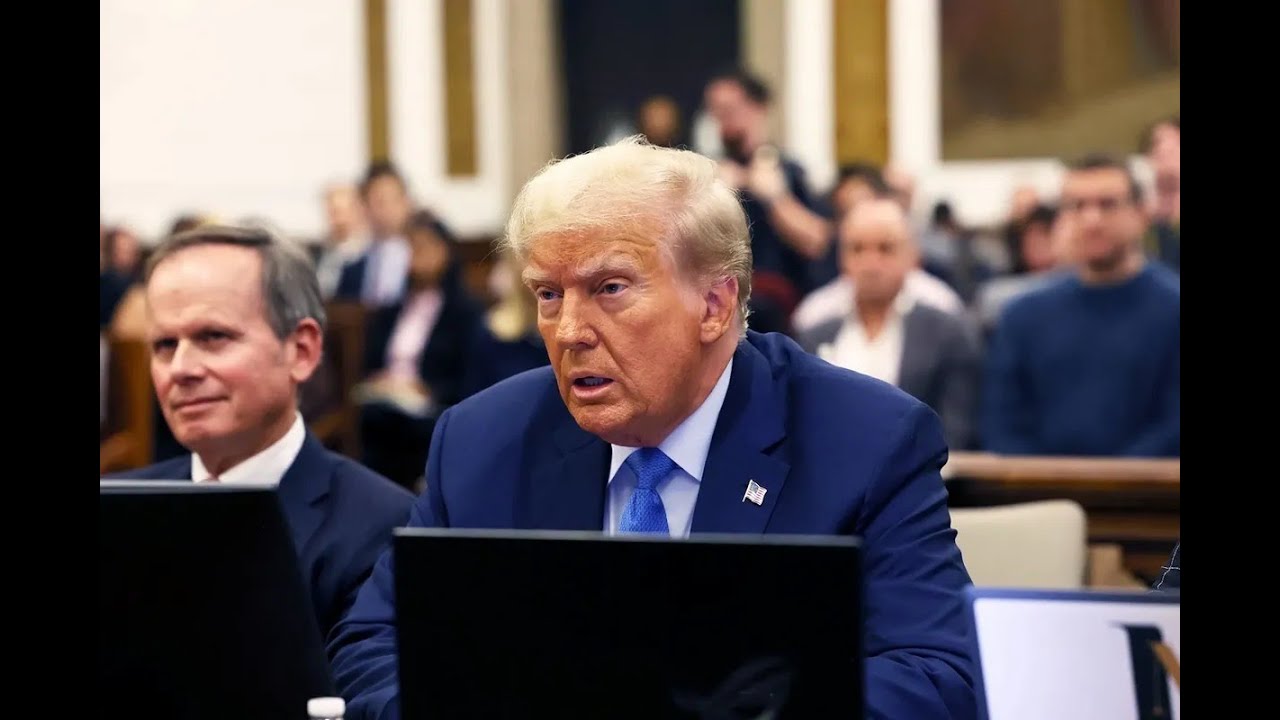
Donald Trump expected his usual barrage of insults to diminish the Texas congresswoman during the televised hearing. But when Jasmine Crockett responded with calculated calm, the next 7 minutes would not only silence the room, but transform what should have been another routine political attack into a moment that would redefine how institutional power could be confronted with strategic dignity. What no one Anticipated was that a single word delivered with the surgical precision of a seasoned attorney would not merely disarm the president's intimidation tactics, but reveal a truth so profound about character and authenticity that even his most
loyal defenders would find themselves unable to ignore it. The fluorescent lights cast harsh shadows across the faces of committee members, while the constant hum of television cameras captured every micro expression. The air conditioning labored against the heat generated by broadcast equipment and the growing emotional intensity filling the House Oversight Committee hearing room. The mahogany table gleamed under the lights, cool to the touch despite the tension in the air. Papers rustled softly as representatives organized their materials, creating a gentle rhythm beneath the more insistent sound of journalists tapping on keyboards in the back row. The scent
of Coffee lingered from an earlier break, mingling with the subtle perfumes and colog of those present, a complex alactory landscape that underscored the human dimension of this institutional confrontation. Jasmine Crockett sat composed, a 44year-old woman whose physical presence communicated authority without arrogance. Her glasses reflected the studio lights as she methodically arranged the documents before her, each movement deliberate and precise. Her Well-maintained nails, previously the target of attacks from opponents, gleamed subtly as she turned the pages, transforming what others had weaponized into a symbol of professional dignity. Her navy suit was impeccably tailored, a conscious choice
that spoke of preparation rather than performance. A simple gold pin on her lapel caught the light occasionally, a reminder of her oath to uphold the Constitution, the only adornment she felt necessary for This particular battle. Her posture remained perfect, straightbacked but not rigid, alert but not tense, the physical embodiment of focused readiness. Present via video link, Donald Trump occupied a large screen dominating part of the room. His body language exuded the confidence of someone accustomed to controlling narratives through volume and repetition. He gestured broadly while speaking, clearly expecting this to be yet another moment where
he could Define the terms of the debate. His red tie seemed almost luminescent against the stark background, intentionally drawing attention. His expression cycled between smuggness and irritation, depending on whether he was speaking or listening, a pattern familiar to anyone who had watched him over the years. The camera angle had been carefully chosen to convey dominance, shooting slightly upward to enhance his presence, a subtle visual reinforcement of the authority he Sought to project. The committee room itself embodied institutional power. The great seal on the wall, the elevated disas where members sat, the careful arrangement of space
that physically manifested hierarchy. Journalists lined the back wall, their presence transforming this governmental process into media spectacle. Staff members whispered to representatives, passing notes and checking facts, while audience members shifted in their seats, sensing They were witnessing something significant. The room temperature seemed to fluctuate with the emotional current, growing almost imperceptibly warmer as tensions mounted. The congresswoman carried with her more than impressive credentials. She brought the lived experience of a black woman who had navigated systems designed for her exclusion. A former civil rights attorney and public defender, she intimately understood how power Institutions use language
and symbolism to marginalize dissenting voices. During her early years in practice, she had learned the hard way that emotional reactions, however justified, often played into the hands of those who wished to dismiss her arguments as irrational or unprofessional. Each trial had been a masterclass in strategic composure. Each difficult client a lesson in patience, each hostile judge, an education in calibrated respect that Acknowledged authority while refusing to be diminished by it. Her journey to this moment had been paved by previous confrontations where she learned to transform personal attacks into opportunities for public education. The incident with
Marjgerie Taylor Green about her eyelashes, the dismissive comments about her appearance, the constant attempts to diminish her intelligence. Each experience had sharpened her ability to respond with Surgical precision. Like many women in positions of authority, she had spent years developing the skill of appearing calm while processing complex emotions and strategic calculations simultaneously. The slight tremble in her hand as she reached for her water glass, visible perhaps only to those who had experienced similar moments of high stakes confrontation, was the sole external indication of the intensity of her focus. At 44, she had reached the Age
where she no longer felt compelled to justify her presence in rooms of power. Instead, she let her preparation speak for itself. The folders before her contained not just facts and figures, but a carefully constructed narrative path. Each document selected not only for its factual content, but for its potential strategic impact. Her legal background had taught her that evidence presented in the right sequence could be more persuasive than the most Impassioned argument. The night before she had rehearsed not just her questions, but her responses to likely deflections, anticipating the predictable patterns of evasion she would face.
Unlike her opponent, who relied on spontaneity and force of personality, she brought the discipline of meticulous preparation. She had a personal stake in this confrontation beyond professional responsibility. Growing up in St. Louis, she had Witnessed firsthand how institutional power could impact individual lives, how policies drafted in distant rooms manifested in her community's daily reality. Her mother, a public school teacher for 30 years, had taught her that dignity was non-negotiable, especially when facing those who sought to deny it. They may have more money, more connections, more volume, her mother would say, but they can never have
more truth unless you Surrender it. That lesson, that truth maintained with dignity, carried its own authority, had guided her from the classroom to the courtroom to this congressional chamber. Trump represented not just an individual, but an entire system that confused volume with authority, intimidation with leadership. His history of personal attacks against women in positions of power followed a predictable pattern. Question competence, attack appearance, use Dimminionative language. It was a strategy that had worked for decades because it rarely met organized and strategic resistance. When challenged, he would simply increase volume and personal invective, a tactic that
often succeeded in shifting attention away from substantive issues and onto emotional reactions. His confidence stemmed from a lifetime of watching this approach succeed, of seeing how often institutions would bend to avoid Confrontation, how frequently substance would be sacrificed to preserve superficial peace. The stakes extended beyond this specific hearing to questions about how power itself functions in public spaces, whether authority stems from institutional position, force of personality, evidence-based expertise, or some combination of these elements. For many viewers, the confrontation represented a test case for whether strategic dignity Could be effective against tactical aggression, whether measured evidence
could prevail against emotional manipulation, whether substance could overcome spectacle in an age that often privileged the latter. Many viewers recognized the dynamic instantly, the older man attempting to use status and volume to silence a competent woman. It was a familiar scene from corporate boardrooms to family dinners where many had learned that silent dignity Sometimes speaks louder than direct confrontation. Women over 50 in particular nodded in recognition, having weathered decades of similar interactions, often without the platform or protection that public office provided. I've been in that exact situation," one 67-year-old retired executive whispered to her television,
where every response is a calculation between authentic reaction and strategic effectiveness. Congresswoman, I've been told you want to question me about border policies, but honestly, I'm not sure someone with your limited understanding of complex issues should be using up valuable time," Trump began. His voice carrying the practiced dismissiveness he often employed against women he perceived as threats. "But go ahead. I'll try to keep my answers simple enough for you to follow." The committee room fell silent, all eyes on Crockett, anticipating an Immediate response. Instead, she allowed 3 seconds of complete silence, her expression unchanged as
she finished organizing the document before her. This small demonstration of control, refusing to be rushed, even under intense public scrutiny, communicated more about her confidence than any verbal retort could have. In living rooms across the country, viewers leaned forward, recognizing the power of this strategic pause. This refusal to be hurried into a Defensive posture. Thank you, Mr. President, for joining us today, she finally responded, her voice measured and professional. I appreciate your concern about using time valuably. In fact, efficiency is precisely what I'd like to discuss with you today. She didn't take his bait about
her intelligence or experience. Instead, she redirected to her chosen topic, demonstrating the first principle of strategic communication. Control the Conversation by controlling which provocations deserve acknowledgement. The slight arch of her eyebrow, almost imperceptible, but noted by those watching closely, was her only concession to the personal nature of his opening attack. Trump's expression flickered briefly with confusion. The attack he had launched found no purchase, like a punch thrown at an opponent who had already stepped aside, but he recovered quickly, falling back On familiar territory. Efficiency, that's rich coming from a Democratic Congress that's wasted more taxpayer
money than any in history. If you understood anything about government or business, you'd know I ran the most efficient administration in modern history. His voice rose slightly, filling the space with practiced indignation. His hands moved in broad gestures, physically claiming the conversational space in a manner that Had become his signature, a visual accompaniment to verbal dominance. Again, Crockett didn't immediately respond. She opened the first folder on her desk and reviewed its contents briefly, though it was clear from her familiarity with the material that this was a tactical pause rather than a necessary review. Many viewers
watching at home recognized this technique, the power of strategic silence from their own experiences with difficult Conversations. She's making him wait, one viewer texted to a friend, making him feel the weight of his own words before responding. I have some specific questions about efficiency metrics during your administration, she continued as if his outburst had been a calm contribution to the discussion. Would you agree that efficient management requires accurate tracking of resources? Of course it does. I built a global business empire by tracking every Dollar. Nobody knows more about efficiency than I do, believe me. His
confidence seemed to grow as the conversation moved toward his preferred territory of self-proclaimed expertise. The familiar phrases, nobody knows more, signaled his comfort, returning to well-worn rhetorical paths where assertions substituted for evidence. Excellent. Then we have common ground to build upon. She smiled briefly, not the appeasing smile of someone seeking Approval, but the contained expression of someone who has just confirmed a useful piece of information. I'd like to discuss the tracking of separated families at the southern border during your administration. The shift was subtle but devastating. By establishing agreement on a principle, efficient management requires
accurate tracking, she had created a foundation from which to examine a specific failure of that very principle. It was a technique Familiar to skilled litigators, establish common ground before revealing the contradiction. Several attorneys watching the exchange nodded in appreciation, recognizing the careful construction of a logical trap from which any exit would require acknowledging inconsistency. We had the best tracking, perfect tracking. Any problems came from the previous administration's policies that we inherited. His response was Immediate and predictable, deflecting responsibility while maintaining the claim of superiority. The superlatives, best perfect, established a standard against which actual performance
could be measured, creating vulnerability that a skilled questioner could exploit. I appreciate your perspective, Crockett nodded, neither accepting nor directly challenging his characterization. Let's review some of the internal documentation from your Department of Homeland Security. She lifted a document from her folder and began reading. According to this memo dated April 2018 from senior DHS officials, and I quote, "Current tracking systems are inadequate for maintaining accurate links between parents and children once separated." End quote. She looked up her expression one of professional curiosity rather than accusation. Were you made aware of these documented inadequacies at the
Time? The room temperature seemed to drop a few degrees. The contradiction between his claim of perfect tracking and the internal assessment of inadequate systems hung in the air. This wasn't an emotional appeal about the morality of family separation. It was a factual examination of administrative competence, territory he had claimed as his strength. Several committee members leaned forward slightly, recognizing the effectiveness of this approach, using His own government's documentation rather than partisan characterizations. I was given different information. My people told me everything was being handled perfectly. His voice took on a defensive edge, beginning the shift
from dismissiveness to deflection. If there were any problems, they were caused by career bureaucrats trying to undermine my policies. Crockett nodded again, acknowledging his response without Validating it. I understand you feel you received incomplete information. Her framing subtly transformed his defense into an admission of being inadequately informed as an executive, a different but equally problematic failure of leadership. The quiet recasting of his explanation into a different kind of accountability demonstrated her ability to find leverage in any response, a skill developed through years of courtroom experience. Let's continue With the documentation timeline, she said, turning to
the next page in her folder. In June 2018, a federal judge ordered your administration to reunite separated families. At that time, your Secretary of Health and Human Services testified under oath that they could locate every child through their central database. She paused, allowing this claim to register with everyone in the room and those watching at home. Many viewers leaned forward, recognizing the Careful construction of a narrative trap. The gentle tap of her finger on the document, a subtle physical emphasis, directed attention to the specific words rather than emotional interpretations of them. "However, on the very
next day, your administration filed this document in federal court," she continued, holding up a new page, stating, and I quote, "There is no integrated database that tracks separated families across all relevant Agencies." End quote. The contradiction was stark and undeniable, not a matter of political opinion or partisan framing, but a documented case of contradictory statements made within 24 hours of each other. The slight emphasis she placed on very next day highlighted the temporal proximity that made the contradiction particularly damning. No reasonable explanation could account for such fundamentally opposing statements made so close together. Would you
help Me understand, Mr. President, how your HHS secretary could testify about a central database that, according to your own Justice Department's court filing, did not exist? 3 seconds of silence followed. A void Trump felt compelled to fill. The room remained perfectly still, all attention focused on the screen, displaying his increasingly uncomfortable expression. This strategic use of silence, creating space that demanded filling, represented another Tool in Crockett's communication arsenal, one that many experienced negotiators recognized immediately. Look, these are complex systems, the largest government in the world. Things fall through cracks sometimes, but we fixed them. We
fixed everything. The real problem was the policies we inherited and the obstruction from Democrats who wouldn't give us the resources we needed. His response had become noticeably longer, a common Reaction when someone feels on defensive footing rather than addressing the specific contradiction. He expanded outward to broader claims and counter accusations. The increasing length of his answers, a trend communication experts watching immediately recognized, indicated growing discomfort with the precise evidence-based nature of the questioning. Crockett made a note on her pad. The movement deliberate enough to be noticed, but not exaggerated. It Communicated that his response was
being recorded and evaluated, creating a subtle pressure toward accountability. This small gesture, familiar to anyone who had participated in depositions or negotiations, silently signaled that evasions would not go unnoticed. "I appreciate the complexity involved in government operations," she acknowledged, finding another small piece of common ground before introducing the next contradictory Evidence. Given that complexity, would you agree that clear communication between agencies is essential for efficient management? Absolutely essential. And we had the best communication, perfect communication between agencies, everyone said. So the superlatives had increased. Another signal of defensiveness that experienced observers immediately recognized. The repetition
of perfect, a word that established an impossible standard, Created another vulnerability that Crockett could exploit through factual contradiction. Thank you. That helps frame my next question. She retrieved another document from her folder. This is an internal email from your Justice Department dated July 2018 expressing frustration that, and I quote, HHS has no records for approximately 700 children, including approximately 100 under age 5 who may have been separated from their parents." End quote. The room Grew tense as the magnitude of the discrepancy became clear. This wasn't about political disagreement. It was about basic administrative competence, missing
records for hundreds of vulnerable children despite claims of perfect communication and superior management. The specificity of the numbers, 700 children, 100 under age 5, transformed abstract policy discussion into concrete human impact, creating an emotional weight that purely theoretical Debate could not achieve. These were temporary issues that got resolved. Every child was eventually accounted for. His voice had risen slightly, the words coming faster, signs of increasing stress that viewers with experience in high pressure conversations immediately recognized. The qualifier eventually created a tacit acknowledgement of the initial failure while attempting to minimize its significance. I want to
be precise about the timeline," Crockett Continued, her own pace remaining measured in deliberate contrast. According to court filings from January 2023, more than 5 years after the initial separations, over 1,000 children have still not been reunited with their parents. Would you consider that an example of the temporary issues you mentioned? The factual contradiction between every child was eventually accounted for and over 1,000 children have still not been reunited hung in the Air. It wasn't an ideological point. It was a matter of documented reality versus stated claim. The dramatic difference between temporary and 5 years created
a contrast so stark that no reasonable interpretation could reconcile them. Trump's face reened slightly. Those numbers are fake news made up by opponents to make me look bad. We had everything under control until the current administration took over and created chaos at the border. Have you seen what's happening at the border now? It's a disaster, an invasion. That's what you should be investigating instead of wasting time on old policies that worked perfectly. His deflection was accompanied by an increase in volume and a complete pivot away from the specific factual discrepancies to broader political accusations, a
classic technique to avoid accountability when confronted with contradictory evidence. The shift From defensive to offensive posturing, attempting to control the conversation through changing its subject entirely, represented another predictable pattern in his communication strategy. Crockett remained composed, neither raising her voice in response nor allowing herself to be pulled off course. She simply waited until his outburst concluded, then proceeded as if they were still engaged in a professional discussion. Her ability to maintain emotional Equilibrium despite the escalating tension demonstrated a key principle of strategic communication. Emotional stability creates space for rational assessment. I'd like to return to
the concept of administrative efficiency that we agreed was important, she said, her voice still measured. According to court records, your administration's inability to maintain accurate records has cost taxpayers over $20 million in efforts to locate and reunite these Families. Would you consider that an efficient use of government resources? The framing was masterful, returning to his own stated values about efficiency and fiscal responsibility rather than engaging with the attempted deflection. Many viewers nodded in appreciation of this technique, recognizing how it prevented the conversation from being derailed while maintaining focus on documented facts rather than charged political
claims. By repositioning the Issue in terms of fiscal responsibility rather than humanitarian concerns, she created multiple paths to accountability, appealing to different value systems simultaneously. That's not accurate. Those numbers are inflated by people who wanted to make my policies look bad. We ran the most efficient administration in history, saved billions in regulatory costs. These are just madeup numbers from the same people who've been trying to get me For years. His denial lacked specificity, falling back on general claims of persecution rather than addressing the documented costs. As his responses became more generalized and defensive, the contrast
with Crockett's specific evidence-based approach became increasingly apparent to everyone watching. The repetition of most efficient administration in history, now directly contradicted by specific cost figures, highlighted the growing gap Between assertion and evidence. I understand you feel the numbers may not be accurate, she responded again, neither accepting nor directly confronting his characterization. Let's look at what your own office of inspector general reported. She retrieved another document, this one bearing the official seal of the Department of Homeland Security. According to this report dated November 2019 from your administration's Own inspector general, and I quote, "The lack of
integration between CBP, ICE, and HHS tracking systems impeded efforts to identify and reunify separated families, leading to significant and avoidable administrative costs." End quote. The room fell silent. This wasn't a report from political opponents or media critics. It was an internal assessment from his own appointed oversight body directly contradicting his claims of superior efficiency and Perfect systems. The official nature of the source highlighted by the visible government seal made accusations of bias or fake news increasingly difficult to sustain. These agencies were working under unprecedented pressure due to the crisis we inherited," Trump responded, his voice
taking on an increasingly frustrated edge. "Any administration would have faced these challenges. What matters is that we were securing the border and enforcing the law, which is More than I can say for what's happening now." Again, he attempted to shift attention away from the specific documented failures to broader political narratives, but Crockett remained focused on the factual record, neither engaging with the partisan framing nor allowing herself to be pulled into a different conversation. Her disciplined attention to the evidence rather than emotional or political distractions demonstrated another principle of Strategic communication. maintain focus on what can
be objectively established rather than subjectively debated. Mr. President, you've mentioned several times that these were inherited problems, she noted, her tone reflecting professional curiosity rather than confrontation. I'd like to clarify the timeline. The family separation policy was formally announced by your attorney general in April 2018, more than a year into your administration. The memo Implementing what was called zero tolerance bears his signature and date. Would you help me understand how this constitutes an inherited policy? The question was devastating in its simplicity, not an accusation, but an inquiry framed as seeking clarification rather than scoring points.
Yet it directly addressed the fundamental inaccuracy in his repeated defense. The juxiposition of specific dates and official documents against the vague Claim of inheritance created a contradiction that could not be easily dismissed. Trump's expression hardened. Look, the previous administration separated families, too. They just didn't get criticized for it like I did. Everything I did was legal and necessary for border security. If you had any actual experience with border issues instead of just reading talking points, you'd understand that the personal attack represented an escalation, a Common tactic when factual defenses begin to crumble. By questioning her
experience and implying she was merely reciting others words, he attempted to diminish her authority and redirect attention from the documentary evidence she had presented. The shift from defending the policy to attacking her qualifications signaled recognition that the factual ground was increasingly untenable. Many women watching recognized this tactical shift. The Familiar move from dismissing the evidence to dismissing the person presenting it had been experienced countless times in professional settings. The slight nod Crockett gave in response spoke volumes to those viewers. an acknowledgement of a predictable pattern rather than surprise at its emergence. One retired professor watching
from home whispered to her screen, "And there it is. When facts fail, attack credentials." "How many Times have we all seen this play?" "I appreciate your concern about my background," she responded, her voice betraying no defensiveness. Before joining Congress, I served as both a civil rights attorney and public defender in Texas, working directly with immigrant communities affected by various border policies. But today, I'm more interested in examining the documented administrative record than discussing our respective Qualifications. in the redirection was masterful, acknowledging the attack without giving it power, briefly establishing her relevant credentials without defensiveness, then
returning firmly to the evidentiary focus of the hearing. It demonstrated a key principle of strategic communication, refusing to be baited into personal justification when the evidence speaks for itself. The brevity of her personal response compared to the emphasis on returning to Documentation communicated clear priorities, substance over status, evidence over assertion. Now, I'd like to address another aspect of administrative efficiency, she continued, retrieving a new document from her folder. This is a budget analysis from your own office of management and budget dated September 2018. It estimates that the family separation policy cost approximately $775 per person
per day compared to $298 Per day for family detention centers and only $58 per day for alternatives to detention such as ankle monitoring and case management. She looked up from the document, her expression reflecting professional curiosity. From a purely fiscal perspective, would you consider a policy that more than doubled costs while creating significant administrative challenges to be an example of efficient government management? The question was carefully Framed to appeal to his self-proclaimed values of business efficiency and fiscal responsibility, making it difficult to dismiss without contradicting his own stated principles. It represented another key technique in
strategic confrontation, using the other parties professed values as the standard against which to measure their actions. The specific dollar amounts $775 versus $298 versus 5 to8 created a stark Numerical contrast that was difficult to obscure with generalities. Those numbers don't tell the full story," Trump insisted, his voice growing louder. "The deterrent effect saved billions by preventing more illegal crossings. You're looking at small costs while ignoring the massive savings. This is exactly the problem with Congress, focusing on pennies while ignoring dollars." I understand you believe there were offsetting benefits. Crockett Nodded, neither accepting nor directly challenging
his characterization. However, according to this analysis from your own Customs and Border Protection Agency, border crossings actually increased by 14% in the 3 months following the announcement of the family separation policy. Would you help me understand how this data supports the deterrent effect you've described? Again, she had presented not partisan opinion, but documented Evidence from his own administration that directly contradicted his claims. The technique was devastatingly effective precisely because it used his own government's data against him, making accusations of bias or fake news increasingly difficult to sustain. The specific percentage, 14% increase, provided concrete measurement
against his claim of deterrence, creating another evidence-based contradiction. Trump's frustration became increasingly Visible. Those are just short-term fluctuations. The long-term trends showed our policies were working before the pandemic disrupted everything, and now the border is the worst it's ever been in history. Instead of wasting time on policies from years ago, you should be investigating the current crisis. His deflection to current politics represented another attempt to shift the conversation away from his own documented administrative failures. But Crockett remained focused, neither defending current policies nor allowing the historical record to be obscured. A persistent return to specific
evidence rather than general political debates demonstrated the power of methodical focus in maintaining accountability. "Mr. President, I understand you'd prefer to discuss current policies rather than past performance," she acknowledged, finding another small piece of common ground before returning To her focus. However, this committee's mandate includes oversight of all executive actions, including those of previous administrations, to ensure accountability and improve future governance. Learning from past challenges is essential for that improvement. Her framing was impeccable, not partisan investigation, but proper congressional oversight and institutional learning. It positioned her inquiry as fundamentally Constitutional rather than political, making it
more difficult to dismiss as mere opposition tactics. By appealing to institutional responsibility rather than partisan advantage, she elevated the conversation from political conflict to civic duty. Now, I'd like to return to the issue of recordkeeping that we've been discussing," she continued, turning to a new document in her folder. "This court filing from February 2023 indicates that your administration not Only failed to maintain adequate records, but according to sworn testimony from your own officials, actually destroyed critical spreadsheets tracking separated families during the transition between agencies. Would you characterize the deliberate destruction of tracking documents as consistent
with efficient management practices? The room temperature seemed to drop several degrees. This wasn't just administrative incompetence, but potentially deliberate Obstruction, a much more serious matter that transformed the nature of the oversight from examining inefficiency to investigating potential misconduct. The term deliberate destruction elevated the issue from passive failure to active malfeasants, changing both legal and ethical implications. Trump's expression darkened. That's completely false. More lies from people trying to smear my administration. If any documents were lost, it was due to standard procedures Or incompetent career bureaucrats trying to make me look bad. Everyone knows I ran the
most transparent administration in history. The gap between this claim of most transparent administration and the documented destruction of critical records was so vast that several committee members visibly reacted, exchanging glances that communicated shared disbelief. Viewers at home, particularly those with experience in organizational leadership or records Management, recognized the fundamental incompatibility between these positions. One former government archivist watching the proceedings sent a one-word text to a colleague. Stunning. I understand you believe the court records may be inaccurate, Crockett responded, again, neither accepting nor directly confronting his characterization. However, these statements were made under oath by your
own appointed officials subject to penalties of Perjury. Are you suggesting they committed perjury in their testimony? The question placed him in an impossible position. Either accept that his own appointed officials had testified to document destruction or accuse them of committing a serious crime without evidence. It demonstrated another principle of strategic confrontation, creating situations where all available responses are problematic for the other party. The legal framing under oath Penalties of perjury, elevated the stakes beyond political disagreement to matters of legal consequence. They were probably pressured or misqued, he insisted, his voice taking on a defensive edge.
You people have been on a witch hunt against me and my administration from day one. Everyone knows it. This is just more of the same. Selectively using information to create a false narrative while ignoring all our accomplishments. The phrase you people Hung in the air carrying the weight of its dismissive implications. Many viewers, particularly women of color, recognize the coded language immediately. the way certain phrases attempt to delegitimize not just arguments but entire identities and experiences. The shift from specific defense to generalized grievance signaled another retreat from factual engagement to emotional positioning. Crockett paused, allowing
the phrase to Register with everyone in the room. She didn't comment on it directly. Drawing attention to the coded language would have shifted the conversation from factual accountability to personal offense potentially playing into stereotypes about emotional reactions. Instead, she simply allowed the three seconds of silence to highlight his choice of words before continuing with her factual examination. Mr. President, throughout this hearing, you've Suggested that any administrative failures were the result of inherited problems, career bureaucrats, or political persecution," she summarized, her voice still measured and professional. "Yet the documentary evidence from your own agencies, officials, and
court filings presents a consistent pattern of decisions made by your appointed leadership that resulted in significant human and fiscal costs. She paused, allowing this summary to Register before continuing. As someone who prides himself on leadership and accountability, who wrote the art of the deal and frequently states that the buck stops with me, I'm curious, is there any aspect of the family separation policies implementation that you would acknowledge as your administration's responsibility? The question was masterfully framed by referencing his own words and self-image as a decisive leader who takes responsibility. She Created a situation where denying
accountability would contradict the very leadership persona he had cultivated throughout his career. It demonstrated another principle of strategic confrontation using the other party's self-conception as leverage for accountability. The reference to specific quotes and publications personalized the question in a way that generic inquiries about responsibility could not. Trump's expression tightened. I took responsibility for securing the border when no one else would. I took responsibility for enforcing laws that Congress passed but didn't have the courage to implement. If there were problems with implementation, they were fixed under my leadership. But the real issue is that people like
you don't want any enforcement at all. You want open borders and to let everyone in, no matter the cost, to American citizens. The pivot to attacking her presumed Policy positions represented another attempt to shift from specific accountability to generalized political narratives. But Crockett remained focused on the factual record, neither engaging with the partisan characterization nor allowing herself to be pulled into defending positions she hadn't expressed. The phrase people like you contained another subtle attempt at delegitimization that she again chose not to explicitly highlight, maintaining Focus on substance rather than personal offense. Mr. president to ensure
I understand your position correctly. You're stating that you take responsibility for the policy itself but not for any documented failures in its implementation. Is that an accurate characterization of your view? The clarification was devastating in its simplicity. By separating policy from implementation, she had created a frame that highlighted the fundamental Contradiction in his position, claiming credit for decisive leadership while simultaneously denying responsibility for how that leadership was executed. The framing presented his position in the most charitable possible terms while still exposing its inherent inconsistency. Trump's frustration became increasingly visible. I'm saying the policy was necessary
and effective. Any problems were minor and quickly fixed. The real scandal is how my Administration has been targeted while the current border crisis gets ignored. But you're not interested in reality, just in pushing your political agenda. The personal attack represented another escalation, a common tactic when factual defenses begin to crumble. By questioning her motives and implying partisan bias, he attempted to delegitimize not just her questions, but the entire oversight process. The term political agenda sought to reframe Factual inquiry as partisan maneuver, a final attempt to escape the documentary evidence through character assassination. Crockett remained composed,
neither defensive nor retaliatory. Mr. President, throughout this hearing, I've relied exclusively on documents produced by your own administration, internal memos, court filings, inspector general reports, and sworn testimony from your appointed officials. These aren't partisan Materials, but the official record of your government's actions and their consequences." Her response was perfect, not engaging with the personal attack, but calmly highlighting the factual foundation of her inquiry, making accusations of bias increasingly difficult to sustain when confronted with his own administration's documentation. The emphasis on your own administration reinforced that the evidence came not from political Opponents, but from within
his own executive branch. Would it be fair to say, she continued, that efficient management requires learning from mistakes to prevent their repetition? Of course, he replied, perhaps sensing a shift toward less confrontational territory. I've always said we should learn from experience. That's how I built my business empire. Thank you, she nodded, finding another small piece of common ground before delivering her Conclusion. In that spirit of learning, I want to return to something fundamental that emerged from our discussion today. She paused, allowing anticipation to build among everyone watching. The room had grown completely still, sensing a
decisive moment approaching. Even her physical movements slowed, creating a temporal space that emphasized the significance of what would follow. Throughout this hearing, you've repeatedly claimed your Administration maintained perfect tracking, perfect communication, and the most efficient administration in history. Yet, when presented with your own government's documentation showing lost children, destroyed records, contradictory testimony, and billions in avoidable costs. You've attributed all failures to others while claiming all successes for yourself. Her tone remained professional rather than accusatory, presenting this summary as Factual observation rather than political attack. The contrast between his grandiose claims and the documented reality had
been established not through emotional appeals, but through methodical presentation of evidence. Mr. President, after reviewing all this documentation, I'm left with one word that seems to capture the fundamental issue here. The room fell completely silent. 3 seconds passed, feeling much longer to everyone present. The camera Operators zoomed in slightly, recognizing that something significant was about to happen. Even the most seasoned journalists in the back row had stopped typing, their attention fully captured by the mounting tension, authenticity. The word hung in the air, carrying more weight than any raised voice or lengthy accusation could have conveyed.
Its power came not from volume but from precision. A single term that distilled hours of contradictions into Their essential nature. Authentic leadership acknowledges both successes and failures. Authentic communication presents reality rather than an idealized image. Authentic accountability accepts responsibility rather than deflecting it to others. She wasn't shouting. She wasn't angry. She was simply stating a truth that resonated beyond the specific policy being discussed to something more fundamental about character and Governance. Her voice remained at exactly the same volume and cadence as it had throughout the hearing. Yet somehow it seemed to fill the room more
completely than before. Authenticity cannot be rehearsed, performed, or purchased. It either exists or it doesn't. Trump's expression changed not to anger, but to something rarely seen in public settings, momentary uncertainty, as if encountering an approach he hadn't anticipated and Couldn't immediately counter with his usual tactics. For the first time in the hearing, he didn't immediately fill the silence with a response. The practiced confidence that had carried him through countless confrontations seemed momentarily suspended, replaced by the genuine confusion of someone whose familiar weapons had suddenly proven ineffective. In that moment, the power dynamic shifted visibly, not
through volume or emotional display, but through The quiet authority of evidence-based truth delivered with dignity. Viewers who had experienced similar confrontations in their own lives recognized the rare but unmistakable moment when someone accustomed to controlling narratives through force of personality suddenly finds those tactics ineffective. This is exactly what happens whispered one 65year-old viewer to her husband when someone who relies on bluster encounters someone who relies On substance. The administrative failures documented here aren't merely about policy disagreements or partisan differences, Crockett continued into the silence. They represent a fundamental gap between stated values and actual practice,
between public claims and private actions, between the image projected and the reality experienced by those affected. She closed her folder deliberately, the small sound amplified By the continuing silence in the room. Authentic leadership begins with truthful assessment of both strengths and weaknesses. I hope this hearing contributes to that assessment, not just for past administrations, but for all of us entrusted with public responsibility. The simplicity of her conclusion stood in stark contrast to the bombastic rhetoric that had characterized much of the hearing. She hadn't attempted to match his volume or personal attacks. Instead, she had demonstrated
how strategic, calm, and methodical evidence could be more effective than emotional displays or partisan accusations. Her final statement had elevated the discussion from particular policy failure to universal principles of leadership. A movement from the specific to the general that gave her conclusion relevance beyond this particular confrontation. The committee chair recognizing the decisive moment that had Just occurred called for a brief recess. As cameras continued to roll, capturing reactions throughout the room, the contrast between Crockett's composed dignity and Trump's visible frustration told a story beyond words. Body language communicated what verbal statements could not. the physical
manifestation of a confrontation that had been decided not through institutional authority or political power, but through the compelling force of documented truth Presented with strategic dignity. Within minutes, social media platforms exploded with clips of the exchange. The hashtag authenticity began trending nationwide, accompanied by a 7-minute compilation of the most devastating contradictions Crockett had methodically established. But what captured most attention was the moment of silence that followed her one-word assessment, that rare instance of a public figure momentarily stripped of performative confidence, faced with a Truth he couldn't immediately deflect or deny. Political analysts struggled to categorize
what they had just witnessed. Not the usual partisan confrontation, but something different. A masterclass in evidence-based accountability delivered without ranker or theatrics. What made this exchange so remarkable, noted one veteran political commentator, wasn't just the factual contradictions exposed, but the methodology employed. Congresswoman Crockett never raised her Voice, never made it personal, never engaged in partisan framing. She simply presented document after document from the administration's own records, creating contradictions that couldn't be dismissed as partisan interpretation. Women across the country, particularly those over 50 who had navigated decades of professional environments where their authority was frequently challenged,
shared the clips with messages of recognition. This is how it's done, Wrote one retired executive. When they go loud, go precise. When they go personal, go factual. When they demand emotion, deliver evidence. The moment resonated because it validated strategies many had developed through years of experience, approaches often dismissed as too subtle or insufficiently assertive in environments that rewarded performative confidence over substantive expertise. Watching Congresswoman Crockett reminded me of Every time I've had to present uncomfortable truths to people who preferred comfortable fictions, shared a 63-year-old former hospital administrator. That strategic calm, that refusal to be baited
into defensiveness, that methodical presentation of evidence. These aren't just communication techniques, but survival strategies for anyone who's had to navigate systems designed to dismiss them. Communication experts began Dissecting the techniques demonstrated during the exchange. The strategic use of silence, the refusal to be baited into defensive responses, the methodical presentation of evidence, the careful framing of questions to create no win situations for evasive answers, and perhaps most importantly, the maintenance of professional dignity throughout. Workshops and seminars quickly incorporated the exchange as a case study in effective confrontation Without escalation in holding power accountable without becoming personally
antagonistic. Notice how she never took the bait when he attacked her personally, observed a corporate communication coach in a viral analysis. Each time he tried to shift from the evidence to the messenger, she briefly acknowledged the attempt and then pivoted back to the documented record. That's a technique anyone can use when faced with attempts to discredit rather Than address your actual points. The phrase authenticity cannot be rehearsed began trending, resonating with people who had witnessed similar dynamics in their own professional and personal lives. situations where performance was substituted for substance, where volume was confused with
authority, where accountability was claimed in success but deflected in failure. How many times have we all encountered leaders who take credit for everything that goes right While blaming subordinates for everything that goes wrong? Wrote one business consultant. Crockett just demonstrated how to expose that pattern through methodical evidence rather than emotional accusation. The Dday in congressional offices, staffers began studying the exchange as a template for effective oversight. How to use an opponent's own words and documents to establish accountability without descending into partisan bickering that Alienates viewers seeking substantive discussion. The approach represented a potential shift in
political communication strategy, moving from emotional appeals that reinforce existing partisan divisions to evidence-based inquiry that creates accountability through documented contradiction rather than ideological opposition. Law schools incorporated the exchange into courses on examination techniques, highlighting how Crockett Had built a methodical case through documentary evidence rather than relying on emotional appeals or personal attacks and how she had used the witness's own statements to create contradictions that couldn't be easily dismissed. This is how you conduct an effective cross-examination. One professor told her students, "You don't argue with the witness. You let the evidence argue for you. You don't
tell the jury what to think. You present Contradictions that make the conclusion inevitable." For Trump, the exchange represented a rare moment of tactical failure. His usual techniques of dismissiveness, deflection, and personal attacks had proven ineffective against an opponent who refused to engage on those terms. instead maintaining focus on the documented record of his administration's actions. The contrast between his increasingly defensive responses and her consistent composure Had been visible to everyone watching, creating an impression that no amount of subsequent spin could fully dispel. Even supportive commentators struggled to identify a clear moment of victory for him
in an exchange where each attempt to establish dominance had been met with calm redirection to documentary evidence. In the days that followed, several former administration officials, perhaps sensing the shifting narrative, began distancing themselves from the Family separation policy, acknowledging administrative failures while attempting to position themselves as internal voices of caution who had been overruled. These selective revisions of history were met with skepticism by journalists who now had a clearer understanding of the documented timeline. It's interesting how many people are suddenly claiming they privately opposed a policy they publicly defended, noted one political analyst. But the
documentary record Congresswoman Crockett presented makes it difficult to maintain both positions simultaneously. For Crockett, the exchange brought national attention, but she was careful not to frame it as personal victory. "This wasn't about individuals, but about institutional accountability," she told reporters afterward. "When public officials make claims about their performance, those claims should be measured against the documented record. That's how our system is designed to work." Her refusal to personalize the confrontation or use it for individual political advantage reinforced the principle she had demonstrated during the hearing itself that substance matters more than spectacle that institutional integrity
transcends personal ambition. The impact extended beyond the specific policy discussion to broader conversations about communication and leadership. Leadership Consultants pointed to the exchange as an example of how authentic authority doesn't require doineering behavior or emotional displays. How precision, preparation, and dignity often communicate more strength than volume or aggression. What we witnessed, wrote one organizational psychologist, was the difference between power derived from institutional position and authority earned through substantive expertise. One relies on external validation. The Other generates its own legitimacy through demonstrated competence. Women's leadership forums organized viewing sessions followed by discussions about strategic communication in
hostile environments. What struck me most, shared one participant, was how Crockett transformed what could have been a disadvantage, being a woman of color facing a white male authority figure, into a strategic advantage. By refusing to match emotional escalation with Emotional response, by maintaining professional dignity despite personal attacks, she created a contrast that spoke volumes about respective credibility. For many viewers, particularly those who had spent decades navigating professional environments where their authority was frequently challenged, the exchange represented something profound. Validation that the skills they had developed. Careful preparation, strategic calm, and Dignified persistence were not just
personal coping mechanisms, but powerful tools for institutional accountability. Watching Congresswoman Crockett, I realized I've been using these exact techniques throughout my career shared one 62-year-old executive in a widely circulated post. Not raising my voice when men get loud. Not becoming defensive when attacked personally. Not allowing myself to be pulled off topic when someone tries to change the Subject. These aren't signs of weakness, but strategies of strength. This philosophy resonated particularly with viewers who had witnessed decades of social change, who had learned through experience that lasting progress often comes not from the loudest voices, but from
the most persistent ones, not from those who demand authority, but from those who demonstrate expertise, not from those who claim authenticity, but from those who embody it. What we Saw in that hearing room, wrote one 74year-old civil rights attorney, was the fruit of generations of women learning to navigate systems not designed for their inclusion, developing techniques of strategic precision that prove more effective than the blunt instruments of volume and intimidation. The exchange would be remembered not just for its political consequences, but for its demonstration of a profound truth that authentic strength, speaks in Measured tones,
relies on verifiable evidence, and maintains dignity, even perhaps especially under pressure. That true power doesn't shout to be recognized. It simply exists, revealed not through assertion, but through consistent alignment between words and actions, between claimed values and actual behavior. That accountability isn't achieved through accusation, but through methodical exposure of contradiction between stated principles And documented practice. Many of you watching have experienced this same dynamic in your own professional lives, noted one commentator, addressing viewers directly. You've sat across from someone who tried to use volume or institutional position to dismiss your expertise. You've developed strategies for
maintaining dignity while establishing truth. You've learned that preparation often prevails over performance, that precision frequently Trumps power. What Congresswoman Crockett demonstrated wasn't just effective questioning, but a philosophy of engagement that many of you have practiced throughout your careers. In the end, what happened in that hearing room wasn't just about politics or policy. It was about redefining what true strength looks like. That strength whispers truth rather than shouting falsehoods. That dignity maintained speaks volumes more than dignity Abandoned. and that authenticity cannot be rehearsed, performed or purchased. It either exists or it doesn't. The moment resonated because
it validated what many had learned through lived experience. That truth presented with strategic dignity carries its own authority, requiring neither institutional position nor performative confidence to compel recognition. For those who had spent decades developing the capacity to maintain composure while establishing Accountability, who had learned through painful experience that emotional reactions often undermine legitimate concerns, who had discovered that strategic patience frequently proves more effective than immediate confrontation. The exchange offered profound validation. It wasn't just about political oversight, but about human dignity, about the power that comes not from dominating others, but from remaining true to oneself
even Under pressure. The lasting impact would be measured not in political victories or media cycles, but in countless personal moments of recognition, in the manager who decided to address workplace bullying through documented patterns rather than emotional appeals. In the teacher who responded to administrative dismissal with methodical evidence rather than frustrated protest. in the parent who confronted systemic bias through strategic dignity rather than Reactive anger. Each represented the ripple effect of witnessing how truth presented with calm precision could prove more compelling than power exercised through volume and intimidation. Like all significant moments of public discourse, this
one would eventually fade from headlines and trending topics. But its influence would continue in altered approaches to confrontation and accountability in small adjustments to personal and Professional strategies in subtle shifts toward valuing substance over spectacle. The ultimate legacy wouldn't be political but pedagogical. teaching through powerful example that authentic strength doesn't need to announce itself, that true authority doesn't require external validation, that dignity maintained often speaks louder than dignity abandoned. In classrooms and boardrooms, in community meetings and family discussions, the principles Demonstrated would find expression in countless contexts far removed from political confrontation. Anywhere people sought
to establish truth through evidence rather than assertion, to maintain dignity under pressure, to transform personal attacks into opportunities for substantive engagement. The exchange would be remembered not for who won or lost, but for what it revealed, about the quiet power of strategic dignity, about how Truth presented with methodical precision could prove more compelling than authority exercised through volume and intimidation. What many viewers would carry forward was the profound recognition that they weren't alone in developing these strategies, that the techniques they had often employed in isolation represented a shared wisdom born of similar experiences across different
contexts. The exchange validated approaches many had developed Through necessity, but sometimes questioned ineffectiveness, confirming that strategic calm could indeed prove more powerful than emotional display, that methodical evidence could overcome bombastic assertion, that dignity maintained could ultimately prevail against dignity abandoned. In the final analysis, what happened in that hearing room wasn't just about political accountability, but about human dignity, about the power that comes not from Performing authority, but from embodying authenticity. The lasting image wouldn't be of partisan victory, but of strategic truth, of how evidence presented with calm precision could create accountability that no amount of
deflection or distraction could ultimately escape. It was a lesson not just in effective oversight, but in authentic engagement, in the quiet power that comes not from claiming authority, but from demonstrating integrity, not From demanding respect, but from earning trust through consistent alignment between words and actions. That was the enduring significance of a confrontation that had lasted mere minutes, but would resonate for years, not as political spectacle, but as human truth, the power of strategic dignity. The authority of methodical evidence, the strength that speaks not in raised voices, but in quiet precision, the authenticity that cannot
be rehearsed, performed, or Purchased, that either exists or doesn't. A truth as relevant in personal relationships as in professional settings, as applicable to family dynamics as to political discourse, as powerful in private conversations as in public confrontations. What happened that day wasn't just about one person standing their ground. It was about reclaiming the dignity that systems of power quietly strip away from all who Encounter them. It was about demonstrating a path forward. Not through matching aggression with aggression, but through transforming conflict into clarity, confrontation into accountability, opposition into illumination. It was about the quiet power
that comes not from performing strength, but from embodying truth. A lesson as profound in its simplicity as it was revolutionary in its application. I could end it here, but what's really Going to stay with you is in the next video. It's on your screen now, and honestly, it's the best thing you'll watch this week.