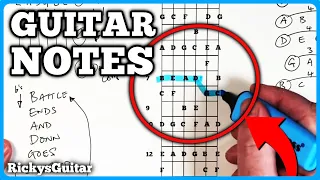
hey up guys it's Ricky here with a lesson all about fretboard navigation what I'm gonna get into is for those of you out there who are struggling to find the names of the notes on the fretboard the alphabet letters that help us to memorize the notes on the fretboard and the starting points for root notes for intervals for our key centers for chords for scales and arpeggios if you don't know your notes then you are essentially lost this is part one of a little series if you watch this all the way to the end there'll
be a link there to another video which shows you how to link them up but first things first I have to show you how we derive these things called caged octaves if you've never heard of the cage system there's a video up here that talks about the cage system I talk about that a lot and it's a really cool way of understanding the guitar fretboard and how it works and how all the shapes link up into each other because that's what happens it's all about shapes and patterns that connect together to learn the fretboard what
we're going to do is we're going to navigate using our five caged chords we're going to look at these Cowboy chords if you know these because you're a beginner or if you've been a guitarist for some time and you've played these chords for ages these caged octaves are hidden within our five caged guitar chords if you are struggling to find your way around still being an advanced player then this can help you because what we're doing is we're tapping into something that you already know I always say the easiest way to go somewhere new is
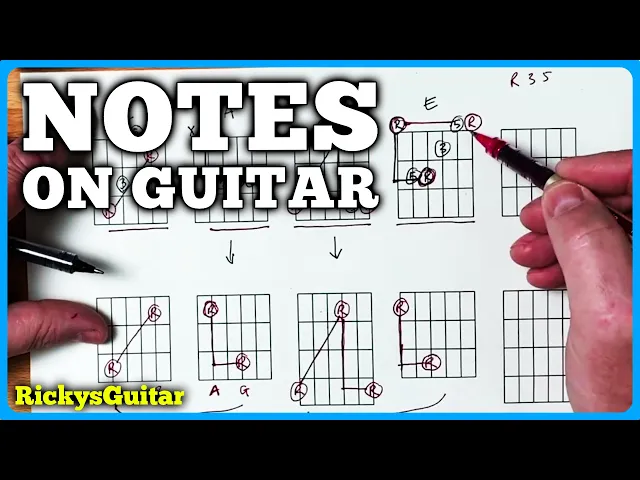
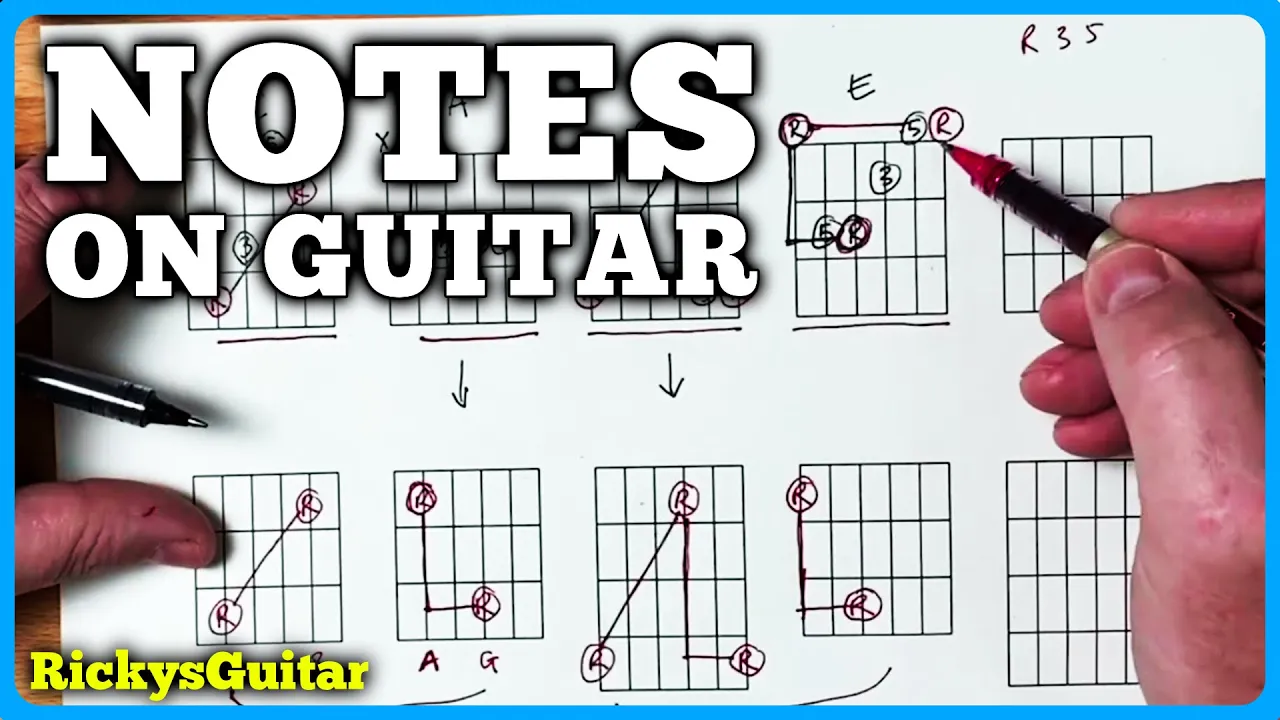
from somewhere you already know let's look at the first chord the c major chord what I'm going to do is I'm going to put in the root third and fifth of these chords if you didn't know these Cage chords they contain a root note a third and a fifth the root note is the home note the third is the emotional and the fifth is transparent that's what you need to know here what I'm going to do is I'm just going to put those in there that is our first root note for our c chord when
I put these other notes on here you'll see that we get the third here the fifth here we get the root here again we get another third here and that's the anatomy of that c chord and if you think about it we don't play that note but we're gonna just highlight these two notes here this root note here and this root note here if you look at that shape there you can see there's a pattern to that if you were thinking about this as a grid reference on a map you might see from this one
you would go one two three strings and back two Frets to find it but the easiest way to find this is actually play the shape and take that middle finger out what I'm going to do is I'm going to transfer this down here so that you can see that if I isolate that shape there then what it means is you are better able to visualize that pattern you can see that is the c-shaped octave you can see where it's derived from this chord we're going to carry on we're going to do the next chord the
next chord we have is the a major we know we have a root note here because it's an a chord and that's an open a string we don't play an E string on an a chord let's get rid of that then the next note we have is we have the fifth and let me just swap my pens because I was going to do these all with the red for root and there you go and I'll just go over that there's just to show that it is red for root we get the third put that Circle
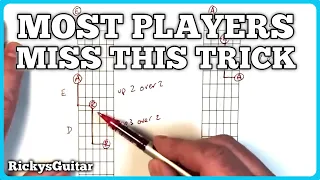
there and then we get another fifth up here right what we're looking at here is we're looking at the pattern that we need to remember to find the octave here and as you can see it goes from the open a string here we go up two Frets and over two strings if I just draw that line in there up two over two I'm going to take this and I'm going to swap it down onto this chord box here so that it's nice and neat and easy for you to see we've got the roux we go
up two Frets and then we go over two strings you can see that is going from the a string there to the G string and you can see that is the octave this one goes from the a string to the B string the thing to notice with this is that the C shape and the a shape these guys they are five string chords because if you look at this look it starts on the a string and that chord is on the a d g b and e string and you can see the same thing applies
here on the a shape here the chord is on the a string D string g string B string and E string and it's worth noting that these sort of foundation root notes if you will the lowest sounding root note of this octave is going to be on the a string it's just there for you but the thing is you might say to yourself which one is it and you'll see this when you get into the next lesson where we link these together and you'll see that this is beautiful pattern that is created by linking these
shapes you've guessed it it is caged and the next chord we're going to look at we're going C A and the next one is going to be G because we're using the Caged acronym c-a-g-e-d this is the G ship let me just put in the root notes for this straight away and then it's just going to be a lot easier for you to see how this works what happens is you get good at doing this using your eye to find out where these things are but I think it's worthwhile putting these other nuts in here
you can see the relationship of these notes and you can start to see these patterns put the fifth in here and then the way I play my G is I play it with this extra octave here that's another use case of this caged octaves idea but what you can see here is that we have this triangle shape this is a bit trickier is this one because it looks a bit similar to the c-ship but what you've got to do is you've got to go back another fret we go over four strings and we go one
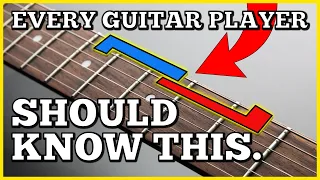
two three back three Frets that's a way to look at it but there is another way that we can do this and this is probably my preferred way of doing it because this ties in with pentatonic scales and other lead orientated navigation methods let's take this and I'm gonna go up one two three and then I go over over two anything that's on this E string is mirrored on this other E string because they are both the same value let's extract that information there and we'll put it down here so that you can see this
so we take this root note here we go back three Frets one two three Frets on the G string and this is why I think it's useful to see this as the G shape because it has a root note on the G string as well so this is what I would call the g-shaped octave this one here let's take this on here you can see it go up three one two three and over two strings and that's the shape that I end up getting I'll get this one here and this one here you can see
there's two ways of looking at that now you might be thinking to yourself how am I going to remember all this don't worry this PDF will be in the video description down below you can download that let me do the next chip the next chip we are going to do is the E shape yes we are just filling out that hole caged thing let's draw the chord in we get a root here we get the fifth we get another other route should do those in red which I will do now we've got the root there
then what happens is we get the third then we get the fifth then we get another root because this root is mirrored as we go across from one E string to an E string and that would make sense there guys this is a cool thing and this is a comparison I want you to notice is that if the guitar wasn't tuned the way it was then a lot of the shapes would be the same there would be less shapes for us to play but the kink in that tuning is what makes these shapes all different
to each other but conveniently for us because of the tuning of the guitar if we look at how we get to this root note here from this root note it means we go up two Frets and then over two strings that looks familiar if you look at the a shape you can see that this ends up being the same scenario taking that across there you can see that we get that up two over two up two over two and I think that's probably the easiest way to see that now let me just separate that I'm
going to put this over here here we're going to say that root is there remember what I said it was up two Frets and then over two strings that defines that shape there and you can see is exactly the same formula to get that as it is for the a-shaped octave it's just on different strings before we go let's just get this you can see that the G shape with a G shape uses all six strings and so does the E shape they use all six strings which is why we have three root notes in
that G chord and we have three root notes in the E chord let me just finish this one off here you can see we've got that root to root there we can look at this one over here now I like to see this as well because it shows you how elegant and beautiful the fretboard works if you remember our C shaped octave it went one two three and then went back two if you look at the same thing we've got one two three and back two we get the same shape as the C shape there
it's an another easy way to look at it these shapes they repeat themselves it's just just noticing them and visualizing them where this crosses over from the E string to the E string this is where it gets repeated here in this e shift we've got to account for all that there now I mentioned that these two chords use Six Strings they do they use six strings and we want to put that there we want to understand that this is six strings therefore we're gonna have three root notes whereas this one uses five strings and we're
gonna end up with two root notes so that means that we only have one shape left guys and that shape is gonna be you've guessed it the D shape we don't use the E string we don't use the a string we only use four strings in this ship and this is a cool thing that you need to really understand which is why I explained it down here that the C in the air shapes they use five strings the Gin e shapes use Six Strings the D shape doesn't share strings with any other chord shape if
we look at that we've got a root note there in that open position we get the fifth here we get the root here switch my pen again and we get the third here looks like a b but it is a number three trust me what you can see here is there's this one because there are less strings we only get two root notes let's do the formula for this one we can see that it goes up one two three Frets and then what we do is we go over two strings look at that look at
how that coincides with the G shape you can think to yourself that the G shape and the D shape there they use the same octave formula up three Frets over two strings it's almost like how chess pieces move and this is actually probably how I came up with this idea of trying to map it out and thinking about how the Knight might move on a chessboard let's put this D shaped octave here we're going to start on the D string because it's a d shaped octave and that's the thing it's always going to give you
the name of the octave look we've got the root note here and then we do that little formula we go up three over two and that helps us to find the octave pattern and that's the d-shaped octave there guys it's a really useful way to do it this is four strings and it's got two roots in that octave pattern as well so now we've got that and let me just put these arrows in here what I'm going to do is I'm going to show you how we extracted that information from those cowboy chords and then
what I'm going to do is I'm going to show you these caged octave patterns on the guitar fretboard and I'll talk you through it so you can actually see them in action if you are enjoying my lessons here on YouTube you might consider supporting my work on the channel and purchasing My ultimate guitar lesson book which has got 80 lessons that are here on my YouTube channel let's get back to the video the first ship we're going to apply this to the c-shaped octave let's just put that c chord on and what we'll do is
we'll extract the notes that we don't need and leave the octaves and that means that I end up with my first finger on the B string at the first fret and then my third finger here on the a string now what you can see is if I play these here this is going to be a c and this is going to be a c now this is a cool way of navigate anywhere around if you know your a string but if you don't know the names of your notes on your B string then what you
can do is you can use this C shape octave to help you to Define what this note is under B string if I take this note here C this is going to be C so if I move that up one fret there up a half step that's a C sharp so by default that's going to be a C sharp as well and I can work this backwards if I play this note here and I'm trying to figure out what it is I go oh what is that no I just play the C shape and then
I can visualize my a string bet is why I say learn your E string and your a strings first then I can find out that note there is a d and by default I know that is a d as well with reverse engineering this whole thing so I can do this with any new as long as I know my musical alphabet up my a string for instance a b c d e f g take that g there that's how I would find a g G on the B string what about an e here well let
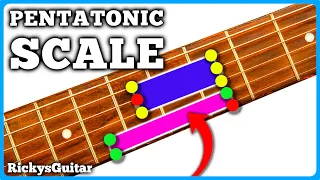
me take that e here and imagine I was playing a pentatonic scale here if I want to repeat that whole same thing again I ran out of strings there but hopefully you'll see that I was just playing [Music] the pentatonic there guys it's really useful to be able to see this idea here and we can do this with the other shapes which brings me on to the next shape which it is the ear shape this is the Airship that we know and love and remember we had an open a string in this I'm going to
take everything off that I don't need and leave the octave so I've got this open a string and I've got the second fret on this g string here I'm thinking to myself up two over two so I've got up two Frets over two strings if I take that up a half step that's a B flat or an A sharp you can see I'm doing exactly the same thing so there is that caged octave and this is a b this is a c this is a d look at that pentatonic idea that I played earlier I
went like this foreign I did exactly the same thing there so it means I can access things I know already and just put them in a different part of the fretboard really easy by leveraging these caged octaves the next ship is the G shape if we look at this I've got this G on the E string here and I've also got it mirrored on my thin E string because e strings mirror each other whatever happens on this one is happening on this one as well and we also have an open G there as well remember
I told you were three G's not the BG's that's a different thing completely so there's the three G's that we have though how does that work if I want to move this up if I take this up to an a note here I can go back one two three Frets and over four strings it's a little harder to see as that one but this is the super convenient one because this is already on the G string if you know this is your G string you just move it you've got g a b let's try this
here from this B here and I know that I go one two three and over two to find that note so let's do that there you go a little Out Of Tune there there's the g-shaped octave this thing moves all around the place guys there's the B there's a C note I know where that is so this is gonna help me to find those scales and those chords and all that other good stuff as well moving on to the next ship that we have which is the other six string chord shape which is the E
shape we've got our trusted E chord on with five R3 there we've got a root on this open E string and remember if it's on this open E string it's repeated on the thin e strings we've got that baby there but inside the chord because I talk about this five R three thing a lot five ah there's our third root so we've got three roots in the E chord notice it sounds very stable because it has three root notes and root note is the resolution yeah let's look at this one and like I said this
was like the a shape it goes up two Frets and over two strings so that's an easy one for us to find let's do it here on this F if you want to find F on the octave here which is going to be on the D string I go up two over two F to F here F sharp we've got F sharp there we've got G here I've got to be really careful with that because I may accidentally play a 1970s disco bass line you know what I'm saying so that's the E shift octave but
remember we had this other way of joining it across because remember E string to E string we've got that going on there but if we take this root note here then we can link it across them let me just show you what I meant about this being like the C shape that doesn't sound like a c by the way don't play it it sounds disgusting what we do is we take this chord here and then what we do is we just move it over and you can see that it's that c shapes but generally what
I tend to do is I just join them up like this use all three and then you can see them you can see how they interlock with each other so that's pretty awesome we've got one more shape to do we've got the D card here remember we had the open D string which is a d because this is the D shaped oxygen this is where these names for these octave shapes are derived from so we've got this one and we know that it's just like that g shape we know that it goes up three Frets
and over two strings so if I play the open D string and this third fret on the B string I can hear that is exactly the same note now if you're having trouble listening and knowing what it is if you just sing hi ho in your head or somewhere over the rainbow the first two notes of that that is the D shape that is all five of those caged octave shapes I'll show you where they come from and I've also showed you how to play them and if that isn't cool enough what I'll do is
I'll show you how to link them so that you can really connect them all up click here to watch this next lesson on how to join them all up thank you [Music]